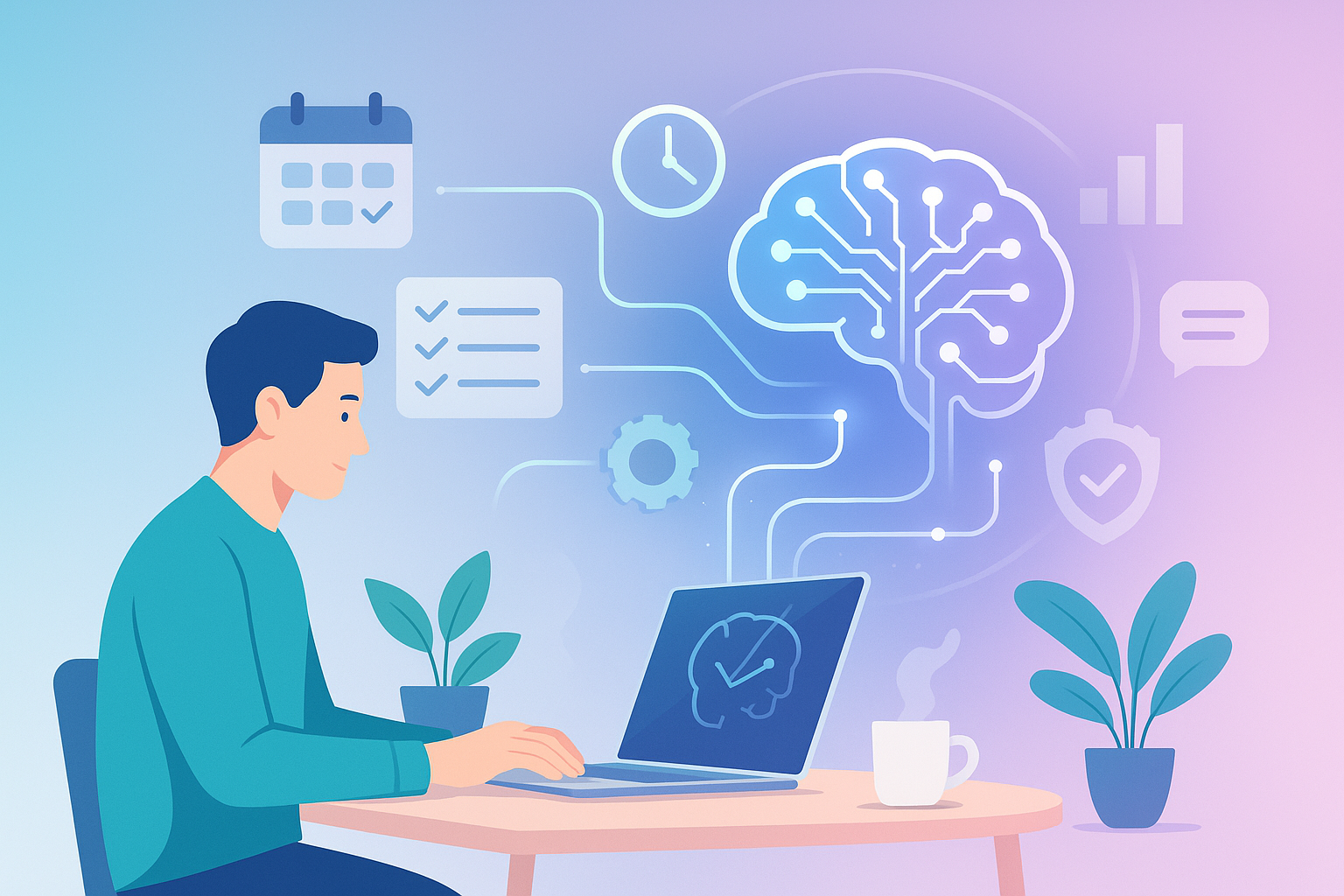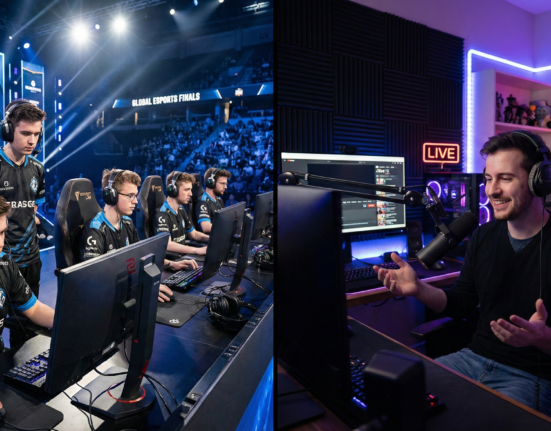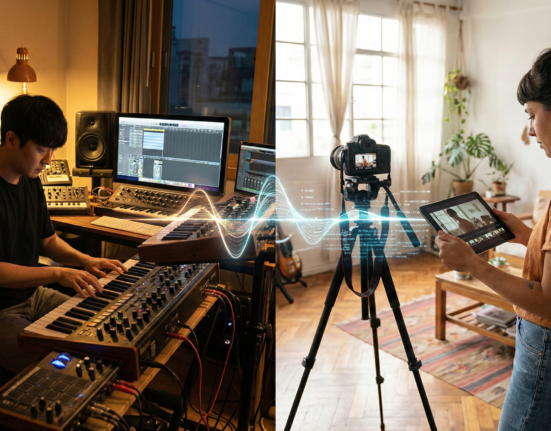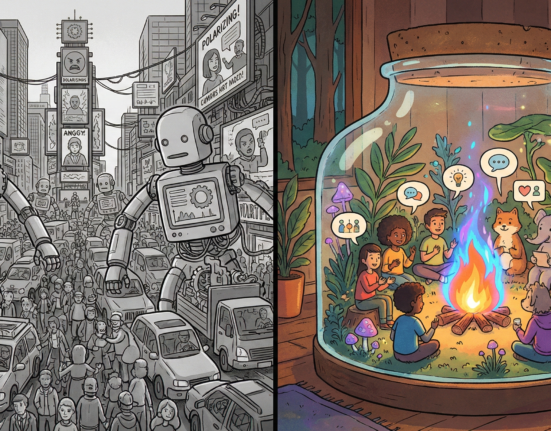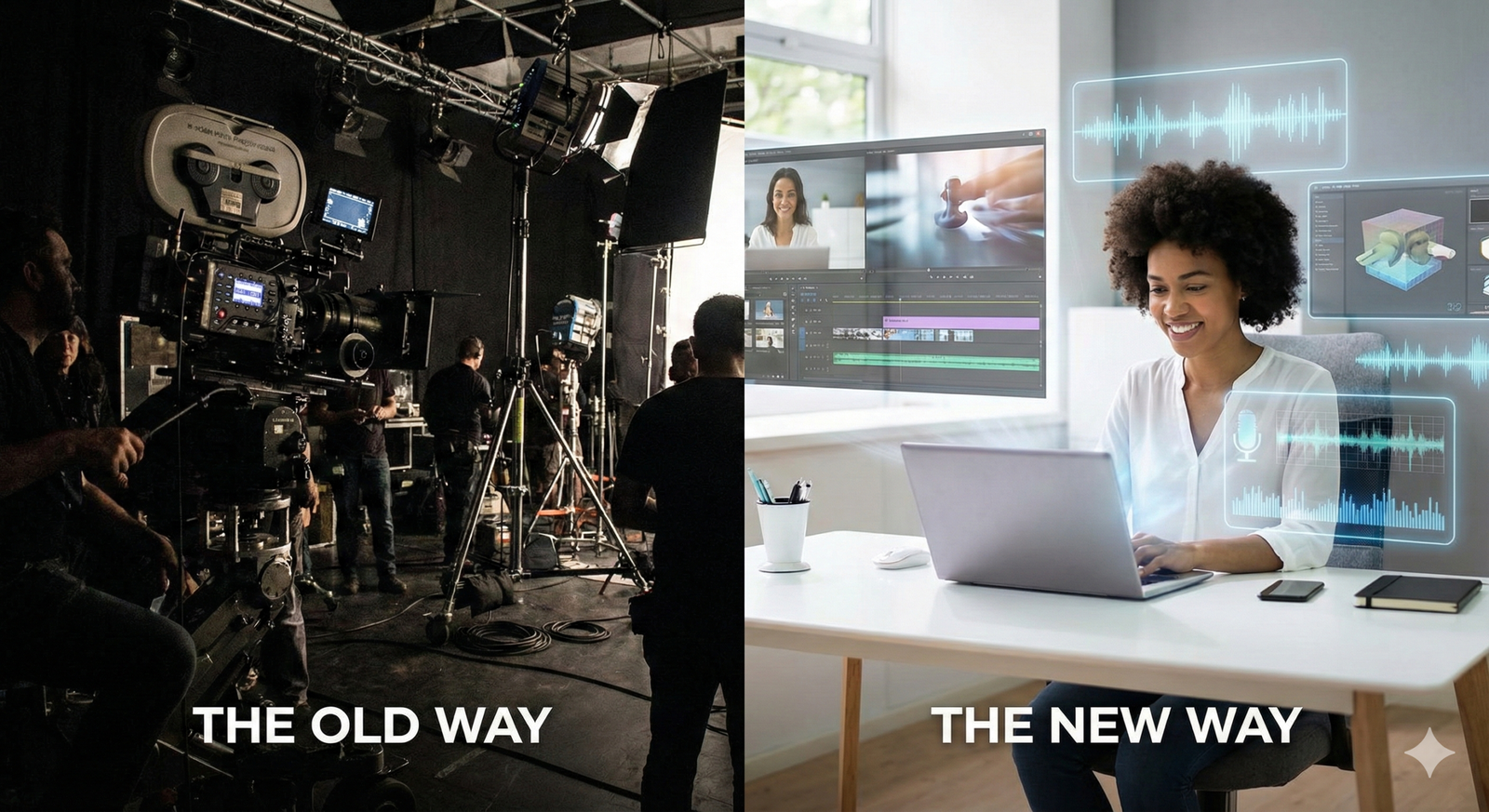
For decades, the creative industries were defined by a simple, brutal truth: quality cost money. If you wanted to produce a film that looked like cinema, record an album that sounded professional, or market a brand like a Fortune 500 company, you needed access to expensive equipment, specialized technical teams, and deep pockets. There were gatekeepers—studios, labels, and publishers—who held the keys to the castle.
As of early 2026, that paradigm has shifted fundamentally. We are witnessing the most significant democratization of creativity since the internet itself. Artificial Intelligence (AI) has moved beyond the novelty phase of generating funny images and has integrated deeply into the professional creative workflow. It is no longer just about automation; it is about augmentation and access.
This guide explores exactly how AI tools for creators are dismantling the barriers to entry, reshaping the economics of production, and allowing independent artists, writers, and entrepreneurs to punch far above their weight class.
Key takeaways
- The cost of quality has collapsed: AI creates “studio-quality” outputs in video, audio, and design for a fraction of the historical cost.
- Skills are being augmented: You no longer need to be a master coder to build an app or a professional colorist to grade footage; AI bridges the technical gap.
- Time is the new currency: Tasks that took weeks (rendering, editing, drafting) now take minutes, allowing solo creators to match the output volume of teams.
- Niche is the new mass market: AI allows creators to hyper-target small communities with personalized content that would be too expensive to produce manually.
- Authenticity remains king: As technical barriers fall, the human element—taste, story, and perspective—becomes the primary differentiator.
Who this is for (and who it isn’t)
This guide is for:
- Independent Creators: YouTubers, podcasters, writers, and streamers looking to scale their output without burning out.
- Small Business Owners: Entrepreneurs who need high-quality marketing assets but cannot afford a creative agency.
- Aspiring Artists: Individuals with great ideas who have previously been held back by a lack of technical skills (e.g., drawing, coding, video editing).
- Freelancers: Creative professionals looking to optimize their workflows and offer more value to clients.
This guide is not for:
- Purists: Those who believe using AI tools invalidates the artistic process.
- Enterprise CTOs: While relevant, this guide focuses on individual and small-team empowerment rather than corporate enterprise integration.
The death of the “Gatekeeper Era”
To understand the magnitude of the shift, we must look at what “leveling the playing field” actually means in practice. Historically, the gap between an “amateur” and a “professional” was largely defined by access to resources.
- The Technical Barrier: Professional software (like Avid or Pro Tools) had steep learning curves that required years of study.
- The Financial Barrier: High-fidelity cameras, studio time, and rendering farms cost thousands of dollars per day.
- The Network Barrier: Distribution channels were controlled by a select few.
AI tools for creators have attacked the first two barriers with unprecedented aggression. The “technical barrier” is being eroded by natural language processing—you can now “speak” your edits or designs into existence. The “financial barrier” is collapsing as software replaces hardware.
In this new landscape, a solo creator in a bedroom can produce a multimedia franchise—complete with lore, visuals, voice acting, and marketing—that rivals the output of a mid-sized production house from a decade ago.
1. Visual Arts: From stock photos to infinite imagination
The most visible disruption has occurred in the visual arts. Previously, if a creator needed specific imagery—say, “a cyberpunk noir detective drinking coffee in 1950s Tokyo”—they had three options: hire an artist (expensive), buy stock photos (generic), or learn to paint (time-consuming).
The new workflow
Today, generative image models have transformed this dynamic. Independent authors use AI to create consistent character art for their novels. Indie game developers generate high-quality textures and assets for their environments without hiring a dedicated 2D artist.
- Concept Art & Storyboarding: Instead of spending weeks sketching concepts, filmmakers can generate hundreds of storyboard iterations in an hour to visualize scenes before a single camera starts rolling.
- Asset Generation: Tools allow creators to generate vector graphics, logos, and UI elements on the fly.
- Restoration and Upscaling: Old or low-quality photos can be restored and upscaled for print or 4K video, salvaging content that would otherwise be unusable.
The playing field shift
The advantage of “hiring the best illustrator in the world” is diminishing. While human artistry is superior for intent and nuance, AI allows a solo creator to reach a “good enough” baseline for supporting assets instantly. This allows the creator to focus their budget on the hero elements that truly require human touch, rather than draining resources on background assets.
2. Video Production: Hollywood in a browser
Video has traditionally been the hardest medium to crack for independent creators due to the sheer logistical weight of production. Lighting, sound, casting, filming, and editing constitute a massive operational overhead.
AI-driven editing and post-production
The most immediate impact of AI tools for creators is in the post-production phase.
- Text-based Editing: You can now edit video by editing the transcript. If you delete a sentence in the text, the corresponding video and audio clips are removed seamlessly. This lowers the barrier for narrative construction significantly.
- Automated B-Roll: AI agents can listen to the context of a video and automatically suggest and insert relevant B-roll or archival footage, saving hours of stock library searching.
- Color Grading and Sound Mixing: AI tools can analyze a reference image (e.g., a frame from a Christopher Nolan movie) and apply that color grade to your iPhone footage. Similarly, audio tools can isolate voice from background noise, making a recording from a busy street sound like it was taped in a studio.
Generative video and virtual studios
We are currently seeing the rise of generative video—creating moving images from text prompts. While still evolving, this allows creators to:
- Fill Gaps: Generate a 3-second establishing shot of a city that they couldn’t afford to travel to.
- VFX and Green Screen: Remove backgrounds without a green screen (rotoscoping) instantly, placing the creator in any environment.
- Digital Avatars: For creators who are camera-shy, hyper-realistic AI avatars can deliver scripts with perfect lip-syncing, democratizing the “on-camera” personality.
In practice, this means a documentary filmmaker can produce a historical piece with “reenactments” generated by AI, rather than hiring actors and costumes, drastically reducing the budget required to tell complex stories.
3. The written word: The end of writer’s block
Writing is often a solitary and mentally taxing struggle. For the solo creator, being the writer, editor, and proofreader is a recipe for burnout. AI Large Language Models (LLMs) act not as replacements, but as tireless junior creative partners.
Ideation and structure
The blank page is the enemy. AI tools level the playing field by ensuring no creator starts from zero.
- Brainstorming: “Give me 20 angle ideas for a blog post about sustainable gardening.”
- Outlining: AI can suggest narrative arcs or structural outlines for long-form content, helping inexperienced writers structure their thoughts logically.
- Research Synthesis: Instead of reading twenty PDFs, a creator can upload them to a context-window-capable AI and ask, “Summarize the conflicting arguments regarding this policy.”
Localization and translation
This is perhaps the most powerful “leveling” aspect. A creator in Brazil writing in Portuguese can now use AI to translate their content into perfect, idiomatic English, Japanese, or French, instantly expanding their Total Addressable Market (TAM) from 200 million to 8 billion. This destroys the language barrier that previously confined many brilliant creators to their local geography.
4. Audio and Music: The studio is optional
Audio engineering is a dark art to many. Bad audio ruins good video, and copyright strikes ruin careers. AI tools for creators are solving both.
Voice cloning and synthesis
High-quality voiceovers previously required hiring talent, booking a studio, and waiting for files. Now, creators can:
- Clone their own voice: A podcaster can type out a correction to an episode and generate the audio in their own voice to patch an edit, without re-recording.
- Multilingual Dubbing: A creator can upload a video in English, and AI tools can generate dubbed audio tracks in Spanish, German, and Hindi, utilizing the creator’s original vocal tone and syncing the lip movements.
Composition and copyright-free music
Finding the right background music is a constant struggle involving licensing fees and copyright strikes. Generative music AI allows creators to specify: “I need a 2-minute lo-fi hip hop track that is melancholic but energetic at the end.” The AI composes a unique track that the creator owns (or can use royalty-free), eliminating the legal risk and financial cost of music licensing.
5. Coding and Game Development: Logic over syntax
The “No-Code” movement was the first wave; AI coding assistants are the tsunami. Previously, having a great idea for a web app or a video game meant nothing if you didn’t know C++ or Python.
Now, natural language is becoming the new programming language. A creator can describe the functionality they want—”Create a landing page with a hero section, a newsletter signup form, and a dark mode toggle”—and the AI writes the code.
For game developers, this is revolutionary.
- NPC Dialogue: Instead of writing static lines, developers can plug in LLMs to give Non-Playable Characters (NPCs) infinite, dynamic dialogue trees.
- Texture Generation: Generating assets for 3D worlds becomes a prompt-based task rather than a sculpting task.
This allows “asset flippers” to become genuine developers, and storytellers to build interactive experiences without needing a computer science degree.
6. Marketing and distribution: The algorithm whisperers
Creating content is only half the battle; getting it seen is the other. Large media companies have entire departments dedicated to SEO, analytics, and social media strategy. Solo creators do not.
AI levels this playing field by acting as a marketing department in a box.
- Repurposing: AI tools can take a long-form YouTube video and automatically chop it into 10 viral-ready TikTok clips, identifying the most engaging moments, cropping them to vertical, and adding captions.
- Personalization: Creators can use AI to segment their email lists and write personalized intro paragraphs for different user personas, increasing engagement rates to levels usually reserved for enterprise CRMs.
- SEO Optimization: AI analyzes search intent and competitor gaps, suggesting titles and keywords that give the small creator a fighting chance to rank against the giants on Google.
The economics of the “One-Person Unicorn”
The cumulative effect of these tools is a radical shift in the economics of creation. We are seeing the rise of the “One-Person Unicorn”—a solo entity capable of generating value at a scale previously requiring dozens of employees.
Cost Comparison: Traditional vs. AI-Augmented Workflow
| Task | Traditional Cost (Est.) | AI-Augmented Cost (Est.) | Time Savings |
| Voiceover (3 mins) | $200 – $500 (Talent + Studio) | $15 – $30 (Subscription) | 95% |
| Custom Music Track | $300+ (Licensing/Composer) | Included in AI Sub | 99% |
| Video Editing (Rough Cut) | $50/hour (Freelancer) | $0 (Auto-edit tools) | 80% |
| Translation/Dubbing | $15/minute | $1-$2/minute | 90% |
| Concept Art | $200+ per piece | Included in AI Sub | 95% |
Note: Prices are estimates based on average freelance rates as of early 2026. AI costs usually represent a monthly subscription fee covering unlimited or high-volume usage.
This reduction in OpEx (Operating Expense) means that independent creators can become profitable with smaller audiences. They don’t need a million views to break even on a video that cost $5,000 to make; they can break even on a video that cost $50 to make with a few thousand views. This sustainability fosters niche communities and diverse voices that big media ignores.
Common mistakes and pitfalls
While AI tools for creators offer immense power, they are not magic wands. Falling into the trap of over-reliance can lead to generic, soulless content.
1. The “Slop” Trap
Because it is easy to generate content, the internet is flooding with low-effort, low-quality AI filler (often called “slop”). Creators who rely 100% on AI for writing or visuals without human curation will drown in this sea of mediocrity.
- The Fix: Use AI for the middle of the process, never the start (strategy) or the end (final polish). Your taste is the filter.
2. Ignoring Copyright and Ethics
The legal landscape regarding AI training data is still settling. Using a tool that blatantly mimics a specific living artist’s style can lead to backlash from the community and potential legal trouble.
- The Fix: Use ethical AI tools that are transparent about their training data. Focus on creating a unique style by blending influences rather than ripping off a single artist.
3. Loss of Voice
If you let an LLM write your script without editing, it will sound like an LLM—polite, verbose, and boring. It strips away the idiosyncrasies that make a creator interesting.
- The Fix: Treat AI output as a “rough draft.” Rewrite it to inject your slang, your cadence, and your personality.
Case Examples: What this looks like in practice
Scenario A: The Documentary Filmmaker
- Before: Jane has a great story about a local historical event but no budget for reenactments or archival licensing. She produces a “talking head” video that is informative but visually dry.
- With AI: Jane uses Midjourney to generate historical “photos” of the event (clearly labeled as recreations). She uses an AI audio tool to clean up her noisy field interviews. She uses an AI motion tool to add “Ken Burns” effects to her static images. The result is a visually rich, immersive documentary produced on a shoestring budget.
Scenario B: The Indie Game Dev
- Before: Tom is a great coder but can’t draw. His game mechanics are fun, but the game uses “programmer art” (colored squares), so nobody buys it.
- With AI: Tom uses AI to generate consistent tile sets for his game world and uses an LLM to help write the backstory for his items. He releases a visually polished game that attracts a player base, allowing him to eventually hire a human artist for the sequel.
Future outlook: The “Curator Economy”
As we move deeper into 2026 and beyond, the definition of a “creator” is evolving into that of a “curator” or “director.”
In a world where execution is cheap, vision is expensive. The playing field isn’t just leveled; it is expanded. The creators who win won’t necessarily be the ones who can draw the best hand or cut the fastest trailer—they will be the ones with the best ideas and the best taste to guide the AI tools to execute that vision.
The barrier to entry has dropped, but the barrier to excellence remains. The difference is that excellence is now defined by your imagination, not your budget.
Related topics to explore
- Prompt Engineering for Creatives: How to speak the language of AI models to get the exact result you want.
- Ethical AI Usage: Understanding the legalities of AI-generated content and copyright ownership.
- Building a Personal Brand: How to maintain humanity and connection in an automated world.
- Monetization Strategies for Niche Creators: Leveraging lower production costs to serve micro-communities.
- The Psychology of Human-AI Collaboration: Overcoming the fear of replacement and embracing augmentation.
Conclusion
AI tools for creators are not coming to replace the artist; they are coming to replace the drudgery of art. They are removing the friction between having an idea and executing it. By lowering the cost of production and bridging the skills gap, AI is dismantling the ivory towers of the media industry.
For the independent creator, there has never been a better time to start. The tools are in your hands, the costs are low, and the gatekeepers are gone. The only limit left is the scope of your own creativity.
Ready to level up? Start by auditing your current workflow to identify one repetitive task you can offload to an AI tool this week.
FAQs
1. Will using AI tools make my content generic?
It can, if you rely on it entirely. The key is to use AI as a tool for support, not a replacement for your creative vision. The most successful creators use AI to handle technical tasks (like audio cleanup or basic drafting) while injecting their unique personality, opinions, and editing style into the final product to ensure it stands out.
2. Are AI tools expensive for small creators?
No, this is one of their main advantages. Many powerful AI tools offer free tiers or affordable monthly subscriptions (often $10–$30/month) that replace hardware or freelance services that would cost hundreds or thousands of dollars. The return on investment regarding time saved is usually very high.
3. Can I copyright content created with AI?
As of early 2026, this is a complex legal area. Generally, raw output from an AI cannot be copyrighted in many jurisdictions (like the US). However, works that involve significant human input, modification, and arrangement alongside AI elements may be eligible for protection. Always consult the latest legal guidance for your specific region.
4. How do I start if I am not technical?
Most modern AI tools are designed with “natural language” interfaces, meaning you interact with them by typing plain English sentences (prompts) rather than code. Start with user-friendly tools for writing (like ChatGPT/Claude) or basic image generation to get comfortable with the prompting process before moving to complex workflows.
5. Will AI replace human creativity?
AI replaces execution, not creativity. It can generate a thousand variations of an image, but it cannot decide which one allows the audience to feel an emotion. It cannot experience life or have a perspective. Human experience and taste are the ultimate differentiators that AI cannot replicate.
6. Which creative industries are most affected by AI?
Visual arts (illustration, concept art), copywriting, and voice acting have seen the fastest disruption. However, video editing, 3D modeling, and coding are rapidly catching up. Essentially, any digital workflow that involves pattern recognition or generation is being impacted.
7. Is it ethical to use AI if it puts professionals out of work?
This is a nuanced debate. While AI shifts the labor market, it also allows individuals who couldn’t afford professionals to create things they otherwise never would have. Ideally, creators should use AI to empower themselves while supporting human artists for “hero” assets whenever their budget allows, fostering a hybrid ecosystem.
8. What is the biggest risk for creators using AI?
The biggest risk is the loss of trust. If your audience feels you are churning out low-effort, automated content without checking facts or adding value, they will disengage. Maintaining authenticity and transparency about your use of AI tools is crucial for long-term community building.
References
- Chui, M., et al. (2024). The economic potential of generative AI: The next productivity frontier. McKinsey & Company. https://www.mckinsey.com/capabilities/mckinsey-digital/our-insights/the-economic-potential-of-generative-ai-the-next-productivity-frontier
- Runway Research. (n.d.). Gen-2: The Next Step Forward for Generative AI. Runway. https://research.runwayml.com/gen2
- OpenAI. (n.d.). Sora: Creating video from text. OpenAI. https://openai.com/sora
- Adobe. (2025). Future of Creativity: 2025 Report. Adobe Newsroom. https://news.adobe.com
- Florida, R. (2023). The Rise of the Creative Class. Basic Books. (Contextual reference on the creative economy structure).
- U.S. Copyright Office. (2023). Copyright Registration Guidance: Works Containing Material Generated by Artificial Intelligence. Federal Register. https://www.federalregister.gov/documents/2023/03/16/2023-05321/copyright-registration-guidance-works-containing-material-generated-by-artificial-intelligence
- Andreessen Horowitz (a16z). (2024). The Generative AI Revolution in Games. a16z. https://a16z.com/2023/11/02/the-generative-ai-revolution-in-games/
- Goldman Sachs. (2023). Generative AI could raise global GDP by 7%. Goldman Sachs Research. https://www.goldmansachs.com/intelligence/pages/generative-ai-could-raise-global-gdp-by-7-percent.html