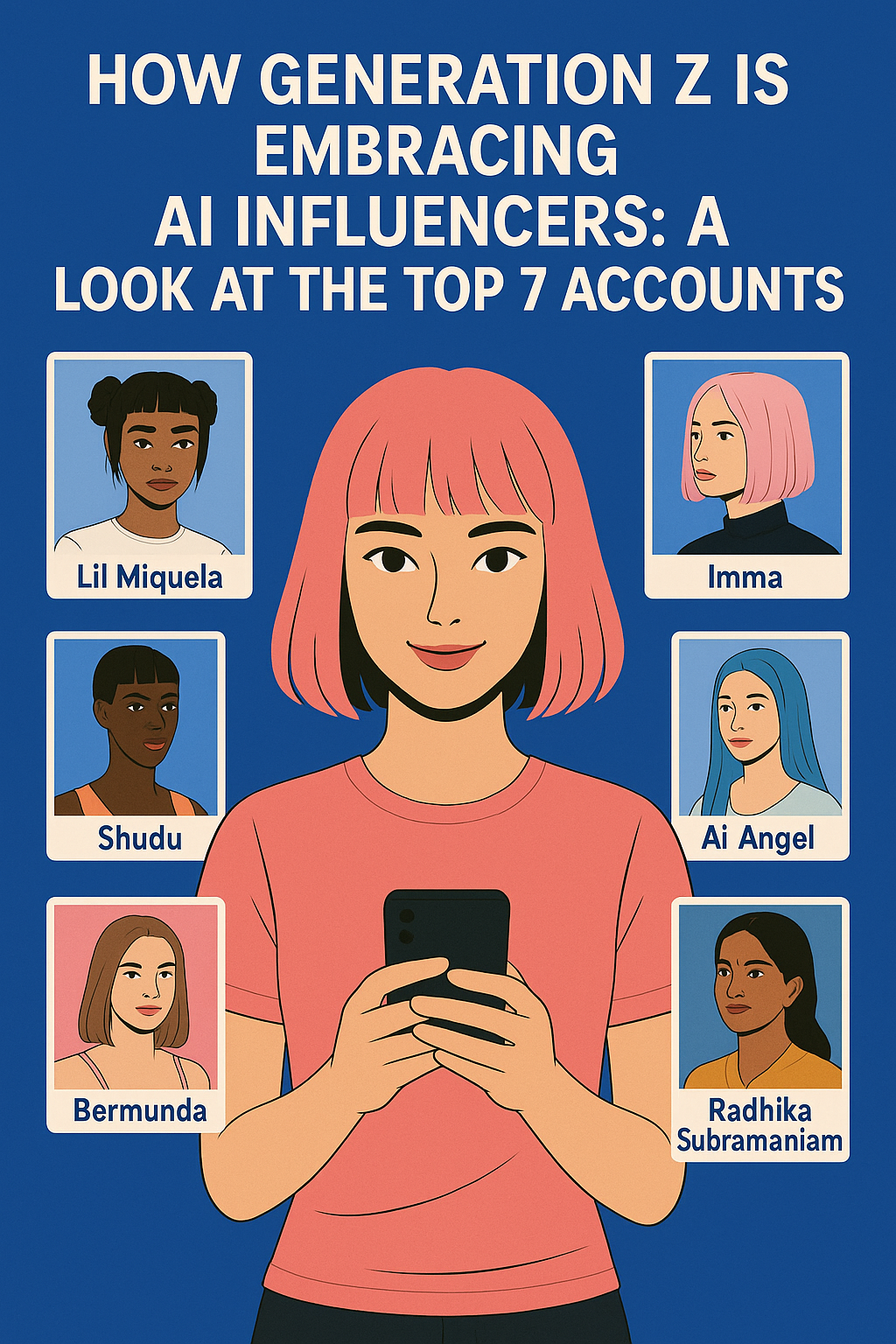
People who were born between the middle of the 1990s and the beginning of the 2010s are part of Generation Z. They grew up with AI and digital technologies that are always changing. People in this group talk to each other differently now that they have grown up with technology. They also find, communicate to, and trust individuals online in a different way. AI-powered virtual influencers are computer-generated people who are supposed to talk to people on social media. Over the past few years, they have become a well-known group of people within the influencer community. Unlike typical human influencers, these AI influencers can be designed to always follow brand values, never get bored of generating content, and readily adapt to new trends.
It’s impossible to distinguish what’s real and what’s not when AI influencers are around. This raises some fascinating considerations about honesty, engagement, and morality. This illustrates that our beliefs about what is real are evolving, even though Generation Z enjoys these fake icons. It might not be about being authentic in the real world anymore, but about creating tales that are consistent and relevant and having values that fit. Fast Company states that one in three Gen Z customers now buy goods because of what AI-generated influencers say. Almost half of persons aged 19 to 21 follow AI accounts on a regular basis.
Generation Z likes these seven AI influencer accounts the most. We find out about their pasts, how they generate money, who they work with, and why so many people like them.
1. The First Virtual Influencer: Lil Miquela—A History and How It Was Made
Lil Miquela, whose true name is Miquela Sousa, first showed up on Instagram in April 2016. She was a 19-year-old female from Brazil and the United States. Brud is a new company in Los Angeles that made Miquela. She was a groundbreaking digital character since she appeared real and her tale was easy to relate to (she had issues with her identity, activism, and relationships). Miquela climbed over the “uncanny valley” by being honest about her phony CGI background and bringing her fans inside her “digital life.”
More people and places to follow
Lil Miquela got more than a million Instagram followers in just two years. She also partnered with huge brands like Calvin Klein, Prada, and Samsung to develop big campaigns. She uploads a combination of professional-looking editorial images and behind-the-scenes shots on Instagram that make her seem real, even if she’s not.
- Miquela writes on her travels, social justice problems (including Black Lives Matter), and “life as a cyborg.”
- Music and Entertainment: She has released her own songs, which makes it even tougher to identify the difference between an artist and an influencer.
- Interactive Polls and Q&As: You can chat to your fans directly through Instagram Stories, which helps them feel more like they are part of the community.
What brand alliances are and what they mean for things
Miquela’s collaborations have proven highly crucial. She starred in a commercial for Calvin Klein alongside Bella Hadid in May 2019. This gained a lot of attention in the news throughout the world and made people think about the ethical considerations that come with CGI. When she signed with Creative Artists Agency (CAA) in 202 immensely, it was the/sub/first time a prominent roster ofCursos included a virtual character. This showed that the firm was ready for it.
What Gen Z believes
Gen Z likes Miquela because:
- Tech Fluency: They admire her CGI work because they know how to use computers.
- Value Alignment: Gen Z is very vocal about social issues because she speaks up for what she believes in.
- People are more loyal when they comment on and share Stories often, so becoming active with the community is a good idea.
2. Shudu: The First Digital Supermodel in the World—How It Was Made and Where It Came From
Cameron-James Wilson, a photographer from South Africa, created Shudu Gram in December 2017. People soon began to nickname it “the first digital supermodel in the world.” They used 3D software and CGI to make her look like a hyperreal yet perfect replica of supermodels from the 1990s.
Being there and following Shudu on Instagram (@shudu.gram), where she was most active, she swiftly attracted hundreds of thousands of followers. Her posts look like editorials in premium magazines since she typically shows off high-end outfits and uses dramatic lighting.
Content and Collaboration
- Fashion Campaigns: Shudu’s campaigns with companies like Balmain and Fenty Beauty show off the attractiveness of high fashion while also getting people to speak about beauty standards and representation.
- Using Pictures to Make a Point: Wilson has utilized Shudu’s platform to draw attention to topics like colorism and diversity in modeling, which the fashion business does not allow.
Being real and being a part of it
Shudu is constructed entirely with CGI, but her well-thought-out biography and pertinent social commentary have made people care about her. Interviews with her creator illustrate how Gen Z artists help shape Shudu’s “voice” so that it sounds like what people want to hear.
3. Imma: The Style and Birth of Japan’s Virtual It-Girl
Aww, Inc., a studio in Tokyo, made Imma in September 2018. The character looks like something from the future and from anime at the same time. She stands out because of her pink haircut and active face.
The people that admire you
As of the middle of 2025, Imma has close to 390,000 followers on Instagram. People from Japan and all over the world are her fans.
Main Points of the Content:
- Imma visits the art districts of Tokyo, talks about modern Japanese culture, and sometimes discusses about societal issues from the point of view of Gen Z.
- Fashion collaborations: She has collaborated with Dior, Valentino, Porsche Japan, and Ikea, where she has engaged in interactive digital projects.
- Real-World Activations: During Paris Fashion Week, models walked the runway with Imma’s face on them. This showed that she had moved from the internet to real life.
What makes Gen Z come together
Imma’s mix of old and modern Japanese styles shows that Gen Z likes items that are both new and authentic. She seems more like a genuine person since she has a charming personality and a machine learning method that is available to the public so you can observe how it works.
4. Bermuda: The Controversial Cyber-Persona—A Look Back and an Introduction
Bermuda first came out in late 2018 as a rival to Lil Miquela. At first, she acted like a conservative who supported the system, but then she “came out” as LGBT and joined Miquela in movements for social change. This tale twist gained a lot of attention and highlighted how good virtual influencers are at telling stories.
Getting involved on social media
A lot of people in Bermuda use Twitter and Instagram. She has talked about politics on both platforms, including as elections and disputes regarding LGBTQ+ rights. Her biography is full with drama that keeps her admirers intrigued, such changing her mind, having “breakdowns,” and making up with individuals.
Brands may learn about marketing and collaborations
Bermuda has been used in advertising by both Prada and Samsung to get people talking. Her journey shows how crucial it is for a story to be able to grow. Bermuda shows that modifying her character can keep people interested in virtual influencers over time.
5. Knox Frost: The Virtual Creator Who Knows How to Make a Crypto Profile and Draw People In
Knox Frost is an expert in cryptocurrencies and NFTs, which are unique digital tokens. He plays an AI influencer that knows a lot about technology and teaches Gen Z about blockchain culture. Knox Frost has a tiny yet loyal circle of youthful admirers who are interested in Web3. He achieves this by talking in a way that mixes funny memes with facts that only he knows.
Plan for Content:
- Twitter threads make it easier to understand hard crypto concepts like staking, DeFi, and the Bored Ape Yacht Club.
- NFT Drops & Giveaways: Giving away special drops to followers that are interested by collaborating with new digital artists.
- AMA Sessions: Live streaming of “Ask Me Anything” sessions let Gen Z viewers ask questions and obtain answers, which helps the community learn.
Why Gen Z Hears
When Gen Z was growing up, cryptocurrencies were quite popular. They want to be free of debt and not have to stay in one spot. Knox Frost is a good bridge between complicated technology and regular people since he is nice and explains things well.
6. Ai Angel: The Wellness Guru’s Idea and Goal
Ai Angel is a virtual self-care influencer who shares tips on how to be more aware, take care of your mind, and live a better life. Her soothing pastel-colored drawings and voiceovers, which came out in early 2024, include guided meditations and tips for dealing with stress.
Gen Z adores Ai Angel’s videos on Instagram Reels, TikTok, and YouTube Shorts. Her sophisticated, algorithm-based strategy, which includes popular music, captions with affirmations, and interactive polls, helps her reach more people.
Businesses Working Together
Her work with mental health apps like Headspace, fitness tech firms, and companies that promote a sustainable lifestyle indicates that she cares about the whole person. Ai Angel is a trustworthy source since it is clear about how it produces AI and keeps people’s private information safe.
Getting Gen Z to take part
Ai Angel helps persons with mental health problems find easy solutions to deal with them. She seems like she knows what she’s doing and is easy to talk to because she always utilizes the same tone, visual branding, and science-based recommendations.
7. The Story of Radhika Subramaniam, India’s First AI Travel Writer
Radhika Subramaniam joined the Collective Artists Network in the middle of 2025. It’s a Tamil-English travel show that takes you to places of India that most people don’t see. Her tale is about learning about the culture, trying the food, and traveling in a way that is beneficial for the earth.
Platforms and Content
Radhika is active on Instagram and YouTube, where she posts short films, polls about trip preferences that people can vote on, and “planning” Stories that reveal what goes on behind the scenes. A lot of Gen Z folks in India and throughout the world adore the voiceovers and subtitles she does in several languages.
Working with brands
She has worked with Indian Railways, local hotels, and boards that promote eco-tourism. People can book with her and talk to her in a real way. She also shows photographs that people have sent in, which is content generated by fans. This makes it easy for people in the community to work together to build things.
Sound for the Gen Z
Gen Z wants to be truthful, learn about other cultures, and be kind to the environment when they travel. Radhika is one of the most prominent AI travel influencers in South Asia since she provides stories about the area and has outstanding cinematography.
FAQs
1. Rise of requests for connection to AI influencers? Steve Jobs
Gen Z cares about being authentic, being able to talk to other people, and being able to connect with them. You can have AI influencers stick to particular ideals, talk about news straight away, and talk to users through surveys and Q&As. Gen Z enjoys how they combine fun, learning, and activism in a way that appeals to a wide range of people.
2. Are AI influencers replacing people who have an effect on others?
Not completely. AI influencers are good at being consistent and scalable, but individuals are unpredictable because they have depth, lived experience, and creativity. To obtain the biggest reach and credibility, brands typically use both real and fake influencers.
3. How do AI influencers stay real?
By being honest about their CGI nature (narrative transparency), letting the audience take part in the story (participatory storytelling), and promoting social concerns that are important to them. For instance, Lil Miquela’s postings on activism or Imma’s articles about culture enable people really connect with each other.
4. What ethical questions arise about AI influencers?
Some of the most critical challenges are disclosure (making sure people know they’re talking to AI), representation (not reinforcing unrealistic beauty standards), and data privacy (how user interactions create AI personas). There are regulations that brands must follow for ethical AI and advertising.
5. How can businesses find out how much money they make from campaigns with AI influencers?
Some metrics are how many people liked, commented on, or shared something, how many people clicked on call-to-action links, how many branded hashtags were used, and how many people bought something or signed up. Surveys that ask individuals how they feel about a brand before and after a campaign are also highly useful.
6. What are the best jobs for AI influencers?
Instagram and TikTok are the greatest because most of their content is pictures and videos. YouTube and new metaverse platforms like Zepeto let you experience things more fully. What you choose will depend on what kind of content it is and who it’s for.
7. Can AI influencers alter in real time to keep up with what’s popular?
Yes. AI personas may stay current and useful by using natural language production and real-time data analysis to respond to trending hashtags, news stories, and how people feel about them.
8. What kinds of tech do AI influencers use?
Some significant technologies are CGI modeling programs like Blender and Maya, motion capture, generative adversarial networks (GANs) for realistic texturing, and large language models (LLMs) to make talks more engaging.
9. What standards do AI influencers have to follow when they market?
They have to respect the platform’s guidelines and let others know when they are advertising something, like by using #ad or #sponsored. They are open about being AI, which is what the guidelines say about being honest in advertising.
10. What will happen to AI influencers in the future?
As AI becomes smarter, virtual humans will be able to do more things. For example, they will be able to arrange live events, send personalized direct messages, and even meet and greet individuals in virtual reality. But it will be very necessary to know what is right and bad and how to be real.
Last Thoughts
AI influencers are getting more prominent, which is a huge change in social media and digital marketing. Generation Z adores these fictional people, which suggests that our beliefs about what is genuine are shifting. Now, it comes from more than just what is right. We get it from tales we can relate to, ideals that don’t change, and interactions that are important.
Virtual influencers will get better as AI gets better. This will enable people get to know each other better, make friends, and be creative. The most important thing for companies and creators that want to explore this new area is to establish a balance between being creative and being responsible. They need to make sure that the digital ambassadors of the future are actual people who are nice and fun.
References
- Fast Company: AI influencers are shaping Gen Z’s shopping habits. Fast Company. (2025).
https://www.fastcompany.com/91340504/ai-influencers-are-shaping-gen-zs-shopping-habits - Wikipedia: Miquela. Wikipedia. (Updated July 2025).
https://en.wikipedia.org/wiki/Miquela - Wired: CGI ‘Influencers’ Like Lil Miquela Are About to Flood Your Feeds. Wired. (2018).
https://www.wired.com/story/lil-miquela-digital-humans - Storyclash: Top 10 Virtual Influencers in 2025. Storyclash. (2024).
https://www.storyclash.com/blog/en/virtual-influencers/ - Virtual Humans Org: Imma—the virtual influencer disrupting the fashion industry. (2023).
https://www.virtualhumans.org/article/imma-the-virtual-influencer-disrupting-the-fashion-industry - ABC News: AI influencers compete for followers and brand deals on social media. ABC News. (2025).
https://abcnews.go.com/US/ai-influencers-compete-followers-brand-deals-social-media/story








1 Comment