Virtual Reality (VR) has gone from being a niche gaming accessory to a game-changing technology that can be used in many areas, such as business, education, healthcare, and entertainment. As we move into a new age of immersive technology, it’s important for developers, investors, businesses, and fans to know where VR is headed. This article talks about three important things that will happen in the future of VR. It talks about how new technologies, changes in the market, and changes in society will change the world in the next ten years. We’ll talk about the future of virtual reality, including hardware convergence, social and business growth, AI-driven experiences, ethical issues, privacy concerns, and common questions.
Prediction 1: Hardware and XR will work together perfectly.
The shift to light wearables that can be worn all day
The first consumer headsets were big and heavy because they were more focused on graphics than comfort. They had to be plugged into a PC or console. On the other hand, the next generation of VR hardware will focus on designs that are thin and comfortable enough to wear all day. For instance, Apple’s Vision Pro, which came out in early 2024, uses pancake lenses and advanced displays to show mixed reality video through a headset. This shows that the industry really wants to make “spatial computing” platforms that use both VR and AR.
Similarly, Meta’s Quest 3 and the lower-cost Quest 3S underline the trend toward untethered, high-resolution experiences in lightweight form factors, featuring inside-out tracking and improved battery life for extended sessions . Cloud streaming will free up even more processing power as 5G and Wi-Fi 7 networks become more common. This will make it possible to have graphics that look almost like real life on glasses that are as thin as regular glasses.
From Headphones to Smart Glasses
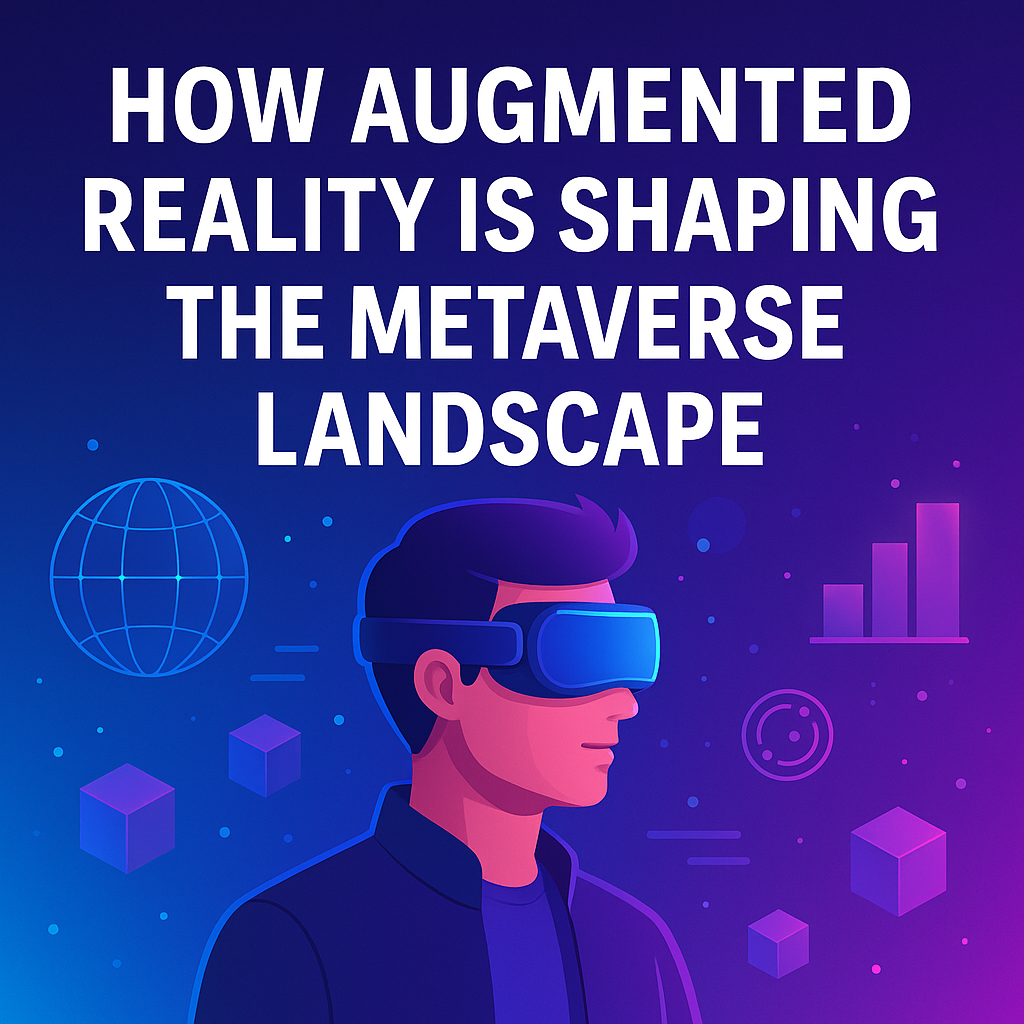
XR convergence’s ultimate goal is smart glasses that can switch between augmented reality overlays and fully immersive virtual reality, not just better headsets. Companies like North (now part of Google) and new startups are making glasses with built-in waveguides that can project holographic interfaces onto the user’s field of view. These devices want to give users information that is relevant to them, like navigation prompts, real-time translation, or immersive training modules, without cutting them off from the world around them.
We can expect the following as hardware gets smaller:
- Pancake optics and foveated rendering will make pixels lighter and denser, which will make the field of view and resolution better.
- Advanced Haptics: Wearable haptic feedback suits and gloves will make things feel more real, which will make games and business applications more immersive.
- Modular Form Factors: Lenses that can be changed, batteries that can be swapped, and clip-on computation units will cut down on electronic waste and let users choose what they need.
These changes will make XR easier for everyone to use, so that fully immersive virtual experiences are as common as smartphones are now.
Prediction 2: VR will grow in both social and business settings.
The Rise of Social VR Platforms
The pandemic’s push for more remote communication sped up the use of social VR platforms like Horizon Worlds, VRChat, and Rec Room. In the future, these shared virtual spaces will turn into real metaverses that will have:
- Virtual conferences and concerts: Companies and artists will use VR to host big events with realistic avatars, spatial audio, and stages that people can interact with. This will save money on travel and lower carbon footprints.
- Universities will build permanent VR campuses where students from all over the world can go to class, work on projects together, and use simulations that would be too dangerous or impractical in real life.
- Digital Commerce Hubs: Companies like Gucci and Nike are already trying out virtual stores. In the future, NFTs and blockchain-based ownership will be added. This will let people buy virtual clothes and other limited-edition items for their avatars.
Statista says that by 2027, the global VR market will be worth more than $52 billion, mostly because it is used in business and social settings. As these platforms get more popular, network effects will help communities grow. This will create a cycle of user engagement and platform monetization that never ends.
Apps for business and training
Aside from entertainment, VR’s most immediate effect on business is in training and simulation:
- Healthcare and Surgery: Surgical teams practice tough surgeries in a virtual operating room where there is no danger. A 2020 systematic review found that surgeons who trained in VR made 37% fewer mistakes than those who trained in other ways.
- Industrial Maintenance: Technicians at GE and Siemens do maintenance checks on digital twins of wind farms and turbines. This lowers the number of accidents and time off work.
- Corporate Onboarding: Walmart and other companies have used VR simulations to train thousands of new employees on everything from how to deal with customers to how to handle dangerous materials.
By 2030, companies are expected to spend more on VR than gamers do on games. This shows a shift toward productivity and professional growth.
Prediction 3: Experiences that are immersive and powered by AI
Generative Worlds and Custom Content:
AI and VR are working together to make places that are made on the spot and change depending on how people use them. Take a moment to think about:
- Dynamic Storytelling: Narrative arcs that change based on how you feel, which biometric sensors can pick up on. AI characters will write their own lines of dialogue, so each person will have their own story beats.
- On-Demand World Building: A developer can just say what a setting is, like “a medieval village at dusk,” and AI engines will make assets, add NPCs, and write events in a matter of seconds.
- Adaptive Learning Modules: In VR education, AI tutors will check on how well students are doing and change the difficulty of the simulation on the fly to keep them interested and help them remember what they learned.
A recent article in Forbes says that combining AI with VR will change immersive computing by allowing “next-level personalization” in areas like gaming and telepresence.
Smart NPCs and avatars
For the future of social VR, realistic non-player characters (NPCs) and AI-driven avatars are very important:
- Emotionally Responsive Agents: Virtual friends can understand how you feel, help you, and even coach you through anxiety or social phobias using natural language processing and sentiment analysis.
- Enterprise Assistants: In corporate metaverses, AI avatars will greet customers, give them virtual tours, and answer common questions. This will give people more time to work on things that are more important.
- Immersive Retail: Virtual shopping assistants will suggest products based on what you’ve bought in the past and what they think you like. This combines e-commerce with real-life interaction.
These new AI tools will change VR from a static medium into a living, breathing ecosystem. This will make it easier for people and computers to work together and feel more connected to each other.
Worries about morals and privacy
It’s very important to think about privacy and ethics as VR becomes more real and uses more data. People are worried about the new metaverse:
- Eye-tracking, gesture recognition, and spatial mapping make detailed user profiles, which makes it more likely that someone will spy on you or change your behavior without your permission.
- Digital Addiction: VR worlds that are really cool might make people who are already addicted to screens even more so, especially younger people. It will be very important to have built-in usage limits and design that is responsible.
- Equity and Accessibility: There will need to be rules and standards for inclusive design to make sure that people with disabilities can afford and use VR hardware and experiences.
The IEEE and the XR Association are two examples of industry groups and standards organizations that are already working on rules for data portability, consent frameworks, and ethical AI use. But it’s still very important to have strong laws and work together across sectors.
Last Thoughts
Virtual reality has a bright future ahead of it because of better hardware, more social and business apps, and the addition of AI-powered intelligence. As headsets become as common as smart glasses and other wearables, people will want experiences that are seamless and high-fidelity, so that it’s hard to tell where the real world ends and the digital world begins. People all over the world will work, learn, and have fun in new ways because of social VR platforms and business simulations. Generative AI will also make custom worlds and avatars that can change, which will let people personalize and interact with things more than ever before. But a lot of responsibility comes with a lot of potential. Ethical frameworks, privacy protections, and fair access must all change as technology does.
Commonly asked questions (FAQs)
- How big will the VR market be around the world by 2027?
Experts in the field say that by 2027, the VR market will be worth more than $52 billion. This is because it can be used for both fun and business. - How will smart glasses change how people use virtual reality?
Smart glasses promise to be light and have mixed-reality features that make it easy for users to switch between AR overlays and fully immersive VR. This gives them new uses besides gaming. - What will AI do to VR experiences in the future?
AI will let you make worlds that change over time, stories that change based on what players do, and NPCs that can talk to players and react to how they feel. - Is immersive VR a threat to privacy?
Biometric data, such as eye movements and gestures, as well as environmental scans, do create detailed profiles of users. We need strong consent systems, rules for how to protect people’s privacy, and rules for how to share data. - How can businesses use VR training without putting themselves in danger?
Companies should only use certified simulator providers, run pilot programs to see how well they work, and do regular checks to make sure that the simulations are safe in the real world.
References
- The Evolution of Virtual Reality: Exploring the Past, Present and Future. Forbes. November 9, 2023. https://www.forbes.com/councils/forbesbusinesscouncil/2023/11/09/the-evolution-of-virtual-reality-exploring-the-past-present-and-future/
- Virtual Reality. Wikipedia. Retrieved July 2025. https://en.wikipedia.org/wiki/Virtual_reality
- Top 5 Virtual Reality Trends of 2025 — The Future of VR. Program-Ace. https://program-ace.com/blog/virtual-reality-trends/
- VR and Multi-Planetary Future in the Age of AI. Forbes. June 3, 2024. https://www.forbes.com/councils/forbestechcouncil/2024/06/03/vr-and-multi-planetary-future-in-the-age-of-ai/
- Virtual Reality Statistics and Facts (2025). Market.us Scoop. https://scoop.market.us/virtual-reality-statistics/
- Privacy Preservation in Artificial Intelligence and Extended Reality (AI-XR) Metaverses: A Survey. arXiv. September 19, 2023. https://arxiv.org/abs/2310.10665
- Virtual Reality Applications—Healthcare and Medicine. Wikipedia. Retrieved August 2025. https://en.wikipedia.org/wiki/Virtual_reality_applications
- Is Virtual Reality the Future? Forbes. February 10, 2023. https://www.forbes.com/councils/forbestechcouncil/2023/02/10/is-virtual-reality-the-future/