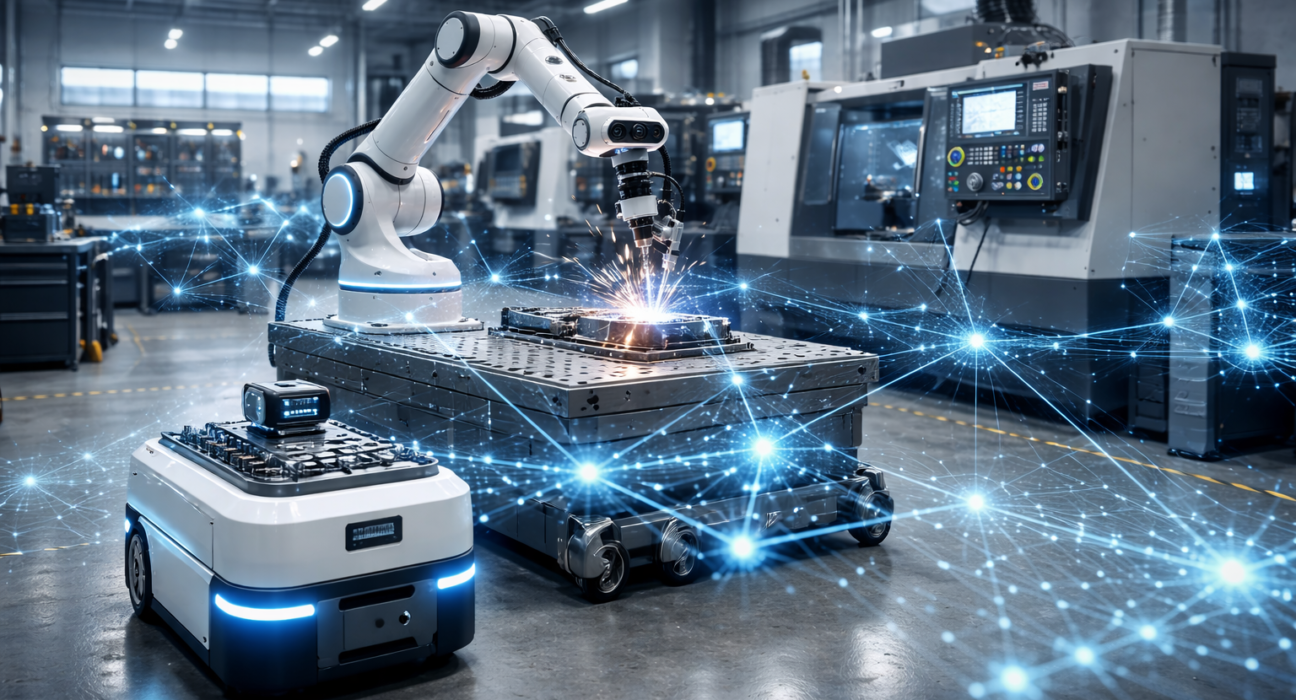
As of March 2026, the robotics industry has reached a critical inflection point. For decades, the primary challenge in creating truly autonomous machines wasn’t just the mechanics—it was the “brain.” Specifically, the time it takes for a robot to perceive its environment, process that data, and execute a physical response. This delay, known as latency, is the difference between a drone smoothly avoiding a tree and a catastrophic collision.
Edge AI in robotics refers to the deployment of machine learning models directly on the robot’s local hardware rather than relying on a distant cloud server. By moving the “thinking” to the “edge” of the network, robots can achieve sub-millisecond response times, ensuring safety, reliability, and operational efficiency.
Key Takeaways
- Latency is the Enemy: Cloud-based processing introduces round-trip delays (often 50ms to 200ms) that are unacceptable for high-speed robotic tasks.
- Local Inference: Processing data on-device allows for “reflex-like” responses, crucial for human-robot collaboration (cobots).
- Bandwidth Efficiency: Edge AI reduces the need to stream massive amounts of high-definition sensor data over the air, saving costs and power.
- Privacy and Security: Sensitive data (like video feeds in a private home or factory) stays on the device, minimizing cyber vulnerabilities.
Who This Is For
This guide is designed for robotics engineers, system architects, industrial automation managers, and tech-forward executives. Whether you are building the next generation of warehouse AMRs (Autonomous Mobile Robots) or integrating AI into surgical tools, understanding the interplay between Edge hardware and low-latency software is now a mandatory skill set.
The Latency Barrier: Why the Cloud Isn’t Enough
To understand why Edge AI is transformative, we must first look at the traditional “Cloud Robotics” model. In a cloud-centric setup, a robot captures data via cameras or LiDAR, compresses it, sends it via Wi-Fi or 5G to a data center, waits for a neural network to process it, and then receives a command back.
The Physics of Delay
Even at the speed of light, data transmission faces several hurdles:
- Network Jitter: Variability in packet arrival times can cause “stuttering” in a robot’s movement.
- Bandwidth Congestion: If a factory has 500 robots all streaming 4K video to the cloud, the local network will inevitably choke.
- The “Kill Switch” Problem: If the internet connection drops, a cloud-dependent robot becomes a “brick”—or worse, a safety hazard.
In high-stakes environments—such as an autonomous forklift operating in a busy distribution center—a 100ms delay can represent several feet of travel. By the time the cloud says “Stop,” the accident has already happened. Edge AI solves this by reducing the decision loop to under 10ms, which is faster than the human blink of an eye.
Core Components of Edge AI in Robotics
Solving the latency barrier requires a synergy between specialized hardware and optimized software. We are no longer using general-purpose CPUs for these tasks; we are using AI-native silicon.
1. Specialized Hardware Accelerators
The rise of System-on-Chip (SoC) designs has brought server-grade AI power to the palm of your hand.
- NVIDIA Jetson Series: As of 2026, modules like the Jetson Thor and Orin provide hundreds of Tera Operations Per Second (TOPS), specifically designed for autonomous machines.
- TPUs and NPUs: Google’s Tensor Processing Units and generic Neural Processing Units (NPUs) are optimized for the matrix multiplication that defines deep learning.
- FPGAs (Field Programmable Gate Arrays): Companies like AMD/Xilinx offer FPGAs that allow engineers to “wire” the AI directly into the hardware logic, offering the lowest possible latency for deterministic tasks.
2. Sensor Fusion at the Edge
A robot rarely relies on a single camera. It uses a combination of LiDAR (Light Detection and Ranging), ultrasonic sensors, IMUs (Inertial Measurement Units), and stereo cameras.
Sensor fusion is the process of combining these disparate data streams to create a single, coherent “world model.” Doing this at the edge is vital because the raw data volume from a single LiDAR sensor can exceed 100 Mbps.
3. Optimized Software Stacks
Running a massive Large Language Model (LLM) or a complex vision transformer on a robot requires optimization.
- Quantization: Converting 32-bit floating-point weights to 8-bit integers, reducing model size by 4x with minimal accuracy loss.
- Pruning: Removing redundant neurons in a network that don’t contribute to the final output.
- Knowledge Distillation: Training a small “student” model to mimic a giant “teacher” model.
Real-World Applications: Where Edge AI is Mandatory
Autonomous Mobile Robots (AMRs) in Warehousing
In massive fulfillment centers, AMRs must navigate dynamic environments where humans, other robots, and spilled items appear unexpectedly. Edge AI allows these robots to perform SLAM (Simultaneous Localization and Mapping) locally. Instead of asking a server “Where am I?”, the robot calculates its position 60 times per second using onboard visual odometry.
Collaborative Robots (Cobots)
Cobots work alongside humans on assembly lines. Safety is the primary concern. If a human arm reaches into the path of a moving robotic welder, the robot must stop instantly. Edge-based computer vision monitors “safety zones” in real-time. Because the processing is local, the robot can transition from “Full Speed” to “Safety Stop” in milliseconds, meeting strict ISO safety standards.
Agricultural Drones and Ag-Bots
In rural areas, 5G or Wi-Fi connectivity is often non-existent. Edge AI allows agricultural drones to perform real-time crop analysis—identifying pests or moisture stress—and adjust their flight path or spray patterns without needing a link to the outside world.
Medical and Surgical Robotics
In telesurgery or AI-assisted surgery, “haptic feedback” latency is the difference between a successful procedure and a nicked artery. Edge AI processes the tactile and visual data at the bedside, ensuring the surgeon’s movements and the robot’s actions are perfectly synchronized.
Overcoming the “Power vs. Performance” Trade-off
One of the biggest hurdles in Edge AI for robotics is the SWaP-C constraint: Size, Weight, Power, and Cost.
| Feature | Cloud AI | Edge AI |
| Compute Power | Virtually unlimited | Limited by thermal/battery |
| Latency | High (Variable) | Low (Deterministic) |
| Power Consumption | Not a factor for the robot | Critical (impacts battery life) |
| Connectivity | Required | Optional/Intermittent |
| Cost | Operational (OpEx) | Hardware (CapEx) |
To maximize battery life, engineers utilize TinyML—a field of machine learning focused on running models on ultra-low-power microcontrollers (consuming milliwatts rather than watts). This is used for “always-on” tasks like keyword spotting or simple vibration analysis.
Technical Deep Dive: SLAM and Path Planning
To truly solve the latency barrier, we must look at how robots move. The most computationally expensive task for an autonomous robot is navigation.
The SLAM Challenge
Simultaneous Localization and Mapping (SLAM) requires a robot to build a map of an unknown environment while simultaneously keeping track of its location within that map.
- Feature Extraction: The AI identifies landmarks (corners, edges, distinct objects).
- Data Association: It matches these landmarks against previous frames.
- Optimization: It runs complex math (like Bundle Adjustment) to correct for drift.
By performing SLAM at the edge using GPU acceleration, robots can achieve “Loop Closure”—the moment the robot recognizes it has returned to a previously visited spot—without the lag that causes “ghosting” or map misalignment.
Path Planning with Reinforcement Learning (RL)
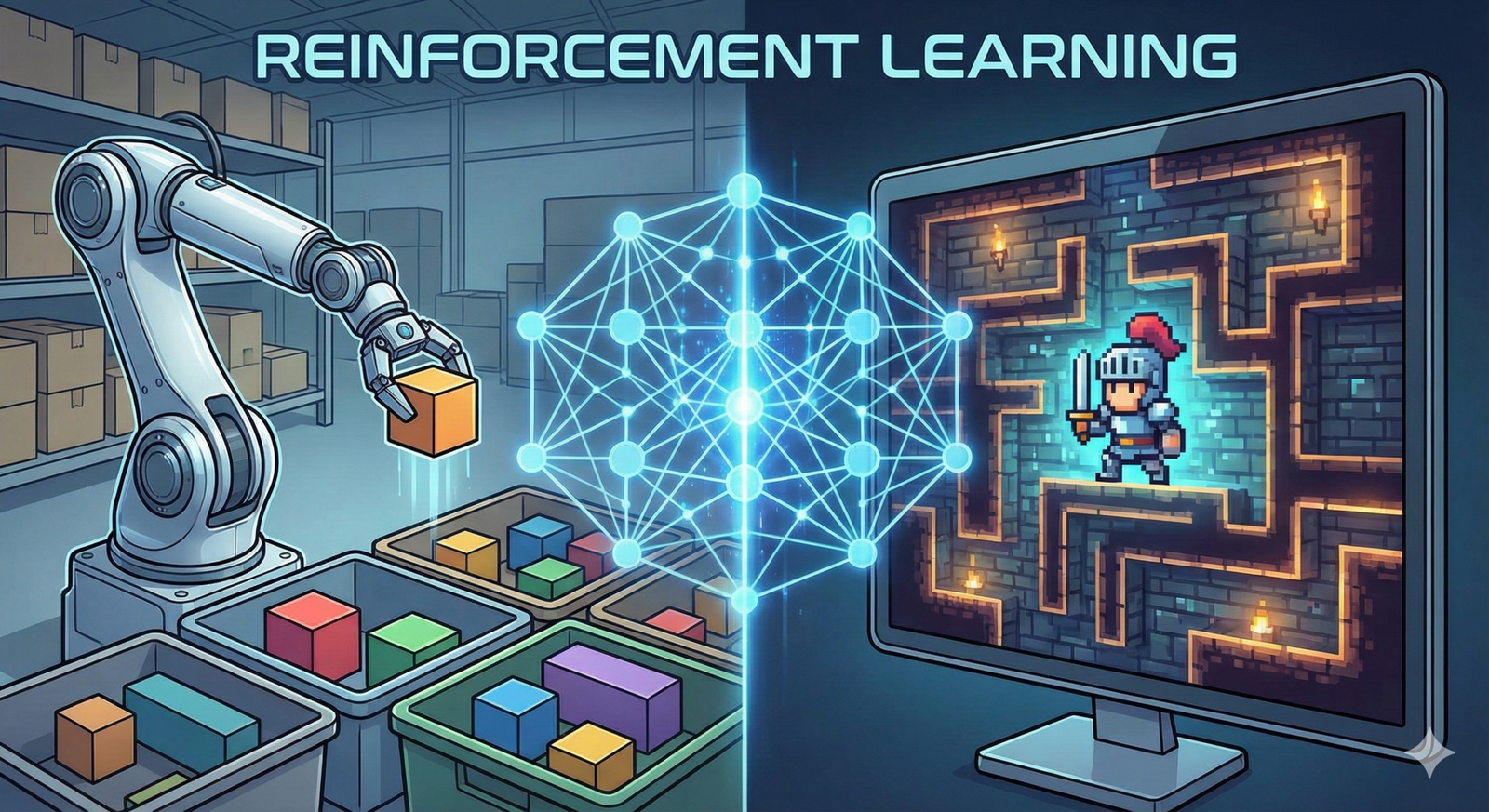
Modern robotics is moving away from hard-coded “if-then” logic toward Reinforcement Learning. An RL agent trained in simulation (Sim-to-Real) can be deployed at the edge. The robot “senses” the state of the world and chooses the best action (velocity, direction) based on its learned policy. Edge AI ensures this policy execution happens in real-time, allowing the robot to weave through a moving crowd as naturally as a human.
Common Mistakes in Edge AI Implementation
Even with the best hardware, projects often fail due to these common pitfalls:
1. Over-Provisioning Hardware
It is tempting to buy the most expensive NVIDIA module available. However, this leads to excessive heat and short battery life. The Goal: Match the model’s requirements to the hardware. If a simple YOLO (You Only Look Once) nano model works, don’t use a full Vision Transformer.
2. Ignoring Thermal Management
AI chips run hot. In a sealed robotic chassis, heat can cause “thermal throttling,” where the CPU slows down to protect itself. This suddenly increases latency, which can be disastrous during a high-speed maneuver. Always design for passive or active cooling from day one.
3. Data Siloing
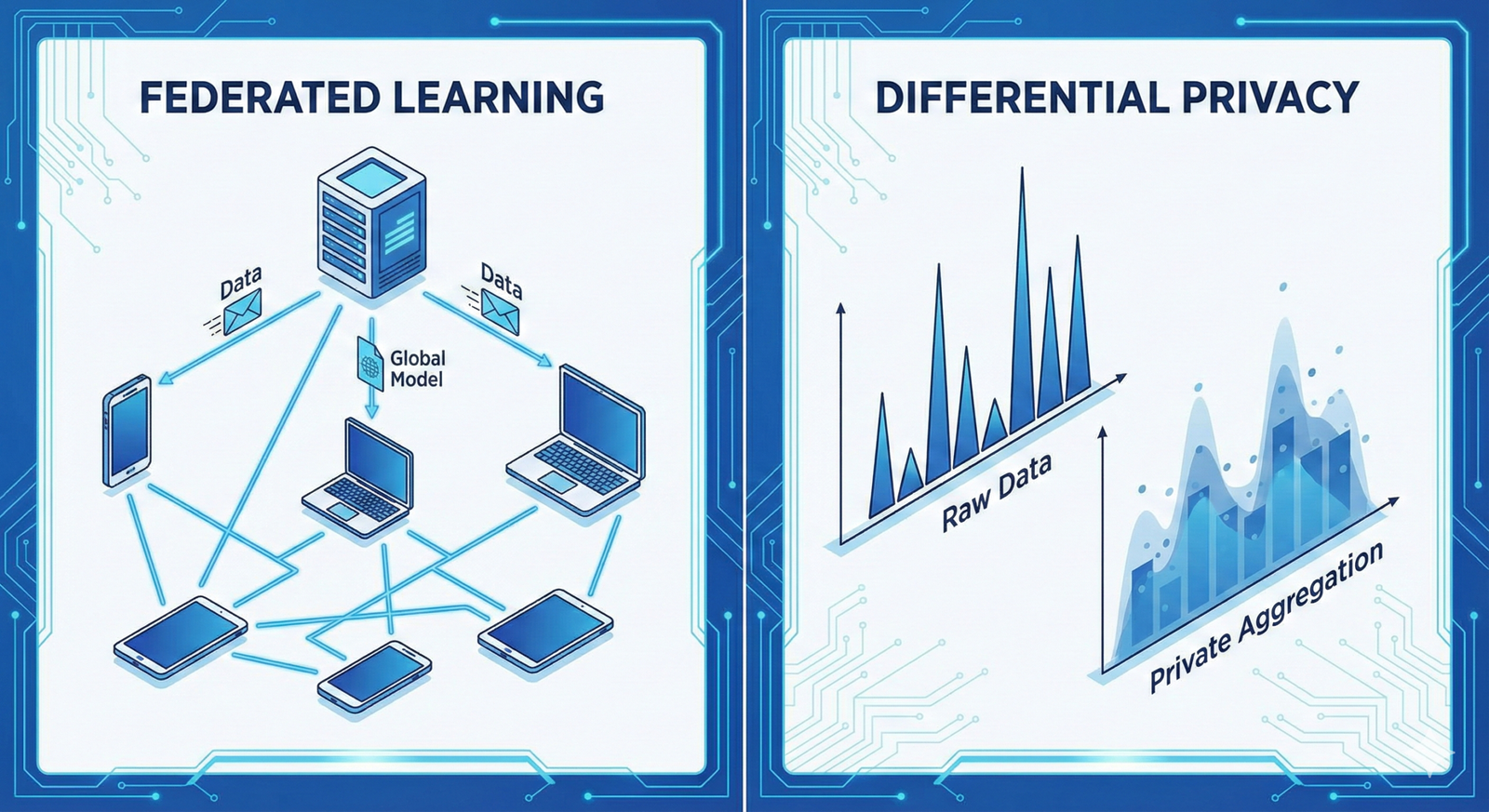
While Edge AI processes data locally, that data is still valuable for training. A common mistake is not having a “Data Flywheel.” You should have a system where “edge cases” (situations where the robot was uncertain) are uploaded to the cloud periodically to retrain the model.
4. Poor Model Quantization
Simply shrinking a model often breaks its accuracy. Engineers must use Quantization-Aware Training (QAT), where the model is trained knowing it will eventually be compressed to 8-bit.
The Role of 5G and Private Networks
While Edge AI prioritizes local processing, it doesn’t exist in a vacuum. The rollout of Private 5G networks in 2025 and 2026 has provided a “high-speed backplane” for Edge AI.
5G offers URLLC (Ultra-Reliable Low-Latency Communication). This allows for “Distributed Edge Computing,” where the robot does the immediate safety tasks, but a local “MEC” (Multi-access Edge Computing) server—located on the factory floor—handles the heavy-duty fleet coordination. This hybrid approach offers the best of both worlds.
Step-by-Step Guide: Deploying an Edge AI Model to a Robot
If you are starting a project today, follow this workflow to ensure low-latency performance:
Step 1: Model Selection and Training
Start with an architecture optimized for the edge, such as MobileNet, EfficientNet, or YOLOv8/v10. Train your model using high-quality, diverse data.
Step 2: Optimization
Use tools like TensorRT (NVIDIA), OpenVINO (Intel), or TFLite (Google) to compile your model for your specific hardware.
Step 3: Integration with ROS 2
The Robot Operating System (ROS 2) is the industry standard. Use the rclcpp (C++) client library instead of Python for time-critical nodes to avoid the overhead of Python’s Global Interpreter Lock (GIL).
Step 4: Hardware-in-the-Loop (HIL) Testing
Before putting the robot on the floor, test the AI in a simulator like NVIDIA Isaac Sim or Gazebo. Measure the “Inference Latency” (how long the AI takes) vs. the “End-to-End Latency” (how long the physical movement takes).
Safety and Ethics: The Human Element
As we solve the latency barrier, robots become more capable and, therefore, more potentially dangerous.
- Fail-Safe Redundancy: Even with Edge AI, there should be a hardware-level “heartbeat” monitor. If the AI software freezes, the hardware must default to a safe state.
- Bias in the Wild: If an Edge AI vision system is trained only on humans in high-visibility vests, it might fail to “see” a visitor in a dark coat. Continuous testing in real-world lighting and conditions is an ethical imperative.
Safety Disclaimer: Robotics involves physical movement and heavy machinery. Always implement physical E-Stops and adhere to local safety regulations (e.g., OSHA, CE, ISO 10218) when deploying AI-driven robots.
Conclusion: The Future of Latency-Free Robotics
Solving the latency barrier via Edge AI is not just a technical “nice-to-have”—it is the foundation of the next industrial revolution. By 2027, we expect to see “General Purpose” Edge AI models that can handle multiple tasks (vision, speech, and movement) simultaneously on a single chip.
The transition from “Automatic” (doing a pre-programmed task) to “Autonomous” (deciding how to do a task) is entirely dependent on the speed of the local loop. As hardware continues to shrink and AI models become more efficient, the line between human reaction time and robotic response will vanish.
Your Next Steps:
- Audit your current latency: Use profiling tools to see where your robot’s “thinking time” is being spent.
- Evaluate Edge Hardware: Look at the latest 2026 benchmarks for NVIDIA Jetson Thor or Intel Gaudi modules.
- Prototype a “Reflex” Layer: Try moving one critical safety feature (like obstacle detection) from your main controller to a dedicated Edge AI accelerator.
FAQs
Q: Does Edge AI mean I don’t need the cloud at all?
A: Not necessarily. You still need the cloud for “Fleet Management,” global map updates, and long-term data logging. Think of Edge AI as the “brain stem” (reflexes) and the Cloud as the “frontal cortex” (long-term planning).
Q: Is Edge AI more expensive than Cloud AI?
A: Initially, yes, because you have to buy the chips for every robot (CapEx). However, you save significantly on monthly cloud subscription fees and data transmission costs (OpEx) over the life of the robot.
Q: Can I run Large Language Models (LLMs) on a robot’s edge device?
A: As of 2026, yes! Using 4-bit quantization and specialized NPUs, “Small Language Models” (SLMs) can run locally, allowing robots to understand natural language commands without an internet connection.
Q: How do I handle updates for Edge AI?
A: Use OTA (Over-The-Air) update systems. You can push new model weights to an entire fleet of robots simultaneously, similar to how Tesla updates its vehicles’ Autopilot software.
Q: What is the biggest bottleneck remaining in Edge AI?
A: Currently, it is Energy Density. While AI chips are getting more efficient, running high-power inference 24/7 still drains batteries quickly. Improvements in solid-state batteries are the next big hurdle.
References
- NVIDIA (2025). “Jetson Platform for Autonomous Machines: Technical Specifications.” [Official Documentation]
- IEEE Robotics and Automation Society. “Low-Latency SLAM Algorithms for Real-Time Navigation.” [Academic Journal]
- Intel Newsroom (2026). “The Role of OpenVINO in Industrial Cobot Safety.” [Official Site]
- Stanford AI Lab. “Quantization-Aware Training for Edge Devices: A Comprehensive Review.” [Academic Paper]
- ROS.org. “ROS 2 Humble and Beyond: Real-Time Performance Benchmarks.” [Official Docs]
- Google Research. “TinyML: Machine Learning on Ultra-Low-Power Systems.” [Official Documentation]
- International Organization for Standardization (ISO). “ISO 10218-1:2024: Robots and Robotic Devices.” [Standardization Document]
- AWS for the Edge. “Greengrass and SageMaker Edge Manager for Fleet Control.” [Official Docs]