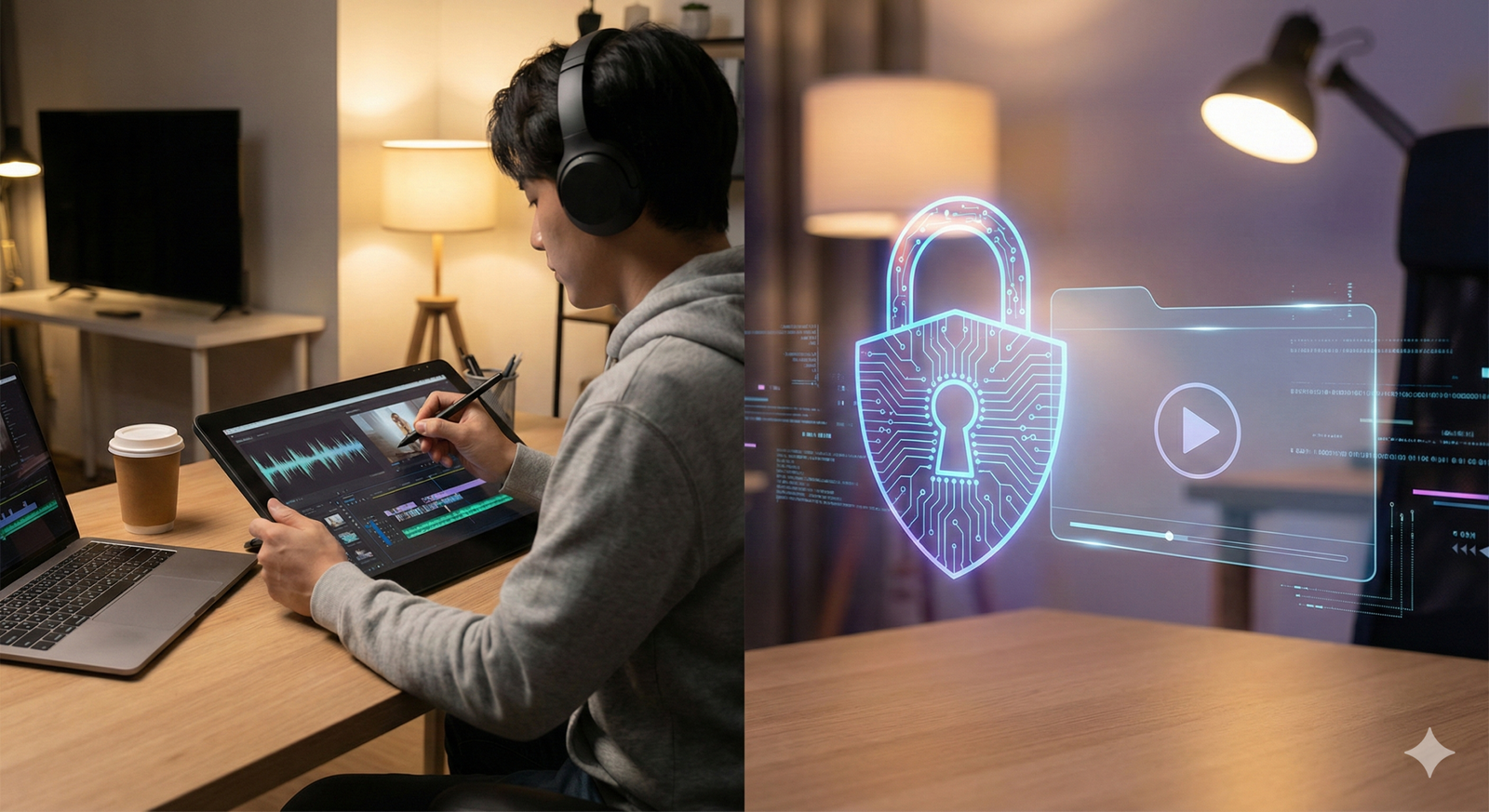
In the rapidly expanding creator economy, the ability to produce content is more accessible than ever, but the ability to control it has become exponentially harder. For photographers, software developers, musicians, and educators, the digital landscape is a double-edged sword: it offers instant global distribution, yet it simultaneously exposes intellectual property (IP) to rampant piracy, unauthorized redistribution, and uncompensated usage.
This guide explores the complex ecosystem of Digital Rights Management (DRM) and IP protection. It moves beyond simple definitions to provide a practical, strategic framework for creators and businesses looking to safeguard their digital assets without alienating their audience. Whether you are an independent artist trying to stop your art from being used in AI training sets or a corporation securing enterprise software, understanding the nuance of digital protection is critical to sustainable monetization.
In this guide, digital rights management (DRM) refers to the technological access control measures used to restrict the use of proprietary hardware and copyrighted works. Intellectual Property (IP) protection refers to the broader legal and strategic framework used to secure ownership rights.
Key takeaways
- DRM is a spectrum: It ranges from “soft” protections like metadata and watermarks to “hard” protections like encryption and hardware dongles.
- Legal backing is essential: Technology alone cannot stop piracy; it must be paired with copyright registration and active enforcement strategies like DMCA takedowns.
- User experience matters: Aggressive DRM can alienate paying customers. The most successful strategies balance security with ease of use.
- Watermarking is evolving: Forensic watermarking allows creators to track the source of leaks even after files have been stripped of metadata.
- AI presents new challenges: New tools are emerging specifically to protect creator IP from being scraped for large language model (LLM) training without consent.
Who this is for (and who it isn’t)
This guide is for:
- Content Creators: YouTubers, course creators, and influencers selling digital products who want to prevent unauthorized sharing.
- Software Developers: Teams looking to license their applications and prevent cracking.
- Enterprise Leaders: Executives needing to secure internal documents and proprietary data.
- Musicians and Artists: Creatives seeking to protect their audio and visual works from theft and uncredited use.
This guide is not for:
- Casual Social Media Users: If you are strictly posting for engagement without a monetization component attached to the asset itself, enterprise-grade DRM is likely overkill.
- Open Source Advocates: While we discuss licensing, this guide focuses primarily on protecting proprietary assets rather than copyleft or open-source distribution models.
1. Understanding the fundamentals of Digital Rights Management
Digital Rights Management is often misunderstood as a single piece of software. in reality, it is a systematic approach to copyright protection for digital media. The purpose of DRM is to prevent unauthorized redistribution of digital media and restrict the ways consumers can copy content they’ve purchased.
The core mechanism: How DRM works
At a technical level, DRM generally functions through a two-step process involving encryption and licensing.
- Content Encryption: The digital file (video, audio, ebook, or software) is encrypted using a cryptographic key. Without this key, the file is essentially a scramble of meaningless data. It cannot be played, read, or executed.
- License Management: When a user attempts to access the content, the DRM client (embedded in a browser, media player, or e-reader) requests a license from a DRM server. This server verifies the user’s identity and entitlements (e.g., “Did this user pay for the premium tier?”).
- Decryption and Playback: If the verification is successful, the server issues a decryption key to the client. The content is decrypted in real-time for playback.Crucially, the user never actually “possesses” the decrypted file in a way that allows them to easily copy it; the decryption happens within a secure environment in the software or hardware.
The difference between Copyright and DRM
It is vital to distinguish between legal rights and technological enforcement.
- Copyright is a legal designation. As of January 2026, in most jurisdictions (including the US and EU), copyright is automatic the moment a work is fixed in a tangible medium of expression. It gives you the legal right to sue someone for infringement, but it does not physically stop them from stealing your work.
- DRM is the technological fence. It effectively enforces the copyright by making it difficult or impossible to perform actions that the copyright holder has not authorized, such as printing an ebook or installing software on more than one computer.
Why DRM is controversial
While necessary for protecting revenue, DRM has a contentious history. Critics argue that it restricts legitimate usage (fair use), such as making personal backups or accessing content on different devices. “Always-on” DRM, which requires a constant internet connection for single-player games or offline software, frequently causes backlash when servers go down or users have unstable internet. A successful IP protection strategy must navigate these consumer sentiments carefully.
2. Strategies for protecting different types of content
The method of protection must match the medium. A strategy that works for a $60 video game will not work for a $0.99 stock photo.
Video and streaming content
Video piracy is a multi-billion dollar issue. For creators selling courses or entertainment, simple password protection is rarely enough.
- Encrypted Media Extensions (EME): Modern web browsers support EME, which allows for communication with DRM systems without plugins. This is the standard used by Netflix and Disney+.
- Dynamic Watermarking: This involves overlaying the viewer’s email address, IP address, or ID semi-transparently over the video. If the video is screen-recorded and leaked, the leaker is instantly identifiable. This is a powerful psychological deterrent.
- HLS/DASH Encryption: Breaking video files into small chunks (HLS for Apple, DASH for others) and encrypting each chunk individually makes it significantly harder to download a single “source file.”
eBooks and PDF documents
For authors and consultants selling high-value reports or books, redistribution can destroy profit margins.
- Social DRM (Watermarking): Instead of locking the file (which often frustrates users who want to move books between Kindle and iPad), Social DRM stamps personal information (name, email) onto the pages of the ebook. It allows the user flexibility but discourages public sharing.
- Proprietary Readers: Keeping content inside a “walled garden” app prevents the user from ever accessing the underlying PDF or EPUB file.
- Expiry and Revocation: For subscription-based documents, DRM can ensure a file becomes unreadable after a subscription lapses or a specific date passes.
Software and applications
Software piracy ranges from casual users sharing serial keys to sophisticated “cracking” groups reverse-engineering code.
- Node-Locking: This ties a license to a specific machine’s hardware ID (fingerprint). The software will only run if it detects the correct CPU, motherboard, or network card serial numbers.
- Obfuscation: This technique scrambles the source code so that it is difficult for humans (and reverse-engineering tools) to understand, making it harder to strip out licensing checks.
- Cloud-Based Execution: Moving critical logic to the cloud ensures that the full program never resides entirely on the user’s machine. This is the most secure method but requires internet connectivity.
Digital Images and Art
Visual artists face the challenge of their work being saved and reposted instantly.
- Visual Watermarks: The traditional logo overlay. While effective, it can detract from the art.
- Metadata Injection: Embedding copyright info into the EXIF data. However, many social media platforms strip this data to save space.
- Glaze and Nightshade: These are newer adversarial tools designed to protect art style. They alter pixels in ways invisible to the human eye but confusing to AI models, preventing the style from being successfully mimicked by generative AI.
3. The role of Digital Watermarking and Forensic technologies
While encryption stops access, watermarking tracks leaks. This distinction is crucial for a comprehensive IP strategy.
Visible vs. Invisible Watermarking
- Visible Watermarking: This is a deterrent. It tells the user, “This is owned property.” It is useful for previews, stock photography, and review copies.
- Invisible (Forensic) Watermarking: This embeds unique data into the file’s frequency domain or pixel structure. It is imperceptible to the human user but survives compression, resizing, and format changes.
How Forensic Watermarking works in practice
Imagine a film studio sends a preview copy of a movie to ten different critics. Each critic receives a file that looks identical. However, Critic A’s file has a unique, invisible pattern embedded in the audio and video frames. If a pirate copy appears on a torrent site, the studio can analyze the file, detect the pattern, and identify that the leak originated from Critic A.
This technology is becoming accessible to smaller creators. Services now offer “transactional watermarking” for PDF downloads and video streams, allowing course creators to ban students who leak content to “group buy” sites.
4. Legal frameworks: DMCA, Copyright, and International Law
Technology is the first line of defense; the law is the second. Understanding your legal toolkit is mandatory for effective IP protection.
The Digital Millennium Copyright Act (DMCA)
Enacted in the US but influential globally, the DMCA provides a mechanism for copyright holders to request the removal of infringing content.
- Safe Harbor: Platforms like YouTube and Instagram are protected from liability for what users post, provided they act quickly to remove infringing content when notified.
- Takedown Notices: A formal request sent to a platform host (ISP, web host, search engine) to remove stolen content. To be valid, it must identify the copyrighted work, the infringing material, and a statement of good faith.
- Counter-Notices: If a user believes their content was removed in error (e.g., fair use), they can file a counter-notice. If the original accuser does not file a lawsuit within 14 business days, the content is restored.
International considerations
The internet has no borders, but copyright laws do.
- The Berne Convention: An international agreement governing copyright, requiring member countries to recognize the copyrights held by citizens of all other signatory countries. This means your US copyright is generally valid in France, Japan, and Brazil.
- GDPR and DRM: In the European Union, tracking user behavior for DRM purposes must comply with GDPR privacy regulations. You generally need to be transparent about what data your anti-piracy tools are collecting.
The “Fair Use” Doctrine
One of the most common pitfalls for creators enforcing rights is misunderstanding fair use. Fair use allows for the limited use of copyrighted material without permission for purposes such as criticism, comment, news reporting, teaching, and research.
Factors determining fair use include:
- The purpose and character of the use (commercial vs. nonprofit/educational).
- The nature of the copyrighted work.
- The amount and substantiality of the portion used.
- The effect of the use upon the potential market for the original work.
Warning: Automated DRM bots often cannot distinguish between piracy and fair use, leading to PR disasters where legitimate reviews are taken down.
5. Creator-led solutions: token-gating and Web3
The rise of blockchain technology has introduced a new paradigm for digital rights: ownership through tokens. While the “hype” cycle of NFTs has fluctuated, the underlying utility for access control remains valid.
What is Token-Gating?
Token-gating restricts access to content (Discord channels, videos, articles, merchandise) to holders of a specific crypto token or NFT.
- Decentralized Verification: Unlike a traditional login where a server checks a password, token-gating checks the user’s public wallet address.
- Transferable Access: Because the “key” (the token) can be sold or traded, creators can create secondary markets for access rights.
- Provenance: Blockchain provides an immutable ledger of who owns a piece of digital art or media at any given time, solving the “right click save” ambiguity regarding ownership, even if it doesn’t solve the viewing aspect.
Smart Contracts for Royalties
Smart contracts can be programmed to automatically pay a percentage of secondary sales back to the original creator. While this is currently platform-dependent (and enforcement varies across marketplaces), it represents a significant shift in how creators capture value from the ongoing circulation of their IP.
6. Practical steps to protect your IP (A Checklist)
If you are launching a digital product or protecting a creative portfolio, follow this workflow to secure your assets.
Phase 1: Prevention (Before publishing)
- Register your Copyright: In the US, registration with the Copyright Office is a prerequisite for filing an infringement lawsuit and enables you to claim statutory damages.
- Apply Metadata: Ensure your name, contact info, and copyright notice are embedded in file properties.
- Choose the right License: Decide if you want “All Rights Reserved” or a Creative Commons license (e.g., CC-BY-NC for non-commercial use).
- Watermark Visuals: Apply a tasteful but difficult-to-crop visual watermark to preview images.
Phase 2: Technical Enforcement (Distribution)
- Use Secure Platforms: Choose delivery platforms that have built-in DRM (e.g., Gumroad for PDFs, Vimeo OTT for video).
- Enable Two-Factor Authentication (2FA): Protect the accounts where your assets are stored. High-profile hacks often occur because the creator’s email was compromised, not the DRM system.
- Limit Downloads: If possible, offer “stream-only” access rather than file downloads.
Phase 3: Monitoring and Action (Post-publication)
- Set up Alerts: Use Google Alerts or specialized services (like Red Points or Copytrack) to monitor the web for your brand name and file titles.
- Reverse Image Search: Periodically check where your visual assets are appearing.
- Execute Takedowns: When piracy is found, send DMCA notices immediately. Start with the site host; if they ignore you, go to the search engines (Google) to de-index the stolen pages.
7. Common mistakes and pitfalls
Even well-intentioned protection strategies can backfire. Here are the most common errors creators make regarding DRM.
The “Punishing the Payer” trap
The most significant risk of heavy-handed DRM is that it inconveniences the paying customer more than the pirate.
- Example: A video game that stutters because the DRM is checking the server every 10 seconds, while the pirated version runs smoothly because the DRM was stripped out.
- Solution: Ensure your DRM is lightweight and fails gracefully. If the internet cuts out, the user should be allowed a grace period, not an immediate boot.
Ignoring “The Analog Hole”
No digital protection can stop the “analog hole”—a user taking a photo of their screen with a phone or recording audio with a microphone.
- Reality Check: Accept that 100% security is impossible. The goal of DRM is not to stop the most determined hacker, but to stop casual sharing (keeping honest people honest).
Over-reliance on “Poor Man’s Copyright”
There is a myth that mailing a copy of your work to yourself (in a sealed envelope) proves copyright. In modern legal battles, this carries very little weight compared to official government registration. Do not rely on it for high-value assets.
8. The cost of protection: is DRM worth it?
Implementing DRM is not free. It involves financial costs (software licensing) and potential friction costs (customer support for login issues).
When to skip DRM:
- You are building a brand and want maximum virality.
- The content is low-cost or a “lead magnet.”
- The relationship with your audience is based on high trust and patronage (e.g., Patreon supporters).
When to enforce DRM:
- The content is high-ticket (expensive certifications, proprietary software).
- The content contains sensitive or confidential data.
- Piracy is actively eroding your primary revenue stream.
Table: Comparing DRM Approaches
| Approach | Security Level | User Friction | Cost | Best For |
| Social DRM | Low | Low | Low | eBooks, PDFs, independent authors |
| Password Protection | Low-Medium | Medium | Low | Low-ticket items, casual sharing |
| Token-Gating | Medium | Medium-High | Variable | Web3 communities, exclusive clubs |
| Digital Watermarking | High (Tracing) | None | Medium | Pre-release movies, high-value documents |
| Hardware/Server DRM | Very High | High | High | Enterprise software, AAA games |
9. Future trends: AI and the evolution of IP
The landscape of digital rights is shifting tectonically due to Artificial Intelligence.
The AI Scraper Wars
As of early 2026, the biggest threat to many creators is not human piracy, but automated AI scraping. Large models ingest billions of images and texts to “learn,” often without compensating the original creators.
- C2PA and Content Credentials: Major tech firms are adopting standards like C2PA (Coalition for Content Provenance and Authenticity). This creates a tamper-evident history for digital files, proving who created it and whether it was AI-generated or human-made.
- Opt-Out Protocols: Technical standards are being developed to allow creators to flag their content as “Do Not Train,” similar to a robots.txt file for search engines, though enforcement remains a legal gray area.
Decentralized Dispute Resolution
Blockchain protocols are experimenting with decentralized courts (like Kleros) to resolve IP disputes faster and cheaper than traditional legal systems. While still nascent, this could offer a lifeline for creators who cannot afford expensive IP lawyers.
Conclusion
Protecting digital rights is no longer just a concern for Hollywood studios; it is a fundamental requirement for anyone participating in the modern creator economy. The goal of Digital Rights Management is not to create a fortress that no one can enter, but to build a sustainable ecosystem where value flows back to the originator.
By combining reasonable technological barriers (like watermarking and lightweight encryption) with robust legal understanding (copyright registration and DMCA enforcement), creators can mitigate theft while maintaining a positive relationship with their audience.
The future of IP protection lies in provenance—proving who made something—rather than just restriction. As tools like C2PA and blockchain verification mature, we are moving toward a web where credit and compensation are baked into the file itself, ensuring that creators can thrive even in an environment of infinite reproducibility.
Next steps
- Audit your assets: Identify your highest-value digital products.
- Check your licenses: Ensure your terms of service explicitly state what users can and cannot do.
- Test your user experience: Try to buy and access your own product. If the security makes it hard for you to open it, it’s too strict.
FAQs
1. Does copyright apply if I don’t register my work?
Yes, copyright protection is automatic the moment the work is created and fixed in a tangible form. However, registering your work with your country’s copyright office usually provides additional benefits, such as the ability to sue for statutory damages and legal fees in federal court.
2. Can I use DRM on my self-published ebook?
Yes, major platforms like Amazon KDP offer the option to apply DRM to your ebook during the upload process. However, many independent authors choose to leave DRM off to make it easier for readers to use the book on different devices, relying on the honor system instead.
3. What is the difference between a watermark and a digital fingerprint?
A watermark is often visible (like a logo), while a digital fingerprint is usually invisible data embedded in the file. Fingerprinting analyzes the audio or video characteristics to identify the content (like Shazam identifying a song), whereas watermarking embeds specific tracking data into that content.
4. Is it illegal to bypass DRM?
In many jurisdictions, including under the US DMCA, it is illegal to circumvent technological measures that control access to copyrighted works, even if you want to use the content for fair use purposes. There are narrow exemptions, but generally, breaking the “digital lock” is a violation of the law.
5. How much does DRM software cost for a small business?
Costs vary wildly. Simple plugin-based protection for WordPress sites might cost $50–$100 per year. Enterprise-grade DRM solutions using Widevine or PlayReady often charge based on the volume of licenses issued, which can run into thousands of dollars per month depending on usage.
6. Does DRM stop screen recording?
Most browser-based DRM cannot fully stop screen recording software, although some advanced implementations can cause the recorded video to appear as a black screen (often seen when trying to screenshot Netflix on a phone). Watermarking is the backup defense here, as it marks the recording if it happens.
7. What is “fair use” regarding digital assets?
Fair use is a legal defense that allows limited use of copyrighted material without permission for purposes such as criticism, news reporting, or education. It is determined on a case-by-case basis. Importantly, “giving credit” to the creator does not automatically make usage fair use.
8. Can I copyright an idea?
No. Copyright protects the expression of an idea, not the idea itself. You cannot copyright the idea of “a story about a wizard school,” but you can copyright the specific book Harry Potter.
References
- U.S. Copyright Office. (n.d.). Copyright Basics and FAQ. Copyright.gov. https://www.copyright.gov/
- Electronic Frontier Foundation (EFF). (n.d.). Digital Rights Management (DRM). EFF.org. https://www.eff.org/issues/drm
- WIPO (World Intellectual Property Organization). (2024). Understanding Copyright and Related Rights. Wipo.int. https://www.wipo.int/copyright/en/
- Coalition for Content Provenance and Authenticity (C2PA). (2025). Technical Specifications for Content Credentials. C2pa.org. https://c2pa.org/
- Widevine Technologies (Google). (n.d.). Widevine DRM Architecture. Widevine.com. https://www.widevine.com/
- Digimarc. (2024). The Science of Digital Watermarking. Digimarc.com. https://www.digimarc.com/
- European Commission. (2024). Intellectual Property Rights and the GDPR. Europa.eu. https://europa.eu/
- Stanford University Libraries. (n.d.). Copyright & Fair Use: Measuring Fair Use. Stanford.edu. https://fairuse.stanford.edu/overview/fair-use/