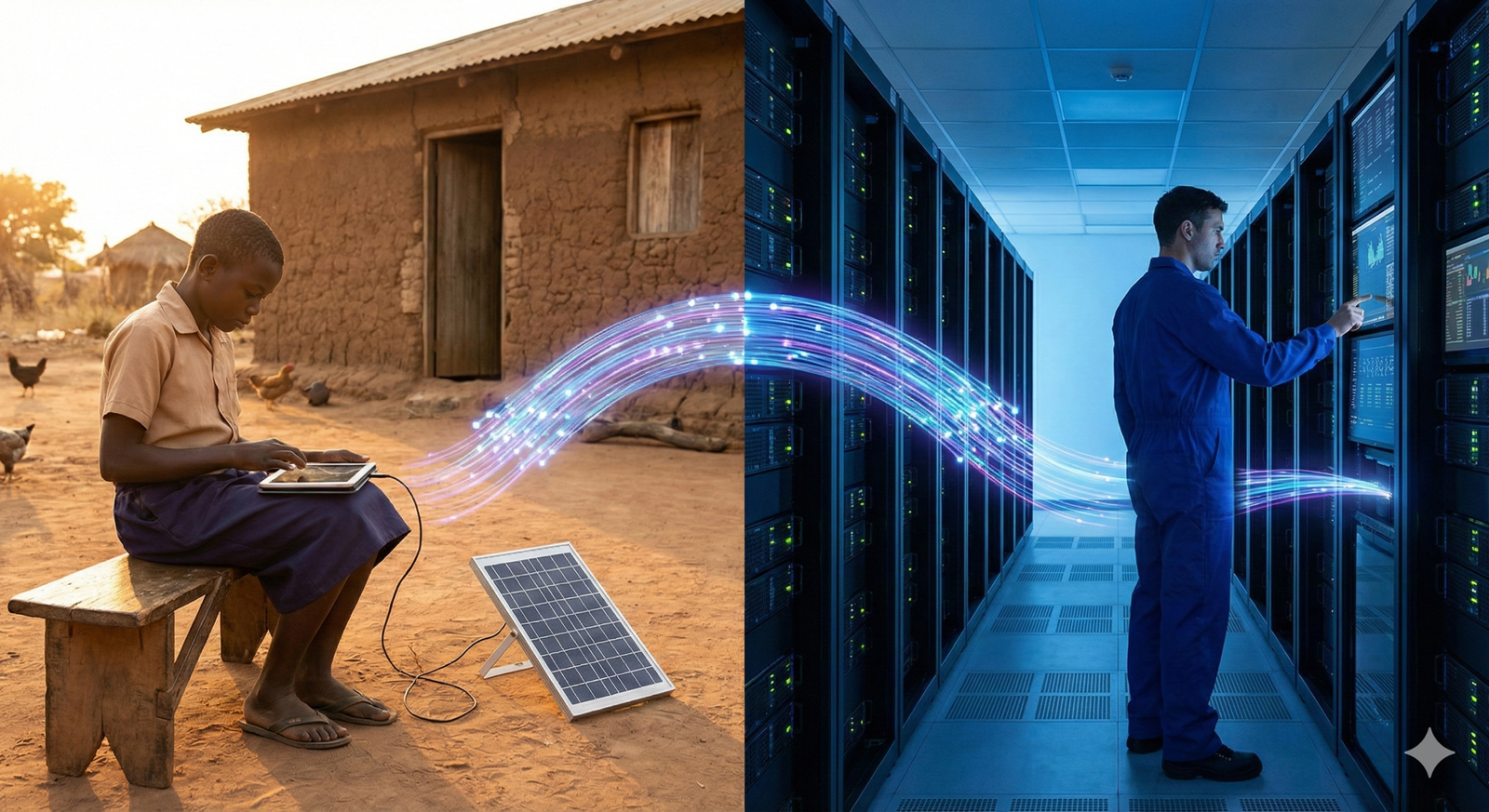
In an era where the internet has evolved from a luxury to a fundamental utility—akin to water or electricity—the ability to connect is no longer just about convenience; it is a prerequisite for participation in modern society. Yet, as of 2026, a significant portion of the global population remains unconnected or under-connected. This chasm, known as the digital divide, is not merely a technological issue; it is a complex socio-economic crisis that deepens existing inequalities in education, healthcare, and economic mobility.
Digital inclusion is the comprehensive strategy employed to dismantle this divide. It goes beyond simply laying fiber-optic cables or launching satellites. True digital inclusion ensures that all individuals and communities, including the most disadvantaged, have access to and use of Information and Communication Technologies (ICTs). This encompasses five critical elements: affordable, robust broadband internet service; internet-enabled devices that meet the needs of the user; access to digital literacy training; quality technical support; and applications and online content designed to enable and encourage self-sufficiency, participation, and collaboration.
In this extensive guide, we will unpack the layers of digital inclusion, moving past surface-level definitions to explore the structural barriers, the innovative technologies closing the gap, and the human-centric skills required to navigate a digitized world. We will look at what effective inclusion looks like in practice, the economic imperative behind it, and why “access” is only the first step in a much longer journey toward digital equity.
Key Takeaways
- Access vs. Adoption: Availability of a signal does not equal connection; affordability and skills are equally high barriers.
- The Usage Gap: More people live within range of a mobile broadband network but do not use it (the usage gap) than those who live in areas without coverage (the coverage gap).
- Economic Multiplier: Increasing internet penetration has a direct, positive correlation with GDP growth, particularly in developing economies.
- Multifaceted Solutions: There is no “silver bullet.” Solutions range from Low Earth Orbit (LEO) satellites to community-owned networks and policy reform.
- Digital Literacy: Providing hardware without training leads to abandonment; skills development is the sustainability engine of digital inclusion.
Defining the Scope: What is Digital Inclusion?
To effectively bridge the gap, we must first define the parameters of the problem. Digital inclusion is often conflated with “internet access,” but the two are distinct.
In this guide, “digital inclusion” refers to the holistic ecosystem required for a person to fully benefit from the digital age.
This includes:
- Infrastructure: The physical hardware (towers, cables, satellites) that delivers the signal.
- Affordability: The cost of data and devices relative to average income.
- Digital Skills: The cognitive ability to navigate tools, evaluate information, and create content.
- Relevance: The availability of content in local languages and services that address local needs.
- Safety and Security: The ability to navigate the online world without falling victim to fraud, harassment, or data theft.
Out of scope: While we will touch on future technologies like the metaverse or advanced AI, this guide focuses on the fundamental connectivity and usability required for essential participation (education, banking, government services) rather than high-end entertainment or niche tech adoption.
The State of Global Connectivity
As of January 2026, the global connectivity landscape presents a paradox of progress and stagnation. While the number of internet users continues to climb, the rate of growth has slowed in some regions, and the nature of the “divide” has shifted.
The Coverage Gap vs. The Usage Gap
Historically, the primary concern was the coverage gap—the number of people living in areas where there was simply no physical infrastructure to connect to the internet. Through massive investments in mobile infrastructure and satellite technology, this gap has narrowed significantly. Today, roughly 95% of the global population lives within range of a mobile broadband signal (at least 4G).
The more pressing challenge is the usage gap. This refers to the billions of people who live in areas covered by mobile broadband networks but are not using the internet. The barriers here are not cables and towers; they are cost, lack of a smartphone, low literacy, and a lack of relevant local content.
Regional and Demographic Disparities
The digital divide is not distributed evenly. It fissures along specific demographic lines:
- Geography: Rural and remote areas lag significantly behind urban centers due to the high cost of infrastructure deployment and lower population density.
- Gender: In many low- and middle-income countries (LMICs), women are significantly less likely than men to own a mobile phone or use mobile internet. This gender gap suppresses economic potential and restricts access to health information.
- Age: Older adults face higher barriers to adoption, often due to a lack of digital literacy and concerns over security, leading to isolation in an increasingly digital-first world.
- Disability: A lack of accessible web design and assistive technologies alienates over a billion people with disabilities globally.
The Three Pillars of Digital Barriers
To solve the problem, we must dissect the barriers preventing inclusion. These generally fall into three pillars: Access, Affordability, and Ability.
1. Access: The Infrastructure Challenge
While mobile coverage is widespread, “meaningful connectivity” is not. A spotty 3G connection that drops when the wind blows is not sufficient for a Zoom call, online learning, or telemedicine.
- The “Last Mile” Problem: Connecting the backbone (major fiber lines) to individual homes or villages is the most expensive part of the network. In mountainous or island regions, laying fiber is cost-prohibitive.
- Energy Poverty: You cannot have digital inclusion without electrical inclusion. In many parts of Sub-Saharan Africa and South Asia, the lack of reliable electricity makes charging devices or powering routers impossible.
2. Affordability: The Cost of Connection
Affordability is calculated based on the cost of a device and a data plan relative to monthly income. The Alliance for Affordable Internet (A4AI) suggests that 1GB of mobile broadband data should cost no more than 2% of the average monthly income. In many nations, it costs upwards of 10% or even 20%, forcing families to choose between food and connectivity.
- Device Cost: For many, the smartphone is the primary computing device. However, the cost of an entry-level smartphone remains a significant hurdle. Taxes and import duties on electronic devices often exacerbate this issue.
3. Ability: The Literacy and Skills Gap
If you handed a smartphone with unlimited data to a person who cannot read or has never used a computer, they would not be “digitally included.” They would be digitally isolated with a paperweight.
- Basic Digital Skills: Being able to operate a device, connect to WiFi, and open a browser.
- Information Literacy: The ability to search for information and distinguish between credible sources and misinformation/scams.
- Creation Skills: The ability to use the internet not just to consume (watch videos) but to create (write documents, build businesses, code).
Strategies for Bridging the Gap: Infrastructure and Technology
Closing the digital divide requires a mix of cutting-edge technology and pragmatic infrastructure investment.
Low Earth Orbit (LEO) Satellites
As of 2026, LEO satellite constellations (like Starlink, OneWeb, and Kuiper) have radically altered the landscape for rural connectivity. Unlike traditional geostationary satellites that sit high above the equator (resulting in high latency), LEO satellites orbit much closer to Earth.
- Pros: They provide high-speed, low-latency internet to virtually anywhere on the planet without the need for trenching fiber through mountains or jungles.
- Cons: The initial cost of the receiver hardware (the dish) and the monthly subscription fees remain too high for the average rural household in developing nations without government subsidies.
Fixed Wireless Access (FWA) and 5G
5G is not just about faster downloads for phones; it serves as a viable alternative to fiber for home internet. Fixed Wireless Access uses 5G signals to beam internet from a tower to a receiver on a building. This eliminates the need to run cables to every door, significantly lowering the cost of “last mile” deployment in suburban and semi-rural areas.
Community Networks
When commercial providers find it unprofitable to connect a village, communities are increasingly taking matters into their own hands. Community networks are infrastructure built, managed, and used by local communities.
- How it works in practice: A village might pool resources to buy a high-capacity satellite link or a fiber backhaul connection, and then use low-cost off-the-shelf Wi-Fi routers to redistribute that signal across the village using mesh networking. This keeps money within the community and ensures the network serves local needs.
Refurbished Devices and Circular Economy
To address the device gap, a robust market for high-quality refurbished electronics is essential. Programs that take corporate fleet laptops, wipe them securely, refurbish them, and distribute them to schools or low-income families are proving to be one of the most cost-effective inclusion strategies.
The Policy Frontier: Regulation and Funding
Technology alone cannot solve a problem created by market economics. Policy plays a decisive role.
Universal Service Funds (USFs)
Many governments collect a small levy from telecommunications companies, which is pooled into a Universal Service Fund. Ideally, this money is used to subsidize infrastructure in unprofitable areas or to subsidize device costs for the poor.
- The Challenge: Historically, billions of dollars have sat unspent in these funds due to bureaucratic inefficiency or lack of clear disbursement mechanisms. Reforming USFs to be more agile and transparent is a key policy goal for 2026.
Spectrum Management
Governments control the radio frequencies (spectrum) used for wireless internet. By releasing more unlicensed spectrum (for Wi-Fi) or lowering the auction costs for cellular spectrum in exchange for rural coverage guarantees, regulators can directly influence the reach and cost of the internet.
Dig-Once Policies
Civil engineering (digging up roads) accounts for up to 80% of the cost of fiber deployment. “Dig-Once” policies mandate that whenever a road is built or repaired, fiber conduits must be laid simultaneously. This simple policy change dramatically reduces the cost of future broadband expansion.
Digital Literacy: The Human Element
Connectivity without capability is wasted potential. Digital literacy programs must be culturally relevant and accessible.
A Tiered Approach to Skills
- Functional Literacy: Understanding the UI, icons, and gestures (swiping, pinching).
- Safety First: Teaching users how to identify phishing, protect passwords, and understand privacy settings is crucial for first-time users who are often targets for fraud.
- Workforce Readiness: Training in office suites, digital communication tools, and basic troubleshooting to prepare users for the modern job market.
The “Train the Trainer” Model
The most successful literacy programs rely on local trust. Instead of bringing in outside experts, organizations train local librarians, teachers, and community leaders. These “digital navigators” then assist their community members. This approach overcomes language barriers and builds confidence among hesitant adopters.
The Economic and Social Impact of Inclusion
Why should governments and corporations invest billions in digital inclusion? Because the return on investment (ROI) is staggering.
Economic Growth
The World Bank has repeatedly demonstrated that a 10% increase in broadband penetration correlates with a 1-2% increase in GDP growth in developing economies. Digital inclusion allows small businesses to access global markets, farmers to access real-time weather and pricing data, and artisans to sell goods via e-commerce platforms.
Telehealth and Healthcare Equity
For rural populations, the nearest specialist might be a day’s travel away. Meaningful connectivity enables telehealth consultations, remote monitoring of chronic conditions, and the digital delivery of medical diagnostics. This does not just save time; it saves lives.
Education and Knowledge Access
The COVID-19 pandemic laid bare the “homework gap.” Students without internet access fell months or years behind. Digital inclusion ensures that access to the sum of human knowledge—Wikipedia, Khan Academy, Coursera—is available to a child in a remote village just as it is to a child in a metropolis.
Civic Engagement
Government services are moving online (e-government). From filing taxes to registering to vote or applying for benefits, digital exclusion increasingly means civic exclusion. Ensuring connectivity guarantees that citizens can exercise their rights and access public services efficiently.
Inclusion for Marginalized Groups
True inclusion requires specific strategies for specific groups. A “one size fits all” approach invariably leaves the most vulnerable behind.
Bridging the Gender Divide
In many cultures, social norms restrict women’s access to technology. Smartphones may be seen as inappropriate for women, or financial resources may be prioritized for male family members.
- Strategy: Programs that specifically distribute phones to women, coupled with digital financial literacy (mobile money) training, have shown to increase women’s economic independence and decision-making power within the household.
Accessibility for Persons with Disabilities
The internet is often hostile to those with visual, auditory, or motor impairments.
- Strategy: Enforcing WCAG (Web Content Accessibility Guidelines) standards is mandatory. This includes proper screen reader compatibility, captioning for videos, and keyboard-only navigation. Furthermore, AI tools that provide real-time captioning or image descriptions are becoming vital inclusion tools.
Aging Populations
For the elderly, technology can be a lifeline against loneliness, but interfaces are often non-intuitive.
- Strategy: Designing “senior-friendly” interfaces with larger text, high contrast, and simplified navigation, alongside intergenerational mentorship programs where youth teach seniors digital skills.
Common Mistakes and Pitfalls
In the rush to connect the world, many well-intentioned initiatives fail. Recognizing these pitfalls is essential for future success.
1. The “Parachute” Approach
Dropping laptops or tablets into a community without securing reliable electricity, maintenance support, or training usually results in the hardware breaking or being sold within months. Hardware is the easy part; the ecosystem is the hard part.
2. Ignoring Local Context
Developing an app for farmers in English when the local population speaks Swahili and has low literacy rates is a waste of resources. Solutions must be co-designed with the end-users.
3. Focus on Speed over Reliability
Marketing gigabit speeds is attractive, but for a rural clinic or school, a reliable 20Mbps connection that never goes down is far more valuable than a gigabit connection that works intermittently.
Case Studies: Inclusion in Action
India’s Unified Payments Interface (UPI)
India revolutionized digital financial inclusion not just by building infrastructure, but by creating a public digital stack. The UPI system allows anyone with a bank account and a phone to transfer money instantly with zero fees. This moved hundreds of millions of people from the cash economy into the digital financial system, enabling credit history and secure savings.
Kenya’s Mobile Connectivity
Kenya remains a global leader in mobile money through M-Pesa. By allowing transactions via SMS on basic feature phones (non-smartphones), Kenya bypassed the need for expensive hardware or reliable 4G/5G, proving that inclusion can happen on existing infrastructure with the right application layer.
The Affordable Connectivity Program (USA)
Although facing funding challenges in later years, this US initiative demonstrated that direct subsidies to households for internet bills are effective. By treating internet support like food stamps or housing assistance, it acknowledged that connectivity is a basic need.
Future Outlook: The Next Connectivity Frontier
As we look toward 2030, the definition of digital inclusion will evolve.
- AI as an Equalizer: AI-powered translation will likely break down language barriers on the web, making the English-dominated internet accessible to speakers of indigenous languages. AI tutors could provide personalized education in areas where teachers are scarce.
- Direct-to-Device Satellite: We are seeing the emergence of technology that allows standard smartphones to connect directly to satellites for text and basic data, without a specialized dish. This could effectively eliminate “dead zones” for emergency communication globally.
- The Right to Disconnect: Paradoxically, as we push for inclusion, we will also grapple with the right to privacy and the right to disconnect, ensuring that inclusion does not equal surveillance.
Conclusion
Digital inclusion is the great equalizer of the 21st century. Bridging the global connectivity gap is not an act of charity; it is an investment in global stability, economic prosperity, and human rights. We have the technology to connect every human on earth. The remaining barriers are human-made—economic policies, lack of skills training, and social norms.
By focusing on the three pillars of access, affordability, and ability, and by rejecting the notion that the internet is a luxury, we can build a future where a child’s potential is defined by their curiosity and ambition, not by the quality of their Wi-Fi signal. The path forward requires a shift from viewing connectivity as a purely commercial product to viewing it as a public good, requiring the synchronized effort of governments, private tech giants, and local communities.
Next Steps: Whether you are a policymaker, a tech leader, or a community organizer, audit your current initiatives against the “Access-Affordability-Ability” framework to ensure you are solving for the user, not just the network.
FAQs
1. What is the difference between the digital divide and digital inclusion? The digital divide is the problem—the gap between those who have access to technology and those who do not. Digital inclusion is the solution—the practical work, policies, and strategies used to close that gap and ensure everyone can use digital tools effectively.
2. Why is digital inclusion important for the economy? Digital inclusion expands the workforce, creates new markets, and increases productivity. When more people are connected, they can learn new skills, apply for jobs, start businesses, and participate in the digital economy, which boosts local and national GDP.
3. How does digital inclusion affect healthcare? It enables telemedicine, which allows patients in remote areas to consult doctors without traveling. It also allows for the usage of health monitoring apps and gives people access to vital health information and preventative care guidelines online.
4. Is satellite internet the solution to the digital divide? It is part of the solution, especially for hard-to-reach rural areas where laying cables is too expensive. However, high costs for equipment and subscriptions currently limit its effectiveness for low-income populations without government subsidies.
5. What is the “usage gap”? The usage gap refers to people who live in areas covered by mobile broadband but do not use it. This is usually due to the high cost of devices/data, lack of digital skills, or lack of content in their local language.
6. How can we improve digital literacy in elderly populations? Effective strategies include intergenerational programs (teens teaching seniors), focusing on safety and fraud prevention first to build trust, and using simplified, large-text interfaces. Patience and repetition are key in these training programs.
7. What role do libraries play in digital inclusion? Libraries are often the front line of digital inclusion. They provide free Wi-Fi, public computers, and digital skills training. For many homeless or low-income individuals, the library is their only access point to the digital world.
8. What is “meaningful connectivity”? Meaningful connectivity goes beyond just having a signal. It means having a connection fast enough for video calls and education (4G or fiber), a dedicated device (not just a shared phone), and enough data to use the internet without rationing every megabyte.
9. Can mobile phones bridge the gap alone? Mobile phones are a great start, but they are often insufficient for complex tasks like writing a resume, coding, or completing homework. “Mobile-only” users often have less digital capability than those with access to a PC or tablet.
10. How does gender inequality impact digital inclusion? Patriarchal norms, income disparity, and lower literacy rates among women in some regions result in fewer women owning phones or using the internet. Bridging this gap is crucial for gender equality and the health of families.
References
- International Telecommunication Union (ITU). (2025). Facts and Figures 2025: Global Connectivity Report. Geneva: ITU. https://www.itu.int
- GSMA. (2025). The State of Mobile Internet Connectivity Report 2025. London: GSMA Intelligence. https://www.gsma.com
- The World Bank. (2024). Digital Development: Bridging the Divide. Washington, DC: World Bank Group. https://www.worldbank.org
- Alliance for Affordable Internet (A4AI). (2024). Affordability Report regarding Mobile Broadband Pricing. Washington, DC: Web Foundation. https://a4ai.org
- World Economic Forum. (2025). Defining the Digital Economy: The Future of Inclusion. Cologny: WEF. https://www.weforum.org
- Broadband Commission for Sustainable Development. (2025). The State of Broadband: Leveraging AI for Inclusion. Geneva: UNESCO/ITU. https://www.broadbandcommission.org
- United Nations Development Programme (UNDP). (2024). Digital Strategy 2022-2025: Leaving No One Behind. New York: UNDP. https://www.undp.org