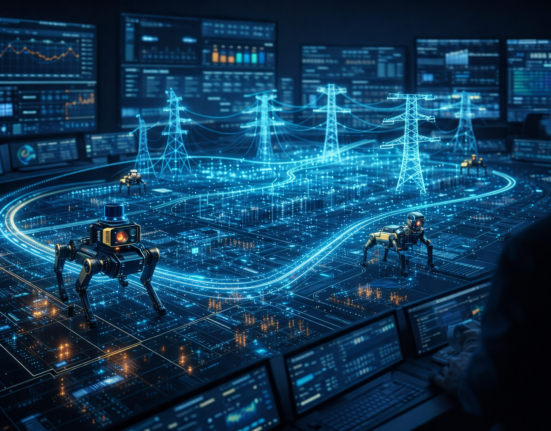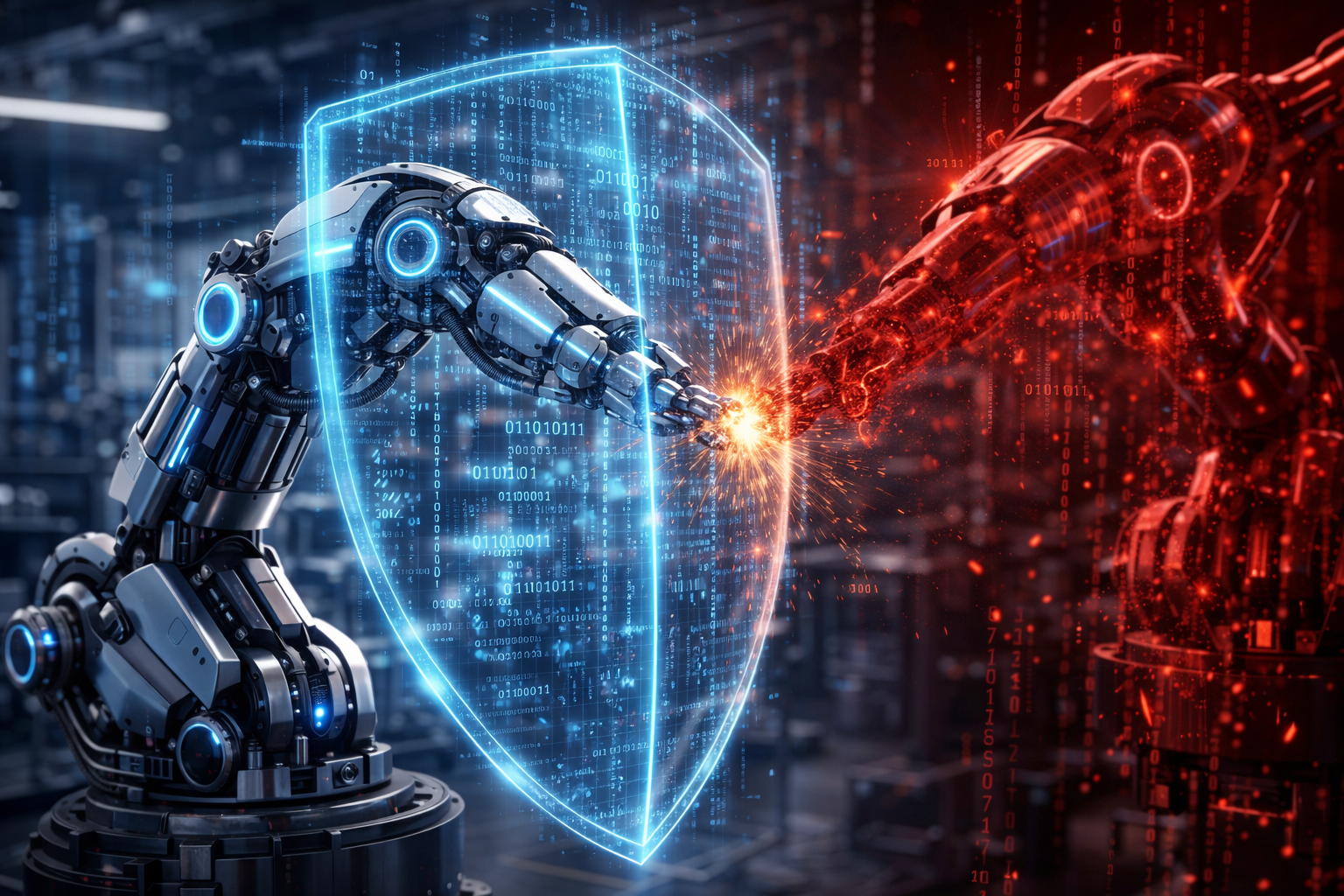
As of March 2026, the convergence of generative AI and mechanical automation has birthed a new era of “Physical AI.” Unlike traditional software that exists purely in the digital realm, Physical AI—ranging from autonomous mobile robots (AMRs) in warehouses to surgical cobots in hospitals—possesses the ability to move, touch, and alter the physical world. With this capability comes a terrifying new threat: Robot-jacking.
What is Robot-Jacking?
Robot-jacking is the unauthorized takeover or redirection of a physical robotic system by a malicious actor. While traditional hacking aims to steal data, robot-jacking aims to control kinetic motion. This could involve rerouting a delivery drone, forcing a manufacturing arm to damage products, or disabling safety sensors on a heavy-duty excavator. In its most extreme form, robot-jacking turns a productive asset into a physical weapon or a tool for industrial sabotage.
Key Takeaways
- Physicality is the Vulnerability: The bridge between digital commands and physical actuators is the primary target for attackers.
- Beyond Data Loss: The risk profile shifts from “Confidentiality” to “Safety and Integrity.”
- Sensor Spoofing: Attackers don’t always need to crack passwords; they can trick the robot’s “senses” (LiDAR, Cameras, IMUs).
- Zero Trust for Hardware: Modern defense requires verifying every command, even those coming from within the internal network.
Who This Guide is For
This deep dive is designed for Chief Information Security Officers (CISOs), Industrial Control Systems (ICS) engineers, Robotics Developers, and Facility Managers who are integrating autonomous systems into their workflows. If your organization relies on machines that make autonomous decisions in a physical space, this guide is your blueprint for resilience.
The Architecture of Physical AI
To protect a system, one must first understand its unique anatomy. Physical AI differs from standard IT systems because it operates on a “Sense-Plan-Act” loop.
1. Sensing (The Input Layer)
Physical AI relies on a suite of sensors to perceive the environment. This includes LiDAR for depth, computer vision for object recognition, and ultrasonic sensors for proximity. In a robot-jacking scenario, this is the first point of failure. If an attacker can inject “ghost images” into a camera feed, the robot’s AI will make decisions based on a false reality.
2. Planning (The Logic Layer)
This is where the “AI” resides. Usually hosted on edge computing modules (like NVIDIA Jetson or specialized TPUs), the planning layer processes sensor data and determines the next move. If the model weights are tampered with (Adversarial ML), the robot can be “conditioned” to ignore certain obstacles or prioritize specific (malicious) objectives.
3. Acting (The Kinetic Layer)
The final stage is the movement. Actuators, motors, and hydraulic pumps translate digital signals into physical force. Robot-jacking at this level involves overriding the “safety governor” of the machine, allowing for high-speed movements that could lead to structural failure or human injury.
Defining the Threat: How Robot-Jacking Occurs
Robot-jacking isn’t a single “hack”; it is a progression of exploits known as the Kinetic Cyber Kill Chain. As of March 2026, security researchers have identified four primary entry points.
Remote Command Injection
Most modern robots are connected to a central Fleet Management System (FMS) via Wi-Fi 6E, 5G, or satellite links. If the communication channel isn’t encrypted or if the FMS itself is compromised, an attacker can send valid-looking commands to the robot. This is the “cleanest” form of robot-jacking, as the robot believes it is following legitimate orders.
The ROS (Robot Operating System) Vulnerability
The Robot Operating System (ROS and ROS2) is the industry standard for robotics middleware. While ROS2 introduced significant security improvements (SROS2), many legacy systems still run on unencrypted ROS1 nodes. An attacker on the same network can “sniff” the messages between the brain and the limbs, eventually injecting their own “topics” to hijack the machine’s pathing.
Supply Chain Tampering
Robot-jacking can begin years before a machine enters your facility. By compromising a third-party library or a hardware component manufacturer, attackers can bake a “logic bomb” into the robot’s firmware. This backdoor remains dormant until it receives a specific trigger, at which point the machine ceases to follow local commands.
Physical Port Access
In many industrial settings, robots have exposed maintenance ports (USB-C, Ethernet, or Proprietary Serial). An “insider threat” or a distracted visitor can plug in a malicious rubber-ducky style device that reflashes the local controller in seconds, granting permanent remote access to the machine’s nervous system.
The Safety-Security Nexus: A Critical Distinction
In traditional IT, the priority is CIA: Confidentiality, Integrity, and Availability. In Physical AI, we must adopt the SAS model: Safety, Actuation, and Sovereignty.
Safety Warning: A robot-jacked machine can bypass software-coded “No-Go Zones.” Never rely solely on software-based safety boundaries in high-risk environments. Use physical interlocks and independent hardware kill-switches.
When a robot is hijacked, the “Safety” systems are often the first to be neutralized. For example, an industrial cobot is designed to stop if it senses resistance (human contact). A sophisticated attacker will disable this feedback loop, allowing the robot to continue its motion regardless of obstacles, turning a “collaborative” robot into a lethal one.
Defensive Strategies: Hardening Physical AI
Protecting against robot-jacking requires a multi-layered defense-in-depth strategy that spans from the silicon chips to the cloud.
1. Hardware-Rooted Trust and Secure Boot
Every Physical AI unit must have a Trusted Platform Module (TPM) or a Hardware Security Module (HSM).
- Secure Boot: Ensures that only firmware signed by the manufacturer can run. This prevents attackers from installing a modified “hijacked” OS.
- Attestation: The robot must “prove” its integrity to the network before it is allowed to receive tasks. If the hash of the system files has changed, the robot is quarantined.
2. Network Segmentation and Micro-segmentation
You should never put your robots on the same network as your office printers or employee Wi-Fi.
- VLAN Isolation: Keep the Robotics OT (Operational Technology) entirely separate from the IT network.
- Micro-segmentation: Even within the robot network, individual machines should not be able to talk to each other unless it is mission-critical. This prevents “lateral movement,” where one hijacked delivery bot infects the entire fleet.
3. Sensor Fusion and Plausibility Checks
To counter sensor spoofing, robots should use “Sensor Fusion.” If the LiDAR says there is a wall, but the ultrasonic sensor says the path is clear, the AI should trigger a “Plausibility Conflict” and come to a safe stop.
- Anomalous Motion Detection: Implement algorithms that monitor the power draw of motors. If a motor is consuming more current than the “planned” movement requires, it may indicate a physical struggle or an unauthorized override.
4. Zero Trust Architecture (ZTA) for Actuators
In a Zero Trust environment, no command is trusted by default.
- Mutual TLS (mTLS): Every message between the controller and the actuator should be encrypted and authenticated.
- Time-Limited Tokens: Commands should only be valid for a few milliseconds. This prevents “replay attacks” where an attacker records a “move forward” command and plays it back later to crash the robot.
Industry-Specific Risks of Robot-Jacking
Manufacturing and “The Sabotage Loop”
In a smart factory, robot-jacking doesn’t always look like a dramatic takeover. It can be subtle. An attacker might slightly alter the calibration of a welding robot by 0.5 millimeters. This doesn’t stop production, but it creates thousands of defective parts that fail months later in the hands of consumers. This “Slow-Motion Sabotage” is a primary concern for the automotive and aerospace sectors as of 2026.
Healthcare: Surgical Hijacking
Tele-surgery and robotic-assisted surgery are becoming standard. A robot-jacked surgical arm could be frozen mid-procedure or forced into unintended tremors. Here, the defense must include Haptic Overrides, allowing the human surgeon to physically overpower the robotic motors via a mechanical linkage if the digital system acts up.
Logistics and Last-Mile Delivery
Autonomous delivery vans and drones are prone to “GPS Spoofing,” a subset of robot-jacking. By broadcasting a fake GPS signal, an attacker can trick a drone into landing in a “recovery zone” (the attacker’s backyard) to steal the cargo or the drone itself.
Common Mistakes in Robotics Cybersecurity
1. Over-Reliance on “Air-Gapping”
Many facility managers believe that because their robots aren’t “on the internet,” they are safe. This is a fallacy. Maintenance laptops, USB drives, and even cellular-connected sensors within the robot create “bridgeheads” for attackers. Air-gapping is a hurdle, not a wall.
2. Using Default Credentials for ROS Nodes
It sounds elementary, but a staggering number of industrial robots are deployed with default manufacturer passwords for their web-based dashboards. In the world of Physical AI, a leaked password is a key to your physical front door.
3. Neglecting “End-of-Life” Security
When a robot is decommissioned or sold on the secondary market, it often contains sensitive network configurations, API keys, and map data of the facility. Failure to perform a “Cryptographic Erase” can lead to a retrospective robot-jacking of your remaining fleet.
4. Lack of Physical Tamper Evidence
We often focus so much on the “cyber” that we forget the “physical.” If an attacker can open a robot’s access panel and clip a logic analyzer to the internal bus, the game is over. Use tamper-evident seals and chassis intrusion sensors.
Implementing a “Robot Incident Response” Plan
What do you do when a 2-ton robotic arm starts moving erratically? You cannot wait for a standard IT ticket to be resolved.
- Immediate Kinetic Isolation: Hard-wired E-Stops must be accessible to human personnel. These must bypass all software.
- State Capture: Before rebooting the robot, capture the volatile memory and the last 30 seconds of sensor data. This is your “Black Box” for forensic analysis.
- Firmware Verification: Run an automated check to see if the machine’s BIOS or Firmware has been altered.
- Network Quarantine: Instantly revoke the robot’s digital certificates to prevent it from communicating with other machines in the fleet.
The Future of Robot-Jacking Defense: AI vs. AI
By late 2026, we expect to see the widespread adoption of Immune System Robotics. This involves a secondary, low-power AI chip that does nothing but monitor the primary AI. It learns the “normal” behavioral patterns of the robot. If the primary AI starts executing commands that deviate from the statistical norm (e.g., moving too fast or entering a restricted zone), the “Immune AI” cuts power to the actuators.
This “Watchdog AI” approach acknowledges that software will always have bugs, and humans will always make mistakes. By creating a digital-mechanical checks-and-balances system, we can enjoy the benefits of Physical AI without the looming shadow of robot-jacking.
Conclusion: The Path Forward for Secure Autonomy
The rise of Physical AI is an inevitability of our quest for efficiency and precision. However, we cannot treat these machines as just “computers with wheels.” They are kinetic entities that require a new philosophy of protection. Robot-jacking represents the ultimate breach of trust—not just a breach of data, but a breach of physical safety.
As we have explored, the defense against these threats is not found in a single software patch. It is found in a holistic commitment to Hardware-Rooted Trust, Zero Trust Networking, and Sensor Integrity. We must move away from the “set it and forget it” mentality of traditional industrial automation and toward a dynamic, observable, and resilient security posture.
Your Next Steps:
- Audit your Fleet: Identify every machine in your facility that possesses autonomous movement.
- Map the Communication: Determine if your robots are using ROS1 or ROS2 and whether their “Sense-Plan-Act” messages are encrypted.
- Physical Check: Ensure that all maintenance ports are physically secured or disabled when not in use.
- Update your IR Plan: Create a specific “Kinetic Incident” protocol that includes physical E-stop drills and forensic data capture.
Securing the future of robotics requires us to be as adaptive and intelligent as the AI we are trying to protect. By staying ahead of the “Robot-jackers,” we ensure that the machines of tomorrow remain our tools, not our liabilities.
FAQs
1. Is robot-jacking the same as a virus?
Not exactly. A virus is a type of self-replicating software. Robot-jacking is the act of taking control. An attacker might use a virus to achieve a robot-jack, but they could also use credential theft, sensor spoofing, or physical tampering.
2. Can I protect my robots by just using a VPN?
A VPN secures the “pipe” between the robot and the server, but it doesn’t protect the robot if the server is compromised or if an attacker is already inside your local network. It is one tool, but not a complete solution.
3. Are “Cobots” safer than traditional industrial robots?
In terms of physical safety, yes, because they have built-in force sensors. However, from a cybersecurity perspective, they are often more vulnerable because they are designed to be user-friendly and highly connected, often featuring open APIs and Wi-Fi connectivity that traditional robots lack.
4. How can I tell if my robot has been “jacked”?
Look for “micro-deviations.” This includes motors running hotter than usual, a slight decrease in battery life (due to unauthorized background processes), or the robot taking slightly different paths than those optimized by the fleet manager.
5. Does NIST have standards for this?
Yes. NIST SP 800-82 (Guide to Industrial Control Systems Security) is the foundation. Additionally, the ISO/IEC 62443 series provides a comprehensive framework for security in industrial automation and control systems.
References
- NIST (National Institute of Standards and Technology): Special Publication 800-82, Revision 3: Guide to Operational Technology (OT) Security. (2025/2026 Updates).
- CISA (Cybersecurity & Infrastructure Security Agency): Securing Converged IT and OT Ecosystems. (Official Government Documentation).
- IEEE Xplore: Cyber-Physical System Security: A Survey of Design-Phase and Run-Time Defenses. (Academic Journal).
- ISO (International Organization for Standardization): ISO/IEC 62443-4-2: Security for industrial automation and control systems.
- Open Robotics: SROS2: Secure Robot Operating System 2 Documentation and Implementation Guidelines.
- SANS Institute: Industrial Control Systems Security Monitoring and Detection.
- MIT CSAIL: Research on Adversarial Machine Learning in Autonomous Navigation.
- Department of Homeland Security (DHS): Security High-Level Principles and Priorities for the Internet of Things (IoT).