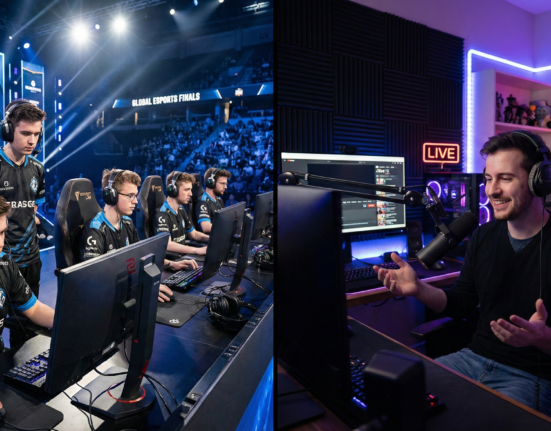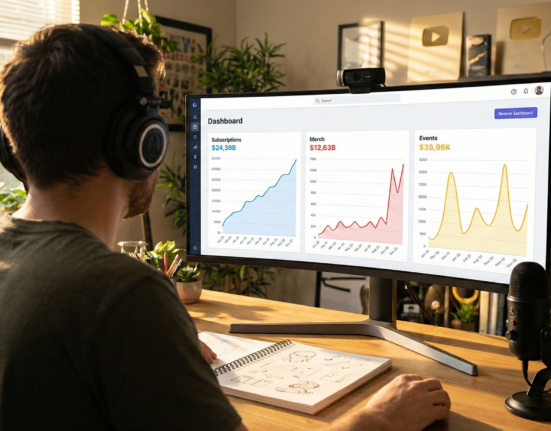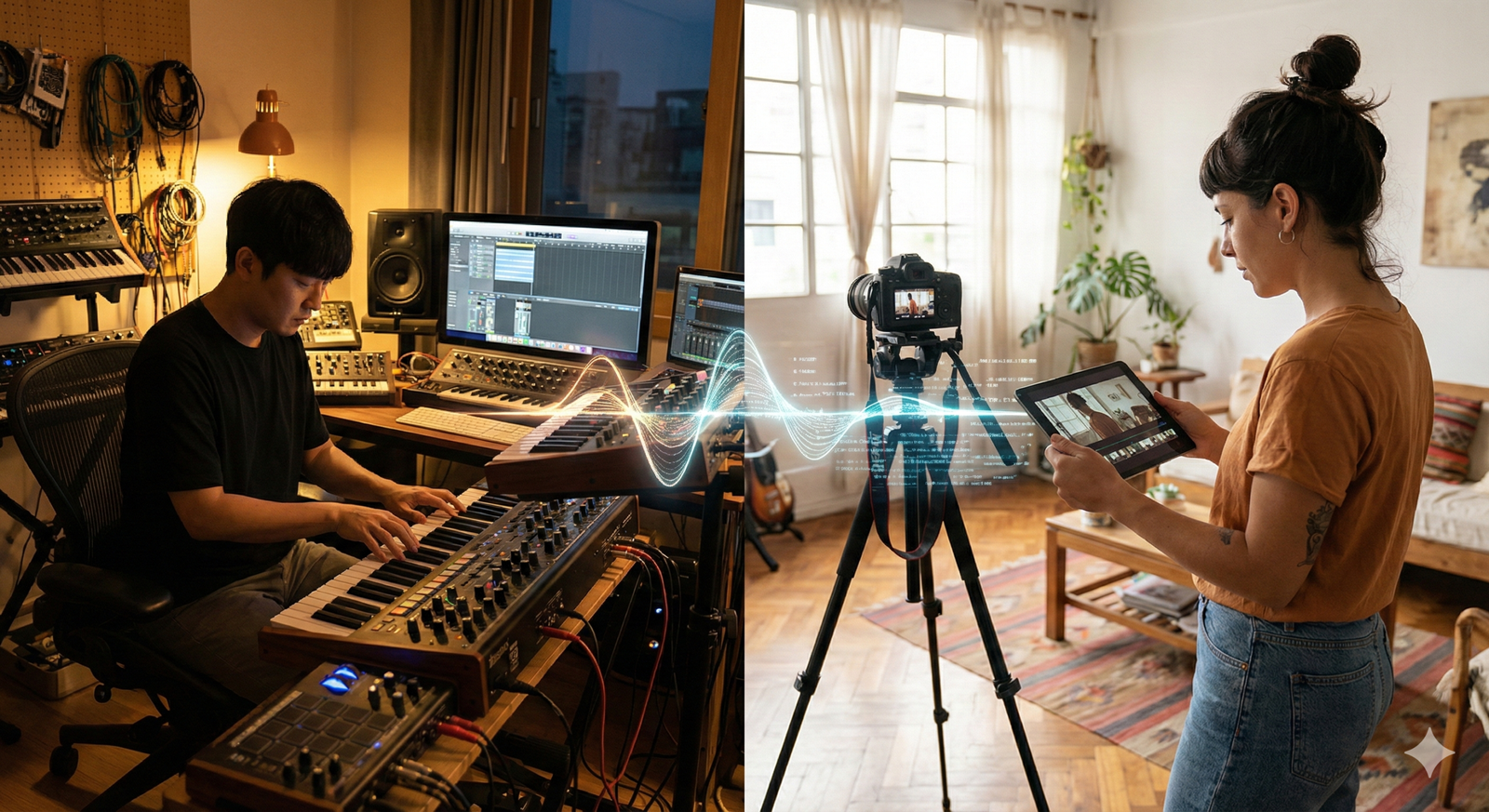
The era of the “local scene” being the only scene is effectively over. For decades, collaborating on a film or an album meant being in the same room, breathing the same air, and often, living in the same city. Today, a beatmaker in Lagos can lay down a rhythm that inspires a vocalist in Oslo, while a video editor in New York cuts footage shot hours earlier in Tokyo.
This is the age of remote cross-cultural collaborations. It is not merely a logistical shift; it is a fundamental reimagining of how art is created. By removing geographical barriers, technology has allowed for a fusion of styles, narratives, and sonic textures that were previously impossible or prohibitively expensive to achieve.
However, moving a creative workflow into the cloud is not without its challenges. It requires a new set of hard skills—mastering latency-free audio tools and cloud-based rendering—and, perhaps more importantly, soft skills related to cultural intelligence, communication, and trust.
In this guide, cross-cultural collaborations refer to partnerships where creatives from distinct cultural backgrounds work together via digital platforms to produce shared artistic output. We will explore the tools making this possible, the workflows that sustain it, and the human nuance required to make it successful.
Key Takeaways
- Geography is no longer destiny: High-speed internet and specialized software have decoupled creative opportunity from physical location.
- Asynchronous is the new normal: “Follow the sun” workflows allow projects to progress 24/7, moving from time zone to time zone.
- Cultural intelligence (CQ) is a hard skill: Understanding communication styles (high-context vs. low-context) is as vital as knowing your software.
- The tech stack is specialized: Generic tools like Zoom are often insufficient; creators need specialized platforms like Splice, Frame.io, or Audiomovers.
- Legal frameworks are lagging: Managing rights, royalties, and payments across borders remains one of the most complex aspects of remote collaboration.
The Shift to a Borderless Creative Economy
The digitization of the creative economy has been accelerating for twenty years, but recent global events turbo-charged the adoption of remote tools. What began as a necessity during lockdowns has evolved into a preference for many. The “bedroom producer” phenomenon has scaled up to the “global producer.”
Why Cross-Cultural Collaboration Matters
Why go through the trouble of coordinating across time zones? The answer lies in the output. Homogeneous teams often produce homogeneous work. Cross-cultural collaborations introduce friction—in a positive sense. The collision of different musical scales, storytelling structures, and visual aesthetics creates hybrid genres and unique narratives.
For independent creators, this levels the playing field. You no longer need a budget for international flights to work with a kora player from West Africa or a colorist from France. You simply need the right connection and the right protocol.
Scope of this Guide
This article focuses on collaborative creation in music and film/video.
- In Scope: Remote recording, songwriting, beat exchange, video editing, color grading, VFX pipelines, and remote directing.
- Out of Scope: Passive consumption (streaming services), general remote office work (spreadsheets/HR), and hardware manufacturing.
Remote Music Production: The Global Studio
Music has arguably adapted faster to remote collaboration than any other art form. The lightweight nature of MIDI data and audio stems compared to 8K video files made the transition smoother. However, the nuance of a “jam session”—that feeling of shared timing and energy—is the hardest thing to replicate digitally.
Synchronous vs. Asynchronous Workflows
In practice, remote music collaboration falls into two buckets:
1. Asynchronous Collaboration (The “Pass-the-Parcel” Method) This is the most common method. One artist records an idea and uploads it; the collaborator downloads it, adds their part, and sends it back.
- Pros: No latency issues; allows deep focus; accomodates vast time zone differences.
- Cons: Loss of spontaneity; iterations can take days instead of minutes.
- Best for: Songwriting, arranging, mixing, and beat-making.
2. Synchronous Collaboration (Real-Time) This attempts to recreate the studio experience. Using low-latency audio plugins, artists can hear each other in near real-time.
- Pros: Captures the “vibe” and immediate feedback.
- Cons: dependent on internet stability; difficult if time zones don’t align.
- Best for: Coaching vocalists, final mix reviews, and simple jamming.
The Technical Stack for Remote Musicians
To collaborate effectively across borders, musicians rely on a specific suite of tools. As of 2026, the standard stack often includes:
- DAW (Digital Audio Workstation): The foundation (Ableton Live, Logic Pro, Pro Tools). Most modern DAWs have integrated cloud collaboration features, though many pros still prefer manual file transfer for quality control.
- Audio Streaming Plugins (e.g., Audiomovers, Source-Connect): These allow a producer to stream high-quality, uncompressed audio directly from their DAW to a listener’s browser. This is crucial for cross-cultural mixing sessions where a producer in London needs to hear exactly what the engineer in LA is doing, without the compression artifacts of Zoom or Skype.
- Cloud Storage & Version Control (e.g., Splice, Dropbox): Unlike general cloud storage, music-specific platforms often handle version history better, preventing the “Final_Final_v3.wav” disaster.
Case Scenario: The Global Beat
Imagine a producer in Atlanta (USA) creating a trap beat. They want a specific flamenco guitar texture.
- Sourcing: They find a guitarist in Seville (Spain) via a platform like SoundBetter or even Instagram.
- Tracking: The producer sends the beat (minus drums for clarity) via a private link.
- Recording: The guitarist records multiple takes in Seville. Because of the time difference, they record while the producer sleeps.
- Review: The producer wakes up to the files. They load them into the session.
- Refinement: They hop on a quick video call to discuss a specific rhythm change. The producer streams the audio via a plugin so the guitarist hears the changes in high fidelity.
- Finalization: The track is finished without the two ever meeting.
The Cloud-Based Filmmaking Revolution
Film and video production face a heavier lift: data. Video files are massive. A single hour of raw footage can be hundreds of gigabytes. Moving this data across borders requires robust infrastructure, yet the industry has pivoted aggressively toward decentralized workflows.
Pre-Production: Virtual Casting and Scouting
Remote platforms have democratized casting. Directors can now audition talent from anywhere in the world via self-tapes and live video callbacks.
- Location Scouting: VR and AR tools allow cinematographers to explore a location in 3D (via scanned environments) without flying there. This reduces the carbon footprint and allows for cross-cultural teams to agree on a visual language early on.
Production: Remote Directing
“Remote directing” became a necessity in the early 2020s and stuck around as a cost-saving measure. A director can sit in New York while a local unit shoots in Mumbai.
- The Video Village in the Cloud: Technology like QTake or generic low-latency streaming allows the camera feed to be broadcast securely to the director’s laptop.
- Cultural Bridge: This requires a trusted “local fixer” or Assistant Director (AD) on the ground who understands the director’s vision but can translate it into the local language and cultural context for the crew.
Post-Production: The “Follow the Sun” Model
This is where remote collaboration shines brightest.
- The Workflow: An editor in London finishes their shift and uploads the project file (linked to low-resolution proxy files stored in the cloud) to a server. An editor in Sydney wakes up, downloads the small project file, and continues cutting. The project never stops moving.
- Cloud Review: Platforms like Frame.io have revolutionized feedback. A director can draw on a specific frame of video in a web browser, leaving a comment like “Color correct this skin tone.” The colorist in another country sees that comment appear directly on their timeline in DaVinci Resolve or Premiere Pro.
Challenges in Remote Film
- Bandwidth inequality: A major barrier in cross-cultural collaboration is internet speed. While a partner in South Korea might have gigabit speeds, a collaborator in a rural area of a developing nation might struggle to upload 4K rushes.
- Proxy Workflows: To mitigate this, teams work with “proxies”—low-resolution copies of the footage. The high-res files are only needed at the very end for the “online” edit (final rendering), which can be done by the person with the physical drive or via a dedicated high-speed transfer service.
Bridging the Gap: Cultural Intelligence (CQ)
The technology works. The cables are laid. The software is installed. Why do projects still fail? Usually, it is a failure of culture, not code.
When collaborating across borders, you are navigating different expectations regarding time, hierarchy, feedback, and communication styles. Cultural Intelligence (CQ) is the capability to relate and work effectively across cultures.
High-Context vs. Low-Context Communication
This is a foundational concept in intercultural communication (popularized by anthropologist Edward T. Hall) that every remote creative must understand.
- Low-Context Cultures (e.g., USA, Germany, Scandinavia): Communication is explicit. “No” means “no.” Feedback is direct. If a mix sounds bad, they will say, “This mix sounds bad.”
- High-Context Cultures (e.g., Japan, Arab nations, many Latin American countries): Communication is implicit. Meaning is embedded in the context, relationships, and non-verbal cues. A direct “no” is considered rude. Disagreement might be expressed as “We will study this further” or hesitant agreement.
Practical Application: If a German producer sends a blunt email listing edits to a Japanese composer, the composer might feel insulted and withdraw. Conversely, if the Japanese composer offers vague feedback to the German producer, the producer might miss the point entirely.
- Solution: Establish a “communication charter” at the start. Discuss how feedback will be given. Assume positive intent.
Time Perception: Linear vs. Flexible
- Linear Time (Monochronic): Time is money. Punctuality is paramount. Deadlines are rigid. (Common in Northern Europe, North America).
- Flexible Time (Polychronic): Relationships take precedence over schedules. Being late is not a sign of disrespect; it implies you were busy with another human interaction. (Common in Latin America, Africa, Mediterranean).
In Practice: A remote film shoot scheduled for 9:00 AM might start at 9:00 AM sharp for the London crew, but the local talent in a flexible-time culture might view 9:30 as acceptable.
- Solution: Buffer schedules. Be clear about “hard” deadlines (broadcast time) vs. “soft” deadlines.
The Language Barrier in Art
Art is a language, but describing it requires words. Terms like “warm,” “crunchy,” “cinematic,” or “emotional” are subjective and culturally loaded.
- Visual References: Never rely solely on text. Use mood boards, reference tracks, and timestamps. “Make it sound like [Link to Song]” is safer than “Make it sound angry.”
- Translation Tools: Real-time translation in chat apps (like Slack or Microsoft Teams) is improving, but it struggles with slang. Avoid idioms (“Let’s hit a home run”) which may not translate.
The Economics of Global Collaboration
Moving money across borders is often harder than moving data.
Payment Logistics
- Currency Fluctuation: A budget agreed upon in USD might become significantly more or less valuable to a collaborator in Brazil or Turkey depending on daily exchange rates.
- Platforms: Traditional bank wires (SWIFT) are slow and expensive with high hidden fees. Platforms like Wise (formerly TransferWise) or Payoneer have become standard for the gig economy because they offer better rates and transparency.
- Crypto: While volatile, stablecoins (USDC/USDT) are increasingly used in tech-forward creative circles to bypass banking delays, particularly in countries with strict capital controls or unstable currencies.
Rights and Royalties
This is the “Wild West” of remote collaboration.
- Music: Copyright laws vary. A “work for hire” agreement in the US might not hold up in France, where “moral rights” of the artist are inalienable.
- Splits: If a song becomes a hit, how are royalties shared? Smart contracts (NFTs/Blockchain) promised to solve this, but adoption is niche. The standard remains the Split Sheet—a simple document signed by all parties detailing percentages before the release.
- Clearance: If your remote collaborator uses a sample that is legal in their country (e.g., shorter copyright terms) but illegal in yours, the whole project faces liability. Always require “cleared” assets.
Tools of the Trade: A 2026 Snapshot
Here is a breakdown of the essential software facilitating these connections, categorized by function.
For Musicians
| Category | Tool Examples | Best For |
| Streaming | Audiomovers Listento, Source-Connect | Streaming HQ audio from DAW to browser. |
| Collaboration | Soundtrap, BandLab, Satellite Plugins | Cloud-based recording and MIDI exchange. |
| File Transfer | WeTransfer, MASV | Sending large stems and project zips. |
| Communication | Discord, Slack | Asynchronous chat and community building. |
For Filmmakers
| Category | Tool Examples | Best For |
| Review & Approve | Frame.io, Vimeo Review | Time-stamped commenting and drawing. |
| Storage | LucidLink, Google Drive | Cloud NAS workflows (streaming files vs downloading). |
| Live Monitoring | QTake Cloud, Louper | Streaming camera feeds to remote directors. |
| VFX Management | ShotGrid (Autodesk) | Tracking thousands of VFX shots across global teams. |
Common Mistakes and Pitfalls
Even with the best tools, things go wrong. Here are the most common points of failure in remote cross-cultural projects.
1. The “Phantom Ghost” Effect
Without physical presence, it is easy for a collaborator to simply disappear (ghost) when things get difficult.
- Fix: Regular video check-ins. seeing a face builds accountability that text does not.
2. Time Zone Math Errors
Scheduling a meeting at “3 PM” without specifying the time zone is a classic error.
- Fix: Use tools like World Time Buddy. Always specify the time zone (e.g., “3 PM EST”).
3. Over-Reliance on Asynchronous Comms
Text lacks tone. A critique delivered via email can read as harsh, whereas the same critique delivered with a smile on Zoom feels constructive.
- Fix: If a topic is sensitive or creative direction is unclear, hop on a call. Do not try to resolve creative conflict via text.
4. Ignoring Local Holidays
You might be working on a Tuesday, but if it is Golden Week in Japan or Thanksgiving in the US, your collaborator is offline.
- Fix: Keep a shared calendar that includes the national holidays of all team members.
The Future: AI, VR, and the Metaverse
As we look toward the latter half of the 2020s, three technologies are poised to deepen these collaborations.
AI Translation and Dubbing
Generative AI is reaching a point where it can translate spoken dialogue in a video, not just by dubbing the voice, but by lip-syncing the actor’s face to the new language. This will allow films to be “native” in dozens of languages simultaneously, breaking down the biggest cultural barrier of all: language.
Virtual Workspaces (The Metaverse)
While the hype has fluctuated, the utility of virtual presence is real. Apps like Horizon Workrooms or specialized VR production tools allow a director and a set designer to stand “inside” a 3D model of a set, pointing at objects and moving them, despite being on different continents.
Generative AI as the Universal Translator
In music, AI tools can now take a hummed melody and convert it into a MIDI violin line. This allows a collaborator who may not play an instrument proficiently to communicate complex musical ideas to a virtuoso on the other side of the world.
Conclusion: The New Renaissance
We are witnessing a new Renaissance in creativity—one that is decentralized, diverse, and digital. The barriers to entry are lower than ever, but the barriers to mastery have shifted. Success no longer depends on living in Los Angeles or London; it depends on your ability to navigate the digital currents, respect cultural nuance, and wield remote tools with precision.
The future of film and music is not just about better cameras or louder synths. It is about the connection between a mind in one hemisphere and a heart in another. By embracing these remote, cross-cultural workflows, creators are not just saving money or time; they are expanding the very definition of what art can be.
Next Steps for Creators
- Audit your stack: Do you have a reliable way to stream high-quality audio or video to a client?
- Check your CQ: Read up on the cultural norms of the regions you wish to work with.
- Start small: Try a low-stakes collaboration (a single track, a short film scene) with someone in a different time zone to test your workflow.
- Join the community: Get active on Discord servers and forums where global creatives gather. That is where your next collaborator is waiting.
FAQs
Q: What is the biggest challenge in remote cross-cultural collaboration? A: Communication nuance. While latency and file sizes are technical hurdles, misunderstandings arising from cultural differences in feedback, hierarchy, and time management are the most common reasons projects fail.
Q: Can you really mix a song remotely? A: Yes. With tools like Audiomovers or Source-Connect, a mix engineer can stream audio directly from their DAW to the client’s speakers in real-time. However, both parties need a decent listening environment to make accurate judgments.
Q: How do I handle payments for international freelancers? A: Avoid traditional bank transfers if possible due to high fees and slow processing. Platforms like Wise, Payoneer, or PayPal are standard. Always agree on the currency and who covers the transaction fees before starting work.
Q: Is there latency in remote music jamming? A: Yes, the laws of physics still apply. Light (and data) takes time to travel. While 5G and fiber reduce this, “real-time” jamming over long distances (e.g., London to Sydney) usually has too much delay for tight rhythmic music. It works better for ambient styles or requires software that compensates for delay, though often at the cost of “live” feeling.
Q: What is a “proxy workflow” in film? A: It is a technique where editors work with low-resolution, small file copies of the raw footage (proxies). This allows them to edit smoothly on laptops or over the cloud. The editing software then relinks these edits to the high-quality original files for the final export.
Q: Do I need to speak the same language as my collaborator? A: Not necessarily, though it helps. Many successful collaborations happen using translation tools, visual references, and the universal language of music or visual storytelling. However, a shared lingua franca (often English) usually smoothes the process.
Q: How do I protect my intellectual property remotely? A: Use watermarks on video and audio files during the review process. Sign Split Sheets (for music) or Deal Memos (for film) before work begins. Use secure file transfer services rather than public links.
Q: What are the best places to find international collaborators? A: For music: SoundBetter, Splice, and Kompoz. For film: Stage 32, Mandy, and specialized Discord communities or LinkedIn groups dedicated to remote production.
References
- Meyer, E. (2014). The Culture Map: Breaking Through the Invisible Boundaries of Global Business. PublicAffairs.
- Frame.io. (2023). The 2023 State of Video Collaboration. Frame.io Insider. https://blog.frame.io
- Splice. (2024). The State of Music Creation: Global Collaboration Trends. Splice Blog. https://splice.com/blog
- Audiomovers. (n.d.). Remote Audio Collaboration Solutions. Retrieved January 2026 from https://audiomovers.com
- Hofstede Insights. (n.d.). Country Comparison Tool. Retrieved January 2026 from https://www.hofstede-insights.com/country-comparison/
- Netflix Technology Blog. (2022). The Evolution of Remote Production at Netflix. https://netflixtechblog.com
- Wise. (n.d.). International Business Payments & Exchange Rates. Retrieved January 2026 from https://wise.com/business