Blockchain for government can be practical, boring-in-the-best-way infrastructure that helps you make public data tamper-evident, streamline workflows across agencies, and give citizens confidence that decisions are recorded transparently. At its core, a blockchain is a shared ledger: multiple parties agree on facts and those facts become hard to alter without leaving fingerprints. Used wisely, it reduces disputes, automates checks, and reveals who did what, when. In this guide, you’ll learn the concrete ways public administrations apply blockchain to voting, records, and transparency—plus the pitfalls to avoid and the guardrails to set. Because many of these topics affect rights and livelihoods, treat this as general information, not legal or policy advice, and consult qualified experts for jurisdiction-specific decisions.
Quick path to results: assess the problem, select the use case, design for privacy first, choose the right network model (public, permissioned, or hybrid), define governance and roles, integrate with existing systems, pilot with a small constituency, measure impact, and then scale with formal change management. Do this, and you’ll cut reconciliation work, reduce fraud risk, and provide citizens and auditors with trustworthy, verifiable records.
1. Establish Digital Identity and Wallets for Citizens and Staff
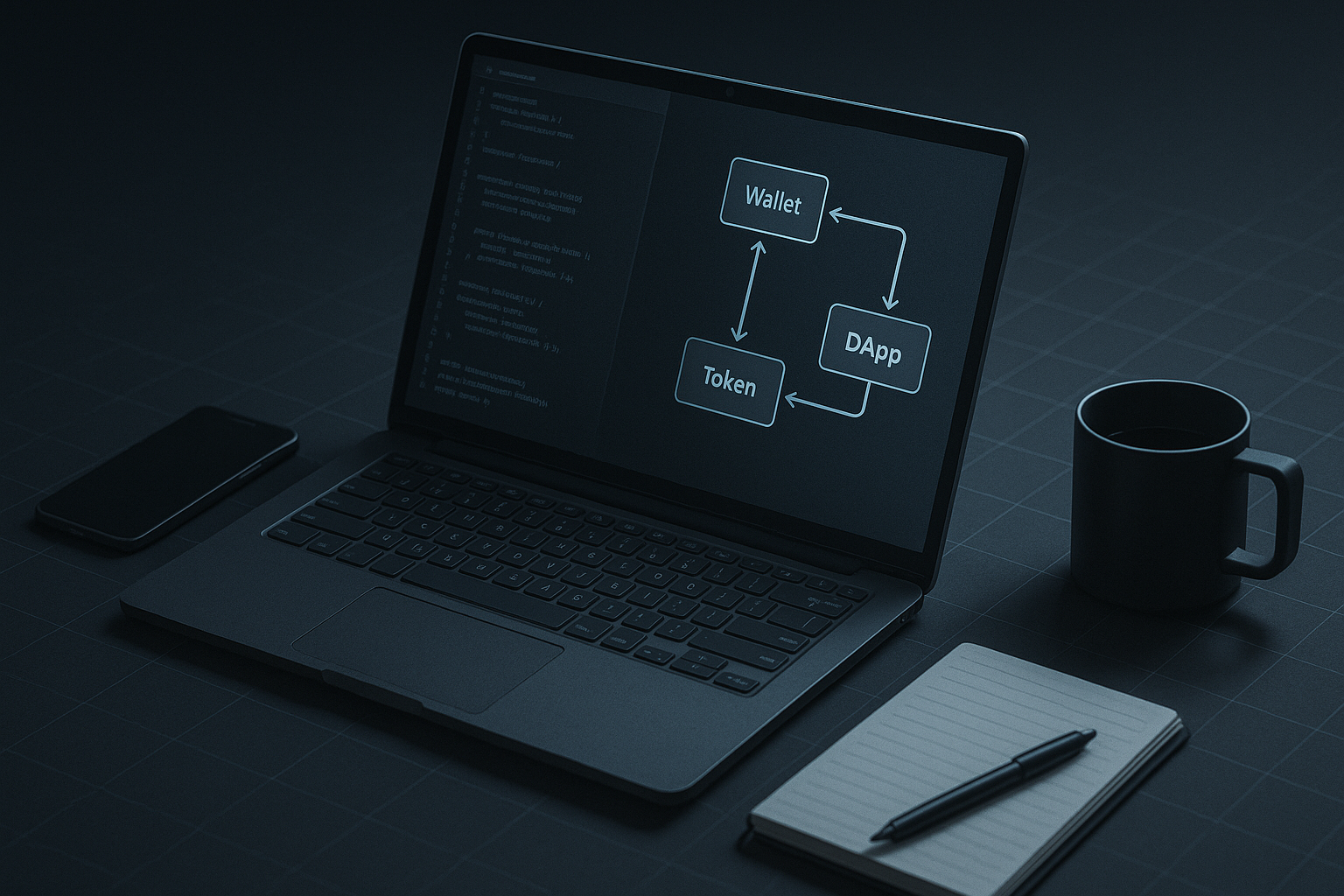
A reliable digital identity is the backbone of every government blockchain use case because it ties real-world people and institutions to on-chain actions. Without it, voting, licensing, and benefit payments either leak privacy or rely on weak credentials that are easy to misuse. Start by defining the identity model: centralized, federated, or self-sovereign identity (SSI) where citizens control verifiable credentials in a wallet. In practice, many public-sector implementations use verifiable credentials and decentralized identifiers (DIDs) to prove facts without disclosing more than needed. Picture a driver’s license that can prove you’re over a threshold age without revealing your name or address—that’s selective disclosure, which supports both inclusion and privacy.
When you deploy identity wallets, you create a consistent way to authenticate users across agencies and to capture consent for data sharing. You also gain an audit trail of credential issuance, updates, and revocation, which is critical when licenses expire or roles change. Because identity data is highly sensitive, you never put raw personal data on-chain. Instead, you anchor hashes (cryptographic fingerprints) or use privacy-preserving proofs so that the ledger only records integrity evidence. This design reduces breach risk while making tampering detectable. It also prepares you to accept credentials from other jurisdictions in cross-border contexts like education and labor mobility.
How to do it
- Start with a high-stakes but bounded credential (e.g., professional license, civil servant ID) and issue it as a verifiable credential.
- Adopt open standards (DID, VC, ISO/TC 307 taxonomies) so wallets interoperate across departments and vendors.
- Separate PII from the ledger: store attributes off-chain; only write hashes and revocation registries to the chain.
- Implement recovery flows for lost devices (social recovery, multi-sig, custodial options for vulnerable users).
- Govern issuance with clear roles: issuer (agency), holder (citizen/staff), verifier (service).
Numbers & guardrails
- Target sub-10 seconds credential verification latency for a responsive citizen experience.
- Keep on-ledger entries minimal: a few hundred bytes per credential event is typical; large payloads stay off-chain.
- Define revocation SLAs (e.g., within minutes for sensitive roles) so misuse windows are short.
A robust identity layer pays dividends later: it simplifies voting eligibility checks, speeds benefit delivery, and makes every audit more reliable without exposing personal data.
2. Enable End-to-End Verifiable Voting and E-Participation
Blockchain’s value in voting isn’t storing ballots forever; it’s creating verifiability: voters can check that their ballot was counted as cast, officials can tally transparently, and observers can audit the process without learning how individuals voted. The right architecture separates identity (off-chain) from vote records (on-chain or anchored) and uses cryptography to protect secrecy. End-to-end verifiability (E2E-V) uses receipts and public proofs so any stakeholder can reproduce the count independently. For low-risk contexts—participatory budgeting, student councils, neighborhood surveys—this is an immediate fit. For statutory elections, you proceed more cautiously, layering in paper trails, risk-limiting audits, and accessibility accommodations.
The flow is simple: an eligible voter proves eligibility via a verifiable credential; a ballot is issued; the voter marks choices; a cryptographic commitment is posted; and, after the election, a tally proof is published so anyone can verify the math. Blockchain provides the public, timestamped bulletin board for commitments and proofs. This doesn’t eliminate governance; it documents it. You still need chain-of-custody procedures, a dispute process, and backup channels for voters with limited connectivity or assistive technology needs.
How to do it
- Use cryptographic mix-nets or homomorphic tallying to separate identity from choices while keeping counts auditable.
- Anchor commitments and proofs on a public chain for liveness and transparency; store ballots off-chain in encrypted form.
- Provide independent verification tools (open-source) so civil society can check results without asking permission.
- Run risk-limiting audits (statistical checks) and publish parameters and outcomes alongside the tally.
- Offer assisted channels (in-person kiosks, accessible devices) to avoid excluding any voter.
Numbers & guardrails (illustrative)
- With 300,000 voters, if verification checks take 0.1 seconds each, a public verifier can re-check the election in ~8 hours on a modest machine.
- Aim for >99.9% ballot acceptance with clear error messaging for the remainder; unsuccessful submissions must get a re-try path.
- Maintain two independent hash anchors (e.g., two chains or a chain plus a notarized log) to make censorship or rollback less plausible.
Use blockchain here to prove process integrity, not to shortcut rigorous election administration. Done this way, you add transparency without sacrificing secrecy or accessibility.
3. Secure Land and Property Registries Against Tampering
Land records are high-value targets for fraud, and disputes are costly for citizens and lenders alike. Blockchain helps by anchoring each title record (or each mutation like transfer, lien, or subdivision) to a tamper-evident ledger at the moment of issuance. The official record remains in your registry database with rich metadata, maps, and documents. The chain stores a hash, timestamp, and signer so anyone can later verify the record’s integrity. This is especially useful during conveyancing and mortgage origination, where multiple parties need confidence that nothing changed between search and settlement.
For new registrations, you can issue a verifiable credential representing the current estate—owner, parcel ID, encumbrances—that updates as events occur. Over time, you build a transparent chain of custody that survives system migrations and political change. Integrate notarization and surveyor attestations as separate credentials, each with its own governance. The result is a system where altering a historical deed without detection becomes impractical, and where cross-agency checks (tax, utilities, courts) can rely on a common integrity anchor.
How to do it
- Hash every title instrument and mutation at intake; include references to authoritative databases and map tiles.
- Design for partial disclosure: let parties prove “no undisclosed lien exists” without exposing sensitive details.
- Bind geospatial data (parcel polygons) with standardized identifiers so mapping systems can verify integrity too.
- Automate common events (e.g., lien release) via smart contracts that require signatures from designated roles.
Mini case (illustrative)
- A registry with 1,000,000 parcels processes 120,000 events a year. Each event anchors a 256-bit hash and metadata (~200 bytes).
- Annual on-chain storage for anchors is ~24 MB, trivial for modern ledgers, while off-chain records remain in your DMS.
- Reducing disputes by 0.5% saves roughly 600 cases yearly; if each case costs $2,500 in staff and legal time, that’s $1.5 million saved.
Common mistakes
- Putting full documents on-chain (privacy and scalability issues).
- Skipping independent time sources (use multiple anchors or notary services).
- Neglecting revocation flows for erroneous entries.
Anchoring your land registry builds citizen trust and accelerates real-estate transactions without uprooting your existing databases.
4. Make Public Records and Archives Tamper-Evident
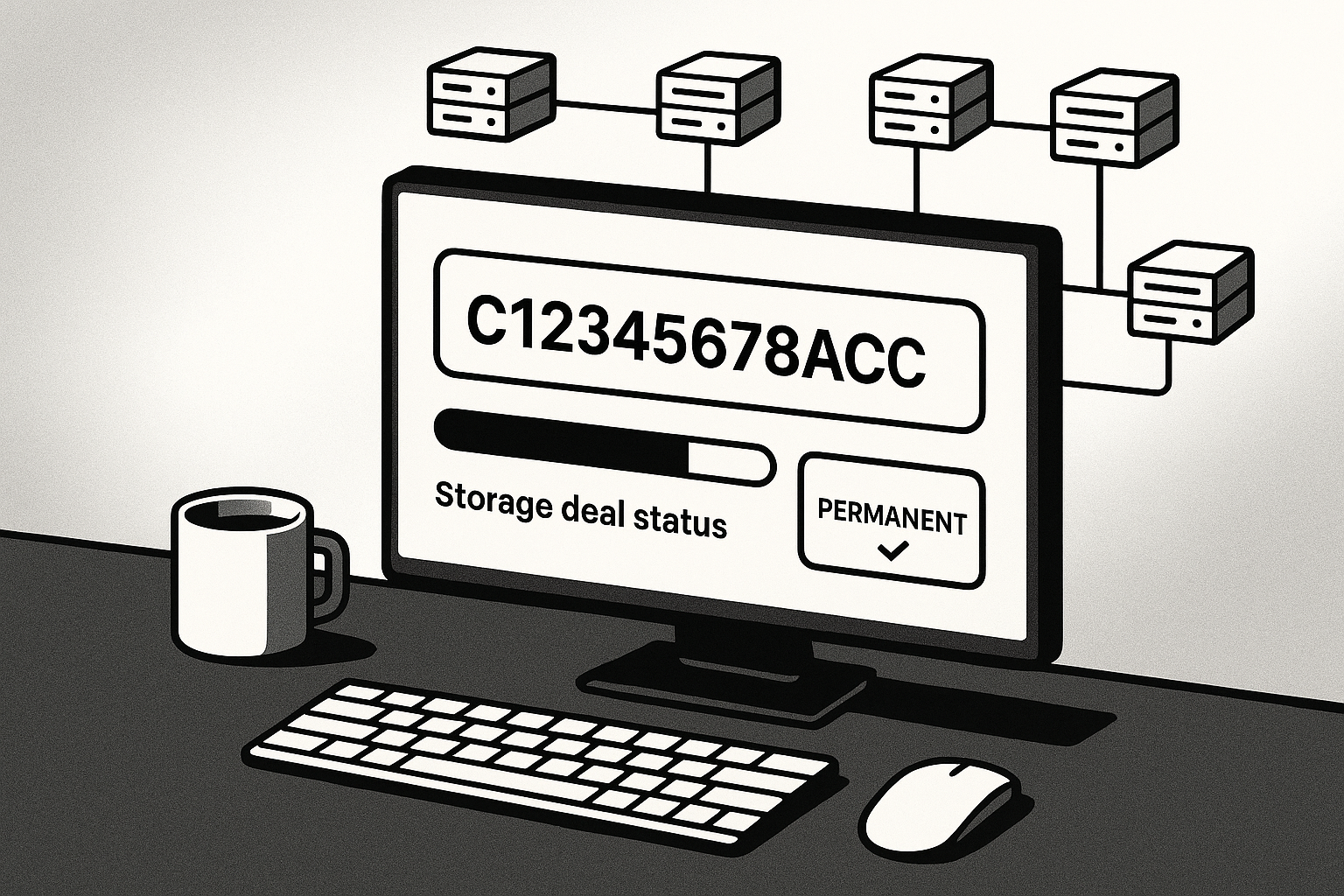
Public records—meeting minutes, inspection results, environmental readings, legislative drafts—benefit from integrity guarantees. Blockchain is ideal as a proof-of-existence layer: you timestamp and hash a document at publication so the public can later verify it hasn’t changed. This delivers two wins: first, version control becomes explicit; second, discovery and oversight improve because watchdogs can detect silent edits. You can publish a Merkle root for a batch of records daily or per release and archive the manifest along with the documents themselves.
Crucially, blockchain complements—not replaces—your records management systems. You still follow retention schedules, accessibility standards, and classification policies. The chain acts like a public seal. When a correction is necessary, you publish a new version and an explanatory note; both versions remain verifiable. Over time, you’ll see fewer FOI disputes about “who changed what” because answers become reproducible: anyone can hash a file and compare it to the on-chain entry.
How to do it
- Batch hash documents (Merkle trees) to keep costs low; store the tree and per-document proofs alongside the files.
- Adopt content-addressed storage (e.g., IPFS or object storage with checksums) so file locations match integrity.
- Expose verification endpoints so citizens can drag-and-drop a file and receive a veracity verdict instantly.
- Train records officers on when to anchor, how to re-issue, and how to handle confidential content.
Mini-checklist
- Scope: Which document types get anchored?
- Frequency: Real-time for critical notices, daily for bulk.
- Disclosure: Where do citizens find proofs and instructions?
- Governance: Who signs roots and rotates keys?
When public documents become verifiably immutable, debate shifts from “Was this changed?” to “What does it mean?”, which is exactly where democratic oversight belongs.
5. Clean Up Procurement with Verifiable Tenders and Contracts
Public procurement is where blockchain’s transparency can deliver outsized impact. The idea is straightforward: publish tender milestones and award data to an append-only ledger, link them to signed documents, and make violations—late notices, unexplained change orders—visible. You can also use smart contracts to enforce rules: bids must be submitted before a deadline; openings happen in a verifiable sequence; change orders above a threshold trigger approvals automatically. Throughout, sensitive bid details remain encrypted off-chain; the chain holds commitments, timestamps, and signatures.
This approach aligns with open contracting data standards while adding cryptographic integrity. It doesn’t guarantee perfect competition, but it raises the cost of manipulation and omissions. Auditors and civil society can cross-check awards, prices, and supplier histories on their own. Internally, procurement teams gain a single source of truth for milestones and approvals that connects to payment systems, so performance-based disbursements are automated rather than reliant on manual reminders.
How to do it
- Use open schemas (e.g., Open Contracting Data Standard) and hash each release package on-chain.
- Automate gates: bid opening, award publication, and change-order thresholds as smart contract events.
- Publish machine-readable logs so independent tools can flag anomalies without your involvement.
- Link to identity: require verifiable credentials for supplier eligibility and beneficial ownership declarations.
Numbers & guardrails (illustrative)
- For 1,200 awards/year, anchoring each milestone (notice, award, contract, two change orders) at ~300 bytes is <2 MB on-chain annually.
- If transparency reduces average overruns by 1–3%, a $500 million portfolio saves $5–15 million without cutting scope.
- Set a 72-hour maximum lag between physical approval and on-chain event to keep logs trustworthy.
Push procurement data to a tamper-evident ledger, and you’ll spend less time arguing over missing paperwork and more time buying the right things at the right price.
6. Streamline Grants, Benefits, and Aid Disbursement
Getting money quickly to the right people is hard—data is fragmented, eligibility changes, and fraudsters probe every gap. Blockchain helps by turning disbursements into verifiable events tied to eligibility credentials and program rules. Think programmable vouchers that unlock when conditions are met, or escrow releases when a grantee submits evidence that passes automated checks. Crucially, funds still move through your normal payment rails; the chain coordinates who is allowed to receive what, when, and why, and records proofs so audits take hours, not weeks.
For humanitarian and social protection programs, blockchain has supported large-scale cash assistance with strong auditability: agencies coordinate on a shared ledger to prevent double-spending and to reconcile faster. Governments can adapt the same pattern for fuel subsidies, school stipends, or disaster relief, linking payments to verifiable credentials (household size, disability status, school attendance) rather than static lists that go stale. Privacy-preserving proofs allow checks without exposing full profiles.
How to do it
- Model program rules as smart contracts that check eligibility credentials and emit audit events.
- Use off-chain payment connectors (banking APIs, mobile money) and record transaction references on-chain for traceability.
- Whitelist providers (stores, clinics) via credentials; only authorized merchants can redeem program vouchers.
- Add human override paths for edge cases so caseworkers can help without breaking auditability.
Mini case (real-world inspiration + illustration)
- A multi-agency program serving 1,000,000 beneficiaries coordinates disbursements on a shared ledger and has processed hundreds of millions of dollars in cash and voucher assistance while reducing reconciliation effort.
- For a national pilot: if 50,000 households receive $120 each via program rules, smart-contract checks at 1,000 tx/min finish the issuance phase in ~1 hour, while the banking layer settles as usual.
Common mistakes
- Encoding personalized data on-chain instead of referencing off-chain databases securely.
- Forgetting grievance redressal paths; citizens need to contest decisions with transparent resolution logs.
- Treating smart contracts as “fire-and-forget” instead of subject to governance and updates.
With programmable, auditable disbursements, you can move fast and leave a trustworthy trail for auditors and citizens alike.
7. Issue and Verify Professional Licenses and Education Credentials
Licenses and diplomas are constantly checked by employers, regulators, and the public. Back-and-forth verification wastes time, and paper is easy to forge. Blockchain-anchored verifiable credentials let agencies issue tamper-evident licenses that employers can verify instantly without calling your office. When a license is suspended or a diploma is rescinded, the revocation registry updates on-chain so everyone sees the change at once. This reduces fraud, protects the public, and cuts administrative load.
The trick is granularity. Rather than a single monolithic license, break it down into attributes (scope of practice, expiry, conditions). That way, hospitals, construction sites, or schools can check exactly the attributes they need without learning extra personal details. For regional mobility, map credentials to common taxonomies so one jurisdiction can recognize another’s. And because credentials are portable, citizens can carry them in their wallets across employers and borders, with consented disclosure at the point of need.
How to do it
- Standardize schemas for each license type and publish them so third parties can build verifiers.
- Create a revocation playbook (suspend, reinstate, expire) with corresponding on-chain events.
- Pilot with a high-verification role (nurses, electricians, teachers) where employers already check frequently.
- Offer batch issuance for universities and professional bodies to reduce integration friction.
Mini-checklist
- Issuer governance: Which agency signs what?
- Verification UX: How do employers verify in <5 seconds?
- Privacy: Which attributes are revealed by default?
- Portability: Can citizens export to other wallets?
Licenses and diplomas become easy to trust and cheap to check, which directly improves public safety and hiring speed.
8. Bring Supply Chain Transparency to Public Purchasing
From road salt to vaccines, governments buy complex goods. Provenance and quality matter, and failures are expensive. Blockchain enables shared, append-only logs across suppliers, logistics providers, and agencies. Each handoff and quality check is recorded; certificates (lab tests, lot numbers, temperature logs) are anchored; and exceptions trigger alerts. You gain a synchronized view of where items came from and how they were handled, which is critical for recalls and vendor performance management.
For strategic items, require suppliers to provide verifiable product passports—structured, machine-readable summaries of origin, materials, certifications, and handling. You don’t need to expose proprietary formulas; you need proofs that claims were validated by authorized parties. When combined with IoT sensors that sign data to the ledger (e.g., cold-chain temperature), you reduce disputes because measurements are witnessed by multiple parties.
How to do it
- Define a data minimum: lot ID, batch size, origin, custody chain, QC outcomes.
- Credential the actors: labs, inspectors, logistics hubs publish signed attestations.
- Automate exception handling: if a lot fails QC, the smart contract blocks downstream redemption until a supervisor reviews.
- Integrate with procurement: contract payment milestones unlock when supply chain proofs are complete.
Numeric example (illustrative)
- A health department procures 2,000,000 doses across 20 lots. Each lot includes 5 certificates and 10 handoffs.
- On-chain anchors: 300 events/lot × 20 = 6,000 events. At 300 bytes/event, that’s ~1.8 MB total—tiny for the assurance it buys.
- A single recall drills down from a lot to affected clinics in seconds, saving staff dozens of hours per incident.
Common pitfalls
- Trying to force competitors to reveal sensitive BOMs; use proofs of compliance instead.
- Over-engineering sensor trust; start with signed operator attestations and upgrade to secure hardware modules later.
- Failing to align incentives; include transparency requirements in bid evaluation and award criteria.
Supply chains become less about arguing over spreadsheets and more about presenting verifiable facts, which lowers risk and speeds delivery.
9. Attest Smart-City and IoT Data for Evidence-Grade Use
Cities collect streams of data: traffic flows, air quality, utility readings. When that data informs fines, zoning, or emergency responses, you need assurance it hasn’t been altered. Blockchain provides witnessed time-stamps for data batches, making later analysis admissible and auditable. The goal isn’t to store every sensor reading on-chain; it’s to create a chain of custody for aggregated, signed datasets. Combine this with device identity (who owns the sensor) and calibration certificates for stronger evidence.
You also need guardrails: sensors fail, networks drop, and models drift. Use the chain to log exception events (outliers, gaps) and corrective actions. For cross-jurisdiction projects—shared air quality across a metro region—permissioned networks with clear governance keep participation simple. Citizens can access dashboards that show both the data and its integrity status, building trust in measures like congestion pricing or pollution alerts.
How to do it
- Sign at the edge: gateways or devices sign batches; hash anchors go on-chain at fixed intervals.
- Publish provenance: device ID, location region (not exact street if privacy-sensitive), firmware versions, calibration status.
- Maintain calibration credentials for devices; revoke when equipment falls out of spec.
- Open read-only APIs so researchers can verify data lineage independently.
Mini-checklist
- Batch size/interval: e.g., hourly per station.
- Exception policy: what gets flagged, how quickly is it reviewed?
- Retention: where raw data lives, for how long.
- Privacy: aggregate or obfuscate sensitive locations.
With integrity-attested data, you can act faster and defend your decisions with evidence that stands up to scrutiny.
10. Share Data Across Agencies with Permissioned Networks
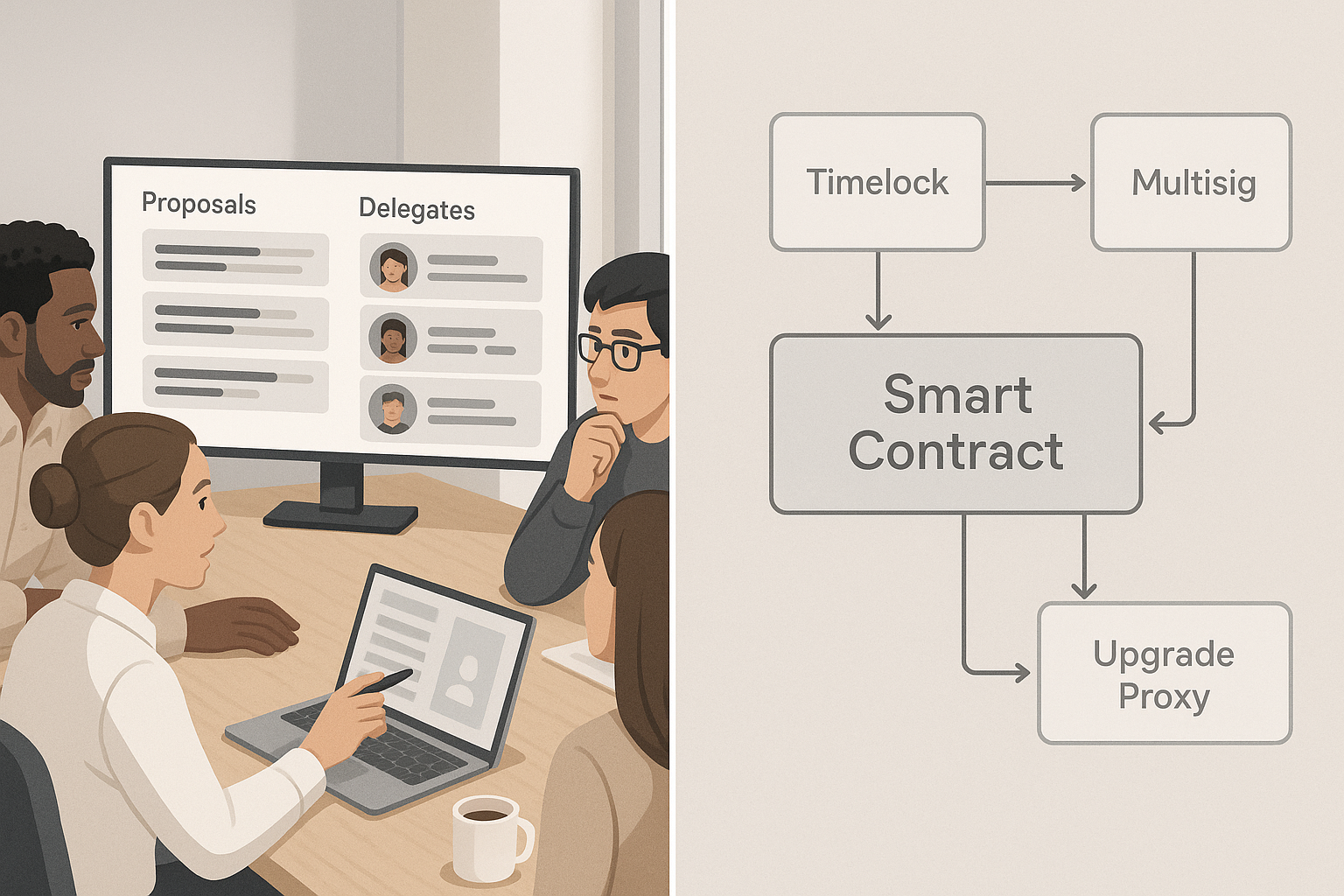
Interagency collaboration often stalls on “whose copy is right?” and “who changed the rules?” Blockchain flips this by creating a shared ledger of agreements, events, and state changes where each participant keeps a synchronized copy. Permissioned networks are ideal: you control who can read, write, and validate; you encode business rules as smart contracts; and you maintain a common audit log without centralizing all data. This is useful for case management (social services crossing health and education), licensing, or tax/benefit coordination.
The pattern is to keep personal data in agency systems and use the ledger to coordinate metadata and proofs. For example, Agency A asserts “eligibility checked,” Agency B asserts “benefit paid,” and both anchor the corresponding evidence. Disputes become easier to resolve because you have a time-ordered, signed sequence of decisions. When laws or policies change, you version the smart contracts and record migrations so auditors can replay history with the correct rules.
How to do it
- Map the process: events, roles, and data elements that cross boundaries.
- Choose a governance model: consortium steering committee, change control, onboarding/offboarding procedures.
- Implement role-based access: validators, writers, readers; align with legal mandates.
- Instrument everything: emit metrics (latency, throughput, error rates) and publish dashboards.
Numbers & guardrails (illustrative)
- A network of 12 agencies with 3 validator nodes each runs smoothly at hundreds of tx/min, plenty for administrative workflows.
- Aim for <2 seconds finality for UX; anything slower frustrates staff during cross-agency tasks.
- Quarterly reviews of contract logic catch drift and policy updates before they cause inconsistency.
With a permissioned ledger, you introduce clarity without centralization, preserving agency autonomy while eliminating reconciliation drudgery.
11. Move to Real-Time Audit and Continuous Compliance
Traditional audits sample documents and replay decisions. With blockchain, you can shift to continuous audit where controls produce verifiable evidence as transactions occur. Every time a payment is approved, a grant milestone is met, or a device passes calibration, a signed event lands on the ledger. Auditors subscribe to streams and check that events match policies: amounts within limits, approvals in order, exceptions investigated. For sensitive metrics, zero-knowledge proofs (ZKPs) let you prove a rule was met without exposing the underlying values—for example, proving that beneficiary income ≤ threshold while hiding the actual income.
This approach doesn’t remove auditors; it makes them faster and more effective. They focus on anomalies and control design, not on paging through document folders. For citizens, this translates into a public transparency portal with aggregate counts and integrity proofs without leaking personal data. For internal teams, it means fewer fire drills during audit season because the evidence already exists in a standardized, machine-readable form.
How to do it
- Instrument key controls: approvals, threshold checks, separation of duties, and policy exceptions emit events.
- Use ZKPs selectively where confidentiality is paramount; keep circuits simple for maintainability.
- Provide auditor tooling: dashboards, replay functions, and independent verification scripts.
- Write retention policies for on-chain events and off-chain evidence to match legal requirements.
Numeric example (illustrative)
- If 1% of 200,000 annual transactions trigger exceptions and each exception takes 30 minutes to investigate, continuous audit tooling that cuts review time to 10 minutes saves ~667 hours of staff time.
- With two independent verifier implementations agreeing on rule checks, you reduce single-vendor risk and improve assurance.
By making compliance event-driven and verifiable, you move from after-the-fact discovery to real-time prevention and transparent governance.
12. Publish Open Transparency Dashboards with On-Chain Proofs
Citizens judge trust by what they can see and verify. An open transparency portal backed by blockchain lets you publish live or periodic dashboards for spending, procurement milestones, service backlogs, environmental metrics, and more—each data point accompanied by a clickable proof. The portal shows numbers; the ledger certifies their integrity and timing. This isn’t about hype graphics; it’s about verifiable accountability that any journalist, researcher, or resident can check independently.
Design the portal to surface context: definitions, denominators, last update time, and the reason a data point might lag. Provide CSV/JSON exports and simple verification scripts so third parties can reproduce your charts. When an error occurs (and it will), publish the correction as a new version with a link to the previous hash—mistakes become part of the transparent record, which is more trustworthy than silent edits.
How to do it
- Pair each metric with a proof link: clicking reveals the hash, timestamp, and signer plus instructions to verify offline.
- Release machine-readable data with stable schemas; avoid format churn that breaks external tools.
- Document known limitations in plain language; don’t hide coverage gaps.
- Accept feedback via issues or forms and show resolution status to close the loop.
Mini-checklist
- Scope: which programs and datasets?
- Frequency: real-time, daily, or monthly?
- Accessibility: WCAG-conformant visualizations and text.
- Longevity: archive versions; never delete prior releases.
When transparency gets a cryptographic backbone, it becomes routine rather than performative, and public trust grows because proof replaces promise.
Choosing the Right Chain Model (Compact Guide)
| Model | Typical public-sector use | Data sensitivity | Pros | Cons |
|---|---|---|---|---|
| Public | Transparency portals, proofs of existence | Low to medium (no PII) | High resilience, broad verifiability | Harder privacy, unpredictable fees |
| Permissioned | Interagency workflows, credential registries | Medium to high | Access control, predictable operations | Requires consortium governance |
| Hybrid | Voting proofs, procurement anchors | Mixed | Best-of-both: public anchoring + private data | Added complexity to manage bridges |
Conclusion
If you remember only one thing, make it this: blockchain is not a silver bullet for government—it is a trust amplifier for the processes you already run. When you anchor identity, voting commitments, land title events, procurement milestones, and benefit disbursements to a tamper-evident ledger, you reduce disputes and speed oversight because everyone works from the same verifiable history. The most successful implementations are modest in scope yet rigorous in design: privacy first, data minimalism on-chain, open standards for wallets and credentials, and clear governance for who can do what. Start with one high-impact use case, instrument it for continuous audit, and expose proofs to the public in a way that’s accessible and humane. Build institutional muscle memory—issuance, revocation, exception handling—and evolve your smart contracts as policies change. Do this, and you’ll see procurement become cleaner, records become easier to trust, benefits reach the right people faster, and participation feel fairer because every citizen can look under the hood. Ready to begin? Pick one use case, set your guardrails, and publish your first verifiable proof within weeks.
FAQs
1) Is blockchain the same as a database for government records?
No. Think of blockchain as an integrity and coordination layer. Your documents and case data still live in databases and content systems designed for search, retention, and access control. The blockchain records proofs and workflows—who approved what and when—so tampering becomes evident. In many projects, only hashes, timestamps, and minimal metadata are written on-chain, while full records remain off-chain behind role-based permissions.
2) Can we put personal data on the blockchain if it’s encrypted?
Avoid it. Encryption helps, but immutability means you can’t remove data later if laws or policies require deletion. The safer pattern is to keep personal data off-chain in systems that support erasure and update, and to write only integrity proofs or zero-knowledge attestations on-chain. This approach honors privacy while preserving auditability, and it’s aligned with data minimization principles found in many regulations.
3) How do we choose between a public chain and a permissioned network?
Decide based on who must verify and what you need to protect. If you need broad, independent verifiability (e.g., proofs of publication), a public chain is strong. If you need fine-grained access control and predictable operations across agencies (e.g., licensing), a permissioned network fits. Many governments use hybrid designs: sensitive data and workflows on permissioned ledgers, with periodic anchors to a public chain for extra integrity.
4) Isn’t blockchain too slow for government workloads?
Most administrative workloads are low throughput compared with financial trading. Anchoring thousands—even millions—of events per year is well within the capacity of mature ledgers. You also batch operations (Merkle roots) to keep costs tiny. The real performance work is in your off-chain integrations and UX; design those well and end users won’t notice the ledger at all.
5) How do zero-knowledge proofs help public agencies?
Zero-knowledge proofs (ZKPs) let you prove a statement is true—“income is below threshold,” “age is over minimum,” “payment matches contract rules”—without revealing the underlying data. This is perfect for social benefits and regulated data. Start with small, stable rules so proofs remain understandable and maintainable, and document circuits as part of your control framework so auditors can review them.
6) What does it cost to get started?
Costs vary with scope, but you can begin with a proof-of-existence pilot for public records at low cost: open-source tools, minimal storage, and a simple verification page. Larger projects (identity, procurement, interagency networks) require funding for integration, change management, and governance. Budget realistically for operations and updates; smart contracts and schemas evolve just like any other system.
7) Will blockchain increase transparency at the expense of privacy?
Not if you design for privacy by default. Keep personal data off-chain; rely on credentials, selective disclosure, and ZKPs. Publish aggregated metrics and proofs rather than raw records. When transparency requires detail—e.g., procurement—disclose contract terms as policy dictates, but still anchor integrity proofs so the public can verify what was published and when.
8) Do we need a national strategy before piloting?
A national strategy helps, but you don’t need to wait. Many agencies start with scoped pilots that follow open standards so they can plug into larger initiatives later. The key is avoiding lock-in: use interoperable identifiers and schemas, and document your governance from day one. When the strategy arrives, your project can align quickly instead of re-platforming.
9) How do we handle errors or wrongful entries on-chain?
You don’t erase; you supersede. Publish a corrected version, link it to the prior hash, and add a clear explanatory note. For critical errors, rely on multi-signature governance to post reversals or flags. This is normal in append-only systems and leads to stronger accountability, since the correction is publicly documented rather than silently edited.
10) What about energy consumption and sustainability?
Energy profiles differ widely across ledgers. Permissioned networks and many public chains use low-energy consensus. For policy alignment, prefer systems with published energy metrics, locate infrastructure in efficient data centers, and anchor infrequently with batched hashes. Sustainability is a procurement requirement you can encode, just like accessibility or security.
11) How do we convince auditors and legal teams?
Bring them in early. Show how event-level evidence simplifies sampling and how on-chain proofs reduce reliance on screenshots and emails. Map each control to a ledger event and provide a read-only auditor toolkit. Legal teams usually focus on privacy, retention, and jurisdiction—address these by keeping PII off-chain, documenting retention policies, and choosing infrastructure locations consistent with data-residency rules.
12) What skills does our team need?
You don’t need everyone to be cryptographers. You do need systems integrators, security engineers, records officers, policy analysts, and product managers who can translate laws into verifiable rules. Train business owners on how credentials, hashes, and smart contracts work at a high level, and build a change-management plan so frontline staff understand new workflows.
References
- Blockchain Technology Overview (NISTIR 8202) — National Institute of Standards and Technology (NIST). Publication date: October 2018. https://csrc.nist.gov/pubs/ir/8202/final
- Blockchain: Emerging Technology Offers Benefits for Some Applications but Faces Challenges (GAO-22-104625) — U.S. Government Accountability Office. Publication date: March 23, 2022. https://www.gao.gov/products/gao-22-104625
- Blockchain at the Frontier — Organisation for Economic Co-operation and Development (OECD). Publication date: 2022. https://www.oecd.org/content/dam/oecd/en/publications/reports/2022/05/blockchain-at-the-frontier_3a3fc7df/80e1f9bb-en.pdf
- European Blockchain Services Infrastructure (EBSI) — Home — European Commission. https://ec.europa.eu/digital-building-blocks/sites/spaces/EBSI/pages/447687044/Home
- ISO/TC 307 — Blockchain and Distributed Ledger Technologies — International Organization for Standardization (ISO). https://www.iso.org/committee/6266604.html
- Building Blocks — World Food Programme Innovation. https://innovation.wfp.org/project/building-blocks
- The Use of the National Blockchain Infrastructure to Support the e-Residency Initiative (Estonia) — Interoperable Europe. https://interoperable-europe.ec.europa.eu/collection/public-sector-tech-watch/use-national-blockchain-infrastructure-support-e-residency-initiative-estonia
- KSI Blockchain — e-Estonia. https://e-estonia.com/solutions/cyber-security/ksi-blockchain/
- Blockchain-Based Application at a Governmental Level: A Systematic Review — Policy and Society (Oxford Academic). Publication date: 2022. https://academic.oup.com/policyandsociety/article/41/3/386/6566828