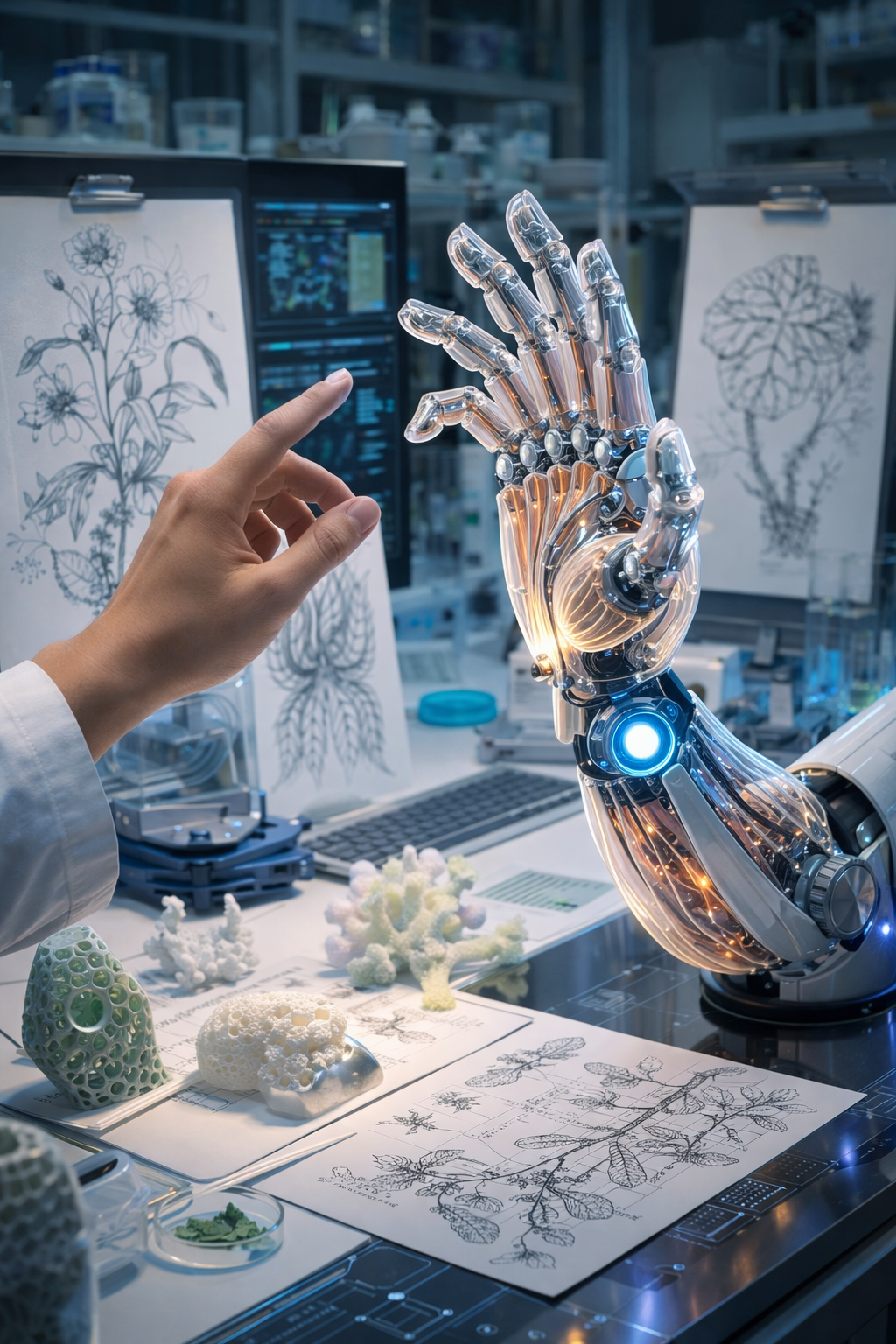
For billions of years, nature has been the ultimate laboratory. Through the relentless process of natural selection, biological organisms have solved complex problems involving locomotion, sensing, energy efficiency, and structural integrity. Today, the field of bio-inspired robotics seeks to “copy nature’s homework” by translating these biological secrets into mechanical systems. This isn’t just about making a robot that looks like a dog; it’s about understanding the underlying principles of why a dog’s leg is more efficient than a wheel on uneven terrain.
What is Bio-Inspired Robotics?
Bio-inspired robotics is an interdisciplinary field that combines biology, engineering, and computer science to design and build robots that mimic the movements, behaviors, and anatomical structures of living organisms. Unlike traditional industrial robots—which are often rigid, heavy, and confined to predictable factory floors—bio-inspired robots are designed to be adaptable, resilient, and capable of operating in the chaotic, “dirty” environments of the real world.
Key Takeaways
- Biomimicry vs. Bio-inspiration: While biomimicry seeks to replicate biological forms exactly, bio-inspiration focuses on extracting the principles behind a biological success to solve human problems.
- Adaptability is King: Biological systems excel at “graceful degradation”—continuing to function even when damaged—a trait engineers are desperate to replicate.
- Efficiency: From the way a tuna swims to how a bee navigates, nature uses significantly less power than modern silicon and steel systems.
- Soft Robotics: A major sub-field moving away from metal joints toward compliant, flexible materials inspired by cephalopods and muscle tissue.
Who This Is For
This guide is designed for engineering students, technology enthusiasts, R&D professionals, and curious minds who want to understand how the intersection of biology and robotics is shaping the future of medicine, exploration, and disaster response.
The Philosophy of Biological Engineering
To understand bio-inspired robotics, we must first recognize that nature does not optimize for “perfection”; it optimizes for “survival.” In engineering terms, this means biological systems are highly efficient, multi-functional, and robust.
Traditional engineering often relies on “top-down” design—starting with a specific goal and building a rigid machine to achieve it. Nature uses “bottom-up” evolution. If a creature’s wing didn’t work, it didn’t survive to pass on those blueprints. As of March 2026, we are seeing a massive shift in robotics labs worldwide: moving away from the “brute force” approach of heavy motors and toward the “elegant nuance” of biological movement.
1. Locomotion: Moving Beyond the Wheel
The wheel is one of humanity’s greatest inventions, but you won’t find it in the animal kingdom. Why? Because wheels require roads. Nature, however, has mastered movement over sand, mud, vertical walls, and through the air.
Bipedal and Quadrupedal Movement
Walking is essentially a controlled fall. Humanoid robots like those developed by Boston Dynamics or Tesla (Optimus) utilize “Dynamic Stability.” By studying how humans and dogs maintain balance, engineers have moved beyond static walking (where the center of gravity must always be over a foot) to dynamic running and jumping.
- Example: The MIT Cheetah uses high-torque motors and bio-inspired leg morphology to hit speeds of 30 mph, mimicking the energy-storing tendons of a feline.
Climbing: The Gecko’s Secret
How does a 100-gram lizard walk across a ceiling? It’s not glue or suction; it’s physics. Geckos use Van der Waals forces—molecular-level attraction—enabled by millions of tiny hairs (setae) on their feet.
- Application: Robots like NASA’s “Lemur” use synthetic gecko adhesives to crawl along the outside of the International Space Station without needing magnetic surfaces.
Avian and Insect Flight
Traditional drones (quadcopters) are loud and inefficient. Bio-inspired drones mimic the flapping of wings (ornithopters).
- The Hummingbird Drone: By mimicking the “figure-eight” wing stroke of a hummingbird, these robots can hover in high winds and move with agility that traditional propellers cannot match.
2. Soft Robotics: The Power of Compliance
For decades, the word “robot” implied “metal.” However, most living things are soft. Soft robotics is a revolutionary branch of bio-inspired design that uses flexible materials like silicone, fabric, and hydrogels.
The Octopus Influence
The octopus is the “gold standard” for soft robotics. With no skeleton, it can squeeze through tiny gaps and use its arms to both manipulate delicate objects and exert powerful force.
- Pneumatic Network (PneuNet) Actuators: These are soft chambers that expand when filled with air, causing the structure to curl or stretch. This allows robots to handle fragile items—like fruit or human organs during surgery—without the risk of crushing them.
Medical Applications
Soft robots are changing the face of internal medicine. Imagine a soft, worm-like robot that can navigate the delicate curves of the human intestines for a colonoscopy, causing significantly less discomfort than a rigid scope.
3. Swarm Intelligence: The Strength of the Collective
Individual ants or bees are not particularly “smart” in the human sense. However, as a colony, they can solve complex logistical problems, build intricate structures, and defend against predators. This is known as Swarm Intelligence.
Decentralized Control
In a robot swarm, there is no “leader” robot. Instead, every robot follows a few simple rules, such as:
- Keep a specific distance from your neighbor.
- Move toward the light.
- Avoid obstacles.
When 1,000 “Kilobots” (small, vibrating robots) follow these rules, they can organize themselves into complex shapes or search a large area for a chemical leak.
Search and Rescue
In a collapsed building, one large robot might get stuck. A swarm of 500 cockroach-sized robots can infiltrate the rubble. If 10 of them are destroyed, the “mission” continues. This is the biological principle of redundancy.
4. Sensing and Perception: Beyond the Camera
While we rely heavily on vision, many animals use specialized sensors to perceive the world. Bio-inspired robotics integrates these “exotic” sensors to help machines function in low-visibility or cluttered environments.
Echolocation and Sonar
Bats and dolphins use sound to “see.” By emitting pulses and timing the echoes, they create a 3D map of their surroundings. Bio-inspired underwater robots use similar sonar arrays to navigate murky depths where cameras are useless.
Whisker Sensors (Vibrissae)
Rats and seals use their whiskers to detect tiny changes in air or water flow.
- Engineering Use: Researchers have developed “robotic whiskers” for autonomous vehicles. These sensors provide tactile feedback when parking or navigating tight corridors, acting as a backup to LIDAR and cameras.
The Compound Eye
Insects have compound eyes that provide a nearly 360-degree field of view and incredible motion detection. Engineers are developing “curved sensor arrays” that mimic this, allowing drones to detect an incoming obstacle from any direction instantly.
5. Materials and Surface Science
Sometimes the “bio-inspiration” isn’t in how the robot moves, but what it is made of. This is often referred to as Morphological Intelligence—where the body itself does part of the “thinking.”
Shark Skin (Denticles)
Shark skin is covered in tiny, tooth-like scales called denticles. These reduce drag and prevent microorganisms from hitching a ride.
- Application: Underwater gliders and long-range autonomous submarines are being coated in “synthetic shark skin” to increase fuel efficiency and speed by reducing turbulence.
The Lotus Effect
Lotus leaves are “superhydrophobic”—they repel water so effectively that droplets roll off, taking dirt with them. Bio-inspired coatings on solar-powered robots allow them to self-clean in the rain, ensuring their sensors and solar panels remain functional without human maintenance.
6. Energy Efficiency and Harvesting
A major hurdle for modern robotics is battery life. A biological bird can fly thousands of miles on a few grams of fat. A drone can fly for 20 minutes before needing a recharge.
Metabolic Scaling
Engineers are studying how animals manage their “energy budget.” This has led to the development of Passive Dynamics.
- Passive Walkers: These are robots that can walk down a slight incline using only gravity and the natural swing of their legs—zero motor power required. By integrating these passive elements into powered robots, we can double or triple battery life.
Energy Harvesting
Some bio-inspired robots are designed to “eat” for energy.
- The EcoBot: Developed in the UK, this robot utilizes a microbial fuel cell that “digests” organic matter (like flies or rotting leaves) to generate electricity. While still in its infancy, this mimics the biological process of turning biomass into fuel.
7. Common Mistakes in Bio-Inspired Design
Even the best engineers fall into traps when trying to mimic nature.
1. Literalism vs. Functionalism
The biggest mistake is trying to make a robot look exactly like an animal. Nature is constrained by biology (cells must be fed, oxygen must be transported). A robot doesn’t have these constraints.
- The Lesson: Don’t build a robot with a digestive system if a battery is more efficient. Copy the mechanism, not the anatomy.
2. Ignoring the Square-Cube Law
Just because an ant can lift 50 times its body weight doesn’t mean a human-sized “Ant-Bot” can. As you scale an object up, its volume (weight) increases much faster than its surface area (muscle/motor strength).
- The Lesson: Bio-inspired designs often only work at specific scales.
3. Over-Engineering
Nature is “lazy”—it uses the simplest path to survival. Engineers often add too many sensors and motors.
- The Lesson: Use “Mechanical Intelligence.” If a soft gripper naturally molds to an object’s shape, you don’t need 50 sensors to tell the robot how to grip it.
8. The Future: Synthetic Biology and Hybrid Robots
As of 2026, the line between “machine” and “organism” is blurring. We are entering the era of Bio-hybrids.
Bio-Hybrid Actuators
Instead of using electric motors, some researchers are using actual living muscle tissue grown in a lab. These muscle fibers are attached to a robotic skeleton and stimulated with electricity or light.
- Benefit: These “muscles” are self-healing and have a power-to-weight ratio that exceeds most mechanical actuators.
Neural Integration
We are seeing the first steps toward robots controlled by biological brains (specifically, clusters of neurons grown on silicon chips). This “wetware” can process sensory data with much lower power consumption than traditional AI.
9. Ethical Considerations and Safety
Safety Disclaimer: Bio-inspired robotics, particularly in the form of “slaughterbots” or autonomous swarms, carries significant ethical weight. The potential for weaponization of small, insect-like drones is a major concern for global security.
Furthermore, we must consider the ecological impact. If we release thousands of “robotic bees” to pollinate crops, will they interfere with actual bee populations? These are questions that require international policy, not just engineering.
Conclusion: The Path Forward
Bio-inspired robotics represents a fundamental shift in how we view technology. We are moving away from the “Industrial Revolution” mindset of mastering nature and toward a “Biological Revolution” mindset of collaborating with nature’s existing designs.
For those looking to enter this field or utilize its benefits, the next steps are clear:
- Study Comparative Anatomy: If you want to build better robots, spend as much time in a biology lab as you do in a machine shop.
- Focus on Materials: The “Soft Robotics” revolution is driven by material science. Researching compliant polymers and smart materials is the key to the next generation of machines.
- Think in Systems: Don’t just build a “leg”; build a system that understands the “terrain.”
The future of robotics isn’t more steel and more code—it’s more life. As we continue to decode the engineering marvels of the natural world, our machines will become more than just tools; they will become as adaptable, resilient, and efficient as the life that inspired them.
FAQs
What is the most successful bio-inspired robot?
Currently, the quadrupedal robots (like Boston Dynamics’ Spot) are the most commercially successful. They are used in construction, oil and gas, and public safety because they can navigate human environments—stairs, rubble, and narrow passages—better than any wheeled robot.
Is bio-inspired robotics the same as AI?
No, but they are related. Bio-inspired robotics focuses on the physical body and movement (Morphology), while AI focuses on the brain and processing (Cognition). However, many bio-inspired robots use “Neural Networks” (AI inspired by the human brain) to control their bio-inspired bodies.
Why don’t we see more bio-inspired robots in daily life?
The primary challenges are cost and durability. Synthetic gecko adhesives wear out; soft robotic skins can tear; and complex flapping wings are difficult to repair compared to a simple propeller. As material science improves, these robots will become more common.
Can bio-inspired robots help the environment?
Yes. Many are being designed for “environmental monitoring,” such as robotic fish that “smell” water pollution or swarms of drones that plant trees in deforested areas.
Does “bio-inspired” mean the robot uses biological parts?
Usually no. Most are 100% synthetic. However, the emerging field of Bio-hybrid robotics does use living cells (like heart or muscle tissue) integrated into mechanical frames.
References
- Nature Robotics: “The Evolution of Bio-Inspired Design Principles” (2024).
- Science Robotics: “Soft Robotics: A New Era of Compliant Machines” (2025).
- MIT Biomimetic Robotics Lab: Official Research Documentation on the Cheetah 3.
- Harvard Wyss Institute: “Bio-inspired Soft Grippers for Deep Sea Exploration.”
- Oxford University Press: “Principles of Animal Locomotion” by R. McNeill Alexander.
- Journal of Bionic Engineering: “Surface Engineering: From Lotus Leaves to Self-Cleaning Robots.”
- NASA Jet Propulsion Laboratory (JPL): “Gecko-Inspired Adhesion for Space Applications.”
- IEEE Xplore: “Swarm Intelligence in Search and Rescue Scenarios: A Review.”
- Stanford University: “The Biomimetics and Dexterous Manipulation Lab Reports.”
- The Royal Society Publishing: “Energy harvesting in biological and artificial systems.”