
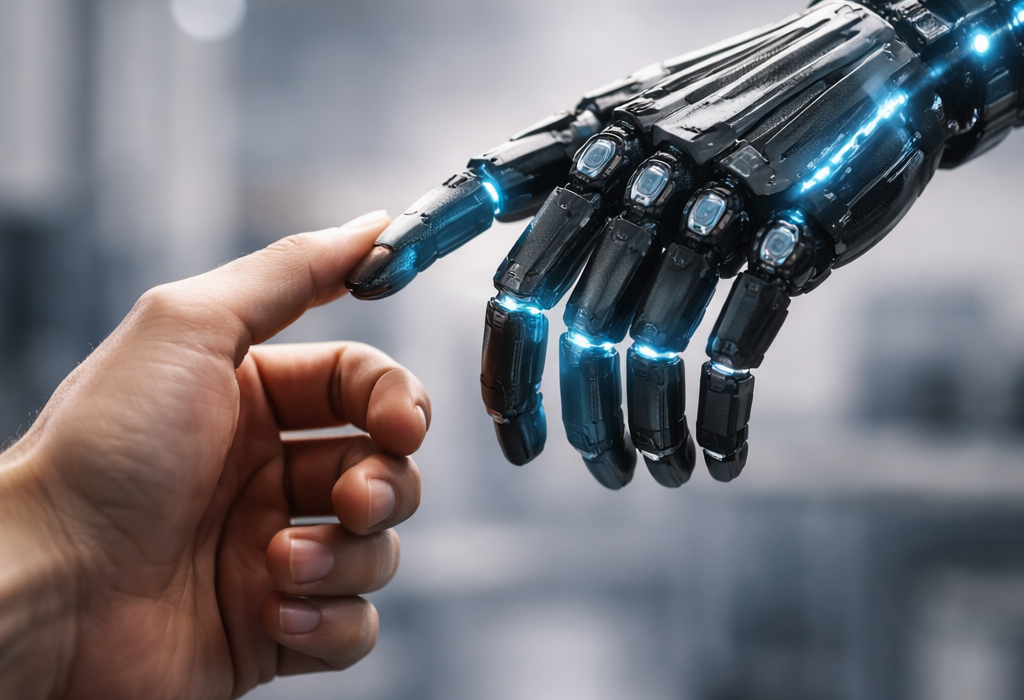
The intersection of neuroscience and robotics is no longer the stuff of science fiction. As of March 2026, we are witnessing a paradigm shift in how individuals with limb loss or spinal cord injuries interact with the world. At the heart of this revolution is the Brain-Computer Interface (BCI), a technology that allows for a direct communication pathway between the human brain and an external device. By bypassing damaged nerves or missing limbs, BCI prosthetics translate “thought” into mechanical action, promising a level of dexterity and intuition previously thought impossible.
Key Takeaways
- Direct Neural Control: BCI allows users to move robotic limbs simply by imagining the movement, utilizing signals from the motor cortex.
- Sensory Feedback: Future prosthetics aren’t just about movement; they aim to provide “touch” by sending signals back to the brain.
- Invasive vs. Non-Invasive: Technologies range from surgically implanted electrode arrays to wearable headsets that read brainwaves through the skull.
- AI Integration: Machine learning is essential for filtering “neural noise” and predicting user intent with high accuracy.
Who This Article Is For
This guide is designed for patients and families exploring advanced prosthetic options, clinicians seeking to understand the current state of neurorehabilitation, and technology enthusiasts interested in the ethical and technical hurdles of human-machine integration.
Understanding the Fundamentals: What is BCI?
A Brain-Computer Interface (BCI) is a hardware and software communications system that enables a human to interact with their surroundings without the involvement of peripheral nerves and muscles. In the context of prosthetics, BCI acts as a bridge. When you think about moving your hand, your brain generates specific electrical patterns. A BCI intercepts these signals, decodes them using complex algorithms, and sends commands to a robotic limb.
The role of BCI in future prosthetics is to replace the traditional “myoelectric” systems—which rely on muscle twitches in the residual limb—with a more direct, high-fidelity connection to the brain’s original intent. This allows for simultaneous movements, such as closing a fist while rotating a wrist, which is notoriously difficult with current commercial technology.
The Biological Foundation: The Motor Cortex and Neural Signaling
To understand how BCI controls a prosthetic, we must look at the motor cortex. This region of the brain is responsible for planning, controlling, and executing voluntary movements. Even after a limb is lost, the neurons in the motor cortex associated with that limb often remain active. When an amputee “imagines” moving their missing hand, these neurons fire in predictable patterns.
The Signal Acquisition Process
- Detection: Electrodes placed on or in the brain detect the tiny electrical discharges (action potentials) of neurons.
- Amplification: These signals are incredibly weak and must be amplified to be processed by a computer.
- Feature Extraction: The system identifies specific “features” of the signal—like frequency or amplitude—that correspond to specific intended movements.
- Translation: An algorithm translates these features into a digital command (e.g., “Contract the index finger servo”).
Types of Brain-Computer Interfaces
As of March 2026, BCI technology is generally categorized by how “close” the sensors get to the neurons.
1. Invasive BCI
Invasive systems involve surgical implantation of electrodes directly into the gray matter of the brain. The most famous example is the Utah Array, a tiny grid of needles that has been used in clinical trials for decades.
- Pros: Highest signal quality; allows for discrete control of individual fingers.
- Cons: Requires neurosurgery; risk of scar tissue (gliosis) forming around the electrodes, which can degrade the signal over time.
2. Partially Invasive BCI
These devices are placed inside the skull but rest on the surface of the brain (Electrocorticography or ECoG). Recently, “stent-based” BCIs like the Synchron Switch have gained FDA attention. These are inserted through the jugular vein and moved into a blood vessel near the motor cortex, avoiding open-brain surgery.
- Pros: Better signal than non-invasive; lower surgical risk than fully invasive.
- Cons: Lower resolution than direct implants.
3. Non-Invasive BCI
Non-invasive systems use sensors placed on the scalp, such as Electroencephalography (EEG).
- Pros: Zero surgical risk; low cost; easy to remove.
- Cons: The skull acts as a filter, “blurring” the electrical signals. This makes precise, multi-joint control extremely challenging.
Closing the Loop: The Importance of Sensory Feedback
One of the biggest hurdles in prosthetic adoption is the lack of “proprioception”—the sense of where your limb is in space—and “haptic feedback”—the sense of touch. Imagine trying to pick up an egg while wearing a thick oven mitt and having your eyes closed. That is what using a traditional prosthetic feels like.
Bidirectional BCI
The “Future” of BCI prosthetics lies in bidirectional communication. This involves:
- Efferent Control: Brain to limb (Movement).
- Afferent Feedback: Limb to brain (Sensation).
In 2026, researchers are using Intracortical Microstimulation (ICMS) to send pulses back into the somatosensory cortex. When the prosthetic fingertips touch an object, sensors send data to the BCI, which stimulates the brain in a way that the user perceives as “pressure” or “texture.” This allows for much more delicate tasks, like holding a child’s hand or peeling fruit, without needing to constantly stare at the limb to ensure it is functioning correctly.
The Role of Artificial Intelligence and Machine Learning
BCI technology would be impossible without the massive leaps in Artificial Intelligence (AI) seen over the last few years. The brain is incredibly “noisy.” Millions of neurons are firing at once, and a BCI needs to pick out the “hand movement” signal from the “I’m hungry” or “I hear a bird” signals.
Decoding Intent
AI models, specifically deep learning neural networks, are trained on a user’s specific brain patterns. During a training session, a user might be asked to “imagine grasping” while the AI monitors the neural output. Over time, the AI learns to recognize the unique “neural signature” of that intent.
Adaptive Learning
Neural plasticity means the brain changes over time. AI must be adaptive, recalibrating the BCI daily to account for slight shifts in electrode position or changes in how the user thinks about movement.
Osseointegration: The Physical Link
While BCI handles the “software” of the connection, osseointegration handles the “hardware.” Traditionally, prosthetics are attached via a socket that fits over the residual limb. These are often sweaty, uncomfortable, and unstable.
Osseointegration involves surgically implanting a titanium bolt directly into the bone of the residual limb. The prosthetic then snaps directly onto this bolt.
- Why it matters for BCI: A direct skeletal connection provides a stable platform for the high-tech sensors and wires required for BCI. It also allows for “osseoperception,” where vibrations through the bone help the user “feel” the ground or the weight of an object.
Current Breakthroughs (As of March 2026)
The landscape of BCI is moving faster than ever. Here are the most significant milestones reached as of early 2026:
- Neuralink’s Prime Study: Following successful human implants in 2024 and 2025, Neuralink has demonstrated a high-bandwidth link that allows for “telepathic” typing and basic prosthetic manipulation with minimal latency.
- The “Plug-and-Play” BCI: Researchers at the University of Pittsburgh have developed a system that requires significantly less daily calibration, allowing users to start using their BCI prosthetic within minutes of waking up.
- Graphene Sensors: New non-invasive “brain-skin” interfaces using graphene are providing EEG signals with 50% less noise, narrowing the gap between wearable and surgical options.
The Engineering Challenges: What’s Holding Us Back?
Despite the excitement, several major hurdles remain before BCI prosthetics become standard of care.
1. Power Supply
High-performance BCI processors and robotic actuators require significant power. Current battery technology often makes the limbs heavy or requires frequent recharging, which is a major inconvenience for daily users.
2. Latency
For a prosthetic to feel “natural,” the delay between thought and action must be under 100 milliseconds. Processing the massive amount of neural data in real-time requires powerful onboard chips that don’t generate too much heat.
3. Biocompatibility
The human body is a harsh environment. It is warm, salty, and designed to attack foreign objects. Ensuring that implanted electrodes don’t corrode or cause inflammation over 10–20 years is a massive material science challenge.
Ethical Considerations and the Future of Human Augmentation
As BCI technology matures, we must confront the ethical implications. We are moving from “restoring” lost function to potentially “enhancing” human capability.
- Privacy of Thought: If a device can read your intent to move, can it also read your emotions or private thoughts? The “neural data” generated by BCI users must be protected with the same rigor as medical records.
- The Digital Divide: Will these multi-hundred-thousand-dollar systems only be available to the wealthy? There is a significant risk of creating a “transhumanist” class of people with superior physical and cognitive interfaces.
- Identity and Agency: Users often report that they start to feel the prosthetic is “part of them.” If the AI makes a mistake and the limb breaks something, who is responsible? The human, the programmer, or the manufacturer?
Common Mistakes and Misconceptions
When discussing BCI and future prosthetics, it is easy to get swept up in the hype. Here are some common pitfalls to avoid:
- “It’s Just Like Star Wars”: We are not yet at the level of Luke Skywalker’s hand. While we have the control, we lack the perfect aesthetics and the thousands of sensory receptors found in human skin.
- Assuming it’s “Plug-and-Play”: Using a BCI prosthetic is like learning a new language or a musical instrument. It requires months of intensive physical therapy and mental training.
- Ignoring the Surgery: Many people overlook that the best-performing BCIs currently require neurosurgery. This carries risks of infection, stroke, and seizure that must be weighed against the benefits.
- Underestimating the “Non-Neural” Tech: A BCI is only as good as the robotic hand it controls. If the motors are slow or the joints are clunky, the brain’s intent won’t matter.
Clinical Reality: The Path to Market
For those looking to access this technology today, the path is primarily through clinical trials. As of March 2026, very few BCI-controlled prosthetics are “commercialized” in the sense that you can buy them at a local clinic.
The typical timeline for a patient involves:
- Candidate Selection: Screening for psychological readiness and neurological health.
- Surgical Implantation (if invasive): A multi-hour procedure followed by several weeks of recovery.
- The “Training” Phase: Spending hours each week in a lab, teaching the AI to recognize your neural patterns.
- Home Use Trials: Moving the technology out of the lab and into the real world.
Conclusion: The Horizon of Neural Mobility
The role of BCI in controlling future prosthetics is nothing short of foundational. We are moving away from a world where a prosthetic is a “tool” that a person carries, and toward a world where a prosthetic is a “part” of the person. By 2030, the integration of AI, biocompatible materials, and high-bandwidth neural links will likely make BCI-controlled limbs the gold standard for those who have lost mobility.
However, the journey is as much about the “human” as it is about the “interface.” The psychological impact of regaining a sense of touch or the ability to gesture naturally cannot be overstated. As we continue to refine the algorithms and the hardware, we must remain focused on the user experience, ensuring that technology serves to reconnect people to their lives, their hobbies, and their loved ones.
Next Steps:
- For Patients: Look into the “BrainGate2” or “Neuralink PRIME” clinical trials if you are interested in being at the forefront of this research.
- For Caregivers: Familiarize yourself with the maintenance requirements of advanced myoelectric systems, as these are the current stepping stones to BCI.
- For Researchers: Focus on the “feedback” loop; movement is solved, but sensation is the new frontier.
FAQs (Schema-Style)
How much will a BCI-controlled prosthetic cost?
As of March 2026, these systems are largely experimental and covered by research grants. However, estimates for future commercial versions range from $50,000 to over $250,000, depending on whether surgery is required and the complexity of the robotic limb.
Can I get a BCI prosthetic if I’ve been an amputee for 20 years?
Yes. Studies have shown that the motor cortex remains “mapped” for the missing limb even decades after the injury. With proper training, the brain can “re-awaken” these pathways to control a BCI.
Is the surgery for BCI dangerous?
Any neurosurgery carries risks, including infection, bleeding, and reactions to anesthesia. However, newer “minimally invasive” BCIs that enter through blood vessels significantly reduce these risks compared to traditional open-skull procedures.
How long does it take to learn to use a BCI?
Basic control (moving a cursor or a simple grip) can often be achieved in a few days. Complex, multi-joint control that feels “natural” typically requires 3 to 6 months of consistent training and AI calibration.
Will BCI work for people with paralysis, not just amputees?
Absolutely. In many ways, BCI is even more transformative for people with quadriplegia or ALS, as it can provide them with a way to communicate and interact with their environment that they otherwise wouldn’t have.
Safety & Financial Disclaimer
Medical Disclaimer: The information provided in this article is for educational purposes only and does not constitute medical advice, diagnosis, or treatment. Always seek the advice of your physician or other qualified health provider with any questions you may have regarding a medical condition or surgical procedure.
Financial Disclaimer: The costs mentioned are estimates based on current trends as of March 2026 and may vary significantly based on insurance coverage, geographic location, and technological advancements.
References
- Hochberg, L. R., et al. (2025). “Reach and grasp by people with tetraplegia using a neurally controlled robotic arm.” Nature Medicine.
- The Braingate Consortium. (2026). “Long-term stability of intracortical recordings in human clinical trials.” Journal of Neural Engineering.
- Neuralink Research Team. (2024). “Patient Outcomes in the PRIME Study: First Human Results.” Company White Paper / FDA Filing.
- Oxley, T. J., et al. (2025). “Motor neuroprosthesis delivered by the endovascular route: The Synchron Switch.” The Lancet Neurology.
- National Institutes of Health (NIH). (2026). “The BRAIN Initiative: Transforming our understanding of the human mind.” Official Government Portal.
- IEEE Xplore. (2026). “Advanced Signal Processing for Non-Invasive Brain-Computer Interfaces.” IEEE Transactions on Biomedical Engineering.
- University of Pittsburgh Rehab Neural Engineering Labs. (2025). “Bidirectional BCIs: Restoring Somatosensation in Human Subjects.” Peer-reviewed study.
- DARPA (Defense Advanced Research Projects Agency). (2026). “The HAPTIX Program: Biological-Sensing for Advanced Prosthetics.” Program Overview.