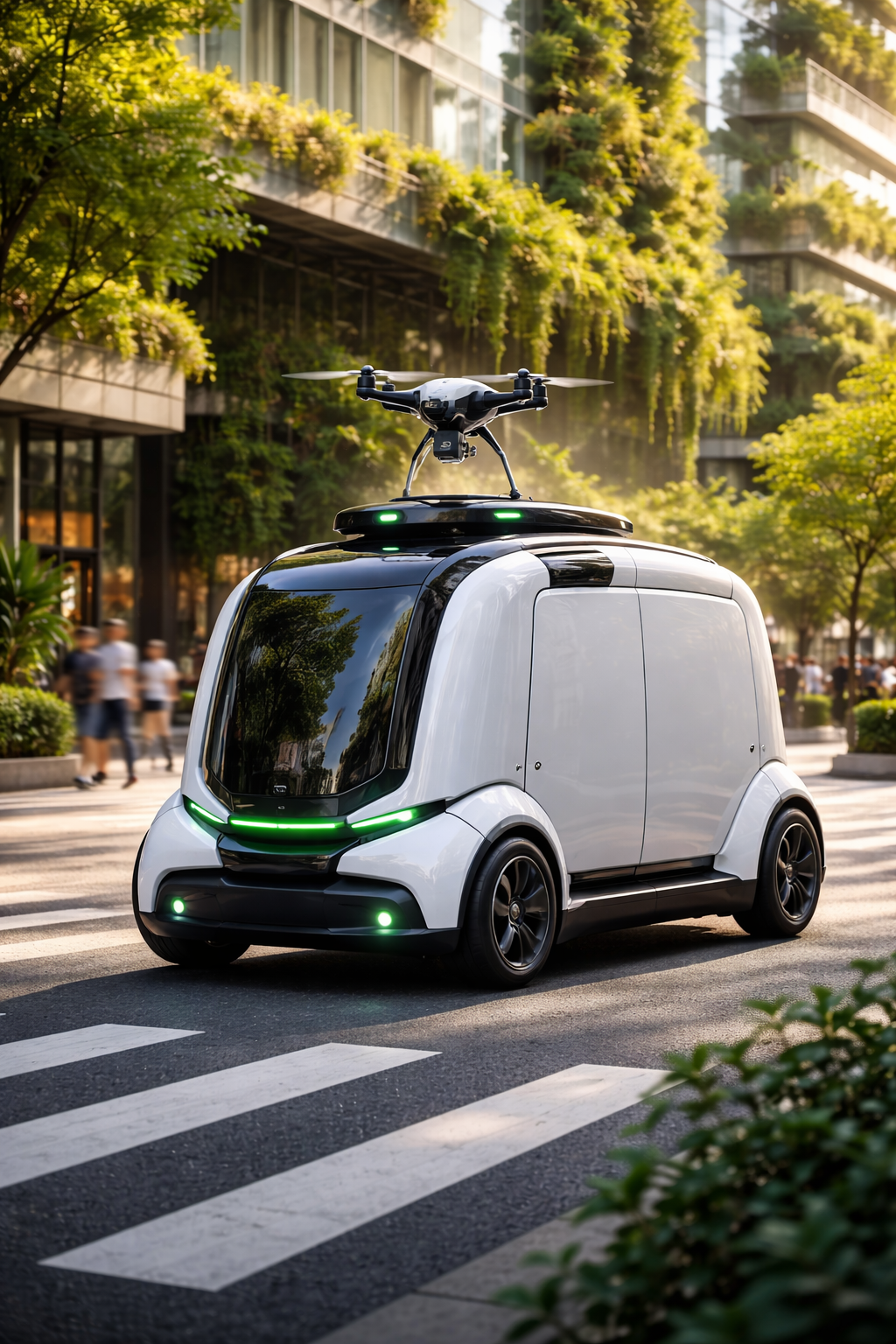
The logistics industry is currently navigating its most significant transformation since the invention of the shipping container. At the heart of this shift is autonomous logistics, a field dedicated to removing human intervention from the movement of goods. Specifically, the industry is hyper-focused on solving the “Last-Mile Delivery Problem”—the final, most expensive, and most complex leg of a package’s journey from a distribution center to the customer’s doorstep.
Definition and Core Concepts
Autonomous logistics refers to the use of self-governing machinery, artificial intelligence (AI), and robotics to manage the storage and transport of goods. While “autonomous” often brings to mind self-driving cars, in a logistics context, it encompasses a broad ecosystem:
- Unmanned Aerial Vehicles (UAVs): Delivery drones for rapid, small-package transport.
- Unmanned Ground Vehicles (UGVs): Sidewalk robots and autonomous delivery vans.
- Automated Storage and Retrieval Systems (ASRS): Warehouse robots that prep the “last mile” before it even begins.
Key Takeaways
- Cost Efficiency: The last mile accounts for roughly 53% of total shipping costs. Automation aims to reduce this by up to 80% through labor and fuel savings.
- Sustainability: Autonomous electric vehicles (EVs) and drones significantly lower the carbon footprint of urban deliveries.
- Speed: 2026 marks the era of “instant gratification,” where autonomous systems enable 30-minute delivery windows that are impossible with traditional human-driven fleets.
- Regulatory Evolution: Global governments are finally codifying laws for drone corridors and sidewalk robot right-of-way.
Who This Is For
This guide is designed for supply chain executives looking to optimize their margins, e-commerce business owners seeking to improve customer experience, urban planners managing city congestion, and tech enthusiasts curious about how the physical world is becoming “programmable.”
Disclaimer: The information provided regarding financial investments in logistics technology and autonomous vehicle safety is for educational purposes only. Always consult with legal and financial professionals before implementing large-scale automation or investing in autonomous fleet stocks. As of March 2026, regulations regarding autonomous vehicle liability vary significantly by jurisdiction.
The Anatomy of the Last-Mile Problem
To understand why autonomous logistics is the “holy grail” of modern commerce, we must first dissect why the last mile is so broken.
The 53% Burden
In traditional logistics, the “long haul” (moving goods across oceans or continents) is incredibly efficient. Large ships and trains move massive volumes at a low cost per unit. However, as soon as a package reaches a local hub, efficiency plummets. A human driver must navigate unpredictable traffic, find parking in congested cities, walk through apartment complexes, and occasionally deal with “failed delivery” attempts when a recipient isn’t home.
The “Cost of Human” Factor
Human drivers are limited by labor laws, fatigue, and rising wages. In 2026, the labor shortage in the trucking and delivery sector remains a persistent challenge. Autonomous systems don’t require sleep, don’t get distracted by smartphones, and can operate 24/7, effectively tripling the potential delivery window for a single vehicle.
Environmental and Urban Impact
Traditional delivery vans are often oversized for the packages they carry, contributing to “dead heading” (driving empty) and excessive emissions. In cities like New York, London, or Tokyo, delivery vehicles contribute to nearly 30% of total traffic congestion.
The Technological Pillars of Autonomous Logistics
Solving the last mile isn’t a “one size fits all” endeavor. It requires a layered approach involving different types of hardware and software.
1. Delivery Drones (UAVs)
As of March 2026, drone delivery has moved past the “experimental” phase. Modern drones utilize Sense and Avoid (SAA) technology, powered by LiDAR and ultrasonic sensors, to navigate around power lines, trees, and birds.
- Best Use Case: High-speed delivery of light items (medication, food, small electronics) in suburban or rural areas.
- Primary Benefit: They bypass ground traffic entirely.
- The Challenge: Battery density remains a hurdle for long-distance flights, though hydrogen-cell drones are beginning to enter the market.
2. Sidewalk Robots (UGVs)
Small, cooler-sized robots like those from Starship Technologies or Kiwibot have become staples on university campuses and in “smart neighborhoods.”
- Best Use Case: Hyper-local deliveries within a 2-mile radius.
- Primary Benefit: They are non-threatening to pedestrians and use the existing sidewalk infrastructure.
- The Challenge: They struggle with “curb jumping” and navigating complex construction sites or heavy snow.
3. Autonomous Delivery Vans
These are mid-to-large sized vehicles without a driver’s cab. Companies like Nuro have pioneered vehicles designed solely for cargo, allowing for a more aerodynamic and space-efficient design.
- Best Use Case: Grocery delivery and multi-stop retail routes.
- Primary Benefit: Larger capacity than drones or sidewalk robots.
- The Challenge: They must share the road with human drivers, necessitating Level 4 or Level 5 autonomy.
| Technology | Ideal Payload | Range | Speed | Primary Obstacle |
| Drones | < 5 lbs | 10–15 miles | 40–60 mph | Weather/Wind |
| Sidewalk Robots | 20–40 lbs | 3–5 miles | 4 mph | Pedestrian Traffic |
| Autonomous Vans | 500+ lbs | 100+ miles | 25–65 mph | Road Regulations |
The Software Backbone: AI and IoT
The hardware is only as good as the brain guiding it. Autonomous logistics relies on a “Digital Twin” of the city.
AI Route Optimization
Traditional GPS tells you how to get from A to B. Autonomous AI tells you how to get from A to B while considering:
- Real-time battery consumption based on elevation.
- Predicted pedestrian density at 3:00 PM (school zones).
- Dynamic “no-fly” or “no-drive” zones issued by city authorities.
The Role of IoT (Internet of Things)
Every autonomous unit is a node in a massive network. V2X (Vehicle-to-Everything) communication allows a delivery robot to “talk” to a smart traffic light, requesting a longer green light to ensure a safe crossing. Similarly, packages themselves are becoming “smart,” with embedded sensors that alert the autonomous vehicle if the internal temperature of a grocery order rises above a safe threshold.
Micro-Fulfillment Centers (MFCs): The Secret Weapon
Autonomous delivery cannot succeed if the “starting line” is too far away. This is where Micro-Fulfillment Centers come in. These are small, highly automated warehouses located in the heart of urban centers—often in the back of existing retail stores or repurposed parking garages.
How MFCs Work
When you place an order, a swarm of internal robots (ASRS) picks the items in under five minutes. The package is then handed off to a drone or sidewalk robot parked at the loading dock. This “hub-and-spoke” model reduces the last mile to the “last half-mile,” making autonomy significantly more viable.
Common Mistake: Ignoring the “Middle Mile”
Many businesses focus so much on the robot at the door that they forget how the goods get to the city in the first place. For autonomous logistics to work, the “middle mile” (from regional warehouse to MFC) must also be streamlined, often using autonomous Class-8 trucks on highways.
Overcoming Barriers: Security, Regulation, and Ethics
Despite the hype, the road to full autonomy is paved with challenges.
The “Porch Pirate” vs. The Robot
Security is a major concern. How does an autonomous robot ensure the package is handed to the right person?
- Biometric Verification: FaceID or fingerprint scans on the robot’s interface.
- Smart Lockers: Robots delivering to secure, code-locked kiosks rather than individual doorsteps.
- Mobile App Handshakes: The robot’s compartment only opens when the user’s phone is within 3 feet (via Bluetooth Low Energy).
Regulatory Landscapes (As of March 2026)
In the United States, the FAA has streamlined “Part 135” certifications for drone operators, allowing for beyond-visual-line-of-sight (BVLOS) flights. In Europe, the “U-Space” framework provides a harmonized system for managing unmanned traffic. However, liability in the event of an accident remains a “grey area.” If a robot hits a pedestrian, is the software developer, the fleet owner, or the sensor manufacturer at fault?
The Human Element: Job Displacement
A human-first approach to autonomous logistics acknowledges that delivery jobs are a major source of employment. The transition in 2026 is moving toward Augmented Delivery, where humans act as “fleet supervisors,” remotely managing 20–30 robots from a central hub, intervening only when a robot encounters a problem it can’t solve.
Case Studies: Success in the Field
Starship Technologies: The Campus King
By 2026, Starship has completed over 10 million commercial deliveries. Their success lies in a “low and slow” approach, focusing on controlled environments like universities and corporate headquarters where variables are predictable.
Amazon Prime Air: The Pivot to Suburbia
After years of development, Amazon’s MK30 drone has become a common sight in suburban Texas and California. By integrating with their massive ASRS-equipped warehouses, they have achieved a “click-to-door” time of 28 minutes for eligible items.
Nuro and the Grocery Revolution
Nuro’s partnership with major grocery chains has proven that autonomous logistics isn’t just for tech-savvy youngsters. Senior citizens in retirement communities have become the largest demographic using autonomous grocery pods, citing the convenience of not having to drive or carry heavy bags.
Future Outlook: The “Physical Internet”
Looking toward 2030, we are moving toward a Physical Internet. This is a concept where global logistics networks are as interconnected and standardized as the digital internet. Autonomous vehicles will act as the “packets” of data, moving seamlessly between different carriers and modes of transport using open-source protocols.
Swarm Intelligence
We will see “swarms” of robots working in tandem. A large autonomous “mother ship” van may park in a neighborhood, releasing five smaller sidewalk robots to handle the individual door-to-door deliveries, then collecting them and moving to the next block.
Practical Implementation: A Guide for Businesses
If you are a business owner looking to enter the autonomous logistics space, follow these steps:
- Audit Your Density: Autonomous logistics thrives in high-density areas. If your customers are spread out across rural counties, traditional logistics or drones are your only options.
- Start with “Dark Stores”: Convert underperforming retail space into micro-fulfillment centers to shorten the delivery distance.
- Prioritize Interoperability: Ensure your inventory management software (IMS) can talk to the robot’s API. A robot that doesn’t know what’s inside its bin is useless.
- Educate the Customer: People are wary of robots. Clear communication about how to interact with the vehicle and what to do if things go wrong is vital for adoption.
Common Mistakes to Avoid
- Underestimating Weather: Many robots still struggle with heavy rain or “black ice.” Always have a “Human-in-the-Loop” backup plan for inclement weather.
- Neglecting Local Ordinances: Just because a drone can fly doesn’t mean it’s allowed to in your specific ZIP code. Always check local “quiet hours” and privacy laws.
Conclusion
Autonomous logistics is no longer a “future” technology; as of March 2026, it is an operational necessity. The “Last-Mile Delivery Problem” has plagued e-commerce since its inception, eating into margins and congesting our cities. By leveraging a combination of UAVs, UGVs, and AI-driven micro-fulfillment, we are finally seeing a path toward a more efficient, sustainable, and cost-effective supply chain.
For the business owner, this means lower overhead and higher customer satisfaction. For the consumer, it means receiving what you need, exactly when you need it, without the friction of traditional shipping. However, the transition must be handled with care—respecting urban privacy, ensuring the safety of pedestrians, and providing a transition path for the millions of humans currently employed in the delivery sector.
The “last mile” is being conquered not by a single silver bullet, but by a symphony of autonomous technologies working in concert. The question for businesses is no longer if they should adopt autonomous logistics, but how quickly they can integrate it into their existing stack.
Would you like me to create a detailed implementation roadmap for a specific type of business, such as a local grocery chain or a high-end electronics retailer?
FAQs
1. Is autonomous delivery safe for pedestrians and pets?
Yes. Autonomous ground vehicles are equipped with multiple redundant sensors, including LiDAR, 360-degree cameras, and ultrasonic sensors. They are programmed to give pedestrians the right-of-way and will come to a complete stop if an obstacle—such as a dog or a child—unpredictably enters their path. As of 2026, the accident rate for sidewalk robots is significantly lower than that of human-driven delivery vans.
2. Can drones deliver in the rain or snow?
It depends on the model. While early drones were grounded by light rain, 2026-generation delivery drones like the Amazon MK30 or Wing’s latest models are rated for light-to-moderate precipitation. However, extreme wind and heavy snow still pose significant risks to flight stability and battery efficiency, usually resulting in a temporary switch to ground-based autonomous vehicles.
3. Will autonomous logistics make delivery cheaper for the consumer?
In the long run, yes. By reducing labor costs—which are the largest variable in delivery pricing—and optimizing fuel use through electric powertrains, companies can offer lower shipping rates. Many retailers are already using autonomous options to offer “free” same-day delivery that would otherwise be cost-prohibitive.
4. How do I prevent people from stealing from a delivery robot?
Delivery robots are essentially “moving safes.” Their cargo holds are locked and can only be opened via the recipient’s smartphone. Furthermore, they are equipped with GPS tracking and high-definition cameras that record 360-degree footage. Attempting to tamper with or steal a robot triggers a loud alarm and alerts local authorities with a live video feed and precise location data.
5. Do I need special permits to use delivery robots for my business?
Generally, yes. Most cities require a “Personal Delivery Device” (PDD) permit. These regulations vary by city and state, often limiting the robot’s speed (usually to 4–6 mph) and specifying which sidewalks they are allowed to operate on. Always consult with your local Department of Transportation (DOT) before deploying a fleet.
References
- U.S. Department of Transportation (DOT): Comprehensive Plan for Autonomous Systems in Logistics (2025).
- Federal Aviation Administration (FAA): Part 135 Operations and BVLOS Certification Standards (2026).
- Journal of Supply Chain Management: The Economic Impact of Micro-Fulfillment Centers on Last-Mile Efficiency (Vol. 42, 2025).
- MIT Center for Transportation & Logistics: Urban Congestion and the Role of Autonomous UGVs (Academic Report).
- International Journal of Robotics Research: Advances in LiDAR-based Obstacle Avoidance for Urban Environments.
- Starship Technologies: Annual Operations & Safety Report (2025).
- Alphabet Wing: Drone Delivery Scalability in Suburban Environments: A Five-Year Study.
- Nuro Corporate Documentation: Safety Framework for Zero-Occupant Autonomous Vehicles.
- European Union Aviation Safety Agency (EASA): U-Space Regulatory Framework for Unmanned Aircraft Systems.
- McKinsey & Company: The Future of the Last Mile: Automation and Decarbonization (2026 Insight).