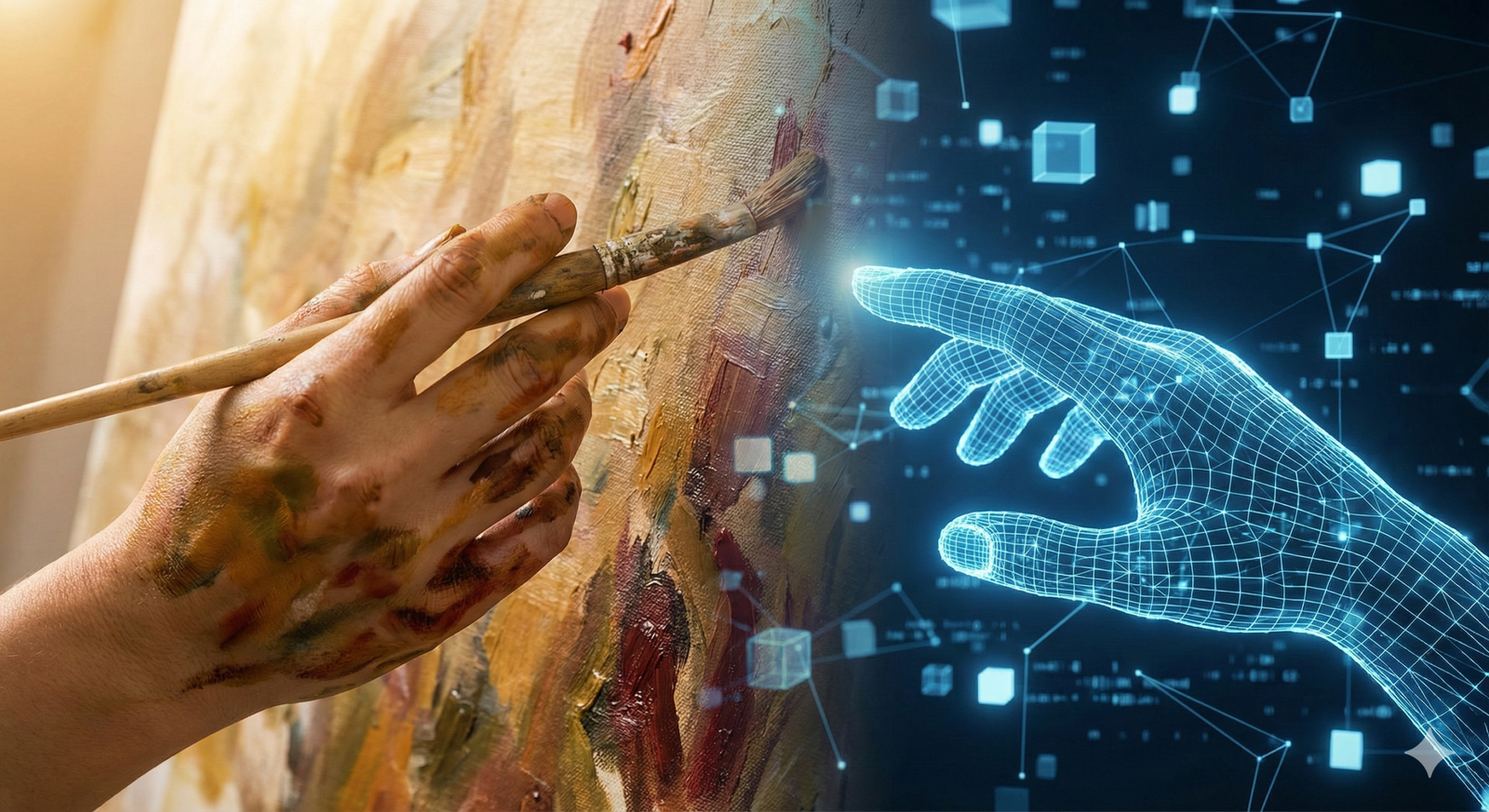
The intersection of human creativity and machine learning has sparked one of the most contentious debates of the 21st century. We are living through a paradigm shift where the lines between “created” and “generated” are becoming increasingly blurred. For centuries, art was the exclusive domain of the human experience—a mechanism to process grief, celebrate joy, and document the intangible texture of life. Today, software can replicate the aesthetics of that experience in seconds.
This guide explores the tension of art vs algorithm, not to declare a winner, but to map the battlefield. It is designed for artists, writers, musicians, and consumers of culture who are grappling with the rapid integration of generative AI into the creative economy. We will dissect what it means to be original in a world of infinite replication, the legal frameworks struggling to keep pace, and practical strategies for creators to maintain their sovereignty.
As of January 2026, the conversation has moved beyond “will AI replace us?” to a more nuanced inquiry: “How do we preserve the human soul in our output when tools can simulate it so well?”
Key Takeaways
- Originality is contextual: Algorithms mimic patterns and aesthetics, but they lack the lived context and emotional intent that drive human innovation.
- The legal landscape is evolving: Copyright offices generally refuse protection for purely AI-generated works, placing a premium on human authorship and significant modification.
- Hybrid models are winning: The most successful creators are not ignoring AI nor surrendering to it; they are using it as an accelerant for their own unique visions (the “centaur” approach).
- Process is the new product: As final outputs become commoditized, the human story behind the creation is becoming the primary value driver for audiences.
- Ethical consumption matters: There is a growing consumer movement toward “certified human” content, similar to the organic food movement, valuing ethical sourcing of training data.
Who This Is For (and Who It Isn’t)
This guide is for:
- Professional Creatives: Illustrators, copywriters, designers, and musicians looking to safeguard their careers and intellectual property.
- Policy Makers & Legal Minds: Those interested in the friction between copyright law and machine learning training datasets.
- Cultural Critics: Readers analyzing the impact of synthetic media on societal narratives.
This guide is not for:
- Tech Purists: Those looking for a purely technical tutorial on how to tune hyperparameters in diffusion models (though we touch on how they work).
- Doomsayers: Those looking for a manifesto declaring the definitive “death of art.” We take a pragmatic, survivalist view rather than a fatalistic one.
1. The Mechanics of Mimicry: How Algorithms “Create”
To defend creative originality, one must first understand the adversary—or the tool, depending on your perspective. The phrase “art vs algorithm” often implies a battle between two conscious entities, but this is a anthropomorphic fallacy. Algorithms do not “create” in the human sense; they predict.
The Statistical Probability of pixels and Words
Generative AI models, whether they are Large Language Models (LLMs) for text or diffusion models for images, operate on the principles of probability and pattern recognition. They are trained on massive datasets—often scraping the entirety of the accessible internet—to learn the statistical relationships between data points.
- In Visual Art: A diffusion model introduces “noise” (random static) to an image and learns to reverse the process to clear the image up. Over billions of iterations, it learns that pixels arranged in this specific way usually represent a “cat,” and pixels arranged in that way represent the style of “Van Gogh.” When prompted, it denoises random static into a probability-based composite of those learned concepts.
- In Writing: LLMs predict the next most likely token (part of a word) in a sequence. They do not understand the plot of a story or the emotion of a poem; they understand that “rose” is statistically likely to be followed by “red” or “petals” in a poetic context.
The Absence of Intent
The fundamental difference—and the fortress of human originality—lies in intent. An algorithm has no desire to communicate a truth. It has no subconscious, no childhood memories, no trauma, and no mortality. It generates output because it was executed to do so.
A human artist creates because they have an urge to exteriorize an internal state. When a painter chooses a specific shade of melancholy blue, it might be tied to a memory of a specific winter. When an algorithm chooses that blue, it is because that hex code appears frequently in images tagged “melancholy.” This distinction is the bedrock of the “art vs algorithm” defense: the shift from output-oriented valuation to process-oriented valuation.
2. Defining Originality in a Synthetic World
If an AI can produce an image that looks 99% identical to a human masterwork, does the concept of “originality” still hold weight? This philosophical question has tangible economic consequences.
The “Stochastic Parrot” Problem
Researchers have termed some AI models “stochastic parrots”—entities that stitch together convincing sequences of data without understanding meaning. In the context of art, this leads to a phenomenon where style is divorced from substance. We see an explosion of “content” that looks professional but feels hollow.
Originality in the human sense often involves breaking the pattern, whereas algorithms are designed to satisfy the pattern. High-quality human art often surprises us by subverting expectations. While AI is getting better at “hallucinating” creative variances, it is largely bounded by the distribution of its training data. It struggles to create a genre that has never existed because it cannot draw from experiences outside its dataset.
The Feedback Loop and Model Collapse
A critical risk to algorithmic creativity is “model collapse.” As the internet fills with AI-generated content, future models will inevitably be trained on data generated by previous models. This creates a photocopy-of-a-photocopy effect, where nuances are lost, and output regresses to the mean.
Human originality acts as the injection of fresh genetic material into the cultural ecosystem. Humans go offline. We experience nature, political upheaval, love, and physical pain. We bring these external, non-digital inputs back into the digital sphere. Without this constant influx of human-derived novelty, the “algorithm” side of the equation eventually stagnates.
The “Aura” of the Work
Walter Benjamin’s famous 1935 essay, The Work of Art in the Age of Mechanical Reproduction, discussed the “aura” of an original work—its presence in time and space. In 2026, the “aura” is re-emerging as a premium commodity.
We are seeing a resurgence in appreciation for:
- Physical Art: Oil paintings, sculpture, and printmaking where the physical labor is evident.
- Live Performance: Theater and live music where the risk of error proves the humanity of the performers.
- Drafts and Sketches: Audiences increasingly want to see the “messy” intermediate stages of creation to verify human authorship.
3. The Legal Front: Copyright, Ownership, and Ethics
The battle of art vs algorithm is currently being fought most fiercely in courtrooms and legislative chambers. As of 2026, the legal landscape is fragmented but beginning to solidify around key principles regarding intellectual property (IP).
The Copyrightability of AI Output
In the United States and the European Union, the prevailing legal stance is that copyright requires human authorship.
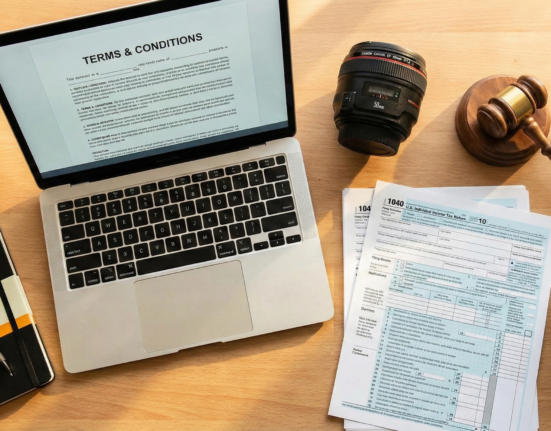
- US Copyright Office (USCO) Stance: The USCO has repeatedly clarified that works created entirely by AI prompt commands are not copyrightable. However, if a human significantly modifies the AI generation (e.g., painting over it, using it as a layer in a larger composition, or editing the text extensively), the human-created portion is protectable.
- The “De Minimis” Standard: The key legal debate centers on how much human input is “enough.” Is prompt engineering sufficient? Generally, no. Prompts are seen as instructions (like commissioning an artist) rather than the act of creation itself.
The Training Data Lawsuits
The ethics of “scraping” remain the hot button issue. Major lawsuits involving stability AI, Midjourney, OpenAI, and DeviantArt have highlighted the practice of training models on billions of copyrighted images without consent or compensation.
- The “Fair Use” Defense: Tech companies argue that training is “fair use” (transformative). They compare an AI learning from images to a human art student studying Picasso in a museum.
- The “Market Usurpation” Argument: Artists argue that unlike a student, the AI competes directly in the marketplace with the artists it learned from, often replicating their specific “style” (which is the artist’s commercial identity) instantly and cheaply.
New Regulatory Frameworks (e.g., EU AI Act)
Regulations like the EU AI Act have introduced transparency requirements. Model developers are increasingly required to disclose summary data of the copyrighted materials used for training. This transparency is vital for “opt-out” mechanisms, where artists can flag their work to be excluded from future training sets—though the efficacy of these opt-out tools is still technically debated.
4. The Economic Impact: The Gig-Creator Overlap
The narrative of “art vs algorithm” inevitably leads to the economy. How does one make a living as a creative when the “floor” of quality has been raised by automation?
The Commoditization of “Good Enough”
AI has drastically lowered the barrier to entry for “competent” imagery and copy. For generic tasks—stock photography, basic SEO blog posts, placeholder assets for game prototypes—AI is rapidly replacing human labor because it is faster and cheaper. This is the commoditization of the average.
Freelancers who competed solely on speed or technical competency in generic styles are finding their market share eroding. If a client needs a generic “cyberpunk city background” for a pitch deck, they no longer need to hire a junior concept artist; they can prompt it.
The Premium on Perspective
However, the “ceiling” of creativity remains high. The value in the creative economy is shifting from technical execution (knowing how to use the brush) to curatorial perspective (knowing what to paint and why).
- High-End Clients: Luxury brands, major publishers, and discerning tech companies are shying away from purely AI content because of the legal risks and the “cheap” perception associated with it. They are paying a premium for distinct, legally clear, human work.
- Brand Identity: Brands are realizing that using the same AI models as their competitors leads to visual homogenization. To stand out, they need the idiosyncrasies of human designers.
The Rise of the “Director” Role
Many solo creators are evolving into creative directors. Instead of spending 10 hours rendering a background, they might generate 20 variations, select the best one, and spend those 10 hours painting over it, refining the lighting, and adding narrative details that the AI missed. This shifts the skillset from pure rendering to editing, composition, and vision.
5. Strategies for Defense: Bulletproofing Your Creative Career
If you are a creative professional, “defending” your originality is not just about philosophy; it is about survival. Here are actionable strategies to maintain relevance and value in the art vs algorithm era.
A) Lean into “Uncomputable” Attributes
Identify the parts of your work that require high-context cultural knowledge, emotional intelligence, or physical presence.
- Hyper-Local Nuance: AI is good at global averages but bad at hyper-local specificity. References to specific local subcultures, inside jokes, or current events are harder for models to nail.
- Complex Narrative Structures: AI struggles with long-term coherence. Writers who excel at complex, interweaving plotlines with deep thematic resonance have a distinct advantage over LLMs that tend to hallucinate or lose the thread after a certain token limit.
B) Develop a “Personal Monopoly”
Marketing expert Jack Butcher coined the term “Personal Monopoly.” It means combining skills in a way that is unique to you. An AI can emulate “technical writing” or “comic book art.” But can it emulate “technical writing about beekeeping told through the visual style of 90s noir comics”? Maybe, but likely not with the same cohesion and passion as a human who loves all three.
C) Show Your Work (The “Proof of Human” Protocol)
In a world of synthetic media, the process is as valuable as the result.
- Time-lapses: Record your screen or canvas. Show the mistakes, the sketches, and the evolution of the piece.
- Behind-the-Scenes: Write about your decision-making process. Why did you choose that composition? What were you feeling?
- Raw Files: Keep your layers. In a commercial context, being able to provide a layered PSD file or a vector file with clean topology is a proof of human craftsmanship that AI (which often outputs flattened rasters) cannot easily match.
D) Protect Your Style Legally and Technically
- Glazing Tools: Use tools like “Glaze” or “Nightshade” (developed by University of Chicago researchers). These tools add invisible noise to your digital images that disrupt how AI models interpret the style, effectively “poisoning” the data for scrapers while looking normal to the human eye.
- Licensing: Be explicit about your usage rights. Use metadata to tag your work as “NoAI” (though enforcement relies on the platforms respecting these tags).
6. The “Centaur” Approach: Collaboration over Capitulation
The binary of “art vs algorithm” suggests a zero-sum game. However, history suggests that technology usually forces an evolution rather than an extinction. Photography did not kill painting; it forced painting to become abstract and expressionist because it no longer needed to be purely representational.
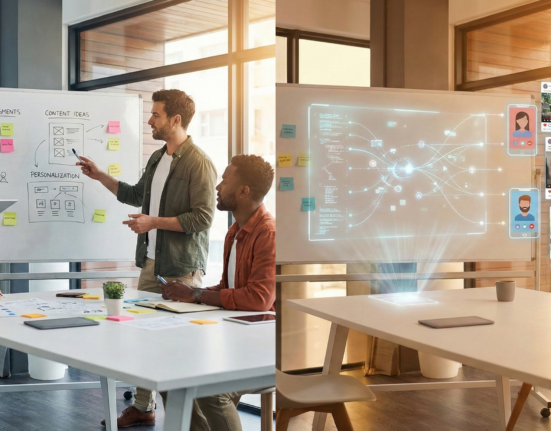
The “Centaur” approach—a term from chess describing a human playing with a computer—might be the most viable path forward.
AI as a Mood Board
Creatives are using AI to bypass the “blank page syndrome.” Generating ten rough concepts in five minutes allows an artist to discard the clichés quickly and get to the unique ideas faster. The AI is not the painter; it is the sketchpad.
Automation of the Mundane
In film editing, AI tools that automatically rotoscope (cut out) characters save editors hours of tedious frame-by-frame masking. This frees up the editor to focus on pacing, color grading, and storytelling. In this context, the algorithm is defending creativity by removing the drudgery that leads to burnout.
The Danger of Dependency
The risk of the Centaur model is atrophy. If a writer relies on AI to generate all their outlines, they may lose the structural muscles required to organize thoughts. If an artist never learns anatomy because they just prompt “correct hands,” they lose the ability to spot when the AI is wrong. Rule of Thumb: Use AI to accelerate skills you already possess, not to replace the learning of foundational skills. You cannot direct a movie if you don’t understand cinematography.
7. The Psychology of Reception: Do We Care Who Made It?
Ultimately, the battle of art vs algorithm will be decided by the audience. Does the viewer care if a symphony was composed by silicon or a suffering soul?
The Theory of Mind
Humans generally engage with art to connect with another human consciousness (Theory of Mind). We read a memoir to understand another’s life. We listen to a breakup song to feel less alone in our own heartbreak. If we discover that the memoir was generated by an LLM that has never lived, or the song by an AI that has never loved, the emotional connection often severs. The artifact remains, but the meaning evaporates.
The “Handmade” Premium
We are likely to see a bifurcation in the market:
- Fast Content: Disposable entertainment, marketing filler, and background noise where origin doesn’t matter (AI dominated).
- Slow Art: Deeply engaging, human-centric works where the creator’s identity is central to the value proposition (Human dominated).
This mirrors the furniture market: IKEA exists (mass-produced, functional), but people still pay thousands for a handcrafted walnut table because they value the craftsmanship and the story of the maker.
8. Common Pitfalls for Creators in the AI Era
Navigating this transition is dangerous. Here are common mistakes creators make when facing the “art vs algorithm” dilemma.
Mistake 1: Ignoring the Tech Entirely
Refusing to understand how generative AI works leaves you vulnerable. You don’t have to use it, but you must understand its capabilities and limitations to articulate why your human work is superior or different.
Mistake 2: Competing on Volume
You will never out-produce a generator. If your business model relies on churning out high volumes of low-complexity work, you are in the “kill zone” of automation. Pivot toward complexity, strategy, and distinct voice.
Mistake 3: Failing to Adapt Contracts
Freelancers must update their contracts. Clauses should specify:
- Whether AI tools are permitted or banned in the workflow.
- Who owns the IP (since AI work may not be copyrightable).
- Indemnification against copyright claims arising from accidental AI plagiarism.
9. Conclusion
The narrative of “Art vs. Algorithm” is not a battle to be won, but a relationship to be managed. The algorithm offers speed, scale, and statistical perfection. Art offers intent, context, and human imperfection.
Defending creative originality in 2026 and beyond requires a dual approach. We must embrace the tools that eliminate drudgery while fiercely protecting the “spark”—the chaotic, inefficient, emotional impulse that drives us to make things in the first place.
For the creator, the mandate is clear: Be more human. Lean into your weirdness, your specific life history, and your flaws. The algorithm can optimize the average, but it cannot simulate the anomaly. In a world of synthetic perfection, the most valuable asset you possess is your own distinct, unreplicable humanity.
Next Steps
- Audit your portfolio: Identify which pieces rely on technical execution vs. unique conceptual thinking.
- Update your terms: Ensure your contracts address AI usage explicitly.
- Experiment: Try a “Centaur” workflow for one project to see if it aids or hinders your flow, then decide your stance from a place of experience.
FAQs
1. Can I copyright art created with AI? As of early 2026, generally no. The US Copyright Office has ruled that works created without “significant human involvement” are not eligible for copyright protection. If you use AI to generate an image, you cannot own the copyright to that raw generation. However, if you paint over it extensively or use it as a small element in a larger human-created collage, the human-created parts may be protected.
2. How can I tell if an image is AI-generated? While models are improving, look for these signs: inconsistent lighting, logical errors in background details (e.g., text that looks like gibberish), “smooth” or overly glossy textures, and anatomical errors in hands or ears. Metadata analysis tools also exist, though they are not foolproof.
3. Is it ethical to use AI for inspiration? This is widely debated, but many artists view using AI as a mood board or reference generator (similar to Google Images) as ethical, provided the final output is significantly transformed and hand-crafted. The ethical concern primarily lies in whether the AI model was trained on stolen data.
4. Will AI replace graphic designers? AI will likely replace tasks, not necessarily roles. Repetitive production tasks (resizing, basic layout, variation generation) are being automated. However, the role of the designer is shifting toward creative direction, client management, and strategic problem-solving—skills AI cannot yet replicate.
5. What are “Glaze” and “Nightshade”? These are software tools designed to protect artists. Glaze adds invisible noise to images that prevents AI models from learning a specific artist’s style. Nightshade goes further, effectively “poisoning” the training data so that models render unpredictable results if they scrape the protected image.
6. Does using AI make me less of an artist? Art is defined by intent, not just the tool. Using a camera didn’t make portrait painters less artistic; it just changed the medium. If your intent, vision, and selection drive the work, you are the artist. However, relying on AI to make all creative decisions relegates you to the role of a consumer/curator rather than a creator.
7. How can writers protect their style from being mimicked? Writers should focus on “voice”—the unique cadence, vocabulary, and perspective that constitutes their style. Publishing on platforms that have data-scraping protections (or your own domain) helps. Legally, the Authors Guild and other bodies are fighting for licensing deals so writers are paid if their work trains LLMs.
8. What is the “Centaur” model in creativity? The Centaur model refers to a human and an AI working together. For example, a human writes the plot and characters, the AI suggests scene descriptions or dialogue variations, and the human edits and polishes the final text. This combines human intent with machine efficiency.
9. Are there “safe” AI models for artists? Some companies, like Adobe (with Firefly), claim to train their models only on licensed stock images or public domain content, offering a more ethically “safe” alternative for commercial work compared to models trained on the open, scraped internet.
10. Why is “human-made” becoming a marketing term? As synthetic media floods the internet, trust is eroding. “Human-made” is becoming a signal of quality, authenticity, and effort. It suggests that a person verified the facts, felt the emotions, and takes responsibility for the work, which is increasingly valuable to consumers.
References
- U.S. Copyright Office. (2023). Copyright Registration Guidance: Works Containing Material Generated by Artificial Intelligence. federalregister.gov.
- Benjamin, W. (1935). The Work of Art in the Age of Mechanical Reproduction. Schocken/Verso.
- Shan, S., et al. (2023). Glaze: Protecting Artists from Style Mimicry by Text-to-Image Models. University of Chicago.
- Bender, E. M., et al. (2021). On the Dangers of Stochastic Parrots: Can Language Models Be Too Big?. ACM Conference on Fairness, Accountability, and Transparency.
- European Union. (2024). The AI Act. europarl.europa.eu.
- New York Times. (2023). The Times Sues OpenAI and Microsoft Over AI Use of Copyrighted Work. nytimes.com.
- Adobe. (2025). Adobe Firefly Ethics and Training Data Transparency. adobe.com.
- Epstein, Z., et al. (2023). Art and the science of generative AI. Science.org.
- Jiang, H., et al. (2023). AI Art and its Impact on Artists. Stanford Human-Centered AI Institute.
- The Authors Guild. (2024). Open Letter to Generative AI Leaders. authorsguild.org.