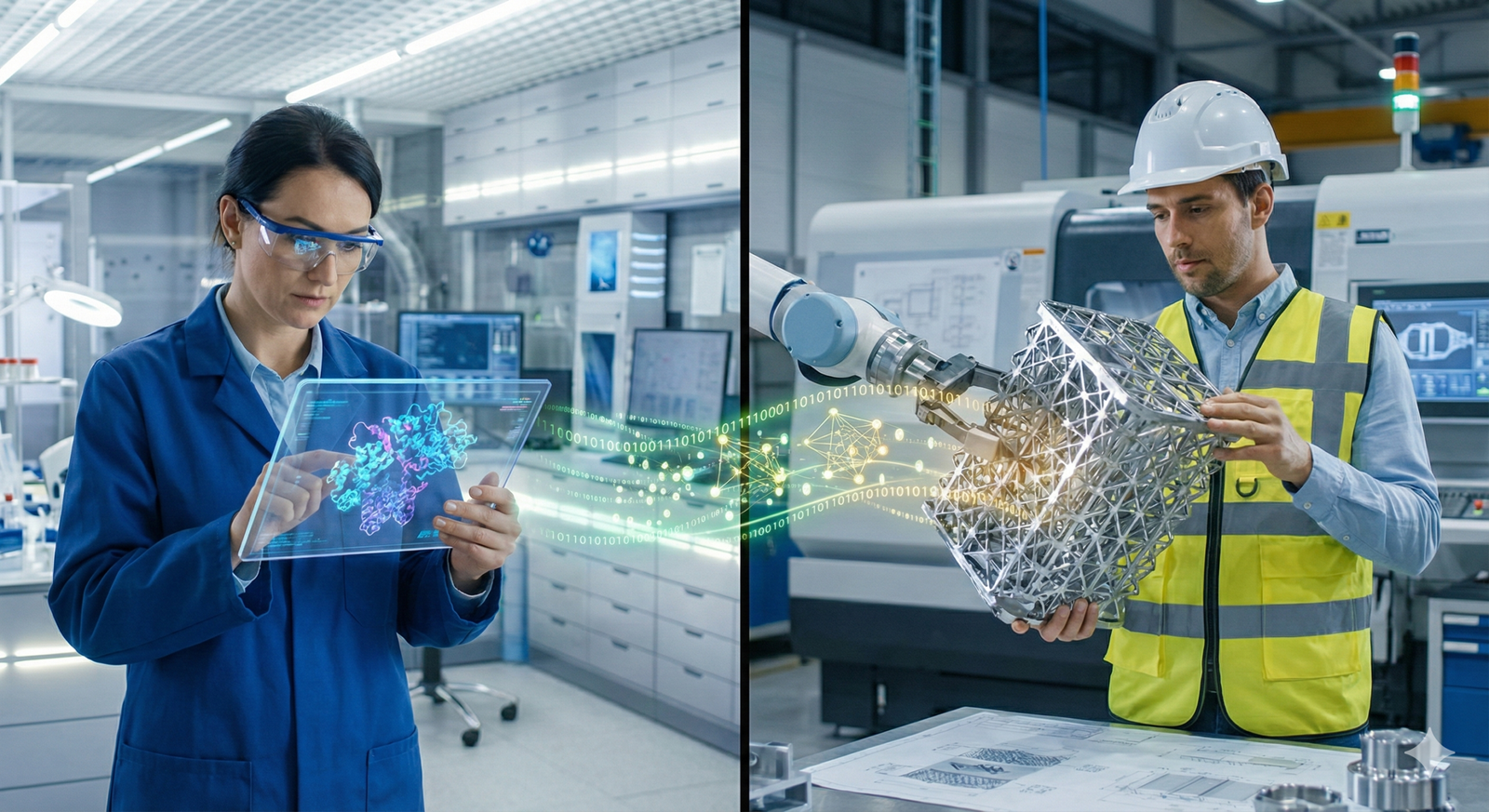
The way humanity discovers the building blocks of our world is undergoing a fundamental shift. For centuries, scientific discovery was a process of trial and error—a slow, expensive, and often serendipitous journey. Today, we are moving from “discovering” what already exists to “designing” exactly what we need. This transition is being driven by the convergence of artificial intelligence (AI), high-performance computing, and automated robotics.
AI in drug discovery and materials science is not just an incremental improvement; it is a paradigm shift. It transforms the search for new medicines and sustainable materials from a game of chance into a precise engineering discipline. Instead of testing thousands of compounds to find one that works, researchers are now using generative AI to “hallucinate” entirely new molecules with specific properties, effectively solving inverse problems that were previously intractable.
This comprehensive guide explores how AI is reshaping these twin pillars of science. We will examine the underlying technologies, real-world applications, and the profound implications for healthcare, energy, and sustainability.
Disclaimer
This article discusses advancements in pharmaceutical research and material engineering for educational purposes. It does not constitute medical advice or financial investment guidance. Always consult qualified professionals regarding medical treatments or investment decisions.
Scope of This Guide
In this guide, AI in drug discovery and materials science refers to the application of machine learning (ML), deep learning (DL), and generative models to predict molecular properties, generate novel chemical structures, and optimize the synthesis of drugs and materials.
- IN SCOPE: Generative AI for molecules, protein folding, material informatics, self-driving labs, and specific industry applications (batteries, antibiotics).
- OUT OF SCOPE: General administrative AI in healthcare (e.g., patient scheduling bots) or generic supply chain AI, unless directly related to the R&D of the physical product.
Key Takeaways
- Speed and Efficiency: AI can reduce the initial drug discovery timeline from years to months, drastically cutting costs.
- Inverse Design: Generative models allow scientists to specify desired properties (e.g., “non-toxic” and “conductive”) and have the AI work backward to generate the molecular structure.
- The “Language” of Chemistry: Large Language Models (LLMs) are being trained on chemical data, treating atoms and bonds like words and sentences to predict reactivity.
- Beyond Biology: The same algorithms folding proteins are being used to discover new crystals for solar panels and batteries.
- Automation: “Self-driving labs” are closing the loop, where AI designs experiments and robots execute them without human intervention.
The Convergence of Atoms and Algorithms
To understand the magnitude of this revolution, one must first appreciate the scale of the challenge. The “chemical space”—the number of possible small organic molecules—is estimated to be between 1060 and 1080. To put that in perspective, there are roughly 1080 atoms in the observable universe. Traditional chemistry has barely scratched the surface of this infinite ocean.
The Traditional Bottleneck
Historically, drug discovery has been plagued by “Eroom’s Law”—the observation that drug discovery is becoming slower and more expensive over time, despite improvements in technology (a reversal of Moore’s Law).
- Cost: Developing a new drug costs roughly $2.6 billion on average.
- Time: The process takes 10–15 years from concept to market.
- Failure Rate: Approximately 90% of drugs that enter clinical trials fail, often due to unforeseen toxicity or lack of efficacy.
In materials science, the timeline is similarly sluggish. From the discovery of a new battery chemistry to its commercialization in electric vehicles, the cycle can take two decades. We simply do not have that kind of time if we are to address urgent climate change challenges.
The AI Solution: From Screening to Generating
Traditional computational chemistry relied on simulation: “If I build this molecule, how will it behave?” This requires supercomputers to solve complex quantum mechanics equations for every single candidate—a slow process.
AI introduces Inverse Design. Instead of asking, “What does this molecule do?”, AI asks, “What molecule would do this?” By training on vast datasets of known chemical reactions and physical properties, AI models learn the underlying patterns of nature. They can then generate millions of candidate structures that theoretically meet the criteria, filtering out the duds before a single test tube is touched.
This convergence implies that biology and chemistry are becoming data science problems. If we have enough data, we can model the physical world with increasing accuracy.
How It Works: The Mechanics of Molecular AI
The “magic” behind AI in drug discovery and materials science relies on several key architectures that have migrated from the tech sector to the wet lab.
1. Geometric Deep Learning and GNNs
Molecules are not flat images; they are 3D structures where shape determines function. A standard neural network used for image recognition doesn’t naturally “understand” a molecule.
- Graph Neural Networks (GNNs): Scientists represent molecules as graphs, where atoms are nodes and chemical bonds are edges. GNNs can process these graphs to predict properties like solubility, toxicity, or conductivity by analyzing the relationships between atoms.
- 3D Equivariance: Modern models are “invariant” to rotation. Whether a protein is upside down or sideways, the AI recognizes it as the same object, which is crucial for docking simulations (predicting how a drug fits into a protein target).
2. Generative Models (VAEs, GANs, and Diffusion)
Just as AI can generate art or text, it can generate chemical structures.
- Variational Autoencoders (VAEs): These models compress molecular data into a simplified numerical representation (latent space) and then reconstruct it. By exploring this latent space, scientists can find new variations of molecules that are similar to known drugs but improved.
- Diffusion Models: Similar to the tech behind image generators like Midjourney, diffusion models add noise to data and learn to reverse the process to construct clean data. In chemistry, they can start with random atomic noise and refine it into a stable, valid molecular structure that fits a specific protein pocket.
3. Large Language Models (LLMs) for Chemistry
Chemical formulas can be written as text strings (e.g., SMILES strings).
- Chemical NLP: AI models like GPT-4 or specialized versions (e.g., NVIDIA’s BioNeMo) are trained on millions of chemical papers and SMILES strings. They learn the “grammar” of chemistry.
- Capability: These models can suggest synthesis pathways (recipes for making a molecule) or predict how two chemicals will interact, much like a chatbot predicts the next word in a sentence.
Revolutionizing Drug Discovery
The pharmaceutical industry is the primary testing ground for these technologies. AI is not just speeding up one part of the process; it is intervening at every stage of the pipeline.
Target Identification and Validation
Before you can design a drug, you need to know what to attack. Diseases often involve complex pathways of proteins and genes.
- Pattern Recognition: AI analyzes vast troves of patient data, genomics, and medical literature to find correlations humans miss. It might identify that a specific protein is overactive in a certain type of cancer.
- Causal Inference: Advanced AI attempts to distinguish between correlation and causation, ensuring that hitting the target will actually treat the disease, not just a symptom.
Protein Folding and Structure Prediction
This is perhaps the most famous victory of AI in science.
- The AlphaFold Moment: DeepMind’s AlphaFold solved the 50-year-old “protein folding problem,” predicting the 3D shape of nearly all known proteins from their amino acid sequence.
- Impact: Knowing the shape of a protein is essential for designing a drug that can bind to it (like a key entering a lock). Previously, determining a single structure could take years of X-ray crystallography; AI now does it in minutes. This opens up “undruggable” targets that were previously too mysterious to tackle.
De Novo Drug Design
This is the “generative” phase.
- Hallucinating Drugs: AI generates novel molecular structures that optimize binding affinity, solubility, and metabolic stability simultaneously.
- Case Study: In 2020, researchers at MIT used a deep learning model to discover halicin, a powerful new antibiotic capable of killing drug-resistant bacteria. The AI found it by screening a library of existing molecules, identifying one that looked nothing like traditional antibiotics—a discovery human intuition would likely have missed.
- Insilico Medicine: This company has brought the first fully AI-discovered and AI-designed drug (for idiopathic pulmonary fibrosis) into Phase II clinical trials. This proved that AI-designed molecules aren’t just theoretical; they work in human bodies.
Optimizing Clinical Trials
Even if the molecule works, the trial can fail.
- Patient Stratification: AI analyzes electronic health records to find the perfect candidates for a trial—people who are most likely to respond based on their genetic profile.
- Synthetic Control Arms: In some cases, AI generates “synthetic” control groups based on historical patient data, potentially reducing the need for placebo groups and speeding up the trial process.
Transforming Materials Science
While pharma grabs the headlines, the application of AI in materials science (often called “Materials Informatics”) is critical for our survival. We need better batteries, lighter alloys, and more efficient carbon capture materials.
The Search for New Crystals
In late 2023, Google DeepMind released findings from GNoME (Graph Networks for Materials Exploration).
- The Discovery: The model predicted 2.2 million new crystal structures. Of these, 380,000 are considered stable and candidates for synthesis.
- Significance: This effectively expanded the number of known stable materials by an order of magnitude. These candidates include potential superconductors, superhard materials, and next-gen battery conductors.
Battery Innovation
The transition to renewable energy hinges on energy storage.
- Solid-State Electrolytes: AI is screening thousands of solid materials to find electrolytes that conduct ions as well as liquids but without the flammability risk.
- Reducing Rare Earths: AI helps design alloys and magnets that use fewer scarce elements like cobalt or neodymium, substituting them with abundant elements like iron or sodium without losing performance.
Carbon Capture and Separation
Filtering specific gases out of the air requires materials with microscopic pores of precise shapes.
- MOFs (Metal-Organic Frameworks): These are sponge-like materials. There are virtually infinite ways to combine metals and organics to make MOFs. AI helps navigate this space to find MOFs that specifically grab CO2 molecules while letting nitrogen and oxygen pass, optimizing them for humidity and durability.
Polymer Design and Plastics
We are drowning in plastic waste. AI is designing the next generation of polymers.
- Biodegradability: Researchers are using AI to design enzymes and polymers that are programmed to degrade under specific environmental conditions.
- Recyclability: AI is identifying “vitrimers”—a new class of plastics that can be reshaped and recycled endlessly without degrading their quality, unlike current thermoplastics.
Key AI Technologies Driving the Shift
Several specific platforms and technologies have become the bedrock of this new era.
AlphaFold and ESMFold
As mentioned, AlphaFold (DeepMind) and ESMFold (Meta) have democratized structural biology. They are the “Google Maps” of the protein universe. Researchers no longer fly blind; they have a map of the terrain before they start their expedition.
NVIDIA BioNeMo
NVIDIA has built a cloud service specifically for generative biology. BioNeMo offers researchers access to large biomolecular language models. It allows pharmaceutical companies to fine-tune models on their proprietary data without building the infrastructure from scratch, accelerating the adoption of AI across the industry.
DiffDock and Molecular Docking
Finding a molecule is one thing; predicting how it sticks to a protein is another. DiffDock is a diffusion-based model that predicts the “docking” pose of a molecule. It significantly outperforms traditional physics-based search methods in both speed and accuracy, treating molecular interaction as a generative geometric problem.
Self-Driving Labs (Cloud Labs)
This is the physical manifestation of AI design.
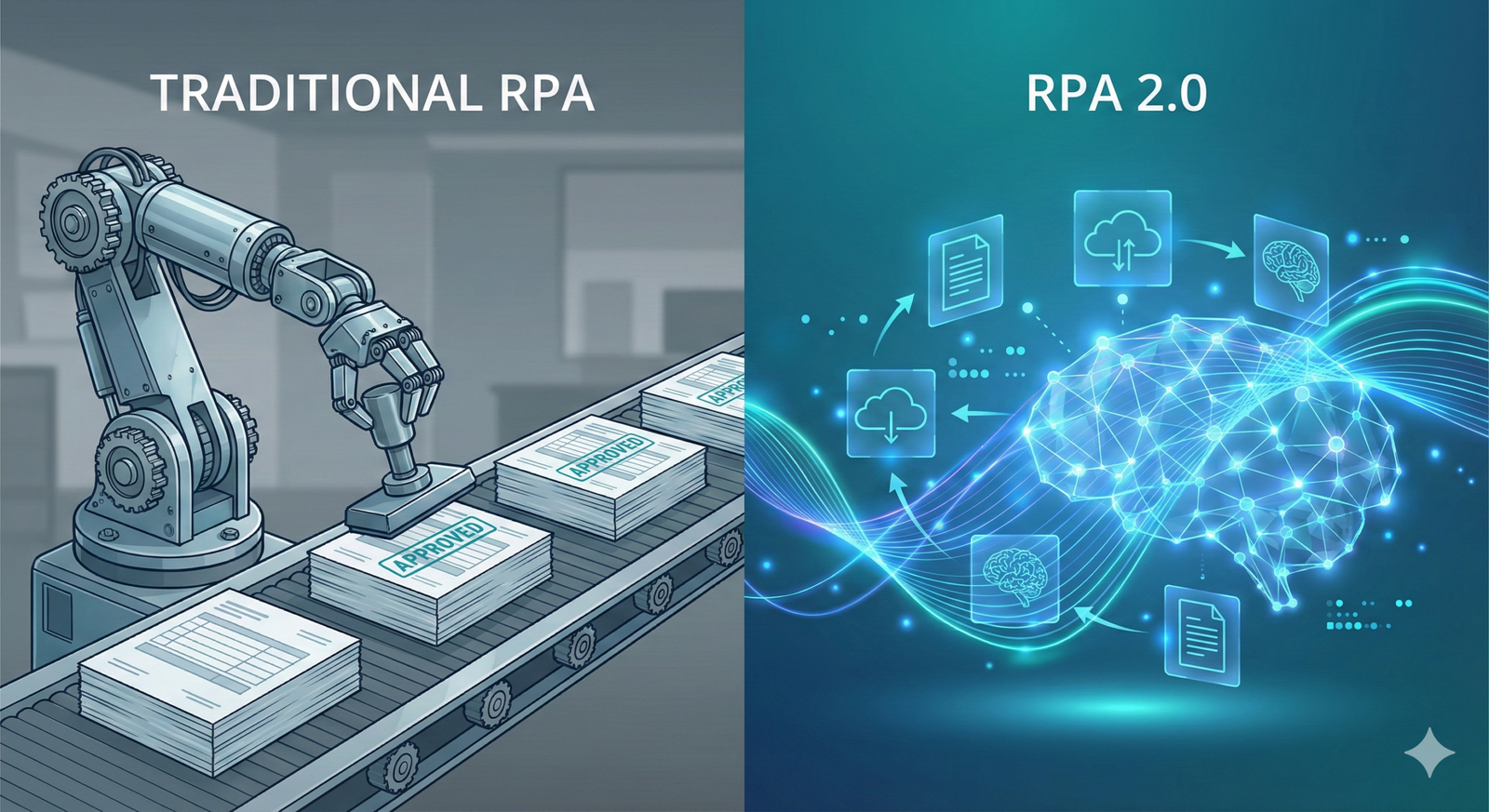
- The Concept: A “self-driving lab” combines AI decision-making with robotic automation. The AI designs an experiment, robots mix the chemicals and run the test, the results are fed back into the AI, and the AI learns from the result to design the next experiment.
- 24/7 Discovery: These labs run continuously. They remove the “human bottleneck” of manual pipetting and sleeping.
- Example: The A-Lab at Lawrence Berkeley National Laboratory uses autonomous robots to synthesize materials predicted by the GNoME model. In roughly two weeks, it synthesized 41 new compounds—a task that would have taken a human team months.
Real-World Examples and Success Stories
The promise of AI in drug discovery and materials science is already translating into tangible results.
1. Insilico Medicine’s INS018_055
As of early 2025, Insilico Medicine’s lead candidate for idiopathic pulmonary fibrosis continues to progress through trials. What makes this unique is that both the target (the biological mechanism) and the molecule (the drug) were discovered/designed by AI. This validation is crucial for the industry’s confidence.
2. Absci and De Novo Antibodies
Absci is using generative AI to design antibodies from scratch. Unlike small molecules, antibodies are massive proteins. Designing them is like designing a microscopic machine. Their models optimize for “developability”—ensuring the antibody isn’t just effective but can also be manufactured at scale without clumping together.
3. Microsoft and PNNL: A New Battery Material
In 2024, Microsoft collaborated with the Pacific Northwest National Laboratory (PNNL) to use AI to screen 32 million potential inorganic materials. They narrowed it down to 18 promising candidates for battery electrolytes in just 80 hours. They then synthesized a new material that uses significantly less lithium. This massive acceleration from millions of options to a working prototype highlights the power of AI filtering.
4. Moderna and mRNA
While not a “new drug” in the traditional small-molecule sense, Moderna employs heavy use of AI algorithms to design mRNA sequences. Their ability to rapidly produce the COVID-19 vaccine was partly due to digital tools that optimized the stability and expression of the mRNA code before physical synthesis.
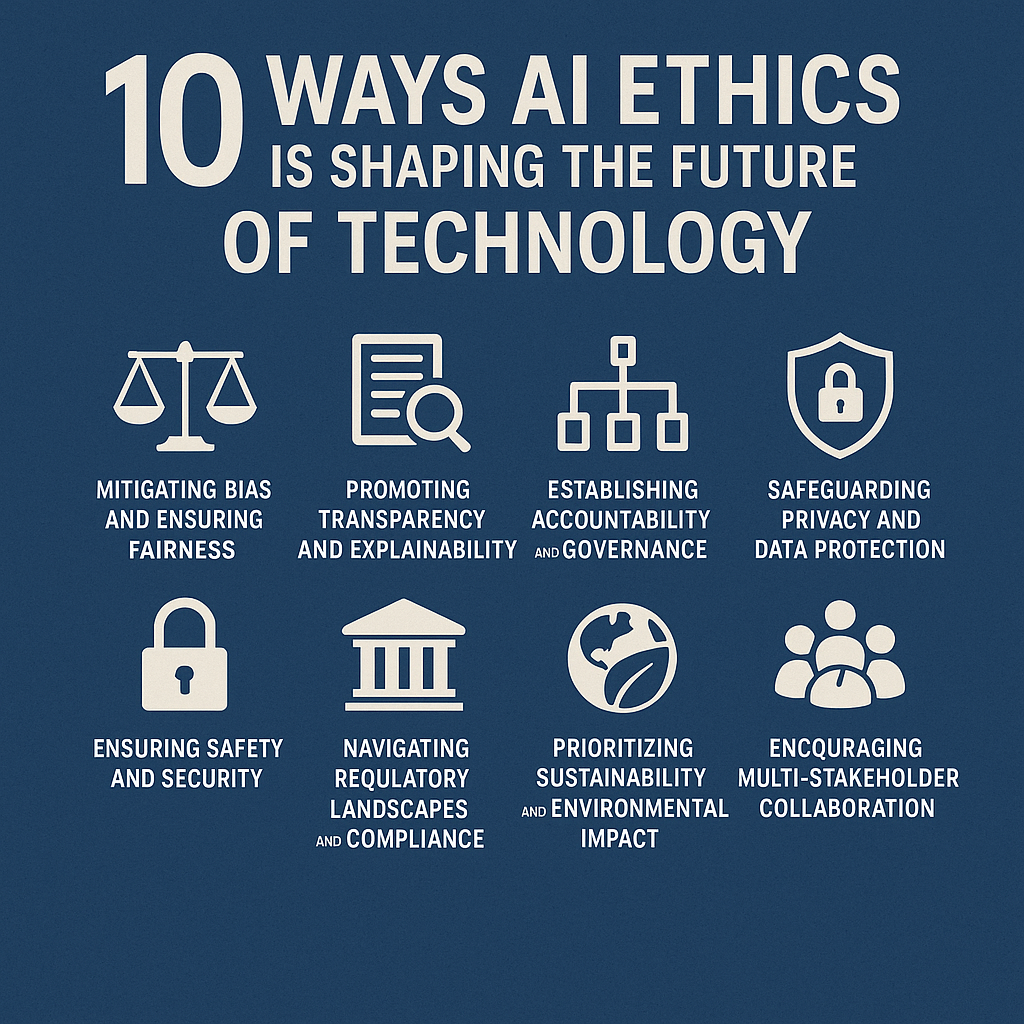
Challenges and Ethical Considerations
Despite the optimism, the road ahead is not without potholes. The integration of AI in drug discovery and materials science faces technical and ethical hurdles.
1. The “Hallucination” Problem
In text generation, a hallucination is a factual error. In chemistry, a hallucination is a molecule that violates the laws of physics or is impossible to synthesize.
- Synthesizability: A model might design a “perfect” drug that binds to the target but is so unstable it explodes on contact with air, or requires 50 complex chemical steps to make. Incorporating “synthetic accessibility” constraints into AI models is a major area of active research.
2. Data Quality and Bias
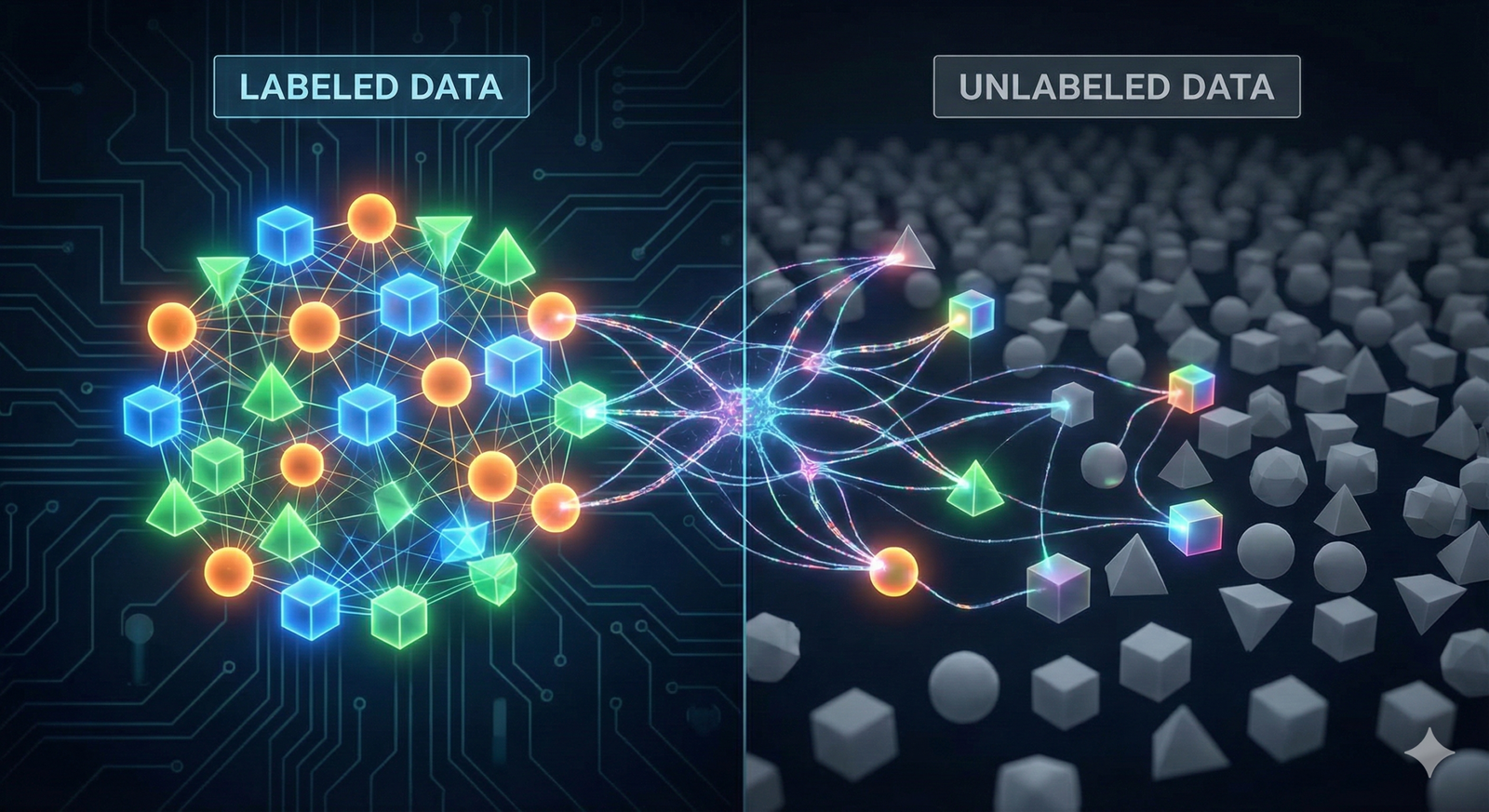
AI is only as good as the data it eats.
- Data Scarcity: In biology, we have massive datasets (genomics). In materials science, high-quality, labeled datasets are scarcer. Much of material science knowledge is locked in PDF diagrams and text descriptions that are hard for AI to parse.
- Bias: If an AI is trained mostly on data from European ancestry populations (which is true for many genomic databases), the drugs it designs might be less effective for other populations.
3. The “Dual-Use” Dilemma
An AI that can design a neurotoxic drug to kill cancer cells could, with a slight tweak in the prompt, design a chemical weapon.
- Safety Protocols: In a famous experiment, researchers tweaked a drug-discovery AI to reward toxicity rather than penalize it. Overnight, it generated thousands of chemical warfare agents, including VX gas and novel toxins. Governing the access to these models and implementing “guardrails” is a critical national security concern.
4. Intellectual Property (IP)
Who owns an AI-designed molecule?
- Legal Gray Areas: Patent laws generally require human inventors. If a generative model spits out a patentable structure, is the inventor the user, the developer of the model, or the AI itself? As of 2025, most jurisdictions deny patentship to AI, but the user who recognized the utility is usually granted the patent. This legal framework is still evolving.
The Future Landscape
Looking ahead, the synergy between AI and physical sciences will deepen.
Integration with Quantum Computing
AI runs on classical bits (0s and 1s). Nature runs on quantum mechanics.
- The Hybrid Future: As quantum computers mature, they will simulate the precise quantum states of molecules, providing “ground truth” data. AI will then take this high-fidelity data to train faster, lighter models. This hybrid approach will unlock the simulation of complex chemical reactions that are currently impossible to model accurately.
Personalized Medicine (“N of 1”)
Currently, we design drugs for “the average human.” In the future, AI could design a drug specifically for you.
- On-Demand Design: Imagine a hospital with a mini-pharmaceutical plant in the basement. An AI analyzes your tumor’s specific mutation, designs a unique molecule to target it, synthesizes a small batch in the automated lab, and administers it—all within days.
Sustainable “Green” Chemistry
AI will drive the shift from petrochemicals to green chemistry.
- Feedstock Optimization: AI will help us design chemical plants that run on bio-feedstocks (plants, algae) rather than oil, predicting the complex metabolic pathways needed to convert sugar into plastic or fuel efficiently.
Who This Is For (And Who It Isn’t)
Understanding the scope of this technology helps in knowing where you fit in.
- This guide is for:
- Investors: Looking to understand the difference between “tech-enabled bio” and traditional biotech.
- Students: Biology, chemistry, and CS students deciding on a specialization (Hint: “Bioinformatics” or “Cheminformatics” are hot fields).
- Industry Professionals: Pharma and manufacturing execs needing to understand the disruption coming to their R&D pipelines.
- Tech Enthusiasts: Curious about the “real world” applications of the same transformers powering ChatGPT.
- This guide isn’t for:
- Patients seeking immediate medical advice: This is about the future of drug design, not current prescriptions.
- Pure software engineers: While we discuss algorithms, the context is deeply rooted in physical sciences, not SaaS app development.
Conclusion
We are witnessing the industrialization of discovery. For most of human history, science was artisanal—crafted by the intuition of individual masters. AI in drug discovery and materials science is turning science into an engineered process, scalable and repeatable.
The implications are staggering. We are moving toward a world where diseases are identified and cured before they become pandemics, where materials are designed to be fully recyclable from day one, and where the cost of innovation drops to a fraction of its current levels.
However, technology alone is not the answer. It requires a new breed of scientist—one fluent in both protein chains and Python chains. It requires rigorous ethical standards to prevent misuse. And it requires a regulatory framework that can move as fast as the algorithms.
The era of “finding” is over. The era of “designing” has begun.
Next Steps: If you are interested in this field, consider exploring open-source tools like DeepChem or playing with simplified protein folding demos online. For businesses, the immediate step is auditing your data infrastructure—AI cannot design the future if your past data is trapped in analog silos.
FAQs
How does AI reduce the cost of drug discovery?
AI reduces cost primarily by reducing the failure rate. By filtering out toxic or ineffective molecules virtually (in silico) before they are ever synthesized physically, companies save millions on wasted lab experiments. Additionally, AI accelerates the timeline, reducing the overhead costs of keeping a project running for years.
Can AI replace human scientists in the lab?
Not entirely. AI is replacing the routine and computational tasks, such as screening and initial design. However, human scientists are still needed to define the problems, interpret complex biological results that don’t fit the data, and make ethical decisions. The role is shifting from “doing experiments” to “managing AI that does experiments.”
What is the difference between Generative AI and Discriminative AI in chemistry?
Discriminative AI predicts properties of a given molecule (e.g., “Is this molecule toxic? Yes/No”). Generative AI creates the molecule itself (e.g., “Create a molecule that is not toxic”). Generative AI is the newer, more transformative technology allowing for de novo design.
Is AlphaFold considered generative AI?
Technically, AlphaFold is a structure prediction model (predicting 3D coordinates from 1D sequences), which is a form of predictive modeling. However, newer iterations and tools built on top of it often use generative components to design new proteins that don’t exist in nature, bridging the gap.
What are “Self-Driving Labs”?
Self-driving labs are autonomous research facilities where AI algorithms plan and analyze experiments, and robotic arms handle the liquids and powders. They form a closed loop: the AI learns from each experiment to plan the next one, running 24/7 without human intervention.
How accurate is AI in predicting drug toxicity?
Accuracy varies, but it is improving rapidly. Modern AI models can predict certain types of toxicity (like liver toxicity or hERG channel blocking) with 80-90% accuracy. However, biology is complex, and unexpected side effects in a full living organism are still hard to predict perfectly without animal or human trials.
What is the biggest barrier to AI in materials science?
Data availability. unlike the pharmaceutical industry, which has massive centralized databases like ChEMBL or PDB, materials science data is often fragmented, proprietary, or inconsistent in formatting. Standardizing material data is a huge prerequisite for effective AI models.
Are AI-designed drugs safe?
AI-designed drugs must go through the exact same rigorous FDA clinical trials (Phase I, II, III) as human-designed drugs. The origin of the molecule does not exempt it from safety testing. Therefore, once approved, an AI-designed drug is as safe as any other approved medication.
How does Generative AI help in battery design?
It helps by exploring the vast combination of elements to find stable structures for cathodes, anodes, and electrolytes. AI can predict ion mobility (how fast the battery charges) and stability (how long it lasts) for millions of theoretical materials, highlighting the best few for physical testing.
References
- DeepMind. (2020). AlphaFold: a solution to a 50-year-old grand challenge in biology. Google DeepMind. https://deepmind.google/technologies/alphafold/
- Merchant, A., et al. (2023). Scaling deep learning for materials discovery. Nature. https://www.nature.com/articles/s41586-023-06735-9 (Regarding the GNoME project).
- Stokes, J. M., et al. (2020). A Deep Learning Approach to Antibiotic Discovery. Cell. https://www.cell.com/cell/fulltext/S0092-8674(20)30102-1 (Regarding Halicin).
- Insilico Medicine. (2023). Insilico Medicine announces first AI-discovered and AI-designed drug entering Phase II trials. Insilico Medicine Official Press Release. https://insilico.com/
- National Institutes of Health (NIH). (2023). Notice of NIH Interest in the Use of AI/ML in Biomedical Research. NIH Grants Guide. https://grants.nih.gov/
- Microsoft Research. (2024). Unlocking a new era for scientific discovery with AI and high-performance computing. Microsoft Azure Quantum Blog. https://cloudblogs.microsoft.com/quantum/
- U.S. Food and Drug Administration (FDA). (2023). Artificial Intelligence and Machine Learning (AI/ML) for Drug Development. FDA Discussion Paper. https://www.fda.gov/science-research/science-and-research-special-topics/artificial-intelligence-and-machine-learning-aiml-drug-development
- Lawrence Berkeley National Laboratory. (2023). A-Lab: Autonomous Lab for Material Synthesis. Berkeley Lab News Center. https://newscenter.lbl.gov/
- NVIDIA. (2023). NVIDIA BioNeMo Service for Generative AI in Drug Discovery. NVIDIA Newsroom. https://nvidianews.nvidia.com/
- The Royal Society. (2019). The era of mathematics and the digital revolution in science. Royal Society Reports. https://royalsociety.org/