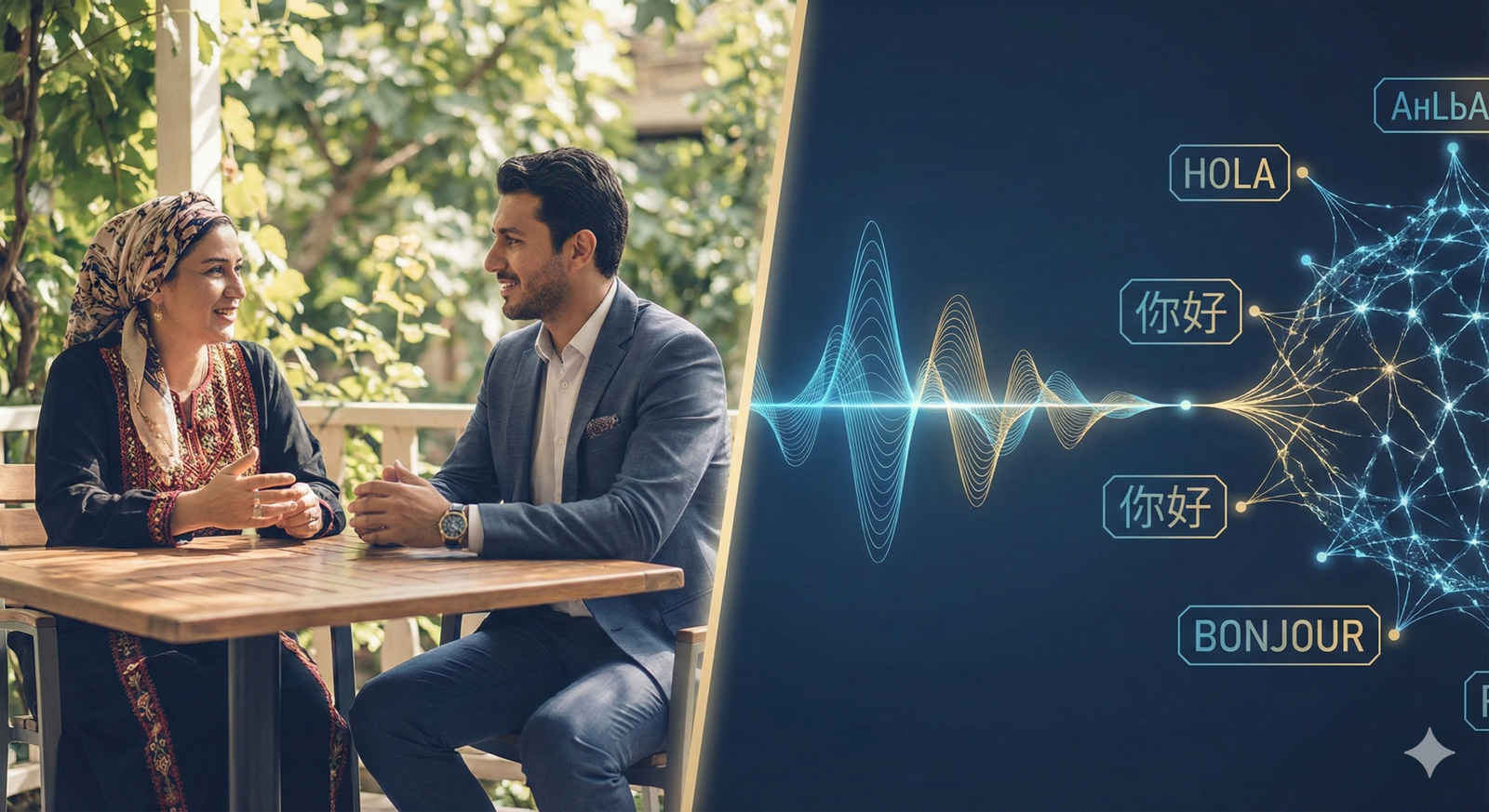
In an increasingly interconnected world, the ability to communicate across linguistic boundaries is not just a convenience—it is a necessity for global business, diplomacy, and personal connection. AI for language translation has emerged as the most transformative technology in this space, moving rapidly from clumsy word-for-word substitutions to sophisticated, context-aware interpretations.
However, true communication is about more than just vocabulary; it is about culture, intent, and nuance. While Artificial Intelligence can process syntax at lightning speed, the subtle dance of cross-cultural communication remains a complex frontier.
This guide explores the current landscape of AI-driven translation as of early 2026. We will examine how it works, where it excels, where it falls short, and how organizations and individuals can leverage it responsibly to build genuine connections rather than just exchanging data.
Key Takeaways
- Beyond Words: AI has evolved from statistical phrase matching to Neural Machine Translation (NMT), allowing for smoother, more human-like fluency.
- Speed and Scale: AI is the only viable solution for the massive volume of content generated daily, offering real-time translation for support tickets, chats, and documents.
- The Culture Gap: Despite advances, AI struggles with high-context cultural nuances, idioms, and humor, often requiring human oversight (Human-in-the-Loop).
- Hybrid Models: The gold standard for professional results is “Machine Translation Post-Editing” (MTPE), combining AI speed with human cultural verification.
- Ethical Risks: Users must remain vigilant regarding data privacy and inherent biases that AI models may inherit from their training data.
Who this is for (and who it isn’t) This guide is designed for business leaders expanding globally, content managers overseeing localization, students of linguistics, and tech enthusiasts interested in the mechanics of NLP. It is not a technical documentation manual for coding NMT models, nor is it a replacement for certified legal or medical translation advice.
Understanding AI in Language Services
To understand where we are going, we must briefly acknowledge where we came from. For decades, machine translation was the butt of jokes—useful for getting the “gist” of a menu, but dangerous for business contracts. Today, AI for language translation powers the subtitles on your streaming services, the “Translate” button on social media, and real-time earbud translators.
What is AI Translation?
At its core, AI translation utilizes machine learning algorithms to automatically translate text or speech from one language to another. Unlike early rule-based systems that relied on programmed linguistic dictionaries, modern AI uses Natural Language Processing (NLP). This allows the system to “read” the input, understand the context (to an extent), and generate an output that sounds natural in the target language.
The Shift to Neural Machine Translation (NMT)
The defining leap in quality occurred with the widespread adoption of Neural Machine Translation.
- Statistical Machine Translation (SMT): Used in the early 2000s, SMT broke sentences into phrases and looked for the most probable translation based on massive bilingual text corpora. It often resulted in disjointed, “robotic” sentences.
- Neural Machine Translation (NMT): NMT uses deep learning models to look at the entire sentence (and sometimes the surrounding paragraph) at once. It predicts the likelihood of a sequence of words, modeling the relationships between words even if they are far apart in the sentence. This results in significantly better handling of grammar, gender, and word order.
In practice, this means AI can now distinguish whether “bank” refers to a financial institution or the side of a river based on the surrounding context, a feat that baffled earlier systems.
The Mechanics: How Neural Networks Decode Language
While you don’t need to be a data scientist to use these tools, understanding the “black box” helps manage expectations regarding accuracy and failure modes.
1. Training on Corpora
AI models are trained on massive datasets known as “corpora”—billions of sentences of bilingual text (e.g., United Nations transcripts, multilingual websites, and books). The AI analyzes these texts to learn patterns, not rules. It learns that in French, the adjective usually follows the noun, not because it was told a rule, but because it has seen millions of examples of it.
2. Encoding and Decoding
The process generally follows an “Encoder-Decoder” architecture:
- Encoder: The AI reads the input sentence and converts it into a mathematical representation (a vector) that captures the semantic meaning of the sentence, independent of language.
- Decoder: The AI takes this “meaning vector” and generates the translation in the target language, word by word, constantly checking back against the original vector to ensure fidelity.
3. Attention Mechanisms
A critical component of modern NMT is the “attention mechanism.” This allows the AI to focus on specific parts of the input sentence when generating a specific word in the output. For example, when translating a sentence with complex agreement rules (like gendered nouns in Spanish), the AI “pays attention” to the subject of the sentence to ensure the adjective has the correct gender ending, even if several words separate them.
Breaking Down Barriers: The Benefits of AI Translation
The adoption of AI for language translation is driven by three undeniable factors: speed, cost, and accessibility. These benefits have democratized cross-cultural communication in ways previously impossible.
Instantaneity and Real-Time Communication
The most visible benefit is speed. Human translation is a thoughtful, time-consuming process. AI is instantaneous. This capability has birthed entire industries:
- Customer Support: Multilingual chatbots can handle queries in 100+ languages instantly, allowing a support agent in Brazil to help a customer in Japan without friction.
- Crisis Response: In humanitarian disasters, aid workers use AI tools to communicate with local populations immediately, bypassing the delay of sourcing human interpreters.
Cost-Efficiency at Scale
For businesses, the cost per word for human translation can be prohibitive when dealing with millions of words of user-generated content, reviews, or technical documentation. AI reduces this cost to a fraction of a cent. This “long-tail” content, which previously would have remained untranslated, can now be made accessible to global audiences.
Accessibility and Inclusion
AI translation tools are breaking down barriers for individuals with different language abilities.
- Live Captioning: Tools like Zoom and Microsoft Teams now offer live translated captions, allowing non-native speakers to participate fully in meetings.
- Travel Confidence: Visual translation apps (where you point your camera at a sign) allow travelers to navigate foreign transit systems and menus independently, fostering a sense of safety and cultural exploration.
The Cultural Gap: Where AI Still Struggles
While AI excels at converting words, it often struggles with meaning. Cross-cultural communication is high-context; it relies on shared history, social hierarchy, and unwritten rules that are rarely explicit in the text. This is the “cultural gap.”
High-Context vs. Low-Context Cultures
Anthropologist Edward T. Hall distinguished between high-context and low-context cultures.
- Low-Context (e.g., USA, Germany): Communication is explicit. “No” means “No.” AI handles this reasonably well.
- High-Context (e.g., Japan, China, Arab nations): Meaning is embedded in the situation, relationship, and tone. A direct “No” might be considered rude, so a speaker might say, “That is difficult,” which actually means “No.”
- The AI Failure: AI will translate “That is difficult” literally. A US businessperson receiving this translation might think, “Okay, it’s difficult but possible, let’s keep pushing,” leading to a major cultural faux pas and a breakdown in negotiation.
Idioms, Humor, and Metaphor
Idioms are the enemy of literal translation.
- Example: The German phrase “Ich verstehe nur Bahnhof” literally translates to “I only understand train station.” Its actual meaning is “I don’t understand anything” (similar to “It’s all Greek to me”).
- AI Progress: Advanced models like GPT-4 and localized NMT engines are getting better at recognizing common idioms, but regional slang or newly coined metaphors can still result in nonsensical outputs.
Formal vs. Informal Register
Many languages (French, Spanish, German, Japanese) have distinct formal and informal pronouns (e.g., tu vs. vous in French).
- The Risk: Using the informal address with a senior executive or a client can be seen as disrespectful. AI often struggles to infer the correct level of formality without explicit context prompts. If the source English text is “You need to sign here,” the AI must guess the relationship between the speakers to choose the correct pronoun.
AI vs. Human Translators: Finding the Balance
The narrative is often framed as “AI replacing humans,” but the reality is more nuanced. The industry has moved toward a “Centaur” model—human intelligence augmented by machine power.
Comparative Analysis
| Feature | AI Translation | Human Translator |
| Speed | Instantaneous | ~2,000–3,000 words per day |
| Cost | Low / Subscription-based | High / Per-word or hourly rate |
| Context | Sentence/Paragraph level | Full cultural & emotional context |
| Creativity | Low (tends to be literal) | High (can transcreate marketing copy) |
| Consistency | High (if using glossaries) | High (with style guides) |
| Best For | Manuals, Support, Gist | Legal, Marketing, Literature, Diplomacy |
The Rise of MTPE (Machine Translation Post-Editing)
The dominant workflow in the language industry today is Machine Translation Post-Editing (MTPE).
- AI Pass: The AI generates a first draft of the translation.
- Human Edit: A skilled linguist reviews the output, correcting errors, fixing style, and ensuring cultural appropriateness. This approach can increase productivity by 30–50% while maintaining near-human quality, offering the “best of both worlds” for technical and business content.
When Humans are Non-Negotiable
There are specific domains where AI should not be the sole authority:
- Legal Contracts: A misplaced comma or misinterpreted clause can lead to million-dollar liabilities.
- Medical Diagnosis: Nuance in describing pain or symptoms is critical; errors can be fatal.
- Creative Marketing (Transcreation): Marketing slogans often rely on wordplay that requires rewriting, not translating. (e.g., Nike’s “Just Do It” doesn’t translate directly into many languages effectively).
Real-World Applications and Tools
As of 2026, the ecosystem of AI translation tools is vast. Choosing the right tool depends on your specific use case—whether you are a tourist, a developer, or a multinational corporation.
1. Consumer-Facing Tools
- Google Translate & DeepL: These remain the market leaders for general text. DeepL is widely regarded for its superior handling of European languages and nuance, while Google Translate offers the widest breadth of language pairs, including low-resource languages.
- Wearable Translators: Devices like the Timekettle earbuds or features in the Google Pixel Buds allow for near-seamless face-to-face conversation. They listen, translate, and play back the audio, reducing the friction of passing a phone back and forth.
2. Enterprise Solutions
- Microsoft Azure Translator & Google Cloud Translation API: These are used by developers to build translation features into apps. They allow for “Custom Models,” where a company can train the AI on its own specific terminology (brand names, technical jargon) to ensure accuracy.
- Lilt & Smartling: These platforms integrate AI into the professional translation workflow, using “predictive typing” that learns from the human translator’s corrections in real-time.
3. Video and Voice Dubbing
A rapidly growing sector is AI dubbing. Tools like HeyGen and Rask.ai can take a video of a person speaking English, translate the audio into Spanish, and lip-sync the video so the speaker’s mouth matches the Spanish words. This is revolutionizing educational content and corporate training, making materials accessible globally without the “uncanny valley” effect of bad dubbing.
Ethical Challenges and Bias in Automated Translation
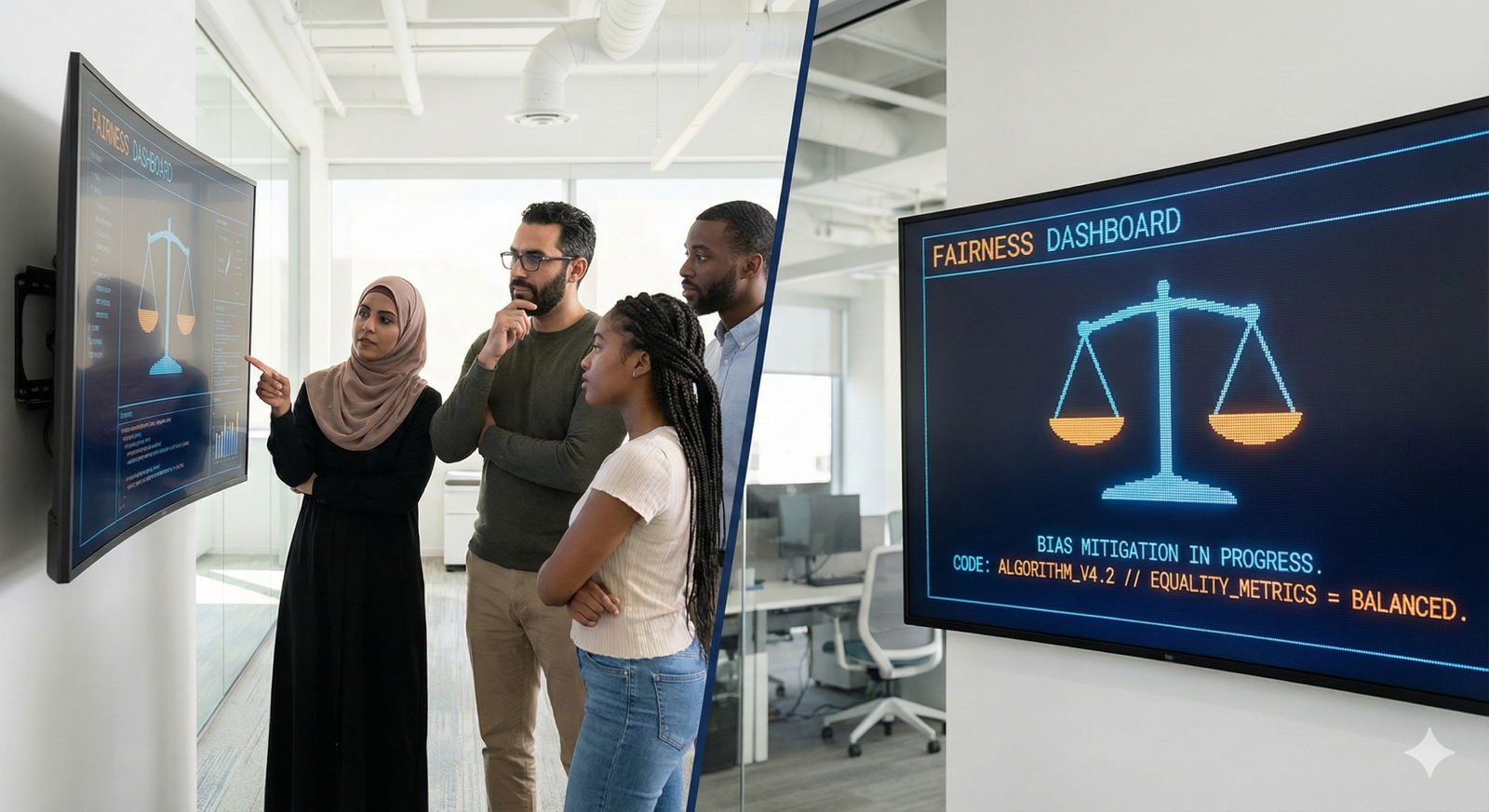
As we entrust more communication to algorithms, we must confront the ethical implications. AI is not neutral; it is a reflection of the data it was fed.
Gender Bias
Historically, translation models have exhibited severe gender bias.
- The Problem: In languages without gendered pronouns (like Turkish or Finnish), the phrase “O bir doktor” (He/She is a doctor) was often translated by AI as “He is a doctor,” while “O bir hemşire” (He/She is a nurse) was translated as “She is a nurse.”
- The Cause: The AI was reflecting historical biases present in the literature it was trained on, where doctors were more often male and nurses female.
- The Fix: Modern engines now attempt to offer both options (masculine and feminine) when the source is ambiguous, but the bias persists in more complex sentences.
Loss of Minority Languages
AI development focuses heavily on “high-resource” languages (English, Chinese, Spanish, French). “Low-resource” languages (Swahili, Yoruba, Quechua) often have poor translation quality due to a lack of training data.
- The Consequence: This creates a “digital divide” where speakers of minority languages are excluded from the benefits of the global internet, or are forced to use a dominant language, accelerating language extinction.
Data Privacy and Security
When you paste a sensitive contract into a free online translation tool, where does that data go?
- The Risk: Many free tools reserve the right to use your input to train their models. There have been cases of sensitive corporate data leaking because it was used to train a public translation engine.
- Best Practice: Enterprises must use paid, secure API endpoints that guarantee “no trace” data policies, ensuring that inputs are deleted immediately after processing.
Implementing AI Translation in Your Strategy
For organizations looking to go global, simply “turning on” AI translation is not a strategy. A thoughtful approach is required to balance efficiency with brand reputation.
Step 1: Content Triage
Not all content deserves the same level of attention. Categorize your assets:
- Tier 1 (High Impact): Homepage, marketing slogans, legal terms. Strategy: Human Translation + Creative Adaptation.
- Tier 2 (Medium Impact): Help center articles, product descriptions, UI text. Strategy: MTPE (AI + Human Review).
- Tier 3 (Low Impact): User reviews, internal forums, ephemeral chats. Strategy: Raw AI Translation (with a disclaimer).
Step 2: Create a Term Base and Style Guide
AI needs guidance. A Term Base is a glossary of your specific terminology (e.g., “Do not translate the product name ‘CloudFlow'”). A Style Guide defines the tone (e.g., “Use formal address for German customers”). Feeding these assets into customizable AI models dramatically improves consistency.
Step 3: The “Disclaimer” Approach
If you are using raw AI translation for customer support or community forums, be transparent. Add a badge: “Translated automatically by AI.” This manages user expectations. If a sentence reads slightly awkwardly, the user is more forgiving if they know a machine wrote it, rather than thinking your company is unprofessional.
Step 4: Continuous Feedback Loop
Treat translation as a living process. If users flag a bad translation on your support page, that data should be fed back to your localization team to update the Term Base. This prevents the AI from making the same mistake twice.
The Future of Cross-Cultural AI
As we look toward the latter half of the 2020s, AI for language translation is moving beyond text and into the realm of total communication.
Speech-to-Speech Translation (S2S)
We are approaching “Star Trek Universal Translator” capability. Advanced S2S models are reducing latency to milliseconds, allowing for natural interruptions and overlapping speech in conversation, which are critical cues in many cultures.
Emotion AI and Tone Preservation
Current research is focusing on preserving the emotion of the speaker. If the source speaker is angry or sarcastic, the translated voice should reflect that anger or sarcasm, not just a flat robotic monotone. This is crucial for cross-cultural empathy, ensuring that the urgency or warmth of a message is not lost in translation.
Context-Aware Augmented Reality (AR)
Future AR glasses will likely overlay translations on the real world more seamlessly. Imagine looking at a person speaking Mandarin, and seeing subtitles float next to them, or hearing a translated voice that spatially sounds like it is coming from their position. This integration will make cross-cultural environments feels less “foreign” and more collaborative.
Conclusion
AI for language translation is a bridge, not a destination. It has successfully democratized access to information and enabled cross-cultural communication on a scale never before seen. It allows small businesses to trade globally, helps travelers connect with locals, and assists governments in serving diverse populations.
However, technology cannot automate empathy. The “cultural gap” remains the most significant hurdle. AI can tell you what the words mean, but it cannot always tell you what the speaker means.
To use AI responsibly in 2026, we must adopt a “human-centric” approach. Use AI to handle the heavy lifting of vocabulary and syntax, but rely on human judgment to navigate the delicate waters of culture, emotion, and intent. By doing so, we ensure that we are not just exchanging data packets, but truly understanding one another.
Next Steps for the Reader
- Audit Your Tools: Check the privacy policy of the translation tools you use daily. Are they secure?
- Test for Nuance: Try translating an idiom from your language into another and back again to see where the AI breaks.
- Categorize Your Content: If you run a business, apply the “Tiered” strategy (High/Medium/Low impact) to optimize your translation budget.
FAQs
1. Is AI translation accurate enough for business contracts? Generally, no. While AI has improved massively, it can still miss subtle legal nuances or definitions that define liability. For legal, medical, or high-stakes business contracts, you should always use a professional human translator or, at the very least, a rigorous human review of the AI output.
2. How does AI handle dialects and accents? AI struggles with strong accents and regional dialects (e.g., Swiss German vs. High German, or Scottish English). Most models are trained on “standard” broadcast versions of a language. However, newer models are being trained on more diverse audio data to improve inclusivity for different accents.
3. What is the difference between translation and localization? Translation is converting text from one language to another. Localization is adapting that content to a specific culture. For example, translation changes “color” to “colour”; localization changes a reference to “baseball” (US) to “cricket” (India) to make it relatable. AI does translation well; humans excel at localization.
4. Can AI translation work offline? Yes. Many modern apps (like Google Translate and Microsoft Translator) allow you to download “language packs” to your device. This enables the Neural Machine Translation engine to run locally on your phone’s processor without an internet connection, though the quality may be slightly lower than the cloud-based version.
5. Will AI replace human translators? AI is replacing tasks, not necessarily the profession. It is replacing the tedious work of translating repetitive technical manuals or basic web content. However, the demand for human translators is shifting toward “post-editing,” creative transcreation, and high-level cultural consulting.
6. How do I prevent gender bias in AI translation? Be explicit in your source text. Instead of writing “The doctor called,” write “The female doctor called” if the gender is known and relevant. When using translation tools, look for features that offer gender-specific alternatives (e.g., “masculine” and “feminine” output options).
7. What is “High-Context” culture in communication? High-context cultures (like Japan, China, and many Arab countries) rely heavily on non-verbal cues, history, and relationship status to convey meaning. Words are only part of the message. AI often fails here because it only analyzes the text, missing the unwritten social rules that dictate the true meaning.
8. Is my data safe when using free translation tools? Usually, no. Free versions of tools like Google Translate or DeepL often retain the right to use your inputs to improve their services. For confidential data, you must use the “Enterprise” or “Pro” versions of these tools, which typically offer data privacy guarantees and do not train on your data.
9. What is Real-Time Translation? Real-time translation processes input (voice or text) and generates output almost instantly. This is used in devices like translation earbuds (Pixel Buds) or platforms like Skype Translator. It relies on low-latency cloud computing or powerful on-device edge processing.
10. Why does AI sometimes leave words untranslated? This usually happens when the AI encounters a proper noun, a brand name, or a very specific slang term that is not in its training data. It treats the unknown term as a “named entity” and leaves it in the original language to avoid guessing and creating a nonsensical error.
References
- Google AI Blog. (2024). Advancements in Neural Machine Translation and Low-Resource Languages. Google Research. https://blog.google/technology/ai/
- DeepL. (2025). DeepL Pro Security and Data Privacy Documentation. DeepL SE.
- Microsoft Azure AI. (2025). Translator Documentation: Custom Translation and Security. Microsoft Learn. https://learn.microsoft.com/en-us/azure/ai-services/translator/
- Common Sense Advisory (CSA Research). (2024). The State of the Language Services Industry: AI and the Human-in-the-Loop. CSA Research. https://csa-research.com
- Association for Computational Linguistics (ACL). (2023). Gender Bias in Neural Machine Translation: A Survey. ACL Anthology. https://aclanthology.org
- Hall, E. T. (1976). Beyond Culture. Anchor Books. (Cited for foundational definitions of High/Low Context cultures).
- Slator. (2025). 2025 Language Industry Market Report: The Impact of Generative AI. Slator. https://slator.com/reports
- UNESCO. (2024). Digital inclusion for low-resource languages. UNESCO Digital Library. https://unesdoc.unesco.org
- National Institute of Standards and Technology (NIST). (2024). Evaluation of Machine Translation Systems. NIST. https://www.nist.gov/programs-projects/machine-translation