The intersection of Artificial Intelligence (AI) and climate science represents one of the most critical technological frontiers of our time. As extreme weather events become more frequent and intense, the traditional methods of forecasting and disaster preparation are being pushed to their limits. AI for climate modeling offers a new paradigm: one that leverages vast datasets, pattern recognition, and predictive speed to foresee environmental shifts long before they occur.
This guide explores how AI is reshaping our understanding of the Earth’s systems, from predicting the path of a hurricane to modeling decades of climate change in mere seconds. We will examine the technology behind these innovations, the practical applications for disaster management, and the limitations that scientists are still working to overcome.
Key Takeaways
- Speed vs. Simulation: AI models can run thousands of times faster than traditional physics-based models, allowing for more “what-if” scenarios.
- Pattern Recognition: Machine Learning (ML) excels at identifying complex, non-linear patterns in historical weather data that humans or traditional equations might miss.
- Hyper-Localization: AI enables weather predictions at a street-level resolution, vital for urban planning and localized flood warnings.
- Digital Twins: New technology allows for the creation of “Digital Twins” of Earth—interactive simulations to test climate interventions.
- Human-in-the-Loop: AI is not replacing meteorologists but augmenting them; human expertise is required to validate “black box” predictions.
Scope of this Guide In this guide, “AI for climate modeling” refers to the use of machine learning algorithms (such as neural networks and transformers) to emulate or enhance atmospheric and oceanic simulations. We will cover short-term weather forecasting, long-term climate projection, and immediate disaster prediction (floods, fires, storms). We will not cover general environmental sustainability topics (like recycling robots) unless they directly relate to modeling and prediction data.
What Is AI-Driven Climate Modeling?
To understand how AI transforms climate science, we must first understand the status quo. Traditional climate models, known as General Circulation Models (GCMs), are physics-based. They use massive supercomputers to solve complex differential equations representing the laws of physics (thermodynamics, fluid dynamics) across a grid covering the Earth.
While incredibly accurate, GCMs are computationally expensive and slow. Running a high-resolution simulation for a century of climate data can take weeks on the world’s fastest computers.
The AI Advantage: Emulation and Hybridization AI approaches the problem differently. Instead of calculating the movement of every molecule based on physics, AI models—specifically Deep Learning models—are trained on historical data (such as the ERA5 dataset, a reanalysis of global climate data). The AI “learns” how weather patterns evolve by studying decades of past examples.
Once trained, an AI model can infer future states almost instantly. This process, often called emulation, allows researchers to run thousands of simulations (ensembles) in the time it takes a physics-based model to run one. This statistical power is crucial for understanding the probability of rare, extreme “tail risks”—the very disasters that cause the most damage.
The Shift from Physics to Data
- Physics-based: “If pressure drops here and temperature rises there, the equation says wind will blow this way.”
- Data-driven (AI): “In the last 50 years, whenever pressure dropped here and temperature rose there, wind blew this way 98% of the time.”
In practice, the most effective modern systems are often hybrid models. These combine the trustworthiness of physics-based constraints with the speed and pattern-recognition capabilities of AI.
How AI Improves Weather Forecasting
Weather forecasting is the immediate, short-term cousin of climate modeling. While climate looks at decades, weather looks at days. AI has revolutionized this field by improving accuracy and resolution.
1. Nowcasting
“Nowcasting” refers to predicting weather over the next 0 to 6 hours. Traditional numerical weather prediction (NWP) models often suffer from “spin-up” time—a lag between receiving data and outputting a forecast. By the time the forecast is ready, the storm may have already moved.
AI models, particularly those using Convolutional Neural Networks (CNNs) and radar data, can generate precipitation forecasts in seconds. For example, deep learning models can analyze sequential radar images to predict exactly when rain will start on a specific street, offering significantly higher utility for logistics companies, event planners, and emergency services.
2. Overcoming the “Butterfly Effect”
The chaotic nature of the atmosphere means that small errors in initial data can lead to massive forecast errors later—the famous “butterfly effect.” AI helps mitigate this through better data assimilation.
AI algorithms can ingest data from non-traditional sources that physics models struggle to incorporate, such as:
- Signal attenuation data from cell towers (which indicates rain intensity).
- Images from street cameras.
- IoT sensor data from smart cars and connected devices. By fusing these diverse data streams, AI creates a more accurate starting picture (initial conditions), leading to more stable forecasts.
3. Graph Neural Networks (GNNs)
Advanced AI models, such as those developed by Google DeepMind (GraphCast), utilize Graph Neural Networks. Instead of treating the Earth as a 2D flat grid, GNNs model the atmosphere as a 3D interconnected mesh (a graph). This allows the model to understand long-range dependencies—how a typhoon in the Pacific might influence a heatwave in California days later—more effectively than traditional grid based methods.
AI in Disaster Prediction: 3 Critical Use Cases
The most tangible impact of AI in this sector is its ability to predict and mitigate natural disasters. By identifying warning signs that are too subtle for human analysts, AI systems are saving lives.
1. Flood Forecasting
Floods are the most common natural disaster globally. Predicting them requires understanding complex interactions between rainfall, soil saturation, river flow, and topography.
- Hydrologic Modeling: AI models take satellite imagery to map terrain elevation and river width with high precision. They then combine this with predicted rainfall to simulate how water will move across the land.
- The Inundation Map: Traditional models might say “River X will rise 2 meters.” AI models go further, generating inundation maps that show exactly which city blocks will be underwater.
- Global Access: As of 2024-2025, initiatives like Google’s Flood Hub have expanded AI-based flood forecasting to over 80 countries, providing up to 7 days of warning in regions that previously had no early warning systems at all.
2. Wildfire Prediction and Detection
Wildfires are becoming faster and hotter due to climate change. AI aids in both early detection and spread modeling.
- Satellite Detection: AI algorithms scan feeds from geostationary satellites to detect the thermal signature of a new fire within minutes of ignition. This is faster than relying on human reports.
- Spread Modeling: Once a fire starts, AI models analyze wind direction, humidity, vegetation dryness (fuel load), and terrain slope to predict the fire’s path. These “fire spread simulators” run in real-time, helping incident commanders decide which towns to evacuate first.
3. Hurricane Intensification
Meteorologists have gotten very good at predicting where a hurricane will go (the track), but they still struggle to predict how strong it will get (intensity). Specifically, “rapid intensification”—where a storm gains massive strength in under 24 hours—is a nightmare scenario.
AI analyzes patterns in the cloud structure, ocean heat content, and vertical wind shear to flag storms primed for rapid intensification. By looking at pixel-level data in satellite imagery, neural networks can spot the specific organizational patterns in a storm’s core that precede a major jump in wind speed.
Digital Twins of Earth: The Next Frontier
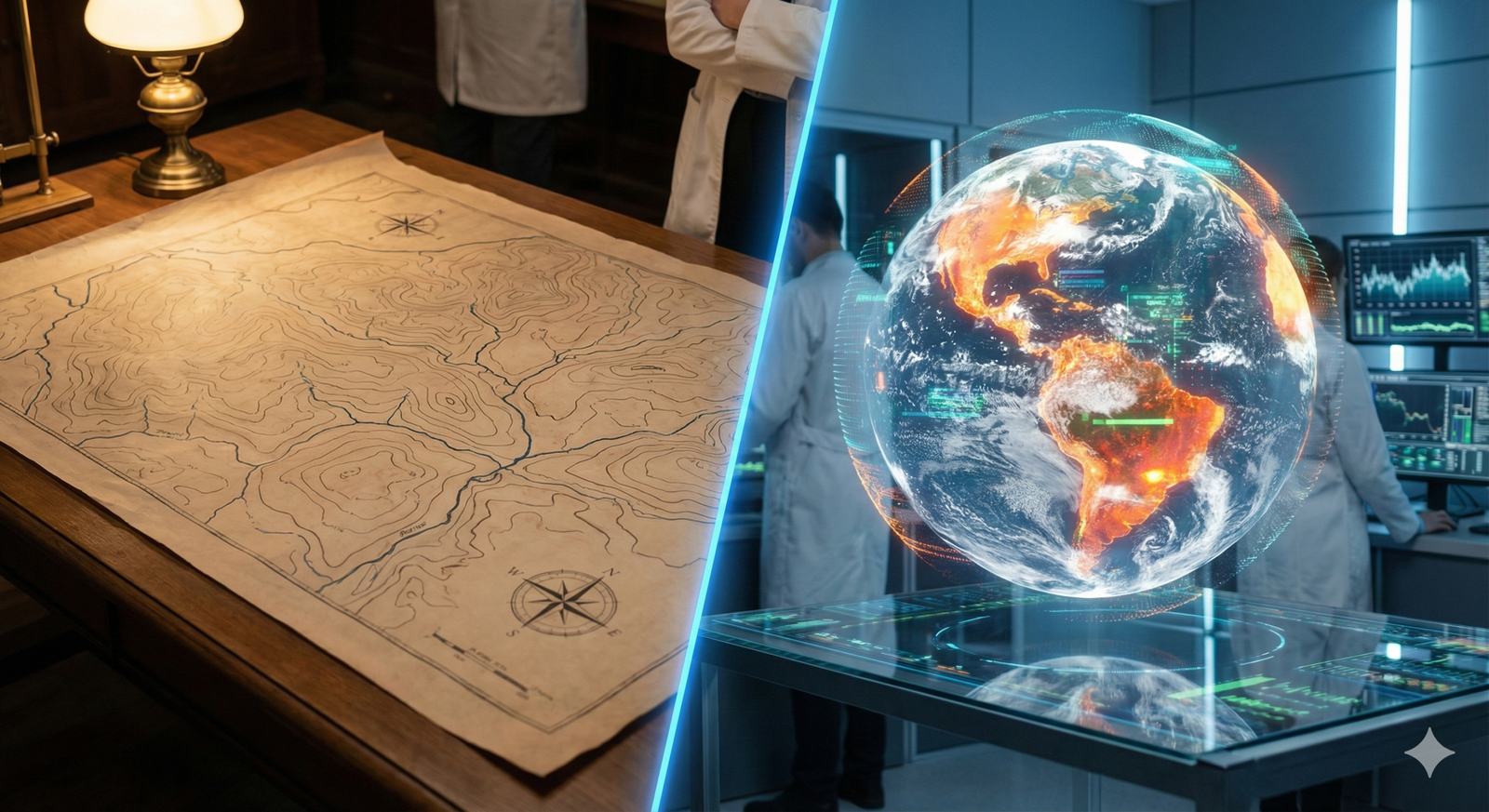
Perhaps the most ambitious application of AI in climate science is the creation of a “Digital Twin” of the Earth. A Digital Twin is a virtual replica that runs in real-time, constantly updated with data from the real world.
What is a Climate Digital Twin?
It is an interactive simulation that allows policymakers to ask “what-if” questions. Unlike a static report, a Digital Twin allows users to toggle variables and see immediate consequences.
- Scenario: “What happens to London’s flood risk if global temperatures rise by 2.5°C instead of 1.5°C?”
- Scenario: “How does building a sea wall in this specific location affect coastal erosion 50 miles down the coast?”
Leading Initiatives
As of late 2025, several major projects are leading this charge:
- NVIDIA Earth-2: A platform designed to predict climate change and extreme weather. It uses AI to super-resolve climate simulations, turning coarse data into high-resolution, localized visualizations.
- Destination Earth (DestinE): An initiative by the European Commission to develop a highly accurate digital model of the Earth to monitor and predict natural and human activity.
These twins rely heavily on Generative AI—specifically diffusion models similar to those used in image generation—to “fill in the blanks” of climate data, generating high-fidelity weather patterns from lower-resolution inputs.
The Technology Behind the Predictions
For those interested in the technical mechanisms, AI for climate modeling relies on a specific stack of architectures and data pipelines.
Convolutional Neural Networks (CNNs)
Originally designed for image recognition (identifying a cat in a photo), CNNs are perfect for meteorology. Satellite imagery and radar maps are essentially images. A CNN analyzes these “images” to identify features like cloud formations, storm rotation, or snow cover.
Transformers and Attention Mechanisms
The architecture behind Large Language Models (LLMs) like GPT-4 is also transforming meteorology. Weather is a sequence of events, much like a sentence is a sequence of words. Transformers use “attention mechanisms” to weigh the importance of different data points.
- Example: When predicting tomorrow’s weather in Paris, the model might “pay attention” to a pressure system currently over the Atlantic, recognizing it as the most relevant influencer, while ignoring a stable system over Russia.
Physics-Informed Machine Learning (PIML)
This is a safeguard technique. Pure AI models can sometimes “hallucinate” physically impossible weather (e.g., creating mass out of nothing or violating laws of thermodynamics). PIML embeds physical laws into the loss function of the neural network. If the AI proposes a prediction that violates the law of conservation of energy, it is penalized during training. This ensures the output is not just plausible, but physically valid.
Benefits Over Traditional Methods
Why are institutions switching to or integrating AI? The benefits are measurable in speed, cost, and accessibility.
1. Computational Efficiency
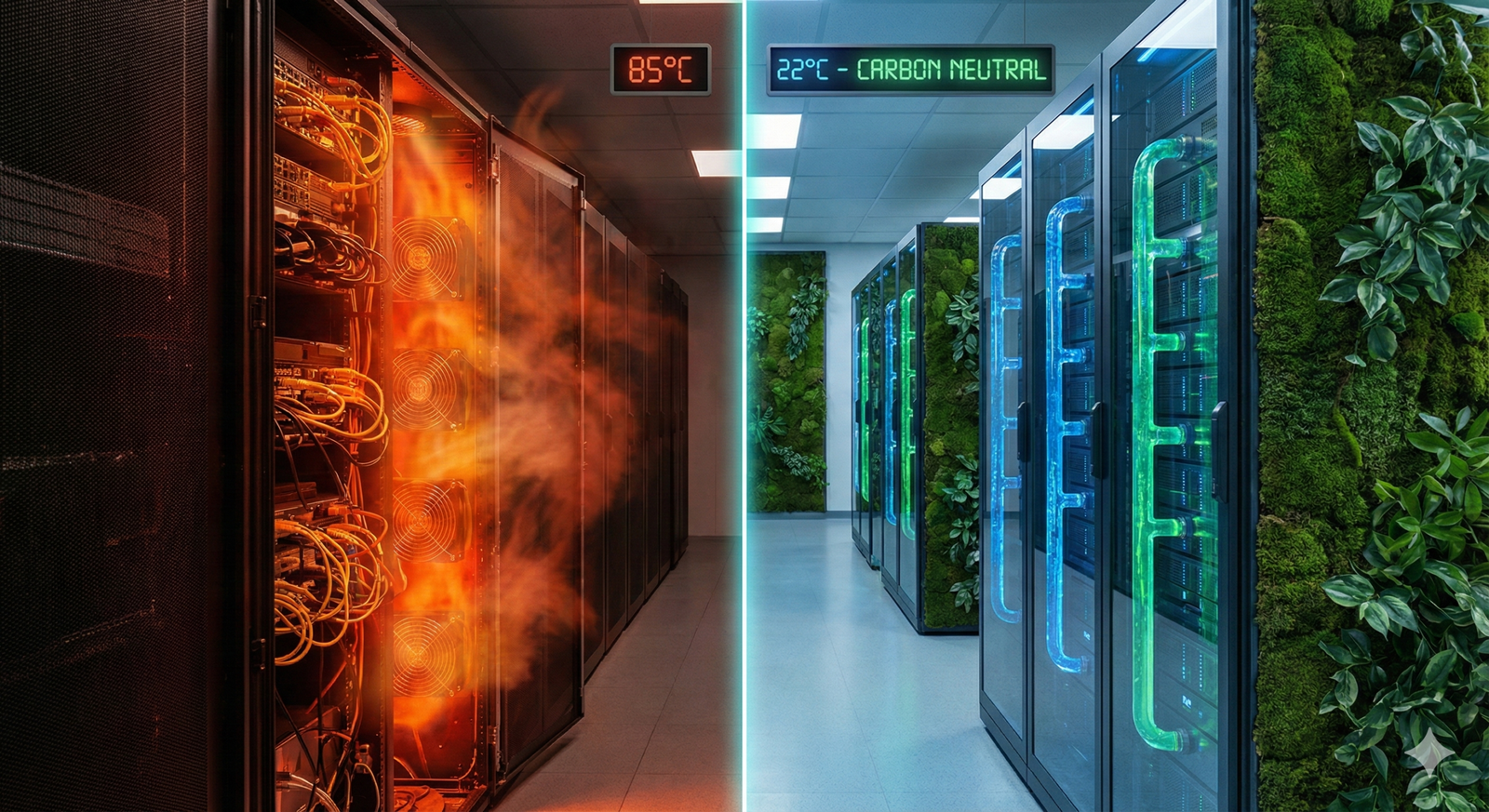
Traditional GCMs require supercomputers that consume megawatts of power. Once trained, an AI model can run on a fraction of that hardware (often just a few GPUs). This democratization means that smaller nations, universities, and NGOs can run high-quality climate models without needing a billion-dollar data center.
2. Hyper-Resolution (Downscaling)
Global models usually divide the Earth into large grid boxes (e.g., 25km x 25km). This is too coarse to predict weather for a specific city block. AI excels at “downscaling”—taking the coarse data from the global model and inferring the fine details based on local topography and historical local data. This brings global climate change down to the neighborhood level.
3. Handling Non-Linearity
Climate systems are chaotic. Traditional linear equations sometimes struggle to capture complex feedback loops (e.g., how melting ice changes cloud cover, which in turn changes temperature). Deep learning models are inherently non-linear and can capture these subtle, multi-variable interactions more effectively.
Challenges and Limitations
Despite the hype, AI is not a silver bullet. There are significant risks and hurdles that must be managed to ensure safety and reliability.
The “Black Box” Problem
In high-stakes decision-making, explainability is key. If an AI predicts a massive flood, a government official needs to know why before ordering an evacuation. Deep learning models are notoriously opaque. If the model cannot explain its reasoning (e.g., “I predict a flood because soil saturation is at 90% and rain is incoming”), officials may hesitate to act.
Data Bias and Quality
AI is only as good as the data it is trained on.
- Geographic Bias: Historical weather data is dense in North America and Europe but sparse in Africa, South America, and the oceans. AI models trained on this data will be less accurate in the Global South—regions often most vulnerable to climate change.
- Stationarity: AI learns from the past. However, climate change is creating a “non-stationary” world—the future will not look like the past. If an AI is trained on weather patterns from 1980-2010, it may fail to predict the extreme heat domes or mega-storms of the 2030s because it has never seen them before.
Hallucinations and Stability
While PIML helps, pure data-driven models can still drift over long simulations. In a 10-year forecast, small errors in the AI’s output can compound, leading to a simulation that diverges from reality. This is why AI is currently better at short-term weather (1-10 days) than multi-decadal projection, though this is changing rapidly.
Who This Technology Is For
The audience for AI climate modeling is broadening beyond academia.
Government and Urban Planners
City planners use these models to design “climate-resilient” infrastructure. By understanding future heat island effects or flood zones at a street level, they can update zoning laws, plan drainage systems, and position cooling centers effectively.
The Insurance Industry
Insurers are among the earliest adopters. They use AI modeling to assess risk portfolios. Accurate hyper-local prediction allows them to price premiums more accurately (though this raises ethical concerns about insurability) and to estimate capital reserves needed for future disaster payouts.
Agriculture and Supply Chain
Farmers use AI weather predictions to optimize irrigation and harvest windows. Supply chain managers use them to route ships around storms and stockpile inventory before forecasted disruptions.
Future Trends in AI Climate Science
Looking ahead, we can identify several emerging trends that will define the next decade of climate AI.
Foundation Models for Weather
Just as we have Foundation Models for text (LLMs), we are seeing the rise of Foundation Models for Earth observation. NASA and IBM have collaborated on models trained on vast amounts of geospatial data. These pre-trained models can be fine-tuned for specific tasks—one user might use it to track deforestation, another to predict crop yields—drastically lowering the barrier to entry for climate apps.
Edge Computing and IoT
Disaster prediction is moving to the “edge.” Instead of sending data to a central server, AI chips on satellites or in remote weather stations will process data locally. This reduces latency, allowing a flood sensor to trigger a siren immediately without needing to connect to the cloud first.
Collaborative AI
We will see a move toward “Ensemble AI,” where predictions from multiple distinct AI architectures (Graph Networks, Transformers, CNNs) are combined. If five different AIs all agree on a hurricane track, confidence is high. If they disagree, uncertainty is flagged.
Conclusion
AI for climate modeling and disaster prediction is no longer a futuristic concept; it is an active, vital part of our global defense against extreme weather. By shifting from pure physics simulation to hybrid data-driven approaches, humanity has gained tools that are faster, more granular, and increasingly accurate.
However, technology alone is not a solution. The insights generated by AI—whether they be flood warnings or long-term drought projections—must be integrated into policy, infrastructure, and community response plans. The “Black Box” must be opened or validated by human experts to build trust. As we face an increasingly volatile climate, the collaboration between human wisdom and artificial intelligence will be our best hope for resilience.
Next Steps: If you are an organization looking to leverage these tools, start by auditing your data availability. AI requires clean, historical data to function. Consider partnering with academic institutions or leveraging open-source pre-trained models like GraphCast to test pilot programs before investing in custom infrastructure.
FAQs
How accurate is AI weather prediction compared to traditional methods?
As of recent benchmarks, top AI models like Google’s GraphCast and NVIDIA’s FourCastNet have demonstrated accuracy equal to or slightly better than the gold-standard ECMWF physics models for medium-range forecasts (3–10 days), while being significantly faster and more energy-efficient to run.
Can AI predict earthquakes?
This remains a challenge. While AI is excellent at weather (fluid dynamics), predicting earthquakes involves geological stress accumulation deep underground where data is scarce. AI has improved detection (spotting tremors faster) and early warning (seconds before shaking starts), but reliable long-term earthquake prediction remains scientifically elusive.
Does AI for climate modeling consume a lot of energy?
Training massive AI models does consume significant energy. However, once trained, the inference (running the prediction) is thousands of times more energy-efficient than running a traditional supercomputer simulation. Over time, this results in a net energy saving for the meteorological industry.
What data do these AI models use?
They primarily use “Reanalysis Data” (like ERA5), which is a comprehensive historical record of global weather combining satellite, weather station, buoy, and radar data from past decades to create a gap-free map of the Earth’s atmospheric history.
Is AI replacing meteorologists?
No. AI is automating the data crunching and initial forecasting, allowing meteorologists to focus on communicating risks to the public, validating extreme outlier predictions, and making high-stakes decisions where human judgment and ethical considerations are required.
What is the “Black Box” problem in climate AI?
It refers to the difficulty in understanding how an AI model arrived at a specific prediction. Unlike physics equations which are transparent, a neural network is a web of millions of connections. Scientists are working on “Explainable AI” (XAI) to make these decisions more transparent.
Can AI solve climate change?
AI cannot solve climate change on its own; it is a tool for optimization and adaptation. It can help us optimize energy grids to use more renewables, design new materials for batteries, and prepare for disasters, but it cannot physically remove carbon from the atmosphere or change political policies.
How does AI help in developing countries?
AI lowers the cost of high-quality forecasting. Since AI models can run on standard GPUs rather than massive supercomputers, developing nations can access state-of-the-art weather predictions without the prohibitive infrastructure costs associated with traditional meteorological centers.
What are “Digital Twins” of the Earth?
Digital Twins are virtual replicas of the Earth’s systems powered by AI. they allow scientists and policymakers to simulate “what-if” scenarios, such as the impact of a new dam or the effects of rising sea levels on coastal cities, in an interactive, real-time environment.
Are these AI models available to the public?
Yes, many are open-source. For example, the code for models like GraphCast is often published by research labs. However, running them requires technical expertise and access to the necessary datasets (like ERA5), which can be large and unwieldy for the average user.
References
- Google DeepMind. (2023). GraphCast: AI model for faster and more accurate global weather forecasting. Science. Retrieved from https://deepmind.google/discover/blog/graphcast-ai-model-for-faster-and-more-accurate-global-weather-forecasting/
- NVIDIA. (2024). Earth-2: A Digital Twin to Visualize and Predict Climate Change. NVIDIA Developer. Retrieved from https://www.nvidia.com/en-us/high-performance-computing/earth-2/
- European Centre for Medium-Range Weather Forecasts (ECMWF). (2023). The rise of machine learning in weather forecasting. ECMWF News. Retrieved from
- World Meteorological Organization (WMO). (2024). State of Climate Services: Digitalization and Data. WMO Library. Retrieved from https://wmo.int/
- NASA. (2023). NASA and IBM Open Source Geospatial AI Foundation Models. NASA Earth Science. Retrieved from https://www.nasa.gov/
- European Commission. (2024). Destination Earth (DestinE). European Commission Digital Strategy. Retrieved from https://digital-strategy.ec.europa.eu/en/policies/destination-earth
- Nature. (2023). Accurate medium-range global weather forecasting with 3D neural networks. Nature Journal. Retrieved from https://www.nature.com/articles/s41586-023-06185-3
- NOAA. (2024). Artificial Intelligence Strategy: Analytics for Next-Generation Earth Science. National Oceanic and Atmospheric Administration. Retrieved from https://science.noaa.gov/
- Intergovernmental Panel on Climate Change (IPCC). (2023). AR6 Synthesis Report: Climate Change 2023. IPCC. Retrieved from https://www.ipcc.ch/report/ar6/syr/