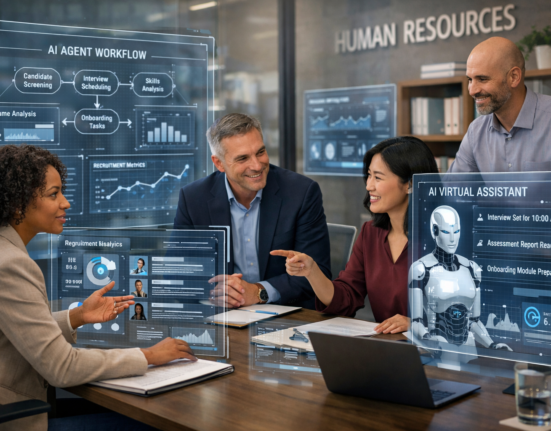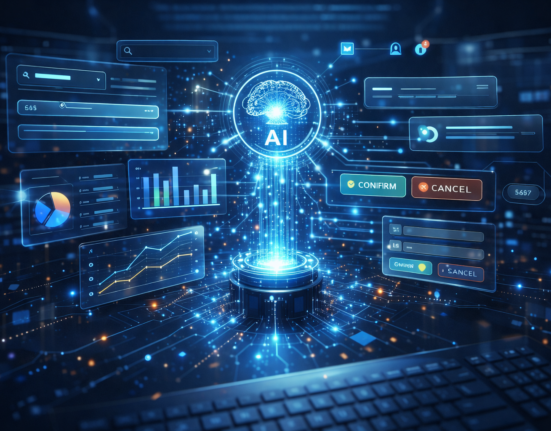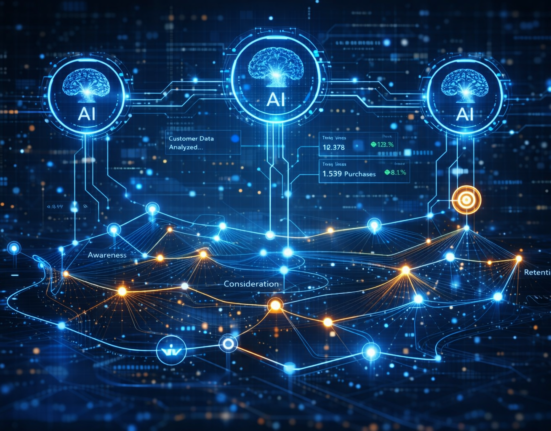
As of February 2026, the landscape of enterprise resource planning (ERP) and supply chain management has shifted from passive data analysis to active, autonomous execution. Agentic procurement is the use of specialized artificial intelligence (AI) agents—software entities capable of reasoning, planning, and executing tasks—to manage end-to-end procurement workflows, specifically focusing on the complex art of B2B vendor negotiations. Unlike traditional automation, which follows rigid “if-then” rules, agentic AI uses Large Language Models (LLMs) and reinforcement learning to navigate the nuances of human-like bargaining.
Key Takeaways
- Autonomy: Agents don’t just flag issues; they resolve them by communicating directly with vendors.
- Efficiency: Drastic reduction in “tail spend” management time, often saving procurement teams 40%–60% in administrative hours.
- Consistency: AI applies the same rigorous logic and data-driven leverage to every negotiation, regardless of the contract size.
- Strategic Shift: Human procurement professionals move from tactical data entry to high-level strategic relationship management.
Who This Is For
This guide is designed for Chief Procurement Officers (CPOs), Supply Chain Managers, and Digital Transformation leads in mid-to-large enterprises. If you are currently managing thousands of vendors and find your team bogged down by repetitive negotiations for non-strategic goods or services, agentic procurement is your next competitive frontier.
1. Defining the Agentic Shift: Beyond Simple Automation
To understand agentic procurement, we must first distinguish it from the technologies that preceded it. For the last decade, Robotic Process Automation (RPA) was the gold standard. RPA is excellent for moving data from a spreadsheet into an invoice system. However, RPA cannot “negotiate.” It cannot react to a vendor saying, “I can’t lower the price, but I can offer faster shipping.”
Agentic AI possesses three distinct characteristics:
- Reasoning: The ability to understand a procurement policy and apply it to a unique situation.
- Tool Use: The ability to log into an e-sourcing portal, send an email, or check a budget database autonomously.
- Iterative Planning: If a vendor rejects an initial offer, the agent analyzes the rejection, checks the fallback parameters, and counter-offers.
As of February 2026, these agents are being integrated directly into platforms like SAP S/4HANA, Oracle NetSuite, and specialized procurement suites like Coupa and Ivalua, allowing for a seamless flow between financial records and active negotiations.
2. The Mechanics of Autonomous B2B Negotiations
How does an AI agent actually talk to a human salesperson? The process is a blend of natural language processing and game theory.
The Training Phase
Before an agent sends its first “Request for Quote” (RFQ), it must be fed the company’s “Negotiation Playbook.” This includes:
- Target Price Points: Derived from historical spend analysis and market benchmarks.
- Non-Price Levers: Payment terms (e.g., Net-30 to Net-60), volume discounts, and service-level agreements (SLAs).
- Walk-away Points: Hard limits where the agent must escalate the issue to a human manager.
The Communication Loop
When a trigger occurs—such as a contract expiration or a low-stock alert—the agent initiates contact. Using generative AI, it drafts a professional, context-aware email or message. If the vendor responds via a portal, the agent parses the text, extracts the data (price, lead time, terms), and compares it against the goal.
Real-Time Strategy Adjustment
The most advanced agentic systems use multi-agent orchestration. One agent might act as the “Negotiator,” while a second “Risk Agent” checks the vendor’s recent financial stability or ESG (Environmental, Social, and Governance) scores in real-time to ensure the deal doesn’t violate corporate compliance.
3. Benefits of Agentic Procurement in the Modern Supply Chain
The implementation of agentic procurement offers a paradigm shift in how value is captured across the supply chain.
Capturing Tail Spend
In most organizations, 80% of vendors account for only 20% of the spend (the “tail”). Procurement teams rarely have time to negotiate with these hundreds of small suppliers. Agentic AI thrives here. By automating these thousands of small interactions, companies often see a 5% to 15% reduction in tail spend costs within the first year.
24/7 Global Sourcing
AI agents do not sleep. They can negotiate with a supplier in Shanghai at 3:00 AM EST and have a finalized contract ready for a human signature by the time the US team logs in at 9:00 AM. This reduces procurement cycle times from weeks to hours.
Elimination of Human Bias and Fatigue
Human negotiators get tired, may have personal preferences for certain vendors, or might rush a deal to meet a Friday deadline. An AI agent is immune to these pressures. It remains consistently firm on policy, ensuring that every vendor is treated with the same objective scrutiny.
| Feature | Traditional Procurement | Agentic Procurement |
| Speed | Weeks of back-and-forth | Real-time or hours |
| Scalability | Limited by headcount | Virtually unlimited |
| Data Usage | Periodic reviews | Real-time market data integration |
| Negotiation Style | Intuition-based | Algorithmically optimized |
Export to Sheets
4. Implementation Strategy: How to Deploy AI Agents
Moving to an agentic model is a journey, not a toggle switch. Following a structured roadmap ensures minimal disruption.
Step 1: Data Sanitization
An AI agent is only as good as the data it accesses. You must centralize your contract repository and clean your vendor master data. If the AI doesn’t know what you paid last year, it cannot negotiate a better deal this year.
Step 2: Defining the Sandbox
Start with low-risk categories. Office supplies, MRO (Maintenance, Repair, and Operations), or standardized software licenses are ideal. Avoid strategic, high-complexity categories like custom-engineered parts or long-term logistics partnerships until the system is proven.
Step 3: Human-in-the-Loop (HITL) Workflows
Design the system so that the AI “proposes” a deal, but a human “disposes” (approves) it. As of early 2026, most enterprises use a 90/10 model: the AI handles 90% of the work, and the human provides the final 10%—the signature and the final sanity check.
5. Common Mistakes in Automating Negotiations
Even with the best technology, procurement transformations can fail due to tactical errors.
- Over-Automating Sensitive Relationships: If a vendor has been a partner for 30 years, suddenly forcing them to talk to a bot can damage the relationship. Use a “High-Touch” vs. “High-Tech” segmentation.
- Ignoring Market Volatility: If your agent is programmed to only look at historical data during a period of hyper-inflation or supply chain crisis, it will fail to secure any contracts. Agents must be linked to live market intelligence feeds.
- Poor Prompt Engineering: If the instructions given to the LLM are vague, the negotiation style might be too aggressive or too passive. “Be firm but professional” is not as effective as “Prioritize Net-60 terms over a 2% price decrease.”
- Neglecting Legal Oversight: Every autonomous negotiation must produce a contract that is legally binding and compliant with local laws. Ensure your legal team has audited the templates the AI uses to generate agreements.
6. The Changing Role of the Procurement Professional
The “Agentic Era” does not mean the end of procurement jobs; it means the evolution of them.
From Buyer to “Agent Architect”
Instead of spending the day emailing vendors for quotes, the modern procurement specialist becomes an architect of the agent’s logic. They spend their time:
- Refining negotiation playbooks.
- Analyzing the performance of the AI across different categories.
- Handling “edge cases” where the AI hits a wall.
Strategic Relationship Management
With the “busy work” automated, humans can focus on Supplier Relationship Management (SRM). This involves visiting vendor facilities, brainstorming co-innovation projects, and building the deep trust that an AI agent simply cannot replicate.
7. Security and Ethics in Agentic Procurement
Automating B2B negotiations involves sharing sensitive pricing and volume data with an AI. This raises significant concerns.
Data Privacy and Leakage
When using generative AI agents, there is a risk that your internal pricing data could be used to train public models. Private LLM instances or “Zero-Retention” APIs are mandatory for enterprise procurement. Ensure your vendor contracts specifically forbid the use of your data for model training.
The “Collusion” Risk
A theoretical risk in the agentic future is “Agent-to-Agent” collusion. If two companies use the same procurement AI provider, their agents might “learn” to keep prices at a certain level. Regulatory bodies are already looking into the implications of algorithmic pricing in B2B markets as of 2026.
Conclusion
Agentic procurement is no longer a “future” technology—it is a current competitive necessity. By automating B2B vendor negotiations, organizations can unlock hidden value in their tail spend, react instantly to market shifts, and allow their human talent to focus on high-impact strategic initiatives.
The transition to an agentic model requires a foundation of clean data, a clear understanding of your negotiation levers, and a culture that views AI as a collaborator rather than a replacement. As the technology matures throughout 2026 and beyond, the gap between “manual” organizations and “agentic” ones will widen, with the latter enjoying significantly higher margins and more resilient supply chains.
Next Steps:
- Audit your tail spend: Identify the bottom 20% of your spend that consumes the most administrative time.
- Pilot one category: Select a commodity-based category and run a 90-day pilot with an agentic AI tool.
- Evaluate your tech stack: Check if your current ERP or e-procurement provider has released agentic features or if you need a third-party “middleware” agent.
FAQs
What is the difference between an AI Chatbot and a Procurement Agent?
A chatbot simply answers questions based on data. A procurement agent is action-oriented; it can log into systems, send emails, evaluate trade-offs, and legally commit to a purchase within predefined limits.
Can AI agents handle complex, multi-year service contracts?
Currently, AI agents are best suited for “discrete” negotiations (goods with clear specs). Complex services requiring nuanced Statements of Work (SOWs) still require heavy human involvement, though AI can assist in drafting and redlining the documents.
How do vendors react to negotiating with an AI?
Surprisingly well, provided the interface is clear. Many vendors prefer the speed and objectivity of an AI over a human buyer who may be hard to reach or slow to provide feedback. Transparency is key—letting vendors know they are interacting with an automated system builds trust.
Is agentic procurement safe for financial compliance?
Yes, as long as the system has a “Human-in-the-Loop” for final approvals and maintains a complete audit trail. In fact, AI agents often improve compliance by ensuring that every negotiation follows the official company policy to the letter.
What is “Zero-Retention” in the context of procurement AI?
Zero-retention means the AI provider does not store the prompts or data you send to the model after the response is generated. This is a critical security feature to prevent your sensitive trade secrets and pricing from leaking.
References
- Gartner: “Predicts 2026: The Rise of Agentic AI in the Supply Chain.”
- Harvard Business Review: “How AI Is Changing the Way Companies Negotiate” (Updated 2025).
- The Journal of Purchasing and Supply Management: “Autonomous Agents in B2B E-Commerce: A Meta-Analysis.”
- SAP Insights: “The Future of Procurement: From Automation to Autonomy.”
- World Economic Forum: “The Ethics of AI in Global Trade and Procurement.”
- MIT Center for Transportation & Logistics: “AI-Driven Negotiation Strategies for Resilient Supply Chains.”
- IEEE Transactions on Engineering Management: “Algorithmic Game Theory in Automated Procurement.”
- NIST (National Institute of Standards and Technology): “AI Risk Management Framework for Financial and Procurement Systems.”