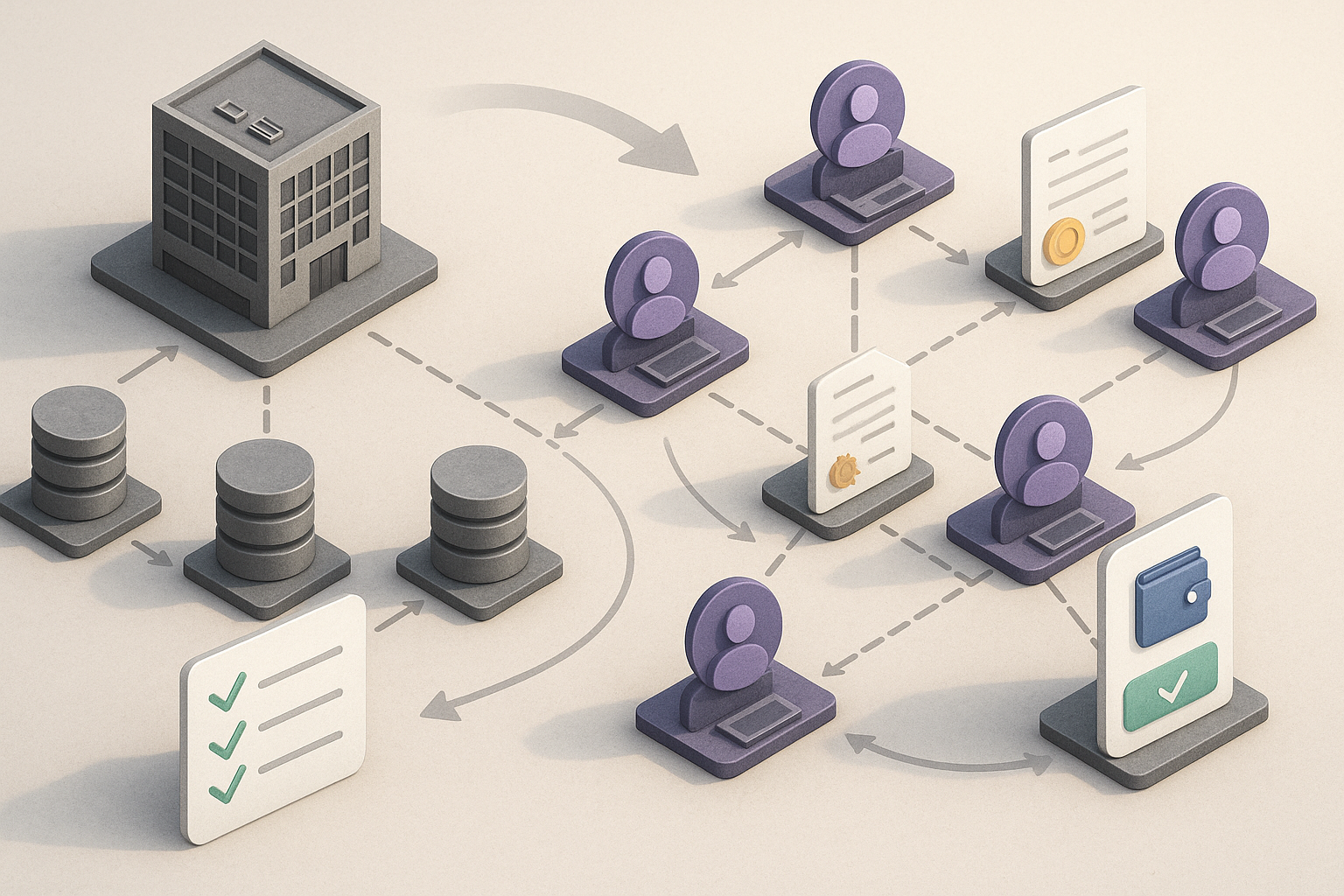
Decentralization explained simply: it’s the shift from platforms that concentrate control over data and decisions to architectures and communities that distribute them. In Web2, value, identity, and policies typically live inside companies’ servers and terms of service. In Web3, these move to public infrastructure, user-controlled keys, and transparent code. The core idea is not to remove coordination, but to reframe where trust resides—away from a single operator and toward shared protocols, verifiable computation, and incentives. If you want the quick answer: decentralization replaces platform promises with cryptographic guarantees and economic alignment so that you can build systems that are open by default, portable by design, and resilient under stress. In practice, you’ll weigh trade-offs rather than chase purity—what matters is knowing which levers to pull and why. Below are the 12 principles you can use to evaluate solutions, design roadmaps, or migrate a Web2 product into Web3 without breaking what already works.
At a glance, here’s the skimmable map of the 12 principles you’ll learn:
- Dimensions of decentralization you must measure, not guess.
- Self-sovereign identity and verifiable credentials for user-owned accounts.
- Consensus as the engine of shared truth and finality.
- Smart contracts as programmable rules—and the security basics you can’t skip.
- Incentives and tokens that drive behavior instead of policies alone.
- Content addressing and decentralized storage patterns.
- Oracles to bridge on-chain logic with off-chain reality.
- Threat modeling in a key-centric world.
- Scale and UX with layers and abstraction.
- Governance that balances speed, participation, and legitimacy.
- Risk, compliance, and privacy without central chokepoints.
- A migration playbook for progressive decentralization.
1. Measure Decentralization Across Four Axes, Not Just One
Decentralization is not a single switch you flip; it’s a multi-axis posture you choose. The fast way to think about it is to evaluate architecture (who runs the infrastructure), governance (who sets and changes rules), economics (who captures and funds value flows), and legal/policy (who bears responsibility and recourse). This four-axis view gives you a realistic picture and prevents the common mistake of focusing only on node count or token distribution. A network can run thousands of nodes yet still be governed by a handful of signers; conversely, a product may be architecturally centralized while giving users strong data portability and exit options. Start every discussion by declaring your target posture on each axis and the constraints you must honor—latency, compliance, and user experience among them. Your goal is not maximum decentralization everywhere; it’s appropriate decentralization where it mitigates real risks and unlocks verifiable openness without collapsing usability or safety.
Why it matters
- It prevents cargo-culting technology choices and keeps conversations grounded.
- It aligns product, engineering, legal, and finance on the same vocabulary.
- It allows you to set phased milestones (e.g., governance later, storage now).
How to do it
- Define a 1–5 score per axis for current state and desired end state.
- List material risks you are decentralizing against (censorship, downtime, exit risk).
- Tie each planned change to a user-visible benefit (portability, permissionless access).
Numbers & guardrails
- Architecture: aim for at least 3 independent providers (or clouds) before calling a stack “resilient.”
- Governance: require ≥ 60% quorum and time-lock delays for high-impact changes.
- Economics: ensure ≥ 50% of fee revenue returns to the protocol/users, not only operators.
Synthesis: By scoring these axes, you turn a vague ideal into a concrete plan—and you can explain to stakeholders exactly what’s improving and why it matters to users.
2. Give Users Self-Sovereign Identity with DIDs and Verifiable Credentials
The shortest path to user ownership is to separate identity from platforms. A decentralized identifier (DID) is a globally unique identifier resolvable to a public key and metadata under a method (the “how” of creating and managing it). Paired with verifiable credentials (VCs)—digitally signed statements about a subject—you can let users prove attributes (age, membership, KYC status) without re-registering on every app or handing over raw documents. This flips the Web2 pattern—username/password in each silo—into a Web3 flow where the user’s wallet anchors identity, credentials live in the user’s control, and apps verify proofs. You lower onboarding friction, reduce honeypot risks, and gain instant portability: a verified customer can try a new app by presenting the same credential they used elsewhere, subject to policy. Most importantly, you move the center of gravity from your database to user-controlled keys and standards that any compliant app can read.
Why it matters
- Cuts duplicate account creation and password resets.
- Minimizes sensitive PII retention and breach surface.
- Enables cross-app portability and consistent compliance checks.
How to do it
- Pick a DID method that fits your trust and availability needs (e.g., ledger-anchored vs. did:key).
- Issue VCs for the few attributes that unlock access; avoid stuffing credentials.
- Use selective disclosure or zero-knowledge presentations where you only need a yes/no proof.
Numbers & guardrails
- Store zero long-term secrets on the server—treat keys as client-side.
- Rotate credential schemas at predictable intervals and version them.
- Target sub-second verification latency by pre-caching resolvers and revocation lists.
Synthesis: When identity is portable and verifiable, users stop “belonging” to a platform and start belonging to themselves; your app becomes an open door rather than a gated garden.
3. Treat Consensus as the Source of Shared Truth and Finality
Consensus is how decentralized systems agree on state without a central referee. Instead of trusting a company to serialize events, you trust a protocol that combines cryptography, incentive design, and networking. The direct benefit is that anyone can verify the rules, and no single administrator can rewrite history without meeting strict economic or cryptographic thresholds. The practical takeaway: choose a consensus family that matches your needs—proof of stake for energy efficiency and economic slashing, proof of work for simple security assumptions, or delegated/committee models for faster finality—and design your product around its latency and throughput realities. This is less about ideology and more about understanding the confirmations you require before treating an action as irreversible and how you surface that to users.
Why it matters
- It replaces platform promises with mathematically enforced ordering.
- It constrains attacker models to quantifiable costs rather than permissions.
- It defines your UX for “pending,” “confirmed,” and “final.”
How to do it
- Declare a finality threshold (e.g., N confirmations or explicit protocol finalization).
- Expose state transitions in the UI: “submitted,” “in consensus,” “final.”
- Instrument for reorgs or forks and design idempotent application logic.
Numbers & guardrails
- Set two thresholds: one for optimistic UI (e.g., 1–2 confirmations) and one for financial finality (e.g., 10+ or explicit finalization).
- Aim for validator decentralization where no single operator controls > 33% of stake or votes.
- Budget for chain fees so a user pays < 1% of transaction value in normal conditions.
Synthesis: By aligning your UX to consensus reality, you avoid false promises and give users clear, predictable guarantees about when “done” is truly done.
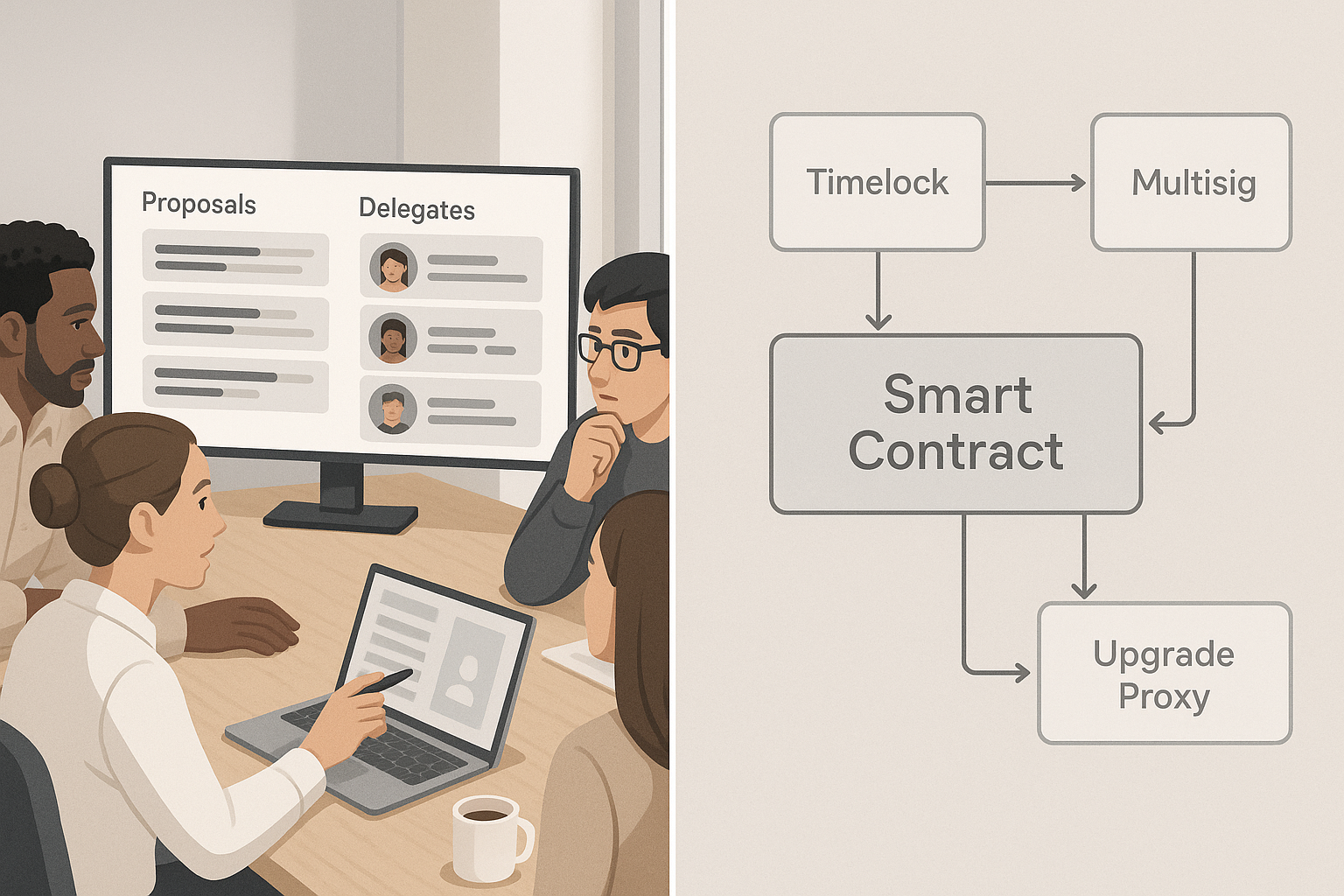
4. Make Smart Contracts Minimal, Auditable, and Upgradable with Care
Smart contracts turn policies into code that anyone can inspect and everyone must obey. The win is consistency; the risk is that bugs become public, permanent liabilities. The principle here is disciplined minimalism: only put logic on-chain when you need trustless execution or shared state; keep everything else off-chain behind signed messages or verifiable proofs. Prefer modular contracts with explicit ownership, pause, and upgrade patterns—and treat upgrades as governance events, not routine deploys. Security is not a checklist you bolt on; it’s a development culture that includes threat modeling, code reviews, fuzzing, property-based tests, and external audits. Your UI should set expectations: explain what a function does, what it can’t do, and how errors will be handled.
Why it matters
- On-chain bugs are expensive and highly visible.
- Auditable, minimal code reduces attack surface.
- Predictable upgrade pathways maintain trust.
How to do it
- Implement role-based access control and enforce least privilege.
- Use multi-sig or time-locked operations for upgrades.
- Add invariant tests (e.g., token supply, collateralization) and continuous fuzzing.
Numbers & guardrails
- Keep public functions to the smallest necessary set; measure cyclomatic complexity and hold thresholds.
- Require M-of-N approvals (e.g., 4-of-7) for admin actions.
- Set bug bounty tiers with meaningful payouts proportional to funds at risk.
Synthesis: Code is law only when the law is simple, reviewed, and governed; minimize what must be immutable and you’ll maximize both safety and flexibility.
5. Align Behavior with Token Incentives—Don’t Just Hope for Good Actors
In Web2, you write policies and enforce them with moderation. In Web3, you also align incentives so the cheapest way to behave is the right way. Tokens—fungible or non-fungible—can meter scarce resources, reward contribution, and distribute governance rights. The art is to connect rewards and costs to the behaviors you actually want: uptime for validators, accurate data for oracles, helpful curation for communities. Avoid over-financializing; people game what you pay for, so define objective signals and design sinks (uses) to prevent runaway inflation. Treat token issuance like monetary policy: transparent schedules, clear utility, and guardrails against concentration.
Why it matters
- Incentives prevent free-riding and centralization creep.
- Community ownership increases durability and resistance to capture.
- Token-gated features can price scarce resources fairly.
How to do it
- Map each role (user, builder, operator, reviewer) to a measurable contribution.
- Tie rewards to verifiable events (proofs, signed attestations, on-chain actions).
- Cap governance power via quadratic voting or vesting/lockups to reduce plutocracy.
Numbers & guardrails
- Target operator churn < 10% per reward epoch to maintain service continuity.
- Keep token supply growth predictable and bounded; publish the curve.
- Use vesting horizons long enough to align stewards with long-term outcomes.
Synthesis: Well-designed incentives turn protocols into economies; they channel self-interest into collective reliability without relying on gatekeepers.
6. Store Data with Content Addressing and Redundancy, Not Just a URL
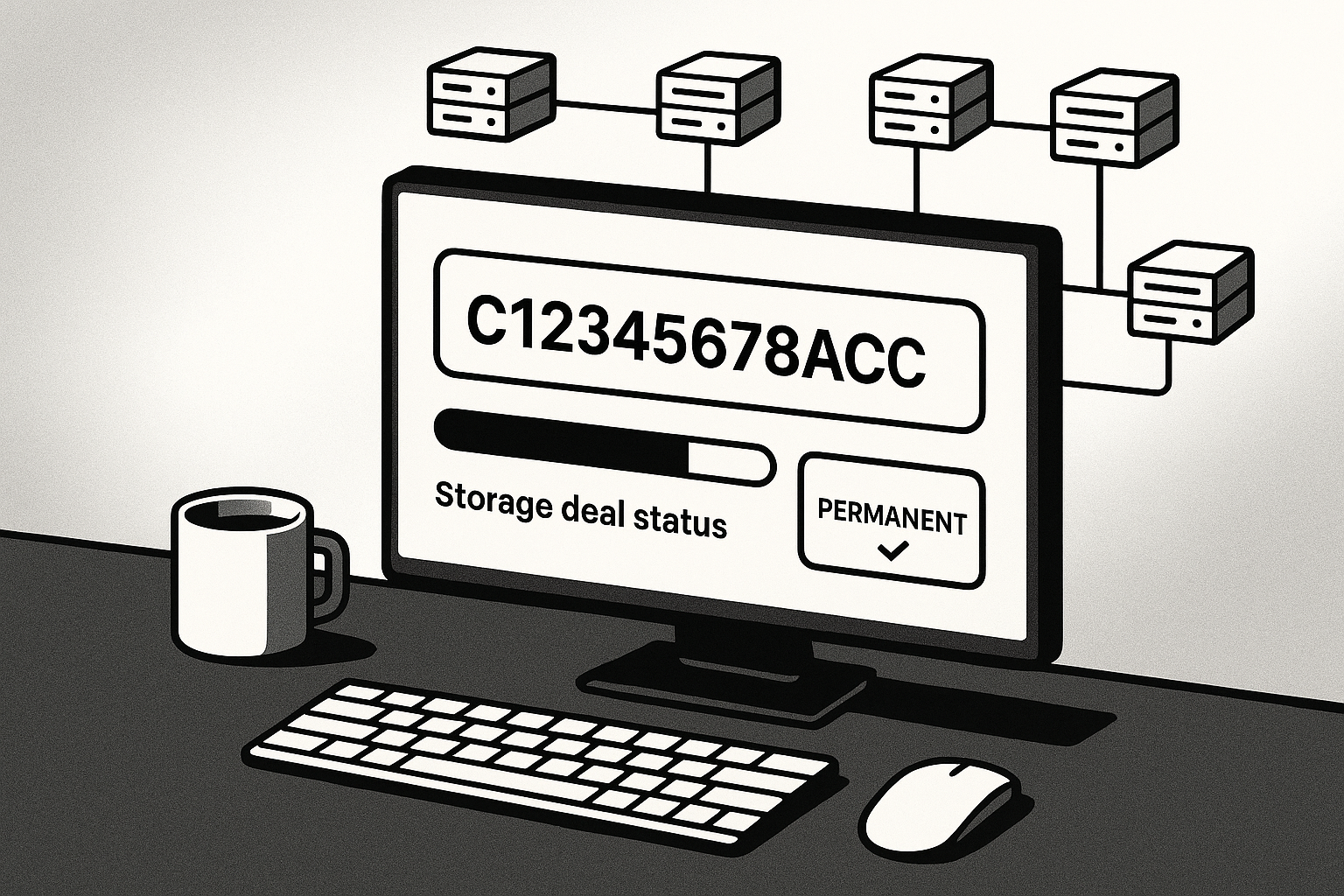
Web2 points to “where” a file lives; Web3 validates “what” it is through content addressing. With networks like IPFS, the content’s cryptographic digest becomes its address, so anyone retrieving it can verify integrity without trusting a host. This reduces vendor lock-in and enables peer distribution and pinning. The catch is durability: peer-to-peer does not guarantee long-term storage by itself, so you must plan who pins what for how long, how you incentivize availability, and how you handle private content (e.g., client-side encryption and access control). Think in layers: content addressing for integrity, decentralized storage for distribution, and optional archival systems for permanence. Design your app so links are resilient even if a single provider disappears.
Why it matters
- Eliminates silent corruption—data either matches its hash or it doesn’t.
- Lets you move across hosts without breaking references.
- Enables collaborative caching and bandwidth efficiency.
How to do it
- Use content identifiers (CIDs) for all user-facing assets.
- Pin critical content via multiple providers plus your own pinning service.
- Encrypt sensitive data before upload; manage keys client-side.
Numbers & guardrails
- Maintain ≥ 3 replicas across ≥ 2 jurisdictions to spread risk.
- Monitor retrieval latency; aim for p95 under 500 ms for popular content via gateways.
- Budget storage by CID size; large files may need chunking and streaming.
Synthesis: By treating the hash as the source of truth and planning for replication, you turn storage from a location problem into a verification and availability discipline.
7. Use Oracles to Bridge Reality—Then Minimize the Trust You Add Back
Smart contracts can’t call web APIs on their own; oracles bring off-chain data and computation on-chain. This unlocks use cases like price feeds, weather-based payouts, and randomness for games. The risk is obvious: every bridge is a potential trust re-centralization. The principle is to reduce single-source dependency with decentralized oracle networks, signed data, and on-chain verification of feeds. Prefer oracles that publish transparency reports (node operators, update frequency, deviation thresholds) and that let you select security parameters for your app. For compute, use verifiable randomness or proofs where feasible so consumers can verify results independently.
Why it matters
- Enables contracts to react to real-world events.
- Converts opaque API responses into signed, auditable inputs.
- Lets you tune latency vs. security per use case.
How to do it
- Choose feeds with deviation thresholds and heartbeat updates suited to your risk.
- Aggregate multiple sources; never rely on a single publisher.
- Log oracle updates in your app so anomalies are visible to users.
Numbers & guardrails
- For financial apps, target update intervals measured in seconds, not minutes, during volatility.
- Cap position sizes relative to oracle liquidity depth to reduce manipulation risk.
- Require multiple independent signers or threshold signatures for critical attestations.
Synthesis: Oracles are the necessary compromise between closed data and open code; minimize the trust they reintroduce and document exactly how they fail and recover.
8. Redesign Your Threat Model Around Keys, Clients, and MEV
In decentralized systems, private keys, client software, and transaction ordering become your primary attack surfaces. Users are now their own account custodians; that changes everything from recovery flows to phishing risks. Model threats where attackers steal keys, trick signatures, or reorder transactions to extract maximum extractable value (MEV). Protect users with multi-factor approvals (e.g., wallet + device), human-readable transaction previews, and rate-limited allowances. On the backend, separate signing from serving, prefer hardware security modules (HSMs) or threshold signing, and audit your mempool strategy if your chain exposes one. Treat front-end integrity as part of your security perimeter; if your UI is compromised, users will sign malicious prompts.
Why it matters
- Prevents the most common and devastating user losses.
- Moves you from perimeter security to cryptographic access control.
- Forces clear UX around permissions and approvals.
How to do it
- Offer multi-sig or social recovery options for high-value accounts.
- Show allowance scopes (who can move what, how much, for how long).
- Use simulation and “what you see is what you sign” messages to prevent surprises.
Numbers & guardrails
- Default token allowances to minimal, revocable amounts; display remaining limits.
- For internal signing services, require quorum approvals and segregate keys per environment.
- Track MEV exposure; limit slippage and provide cancel/replace flows.
Synthesis: When keys are the new perimeter, your best defense is clear, revocable permissions and infrastructure that treats every signature as precious and potentially hostile.
9. Scale Without Sacrificing Openness: Layers, Batching, and Caching
Decentralization must coexist with performance. The pragmatic way is to split responsibilities: keep consensus and settlement on a robust base layer, then move execution to layer-2 systems or specialized networks. You can batch many user actions into a single on-chain commitment or prove off-chain computation with validity or fraud proofs. Add smart caching, stateless clients, and session keys to make common actions fast. The design trick is surfacing this complexity through familiar UX: progress bars, explainer text, and clear fees. You don’t have to hide that you use layers; you just need to make the flow feel instantaneous while preserving verifiability.
Why it matters
- Delivers the responsiveness users expect without closing the system.
- Dramatically lowers costs for routine interactions.
- Keeps the base layer simple and secure.
How to do it
- Pick an L2 that publishes proofs and data needed to reconstruct state.
- Use meta-transactions so users can pay fees in your app’s tokens or with sponsored gas.
- Cache reads aggressively but pin critical writes to on-chain checkpoints.
Numbers & guardrails
- Target >10× cost reduction for L2 vs. base layer while keeping auditability.
- Keep p95 end-to-end interactions under 2 seconds for routine UI actions.
- Expose a clear status page for L2 health and bridge availability.
Synthesis: With layered designs, you can give users the speed of centralized apps while keeping the openness and auditability that define Web3.
10. Govern with Legitimacy: Clear Mandates, Checks, and Inclusive Feedback
Decentralized governance is not the absence of leadership; it is the presence of legitimacy—rules for who decides what, how decisions are made, and how they can be challenged. Many systems evolve toward DAOs or token-holder votes, but you should consider a spectrum: delegated councils, elected stewards, or hybrid models with off-chain deliberation and on-chain execution. What matters is aligning authority with accountability and giving contributors clear mandates and budgets. Prevent “whales decide everything” by using representation, quorums, caps, and non-transferable roles. Design governance like software: documented interfaces, versioning, and safety rails for emergencies.
Why it matters
- Increases durability by reducing dependence on founders.
- Offers a path to upgrade protocols without forks.
- Builds community trust and participation.
How to do it
- Publish a constitution with scopes: what is governed and what is not.
- Use time-locked execution so stakeholders can react.
- Invest in forums, temperature checks, and iterative proposals.
Numbers & guardrails
- Set proposal thresholds that balance spam prevention with accessibility.
- Require conflict-of-interest disclosures for delegates above a voting power line.
- Use veto powers sparingly and make them auditable and expiring.
Synthesis: Governance done well turns users into stewards; it channels energy into constructive change rather than endless battles over legitimacy.
11. Manage Risk, Compliance, and Privacy Without Re-Centralizing Everything
Decentralization doesn’t mean ignoring laws or safety; it means meeting requirements without recreating a single chokepoint. You can combine VCs for attestations, zero-knowledge proofs for selective disclosure, and policy engines that enforce rules client-side or at the edges. Consider data minimization: if you can prove “over-18” or “country-allowed” without storing the birthday or full address, you should. For payments and financial flows, separate routing from identity by verifying credentials and risk scores rather than holding raw PII. Document what you keep, why, and for how long, and make deletion or rotation part of the normal lifecycle. The key is transparent controls you can explain to users, partners, and regulators alike.
Why it matters
- Reduces breach impact and compliance overhead.
- Makes global launches feasible with localized policies.
- Builds trust with enterprise partners that need auditability.
How to do it
- Use allow-lists based on credentials, not accounts stored in your database.
- Log decisions with hash-chained audit trails so policies are provable.
- Offer privacy budgets and per-feature consent toggles in the client.
Numbers & guardrails
- Keep retained logs to the minimum retention window necessary and encrypt at rest.
- Enforce rate-limits and anomaly detection at edges, not just servers.
- For sensitive operations, require two independent proofs (e.g., credential + risk score).
Synthesis: You can satisfy real-world obligations while staying true to decentralization—by proving what’s needed, storing less, and giving users meaningful control.
12. Migrate with Progressive Decentralization and Measurable Milestones
You don’t have to rebuild from scratch; the sane approach is progressive decentralization. Start where decentralization delivers concrete value—usually identity portability, data integrity, or transparent settlement—and expand from there. Frame each phase as a user story: what becomes easier, safer, or more open? Build your governance, incentives, and storage plans alongside UX so nothing arrives as an afterthought. Keep migration reversible until benefits are proven, and publish a public roadmap that commits to specific, testable milestones. Treat your initial centralized components as bootstrapping tools, not permanent crutches.
Quick comparison table
| Dimension | Centralized Web2 (baseline) | Decentralized Web3 (target) | Quick test |
|---|---|---|---|
| Identity | Email+password silo | DID + verifiable credentials | Can the user reuse identity elsewhere? |
| Data | URLs + provider lock-in | Content addressing + pinning | Can anyone verify file integrity? |
| Policy | Admin panel | Smart contracts + governance | Can rules change only via defined process? |
| Trust | Platform promises | Public verification | Can a third party audit actions? |
How to do it
- Phase 1: external wallets + VCs for sign-in and gated features.
- Phase 2: move critical business rules on-chain and introduce transparent fees.
- Phase 3: decentralize storage for user-generated content and backups.
- Phase 4: open governance scopes with budgets and road-mapped upgrades.
Numbers & guardrails
- Require each phase to ship a user-visible benefit (e.g., portable login) and a measurable KPI (e.g., % of actions verifiable on-chain).
- Keep rollback plans until two consecutive milestones show stability.
- Define end-state criteria per the four axes from Principle 1.
Synthesis: By sequencing decentralization around user value and testable outcomes, you avoid the trap of ideology-driven rewrites and deliver durable gains step by step.
Conclusion
Decentralization is not a destination; it is a set of decisions that move trust from platform promises to public verification and aligned incentives. When you break the challenge into the four axes—architecture, governance, economics, and legal/policy—you can choose specific interventions that deliver value without collapsing usability. DIDs and verifiable credentials give users portable identity; consensus and smart contracts create shared truth; incentives and oracles connect economics and information; storage, scaling, and threat models keep the system usable and safe; governance and compliance align the community with obligations; and progressive decentralization turns all of this into a realistic roadmap. If you apply these 12 principles with discipline, you’ll build systems that are open, resilient, and genuinely user-owned—without losing the clarity and speed that users expect. Ready to make the first move? Pick one principle, ship a small win, and build momentum from there.
FAQs
1) What does “decentralization explained” actually mean in product terms?
It means moving critical functions—identity, data integrity, and rule enforcement—out of a single company’s control and into user-held keys, public verification, and transparent processes. In practical terms, you stop relying on admin panels and opaque databases for the pieces of your system that need neutrality, and you design around standards that other apps can interoperate with. You’ll still make choices and trade-offs, but the defaults lean toward portability and auditability rather than lock-in.
2) Is full decentralization necessary, or can I mix centralized and decentralized parts?
You can—and usually should—mix components. For example, keep high-speed search centralized while anchoring core transactions on a public chain. What matters is that the parts that create the most risk (custody of funds, censorship control, unilateral policy changes) receive the strongest decentralization treatment. Document the boundaries so users and partners understand where guarantees apply and where they do not.
3) How do decentralized identifiers (DIDs) improve sign-in compared with OAuth?
OAuth delegates access between servers you trust; DIDs let the user present a cryptographic identity that any app can verify without that app pre-trusting your server. This eliminates the need for one provider to become a universal gatekeeper. With verifiable credentials, users can prove attributes from different issuers and keep them in their control, which reduces account sprawl and the risk of mass data breaches tied to a single platform compromise.
4) What’s the simplest way to start if I run a typical Web2 app?
Begin with identity and storage. Add wallet-based sign-in and, where appropriate, issue or consume verifiable credentials to unlock features. For content, adopt content addressing and pinning so files remain portable and verifiable. These changes don’t disrupt your core business logic but immediately lower lock-in and increase user trust, setting the stage for contracts and governance later.
5) Aren’t blockchains too slow or expensive for real apps?
Raw base layers can be costly for frequent interactions, but modern designs rely on layers: keep the canonical record on the base chain and move most execution to layer-2 systems that batch or prove computations. Users experience fast, cheap interactions while retaining the ability to verify or exit. The design challenge is handling latency and bridging with clear UI and safe defaults, not abandoning openness for speed.
6) How do I prevent governance from being captured by large token holders?
You can mitigate plutocracy with delegation, reputation-weighted roles, non-transferable participation badges, quorum rules, and caps on voting power. Pair on-chain voting with off-chain deliberation so expertise shapes proposals before they reach the ballot. Make all roles and powers transparent and revocable via documented processes, and include time-locks to allow community review before execution.
7) What security mistakes do teams make most often in Web3?
Common pitfalls include over-complex contracts, admin keys without adequate controls, unlimited token allowances, and poor front-end message clarity leading to malicious signatures. Teams also underestimate oracle risks and assume a single data source is “good enough.” You prevent most of this by minimizing on-chain code, enforcing multi-party approvals, simulating transactions, and choosing decentralized, well-audited oracle feeds.
8) How do oracles avoid becoming centralized points of failure?
Robust oracle networks aggregate multiple independent sources, publish update schedules and deviation thresholds, and sign data so anyone can audit it. You can further reduce risk by selecting feeds with threshold signatures, fallback mechanisms, and the ability to tune frequency and sensitivity. Document your oracle configuration so users know when and how data updates—and what happens during anomalies.
9) Do I need a token to decentralize?
Not always. You can decentralize identity, storage, and governance through standards and structures that don’t require a native token. Tokens become useful when you need to coordinate incentives at scale, meter scarce resources, or distribute governance rights. If you do use one, tie it directly to verifiable contributions and utility rather than speculation alone.
10) What’s the user-experience gotcha most teams overlook?
Signing experiences and error handling. Users need to understand exactly what they are agreeing to, how to undo it, and what happens if something goes wrong. Provide human-readable messages, simulate outcomes before signature, show allowances and expiry, and design for cancellation or replacement of pending transactions. Clear, revocable permissions build confidence and reduce support load.
References
- Blockchain Technology Overview (NIST IR 8202) — National Institute of Standards and Technology — October 2018 — https://nvlpubs.nist.gov/nistpubs/ir/2018/nist.ir.8202.pdf
- Decentralized Identifiers (DIDs) v1.0 — World Wide Web Consortium (W3C) — July 19, 2022 — https://www.w3.org/TR/did-core/
- Verifiable Credentials Data Model v2.0 — World Wide Web Consortium (W3C) — May 15, 2025 — https://www.w3.org/TR/vc-data-model-2.0/
- ISO 22739: Blockchain and Distributed Ledger Technologies — Vocabulary — International Organization for Standardization — January 2024 — https://www.iso.org/standard/82208.html
- What Is a Blockchain Oracle? — Chainlink — June 2, 2025 — https://chain.link/education/blockchain-oracles
- What is Web3 and why is it important? — Ethereum Foundation — n.d. — https://ethereum.org/web3/
- A Guide to Smart Contract Security Best Practices — ConsenSys Diligence — n.d. — https://consensysdiligence.github.io/smart-contract-best-practices/
- IPFS Docs — Protocol Labs — n.d. — https://docs.ipfs.tech/