| Myth | Reality |
|---|---|
| Ephemeral environments are just frontend preview links | Modern platforms provision full stacks: databases, queues, background workers, so backend and API changes get the same live preview treatment |
| Running extra environments always costs more | Because each environment exists only for the life of a pull request, total compute hours are usually lower than one shared, always-on staging environment |
| You need a dedicated platform team to build this | Managed providers such as Vercel and Render, plus open patterns built on Kubernetes namespaces, get most teams running previews within a day |
| Ephemeral environments replace staging entirely | Most mature setups keep one persistent staging environment for integration testing and use ephemeral environments for per-change validation |
| Data seeding is a solved problem everywhere | Seeding realistic, safe data into a fresh environment every single time remains the hardest and most commonly skipped step |
What an Ephemeral Environment Actually Is
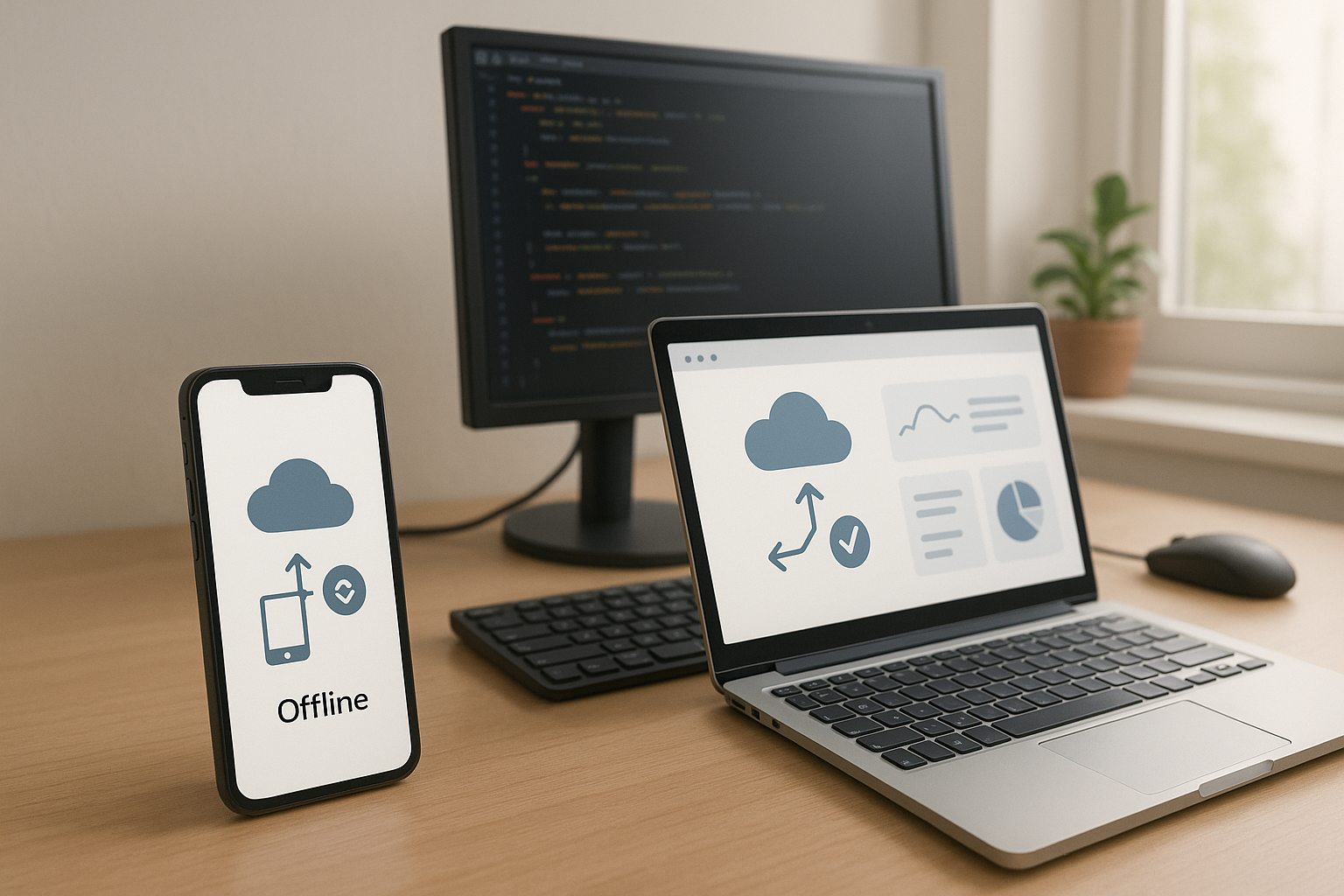
An ephemeral environment is a complete, disposable copy of an application stack that exists for a defined window of time, usually the lifespan of a pull request. It gets a unique URL, its own database instance or schema, its own configuration, and often its own queue and cache. When the pull request is merged or closed, the environment and everything inside it is deleted. Nothing lingers, nothing drifts, and nothing needs manual cleanup.
This is different from a traditional staging server in one important way: staging is shared and permanent, while an ephemeral environment is private and temporary. A team of ten engineers sharing one staging server will eventually step on each other’s migrations, feature flags, and test data. Give each pull request its own environment and that contention disappears, because nobody else is touching it.
The pattern is not new. Netlify and Heroku review apps popularized the idea for static sites and simple web apps years ago. What changed recently is the scope: teams now expect ephemeral environments to cover full-stack applications with real databases, message brokers, and third-party service stubs, not just a static bundle behind a CDN. That expansion is also why cost control became a real engineering problem rather than an afterthought.
Figure 1: The Ephemeral Environment Lifecycle
A pull request opens, a CI pipeline builds the branch, an orchestrator provisions an isolated namespace or project with its own database and secrets, a bot comments the preview URL back on the pull request, and the entire stack is destroyed automatically once the branch is merged or closed.
Why Preview Deploys Got Expensive in the First Place
The economics of ephemeral environments break down in three places, and none of them are the compute cost of the application container itself.
Databases That Never Get Deleted
Spinning up a new application container is cheap. Spinning up a new managed database instance, seeding it, and then forgetting to tear it down when the pull request goes stale is where budgets quietly bleed out. Teams that provision a fresh, full-sized database per branch, and then leave branches open for weeks, end up running dozens of idle databases that nobody remembers creating.
Idle Compute Left Running Over Weekends
A preview environment tied to an open pull request that sits untouched over a long weekend still consumes compute unless something actively suspends it. Without an idle-timeout policy, “ephemeral” quietly becomes “semi-permanent,” and the monthly cloud bill reflects that.
Third-Party Service Fees That Scale With Environment Count
Observability agents, feature-flag SDKs, and managed queue services frequently bill per environment or per active connection. A platform that celebrates “unlimited preview deploys” can still generate real invoices from every vendor plugged into the stack, especially once a team runs twenty or thirty pull requests a week.
How the Modern Stack Builds Ephemeral Environments
Three architectural approaches dominate in 2026, and most engineering teams end up mixing at least two of them.
The first is platform-managed preview deploys, where a provider like Vercel or Render builds and hosts the environment for you, wiring it to Git automatically. This is the fastest path to a working setup and suits teams whose entire stack fits the provider’s supported runtimes.
The second is Kubernetes namespace-per-branch, where a CI pipeline creates a fresh namespace, applies manifests, and tears it down on merge. This gives full control over networking and resource limits but requires someone to own the tooling, typically built around Helm or Kustomize plus a controller that watches pull request events.
The third is infrastructure-as-code driven provisioning, where tools call cloud APIs directly to create and destroy resources per branch. This overlaps heavily with the patterns used in policy-driven autonomous infrastructure, since the same guardrails that keep self-provisioning safe also keep ephemeral environments from over-spending.
| Approach | Best fit | Cost control lever |
|---|---|---|
| Platform-managed (Vercel, Render) | Web apps and APIs on supported runtimes | Provider-native sleep and cleanup policies |
| Kubernetes namespace-per-branch | Microservice stacks already running on Kubernetes | Resource quotas plus a reaper controller |
| Infrastructure-as-code provisioning | Multi-cloud or highly customized stacks | Time-boxed leases enforced in the provisioning script |
Designing the Cost Model Before You Ship It
The cheapest ephemeral environment strategy starts with a budget, not a tool. Before wiring anything to a Git webhook, decide on three numbers: maximum environment lifetime, maximum concurrent environments, and which resource tiers are allowed. Enforce all three in code, not in a wiki page nobody reads.
Database strategy matters more than compute strategy for cost. Instead of provisioning a new full database server per branch, most teams that get this right use one of two patterns: a schema-per-branch approach on a shared database cluster, or a snapshot-and-branch approach on databases that support copy-on-write branching. Both avoid paying for dozens of idle database instances while still giving each pull request isolated data.
Auto-suspend is the second lever. An environment that has received no traffic for a set window, commonly two to four hours, should scale to zero automatically and wake back up on the next request. This alone tends to cut ephemeral compute spend more than any other single change, because most preview environments sit idle far longer than they are actively used.
Data, Secrets, and the Parts Nobody Wants to Rebuild
The hardest part of ephemeral environments is rarely the compute layer. It is making sure each environment has believable data without copying production data that includes real customer records. Teams generally land on one of three approaches: synthetic data generators tuned to match production schema shapes, anonymized snapshots refreshed on a schedule, or a small curated fixture set that covers the common test paths. The third option is the cheapest and fastest but the least realistic, which is why it usually gets replaced once a team has been burned by a bug that only appeared with real-shaped data.
Secrets management deserves the same discipline as production. Each ephemeral environment needs its own scoped credentials, not a shared API key copied into every preview. Short-lived, automatically expiring tokens tied to the environment’s lifecycle close off one of the more common ways preview environments become a security liability rather than just a cost one.
Figure 2: Where the Ephemeral Environment Bill Actually Comes From
A breakdown of a typical monthly spend on preview environments shows compute for running containers as the smallest slice, with idle databases, third-party per-environment vendor fees, and orphaned environments left open past their pull request’s lifetime making up the majority of avoidable cost.
Common Mistakes Teams Make
Pitfall
Provisioning a full-sized production-equivalent database for every single pull request, then never auditing which branches are still open. Weeks later, a team discovers forty databases running for pull requests that were merged a month prior, because nothing tied database lifetime to pull request status.
Pitfall
Treating the ephemeral environment as identical to production without accounting for scale differences. A preview environment running on a fraction of production’s compute will behave differently under load testing, and teams that run performance benchmarks against preview environments often chase phantom regressions that are actually just resource constraints.
Pitfall
Skipping teardown verification. An environment that fails to delete cleanly, perhaps because a database has deletion protection enabled, will silently keep billing. Without a scheduled audit job that reconciles “environments that should exist” against “environments that actually exist,” these leaks go unnoticed for months.
Pitfall
Giving every ephemeral environment the same broad permissions as production service accounts. This turns a convenience feature into a lateral-movement risk if a preview environment is ever compromised, since an attacker who reaches one throwaway environment should not be able to reach production data.
How Experienced Platform Teams Run This
Practice
Mature platform teams tag every ephemeral resource with the pull request number and creation timestamp at the moment of provisioning, then run a scheduled reconciliation job, often hourly, that compares tagged resources against currently open pull requests and force-deletes anything orphaned. This single habit tends to eliminate the majority of preview environment cost overruns because it removes reliance on the merge event actually firing a cleanup webhook successfully.
Practice
Instead of scaling databases per branch, experienced teams standardize on a single shared database cluster with schema-per-branch isolation, then use a lightweight migration runner that applies and rolls back schema changes as part of the environment’s own lifecycle. This keeps the expensive, stateful part of the stack centralized while still giving each pull request an isolated dataset.
Where This Pattern Is Heading
Ephemeral environments are converging with the same automation ideas driving self-healing software systems: instead of a human deciding when an environment should exist, policy engines are starting to make that call based on pull request activity, test results, and even reviewer assignment. A pull request with no reviewer assigned might not get a live environment at all until someone is actually looking at it, saving compute that would otherwise sit idle waiting for attention.
The other clear direction is tighter integration with event-driven architecture, where environment provisioning itself becomes just another event consumer reacting to Git webhooks, rather than a bolt-on CI step. This makes the provisioning logic easier to test and reason about, because it follows the same patterns the rest of the system already uses.
Teams choosing between serverless, containers, or full virtual machines for their production workloads will find that choice shapes their ephemeral environment options too. Serverless platforms tend to make ephemeral environments nearly free by design, since idle functions cost nothing, while container and virtual machine based stacks need the explicit auto-suspend and reaper tooling described above.
Glossary
- Ephemeral environment
- A short-lived, isolated deployment of an application stack created for a specific task, such as a pull request, and destroyed once that task completes.
- Preview deploy
- The developer-facing term for the unique URL and live environment generated automatically for a branch or pull request.
- Namespace-per-branch
- A Kubernetes pattern where each branch or pull request gets its own isolated namespace containing all the resources needed to run the application.
- Auto-suspend
- A policy that automatically scales an idle environment down to zero compute after a period of inactivity, waking it back up on the next incoming request.
- Schema-per-branch
- A database isolation strategy where each branch gets its own schema on a shared database cluster instead of a dedicated database instance.
- Reaper job
- A scheduled process that finds and deletes orphaned ephemeral resources whose associated pull request no longer exists or has already merged.
Key Takeaways
- Ephemeral environments are complete, isolated stacks tied to a pull request’s lifecycle, not just a static preview link.
- Idle databases and orphaned resources, not container compute, are usually the biggest source of avoidable cost.
- Platform-managed tools like Vercel and Render suit standard web stacks, while Kubernetes namespace-per-branch and infrastructure-as-code approaches fit more custom architectures.
- Auto-suspend policies that scale idle environments to zero typically cut spend more than any other single change.
- Schema-per-branch or copy-on-write database branching avoids paying for dozens of full database instances.
- A scheduled reconciliation job that reconciles tagged resources against open pull requests catches teardown failures before they become a recurring bill.
- Ephemeral environments complement, rather than replace, a persistent staging environment used for broader integration testing.
FAQs
What is the difference between an ephemeral environment and a staging environment?
A staging environment is shared and permanent, used for ongoing integration testing across the whole team. An ephemeral environment is private and temporary, created for one pull request or branch and destroyed once that work is merged or closed, which avoids the contention that comes from many people sharing one staging server.
Do ephemeral environments actually save money compared to a shared staging server?
Usually yes, because a shared staging environment runs continuously regardless of how much it is used, while ephemeral environments only consume compute while a pull request is open and, with auto-suspend policies, only while it is actively receiving traffic. The savings depend heavily on enforcing lifetime limits and cleaning up orphaned resources.
Can ephemeral environments include a real database, not just the application code?
Yes, and modern setups generally expect this. Most teams use schema-per-branch isolation on a shared database cluster or copy-on-write database branching rather than provisioning a full dedicated database instance per pull request, which keeps stateful resources realistic without multiplying infrastructure cost.
How long should an ephemeral environment be allowed to live?
Most teams cap environment lifetime to match expected pull request review time, often three to seven days, with automatic extension if the pull request is still open and active. Environments tied to stale or abandoned branches should be torn down automatically rather than left running indefinitely.
What is the biggest security risk with ephemeral environments?
Overly broad credentials are the most common risk. If every preview environment shares production-equivalent service account permissions, a compromised preview becomes a path to real data. Each environment should receive scoped, short-lived credentials generated specifically for its lifecycle.
Which platforms support ephemeral environments out of the box?
Vercel and Render both provide native preview deployments tied directly to Git branches and pull requests. Teams running on Kubernetes commonly build their own namespace-per-branch tooling, and teams using infrastructure-as-code platforms can script equivalent behavior against their cloud provider’s APIs directly.
Do ephemeral environments replace the need for automated tests?
No. Ephemeral environments give reviewers and stakeholders a live, clickable version of a change, which is valuable for manual verification and stakeholder review, but they do not replace automated unit, integration, or end-to-end tests, which still need to run in CI regardless of whether a preview environment exists.
What happens if an ephemeral environment fails to delete properly?
Without a reconciliation process, a failed teardown becomes a silent, ongoing cost, since the resource keeps running even though its associated pull request has already merged or closed. A scheduled job that compares actual running resources against currently open pull requests, then force-deletes anything orphaned, catches this before it accumulates into a meaningful bill.
- Vercel, “Environments” documentation, vercel.com/docs/deployments/environments
- Render, “Preview Environments” documentation, render.com/docs/preview-environments
- Render Changelog, “Create preview instances only for specific pull requests,” render.com/changelog
- Fly.io Community, “Pull Request Previews and Preview Environments,” community.fly.io