
As of March 2026, the global economy stands at a critical crossroads. For decades, the primary concern regarding artificial intelligence was “job displacement”—the fear that machines would take work away from humans. Today, the narrative has flipped entirely. We are facing a “Great Labor Gap,” a systemic shortage of human workers across manufacturing, healthcare, logistics, and agriculture. The solution isn’t just “more software”; it is Physical AI.
Definition of Physical AI
Physical AI, often referred to as Embodied AI, is the integration of advanced generative intelligence with physical robotic systems. Unlike traditional industrial robots that follow rigid, pre-programmed paths, Physical AI uses “World Models” to perceive, reason, and act in unstructured environments. It is the transition from a robot that executes a task to a machine that understands its surroundings and adapts its physical movements in real-time.
Key Takeaways
- Adaptability: Physical AI can handle “dirty, dull, and dangerous” tasks that were previously too complex for standard automation.
- Foundation Models: Modern robotics now use transformer-based architectures, allowing robots to learn from video data and human demonstration rather than manual coding.
- Economic Bridge: Physical AI serves as a critical bridge for aging populations in G7 nations, maintaining productivity as the workforce shrinks.
- Human-Centric: The goal is not replacement but augmentation, allowing humans to move into supervisory and creative roles.
Who This Is For
This guide is designed for business leaders navigating operational bottlenecks, policymakers addressing demographic shifts, and industrial engineers looking to implement the next generation of “Cobots” (collaborative robots). If you are struggling to find reliable labor for physical tasks, understanding Physical AI is no longer optional—it is a requirement for survival.
The Anatomy of Physical AI: Why It’s Different This Time
To understand why Physical AI is the answer to our labor woes, we must first understand why “Traditional AI” and “Traditional Robotics” failed to solve the problem.
For years, robots were “blind.” They functioned brilliantly in car factories where every bolt was in the exact same place every time. But if a bolt was slightly skewed, or a human walked into the path, the robot stopped or broke. Physical AI changes this by giving the machine a “brain” capable of spatial reasoning.
The Integration of Large Behavior Models (LBMs)
Just as Large Language Models (LLMs) like Gemini and GPT revolutionized how we process text, Large Behavior Models (LBMs) are revolutionizing how machines move. These models are trained on millions of hours of human movement data.
As of March 2026, we have seen the emergence of “General Purpose Robot Foundation Models.” These allow a robot to be unboxed in a warehouse and, within hours, “learn” how to sort diverse packages simply by watching video feeds or being guided by a human operator through VR teleoperation.
Sensor Fusion and Real-Time Perception
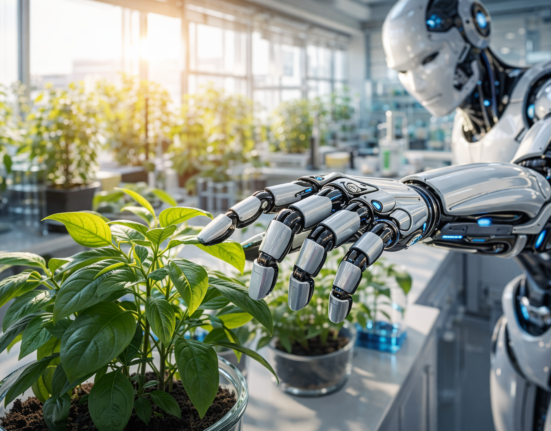
Physical AI relies on Sensor Fusion—the ability to combine data from cameras (computer vision), LiDAR (depth), and tactile sensors (touch). In 2026, tactile sensing has become the “holy grail.” Robots can now “feel” the difference between a glass bottle and a plastic one, adjusting their grip pressure accordingly. This “human-like” touch is what allows Physical AI to enter sectors like elder care and delicate electronics assembly.
The Demographic Crisis: Why We Need Physical AI Now
The labor shortage isn’t a temporary post-pandemic blip; it is a demographic reality. Across the globe, birth rates are declining and populations are aging.
The “Silver Tsunami”
In countries like Japan, Germany, and the United States, the “Silver Tsunami” is in full swing. More people are retiring than entering the workforce. By some estimates in early 2026, there are over 10 million unfilled manufacturing jobs globally.
Physical AI fills the gap in several ways:
- Maintaining Output: Machines handle the high-volume, repetitive physical labor that younger generations are increasingly unwilling to perform.
- Knowledge Retention: Physical AI systems can be “trained” by retiring experts. A master welder can wear a motion-capture suit, and the Physical AI can record the nuances of their technique, preserving that skill for the company indefinitely.
The Shift in Worker Expectations
The modern worker is less interested in “3D Jobs” (Dirty, Dull, and Dangerous). This has left industries like waste management, construction, and deep-sea maintenance with a permanent deficit of workers. Physical AI provides a way to digitize these physical tasks, turning a “laborer” into a “robotics fleet manager.”
Industry Deep-Dive: Where Physical AI is Winning
1. Manufacturing and Assembly
In 2026, the “Assembly Line” is being replaced by “Work Cells.” Physical AI-powered robots can now move between cells, switching from soldering to packing without a human needing to rewrite a single line of code.
- Practical Example: A mid-sized automotive parts supplier in Michigan recently implemented Physical AI humanoids. Instead of a fixed arm, these robots use vision-based learning to pick up randomly oriented parts from a bin—a task that previously required three human shifts.
- Common Mistake: Many firms try to automate the entire line at once. The successful approach is “Incremental Augmentation”—replacing the single most dangerous or repetitive station first to prove ROI.
2. Logistics and Warehousing
E-commerce continues to grow, but the number of people willing to walk 15 miles a day in a warehouse is shrinking. Physical AI-powered autonomous mobile robots (AMRs) are now common.
These robots don’t just move pallets; they use Physical AI to “slot” inventory dynamically. If they see a spill, they navigate around it and alert maintenance. If a shelf is disorganized, they take the initiative to straighten it. They are “proactive” rather than “reactive.”
3. Healthcare and Elder Care
This is perhaps the most sensitive and vital application. As of March 2026, we are seeing “Supportive Physical AI” in hospitals.
- Patient Transfer: Robots that can gently lift patients from beds to wheelchairs, preventing the #1 cause of nurse back injuries.
- Sterile Logistics: AI units that autonomously navigate hospital halls to deliver medication and linens, freeing up nurses to focus on actual patient care.
The Technical Core: How Physical AI “Learns”
The secret sauce of Physical AI is Sim-to-Real transfer.
Simulation and Digital Twins
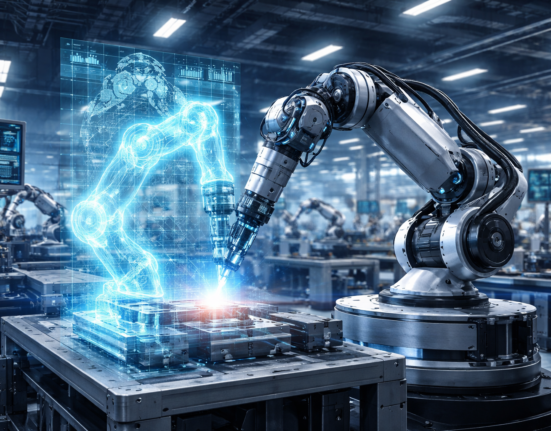
We cannot train a robot in the real world 24/7; it’s too slow and dangerous. Instead, we use “Digital Twins”—perfect virtual replicas of a factory or warehouse. In these simulations, thousands of versions of the robot “practice” a task simultaneously, failing millions of times in seconds until they find the optimal movement.
Once the “brain” has learned the task in simulation, it is “flashed” onto the physical hardware. This is why Physical AI feels like it “just works” out of the box.
The Role of Edge Computing
Because Physical AI requires split-second reactions (like catching a falling object), the “thinking” cannot happen entirely in the cloud. Latency would be fatal. As of 2026, onboard Edge AI chips allow robots to process high-resolution visual data locally, ensuring safety and fluidity of movement.
Overcoming the “Uncanny Valley” and Human Friction
One of the biggest hurdles to Physical AI is human psychology. When a robot looks and moves too much like a human, it can trigger the “Uncanny Valley”—a feeling of unease.
Collaborative Design
The industry has shifted toward “Functional Aesthetics.” Robots are designed to look like tools, not people. Their movements are smoothed out using AI to appear predictable to human coworkers.
- Safety Tip: High-visibility lighting and “intent signaling” (the robot “looking” in the direction it is about to move) are essential for building trust on the factory floor.
Reskilling the Workforce
A common fear is that Physical AI will lead to mass unemployment. However, the data in 2026 suggests the opposite. Companies that adopt Physical AI are growing faster and hiring more humans for roles such as:
- AI Fleet Supervisors: Managing 10–20 robots.
- Exception Handlers: Humans who step in when the AI encounters a unique problem it hasn’t seen before.
- Maintenance Technicians: Specialized mechanics for the robotic hardware.
Common Mistakes When Implementing Physical AI
Even with the best technology, implementation can fail. Here are the most frequent pitfalls seen in early 2026:
- The “Hardware-First” Trap: Companies buy expensive robots before they have a data strategy. Physical AI is software that lives in a body. If your facility doesn’t have robust Wi-Fi 6 or 5G, your “smart” robot will be “dumb.”
- Underestimating the “Edge Case”: A Physical AI might work 99% of the time, but that 1% (a weirdly shaped box, a change in lighting) can cause a bottleneck. You must have a “Human-in-the-loop” system to handle these anomalies.
- Ignoring Worker Input: The best people to help train Physical AI are the workers who currently do the job. If you exclude them, you lose decades of “tacit knowledge” that the AI needs to learn.
- Poor Data Hygiene: AI learns from data. If your inventory system is a mess, your Physical AI will be navigating a mess.
The Economic Impact: ROI in 2026
The Return on Investment (ROI) for Physical AI has shifted. In 2022, a robot might have taken 5 years to pay for itself. Today, thanks to standardized foundation models and cheaper sensors, the “Payback Period” is often less than 18 months.
| Metric | Traditional Automation | Physical AI (2026) |
| Setup Time | Months (Coding required) | Days (Learning-based) |
| Flexibility | Single-task | Multi-task |
| Safety | Requires Cages | Collaborative (Fenceless) |
| Adaptability | Zero | High (Learns from errors) |
| Labor Cost | High specialized engineers | Low (Fleet management) |
Safety and Ethics: A Vital Disclaimer
Safety Disclaimer: While Physical AI systems are designed with advanced safety protocols, they remain heavy machinery capable of causing physical harm. Always adhere to ISO 10218 and ISO/TS 15066 standards for collaborative robots. Never bypass factory safety sensors or emergency stop systems. AI is a tool, but physical safety remains a human responsibility.
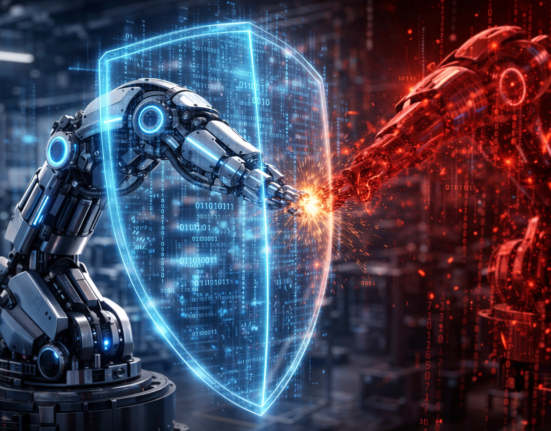
Beyond physical safety, we must consider Ethical AI. This involves ensuring that the data used to train these robots doesn’t contain biases that could lead to discriminatory behavior (e.g., a security robot misidentifying people based on gait or appearance).
The Future: Toward General Purpose Robotics
We are moving toward a world where robots are as common as power tools. We will see Physical AI in:
- Last-Mile Delivery: Droids that can navigate stairs and ring doorbells.
- Disaster Recovery: Robots that can enter burning buildings or nuclear zones to perform complex mechanical repairs.
- Agriculture: Autonomous “weeders” that use lasers to kill pests without chemicals, identifying individual plants with 99.9% accuracy.
Physical AI is not just a “cool gadget.” It is the structural reinforcement our global economy needs to stay upright as our demographic foundation shifts.
Conclusion
The labor shortage is one of the defining challenges of the 21st century. We simply do not have enough “human hands” to maintain the standard of living we have built. For years, we tried to solve physical problems with digital-only solutions, but you cannot “code” a package onto a truck or “email” a patient out of bed.
Physical AI is the definitive answer because it bridges the gap between the logic of the computer and the chaos of the real world. By imbuing machines with the ability to see, feel, and learn, we aren’t just automating tasks; we are creating a more resilient, productive, and human-centric economy.
For business owners, the next step is clear: audit your most labor-intensive physical processes. Look for the “bottlenecks of boredom” or “pain points of safety.” These are the beachheads for Physical AI. The goal is to start small, gather data, and scale as your workforce gains confidence in their new “silicon colleagues.” The future isn’t a world without workers—it’s a world where every worker is empowered by the boundless physical potential of AI.
Would you like me to create a 12-month implementation roadmap for integrating Physical AI into your specific industry?
FAQs
What is the difference between Robotics and Physical AI?
Traditional robotics follows a “Sense-Think-Act” loop where “Think” is a set of hard-coded rules. Physical AI uses neural networks (Foundation Models) to allow the “Think” phase to be adaptive, meaning the robot can handle objects or situations it has never seen before.
Is Physical AI expensive to implement in 2026?
While the upfront hardware cost remains significant, the “Total Cost of Ownership” (TCO) has dropped. Because these robots can be trained via video or teleoperation, you no longer need to hire expensive robotics engineers for every minor task change, drastically lowering operational costs.
Can Physical AI work in outdoor environments?
Yes. Thanks to improvements in LiDAR and multi-spectral computer vision, Physical AI is now highly effective in rain, snow, and variable lighting, making it viable for construction, agriculture, and outdoor yard management.
How do I protect my company’s data when using Physical AI?
Most Physical AI providers in 2026 offer “On-Premise” model training. This means the video and sensor data from your factory floor stays on your local servers, and only the “weights” (the learned improvements) are shared with the cloud, protecting your trade secrets.
Will Physical AI replace my human workers?
It replaces tasks, not people. In almost every 2025–2026 case study, companies used Physical AI to handle the work they couldn’t find humans to do. This allowed their existing staff to move into higher-paying, less physically taxing roles.
References
- NVIDIA Research (2025). Project GR00T: General-Purpose Foundation Models for Humanoid Robots. official documentation.
- International Federation of Robotics (IFR). World Robotics 2025 Report: The Rise of Embodied Intelligence.
- MIT Computer Science & Artificial Intelligence Laboratory (CSAIL). Advances in Sim-to-Real Transfer for Tactile Sensing. (2024 Academic Paper).
- Tesla AI. Optimus Gen 3: Progress in Neural Network-Based Actuation. Investor Day 2025.
- Stanford Institute for Human-Centered AI (HAI). 2025 AI Index Report: The Economic Impact of Physical Automation.
- Figure AI. Case Study: Humanoid Integration in Automotive Logistics. (2026 Corporate Release).
- IEEE Xplore. Deep Reinforcement Learning for Robust Robot Motion. (2024 Journal Article).
- U.S. Bureau of Labor Statistics. Occupational Outlook 2026: The Changing Role of Manufacturing Labor.
- ISO Standards. ISO 10218-1:2025 – Robots and Robotic Devices Safety Requirements.
- Sanctuary AI. The Carbon Operating System: Towards Human-Like Intelligence in General-Purpose Robots. (2025).
- Oxford Economics. The Demographic Deficit: Why Automation is No Longer Optional. (2024 Research).
- Boston Dynamics. Atlas and the Evolution of Electric Actuation in Physical AI. (2025 Technical Blog).

2 Comments