In the modern industrial landscape, the intersection of technology and ethics has moved from a niche conversation to a boardroom priority. As of March 2026, the global push for Environmental, Social, and Governance (ESG) transparency has transformed how companies view automation. Robotics is no longer just a tool for increasing throughput; it is a fundamental pillar for achieving sustainability goals.
By definition, Robotics ESG Sustainability refers to the strategic deployment of automated systems to minimize environmental impact, enhance human welfare, and ensure rigorous corporate accountability. This involves everything from energy-efficient “lights-out” factories to collaborative robots (cobots) that protect aging workforces.
Key Takeaways
- Environmental: Robots reduce material waste through precision and lower energy consumption via optimized path planning.
- Social: Automation removes humans from “Dull, Dirty, and Dangerous” jobs, significantly lowering workplace injury rates.
- Governance: Integrated sensors provide granular data for real-time ESG reporting and supply chain traceability.
- Economic: Sustainable robotics drives long-term ROI by reducing fines, lowering insurance premiums, and attracting ESG-focused investors.
Who This Is For
This guide is designed for Chief Sustainability Officers (CSOs), Operations Managers, and investors who need to understand how high-tech automation aligns with non-financial reporting requirements. It is also a resource for engineers tasked with designing “Green” production lines that meet 2026 regulatory standards.
The Environmental Pillar: Precision as a Catalyst for “Green”
The “E” in ESG is often the most visible. In traditional manufacturing, waste is an accepted byproduct of human error and mechanical inefficiency. Robotics changes this dynamic by introducing a level of precision that human hands cannot replicate consistently.
1. Energy Efficiency and “Lights-Out” Manufacturing
One of the most significant environmental benefits of robotics is the ability to operate in “lights-out” environments. Because robots do not require lighting, heating, or cooling to function effectively, factories can significantly reduce their HVAC and lighting energy consumption.
As of March 2026, advanced AI-driven path planning allows robotic arms to calculate the most energy-efficient movement for every task. By reducing “air time” (the time a robot spends moving without performing a task), companies have reported energy savings of up to 15% across automated lines.
2. Waste Reduction and Circular Economy
In industries like electronics and aerospace, material waste is both an environmental hazard and a financial drain. Robotics enables “additive manufacturing” (3D printing) at scale, where material is added only where needed, rather than being carved away from a larger block.
Furthermore, robots are now the backbone of the Circular Economy. Autonomous sorting systems in recycling facilities use hyperspectral imaging and AI to separate plastics, metals, and paper with 99% accuracy. This ensures that high-quality materials are returned to the production loop rather than ending up in landfills.
3. Reducing the Carbon Footprint of Logistics
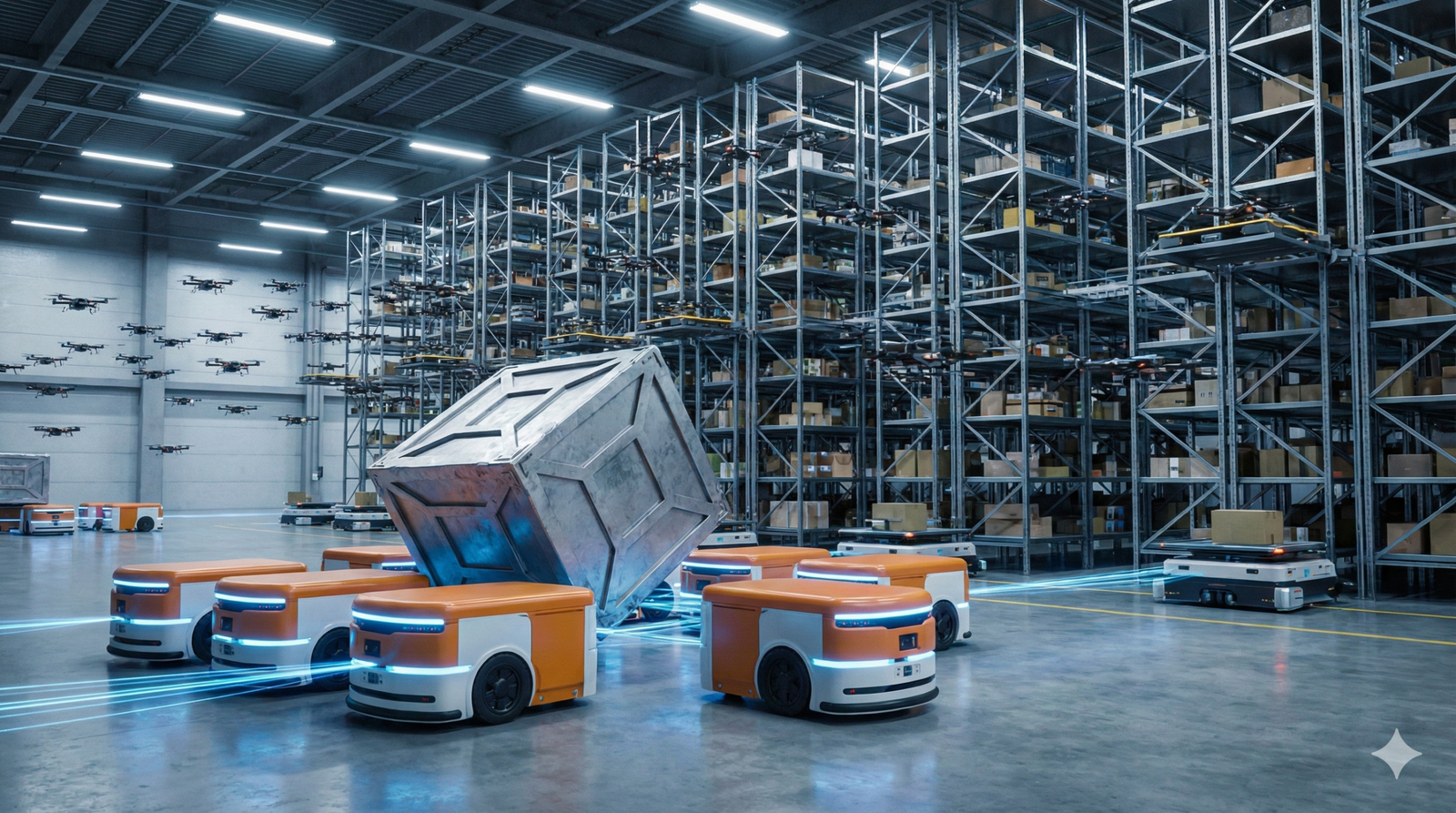
Mobile robotics, specifically Autonomous Mobile Robots (AMRs), are optimizing warehouse flows. By calculating the shortest path for every “pick” and “pack” operation, these robots reduce the battery cycles required for operation. When paired with renewable energy microgrids, these robotic fleets can achieve near-zero operational emissions.
The Social Pillar: Human-Centric Automation
Perhaps the most misunderstood aspect of robotics is its impact on the “S” in ESG. While critics fear job displacement, the reality in 2026 is a shift toward Human-Robot Collaboration.
1. Eliminating “3D” Jobs
Robotics excels at jobs that are:
- Dull: Repetitive tasks that lead to mental fatigue and errors.
- Dirty: Environments with high dust, chemicals, or waste.
- Dangerous: Tasks involving heavy lifting, extreme heat, or sharp materials.
By delegating these tasks to machines, companies drastically improve the “Social” score of their ESG mandate. Occupational health and safety (OHS) metrics show a direct correlation between increased automation in heavy lifting and a decrease in musculoskeletal disorders (MSDs) among staff.
2. The Rise of the Cobot and Upskilling
Collaborative robots, or cobots, are designed to work alongside humans. They do not replace the worker; they act as a “power tool” that enhances the worker’s capability. This fosters an inclusive workplace where older employees or those with physical limitations can remain productive in roles that would otherwise be too strenuous.
Common Mistake: Many firms fail to invest in “Human-in-the-Loop” training. True social sustainability requires upskilling workers from “operators” to “robot technicians,” ensuring that the workforce evolves alongside the technology.
3. Labor Ethics and Supply Chain Transparency
Governance and Social pillars overlap when it comes to labor. Robotics provides a standardized output that is not dependent on exploitative labor practices. In regions where labor laws are loosely enforced, the implementation of robotic systems ensures that production meets international ethical standards, as robots do not require “working hours” breaks or pose the risk of child labor violations.
The Governance Pillar: Accountability Through Data
Governance is the “G” that holds the entire ESG framework together. In the past, ESG reporting was often based on estimates and manual audits. In 2026, robotics has turned ESG into a data-driven science.
1. The Digital Twin and Real-Time Auditing
Modern robotic systems are integrated with Digital Twins—virtual replicas of the physical factory. Every movement, every watt of energy used, and every gram of waste produced is logged. This provides a “single source of truth” for auditors.
- Transparency: Investors can see real-time carbon metrics.
- Compliance: Automated systems ensure that products are manufactured according to specific regulatory standards (e.g., ISO 14001).
2. Algorithmic Transparency and Ethical AI
As robots become more autonomous, governance also covers the “ethics” of the code. Companies must now demonstrate that their robotic AI is transparent and free from biases that could affect safety or production quality. Governance frameworks in 2026 require documented “Explainable AI” (XAI) for all autonomous industrial systems.
3. Supply Chain Governance
Robotics in the supply chain (from autonomous trucking to port automation) creates a digital breadcrumb trail. For industries like “conflict-free” minerals, robotic sorting and tracking ensure that materials are sourced and handled according to global governance mandates.
Strategic Implementation: A Step-by-Step Guide
Transitioning to a robot-driven ESG model requires more than just buying hardware. It requires a systemic shift in operations.
Step 1: Baseline Assessment
Before automating, you must measure your current ESG footprint.
- What is the energy use per unit?
- What is the current injury rate?
- How much scrap material is generated?
Step 2: Selecting the “ESG-First” Robot
Not all robots are created equal. When sourcing, prioritize:
- Recyclability: Can the robot itself be recycled at the end of its life?
- Modular Design: Can parts be swapped out to extend the machine’s life, or must the whole unit be replaced?
- Open API: Does the robot allow for easy data extraction for your ESG reporting software?
Step 3: Workforce Integration
Launch a “Robotics Literacy” program. Transparency about why the robots are being introduced (safety, sustainability, longevity) helps gain employee buy-in.
Common Mistakes in Robotics ESG Integration
Even with the best intentions, companies often stumble. Avoiding these pitfalls is crucial for a successful mandate.
- The “Rebound Effect”: This occurs when a company makes a process more efficient (using robots) but then increases production so much that total energy consumption actually rises.
- Neglecting E-Waste: Robots are electronic devices. Failing to have a “Retirement Plan” for old robots can tank your Environmental score.
- Data Overload: Collecting data is not the same as reporting it. Many companies fail to translate robotic telemetry into actionable ESG insights for stakeholders.
- Ignoring the “G” in AI: Using black-box AI to control robots without understanding the decision-making process can lead to governance failures if an accident occurs.
Industry-Specific ESG Robotics Use Cases
| Industry | ESG Focus | Robotic Application |
| Agriculture | Water/Pesticide Reduction | Autonomous weed-zapping robots (lasers) reduce chemical runoff. |
| Construction | Material Efficiency | Robotic 3D concrete printing reduces waste by up to 60%. |
| Healthcare | Social (Staff Burnout) | Logistics robots handle linen/waste, allowing nurses more patient time. |
| Mining | Safety/Environmental | Autonomous drills and haulers keep humans out of deep-earth risks. |
The Future: Bio-Inspired and Renewable Robotics
As we look toward 2030, the next frontier is Soft Robotics and bio-degradable components. Researchers are currently developing robotic “muscles” made from organic polymers that can be composted. Furthermore, the integration of “Energy Harvesting” allows small robots to run indefinitely on ambient light or thermal gradients, removing the need for batteries entirely.
Safety Disclaimer: The implementation of industrial robotics involves significant mechanical and electrical risks. Always adhere to local safety regulations (such as OSHA or EU Machinery Directive) and ensure all systems are audited by certified safety professionals. This article does not constitute financial or legal advice regarding ESG compliance.
Conclusion
The marriage of robotics and the ESG mandate is not a trend; it is the new standard for industrial survival. As of March 2026, the data is clear: companies that leverage automation to solve environmental and social challenges outperform their peers in both resilience and investor appeal.
By focusing on energy efficiency, human safety, and data transparency, robotics transforms from a tool of mere production into a tool of global stewardship. The journey toward a sustainable future is complex, but it is one that can be navigated with precision, guided by the very machines we have built to enhance our world.
Next Steps for Leaders:
- Conduct an ESG Audit of your current manual processes to identify high-waste areas.
- Pilot a Cobot Program focused specifically on reducing workplace injuries in high-risk zones.
- Integrate Robotic Telemetry directly into your annual sustainability report to provide “proof of green.”
Would you like me to create a detailed implementation roadmap for a specific industry, such as food processing or electronics manufacturing?
FAQs
1. Does adding robots really decrease a company’s carbon footprint?
Yes, but with nuances. While the manufacturing and charging of robots require energy, the net gain comes from reduced material waste, the ability to operate without HVAC/lighting, and the optimization of logistics. In most industrial settings, the lifecycle carbon savings of a robotic system outweigh the footprint of its production within 18–24 months.
2. How do robots improve the “Governance” aspect of ESG?
Governance relies on accuracy and accountability. Robots provide immutable data logs of every action they perform. This means “Greenwashing” becomes much harder, as auditors can see exactly how much energy was used and how much waste was produced per unit, rather than relying on generalized corporate estimates.
3. Will robots eventually replace the need for human safety protocols?
No. In fact, robots require new safety protocols. While they remove humans from dangerous tasks, the interaction between humans and machines (Cobots) requires strict adherence to standards like ISO 10218. Safety shifts from “avoiding the task” to “managing the interface.”
4. Is the “Social” score negatively impacted by potential job losses?
In the short term, some roles are automated. However, ESG frameworks look at the “Just Transition.” Companies that use robotics to upskill their workers into higher-paying, safer technical roles actually see an increase in their Social score. The focus is on “Quality of Work” rather than just “Quantity of Jobs.”
5. What is “Green Robotics”?
Green Robotics refers to the design and use of robots that are energy-efficient, made from sustainable materials, and used for environmental purposes (like ocean cleanup or reforestation). It also encompasses the “Right to Repair,” ensuring robots aren’t treated as disposable e-waste.
References
- International Federation of Robotics (IFR): “World Robotics 2025 Report on Sustainability.” (Official Statistical Doc).
- ISO 14001:2015: “Environmental management systems — Requirements with guidance for use.” (Standardization Body).
- Journal of Cleaner Production: “Robotics and Circular Economy: A Review of Automated Disassembly.” (Academic).
- Global Reporting Initiative (GRI): “GRI 302: Energy and GRI 403: Occupational Health and Safety.” (Official Standard).
- IEEE Xplore: “Energy-Optimal Path Planning for Industrial Robots.” (Technical Research).
- United Nations Environment Programme (UNEP): “The Role of AI and Robotics in Achieving the SDGs.” (Official Report).
- Harvard Business Review: “The ESG Integration of Industrial Automation.” (Business Analysis).
- Stanford Institute for Human-Centered AI: “2026 AI Index Report: Robotics and Labor Ethics.” (Academic).