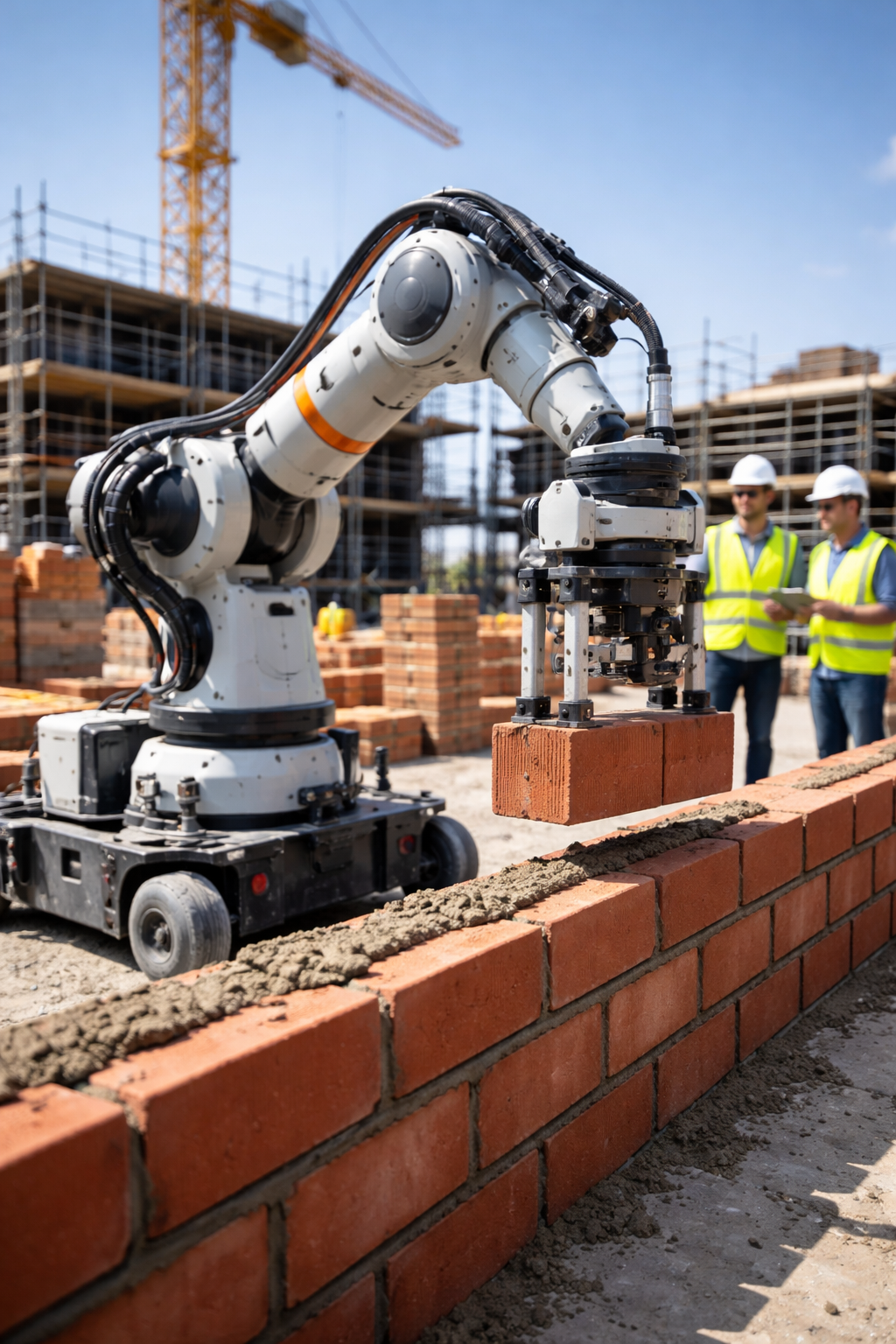
The construction industry, long characterized by manual labor and traditional methods, is undergoing a seismic shift. As of March 2026, construction robotics has transitioned from experimental “innovation lab” pilots to essential jobsite tools. Faced with a persistent global labor shortage and the need for higher precision, contractors are turning to automation to handle the “dirty, dull, and dangerous” tasks that have historically defined the trade.
Robotics in construction refers to the integration of automated or semi-autonomous machines designed to perform specific building tasks—ranging from high-speed bricklaying and 3D concrete printing to autonomous earthmoving and site layout. These machines do not replace humans; rather, they serve as “force multipliers,” allowing smaller crews to accomplish more with greater accuracy and less physical strain.
Key Takeaways
- Market Growth: The global construction robotics market is valued at approximately $1.30 billion in 2026, with a projected compound annual growth rate (CAGR) of over 15% through 2040.
- Labor Crisis Mitigation: Automation is a direct response to the industry’s need to add nearly 440,000 workers annually to meet demand, filling gaps left by an aging workforce.
- Efficiency Gains: Case studies show that robotic solutions can lead to 30–50% labor savings on specific tasks and reduce rework by detecting errors in real-time.
- Safety Revolution: Wearable exoskeletons and remote-controlled demolition robots are significantly reducing musculoskeletal disorders (MSDs) and on-site fatalities.
- Data Integration: Modern robots are deeply integrated with Building Information Modeling (BIM) and Digital Twins, ensuring that the “as-built” reality matches the digital design.
Who This Is For
This guide is designed for general contractors, site managers, civil engineers, and construction technology investors looking to understand the practical applications, economic viability, and future trajectory of robotics on the modern jobsite. Whether you are considering your first “Robotics-as-a-Service” (RaaS) contract or scaling an existing fleet, this article provides the technical depth and strategic insight required to navigate the automation landscape.
The Current State of Construction Robotics (2026)
The construction site is one of the most unstructured environments for a robot to navigate. Unlike a climate-controlled factory floor with fixed assembly lines, a construction site is dynamic, muddy, and constantly changing. However, as of March 2026, advancements in computer vision, LiDAR (Light Detection and Ranging), and “Embodied AI” have finally allowed robots to thrive in these chaotic conditions.
The industry has moved beyond the “hype cycle” of the early 2020s. We are now in a period of repeatable production. Success is no longer measured by how “cool” a robot looks in a YouTube video, but by its utilization rate and ROI per square foot.
The Shift to “Human-Robot Teaming”
The prevailing philosophy in 2026 is not total autonomy, but Human-Robot Teaming (HRT). Most successful deployments involve a “cobot” (collaborative robot) model where a skilled tradesperson supervises one or more robotic units. For example, a single layout professional might oversee three layout robots marking a high-rise floor, intervening only when a robot encounters an unexpected obstacle or requires a battery swap.
7 Categories of Construction Robots Automating the Jobsite
To understand how robotics is impacting the industry, we must look at the specific machines currently operating on active sites. Each category addresses a unique pain point in the construction lifecycle.
1. Layout and Surveying Robots
Layout marking—the process of transferring digital blueprints onto a physical floor—was traditionally a slow, manual task involving chalk lines and tape measures. It was also a primary source of rework.
- Technology: Robots like the HP SitePrint or Dusty Robotics FieldPrinter use high-precision GNSS (Global Navigation Satellite System) and total stations to print full-scale CAD/BIM designs directly onto the slab.
- Impact: These robots can complete a layout 5 to 10 times faster than a manual crew.
- Example: On a recent commercial project, a layout robot printed 10,000 square feet of wall locations, mechanical penetrations, and plumbing sleeves in a single day with millimeter precision.
2. Masonry and Bricklaying Robots
Bricklaying is one of the most physically demanding trades, requiring constant bending and lifting.
- Hadrian X (FBR): A truck-mounted robotic arm that can lay up to 300 blocks per hour. It uses a specialized adhesive instead of traditional mortar, allowing for faster curing and structural stability.
- SAM100 (Construction Robotics): The “Semi-Automated Mason” works alongside human masons. While SAM handles the heavy lifting and placement of bricks, the human mason finishes the joints and handles the aesthetic details.
- Common Benefit: These systems maintain a consistent pace regardless of the weather or time of day, significantly shortening the masonry schedule.
3. 3D Concrete Printing (3DCP)
3D printing has evolved from a novelty to a viable method for residential and infrastructure development.
- Methodology: Large gantry-style or robotic-arm printers extrude specialized concrete mixtures layer by layer to create walls, facades, and even bridges.
- Sustainability: 3DCP can reduce material waste by up to 60% because it only places concrete where it is structurally necessary.
- Market Leaders: Companies like Apis Cor, ICON, and COBOD are currently printing affordable housing communities across North America and the Middle East.
4. Robotic Demolition
Demolition is inherently dangerous. Unstable structures, falling debris, and toxic dust pose constant threats to workers.
- Remote Operation: Robots like the Brokk series allow operators to stand up to 300 feet away from the “impact zone.” These compact, electric-powered machines can climb stairs and enter confined spaces that would be too small for a traditional excavator.
- Precision: Unlike a wrecking ball, a demolition robot can selectively “nibble” away at concrete or steel, allowing for controlled dismantling in urban environments where noise and vibration must be minimized.
5. Autonomous Heavy Equipment
The heavy machinery of 2026—excavators, dozers, and loaders—now features “brain” kits that allow for semi-autonomous operation.
- Retrofitting: Companies like Built Robotics provide “Exosystem” kits that can be installed on standard Caterpillar or John Deere equipment. These kits use AI to manage trenching, grading, and earthmoving.
- Benefit: An autonomous excavator can work continuously through the night to prepare a site for the morning crew, optimized for fuel efficiency and exact grade specifications.
6. Wearables: Exoskeletons
For tasks that cannot yet be fully automated, the industry is “automating” the human.
- Passive vs. Active: Passive exoskeletons (like those from Hilti or Ekso Bionics) use spring-loaded mechanisms to support a worker’s shoulders and back during overhead drilling or heavy lifting. Active exoskeletons use motors to provide “power steering” for the human body.
- Health Outcomes: These devices are crucial for extending the careers of aging, skilled tradespeople and reducing the multibillion-dollar cost of workplace strain injuries.
7. Drones and Inspection Robots
Aerial and ground-based “reality capture” robots have become the eyes of the project manager.
- Drones: Used for volumetric analysis of stockpiles and site-wide progress photos.
- Spot (Boston Dynamics): The agile quadruped “dog” robot is frequently equipped with LiDAR scanners to walk through complex indoor sites, documenting progress against the BIM model and flagging safety hazards.
The Economic Impact: ROI and the RaaS Model
The primary barrier to construction robotics has always been the high initial capital expenditure (CapEx). As of 2026, the market has shifted toward Robotics-as-a-Service (RaaS).
Understanding RaaS
Instead of buying a $500,000 robot, contractors now “lease” the machine or pay based on output (e.g., price per square foot of layout or price per brick laid). This shifts the maintenance and software update burden to the manufacturer.
Simple ROI Calculation Example
Scenario: A contractor uses a robotic layout system for a 40-week project.
- Manual Layout: 2 workers x $60/hr x 40 hrs/week = $4,800/week.
- Robotic Layout (RaaS): $3,000/week (including one operator and the machine).
- Weekly Savings: $1,800.
- Annual Savings: $72,000 + a 15% reduction in rework costs (typically 5% of project total).
Cost Reduction via Rework Prevention
Rework is the “silent killer” of construction profit. It is estimated that direct rework costs account for ~5% of a typical project’s budget. By using robots to verify installations daily through “scan-to-model” comparisons, deviations are caught within hours rather than weeks, preventing the cascading delays that destroy margins.
Enhancing Jobsite Safety and Sustainability
Safety Disclaimer: While robotics improves safety, the introduction of heavy automated machinery requires new safety protocols, specialized training, and “exclusion zones” to prevent human-robot collisions. Always consult OSHA or local regulatory guidelines for on-site automation.
Reducing Human Exposure
Robots are increasingly used in environments with:
- High-Altitude Risk: Facade-climbing robots for window cleaning and painting.
- Toxic Environments: Robots handling asbestos removal or working in nuclear decommissioning.
- Repetitive Strain: Exoskeletons mitigating “overhead fatigue,” which is a leading cause of long-term disability in electricians and drywallers.
Sustainability and Waste
Construction accounts for nearly 40% of global carbon emissions. Robotics aids sustainability by:
- Material Precision: 3D printing and automated cutting tools ensure that only the necessary amount of timber, steel, or concrete is used.
- Electric Power: Many modern construction robots are fully electric, reducing the noise pollution and carbon footprint of sites in urban centers.
Common Mistakes When Implementing Robotics
Adopting robotics is not as simple as “turning it on.” Many firms fail because they treat robots like traditional tools rather than part of a digital ecosystem.
- Ignoring the “Data Backbone”: A robot is only as good as the BIM model it follows. If the digital designs are inaccurate or outdated, the robot will precisely build the wrong thing.
- Failing to Get “Buy-In” from Labor: If workers see robots as a threat to their jobs, they may resist or even sabotage the implementation. Successful firms emphasize that robots handle the “brute work,” allowing the humans to act as “managers of machines.”
- Poor Site Preparation: A robot that requires a level floor to operate will struggle on a site littered with debris. Effective automation requires a “robot-ready” site mentality.
- Underestimating the Learning Curve: Expect the first 2–4 weeks of a robotic deployment to be slower than manual labor as the team adjusts to the new workflow.
Technical Integration: BIM, AI, and Digital Twins
In 2026, the “brain” of the construction robot is not located on the machine itself, but in the cloud.
The Role of BIM (Building Information Modeling)
BIM serves as the “single source of truth.” Robots download their task lists directly from the BIM. As they work, they upload “as-built” data back into the system. This creates a closed-loop system where the digital twin is constantly updated with real-world progress.
Computer Vision and AI
Advanced perception allows robots to:
- Identify different types of rebar and tie them automatically.
- Differentiate between a human worker and a static obstacle (e.g., a pile of lumber).
- Adjust their tool path in real-time to account for slight deviations in the foundation.
Conclusion: The Path Forward for Construction Leaders
The era of “automating heavy labor” is no longer a futuristic vision; it is a competitive necessity. As we look at the remainder of 2026 and beyond, the construction firms that survive will be those that successfully integrate robotic precision with human ingenuity.
The transition won’t happen overnight. It starts with identifying a single, high-ROI task—like site layout or material transport—and mastering it through a RaaS model. By shifting the physical burden of heavy labor to machines, we can create a construction industry that is not only more efficient and profitable but also safer and more rewarding for the people who build our world.
Next Steps for Implementation:
- Audit your current workflows: Identify the task with the highest rework cost or labor turnover.
- Evaluate RaaS providers: Look for vendors that offer “human-in-the-loop” training and robust technical support.
- Update your BIM standards: Ensure your digital models are “robot-ready” with the necessary metadata and precision.
FAQs (Schema-Style)
Q1: Will robots replace human construction workers?
A: No. Robots are designed to augment the workforce, not replace it. They handle repetitive, dangerous, and high-strain tasks, while human workers move into higher-value roles such as robotic supervision, complex problem-solving, and specialized finishing work. The industry’s massive labor shortage means there is more work than humans can currently handle alone.
Q2: What is the most common type of construction robot in use today?
A: As of 2026, layout and surveying robots (like Dusty Robotics) and robotic arms for material handling have seen the highest adoption rates due to their immediate ROI and ease of integration into existing workflows.
Q3: How much does it cost to use a construction robot?
A: Costs vary based on the model. Under the Robotics-as-a-Service (RaaS) model, contractors typically pay a weekly or monthly subscription fee ranging from $2,500 to $6,000, which is often lower than the cost of the 2-3 laborers needed to perform the same task manually.
Q4: Can robots work in bad weather?
A: This depends on the specific robot. While some, like autonomous excavators, are ruggedized for all-weather use, precision layout robots and 3D concrete printers may require specific environmental conditions (e.g., no heavy rain or extreme wind) to maintain accuracy.
Q5: Is 3D concrete printing cheaper than traditional building?
A: For specific architectural designs and large-scale residential projects, yes. 3D printing can reduce labor costs and material waste, but the current cost of specialized “ink” (concrete mix) can be higher than traditional materials. The primary savings come from the significantly reduced construction timeline.
References
- Zacua Ventures (2026): Construction Robotics Report 2026 – Repeatable Production. 2. CMiC Global (2026): Top Construction Trends Defining Project Delivery and Cost Control. 3. MDPI – Applied Sciences (2025/2026): Robotics in the Construction Industry: A Bibliometric Review of Recent Trends.
- The Robot Report (2026): State of the Robotics Industry 2026 – Steve Crowe. 5. Automate.org (2025): The Effectiveness of Robotic Technologies in Construction and Infrastructure Development.
- Research and Markets (2026): Global Construction Robotics Market Size and Forecast 2026-2033.
- OSHA (2024/2025 Reports): Guidelines for Safe Human-Robot Collaboration in Industrial Environments.
- Hilti Group Corporate Documentation: The Impact of Exoskeletons on Workplace Musculoskeletal Health.
- ICON Technology Reports: Sustainability Metrics in 3D Printed Residential Structures.
- Built Robotics: Case Study on Autonomous Trenching in Utility-Scale Solar Projects.
- Standard Bots (2025): Robotics in Construction 101: The Complete Guide.
- Future Market Insights: Construction Tech Market Forecast 2026 to 2036.