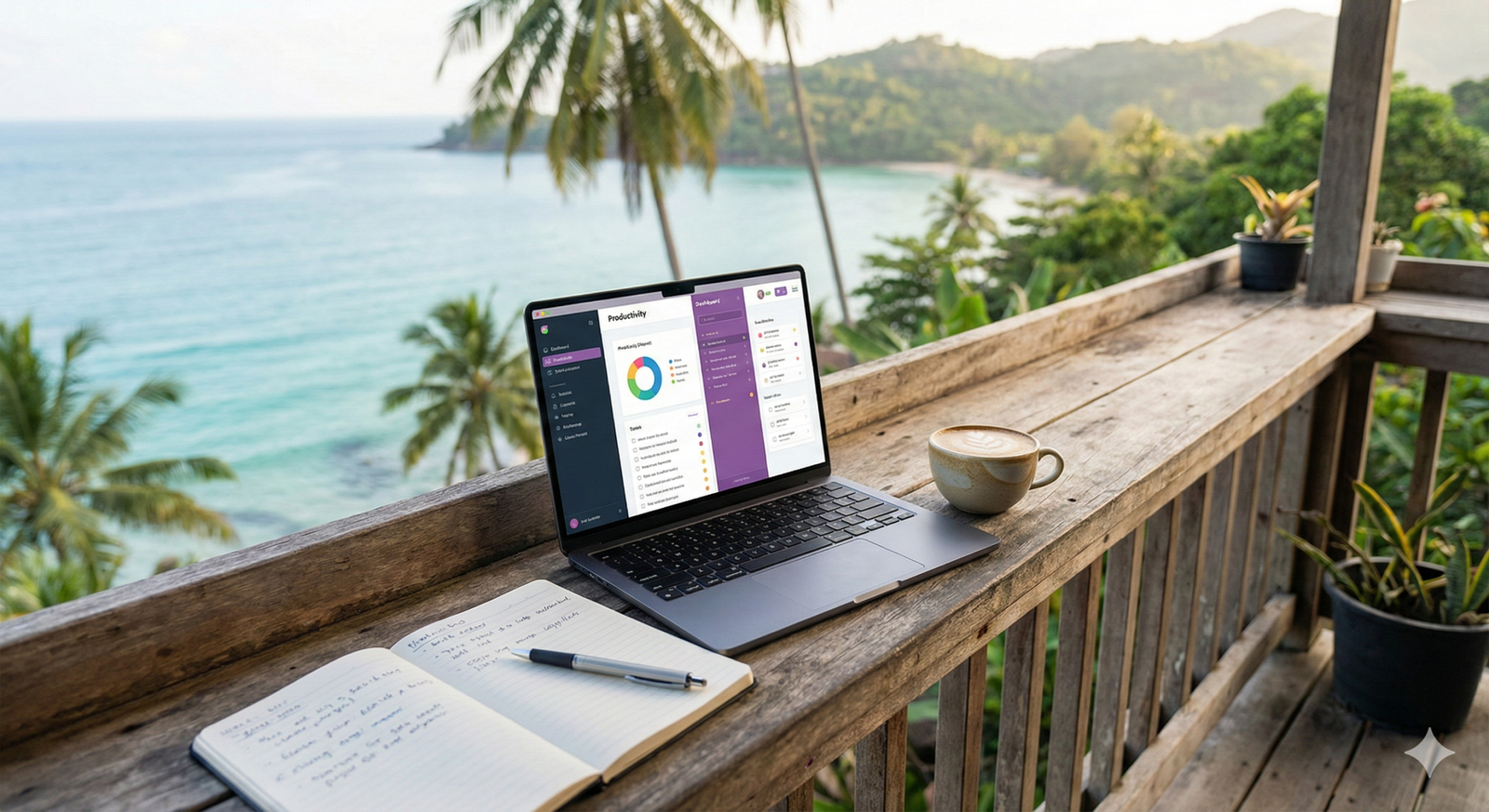
The traditional binary between “work” and “vacation” is dissolving. For decades, employees were expected to be either entirely present in the office or entirely absent on holiday. Today, a hybrid phenomenon has taken root firmly within the corporate mainstream: the “workation.”
No longer the exclusive domain of freelance digital nomads or tech entrepreneurs, workations—taking a trip to a leisure destination while continuing to work full-time—are becoming a standardized perk in corporate benefit packages. As of January 2026, companies are increasingly viewing location flexibility not just as a pandemic-era holdover, but as a critical tool for retention, mental health, and productivity.
In this guide, strictly focused on the intersection of professional responsibility and travel freedom, “workation” refers to an employee-initiated or company-sponsored trip where the primary objective combines active duty work with leisure elements in a non-office environment. We will explore how this trend is reshaping corporate culture, the practicalities of execution, and the regulatory frameworks required to make it sustainable.
Key Takeaways
- Definition Shift: Workations are distinct from “bleisure” (business trips extended for fun) and digital nomadism (a permanent lifestyle); they are temporary, sanctioned periods of remote work from a holiday destination.
- Retention Tool: Forward-thinking companies use “work from anywhere” (WFA) weeks as a high-value perk to reduce burnout without sacrificing output.
- Compliance is Key: Tax nexus laws, data security, and insurance coverage are the biggest hurdles for corporate adoption.
- Planning is Critical: Success relies on “infrastructure first” mindset—verifying Wi-Fi speeds, ergonomics, and time zone overlaps before booking.
- Inequality Risks: Organizations must manage the “privilege gap” to ensure workation policies do not alienate employees with caregiving duties or lower incomes.
Who This Is For (And Who It Isn’t)
This guide is designed for:
- HR Professionals and Business Leaders: Looking to draft compliant workation policies and improve employee retention.
- Remote and Hybrid Employees: Seeking practical advice on how to propose, plan, and execute a productive workation.
- Team Managers: Needing strategies to manage output and communication with a distributed team across time zones.
This guide is NOT for:
- Permanent Digital Nomads: While related, this guide focuses on employees with a home base who travel temporarily, rather than those without a fixed residence.
- Gig Workers: While applicable, the focus here is on corporate employment structures, compliance, and team dynamics.
1. Defining the Workation in the Modern Workplace
To integrate workations into corporate culture, we must first agree on what they are. The terminology often gets muddled with other travel trends.
The Spectrum of Remote Travel
- Bleisure: A business trip (e.g., a conference in London) where the employee adds a few days of vacation at the end. The primary driver is business necessity.
- Workation: A trip driven by the employee’s desire for a change of scenery. The employee works normal hours (or near-normal) but spends evenings and weekends exploring a new location. The duration is typically 1–4 weeks.
- Digital Nomadism: A lifestyle where one has no permanent home and moves continuously. This is often incompatible with strict corporate tax compliance for full-time employees.
- Corporate Retreats/Offsites: Company-organized trips where the team travels together. While these are “work + vacation,” they are mandatory and structured.
Why Workations Are Booming
The rise of the corporate workation is driven by a convergence of technological capability and psychological need.
- The “Novelty” Dividend: Neuroscience suggests that novel environments stimulate dopamine and neuroplasticity. Employees stuck in the same home office for years often experience creative stagnation. A view of the mountains or the ocean can reboot problem-solving skills.
- The PTO Paradox: Many employees hoard paid time off (PTO) because they fear falling behind or cannot afford to disconnect completely. A workation allows them to travel without spending PTO, reserving actual vacation days for total disconnection.
- Asynchronous Maturity: Companies have become better at documentation and async communication, making physical presence less relevant to performance.
2. The Business Case: Benefits for Employers and Employees
Why should a corporation agree to let an accountant work from Bali or a developer code from the Alps? The benefits are tangible, provided the boundaries are clear.
For the Employee
- Mental Health Decompression: Changing the environment reduces “home fever.” The ability to swim in the ocean before a 9:00 AM meeting or hike at 5:30 PM drastically improves perceived quality of life.
- Extended Family Time: Employees can visit family in other states or countries without burning through limited vacation days, working during the day and bonding in the evenings.
- Deep Work Focus: Ironically, being away from the distractions of home (chores, errands, neighbors) and the interruptions of the office can lead to periods of intense “deep work.”
For the Employer
- Retention and Attraction: In a competitive talent market, flexibility is currency. A policy allowing “4 weeks of work-from-anywhere” can be the deciding factor for a candidate choosing between two offers.
- Reduced Burnout: Employees who take workations often return feeling refreshed, even though they were working. This micro-recovery prevents long-term exhaustion.
- Cost Neutrality: Unlike a salary raise or a bonus, a workation policy costs the company relatively little in direct funds (assuming the employee pays for travel), yet it offers high perceived value.
In Practice: A mid-sized tech firm noticed a slump in morale in February. They instituted a “February Flex” policy allowing employees to work from any time zone within +/- 3 hours of headquarters. Productivity remained stable, but internal satisfaction scores rose by 18% quarter-over-quarter.
3. The Regulatory Landscape: Compliance, Tax, and Security
This is the section where corporate culture meets legal reality. “Work from anywhere” often sounds simple until the legal department gets involved. If you are an employer, you cannot ignore these factors.
Tax Nexus and Permanent Establishment
If an employee works in a different state or country for an extended period, they may inadvertently create a “tax nexus” for the company.
- Domestic (USA): If a New York employee works from California for 30 days, the company might be liable for California payroll taxes and compliance.
- International: If an employee works from France for three months, French authorities might view the company as having a “permanent establishment” there, subjecting the corporation to local corporate taxes and labor laws.
Guidance: Most corporations cap international workations at 30 days or less to stay under the radar of “permanent establishment” risks, though this varies heavily by jurisdiction. Consult international tax counsel.
Data Security and Cybersecurity
Public Wi-Fi in a beach café is a security nightmare for corporate IT.
- The Risk: Unsecured networks, visual hacking (people looking at screens in public), and device theft.
- The Fix:
- Mandatory VPNs: Access to company servers must be tunneled through enterprise-grade VPNs.
- Privacy Screens: Physical filters for laptops to prevent “shoulder surfing.”
- Device Encryption: Hard drives must be encrypted in case of theft.
Visa and Immigration
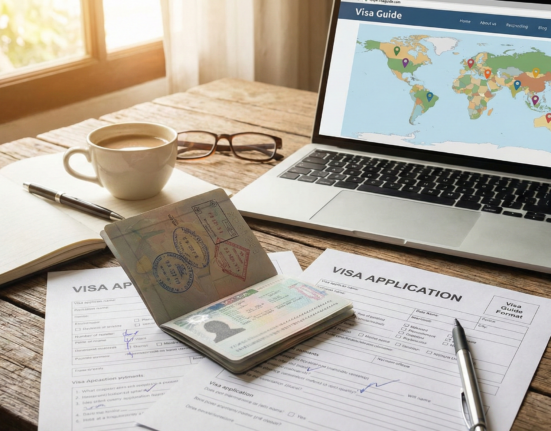
Working on a tourist visa is technically illegal in many countries, even for remote workers. While enforcement has historically been lax for “laptop squatters,” countries are tightening rules.
- Digital Nomad Visas: As of 2026, over 60 countries (including Spain, Costa Rica, and Japan) offer specific visas for remote workers. Corporate policies should encourage or mandate using these legal channels for stays exceeding tourist limits.
4. Designing a Corporate Workation Policy
For “workations” to become culture rather than chaos, they must be governed by policy. Ambiguity leads to inequality (managers letting favorites go while denying others).
Core Components of a Policy
A robust policy should answer the following questions:
- Eligibility: Is this for everyone? Usually, it is restricted to employees in good standing who have passed their probation period.
- Duration limits: How long can they be away? Common caps are 2 weeks, 30 days, or 90 days per year.
- Location constraints: Are there banned countries (due to high security risk or sanctions)? Are there time zone requirements (e.g., “Must overlap 4 hours with EST”)?
- Approval workflow: Who approves it? Usually the direct manager and HR.
- Expense responsibility: Explicitly state that travel, accommodation, and food are the employee’s responsibility, not the company’s.
The “Core Hours” Agreement
To maintain collaboration, companies rarely allow total asynchronous work during a workation. The most common compromise is “Core Hours.”
- Example: Even if you are in Lisbon (GMT) working for a New York (EST) company, you must be online and available for meetings from 2:00 PM to 6:00 PM Lisbon time (9:00 AM to 1:00 PM EST).
Equipment and Ergonomics
The policy must address hardware.
- Risk: An employee working from a hammock for two weeks develops back pain and files a worker’s compensation claim.
- Mitigation: Require employees to self-certify that they have a safe, ergonomic workspace (table and chair) at their destination.
5. How to Plan a Successful Workation: A Step-by-Step Guide
For the employee, the dream of sipping coconuts while answering emails can quickly turn into a nightmare of poor Wi-Fi and missed deadlines. Here is the operational framework for success.
Phase 1: The Feasibility Check
Before asking your boss, check the basics.
- Internet Speed: Do not rely on Airbnb listing descriptions (“High-speed Wi-Fi” is subjective). Ask the host for a screenshot of a speed test (Speedtest.net or Fast.com). You generally need at least 20 Mbps down / 5 Mbps up for reliable video calls.
- Time Zone Math: Use tools like World Time Buddy to visualize your schedule. If you are a night owl, working US hours from Europe is great. If you are an early bird, working US hours from Asia is grueling (often requiring work until 3:00 AM).
Phase 2: The Pitch to Management
Do not frame this as “I want a vacation.” Frame it as “I will be working remotely from a different location.”
- The Script: “I am planning to work remotely from [Location] for [Dates]. I have verified the internet connectivity and workspace setup. I will adhere to our core hours of [Time] and will be fully reachable. Does this align with our current projects?”
- The Assurance: Emphasize that your output will not change.
Phase 3: The Setup
You cannot rely on hotel infrastructure. Bring your own redundancy.
- Travel Router: A device to bridge weak hotel Wi-Fi or create a secure sub-network.
- Mobile Hotspot: Never travel without a backup data plan (local SIM or e-SIM like Airalo) in case the main internet fails.
- Ergonomics: Portable laptop stand, external mouse, and keyboard. Working hunched over a laptop for 8 hours will ruin the trip.
6. Top Destinations and “Zoom-Ready” Infrastructure
Not all destinations are created equal. A remote cabin might sound romantic, but if it lacks cell service, it is not a workation destination; it is a vacation destination.
Criteria for a Workation Hub
- Connectivity: Fiber optic prevalence and 5G backup.
- Co-working Access: Availability of day-pass offices (WeWork, Regus, or local hubs) if the accommodation proves too noisy.
- Community: Presence of other remote workers helps combat isolation.
- Cost of Living: Affordable food and leisure activities maximize the value of the salary.
Popular “Work-Ready” Regions (As of 2026)
- Lisbon & Madeira, Portugal: High-speed internet, established digital nomad villages, and time zones compatible with the US East Coast (afternoon/evening work) and Europe.
- Mexico City, Mexico: Strong infrastructure in neighborhoods like Roma/Condesa, US Central time zone alignment, and vibrant culture.
- Canary Islands, Spain: European legal protections, island lifestyle, and specific investments in remote work infrastructure.
- Cape Town, South Africa: While load-shedding (power cuts) was historically an issue, many co-working spaces and hotels now have solar backups, making it a prime destination for European time zone alignment.
7. Common Pitfalls and How to Avoid Them
Even with good planning, workations can fail. Here are the most common failure modes.
1. The “Vacation Mindset” Trap
The Mistake: Treating the trip like a holiday where you “squeeze in” work. The Reality: You end up doing mediocre work and having a mediocre vacation. The Fix: Routine is king. Wake up, exercise, shower, and dress for work just as you would at home. Compartmentalize leisure to evenings and weekends.
2. Underestimating Context Switching
The Mistake: Moving locations every 2-3 days. The Reality: Travel days kill productivity. Checking in, finding the Wi-Fi password, and setting up the desk takes time and mental energy. The Fix: “Slow Travel.” Stay in one location for at least one week, preferably two.
3. The Connectivity Crisis
The Mistake: Trusting “Hotel Wi-Fi.” The Reality: Hotel networks are often throttled, blocking VPNs or struggling with Zoom bandwidth. The Fix: Always have a co-working space identified as a “Plan B” within 10 minutes of your accommodation.
4. Overpacking vs. Underpacking
The Mistake: Bringing a full monitor (too heavy) or just a laptop (neck pain). The Reality: You need a middle ground. The Fix: Use an iPad or portable USB-C monitor as a second screen. It fits in a backpack but doubles your screen real estate.
8. Equity and Inclusion: The Shadow Side of Workations
As corporate culture embraces workations, we must address the inclusivity elephant in the room.
The Privilege Gap
Workations are inherently easier for:
- Singles or couples without children.
- Senior employees with higher disposable income.
- Knowledge workers whose roles are 100% digital.
They are difficult or impossible for:
- Parents with school-aged children (who cannot just leave for 3 weeks).
- Caregivers for elderly parents.
- Junior staff who may need in-person mentorship.
- Roles requiring physical presence (lab techs, receptionists).
Corporate Mitigation Strategies: To prevent resentment, companies should:
- Be transparent: Acknowledge that role types dictate flexibility.
- Offer alternatives: If a role cannot work remotely, perhaps offer additional flexible PTO or other financial perks to balance the “lifestyle benefit” others receive.
- Subsidies: Some progressive companies offer a “remote work stipend” that can be used for home office upgrades or travel costs, giving employees choice in how they use the funds.
9. Tools and Tech Stack for the Mobile Workforce
Successful workations run on software. Here is the essential tech stack for maintaining corporate standards while mobile.
Communication & Async
- Slack / Microsoft Teams: Essential for presence indication. Statuses should be updated clearly (e.g., ” working from GMT+1, delayed response likely”).
- Loom: Video messaging tool. Instead of scheduling a live meeting across difficult time zones, record a 5-minute screen share briefing.
Security
- NordVPN / ExpressVPN (Business Tiers): For securing connection on public networks.
- 1Password / LastPass: managing passwords securely without writing them down or risking exposure.
Planning & Logistics
- TripIt: Organizes travel itineraries.
- Croissant / WeWork On Demand: Apps that allow you to book desks by the hour or day in cities worldwide.
10. The Future: Corporate-Owned Outposts?
We are seeing the emergence of a new trend: Corporate Housing Networks.
Instead of giving employees a stipend, large tech companies and consultancies are leasing or buying properties in desirable locations (e.g., a lodge in Tahoe, an apartment block in Barcelona).
- How it works: Employees can book these units for 1-2 weeks a year.
- Why: It solves the Wi-Fi/ergonomics reliability issue and ensures tax compliance (the company owns the asset).
- Result: It turns the “workation” from a risky individual request into a standardized, managed company benefit.
Conclusion
Workations are not a fleeting trend; they are the natural evolution of a workforce that values autonomy and experiences over mere presence. For the corporation, integrating workations is a strategic move to build a resilient, satisfied, and high-retention workforce. For the individual, it is an opportunity to reclaim the “life” part of work-life balance without sabotaging career trajectory.
However, the “work” must come first. The culture only holds if productivity is maintained. By establishing clear boundaries, robust infrastructure, and transparent policies, companies and employees can thrive in this new hybrid reality.
Would you like me to draft a specific “Workation Request Email Template” for employees or a “Workation Policy Checklist” for HR managers?
FAQs
1. Do workations count as vacation days? No. On a workation, you are expected to work your full contractual hours and meet all deliverables. Therefore, it does not deduct from your PTO (Paid Time Off) or annual leave allowance. You are simply changing your location, not your employment status.
2. Can I work from a different country without telling my employer? No. This creates significant legal and security risks. Working internationally can trigger tax liabilities for your company and visa issues for you. Always obtain approval from HR and your manager before working internationally.
3. Who pays for the travel costs during a workation? Generally, the employee pays. Since the trip is voluntary and for personal lifestyle benefit, the employee covers flights, accommodation, and food. The company continues to pay your salary. Exceptions exist for company-mandated retreats.
4. How long is the average workation? Most corporate policies allow for 1 to 4 weeks. This duration is long enough to settle in and be productive but short enough to avoid tax residency complications in most jurisdictions.
5. What is the difference between a digital nomad and a workationer? A digital nomad typically has no permanent residence and moves constantly. A workationer has a permanent home base and job but takes temporary trips to work from other locations before returning home.
6. Do I need special insurance for a workation? Yes. Standard travel insurance often excludes claims if you are “working.” Corporate health insurance may not cover international non-emergency care. Look for “digital nomad insurance” or check if your company’s policy covers international remote work.
7. Can I bring my family on a workation? Yes, but with caution. You must ensure you have a dedicated workspace separate from family activities during work hours. Managing childcare while trying to work remotely is a common cause of workation failure; ensure childcare is arranged.
8. What happens if the internet fails at my destination? It is the employee’s responsibility to maintain connectivity. If you cannot get online to work, you may be required to take a PTO day or make up the hours later. Always carry a mobile hotspot backup.
References
- Deloitte. (2024). The Future of the Remote Workforce: Tax and Compliance Implications. Deloitte Insights. https://www2.deloitte.com/us/en/insights/focus/human-capital-trends.html
- Harvard Business Review. (2023). Why “Work from Anywhere” Is Here to Stay. HBR.org.
- Buffer. (2025). State of Remote Work 2025. Buffer.com. https://buffer.com/state-of-remote-work/2025
- Internal Revenue Service (IRS). (2024). Tax Guide for U.S. Citizens and Resident Aliens Abroad. IRS.gov. https://www.irs.gov/individuals/international-taxpayers/us-citizens-and-resident-aliens-abroad
- Airbnb. (2024). The Rise of the ‘Live Anywhere’ Phenomenon. Airbnb Newsroom. https://news.airbnb.com
- MBO Partners. (2024). State of Independence in America: The Digital Nomad Report. MBO Partners. https://www.mbopartners.com/state-of-independence/
- Society for Human Resource Management (SHRM). (2024). Managing International Remote Workers: Legal and Practical Considerations. SHRM.org. https://www.shrm.org