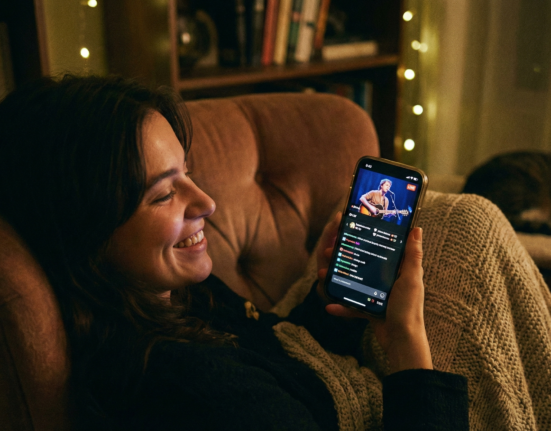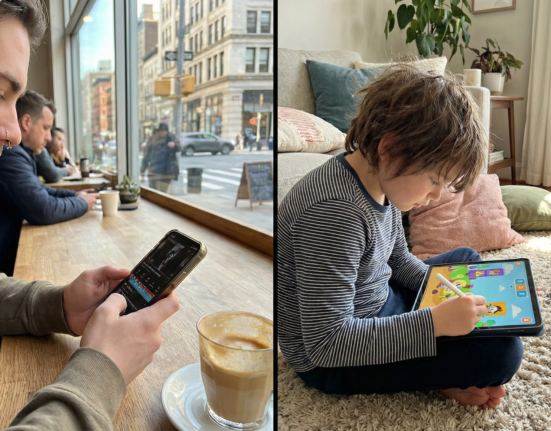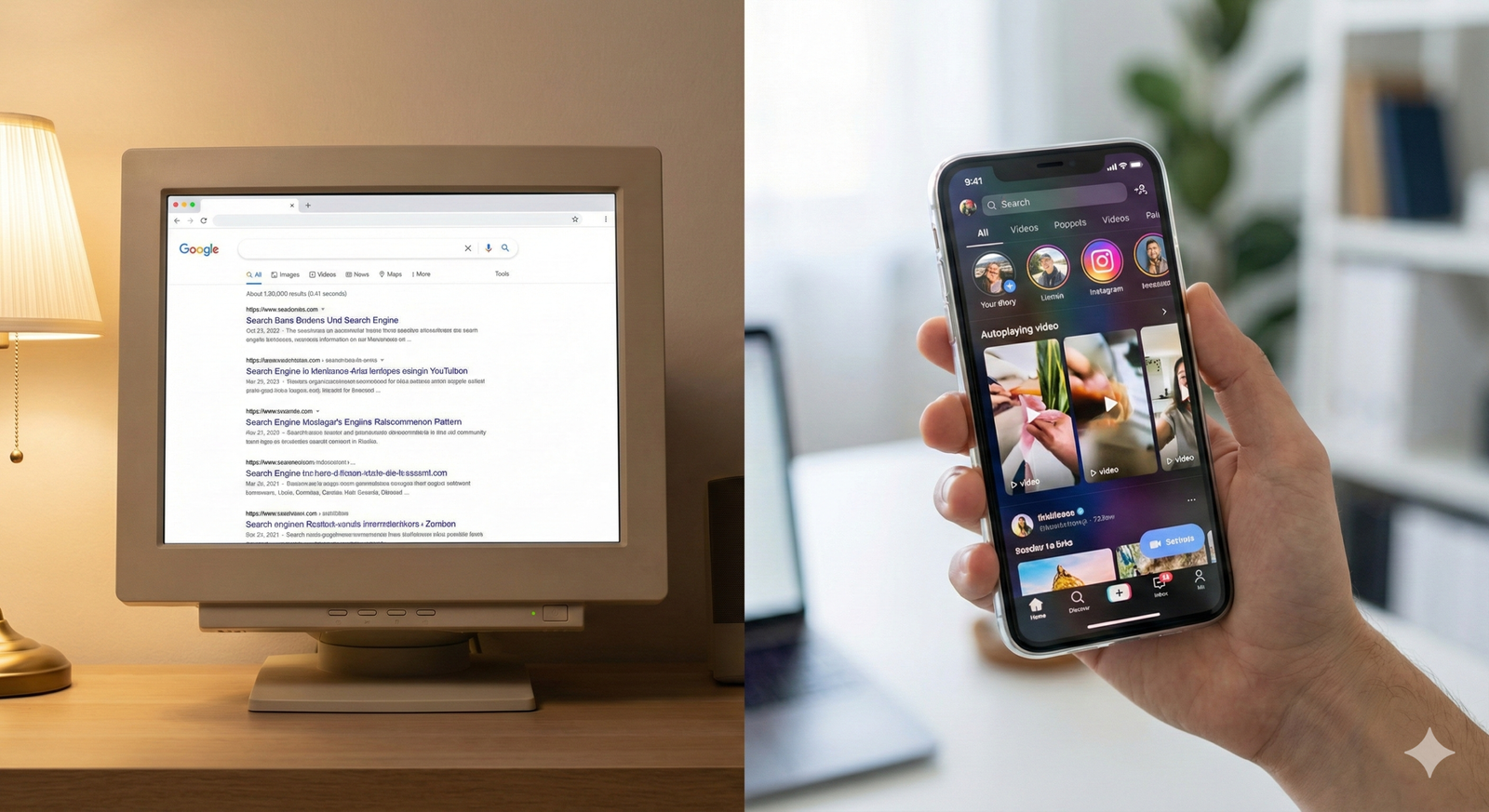
For two decades, “Googling it” was synonymous with searching. If you wanted a recipe, a restaurant recommendation, or a review of a new vacuum cleaner, you typed a query into a white box and scrolled through ten blue links. That monopoly on curiosity is breaking. We are witnessing a seismic shift in digital behavior known as social search.
The headline claiming the “death” of traditional SEO might seem hyperbolic, but for a growing demographic, the traditional search engine results page (SERP) is no longer the first port of call. Instead, users are turning to TikTok, Instagram, Pinterest, and YouTube to find answers. They aren’t looking for websites; they are looking for visual proof, human validation, and immediate vibes.
In this guide, social search refers to the use of social media platforms as primary search engines to discover information, products, and local businesses, bypassing traditional web indexes.
This shift forces marketers, business owners, and content creators to rethink visibility. Optimization is no longer just about metadata and backlinks; it is about cultural relevance, visual engagement, and algorithmic alignment within walled gardens. This article explores why this shift is happening, how social algorithms function as search engines, and how you can build a hybrid strategy that survives the fragmentation of search.
Key Takeaways
- The Shift is Generational but Spreading: While nearly 40% of Gen Z prefers TikTok/Instagram for search over Google, this behavior is bleeding into older demographics seeking visual verification.
- Intent Differs by Platform: Social search is driven by “vibes,” authenticity, and visual proof, whereas Google is still dominant for navigational and high-stakes informational queries (finance, medical).
- Keywords are now “Spoken”: On video platforms, algorithms index spoken audio, text overlays, and captions just as Google indexes meta tags.
- Engagement is the new Backlink: In social SEO, high retention rates and shares signal authority, replacing the traditional domain authority model.
- The “Death” is actually Fragmentation: Traditional SEO isn’t dying, but it is losing its monopoly. The future is a fragmented search landscape where you must optimize for multiple ecosystems simultaneously.
The Rise of Social Search: Why Users Are Leaving Google
To understand how to optimize for social search, we must first understand the user psychology driving the exodus from traditional search engines. The shift isn’t purely technological; it is deeply rooted in a desire for authenticity and efficiency.
1. The Trust Deficit and “SEO Spam”
For many users, traditional Google results have suffered from the “SEO-ification” of the web. A query for “best running shoes” often leads to affiliate marketing blogs filled with generic, AI-generated text and stock photos. The user has to wade through thousands of words of fluff to find a simple recommendation.
Social search offers an antidote: Human verification. When a user searches TikTok for “best running shoes,” they see a real person holding the shoe, bending the sole, and wearing it on a run. Even if the content is sponsored, the visual evidence provides a layer of trust that text on a website cannot match. Users feel they are getting advice from a peer rather than a faceless publisher.
2. The Demand for “Vibes” and Visual Context
Text-based results are terrible at conveying atmosphere. If you search for a “romantic dinner spot” on Google, you get a star rating and a menu link. If you search the same query on Instagram or TikTok, you see the lighting, the noise level, the plating of the food, and the dress code of the patrons.
This “vibe check” is crucial for lifestyle, travel, and hospitality queries. Younger users, in particular, treat the internet as a visual medium. They process information faster through 15-second video clips than through long-form blog posts.
3. Serendipity and the Discovery Loop
Traditional search is teleological—it assumes you know exactly what you want. You type a specific query to get a specific answer.
Social search is exploratory. A user might start searching for “kitchen organization” and end up buying a specific label maker they didn’t know existed because the algorithm suggested related content. This loop of search-to-discovery is much tighter on social platforms, making it a powerful driver for top-of-funnel awareness.
4. Speed and Digestibility
Social search results are often pre-digested. Instead of opening five different tabs to compare skincare routines, a user watches one video that aggregates the top three products. The “answer” is delivered immediately within the feed, removing friction from the user journey.
How Social Algorithms Function as Search Engines
The biggest mistake marketers make is treating social media solely as a distribution channel. In 2026, social platforms are sophisticated retrieval systems. They possess their own crawling, indexing, and ranking mechanisms that differ fundamentally from Google’s PageRank.
The Indexing of Video and Audio
Social platforms do not just look at your hashtags. They analyze the actual content of your media.
- Computer Vision: Algorithms scan the video frames to identify objects, settings, and logos. If you hold up a coffee cup, the AI recognizes “coffee” even if you don’t write it in the caption.
- Automated Speech Recognition (ASR): Every word spoken in a video is transcribed and indexed. If you say “how to fix a leaky faucet” in your video, you can rank for that keyword.
- Optical Character Recognition (OCR): Text overlays placed on the video (e.g., the text bubbles that pop up on screen) are readable by the algorithm.
Ranking Factors: Engagement vs. Authority
Traditional SEO relies on Authority (backlinks, domain age, expert authorship). Social SEO relies on Engagement Velocity.
- Google: “This page is trustworthy because many other trustworthy sites link to it.”
- TikTok/Instagram: “This content is relevant because users who searched for ‘X’ watched this video until the end, saved it, and shared it.”
This creates a lower barrier to entry. A brand new account with zero followers can rank at the top of a TikTok search result if the content perfectly satisfies the user’s intent and keeps them watching.
The Role of Personalization
Google results are personalized, but generally, everyone sees roughly the same top 10 links. Social search results are hyper-personalized based on the user’s “interest graph.” The results I see for “healthy dinner” might lean keto if I’ve watched keto videos previously, while yours might be vegan. Optimizing for social search means understanding that you are targeting specific communities rather than a universal keyword volume.
TikTok SEO: Optimization for the “For You” Page
TikTok has arguably done the most to disrupt the search landscape. Google executives have explicitly acknowledged that TikTok is their primary competitor for younger demographics.
1. Keyword Research for TikTok
You cannot use standard tools like Ahrefs or SEMrush for TikTok (though some integration is beginning to happen). You must use the native tools:
- The Search Bar Auto-Complete: Type your main topic and see what TikTok suggests. These are high-volume queries.
- Comment Sections: Look at the top videos in your niche. What questions are people asking in the comments? These are your long-tail keywords.
- Creative Center: TikTok’s own trend discovery tool shows which hashtags and songs are trending in your region.
2. The “SEO Sandwich” Technique
To maximize indexability on TikTok, apply the “SEO Sandwich” method to every video:
- Spoken Audio: Say your primary keyword within the first 3 seconds of the video.
- Text Overlay: Place the keyword on the screen using the native text tool (not a third-party editor, as native text is easier for the system to read).
- Caption & Hashtags: Write a natural sentence description including the keyword and 3-5 broad-to-niche hashtags.
3. Creating “Searchable” Content
Not all viral content is searchable. To rank for search, your content needs to be educational or answer-based.
- Hook: State the problem clearly (“Struggling to sleep? Here is a 2-minute fix”).
- Body: Deliver the value concisely.
- Payoff: Show the result.
- Loop: encourage a save. Saves are a massive ranking signal for search because they indicate the user wants to reference the content later—exactly like a bookmark.
What this looks like in practice: A law firm targeting “personal injury” shouldn’t just dance to trending audio. They should create a video titled “3 Things to Do Immediately After a Car Accident.” They speak the list, put the steps on screen, and use hashtags like #CarAccidentHelp and #LegalAdvice. This video becomes an evergreen asset that surfaces whenever a user searches that specific problem.
Instagram SEO: Maps, Hashtags, and Visual Discovery
Instagram has evolved from a chronological photo feed into a multifaceted search engine comprising the Explore page, Reels, and Maps.
1. Optimizing the Bio and Name Field
On Instagram, your profile is your homepage. The “Name” field (the bold text under your photo) is distinct from your @username and is fully searchable.
- Tip: If you are a hairstylist named Sarah, don’t just use “Sarah Jones” as your name. Use “Sarah Jones | Chicago Balayage Expert.” This ensures you appear when users search for “Chicago Balayage.”
2. Alt Text and Visual Analysis
Instagram allows you to add custom Alt Text to images for accessibility. While primarily for visually impaired users, this text tells the algorithm exactly what is in the image.
- Action: Always add custom Alt Text describing the image and including your keywords. Do not keyword stuff; describe the scene naturally.
3. Location and Map Search
Instagram Maps is a direct competitor to Google Maps for local discovery.
- Geotags: Every post must have a specific geotag.
- Stories: Post stories with location stickers. These often aggregate into the larger location story, giving you visibility to anyone checking that specific spot (e.g., a city park or a museum).
4. Hashtag Strategy: Quality over Quantity
The days of using 30 irrelevant hashtags are over. Instagram recommends 3-5 relevant tags.
- Categorization: Treat hashtags as filing cabinets. Use them to tell the algorithm exactly what category your post belongs to so it can serve it to people searching that category.
The Hybrid Strategy: Bridging Traditional and Social SEO
The “death” of traditional SEO is a misnomer; it is actually a fragmentation. Users might discover a brand on TikTok, verify it on Instagram, and then go to Google to make a purchase or read a return policy. Your strategy must be holistic.
1. SERP Saturation (The Barnacle Strategy)
Google is now indexing TikTok and Instagram videos directly in its search results. A query for “how to clean cast iron” on Google often displays a “Short Videos” carousel featuring TikToks.
- Strategy: By optimizing your social content, you are essentially getting a “double dip.” You rank on the social app and potentially on Google’s first page without writing a blog post.
2. Cross-Pollination of Keyword Data
Use Google trends to inform your TikTok strategy, and use TikTok trends to update your website content.
- From Google to Social: If you see high search volume for a specific question on Google, make a vertical video answering that exact question.
- From Social to Google: If a specific topic goes viral on your social channels, write a comprehensive deep-dive guide on your website to capture the traffic seeking more depth.
3. User-Generated Content (UGC) as SEO Fuel
Embed your top-performing social content onto your website.
- Dwell Time: Having a video on a landing page increases the time users spend on the site (Dwell Time), which is a positive ranking signal for traditional Google SEO.
- Trust: Social proof embedded on a checkout page increases conversion rates.
4. Brand Search Defense
When someone finds you on TikTok, their next step is often to search your brand name on Google to see if you are legitimate.
- Action: Ensure your “About Us” page and homepage are optimized for your brand name and clearly link back to your social profiles. You want to control the narrative when they make the jump from app to web.
Pitfalls and Common Mistakes in Social SEO
As businesses rush to adapt, many fall into traps that hurt their visibility across both ecosystems.
1. Neglecting Search Intent
Creating entertaining content is different from creating searchable content. “A Day in the Life” video is entertaining but rarely searchable. “How to structure your morning routine” is searchable.
- Correction: Balance your content calendar. Aim for 40% “Search/Educational” content (evergreen) and 60% “Trend/Entertainment” content (viral).
2. Using “Link in Bio” as a Crutch
Social algorithms hate sending users off-platform. If your caption just says “Link in bio for more,” the video often sees reduced reach.
- Correction: Provide the value in the video. The goal is to build trust so high that the user voluntarily clicks your profile. Do not hold the answer hostage behind a click.
3. Assuming Global Applicability (Localization)
Social feeds are often highly localized. If you are a global brand, a single account might struggle to rank in different regions due to language and cultural nuances.
- Correction: Use location-specific hashtags and, if resources allow, region-specific accounts or playlists to signal relevance to local users.
4. Ignoring the Audio Component
Many brands upload polished ads without spoken audio or trending sounds.
- Correction: Social search is audio-visual. If you don’t speak the keywords, you are missing 50% of the indexing potential.
Measuring Success: Metrics for Social Search
How do you track “ranking” on a platform that doesn’t have a traditional rank tracker?
1. Share-to-Like Ratio
Likes are vanity metrics. Shares indicate that the content was so valuable the user wanted to distribute it. High shares correlate strongly with higher search visibility.
2. Save Rate
This is the gold standard for social SEO. A “save” literally means “I want to find this again later.” It tells the algorithm your content is a reference material, which pushes it up in search rankings.
3. Traffic Source: Search
TikTok and YouTube analytics break down traffic sources. Monitor the percentage of viewers finding you via “Search” versus the “For You” feed. If your “Search” percentage is rising, your SEO strategy is working.
4. Share of Voice (SOV)
Manually search your target keywords. Do you appear in the top 6 spots? Are your competitors dominating the “Top” tab? Track this qualitative data monthly.
Who This Strategy Is For (And Who It Isn’t)
While social search is powerful, it is not a magic bullet for every industry.
This is critical for:
- B2C Retail & E-commerce: Fashion, beauty, home goods, gadgets.
- Local Businesses: Restaurants, gyms, salons, real estate agents.
- Travel & Hospitality: Hotels, tour operators, experience providers.
- Lifestyle Services: Personal trainers, coaches, interior designers.
This is less urgent (but still relevant) for:
- Complex B2B SaaS: While LinkedIn (a social search engine in its own right) is vital here, TikTok might be lower priority unless you have a strong educational angle.
- Highly Regulated Industries: Finance and Healthcare (YMYL – Your Money Your Life). Users still turn to Google for serious medical advice due to stricter verification standards, although “wellness” thrives on social.
- Emergency Services: If your basement is flooding, you call a plumber via Google Ads; you don’t search TikTok for a tutorial.
The Future: Multimodal and AI-Driven Discovery
The final piece of the puzzle is the integration of Generative AI. We are moving toward Multimodal Search, where a user can point their camera at a vegetable in the grocery store and ask, “What recipe can I make with this?”
- Google Lens & Circle to Search: Google is fighting back by making visual search seamless on Android and Chrome.
- TikTok’s AI Search: TikTok is testing features where AI summarizes search results, effectively answering queries without the user needing to watch a video.
This convergence suggests that the line between “Social Media” and “Search Engine” will vanish entirely. Future optimization will require a “Create Once, Optimize Everywhere” approach, where a single asset includes rich text, clear audio, and descriptive visuals to satisfy any algorithm that parses it.
Conclusion
Traditional SEO is not dead, but it has been demoted from “The Only Way” to “One of Many Ways.” The user journey has fractured. It is no longer a straight line from Google Search to Purchase. It is a messy, vibrant web of TikTok discoveries, Instagram verifications, and Reddit discussions.
To survive this shift, brands must stop viewing social media as a billboard and start viewing it as a library. You are not just broadcasting; you are cataloging answers.
Next Steps:
- Audit your social profiles: Are your bios searchable? Are you using location tags?
- Identify your top 10 keywords: Type them into TikTok and Instagram. Who is ranking? Why?
- Create 3 “SEO-First” Videos: Script three videos specifically to answer a common customer question, ensuring you speak the keywords and use text overlays. Measure their long-term performance against your trending content.
The death of the old way is the birth of a more authentic, visual, and human internet. Don’t just optimize for the bots; optimize for the people holding the phone.
FAQs
1. Is traditional website SEO still worth the investment? Yes, absolutely. Google still commands the majority of global search traffic, particularly for transactional, navigational, and complex informational queries. Social search captures discovery and lifestyle queries, but a website remains the owned asset where conversions happen and deep authority is established.
2. Can I use the same keywords for Google and TikTok? Generally, yes, but the phrasing often differs. Google queries tend to be shorter (“best retinol cream”). TikTok queries are often more conversational or problem-based (“how to fix acne scars with retinol”). You should adapt your keywords to match the natural language used on each platform.
3. Does follower count affect social search ranking? Follower count is less important for search ranking than engagement and relevance. A small account with highly relevant content and high retention rates can outrank a large account that creates generic content. The algorithm prioritizes the content’s ability to satisfy the searcher’s intent over the creator’s popularity.
4. How does privacy impact social search data? Privacy regulations make it harder to track users across apps, but social search creates “first-party data.” Because users are searching within the app, the platform knows exactly what they want without needing third-party cookies. This makes in-app targeting highly effective even in a privacy-first world.
5. What is “visual search” versus “social search”? Visual search (like Google Lens or Pinterest Lens) involves using an image as the search query. Social search involves using text or voice to search within a social network. However, the two are converging, as social platforms increasingly use visual recognition technology to index video content.
6. How often should I update old social posts for SEO? Unlike a blog post, you cannot easily edit a published video file. However, you can update captions and hashtags on Instagram and TikTok. If a trend resurfaces, revisiting high-performing old posts and updating the hashtags to current search terms can give them a second life.
7. Is YouTube considered social search or traditional search? YouTube is a hybrid. It is the world’s second-largest search engine (owned by Google) and functions very much like a video library. However, it also has social elements (comments, community tabs). YouTube SEO is closer to traditional Google SEO than it is to TikTok SEO, prioritizing titles, descriptions, and tags.
8. Can B2B companies really benefit from TikTok SEO? Yes, but the strategy is different. Instead of viral trends, B2B companies should focus on “Edu-tainment” and niche authority. Searching for Excel tips, coding tutorials, or marketing strategies yields massive views on TikTok. B2B buyers are people too, and they consume content on these apps.
9. What is the role of hashtags in 2026? Hashtags are moving from “distribution tools” to “categorization labels.” They help the algorithm understand what the content is about. Using 3-5 highly specific tags is better than using 30 generic ones. They are less about generating immediate reach and more about long-term indexability.
10. How do I track ROI from social search? ROI tracking is difficult because of “dark social” (sharing via private DMs). Use tracking parameters (UTMs) in your bio links. Additionally, use post-purchase surveys asking “How did you hear about us?” Many customers will say “TikTok” even if they eventually clicked a Google Ad to buy.
References
- Google Internal Data / TechCrunch: Google exec suggests Instagram and TikTok are eating into Search and Maps, TechCrunch. (Reference to Prabhakar Raghavan’s statement on Gen Z search habits). https://techcrunch.com/
- Hootsuite: Social Media Trends 2025: The Evolution of Social Search, Hootsuite Blog. (Insights on consumer behavior and platform updates). https://www.hootsuite.com/research/social-trends
- TikTok Newsroom: Understanding the TikTok Algorithm and Search, TikTok Official Newsroom. (Official documentation on how TikTok indexes content). https://newsroom.tiktok.com/
- Search Engine Land: The rise of TikTok as a search engine: What marketers need to know, Search Engine Land. (Analysis of search volume and keyword strategies). https://searchengineland.com/
- Instagram for Business: How Instagram Search Works, Instagram Business Blog. (Official guide on ranking signals for Explore and Search). https://business.instagram.com/blog/
- Pew Research Center: Teens, Social Media and Technology, Pew Research Center. (Demographic data on social media usage patterns). https://www.pewresearch.org/internet/
- HubSpot: The State of Consumer Trends Report, HubSpot. (Data on discovery channels and purchasing behavior). https://www.hubspot.com/state-of-marketing
- eMarketer: US Social Search Ad Spending Projections, eMarketer. (Financial data regarding the shift in ad spend to social search). https://www.insiderintelligence.com/