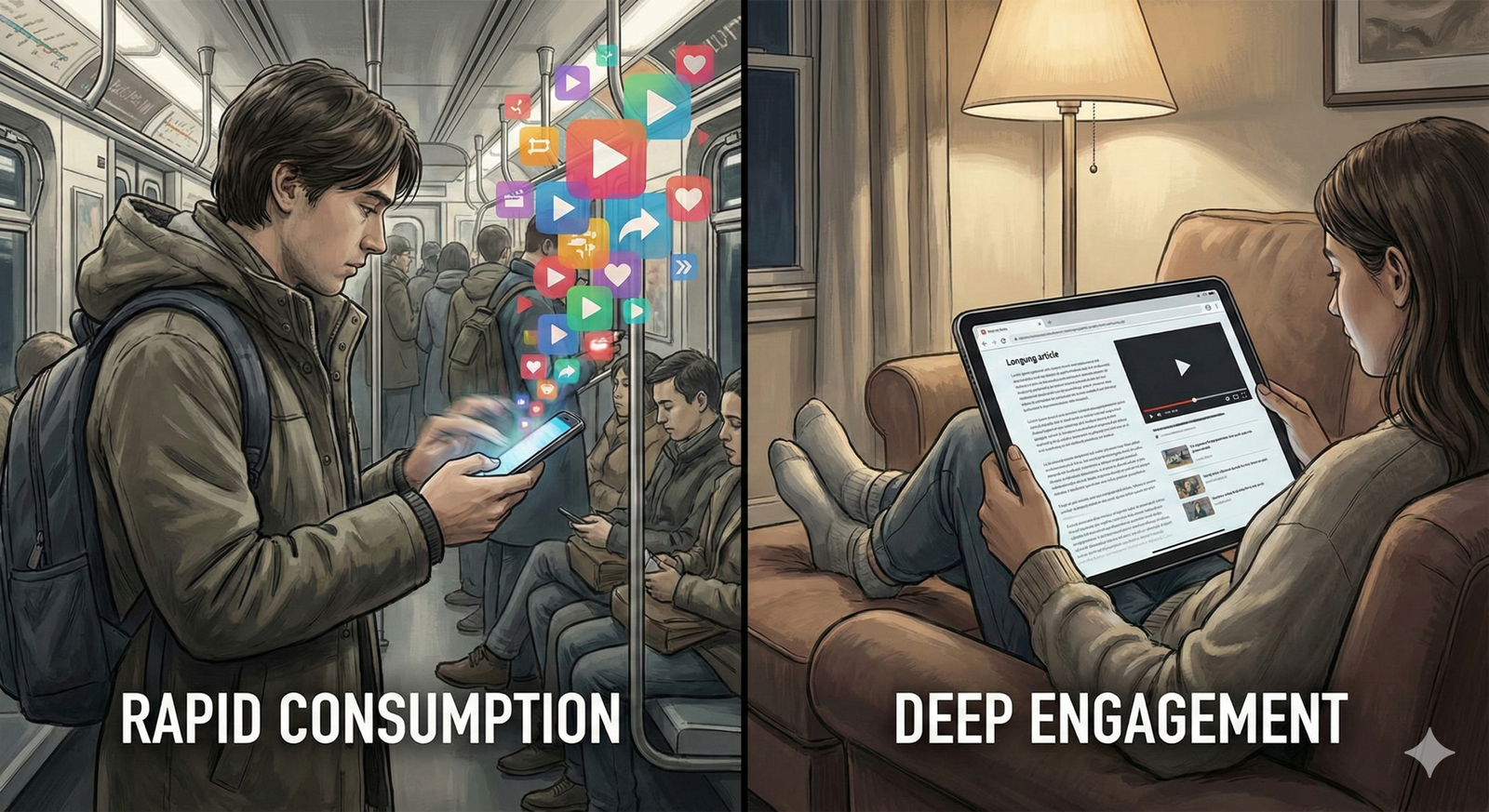
Social media has evolved from a digital town square into a bustling global marketplace. For years, platforms served primarily as discovery engines—places where users found inspiration before clicking a link to buy products elsewhere. That friction-heavy model is rapidly disappearing. As of 2026, the dominant shift in digital retail is the total integration of shopping into the social experience, characterized specifically by seamless checkout and native in-app purchasing.
This guide explores the current landscape of social commerce trends, dissecting how the removal of friction between “seeing” and “buying” is reshaping consumer behavior and business strategy. We will examine the mechanics of in-app purchasing, the platforms leading the charge, and the strategic pivots brands must make to thrive in an era where the storefront is everywhere.
Key Takeaways
- Friction is the Enemy: The primary driver of social commerce in 2026 is the elimination of clicks. Every step removed between discovery and purchase significantly increases conversion rates.
- Platform as Storefront: Social apps are no longer just traffic sources; they are full-fledged e-commerce platforms with integrated inventory, payment processing, and logistics tracking.
- Trust is Currency: As transactions move in-app, consumer trust in the platform’s security and the creator’s authenticity is as important as the product quality.
- Video is the Catalyst: Short-form video and live streams are the primary vehicles for seamless transactions, turning entertainment directly into revenue.
- Data Sovereignty Shifts: Moving sales to social platforms changes how brands collect customer data, requiring new strategies for retention and relationship building.
Who This Is For (And Who It Isn’t)
This guide is designed for:
- E-commerce Managers and Marketers: Professionals looking to diversify sales channels beyond their owned websites and Amazon.
- Direct-to-Consumer (DTC) Founders: Business owners seeking to capitalize on impulse buying behaviors inherent to social media.
- Social Media Strategists: Creators and agencies needing to understand the technical and commercial layers of the content they produce.
This guide is NOT for:
- Passive Observers: Those looking for basic definitions of social media marketing without the commercial integration aspect.
- Strictly B2B Industrial Sellers: While B2B social selling exists, this article focuses on the high-volume, B2C/DTC transactional trends occurring on major consumer platforms.
The Evolution: From “Link in Bio” to Native Checkout
To understand the magnitude of current social commerce trends, we must recognize the limitations of the past. Historically, social commerce was a game of referral traffic. A user would see an ad on Instagram, click a “Learn More” button, wait for a mobile browser to load a brand’s website, navigate a pop-up, add an item to a cart, and finally attempt to enter credit card details on a small screen. This process, known as the “click-out” model, was fraught with drop-off points.
The Problem with Friction
In the economy of attention, friction kills conversion. Studies consistently show that mobile conversion rates drop significantly with every additional second of load time and every extra field in a checkout form. The “Link in Bio” era required high intent from the buyer to overcome these hurdles.
The 2026 Reality: Native Commerce
Today, the goal is “zero-click” external navigation. Platforms have internalized the entire funnel.
- Discovery: Algorithmic feeds serve products based on interest graphs.
- Consideration: Influencer reviews, comments, and live demos provide social proof instantly.
- Transaction: Payment credentials stored in the social app (or linked digital wallets) allow for one-tap purchasing.
In this model, the social app is the internet for the consumer. They do not leave the walled garden to buy; they buy to enhance their experience within the garden.
Defining Seamless Checkout and In-App Purchasing
While often used interchangeably, these terms represent distinct technical and experiential components of the modern social shopping ecosystem.
What is In-App Purchasing?
In-app purchasing (IAP) in the context of social commerce refers to the infrastructure that allows a transaction to occur entirely within the social media application’s environment. The platform acts as the merchant of record or the facilitator, processing the payment and passing the order details to the brand for fulfillment.
Key characteristics:
- Universal Login: Users do not create a new account for every brand; they are logged in via their social profile.
- Unified Interface: The look and feel of the product page and checkout screen remain consistent with the app’s UI, reducing cognitive load.
- Stored Credentials: Shipping addresses and payment methods are saved at the platform level.
What is Seamless Checkout?
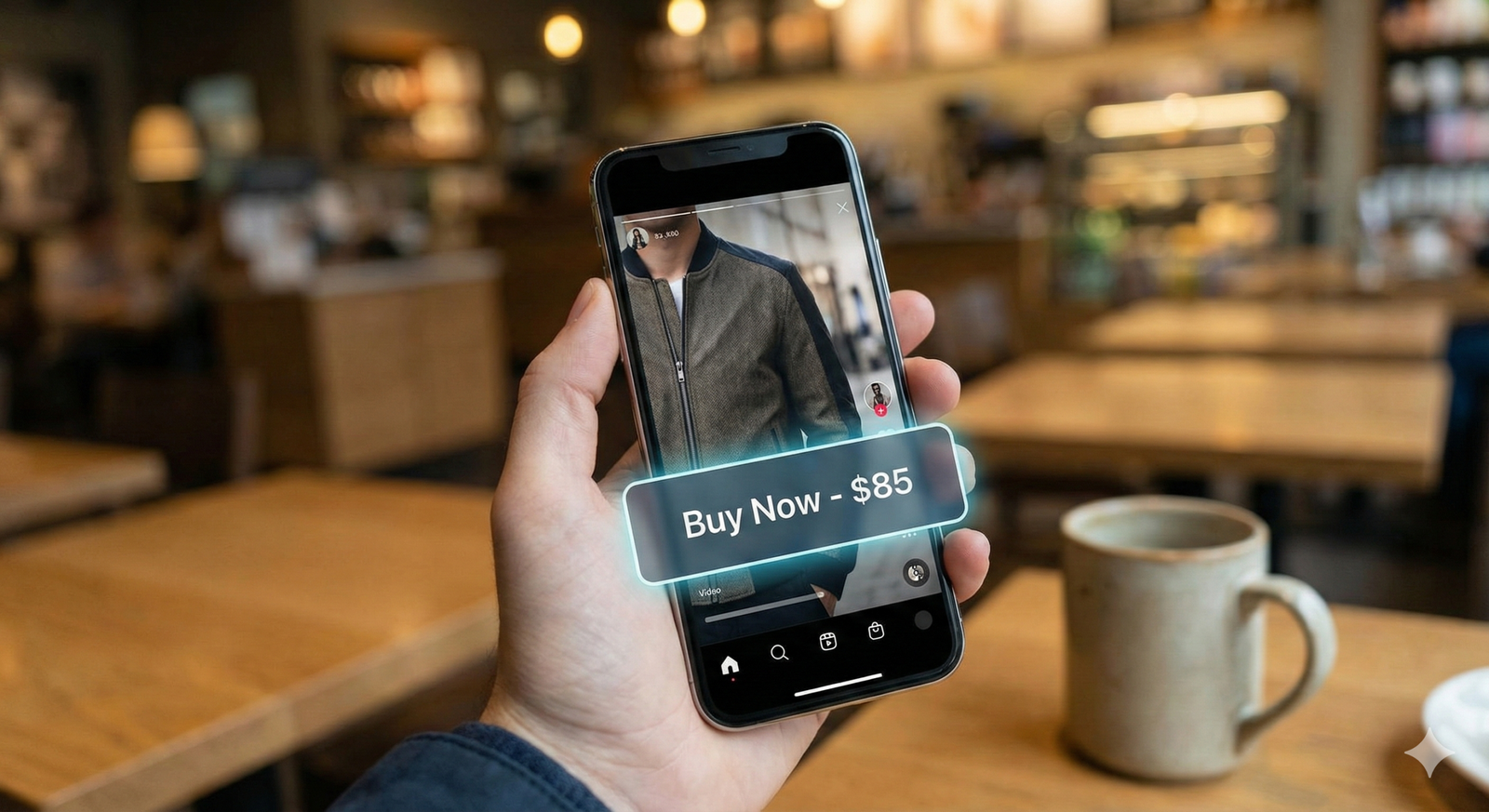
Seamless checkout is the quality or outcome of a well-implemented in-app purchase system. It describes a user flow that feels instantaneous and intuitive. It is the reduction of the buying process to its absolute minimum viable steps.
The “Seamless” Standard:
- Trigger: User taps a product tag in a video.
- Review: A bottom-sheet pops up with product details (size, color) without stopping the video completely.
- Action: User taps “Buy with [Platform] Pay.”
- Confirmation: Authentication (FaceID or TouchID) confirms the purchase.
- Resume: The user returns immediately to their content feed.
This loop can take less than 15 seconds.
Key Platforms Driving Social Commerce Trends
As of early 2026, the landscape is dominated by a few key players who have aggressively built out their commerce infrastructure.
1. TikTok Shop: The Engine of Viral Commerce
TikTok has arguably been the most disruptive force in social commerce. By combining its hyper-accurate discovery algorithm with robust shop features, it created “Shoppertainment.”
- Video Shopping Ads: These allow brands to make their in-feed video ads shoppable.
- Creator Affiliates: TikTok’s marketplace connects brands with creators who can sell products directly in their videos for a commission, with attribution handled automatically by the app.
- The “Shop” Tab: A dedicated marketplace feed that competes directly with Amazon, offering personalized product recommendations based on watch history.
2. Meta (Instagram and Facebook): The Visual Catalog
Meta continues to refine its commerce offerings, focusing on high-aesthetic brands and community-driven sales.
- Instagram Checkout: Allows users to buy products from drops and influencer posts without leaving the app. It relies heavily on the visual appeal of “Shoppable Posts.”
- Facebook Shops: Acts as a customizable digital storefront that unifies the experience across both Instagram and Facebook/Messenger.
- Messaging Commerce: A growing trend where transactions are finalized via DM (Direct Message) automation on WhatsApp and Messenger, particularly popular in international markets.
3. YouTube (Google): The Long-Form Convertor
YouTube utilizes its massive library of review content and long-form tutorials to drive sales.
- Shopping Affiliate Program: Creators can tag products from participating merchants in their videos and Shorts.
- Live Shopping: YouTube leverages its strength in live streaming to host shopping events where viewers can buy pinned products in the chat.
4. Pinterest: The Planner’s Paradise
Pinterest differs because its users specifically come to the platform to plan purchases (home decor, weddings, fashion).
- Mobile Deep Links: While Pinterest has experimented with native checkout, it also excels at deep linking users directly to the specific product checkout page on a retailer’s app, bridging the gap between social and native app commerce.
The Mechanics of Frictionless Commerce
How does this actually work under the hood? Understanding the mechanics is crucial for brands attempting to integrate their systems.
1. Catalog Integration
Brands must sync their product catalogs with social platforms. This is rarely done manually anymore. Middleware solutions and ecommerce platforms (like Shopify, BigCommerce, or Salesforce Commerce Cloud) enable real-time syncing of:
- Inventory Levels: Preventing overselling is critical. If a viral video causes a spike in sales on TikTok, the brand’s main warehouse must know instantly.
- Pricing: Dynamic pricing updates must reflect across all social storefronts simultaneously.
- Product Metadata: Titles, descriptions, and images must be formatted for the mobile-first social interface.
2. Payment Gateways and Digital Wallets
The “seamless” aspect relies heavily on the proliferation of digital wallets.
- Apple Pay / Google Pay: Social apps integrate these OS-level wallets. Because biometric authentication (FaceID/TouchID) is standard, consumers don’t need to type passwords or CVV codes.
- Buy Now, Pay Later (BNPL): Integration with services like Klarna or Afterpay directly within the social checkout flow has lowered the barrier for higher-ticket items.
3. Order Management Systems (OMS)
Once a purchase occurs in-app, the order data must flow back to the brand. This is often the point of failure for inexperienced sellers.
- The Flow: Social App $\rightarrow$ API Connector $\rightarrow$ Brand OMS $\rightarrow$ Warehouse (3PL).
- Tracking: Tracking numbers generated by the warehouse must be pushed back to the social app so the customer gets the notification where they bought the item.
The Role of Trust and Security
With in-app purchasing, the social platform asks the user to trust them with credit card data, rather than the individual brand. This centralization of trust has pros and cons.
The “Trust Transfer” Effect
Consumers may not know a new boutique brand, but they know and trust Instagram or TikTok (to varying degrees). When the platform handles the checkout:
- Security Perception: Users feel safer knowing their financial data isn’t being scattered across dozens of unknown websites.
- Purchase Protection: Platforms often offer their own purchase protection programs (refunds for non-delivery), acting as an arbitrator between buyer and seller.
Fraud and Counterfeits
However, the ease of setting up social shops has led to issues with low-quality drop-shippers and counterfeit goods.
- Vetting: Platforms are implementing stricter verification for merchants to obtain “verified shop” badges.
- Social Proof: In-app reviews are becoming critical. Unlike reviews on a brand website (which can be curated), platform reviews are often harder for merchants to manipulate.
Live Shopping: The Real-Time Checkout Revolution
One of the most potent applications of seamless checkout is Live Shopping (or Livestream Commerce). Originating in China, this trend has matured globally by 2026.
Why It Works
Live shopping creates urgency. A host demonstrates a product, answers questions in real-time, and drops limited-time discounts.
- The “Pinned Product”: As the host speaks about an item, it pops up on the screen.
- One-Tap Buy: Viewers can tap the pinned item, select a size, and buy without the stream stopping (audio often continues, or the video minimizes to a picture-in-picture mode).
Humanizing the Transaction
Live shopping replaces the cold interface of a website with a human connection. The “checkout” feels less like a form-filling exercise and more like asking a sales associate to ring you up.
Benefits for Brands
Why should a business surrender control of the checkout experience to a third-party platform?
1. Higher Conversion Rates
This is the single biggest driver. By removing the “browser switch,” brands see significantly lower cart abandonment. Impulse purchases—decisions made in seconds—thrive in this environment.
2. Access to Younger Demographics
Gen Z and Gen Alpha treat social media as their primary search engine and shopping mall. Being native to these platforms is not optional for brands targeting under-35s.
3. Reduced Customer Acquisition Cost (CAC)
While platform fees apply, the increased conversion rate often improves the overall Return on Ad Spend (ROAS). If you don’t lose 50% of your traffic during the click-out process, your ads work harder.
4. Viral Inventory Velocity
Native checkout facilitates viral moments. If a product trends, the friction-free nature of the purchase allows thousands of units to move in hours, capitalizing on the peak of the hype cycle.
Challenges and Pitfalls
It is not all upside. There are significant trade-offs to relying on social commerce trends like in-app purchasing.
1. Loss of Customer Data (The “Walled Garden” Problem)
When a transaction happens on a social app, the platform owns the primary relationship.
- Limited Data: Brands may receive shipping info but might be restricted from getting email addresses for future marketing, or pixel data might be less granular.
- Retargeting Limits: You cannot easily build lookalike audiences based on website behavior if the behavior happened off-site.
2. Margin Erosion
Social platforms charge transaction fees (often ranging from 2.9% to 5% or more per transaction). Combined with the cost of ads and potential influencer commissions, margins can be squeezed tight.
3. Inventory Fragmentation
Managing stock across TikTok, Instagram, Amazon, and your own Shopify store requires sophisticated inventory management. “Overselling” (selling an item you don’t have) is a quick way to get banned from social marketplaces.
4. Brand Dilution
A standardized checkout form means less opportunity to brand the experience. You cannot upsell with a custom-designed “complete the look” module or offer a branded unboxing experience digitally.
Strategic Framework: How to Implement
For brands ready to embrace seamless checkout, here is a strategic roadmap.
Phase 1: Infrastructure Readiness
Before enabling the “Shop” button:
- Audit your tech stack: Does your inventory system support real-time API syncing?
- Clean your data: Ensure product images are high-res and mobile-optimized (vertical formats preferred).
- Pricing strategy: Decide if you will absorb the platform fees or price slightly higher on social channels (risky, as savvy users compare).
Phase 2: The “Test and Learn” Pilot
Do not launch on all platforms at once.
- Pick one platform where your audience is most active (e.g., Instagram for fashion, TikTok for gadgets).
- Select a “capsule” collection of products—items that are visually demonstrable and have a lower price point (impulse friendly).
- Run ads specifically optimizing for “Shop Purchases” rather than “Link Clicks.”
Phase 3: Content and Creator Integration
In-app purchasing dies without content.
- Tagging: Every post must be tagged. Make it a habit.
- Affiliates: Open your shop to creators. Let them create the content for you. Their endorsement + seamless checkout is a potent combination.
- Live Stream Schedule: Commit to a regular cadence of live selling to build a habit with your followers.
Phase 4: Post-Purchase Experience
Since you control less of the pre-purchase experience, over-index on the post-purchase.
- Packaging: Make the physical unboxing incredible to encourage user-generated content (UGC).
- Inserts: Use physical package inserts (QR codes, discount cards) to drive the next purchase to your owned website, reclaiming the customer relationship.
Examples of Social Commerce in Action
Case Study 1: The Beauty Brand Drop
A clean beauty brand launches a new lip tint on TikTok Shop.
- Strategy: They send 500 units to micro-influencers one week before launch.
- Launch Day: Influencers post “Get Ready With Me” videos using the tint. Each video has a yellow shopping cart anchor link.
- Result: Viewers watching the videos see the transformation and buy immediately via Apple Pay within TikTok. The brand sells out 10,000 units in 4 hours.
Case Study 2: The Apparel “Live” Event
A streetwear brand uses Instagram Live.
- Strategy: The founder hosts a stream showing the fit and fabric of a new hoodie.
- Interaction: A viewer asks, “Is the medium oversized?” The founder tries on the medium live.
- Conversion: The viewer taps the pinned product and buys. The trust gap was bridged instantly by the live interaction.
Future Outlook: What to Expect Beyond 2026
The trajectory of social commerce suggests deeper integration and smarter AI.
- AI Personal Shopping Agents: We will likely see AI agents within social apps that negotiate prices or curate bundles for users based on their viewing habits.
- AR Commerce: Augmented Reality (AR) filters that allow virtual “try-ons” (glasses, makeup, sneakers) will integrate directly with checkout. “Looks good? Buy it now.”
- Voice Commerce Integration: As social apps integrate more with smart glasses and wearables, voice-activated purchasing (“Hey, buy that shirt he’s wearing”) may become viable.
Conclusion
Social commerce trends in 2026 are defined by the death of the browser tab. Seamless checkout and in-app purchasing have transformed social media from a marketing channel into a sales channel. For businesses, this shift requires a willingness to meet the customer where they are, even if it means sacrificing some control over data and margins.
The brands that win will be those that view their social profiles not as billboards, but as flagship stores. They will master the art of blending entertainment with transaction, creating a shopping experience so fluid that the customer hardly notices they’ve made a purchase until the confirmation notification slides down their screen.
Next Steps:
- Identify your top-performing social channel.
- Investigate the requirements to enable native checkout on that specific platform.
- Run a 30-day pilot with a specific product set to measure conversion lift versus your standard website traffic.
Frequently Asked Questions (FAQs)
Q: Is social commerce the same as e-commerce?
A: Not exactly. E-commerce is a broad term for buying and selling online. Social commerce is a subset of e-commerce specifically involving transactions that take place entirely within or heavily influenced by social media platforms.
Q: Are transaction fees higher on social apps than on my website?
A: Generally, yes. While a typical credit card processor charges around 2.9% + $0.30, social platforms may charge a “selling fee” that can range from 5% to higher depending on the category and platform incentives. You must factor this into your margin analysis.
Q: Is it safe for users to store credit cards on social apps?
A: Major platforms (Meta, TikTok, Google) invest billions in security and are PCI DSS compliant. In many ways, using a centralized wallet on a major platform is safer for users than entering card details into dozens of small, unknown merchant websites.
Q: Can I still collect customer emails with in-app purchasing?
A: It depends on the platform. Some platforms share the customer email for marketing purposes if the customer opts in; others only provide it for order notifications. You often have less data ownership than on your own site.
Q: Does in-app purchasing work for B2B?
A: It is primarily designed for B2C (Business to Consumer). B2B sales usually require complex invoicing, bulk pricing, and longer sales cycles that do not fit the “impulse buy” model of seamless social checkout.
Q: How do I handle returns for social commerce orders?
A: Usually, you define the return policy, but the platform facilitates the request. The customer requests a return in the app, and you (the merchant) approve it and provide a label, or the platform automates this based on your settings.
Q: What is the biggest mistake brands make with social shops?
A: The biggest mistake is “setting and forgetting.” Social shops require active management—refreshing collections, updating imagery, and ensuring inventory stays synced. A stagnant shop signals a dead brand to the algorithm.
Q: Will social commerce replace websites?
A: Unlikely. Websites remain the hub for brand identity, SEO, and full data ownership. Social commerce serves as a powerful satellite location or franchise that captures a specific type of traffic that might not otherwise reach your site.
References
- TikTok Shop Academy. (2025). Merchant Guidelines and Best Practices. TikTok. https://shop.tiktok.com/ merchant-support
- Meta for Business. (2025). About Instagram Checkout and Shops. Meta. [suspicious link removed]
- eMarketer. (2025). Social Commerce Forecasts and Trends 2026. Insider Intelligence. https://www.emarketer.com/
- Shopify. (2025). The Future of Commerce: Social Selling Report. Shopify Research. https://www.shopify.com/research
- Harvard Business Review. (2024). The Psychology of Frictionless Commerce. HBR.org. https://hbr.org/
- Pinterest Business. (2025). Shopping on Pinterest: Product Specs. Pinterest. https://business.pinterest.com/ Let me know if you would like me to draft a specific “Pilot Plan” checklist for launching your first TikTok Shop capsule collection.