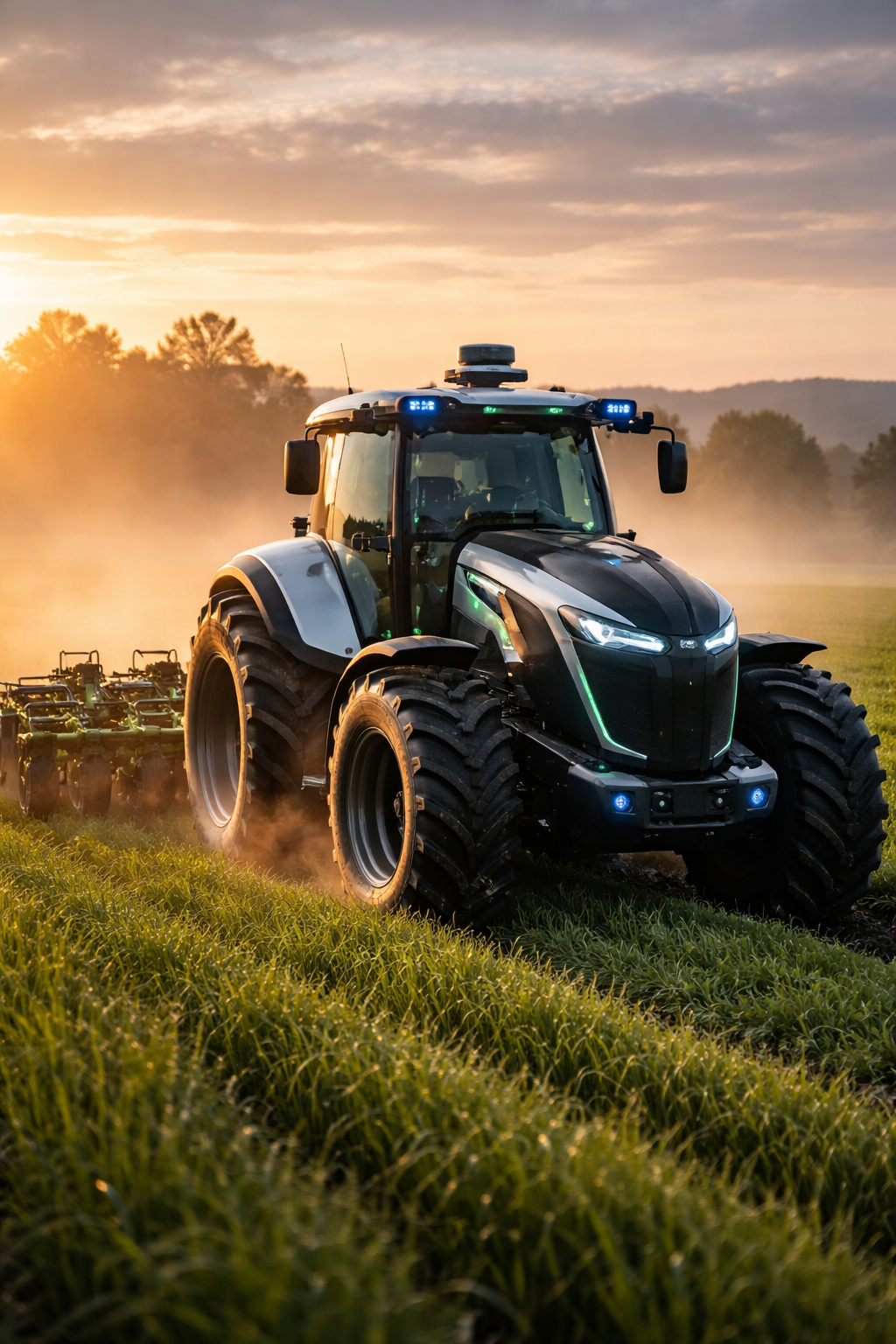
The silhouette of the lone farmer on a tractor at sunrise has been the symbol of American grit for a century. But as of March 2026, that silhouette is changing. In many fields across the globe, the tractor is still there, and the sun is still rising—but the cab is empty. Agricultural robotics has moved from the realm of science fiction and experimental university plots into the mud and grit of commercial production.
This transition isn’t just about “cool gadgets.” It is a fundamental shift in how we interact with the Earth to produce food. Driven by a global labor shortage, the need for sustainable practices, and an exploding global population, automated planting and harvesting systems are becoming the backbone of the modern farm. In this guide, we will explore the nuances of this “Silicon Valley meets the Central Valley” revolution, detailing the technology, the economic impact, and the practical steps for implementation.
Key Takeaways
- Labor Efficiency: Robotics address the critical 20–30% labor gap currently facing the global agricultural sector.
- Precision and Yield: Automated seeding reduces seed waste by up to 15% through centimeter-accurate placement.
- Sustainability: Robotic harvesters and weeders allow for “per-plant” management, drastically reducing the need for blanket chemical applications.
- Scalability: Small-scale “swarm” robotics are making automation accessible to family farms, not just industrial giants.
Who This Is For
This deep dive is designed for commercial growers looking to modernize their operations, agricultural investors seeking to understand the “Robot as a Service” (RaaS) model, and tech enthusiasts interested in the real-world application of AI and computer vision.
1. The Evolution of the Automated Field
To understand where we are in 2026, we must look at where we started. Agriculture has always been a race between human energy and mechanical assistance. We have moved from the horse-drawn plow to the combustion engine, and now to the Autonomous Era.
The primary driver for the current robotic surge is the “Three Ds”: tasks that are Dull, Dirty, or Dangerous. Planting thousands of acres with pinpoint accuracy is dull; harvesting in 100-degree heat is dirty; and handling heavy machinery for 18 hours straight is dangerous.
The Precision Agriculture Foundation
Before we had robots, we had Precision Agriculture (PA). PA used GPS and satellite imagery to give farmers a “macro” view of their fields. Agricultural robotics takes this a step further by providing a “micro” view. Instead of treating a 100-acre field as a single unit, a robot treats each of the 500,000 plants in that field as an individual.
2. Automated Planting: The Foundation of the Season
Planting is the most critical window in the farming calendar. A mistake in April can ruin a harvest in October. Automated planting systems are designed to maximize “emergence”—the percentage of seeds that successfully sprout and grow.
Autonomous Tractors and Planters
The industry leaders, such as John Deere and CNH Industrial, have transitioned from “driver-assist” to “fully autonomous” units. These machines use a combination of:
- RTK-GPS: Real-Time Kinematic GPS provides positioning accuracy down to 2.5 centimeters.
- Lidar and Radar: These sensors allow the machine to detect obstacles (like a stray dog or a fallen branch) and stop instantly.
- Automated Downforce: Sensors on the planter arms detect soil hardness and adjust the pressure in real-time to ensure every seed is planted at the exact same depth.
Drone-Based Seeding
In areas with difficult terrain or for cover-cropping, heavy machinery can’t always go where it’s needed. Seeding drones are now capable of carrying up to 100 pounds of seed, using “seed cannons” to fire seeds into the soil with enough force to ensure contact without tilling. This is particularly useful in reforestation and “no-till” farming, which helps sequester carbon in the soil.
The Role of Soil Sensors
Modern robotic planters don’t just drop seeds; they “read” the soil. Integrated sensors measure moisture, temperature, and organic matter as the machine moves. This allows the robot to adjust the “population” (how many seeds per acre) on the fly. In a dry patch, it might plant fewer seeds to ensure each plant has enough water; in a rich, moist patch, it increases the density to maximize yield.
3. Robotic Harvesting: The Holy Grail of Ag-Tech
Harvesting is significantly more difficult to automate than planting. While a seed is a uniform object, a strawberry is delicate, hidden behind leaves, and varies in ripeness.
Soft Robotics and “The Human Touch”
The biggest breakthrough in harvesting has been in soft robotics. Early robotic grippers would crush delicate produce. Today’s harvesters use silicone-filled “fingers” or vacuum-based suction cups that mimic the gentleness of a human hand.
- Fruit Picking (Apples/Citrus): Modern harvesters use “vacuum tubes” and computer vision to identify ripe fruit, reach into the canopy, and gently suck the fruit off the branch without bruising.
- Berry Harvesting: Companies like Harvest CROO use massive platforms that straddle strawberry rows, using 16 robotic pickers to harvest an entire field in a fraction of the time a human crew would take.
Computer Vision and Ripeness Detection
A robotic harvester is only as good as its “eyes.” Using Hyperspectral Imaging, robots can see light frequencies invisible to the human eye. This allows them to detect sugar content (Brix levels) and internal bruising through the skin of the fruit. As of March 2026, these systems can differentiate between “ripe today,” “ripe in two days,” and “overripe” with 98% accuracy.
Grain Harvesting: The Autonomous Combine
In row-crop farming (corn, soy, wheat), the challenge isn’t delicacy; it’s throughput. Autonomous combines now coordinate with autonomous “grain carts.” When the combine is full, it signals the grain cart, which drives itself alongside the moving combine. The combine unloads its grain without ever stopping, increasing efficiency by nearly 20% during the high-pressure harvest window.
4. The Brains Behind the Bronze: AI and Farm Management
A robot without AI is just a programmed tool. The true power of agricultural robotics lies in the software.
Neural Networks for Weed vs. Crop
One of the most impressive applications is Laser Weeding. Instead of spraying a field with glyphosate (Roundup), a robot moves through the rows, uses a neural network to identify weeds among the crops, and fires a high-energy laser to incinerate the weed’s growing point.
- The Result: 0% chemical usage for weed control and no soil disturbance.
Digital Twins
Many farms now utilize “Digital Twins”—virtual replicas of the physical farm. Data from robotic planters and harvesters is uploaded to the cloud to create a living map. Farmers can “replay” the planting season in a simulation to see why certain areas underperformed, allowing for better decision-making the following year.
Connectivity Challenges
A major hurdle for these “brains” is rural connectivity. In many parts of the world, 5G is non-existent. The solution has come through satellite internet providers like Starlink and the development of “Edge Computing,” where the robot does all the heavy processing on-board rather than relying on a constant cloud connection.
5. Economic Impact and the “Robot as a Service” (RaaS) Model
The “sticker shock” of a $500,000 autonomous harvester is the biggest barrier for the average farmer. To solve this, the industry has pivoted to Robot as a Service (RaaS).
How RaaS Works
Instead of buying the robot, the farmer pays per acre or per pound of produce harvested. This shifts the cost from a “Capital Expenditure” (buying a machine) to an “Operating Expense” (paying for a service). The tech company remains responsible for maintenance, software updates, and transporting the robots to the field.
| Feature | Traditional Ownership | Robot as a Service (RaaS) |
| Upfront Cost | Very High ($250k – $1M+) | Low (Subscription/Per-acre) |
| Maintenance | Farmer’s Responsibility | Provider’s Responsibility |
| Tech Obsolescence | High (Machine devalues) | Low (Provider updates hardware) |
| Scalability | Limited by Fleet Size | Easy to add units |
Labor Mitigation
As of 2026, the agricultural sector continues to struggle with an aging workforce and shifting migration patterns. Robotics aren’t just “taking jobs”; they are filling roles that are currently vacant. In many cases, one skilled technician managing a fleet of five robots replaces twenty manual laborers, allowing those workers to move into higher-paying, less physically demanding roles in the tech maintenance side of the farm.
6. Environmental and Social Sustainability
Sustainability is no longer a buzzword; it’s a regulatory requirement in many regions. Agricultural robotics offer several environmental “wins”:
- Reduced Soil Compaction: Large, heavy tractors crush the soil, making it harder for roots to grow and water to penetrate. Smaller, lighter “swarm” robots can perform the same tasks without compacting the earth.
- Chemical Reduction: By targeting individual weeds or pests (Precision Spraying), robots can reduce pesticide and herbicide use by up to 90%.
- Energy Efficiency: Many new robotic platforms are fully electric, allowing farms to power their “fleet” using on-site solar or wind energy, moving toward a carbon-neutral farm.
Safety Note: While autonomous machinery is designed with multiple redundant sensors, humans should never enter a “geo-fenced” autonomous zone without first disabling the fleet’s active mode. Always follow manufacturer-specific safety protocols regarding remote kill-switches.
7. Common Mistakes in Adopting Ag-Robotics
Even the best technology fails if implemented poorly. Here are the most common pitfalls farmers encounter:
Mistake 1: Ignoring Data Integration
A robot that plants seeds but doesn’t talk to the harvester is only half-useful. Many farmers buy “siloed” technology. Ensure your equipment uses open-source standards (like ISOBUS) so that data flows seamlessly between different brands of machinery.
Mistake 2: Underestimating “The Learning Curve”
The first year of automation is rarely the most profitable. There is a steep learning curve in managing the software and understanding the machine’s limitations in varying weather conditions (e.g., mud vs. dry dust).
Mistake 3: Poor Field Preparation
Robots love “clean” environments. If your fields have hidden stumps, large rocks, or inconsistent row widths, the robot will frequently trigger its safety stops. Preparing the field physically is just as important as setting up the software.
8. The Future: Toward “Autonomous Ecosystems”
By the end of this decade, we expect to see autonomous ecosystems. This isn’t just one robot planting; it’s a swarm.
- Scouting Drones identify a pest outbreak.
- Autonomous Sprayers are dispatched only to the affected square meters.
- Automated Irrigation adjusts based on real-time transpiration data from the plants.
- Market-Linked Harvesters wait to pick produce until the exact moment a buyer is secured, ensuring zero food waste.
Conclusion
The integration of robotics into agriculture is not merely a trend; it is a necessity for the survival of the global food system. As of March 2026, we are witnessing the “unbundling” of the tractor. What was once one giant machine controlled by one human is becoming a coordinated dance of smaller, smarter, and more efficient mechanical assistants.
For the grower, the benefits are clear: higher yields, lower chemical costs, and a solution to the perennial labor crisis. However, the transition requires a shift in mindset. Farming is becoming as much about “bits and bytes” as it is about “soil and seeds.” The most successful farmers of the next decade will be those who can manage a fleet of robots with the same intuition that their grandparents used to manage a team of horses.
Next Steps for Implementation:
- Audit your labor costs: Identify the tasks that cost you the most in manual man-hours.
- Check your connectivity: Ensure your fields have the minimum bandwidth required for RTK-GPS or satellite-based control.
- Start small: Look into RaaS options for specialized tasks like weeding or scouting before committing to full-scale autonomous planting.
Would you like me to generate a specific cost-benefit analysis template for transitioning a 500-acre corn farm to autonomous planting?
FAQs
1. Will robots replace all human farmworkers?
No. While robotics are excellent at repetitive, physical tasks, they lack the nuanced judgment of a human farmer. Humans are still required for strategic decision-making, mechanical maintenance, and managing the complex biological variables that no AI can fully predict yet. The role of the farmworker is evolving from manual labor to “technical fleet management.”
2. How do these robots handle bad weather?
Most modern agricultural robots are rated for IP67 or higher, meaning they are dust and water-resistant. However, extreme conditions like deep mud or heavy fog can still hamper performance. Computer vision can “struggle” in heavy rain, and many autonomous systems are programmed to safely park themselves if their sensors become too obscured to operate safely.
3. Is robotic harvesting only for large-scale industrial farms?
While large farms were the early adopters, the “Swarm” model and “Robot as a Service” (RaaS) have made this technology accessible to mid-sized and even small family farms. Smaller robots are often cheaper to maintain and more flexible for diverse crop types than traditional heavy machinery.
4. What happens if the robot’s GPS signal is lost?
Safety is the priority. If an autonomous machine loses its high-precision GPS (RTK) signal, it is programmed to execute a controlled stop immediately. Many systems now use “dead reckoning” (using wheel sensors and gyroscopes) to move to a safe standby position if the signal is interrupted briefly.
5. How long is the ROI (Return on Investment) for agricultural robotics?
Under the RaaS model, ROI can be almost immediate as it replaces a direct labor expense. For capital purchases, the average ROI typically ranges between 3 to 5 years, depending on the crop value, the size of the operation, and the reduction in chemical/seed waste.
References
- USDA (U.S. Department of Agriculture): “Adoption of Precision Agriculture Technologies on U.S. Farms.” (Official Reports on Ag-Tech).
- FAO (Food and Agriculture Organization of the United Nations): “The State of Food and Agriculture 2024: Leveraging Automation in Agriculture.”
- IEEE Robotics & Automation Society: “Technical Committee on Agricultural Robotics and Automation.” (Academic Research).
- Wageningen University & Research: “Smart Farming and Robotic Agriculture Initiatives.” (Leading European Ag-Tech Research).
- UC Davis Department of Biological and Agricultural Engineering: “Specialty Crop Harvesting Automation Studies.”
- Association for Advancing Automation (A3): “Agriculture Robot Market Trends 2025-2026.”
- CABI Agriculture and Bioscience: “Review of Autonomous Systems in Modern Row-Crop Production.”
- MIT Technology Review: “How AI is changing the way we grow food.” (2025 Archive).