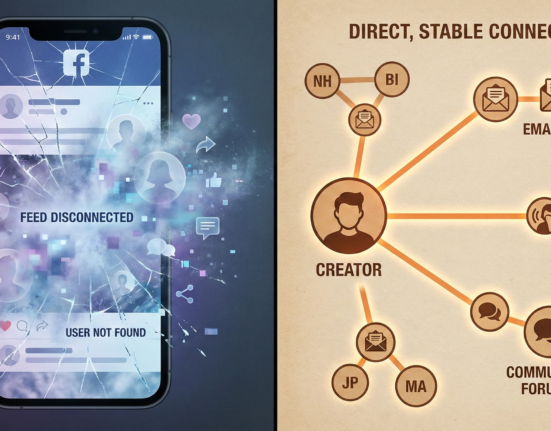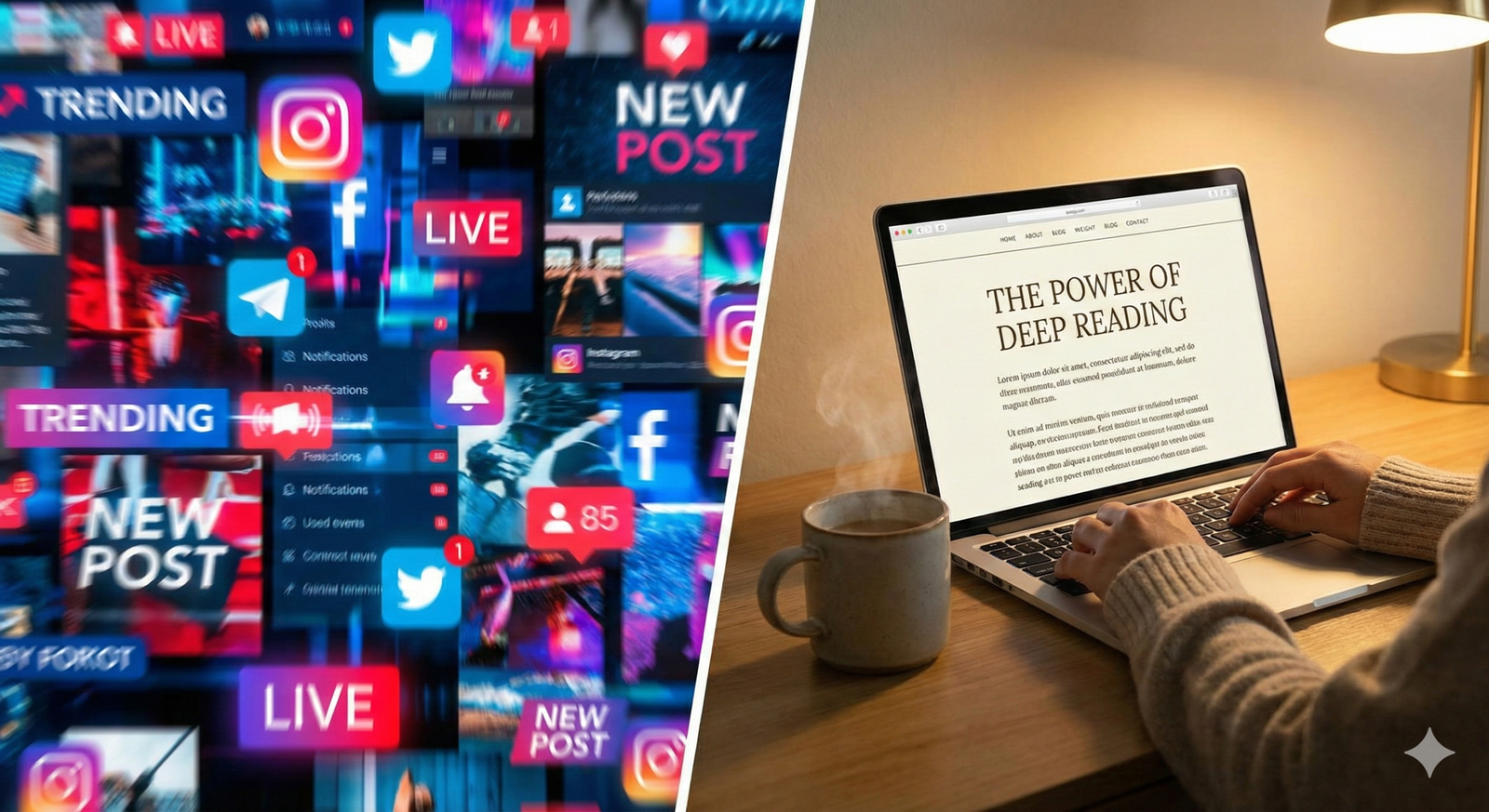
In the digital landscape of 2026, a quiet but powerful shift is occurring. After a decade dominated by the algorithmic feeds of social media—where success was measured in viral moments and fleeting attention—creators, businesses, and readers alike are returning to the foundational pillars of the internet: the blog and the email newsletter. This movement is not merely a nostalgic look backward; it is a strategic response to the increasing “enshittification” of social platforms, the volatility of algorithms, and a collective fatigue with the noise of short-form content.
The revival of blogging and newsletters represents a desire for ownership, depth, and genuine connection. While social media remains a powerful tool for discovery, it is increasingly viewed as a rented space where the landlord can change the locks—or the rules—at any moment. In contrast, blogs and newsletters offer a plot of digital land that you own, fostering direct relationships that are immune to the whims of a platform update.
This guide explores why this shift is happening now, the mechanics behind the resurgence of long-form text, and how you can leverage these “vintage” mediums to build a sustainable, future-proof presence online.
Key Takeaways
- Ownership is Critical: Social media is “rented land.” Blogs and email lists are assets you own, protecting you from platform decline and algorithmic suppression.
- Depth Over Width: Audiences are tired of superficial scrolling. There is a growing premium on deep, nuanced thinking that can only be conveyed through long-form content.
- The “Human” Premium: In an era of AI-generated noise, a distinct human voice delivered directly to an inbox or a personal site holds significantly higher value.
- Compounding Returns: Unlike social posts that vanish in hours, blog posts accumulate traffic over years through SEO, providing compounding returns on effort.
- Direct Monetization: Newsletters and blogs offer clearer paths to direct monetization (subscriptions, memberships) compared to the opaque “creator funds” of social apps.
Scope of This Guide
In Scope:
- The strategic reasons for shifting from social-first to owned-media strategies.
- Detailed analysis of blogging and newsletters as modern content vehicles.
- The psychology of audience connection in a saturated market.
- Practical platforms and tools (WordPress, Ghost, Substack, Beehiiv, etc.).
- Monetization models and growth strategies for text-based creators.
Out of Scope:
- Technical coding tutorials for setting up servers.
- Reviews of specific social media trends (e.g., the latest TikTok dance).
- Legal advice regarding data privacy laws (GDPR/CCPA), though general compliance is mentioned.
The State of Social Media Saturation
To understand the revival of blogging and newsletters, we must first diagnose the ailment they are curing: social media saturation. For years, the promise of social media was democratization—anyone could build an audience for free. However, as these platforms matured, the dynamic shifted.
The Decline of Organic Reach
As of early 2026, organic reach on major social platforms has hit historic lows. Platforms that once offered massive viral potential have transitioned to “pay-to-play” models. Algorithms now prioritize content that keeps users on the app for as long as possible, often favoring controversial, high-stimulus, or video-based content over community building or educational depth.
For creators and brands, this means that even if you have 100,000 followers, a typical post might only be seen by 5% of them unless you pay for boosting. You are effectively shouting into a void, hoping the algorithm grants you access to the audience you spent years building.
Algorithmic Volatility and Anxiety
Reliance on social media creates a state of constant anxiety. A single update to a recommendation algorithm can wipe out a business overnight. We have seen this repeatedly:
- YouTubers losing views due to thumbnail policy changes.
- Instagram businesses collapsing when the feed shifted to Reels.
- X (formerly Twitter) users losing engagement due to verification changes.
This volatility makes social media an unstable foundation for a business or a career. It is akin to building a house on a fault line; the ground is constantly shifting.
The “Enshittification” Cycle
Coined by writer Cory Doctorow, “enshittification” describes the lifecycle of digital platforms: first, they are good to their users; then they abuse their users to make things better for their business customers (advertisers); finally, they abuse those business customers to claw back all the value for themselves.
We are currently in the late stages of this cycle for many legacy social apps. The user experience is cluttered with ads, recommended posts from strangers, and AI-generated filler, making it difficult to connect with the actual friends and creators users signed up to follow. This degradation of user experience is driving the migration toward quieter, cleaner spaces like inboxes and personal websites.
Why Blogging is Making a Strategic Comeback
Blogging—publishing articles on a website you control—was written off as “dead” multiple times over the last decade. Yet, it is currently experiencing a renaissance. The revival of blogging and newsletters is anchored in the unique properties of the web itself.
The Asset vs. The Stream
Social media is a stream. Content flows by and disappears. It is ephemeral. A blog post is an asset. It sits on a URL that can be indexed, referenced, and discovered for years.
When you write a high-quality blog post, it may receive traffic on day one. But unlike a tweet, it can continue to receive traffic on day 1,000. This is the concept of compounding value. A social media manager starts every month from zero, needing to feed the beast with new content. A blogger starts every month with the cumulative traffic of everything they have ever written.
SEO: The Engine of Longevity
Search Engine Optimization (SEO) remains the most powerful discovery mechanism on the internet. While “social search” (searching on TikTok or Instagram) is rising for certain queries, Google and other search engines still dominate complex, informational, and transactional intent.
- Intent-Based Discovery: When someone searches “how to manage remote teams” or “best ergonomic chairs,” they are actively looking for a solution. A blog post answering this query connects with the user at the moment of need.
- Trust and Authority: Long-form writing allows for citations, data analysis, and nuanced argument. This builds authority in a way that a 60-second video cannot. In professional fields (B2B, tech, health, finance), a blog is often the primary vehicle for demonstrating expertise.
The Freedom of Format
Social platforms dictate the format of your creativity. You must fit your thoughts into 280 characters, a square image, or a vertical video. Blogging offers canvas freedom. You can write 5,000 words or 500. You can embed interactive charts, code blocks, audio files, or downloadable PDFs. You can design the visual experience to match your brand, not the platform’s interface.
The Renaissance of the Newsletter
If the blog is the home base, the newsletter is the delivery system. The resurgence of the email newsletter is perhaps the most significant trend in the creator economy over the last five years.
The Power of the Inbox
The inbox is a sacred space. It is a to-do list. It is professional. It is personal. Unlike a social feed, which is designed for passive scrolling, the inbox is designed for active attention.
When a user subscribes to a newsletter, they are giving you permission to enter their personal digital space. This permission is a high-value transaction. Open rates for newsletters (often 20–50%) dwarf engagement rates on social media (often <1%).
Platform Independence (The “Portable Audience”)
The most critical advantage of a newsletter is “portability.” If you build an audience on Substack and decide you don’t like their policies, you can export your list of email addresses (a CSV file) and move to Beehiiv, Ghost, or Mailchimp.
You cannot “export” your YouTube subscribers or Instagram followers. If you leave those platforms, you leave your audience behind. The email list is the only digital audience asset that you truly own and can take with you.
Deeper Relationships and Parasocial Connection
Newsletters foster a sense of intimacy. Because the email arrives directly to the reader, addressed to them, it feels like a 1:1 correspondence. Writers often adopt a more personal, vulnerable tone in newsletters than they do on public blogs. This fosters a “parasocial relationship”—a one-sided but deeply felt bond between the creator and the audience—that is highly conducive to trust and loyalty.
Social Media vs. Owned Media: A Strategic Comparison
To understand why the revival of blogging and newsletters is gaining momentum, we must compare the two ecosystems side-by-side.
| Feature | Social Media (Rented Land) | Blogs & Newsletters (Owned Land) |
| Primary Goal | Discovery & Virality | Retention & Depth |
| Control | Low (Algorithm dictates reach) | High (You control delivery) |
| Lifespan of Content | Minutes to Hours | Years (Evergreen) |
| Audience Relationship | Distant / Passive | Intimate / Active |
| Monetization | Ad revenue share (low), Brand deals | Subscriptions, Products, Affiliates |
| Data Access | Limited analytics | Full email data & reader behavior |
| Switching Costs | High (Locked in) | Low (Portable list) |
This comparison highlights a crucial strategy for 2026: Use social media for discovery, but use blogs and newsletters for the relationship. The smartest creators are not abandoning social media entirely; they are changing how they use it. They use social apps as a “top of funnel” mechanism to drive traffic to their owned assets.
The Psychology of Long-Form Consumption
Why are readers returning to long-form reading? The common narrative is that “attention spans are shrinking.” While true for certain contexts, a counter-trend is emerging: the craving for nuance.
Digital Minimalism and Slow Media
As social media becomes more frantic, users are seeking “slow media.” This is content that respects the user’s time not by being short, but by being valuable. A well-structured 2,000-word essay is often more satisfying than 30 minutes of doomscrolling because it provides a sense of completion and understanding.
The Authority of the Written Word
In an age of deepfakes and AI hallucinations, a human voice with a distinct perspective is becoming a luxury product. Reading long-form content signals a commitment to learning. Readers who subscribe to newsletters are often “information omnivores”—high-value audiences who are willing to pay for curation and expertise.
Community Belonging
Substack and similar platforms have introduced comments sections that function like private communities. Unlike the toxic comment sections of public social media, newsletter communities are often gated by subscription or interest, leading to higher quality discourse. Readers feel they are part of a “club” of like-minded individuals.
How to Pivot: Building Your Owned Channel
If you are convinced by the revival of blogging and newsletters, the next logical question is: How do I start or pivot? The barrier to entry has never been lower, but the strategy is key.
Choosing Your Tech Stack
As of 2026, there are distinct paths depending on your technical comfort and goals.
- The “All-in-One” Growth Platforms (Substack, Beehiiv):
- Best for: Writers who want to focus purely on writing and growing a newsletter.
- Pros: Built-in discovery networks (recommendation engines), zero technical maintenance, integrated payments.
- Cons: Less design customization, transaction fees, you build on their domain (mostly).
- The “Owner” Platforms (Ghost, WordPress):
- Best for: Brands and creators who want total control over design, SEO, and functionality.
- Pros: You own the code, the design, and the data. No platform fees on revenue (usually). High SEO capabilities.
- Cons: Requires more setup (though Ghost is quite user-friendly), you are responsible for your own traffic growth.
- The “Marketing” Stack (ConvertKit/Kit + Webflow/Squarespace):
- Best for: Businesses selling products who use content as a marketing tool.
- Pros: Advanced automation and segmentation capabilities.
- Cons: More expensive, disjointed writing experience.
Migration Strategies
If you have a social following, the goal is to convert “followers” into “subscribers.”
- The Lead Magnet: Offer something of value (a PDF guide, a mini-course, a checklist) in exchange for an email address.
- The “Open Loop”: Tease a story or concept on social media, but put the conclusion or the deep dive on the blog/newsletter.
- Exclusive Access: Make the newsletter the place where you share personal updates or behind-the-scenes content first.
Monetization Models for Blogs and Newsletters
One of the driving forces behind this revival is the clarity of the business model. Social media monetization is notoriously fickle. Owned media offers direct paths to revenue.
1. The Paid Subscription Model
popularized by Substack, this model asks “true fans” to pay a monthly fee (e.g., $5–$15/month) for exclusive content.
- Why it works: It aligns incentives. The writer works for the reader, not for advertisers.
- Requirement: You need a highly loyal, niche audience. You generally need 1,000 free subscribers to find 50–100 paid ones (a 5–10% conversion rate is standard).
2. Sponsorships and Native Ads
Instead of programmatic ads (like Google AdSense) which ruin the user experience and pay pennies, newsletters use “native sponsorships.” A brand pays to have a short text-based ad read by the creator inserted into the newsletter.
- Why it works: High trust transfer. If a creator recommends a tool, subscribers listen.
- Requirement: A well-defined niche audience (e.g., “Software engineers interested in productivity”).
3. Affiliate Marketing
Reviewing tools, books, or software and earning a commission on sales.
- Why it works: Blogs are excellent for “bottom of funnel” intent (e.g., “Best email marketing software 2026”).
- Requirement: rigorous honesty and transparency. Trust is the currency here.
4. Digital Products and Courses
Using the blog/newsletter to establish authority, then selling a deep-dive course or eBook.
- Why it works: High margins. You build the product once and sell it infinitely.
- Requirement: Deep expertise in a solveable problem.
Key Challenges and Common Pitfalls
While the revival of blogging and newsletters is exciting, it is not “easy mode.” It presents a different set of challenges than social media.
The Discovery Problem
The biggest downside of owned media is the lack of an algorithmic feed. If you publish a blog post, no one sees it unless you distribute it.
- Solution: You must become your own distributor. This implies using social media to share links, mastering SEO, engaging in communities (Reddit, Hacker News), and cross-promoting with other newsletter writers.
The Consistency Treadmill
Newsletters create an expectation of regularity. If you promise a weekly email, missing a week can hurt open rates and trust. This can lead to “newsletter burnout,” similar to social media burnout.
- Solution: Seasons (taking breaks), guest posts, or reducing frequency to bi-weekly or monthly to focus on quality over quantity.
“Inbox Rot”
Just as social feeds are saturated, inboxes are becoming crowded. Readers are becoming ruthless about unsubscribing from newsletters that do not provide value.
- Solution: Respect the reader. Keep intros short. Deliver value immediately. Ensure your subject lines are honest, not clickbait.
Case Examples: The Shift in Practice
To illustrate the revival of blogging and newsletters, let’s look at how different types of creators are navigating this shift.
The Journalist Going Solo
- Scenario: A tech journalist leaves a major publication to start a Substack.
- Strategy: They leverage their existing reputation to gain initial subscribers. They offer deep analysis that their editor might have cut.
- Outcome: They make 3x their previous salary through direct subscriptions, writing for an audience of 10,000 rather than millions.
The B2B SaaS Company
- Scenario: A software company sees diminishing returns on LinkedIn ads.
- Strategy: They launch a “media brand”—a blog focused on solving their customers’ career problems, not just selling software. They start a weekly curated newsletter of industry news.
- Outcome: They build an email list of 50,000 qualified leads. Customer Acquisition Cost (CAC) drops because they “own” the audience.
The Lifestyle Influencer
- Scenario: An Instagram fashion influencer is tired of the Reel algorithm changes.
- Strategy: They start a blog to archive their outfits (making them searchable) and a newsletter sharing personal essays on style and confidence.
- Outcome: They secure stable sponsorship deals for the newsletter that are not dependent on how many “likes” a photo gets.
Future Outlook: The Integrated Ecosystem
The revival of blogging and newsletters does not spell the end of social media. Instead, we are moving toward an Integrated Ecosystem.
In this future, the smart digital citizen operates on three levels:
- Discovery (Social Media): Using short-form, algorithmic content to cast a wide net and meet new people.
- Connection (Newsletter): Moving interested people into a permission-based relationship where trust is built.
- Destination (Blog/Website): Housing the evergreen assets, products, and services that generate value.
The creators and businesses that thrive in the late 2020s will be those who stop viewing these channels as competitors and start viewing them as a funnel. The goal is no longer to be “famous” on social media; the goal is to be “connected” via owned media.
As AI continues to flood the web with generic content, the “human touch” of a personally written newsletter or a voice-driven blog post will become the ultimate differentiator. We are pivoting from an economy of attention (who can yell the loudest) to an economy of trust (who can help the most).
Related topics to explore
- RSS Feeds: The technical standard powering the open web and how to use it.
- Digital Gardening: A philosophy of blogging that treats websites as evolving gardens rather than streams of posts.
- Email Deliverability: Technical guides on keeping your newsletter out of the spam folder.
- Community Platforms: Tools like Discord or Circle that pair well with newsletters.
- SEO for Writers: How to optimize creative writing for search engines without selling out.
Conclusion
The revival of blogging and newsletters is a correction to a digital world that tilted too far toward the ephemeral and the algorithmic. It is a movement toward stability, sanity, and sustainability.
For anyone feeling the burnout of the social media treadmill, the message is clear: you do not have to keep running. You can build a house. You can plant a garden. By shifting your focus to owned platforms like blogs and newsletters, you invest in an asset that grows with you, fosters genuine human connection, and provides a buffer against the noise of the internet.
Next step: Choose one owned platform today—be it a simple WordPress site or a Substack account—and write your first post, not for the algorithm, but for the reader.
FAQs
1. Is blogging actually effective in 2026?
Yes, blogging is highly effective, but the strategy has changed. It is no longer about posting personal diaries (unless you have a massive following); it is about creating high-quality, authoritative content that answers specific questions or provides unique analysis. Blogs remain the primary way content is indexed by search engines, making them essential for long-term organic traffic.
2. How often should I send a newsletter?
Consistency matters more than frequency. Weekly is the industry standard, as it keeps you top-of-mind without being annoying. However, a high-quality bi-weekly or monthly newsletter is better than a low-quality weekly one. Choose a cadence you can sustain for at least six months without burnout.
3. Do I need a large social media following to start a newsletter?
No, but it helps. You can grow a newsletter from zero by utilizing SEO (blogging), guest posting on other newsletters, and participating in niche communities. Social media accelerates growth, but it is not the only engine. Many successful newsletters grow through word-of-mouth recommendations.
4. What is the difference between Substack and a blog?
Substack is a platform that combines a blog and a newsletter into one easy-to-use interface with built-in payment processing. A traditional blog (like WordPress) allows for more customization and SEO control but requires more setup. Substack is often better for “writers,” while WordPress is better for “businesses” or those wanting full design control.
5. How long does it take to make money from a blog or newsletter?
It is a long-term game. Generally, it takes 12 to 24 months of consistent publishing to build an audience large enough to generate significant revenue. Unlike social media, where a viral hit can bring instant (but fleeting) fame, owned media builds slowly but compounds over time.
6. Won’t AI just replace bloggers?
AI can replace generic, low-effort content. However, AI cannot replace personal experience, unique voice, strong opinions, and human connection. The revival of blogging is driven by a desire for more humanity, not less. Use AI as a research assistant, but ensure the writing and perspective are distinctly yours.
7. Can I move my newsletter subscribers if I change platforms?
Yes. This is the superpower of email. You own the data. If you use Mailchimp and want to switch to ConvertKit, you simply export your subscriber list as a CSV file and import it into the new provider. You cannot do this with Instagram or TikTok followers.
8. What should I write about?
Write about the intersection of what you are an expert in (or curious about) and what solves a problem for others. The most successful blogs and newsletters have a specific “niche”—they don’t try to be everything to everyone. Define your “value proposition”: Why should someone open this email?
References
- Doctorow, C. (2023). Social Quitting. Locus Magazine. https://locusmag.com/2023/01/commentary-cory-doctorow-social-quitting/ (Discusses the concept of “enshittification” of platforms).
- Newport, C. (2019). Digital Minimalism: Choosing a Focused Life in a Noisy World. Portfolio/Penguin. (Foundational text on the shift away from noisy social feeds).
- Substack. (2025). Network Effects and Creator Revenue Reports. Substack Official Blog. https://on.substack.com (Source for trends in subscription models and writer revenue).
- Ghost. (2024). The State of the Creator Economy. Ghost Resources. https://ghost.org/resources/ (Data on open source publishing and ownership).
- Pew Research Center. (2024). Social Media Usage and Fatigue Reports. Pew Research. https://www.pewresearch.org/internet/ (Statistics on declining organic reach and user sentiment regarding social media).
- Content Marketing Institute. (2025). B2B Content Marketing Benchmarks, Budgets, and Trends. https://contentmarketinginstitute.com/ (Data supporting the shift of marketing budgets toward owned media).
- The Verge. (2024). The future of the web is email. The Verge Tech Reporting. https://www.theverge.com (General reporting on the shift from platforms to protocols).