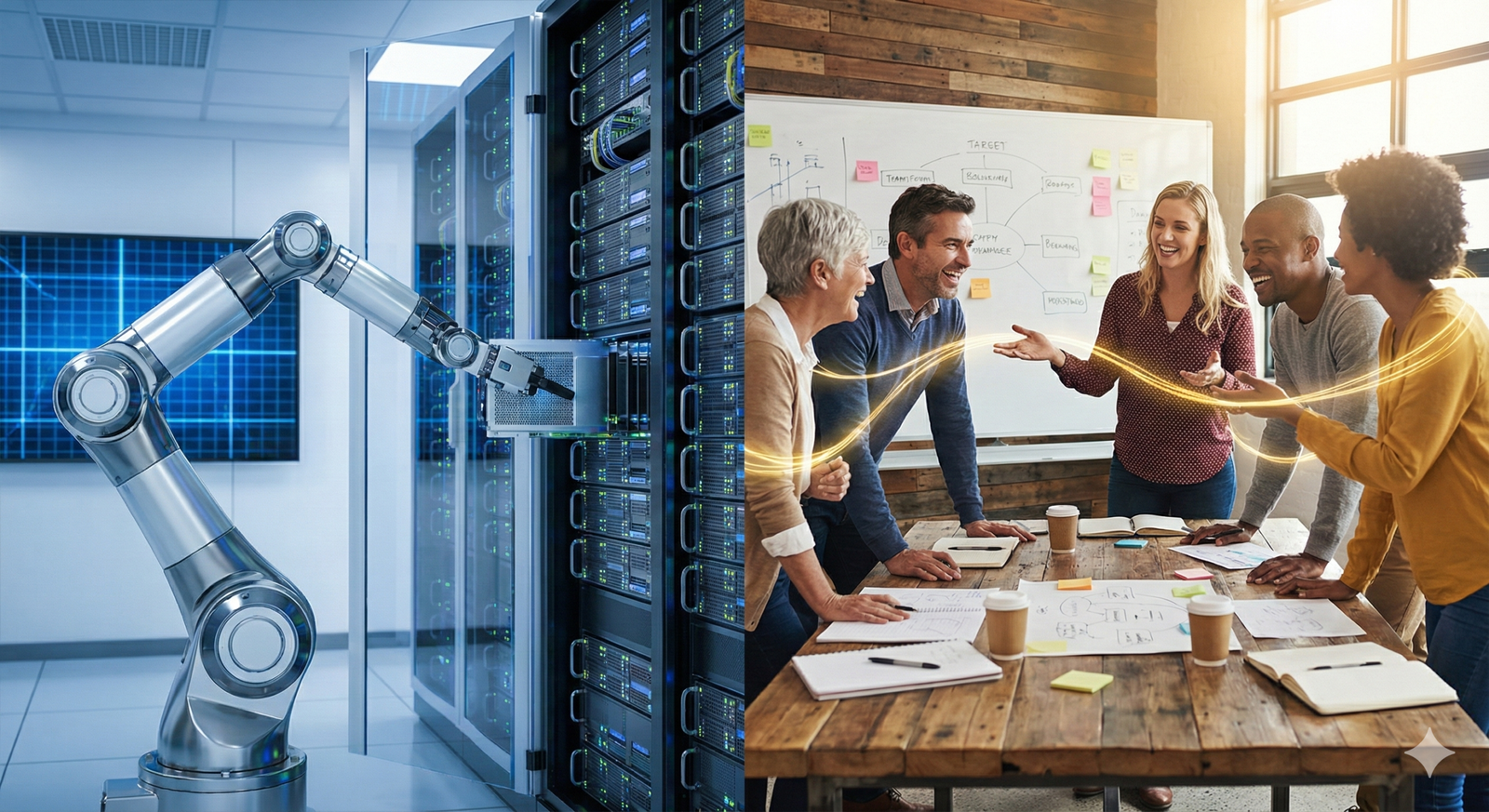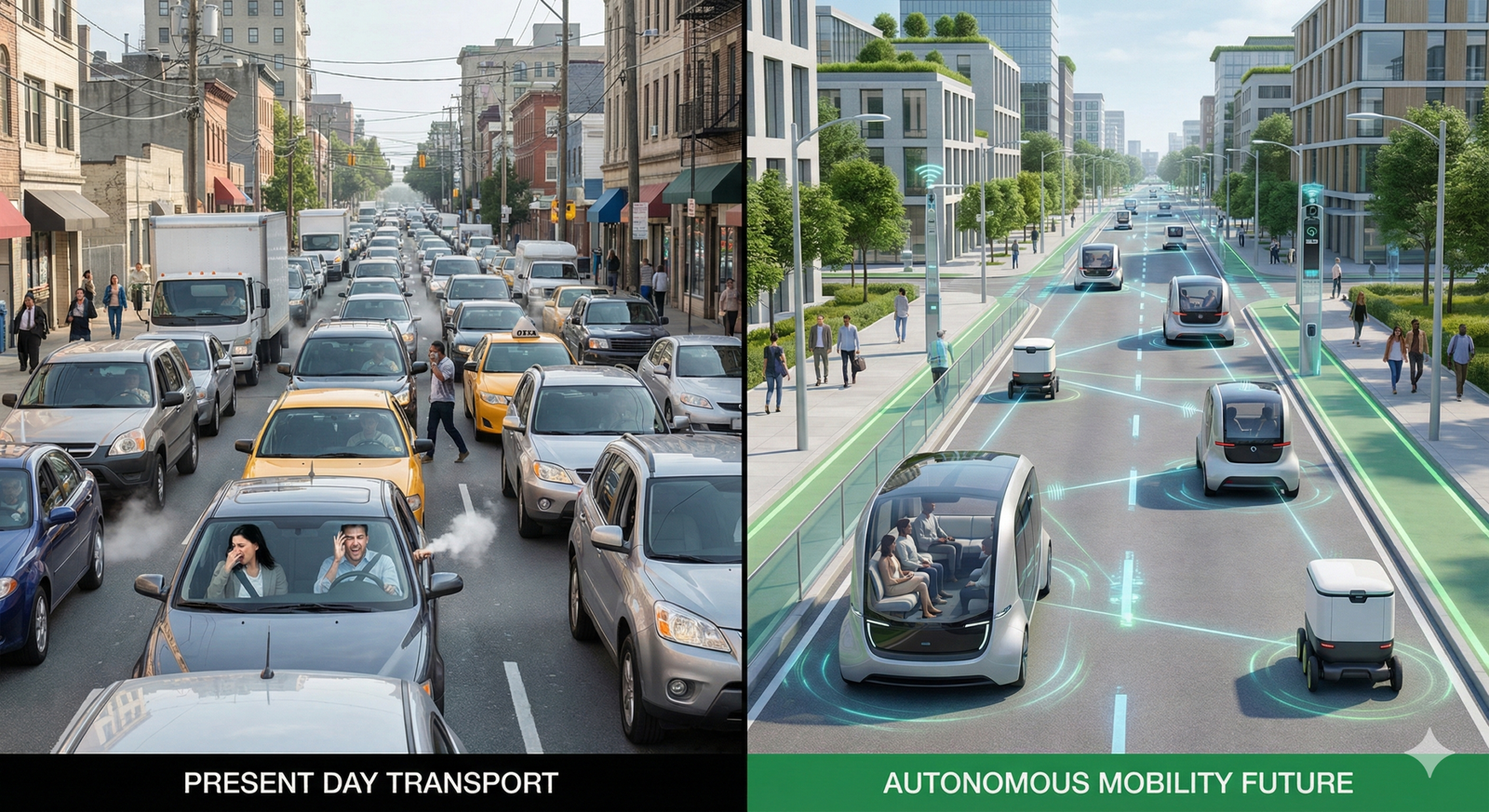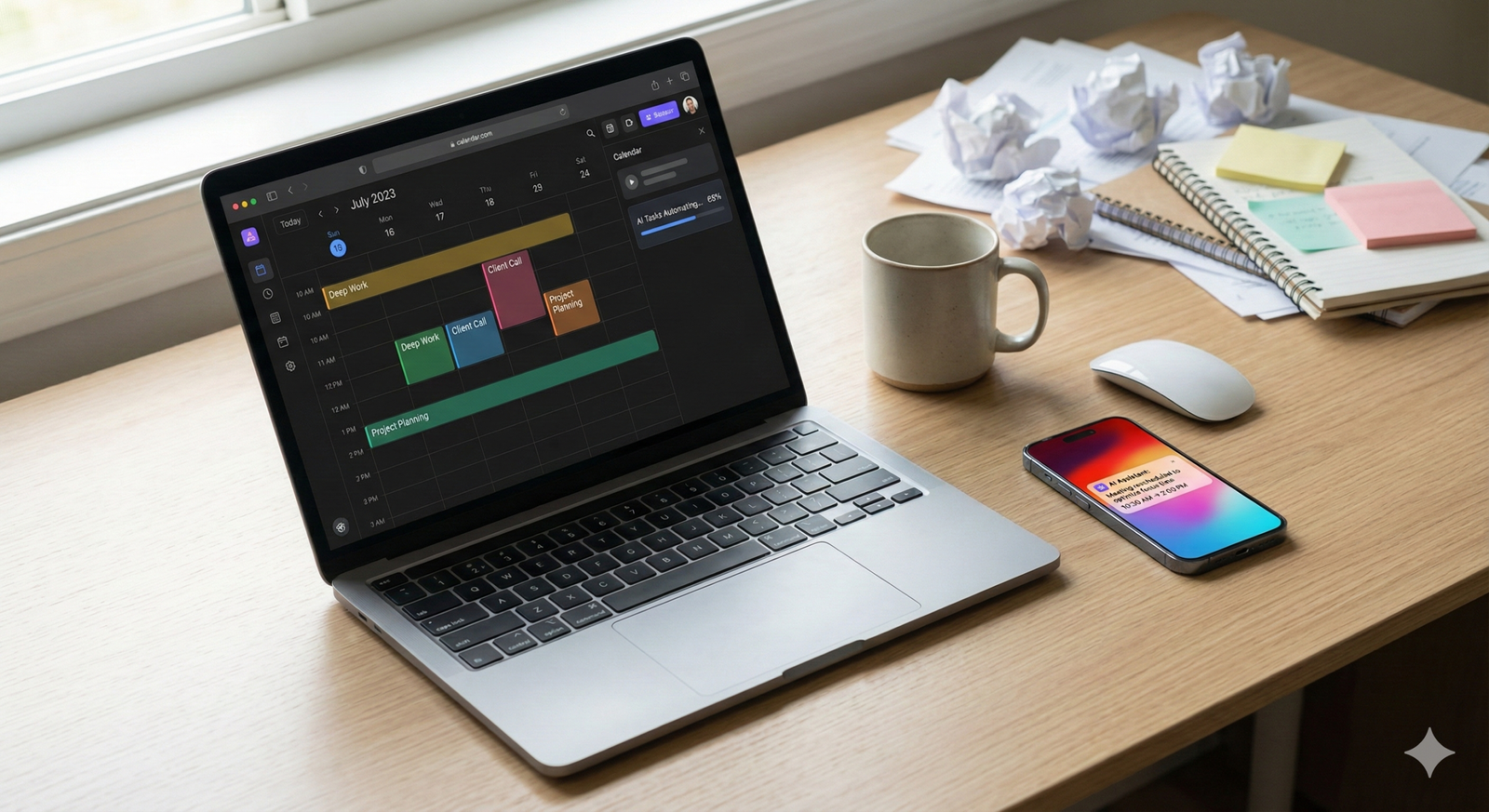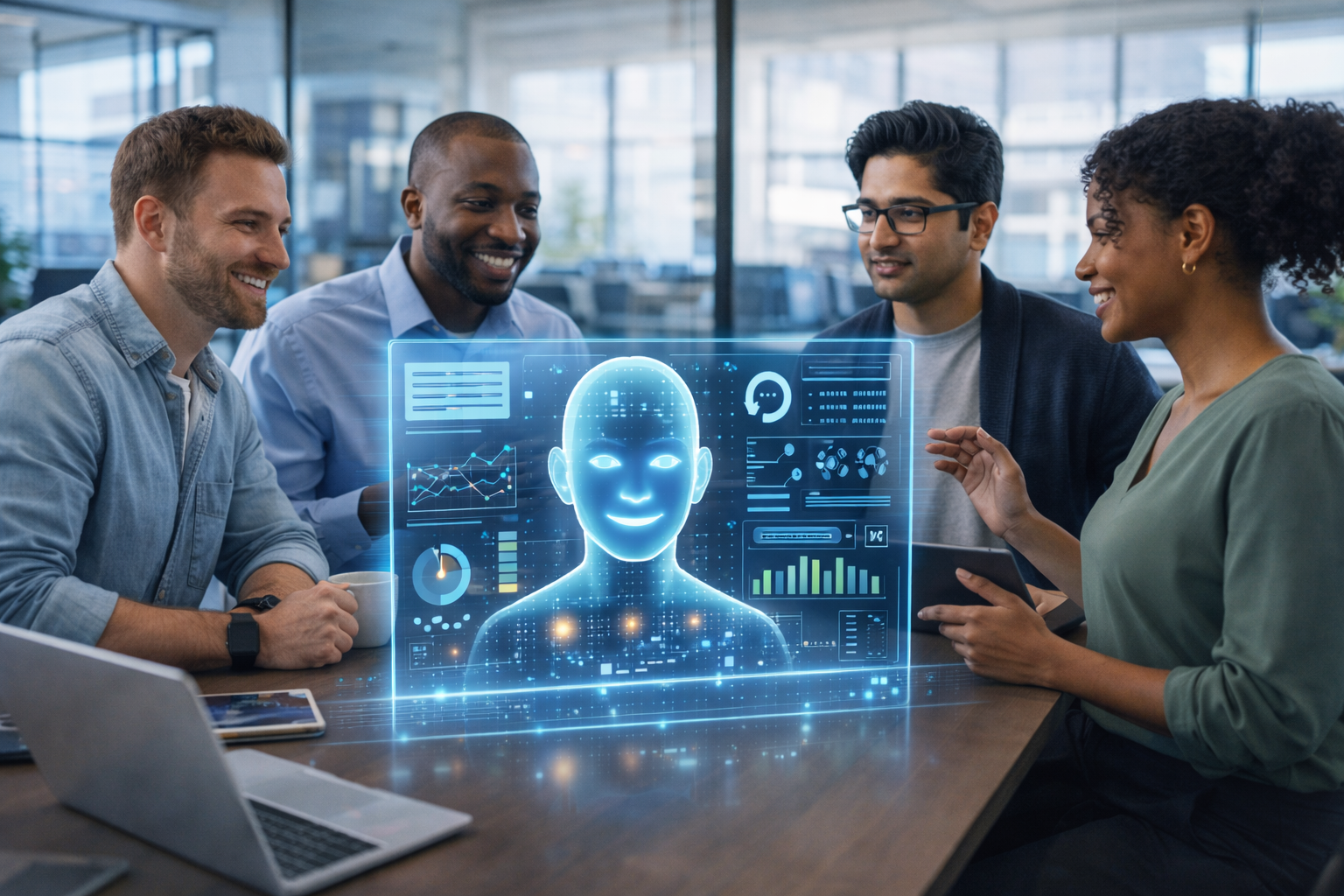
As of February 2026, the global workforce has moved past the initial shock of generative AI. We are no longer simply “using” tools; we are integrating autonomous agents into our daily workflows. This transition—moving from AI as a “Copilot” (a tool that waits for your command) to a “Co-worker” (a proactive participant in the workflow)—represents the most significant cultural shift in the professional world since the Industrial Revolution.
Integrating AI into workplace culture is not a technical challenge; it is a psychological and organizational one. It requires redefining what it means to “work,” shifting from a mindset of task execution to one of orchestration and oversight. This guide explores the nuances of this shift, providing a roadmap for leaders and individuals to thrive in a landscape where the distinction between human effort and algorithmic output is increasingly blurred.
Key Takeaways
- The Mindset Shift: Transitioning from viewing AI as a “search engine” to viewing it as a “junior associate” with high speed but limited judgment.
- Workflow Re-engineering: Adopting “Agentic Workflows” where AI takes initiative on multi-step processes, requiring human “checks and balances.”
- Cultural Readiness: Prioritizing psychological safety to ensure employees don’t feel replaced, but rather augmented.
- The New Skillset: Developing “Critical Oversight” and “Contextual Intelligence”—skills that AI cannot currently replicate.
Who This Is For
This article is designed for organizational leaders tasked with digital transformation, managers navigating hybrid human-AI teams, and individual contributors who want to future-proof their careers. Whether you are in HR, Engineering, Marketing, or Operations, the principles of cultural AI integration apply to every facet of the modern enterprise.
The Evolution: Understanding the “Co-worker” Paradigm
In early 2023, AI was a novelty. By 2024, it was a “Copilot”—a sidebar in our documents and emails. By February 2026, we have entered the era of the “Co-worker.” But what does this actually mean in a practical, day-to-day sense?
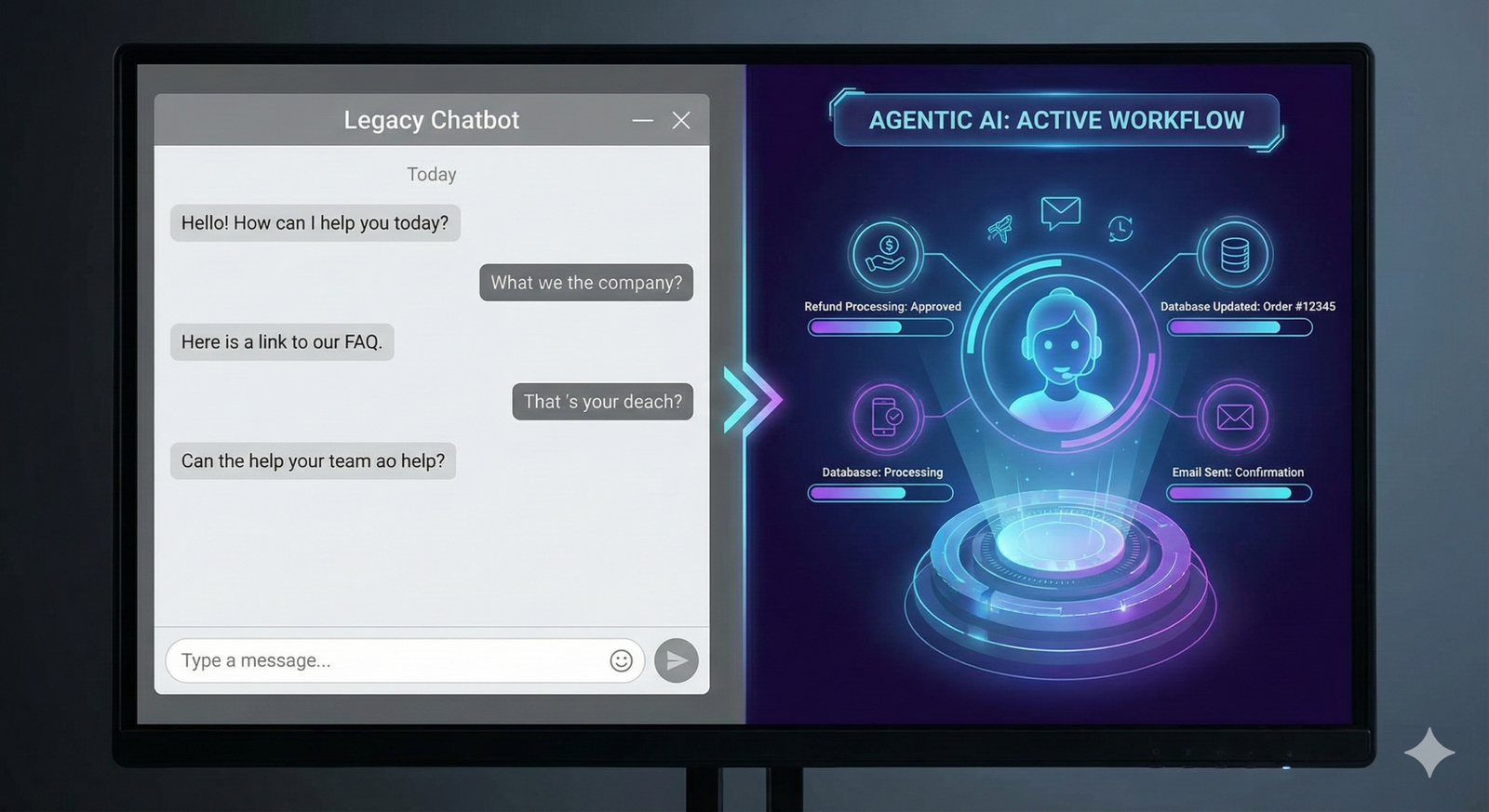
A “Copilot” is reactive. You give it a prompt, and it gives you a response. You are the driver; it is the navigation system. However, a “Co-worker” (or agentic AI) is proactive. It monitors your inbox, identifies a client’s need, drafts a proposal based on previous successful templates, and presents it to you for final approval.
This shift requires a fundamental change in organizational psychology. If employees view AI as a competitor for their desk, adoption will fail. If they view it as a digital teammate that handles the “drudge work,” allowing them to focus on high-level strategy and creative problem-solving, the culture flourishes.
Digital Transformation vs. Cultural Transformation
Many companies mistake AI adoption for a simple IT upgrade. True digital transformation is 20% technology and 80% people. The cultural shift involves:
- Trust Building: Understanding the limitations and “hallucination” risks of AI.
- Accountability: Establishing who is responsible when an AI “co-worker” makes a mistake.
- Transparency: Being open with clients and internal teams about where AI is used.
The Psychological Impact of AI Integration
The transition to AI co-workers triggers a range of human emotions, from excitement to existential dread. To navigate this cultural shift, organizations must address the “Uncanny Valley” of office work—the point where AI becomes so capable that it feels threatening rather than helpful.
Overcoming the Replacement Myth
The most significant barrier to AI integration in the workplace is the fear of job loss. History shows that technology shifts generally shift the nature of jobs rather than the number of jobs. In 2026, we see a massive demand for “Human-in-the-Loop” (HITL) roles. These are positions where the human provides the empathy, ethical grounding, and strategic context that the AI lacks.
Building Psychological Safety
Google’s Project Aristotle famously found that psychological safety is the number one predictor of team success. In an AI-augmented team, this means:
- Allowing employees to experiment with AI without fear of failure.
- Encouraging “prompt sharing” to build a collective intelligence.
- Rewarding employees who find ways to automate their own tasks, rather than punishing them with more work.
Redefining Workflow: The Human-AI Collaboration Model
To treat AI as a co-worker, we must change how we design our workdays. We are moving toward a “Sandwich Model” of productivity.
- Human Context (The Top Bun): The human defines the goal, the tone, and the constraints. They provide the “why.”
- AI Execution (The Meat): The AI processes data, generates drafts, and performs repetitive tasks. It provides the “how” at scale.
- Human Review (The Bottom Bun): The human edits, fact-checks, and applies emotional intelligence. They provide the “final say.”
Collaborative AI in Action
Consider a Marketing Manager in 2026. Instead of spending six hours writing a campaign brief, they spend one hour defining the strategy and target audience. Their AI “co-worker” generates five variations of the brief, analyzes sentiment data from the previous year, and suggests a budget allocation. The manager then spends two hours refining the best option and presenting it to the board. The total time spent is halved, but the quality is higher because the manager had more time for deep thinking.
Essential Skills for the 2026 AI Workplace
As AI takes over technical execution, “soft skills” have become the new “hard skills.” To thrive alongside digital co-workers, employees must master:
1. Contextual Intelligence
AI is brilliant at patterns but poor at context. It doesn’t know that your company is currently in a sensitive merger or that a specific client prefers a formal tone. Humans must provide the “contextual guardrails” that keep AI outputs relevant and safe.
2. Prompt Engineering and Beyond
While basic prompting was the buzzword of 2024, by 2026, we focus on System Design. This involves setting up “agentic workflows” where multiple AIs interact with each other to solve complex problems. Understanding the “logic” of AI is now more important than knowing the right words to type.
3. Ethical Discernment
AI ethics is no longer just for the legal department. Every employee must act as an ethical filter. Is this AI-generated image biased? Does this automated response sound robotic or insensitive? Developing a “moral compass” for digital outputs is a critical competency.
Management and Leadership in the AI Era
Leading a team of humans is hard; leading a hybrid team of humans and AI agents is harder. Managers in 2026 must act more like conductors than supervisors.
Orchestrating Talent
A manager’s job is now to ensure that the human talent is not being “drowned out” by the speed of AI. If the AI co-worker can produce 100 reports a day, the manager must ensure the human team isn’t being forced to review all 100 at the cost of their mental health.
Change Management Strategies
- The “AI-First” Monday: A dedicated time for teams to share what new AI capabilities they discovered over the week.
- Reverse Mentoring: Having tech-savvy junior employees teach senior leaders how to use generative tools effectively.
- The 70/30 Rule: Encouraging employees to spend 70% of their time on AI-assisted tasks and 30% on “pure human” tasks like face-to-face networking and creative brainstorming.
Common Mistakes in AI Integration
Even with the best intentions, many organizations stumble during the cultural shift. Here are the most frequent pitfalls to avoid:
- Treating AI as a Search Engine: AI is an engine for creation and logic, not just a way to find facts. Using it only for search wastes 90% of its potential.
- Ignoring the “Black Box” Problem: Implementing AI without explaining to employees how it works leads to distrust and “shadow AI” (using unapproved tools).
- The “Set and Forget” Fallacy: Assuming an AI agent can run a process indefinitely without human supervision. All AI models “drift” over time and require periodic re-calibration.
- Lack of Data Privacy Literacy: Employees often feed sensitive company data into public models without realizing the security risks. Continuous training is mandatory.
- Over-reliance on Output: Accepting AI suggestions without question. This leads to “algorithmic bias” and a loss of brand voice.
Safety and Ethical Disclaimers
Safety & Professional Disclaimer: The integration of AI involves significant data privacy and security risks. Always consult with your IT and Legal departments before inputting proprietary data into AI models. Furthermore, AI outputs can contain biases or inaccuracies; always verify critical information (especially financial or medical data) with authoritative sources. As of February 2026, AI-generated content may be subject to evolving copyright laws—ensure your usage complies with current regional regulations.
Conclusion: Embracing the Future of Work
The shift from Copilot to Co-worker is not a destination but a continuous journey of adaptation. By February 2026, the most successful organizations are those that have fostered a culture of curiosity over fear. They recognize that while AI can process information at an inhuman speed, it cannot care about the outcome. It cannot feel the pride of a successful product launch or the empathy required to support a colleague through a difficult time.
The “cultural shift” is ultimately about reclaiming our humanity. By offloading the cognitive “heavy lifting” to digital co-workers, we free ourselves to engage in the work that matters most: building relationships, solving complex ethical puzzles, and dreaming up the next great innovation.
The future of work is not “Human vs. AI.” It is “Human + AI” versus the problems of the world. To stay ahead, you must move beyond the “tool” mindset and begin the hard work of cultural integration today.
Would you like me to draft a 90-day AI Cultural Integration Roadmap specifically for your HR or Leadership team?
FAQs
1. What is the difference between a “Copilot” and an “AI Co-worker”?
A Copilot is a reactive tool that requires a human to initiate every action. An AI Co-worker is an “agentic” system capable of taking initiative, managing multi-step tasks, and collaborating with humans and other AI agents with minimal supervision.
2. Will AI integration make my job obsolete by the end of 2026?
Unlikely. While AI will automate many tasks, it rarely replaces entire jobs. The most successful professionals in 2026 are those who act as “orchestrators,” using AI to amplify their productivity while providing the critical thinking and emotional intelligence that AI lacks.
3. How do we ensure our company culture doesn’t suffer when we introduce AI?
Focus on transparency and psychological safety. Involve employees in the selection of AI tools, provide extensive training, and emphasize that AI is there to remove “boring” work, not to replace the people who do it.
4. What are the biggest security risks of using AI as a co-worker?
Data leakage and “hallucinations” are the primary risks. If employees use public AI models with private company data, that data can become part of the training set. Always use enterprise-grade, “closed” AI environments for business operations.
5. How can I improve my “AI literacy” if I’m not a technical person?
Focus on “System Thinking.” Learn how AI processes logic, understand its common failure points (like bias and confidence in wrong answers), and practice “iterative prompting”—the art of having a conversation with the machine to refine an output.
References
- Microsoft Work Trend Index (2025-2026): “The Rise of the Agentic Workforce.”
- McKinsey Global Institute: “The Economic Potential of Generative AI: The Next Productivity Frontier” (Updated 2026 Report).
- Gartner Research: “Top Strategic Technology Trends for 2026: AI as a Digital Teammate.”
- MIT Sloan Management Review: “Beyond Productivity: The Cultural Impact of AI Integration.”
- OECD AI Policy Observatory: “Guidelines for Human-Centric AI in the Workplace.”
- Harvard Business Review: “Leading the Augmented Team: Management Strategies for 2026.”
- Stanford Institute for Human-Centered AI (HAI): “2026 AI Index Report on Workplace Adoption.”
- World Economic Forum: “The Future of Jobs Report 2025: Transitioning to Collaborative Intelligence.”
- Journal of Business Ethics: “The Accountability Gap in AI-Human Collaboration.”
- IEEE Standards Association: “Ethical Guardrails for Autonomous and Intelligent Systems.”