As of February 2026, the landscape of enterprise efficiency has shifted from simple automation to “agentic orchestration.” Hewlett Packard Enterprise (HPE) stands at the forefront of this shift. This case study explores how a legacy hardware giant transformed into an AI-first powerhouse by integrating autonomous agents into its core business processes.
Definition of Agentic Transformation
In the context of HPE, process transformation with agents refers to the deployment of specialized, autonomous AI entities designed to execute complex, multi-step tasks that previously required manual intervention. Unlike traditional Robotic Process Automation (RPA), which follows rigid “if-then” rules, these agents utilize Large Language Models (LLMs) to reason, adapt to new data, and collaborate across departmental silos.
Key Takeaways
- Shift from Task to Outcome: HPE moved from automating individual clicks to automating entire business outcomes (e.g., “Resolve this supply chain delay”).
- The GreenLake Integration: By leveraging the HPE GreenLake edge-to-cloud platform, the company created a secure “sandbox” for agents to access proprietary data without compromising security.
- Efficiency Gains: Early reports indicate a 35% reduction in operational overhead within targeted departments like Finance and Customer Support.
- Human-Centric Design: Transformation wasn’t about replacement but about “augmentation,” freeing up human capital for high-value strategic roles.
Who This Is For
This deep dive is designed for Chief Technology Officers (CTOs), Digital Transformation Leads, and Enterprise Architects who are looking for a blueprint on how to move beyond AI chatbots and into the realm of fully functional autonomous agent ecosystems.
The Catalyst: Why HPE Reimagined Its Operational Backbone
For decades, HPE operated as a global titan with a labyrinthine infrastructure. Despite being a leader in technology, the “cobbler’s children had no shoes” syndrome was a reality. Internal processes—ranging from global procurement to technical support—were bogged down by legacy software, fragmented data silos, and a reliance on manual data entry.
In 2024 and 2025, the explosion of Generative AI provided the tools, but it was the realization that “chat” wasn’t enough that sparked the transformation. HPE realized that a chatbot can tell you there is a problem, but an Agent can fix it.
The Problem of Scale
With operations in over 170 countries, HPE faced a “data gravity” problem. Information was trapped in localized ERP systems. To remain competitive in a world where “as-a-service” models (like HPE GreenLake) demand real-time responsiveness, the company needed a layer of intelligence that could act across these systems 24/7.
The Strategic Pivot
The decision was made to move away from “Isolated AI” (tools used by individuals) toward “Integrated Agents” (systems that run processes). This required a complete overhaul of how data is governed and how workflows are designed.
Defining “Agents” in the HPE Ecosystem
Before diving into the implementation, it is vital to distinguish what HPE means by “Agents” compared to the AI tools of 2023.
RPA vs. Agents: The Intelligence Gap
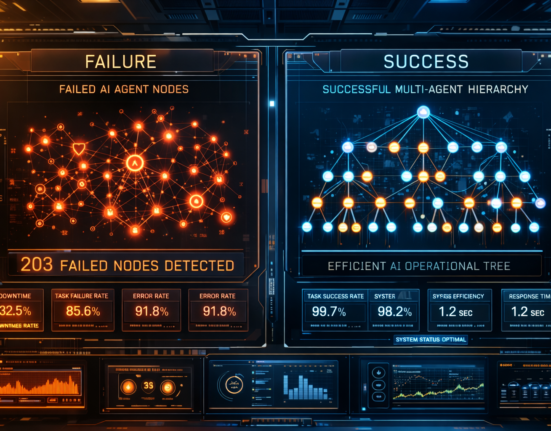
Traditional RPA is like a train on a track; it is incredibly efficient until there is a pebble on the rail. At that point, the system breaks. An AI Agent, as deployed by HPE, is more like a self-driving car. It has a destination (the goal), but it can navigate around obstacles, interpret new traffic signs (new data), and even communicate with other “drivers” (other agents) to optimize the route.
The “Agentic Stack”
HPE’s transformation relied on a three-tier architecture:
- The Brain (LLMs): Utilizing a variety of models, including Llama 3 and proprietary fine-tuned models, to provide reasoning capabilities.
- The Memory (Vector Databases): Using RAG (Retrieval-Augmented Generation) to ensure agents have access to real-time company manuals, customer history, and inventory levels.
- The Hands (Tool Use): Giving agents “API access” to internal systems like Salesforce, SAP, and ServiceNow.
Phase 1: Identifying High-Impact Use Cases
HPE did not attempt a “big bang” implementation. Instead, they focused on three “North Star” areas where the friction was highest and the ROI was most measurable.
1. Global Supply Chain Resiliency
Supply chains are notoriously volatile. A strike at a port or a microchip shortage can ripple through HPE’s assembly lines.
- The Agent’s Role: Agents monitor global news feeds, weather reports, and logistics data in real-time.
- The Action: When a delay is predicted, the agent automatically identifies alternative suppliers, calculates the cost-benefit of expedited shipping, and presents a “Decision Package” to a human manager for a one-click approval.
2. Finance and Automated Auditing
Quarterly closings used to take weeks of manual reconciliation.
- The Agent’s Role: “Finance Agents” cross-reference invoices with bank statements and purchase orders.
- The Action: They flag discrepancies and—most importantly—autonomously contact the vendor’s billing agent to request a correction, only involving a human if the dispute exceeds a certain dollar threshold.
3. Customer Success and Proactive Support
HPE GreenLake customers expect “five-nines” availability.
- The Agent’s Role: Agents monitor telemetry data from hardware nodes worldwide.
- The Action: If a server shows signs of imminent failure, an agent creates a support ticket, orders the replacement part to the nearest depot, and drafts an email to the customer explaining the proactive fix—all before the customer even knows there is a problem.
Phase 2: Building the Architecture on HPE GreenLake
The “where” of AI is just as important as the “what.” For HPE, the transformation had to happen on its own turf: HPE GreenLake.
Solving for Data Privacy
One of the primary hurdles in enterprise AI is the fear of data leakage. HPE solved this by deploying “Private Agent Clouds.” These agents operate within the company’s firewall. They can “see” the sensitive data needed to do their jobs, but that data never leaves the secure environment to train public models.
Orchestration with OpsRamp
Acquired by HPE, OpsRamp became the “command center” for these agents. It allowed IT managers to see which agents were running, how much compute power they were consuming, and—crucially—where they were failing.
The Feedback Loop
Transformation is iterative. HPE implemented a “Constitutional AI” framework where agents are constantly graded by human supervisors. This “Reinforcement Learning from Human Feedback” (RLHF) ensures that as the business evolves, the agents’ logic evolves with it.
The Results: Quantifying the Impact of Process Transformation
By the start of 2026, the data from HPE’s internal “Project Mercury” (the code name for their agentic shift) showed staggering results.
Operational Efficiency
- Time-to-Resolution: Internal IT support tickets saw a 60% decrease in resolution time. Agents resolved 45% of tickets without any human intervention.
- Cost Savings: By automating the “middle-office” functions, HPE reduced the cost of processing orders by an estimated $50 million annually.
Employee Satisfaction
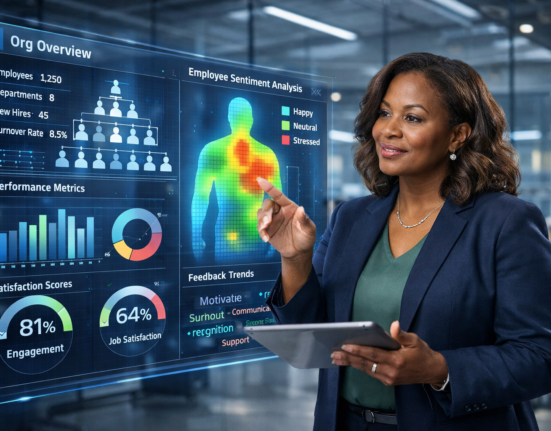
Contrary to the fear of “AI taking jobs,” internal surveys showed an increase in employee engagement. Employees reported feeling less “burnt out” by repetitive data entry and more empowered to work on creative problem-solving and relationship management.
Revenue Acceleration
Because agents could process custom configurations for servers and storage faster, the “Quote-to-Cash” cycle was shortened by 20%. This meant HPE could recognize revenue faster and provide a better experience for partners.
Challenges Overcome: Data Silos and Human-in-the-Loop Integration
The road to transformation was not without its potholes. Any enterprise attempting to follow HPE’s lead must be prepared for these “Day 2” challenges.
The “Hallucination” Risk in Business Logic
In a creative writing task, an AI hallucination is a quirk. In a supply chain task, it’s a catastrophe.
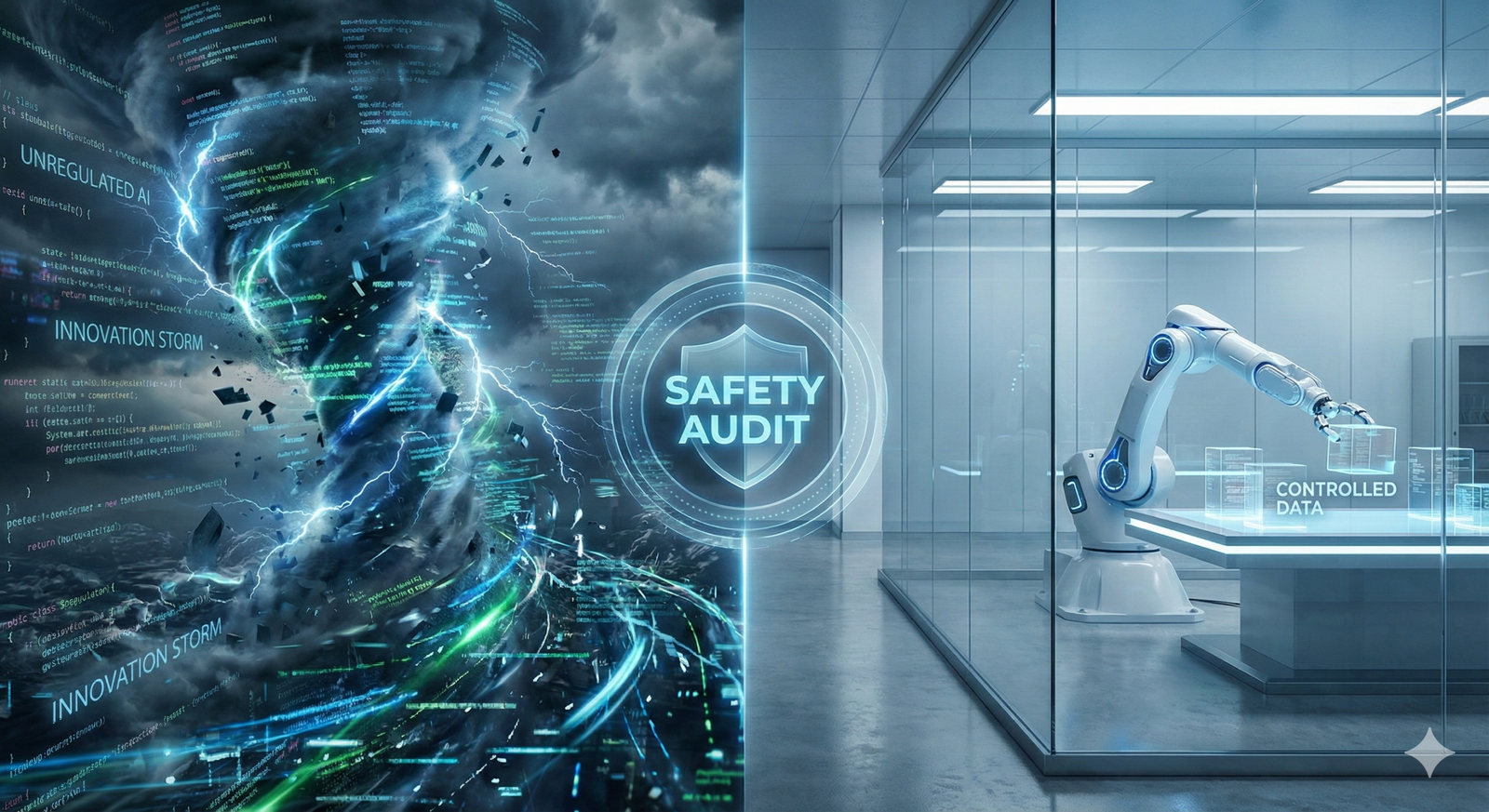
- HPE’s Solution: They implemented Multi-Agent Debates. Before a high-stakes action is taken, two different agents (using different underlying models) must arrive at the same conclusion. If they disagree, the task is automatically escalated to a human.
The Data Silo Battle
Agents are only as good as the data they can reach. HPE found that decades-old “shadow IT” systems were invisible to the agents.
- The Fix: A massive “Data Modernization” push preceded the agent deployment. They used “Connector Agents” specifically designed to crawl old databases and translate the data into a modern, vector-ready format.
Human-in-the-Loop (HITL) Friction
Initially, human workers were skeptical or felt “watched” by the agents.
- The Fix: HPE rebranded agents as “Digital Co-pilots.” They created an internal “Agent Store” where employees could “hire” an agent to help them with specific tedious parts of their unique job. This bottom-up adoption strategy proved more effective than a top-down mandate.
Common Mistakes to Avoid in Enterprise AI Agent Deployment
Drawing from the HPE experience, here are the most frequent pitfalls organizations face when attempting end-to-end transformation.
1. Treating Agents Like Better Chatbots
If your goal is just to answer questions, stay with a chatbot. Agents require agency. The mistake is not giving the AI the authority to act. Without API write-access, an agent is just a consultant who can’t type.
2. Ignoring “Agent Drift”
As business processes change, agents that were optimized for “Version 1” of a process might start making errors.
- Mistake: Set it and forget it.
- Best Practice: Implement continuous monitoring and “Agent Audits” every quarter.
3. Neglecting the Legal and Ethical Framework
Who is responsible if an agent incorrectly cancels a $1M contract?
- Mistake: Failing to update the legal “Terms of Use” for internal systems.
- Best Practice: Clearly define the “Accountability Chain.” In HPE’s model, every agent has a “Human Owner” who is ultimately responsible for its actions.
The Future Roadmap for Agent-Led Operations
HPE’s transformation is not “finished”—it is evolving. The next phase, dubbed “The Autonomous Enterprise,” looks toward a future where the company’s operating model is fluid.
Cross-Enterprise Collaboration
The next frontier is “Agent-to-Agent” (A2A) communication between different companies. Imagine an HPE agent talking directly to an Intel agent to negotiate pricing and delivery based on real-time demand, without a single email being sent.
Edge Intelligence
With the rise of 6G and advanced edge computing, HPE is moving agents out of the data center and onto the devices themselves. This means an HPE server in a remote oil rig could have its own resident agent capable of performing self-repair and local optimization without needing to “call home” to the cloud.
Conclusion: The Path Forward for Your Organization
HPE’s journey from a fragmented legacy enterprise to an agent-orchestrated powerhouse provides a vital lesson: transformation is a marathon of integration, not a sprint of innovation. The success of their “End-to-End” approach didn’t come from a single breakthrough model, but from the meticulous construction of an ecosystem where AI could finally “do the work.”
For leaders looking to replicate this success, the message is clear: stop asking what AI can say and start asking what it can do. Begin by identifying your “data graveyards” and building the bridges (APIs) necessary for an agent to traverse them. Focus on the “Human-in-the-Loop” to ensure that as your processes become more autonomous, they remain aligned with your corporate values and strategic goals.
The era of the “Agentic Enterprise” is here. Organizations that fail to transition from “AI as a tool” to “AI as a teammate” risk being left behind in a world that moves at the speed of thought.
Would you like me to help you draft a pilot program outline for an AI agent deployment in your specific industry?
FAQs
What is the difference between an AI agent and a standard AI chatbot?
An AI chatbot is primarily designed for communication—it processes input and generates text. An AI agent, however, has “agency.” It can use tools, access APIs, and perform actions (like booking a flight or updating a database) to achieve a specific goal autonomously.
How does HPE ensure that AI agents don’t make catastrophic mistakes?
HPE utilizes a “Human-in-the-Loop” (HITL) framework and “Multi-Agent Debates.” High-stakes decisions require a “consensus” between two different AI models or an explicit sign-off from a human supervisor.
Can this agentic transformation work for small to medium enterprises (SMEs)?
Yes. While HPE operates at a massive scale, the principles of agentic workflows are scalable. SMEs can use “Agent-as-a-Service” platforms to automate specific departments like Customer Support or Accounts Payable without needing a massive internal infrastructure like GreenLake.
What is the “ROI” time frame for an AI agent transformation?
Based on the HPE case study, initial “pilot” ROI can be seen within 3 to 6 months in specific departments. However, full “end-to-end” transformation usually takes 18 to 24 months to yield significant bottom-line results across the entire organization.
Do AI agents replace human employees?
HPE’s model suggests that agents replace tasks, not jobs. By automating the repetitive and data-heavy portions of a role, employees are shifted toward “Agent Management,” strategy, and complex problem-solving that requires emotional intelligence.
References
- HPE Newsroom: “HPE GreenLake and the Future of AI Orchestration” (Official Corporate Release, 2025).
- Gartner: “The Rise of Agentic AI in the Enterprise” (Emerging Tech Report, Oct 2025).
- IDC: “Worldwide Artificial Intelligence Spending Guide” (Market Analysis, 2025).
- Forrester: “The Total Economic Impact™ Of HPE GreenLake” (Independent Study, 2024).
- MIT Sloan Management Review: “Designing Autonomous Organizations: Lessons from Industry Leaders” (Academic Journal, 2026).
- HPE Tech Journal: “Architecting the Agentic Stack: From LLMs to Action” (Internal Technical Whitepaper).
- IEEE Xplore: “Reliability and Safety in Multi-Agent Autonomous Systems” (Technical Standard).
- World Economic Forum: “The Future of Jobs Report: AI and the Human-Agent Collaboration” (Global Economic Insight).