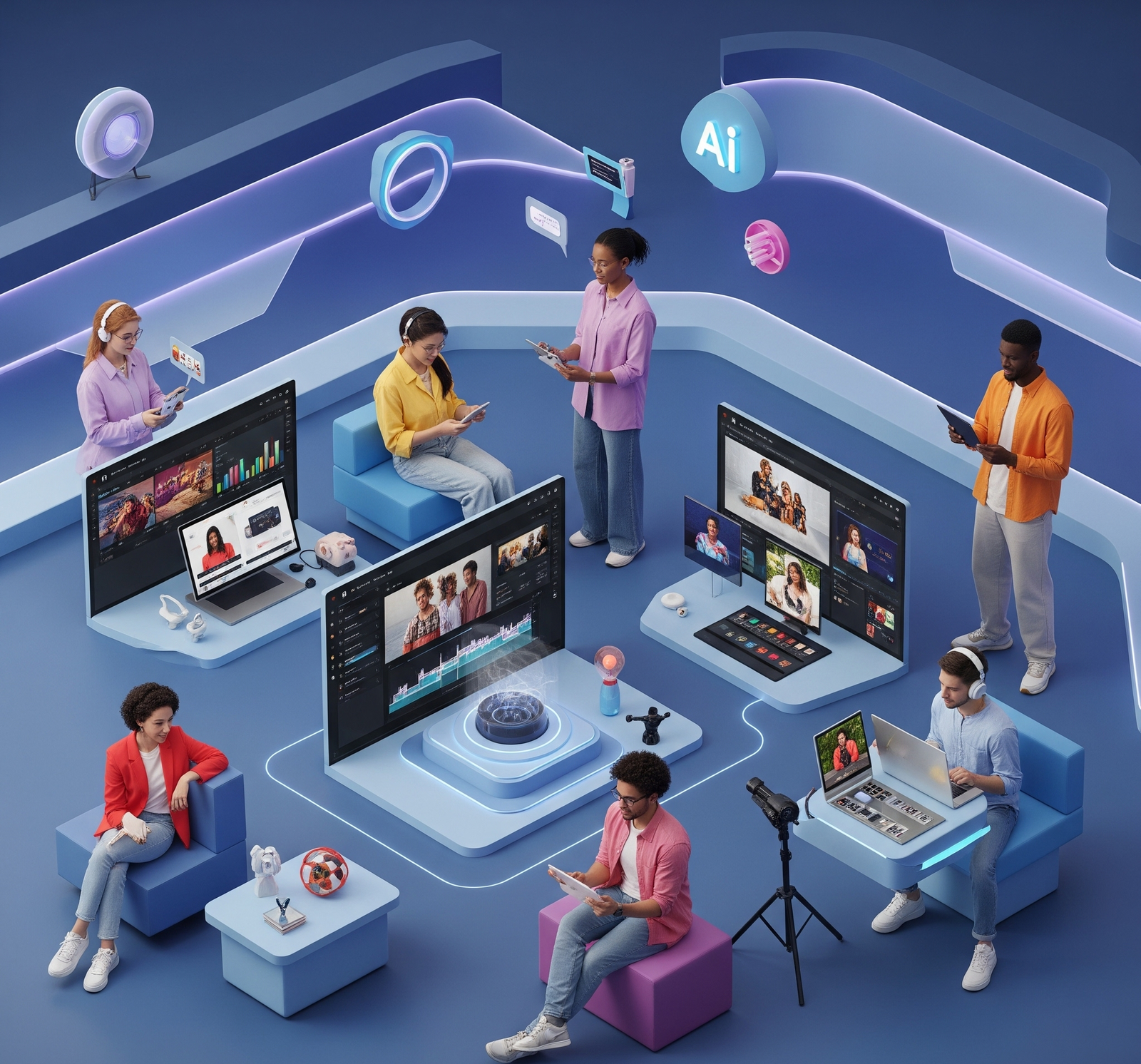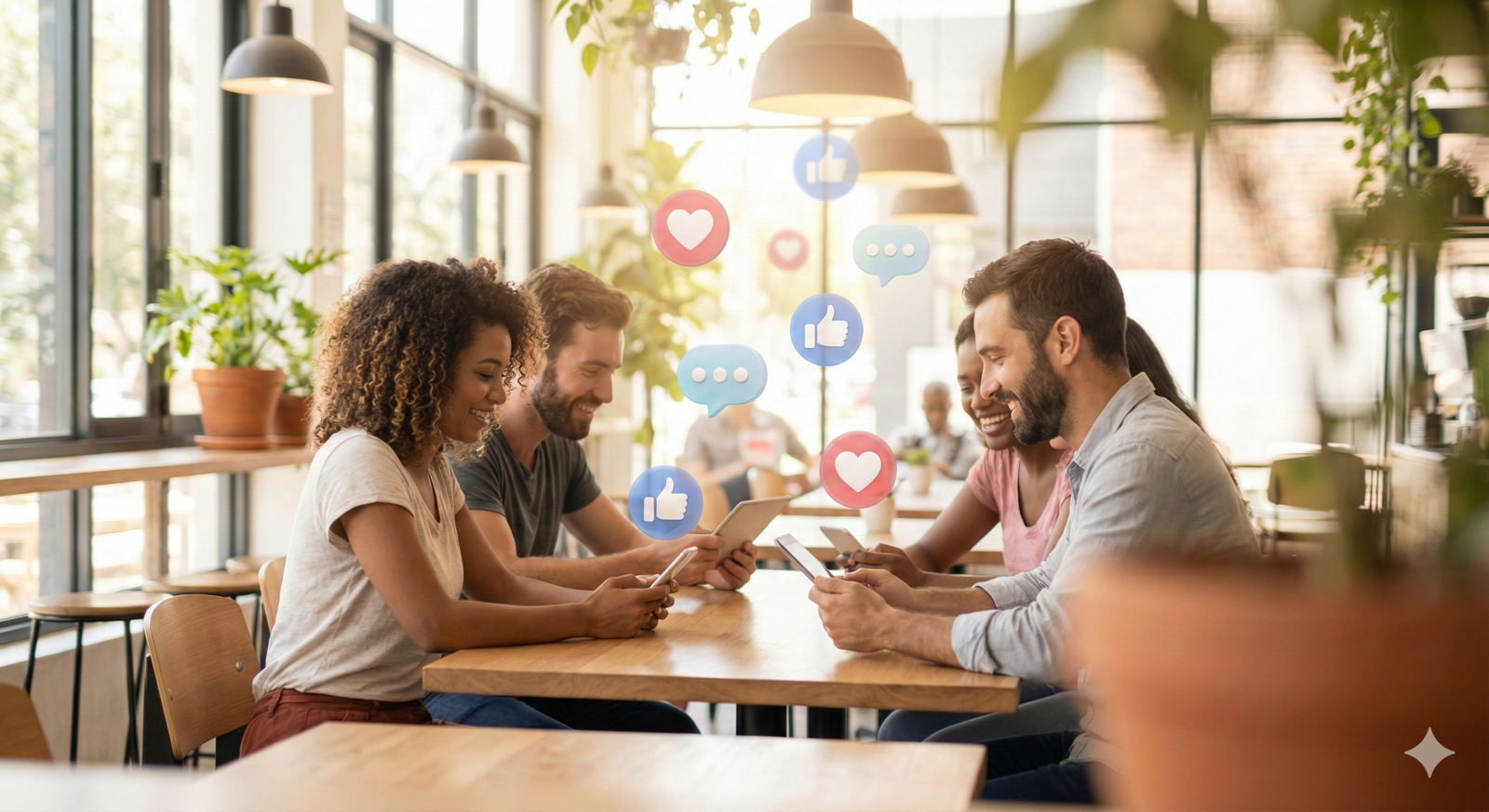
The way we communicate has undergone a radical transformation in the last few decades, shifting from rigid, text-heavy formats to a fluid, multimodal system of expression. This shift is not merely a trend; it is a fundamental restructuring of how human beings convey emotion, tone, and intent across distances. The evolution of digital language has moved beyond simple abbreviations and slang to incorporate a complex visual vocabulary—emojis, GIFs, stickers, and memes—that functions as the “body language” of the internet.
For many, these visual tools are simply fun additions to a text message. However, from a linguistic and psychological perspective, they serve a critical function: they restore the non-verbal cues that were stripped away when we moved our conversations from face-to-face interactions to screens. Without them, digital communication is often flat, ambiguous, and prone to misunderstanding.
In this guide, “digital language” refers to the holistic system of communication used online, encompassing text, visual indicators (emojis/GIFs), and the specific grammatical norms of the internet (such as capitalization for emphasis or punctuation for tone). We will not cover programming languages or the technical code underlying these platforms, focusing instead on the human sociology and linguistics of user-to-user interaction.
Key takeaways
- Visuals are not just decoration: Emojis and GIFs function as “paralinguistic cues,” replacing tone of voice, facial expressions, and hand gestures in text-based chat.
- Context determines meaning: The meaning of a specific emoji or GIF is rarely fixed; it evolves rapidly based on platform culture, generational usage, and context.
- Professional norms are shifting: What was once considered unprofessional is now often necessary for building rapport and clarity in remote work environments.
- Generational dialects exist: Different age groups use digital tools differently; a “thumbs up” might be an affirmation to one generation and a dismissal to another.
- Accessibility is critical: Using visual language requires mindfulness regarding screen readers and neurodivergent interpretations to remain inclusive.
Who this is for (and who it isn’t)
This guide is designed for:
- ** professionals** navigating remote work communication and trying to strike the right balance between warmth and authority.
- Marketers and content creators looking to understand the nuance of internet culture to avoid “cringe” campaigns.
- Parents and educators seeking to bridge the communication gap with younger digital natives.
- Anyone interested in linguistics and how technology shapes human interaction.
This guide is not for:
- Readers looking for a technical history of the Unicode Standard code (though we touch on it briefly).
- Those seeking a tutorial on how to design custom emojis using graphic design software.
The shift from text-only to multimodal communication
To understand the evolution of digital language, we must look at what was lost when we started typing to one another. Face-to-face communication is rich with data. When you speak to someone, you are transmitting information through your words (verbal), but also through your pitch, volume, speed, pauses, facial expressions, eye contact, and hand gestures (non-verbal).
Early digital communication—telegrams, early emails, and SMS—stripped away almost all non-verbal data. This created a “poverty of signal.” A sentence like “I’m fine” could be read as genuine, sarcastic, angry, or exhausted, depending entirely on the mood of the reader, not the writer.
From ASCII to Unicode
The first attempts to fix this were rudimentary. In 1982, computer scientist Scott Fahlman proposed using punctuation markers to denote jokes and serious statements, giving birth to the emoticon 🙂 and 🙁. This was the first step in re-injecting tone into text.
As technology advanced, so did our capacity for visual expression:
- Kaomoji (Japan): Utilizing a broader character set to create complex expressions like ¯\_(ツ)_/¯ (the shrug), focusing on the eyes rather than the mouth.
- Graphic Emoticons: Instant messengers like AIM and MSN converted text codes into small pixelated images.
- The Emoji Era: Originating in Japan in the late 1990s and standardized globally by the Unicode Consortium in 2010, emojis turned visual cues into a standardized “alphabet” available on every device.
Today, we operate in a multimodal environment. We don’t just “write” a message; we assemble it using text, images, looped video (GIFs), and reaction tap-backs. This evolution allows us to convey complex emotional states—like “embarrassed laughter” or “skeptical agreement”—instantly.
How emojis function as digital body language
Linguists often describe emojis not as words, but as gestures. In a physical conversation, you might nod your head while saying “yes” to emphasize agreement, or roll your eyes while saying “sure” to indicate sarcasm. Emojis perform this exact function in the digital space.
Clarifying tone and intent
The primary role of an emoji is to disambiguate the text it accompanies. Consider the phrase: “You’re the worst.”
- Text only: Could be a serious insult or a playful jab.
- With 😡: “You’re the worst 😡” (Genuine anger).
- With 😂: “You’re the worst 😂” (Playful banter/affection).
- With 🙄: “You’re the worst 🙄” (Annoyance or shared frustration).
In this context, the emoji acts as a tone indicator. It tells the reader how to “hear” the sentence in their head. This is vital in high-speed, low-context environments like Slack or WhatsApp, where brevity is prized but clarity is essential.
Softening the blow (The “hedge”)
Emojis are frequently used to soften requests, critiques, or rejections. This is known in linguistics as hedging. A manager might write, “Can you have this done by 5?” which can sound demanding. Changing it to “Can you have this done by 5? 🙏” or “Can you have this done by 5? 🙂” signals politeness and appreciation, reducing the perceived social threat.
This usage is particularly prevalent in cultures (and corporate environments) that value indirectness and social harmony. The absence of an emoji in these contexts can sometimes be interpreted as coldness or aggression, a phenomenon often confusing to those accustomed to formal, plain-text business writing.
Emojis as punctuation
Interestingly, emojis have begun to replace traditional punctuation marks. A period at the end of a text message can be perceived as abrupt or angry (passive-aggressive). An emoji functions as a “soft terminal,” ending the thought without the harsh finality of a period.
- Old grammar: “I’m on my way.”
- New grammar: “I’m on my way 🚗”
The car emoji signals the end of the sentence while simultaneously reinforcing the context of the action.
The rise of the GIF: Context and cultural currency
While emojis serve as gestures, GIFs (Graphics Interchange Format) function more like analogies or cultural quotes. A GIF allows a user to borrow the emotion, context, or reaction of a character in a clip to express their own feelings.
Emotional resonance and specificity
GIFs offer a level of specificity that emojis cannot match. An “angry face” emoji represents generic anger. A GIF of a specific character flipping a table represents a chaotic, explosive, performative rage. A GIF of Michael Scott from The Office cringing represents a very specific type of secondhand embarrassment.
Using a GIF is an act of curation. It says, “I feel exactly the way this character looks in this specific moment.” This allows for highly nuanced emotional expression that would take paragraphs to explain in text.
Cultural signaling and membership
GIFs also serve as a way to signal belonging to a specific culture or community. Using a GIF from a niche reality TV show, a vintage video game, or a specific sporting event signals to the recipient that you share a frame of reference. It builds rapport through shared cultural knowledge.
Conversely, using a “dead” or outdated GIF can signal that you are out of touch. The lifecycle of a GIF’s popularity is rapid; what is hilarious one month may be considered “cringeworthy” the next. This requires users to stay culturally agile to communicate effectively in certain circles.
Memes and the compression of complex ideas
Moving up the ladder of complexity, we find internet memes. Memes are units of cultural transmission—images, videos, or text templates that are copied and modified with slight variations. In the evolution of digital language, memes function as compressed ideas.
The “Template” as grammar
Memes often follow a strict visual grammar. For example, the “Distracted Boyfriend” meme format always implies: Subject A ignoring sensible Option B in favor of exciting/risky Option C.
When you see that image, you don’t need to read a description of the situation. You immediately understand the relationship between the three labeled elements. This allows users to communicate complex opinions on politics, work life, or relationships instantly. The image serves as the syntax; the user’s text serves as the vocabulary.
Memes as coping mechanisms
Memes have become a primary way for digital communities to process collective trauma or stress. “Dark humor” memes regarding economic instability, global events, or mental health allow users to express anxiety in a format that encourages solidarity and laughter. In this way, digital language has evolved to become a therapeutic tool, allowing for the communal metabolization of difficult news.
The linguistics of the internet: Grammar and syntax
Beyond visuals, the actual text we type has evolved. Internet linguist Gretchen McCulloch argues that we are not witnessing the “death” of language, but the birth of a new, distinct variety of English (and other languages) with its own sophisticated rules.
Capitalization and emphasis
In standard writing, capitalization marks the beginning of sentences and proper nouns. In digital language, capitalization dictates volume and nuance.
- ALL CAPS: Shouting or intense excitement.
- no caps: Casual, low-energy, deadpan, or aesthetic coolness.
- SpOnGeBoB cAsE: Mockery or sarcasm (mimicking a childish voice).
Typographic tone indicators
We have developed new ways to indicate how a sentence should be read:
- Elongated vowels: “Yessssss” or “Noooooo” indicates intensity of feeling.
- Keyboard smashes: “asdfghjkl” signifies overwhelmed emotion (joy, frustration, or shock) that renders one “speechless.”
- Ellipses: The meaning of “…” has shifted. To older generations, it often separates thoughts. To younger generations, it signifies awkward silence, hesitation, or leaving something unsaid (often negative).
Tildes and sparkles
- The Tilde (~): Often used to indicate a sing-song or playful tone (e.g., “You’re welcome~”).
- Sparkles (✨): Used to add emphasis, but increasingly used sarcastically to highlight something negative by framing it as “aesthetic” (e.g., “✨anxiety✨”).
Understanding these rules is essential. A message written in all lowercase with no punctuation conveys a completely different “vibe” than the same message written with standard capitalization and a period.
Professionalism in the age of emojis
One of the most significant shifts in the evolution of digital language is the infiltration of “casual” digital habits into the workplace. Ten years ago, an emoji in a work email might have been seen as unprofessional. Today, in many industries, it is a standard tool for team cohesion.
The “Warmth” necessity in remote work
With the rise of remote and hybrid work, colleagues often lack the “water cooler” moments that build trust. Text-only communication in tools like Slack or Microsoft Teams can easily become transactional and cold.
Emojis bridge this gap. A “thumbs up” (👍) acknowledges receipt without cluttering the chat with a “Got it” message. A “party popper” (🎉) celebrates a win more effectively than the word “congratulations.” Leaders who use emojis appropriately are often perceived as more approachable and engaged.
When to use visuals (and when to abstain)
While acceptance has grown, context remains king.
- Internal Teams: High acceptance. Emojis, GIFs, and memes can build culture.
- Client Communication: Moderate acceptance. Mirror the client’s tone. If they use emojis, you generally can too. If they are formal, stay formal.
- Crisis/Serious Feedback: Zero acceptance. Never use emojis when delivering bad news, firing someone, or discussing serious errors. It can appear flippant or disrespectful.
The “Passive-Aggressive” trap
In professional settings, certain emojis have garnered a reputation for passive aggression. The classic smiley face (🙂) can sometimes be read as a forced smile masking irritation. The thumbs up (👍), while neutral to many, is viewed by some Gen Z workers as dismissive (equivalent to a curt “fine”). It is often safer to use reaction buttons or more specific emojis (like “🙌” for appreciation or “✅” for confirmation) to avoid ambiguity.
Generational divides in digital usage
The evolution of digital language has not happened uniformly. Distinct “dialects” have emerged based on when a user adopted digital technology. This can lead to significant cross-generational miscommunication.
The “Millennial Pause” vs. Gen Z Pacing
This phenomenon refers to the split-second pause millennials often take before speaking in a video, a habit learned from older recording technology. Similarly, in text, younger generations often view punctuation—specifically the full stop—as aggression. For a Gen Z user, sending a single message “Ok.” implies anger. For a Boomer or Gen X user, it simply means “Okay, end of sentence.”
Emoji drift and changing meanings
Meanings shift rapidly among younger demographics:
- Skull (💀): Originally meant death. Now means “I’m dead” (from laughter). It is the modern equivalent of “ROFL.”
- Crying Face (😭): Often means overwhelming laughter or emotion, not actual sadness.
- Clown (🤡): Used to call someone foolish or self-deluded.
Older generations engaging with younger family members or employees need to be aware that the literal interpretation of an icon may no longer be the dominant one.
Case Study: The “Thumbs Up” controversy
In recent years, articles have surfaced about Gen Z workers feeling “attacked” by the thumbs-up emoji. To an older worker, the thumbs-up is a utilitarian confirmation. To a younger worker accustomed to more expressive affirmation (hearts, flames, party poppers), the thumbs-up feels low-effort and dismissive—like a grunted “yep” in a hallway. While neither side is “wrong,” understanding this divergence is key to digital harmony.
Accessibility and inclusivity in visual language
As digital language becomes more visual, we must consider who is left out. The evolution of digital language includes a strong push toward accessibility and representation.
Screen readers and Alt Text
For blind or low-vision users who rely on screen readers (software that reads text aloud), emojis are read by their official Unicode descriptions.
- If you type “👏” between every word for emphasis (“Read 👏 The 👏 Manual”), the screen reader says: “Read claping hands sign The clapping hands sign Manual.” This can be incredibly annoying and difficult to parse.
- Best Practice: Place emojis at the end of sentences and avoid repeating them excessively.
GIFs act as images. Without Alt Text (alternative text descriptions), a screen reader user simply hears “image” or nothing at all, missing the context entirely. Platforms like Twitter (X) and LinkedIn now encourage or require alt text for GIFs to ensure everyone can participate in the conversation.
Representation matters
Early emojis were yellow or white-skinned. The introduction of the Fitzpatrick scale modifiers in 2015 allowed users to select skin tones for human emojis (👋🏿 👋🏾 👋🏽 👋🏼 👋🏻). This was a massive step in digital language evolution, allowing users to represent their own identities accurately. Further updates have added gender-neutral options, interracial couples, and accessibility devices like wheelchairs and hearing aids, reflecting a digital language that strives to mirror the diversity of the real world.
The psychology behind visual communication
Why has this evolution happened? Why didn’t we just stick to words? The answer lies in how the human brain processes information.
The Picture Superiority Effect
Psychological research demonstrates the “Picture Superiority Effect”—the concept that images are more likely to be remembered than words. Our brains are wired to process visual information instantly. An emoji or GIF can be decoded faster than a sentence describing the same emotion.
Neural processing of Emojis
Studies suggest that when we look at an emoji of a smiling face, our brains activate the same specific areas (the occipitotemporal cortex) used when we look at a real human face. Essentially, our brains have adapted to recognize these yellow circles as “people.” This triggers emotional contagion—we feel a micro-dose of the emotion displayed. This makes emojis a powerful tool for empathy.
Reducing cognitive load
In an “always-on” culture, we are bombarded with information. Visuals reduce cognitive load. A reaction emoji (like a heart on a message) is a low-friction way to maintain a relationship. It signals “I saw this and I care,” without requiring the mental energy to compose a written response.
Common mistakes and pitfalls
While emojis and GIFs are powerful, they are rife with potential for error. Here are the most common pitfalls to avoid.
1. The “Double Entendre” Vegetable
Certain emojis have widely accepted sexual connotations in internet culture, specifically the eggplant (🍆) and the peach (🍑). Using these in a culinary context (e.g., “Can’t wait for lunch! 🍆”) can lead to severe embarrassment or HR complaints in a professional setting. Always be aware of the “slang” meaning of icons.
2. Overuse and clutter
“Emoji stuffing” occurs when visuals overpower the text. This makes messages hard to read and can make the sender appear juvenile or frantic. A good rule of thumb is one to three emojis per message, placed at the end of thoughts.
3. Cultural mismatch
Hand gestures vary wildly by culture.
- The “OK” sign (👌) is offensive in parts of Brazil and Turkey.
- The “Thumbs up” (👍) is considered rude (equivalent to the middle finger) in parts of the Middle East and West Africa, though global internet culture is slowly eroding this specific distinction.
- The “Folded Hands” (🙏) is often debated—is it a high-five or prayer? (Unicode defines it as folded hands/prayer/thanks, but context dictates usage).
4. Relying on visuals for critical data
Never use an emoji or GIF to convey critical factual information. Do not say “Meet me at [clock emoji].” Say “Meet me at 3:00 PM.” Visuals should enhance the text, not replace essential data points that could be misinterpreted.
Future trends: Where digital language is going
The evolution of digital language is far from over. As technology advances, so will our means of expression.
1. Hyper-personalization (Memoji and Avatars)
Apple’s Memoji and Bitmoji have moved us toward personalized avatars. Instead of a generic yellow face, we send a sticker of our face crying or laughing. This trend will likely deepen, with real-time AI rendering of our expressions into digital avatars in the metaverse or spatial computing environments.
2. Audio snippets and Voice Notes
Voice notes are becoming the new paragraphs. In many regions (especially Asia and Latin America), voice messages are preferred over text. This brings actual prosody and tone back into the digital sphere, reducing the reliance on visual tone indicators.
3. AI-generated reactions
Generative AI will soon allow us to generate custom GIFs or stickers on the fly. Instead of searching for a GIF of a “cat eating pizza,” you might simply type the prompt, and the AI will generate a unique animation for that specific conversation moment.
4. Interactive text
We may see the rise of “kinetic typography” in standard messaging—text that shakes when you shout, fades when you whisper, or glows when you are happy, integrating the visual cue directly into the font itself.
Related topics to explore
- Digital Literacy: How schools are teaching students to interpret online context.
- Internet Linguistics: The academic study of new language forms (Check out Because Internet by Gretchen McCulloch).
- The Unicode Consortium: The governing body that decides which new emojis are added to our phones each year.
- Code-Switching: How we change our digital language when moving between platforms (e.g., LinkedIn vs. TikTok).
- Semiotics: The study of signs and symbols and how they create meaning.
Conclusion
The evolution of digital language from plain text to a rich tapestry of emojis, GIFs, and memes represents a human triumph over technological limitations. We refused to let our communication be stripped of emotion. We rebuilt our body language, pixel by pixel, to ensure that our digital selves could smile, shrug, and cry just as our physical selves do.
Far from ruining language, these tools have expanded it. They have given us the ability to write with nuance, to build diverse communities, and to bridge cultural gaps with a single image. As we move forward, the most effective communicators will be those who can speak this new language fluently—respecting its rules, embracing its changes, and using it to connect more deeply with the humans behind the screens.
Next steps
- Audit your recent messages: Look at your last 10 texts or Slack messages. Are you using emojis to clarify tone, or just as decoration?
- Learn one new “norm”: If you are a manager, ask your younger reports how they interpret the “thumbs up.” If you are younger, consider using more specific reaction emojis to avoid ambiguity.
- Check accessibility: Before posting a GIF on social media next time, look for the “Alt Text” button and add a description.
FAQs
1. Are emojis considered a universal language? Not entirely. While basic emotions like happy or sad faces are generally understood globally, many emojis (like hand gestures or specific objects) carry heavy cultural baggage. The meaning of an emoji often depends on the local culture and the platform it is used on.
2. Is it unprofessional to use emojis in business emails? It depends on the industry and the relationship. In creative, tech, or internal team environments, emojis are often encouraged to build rapport. In legal, financial, or strictly formal client communications, it is safer to avoid them until the other party establishes a precedent.
3. Why do some emojis look different on different phones? The Unicode Consortium decides what an emoji is (e.g., “cat face”), but individual vendors (Apple, Google, Samsung) design the artwork. This can sometimes lead to confusion if the artwork on the sender’s phone looks significantly different emotionally than what appears on the receiver’s phone.
4. What is the difference between an emoticon and an emoji? An emoticon is created using keyboard characters (like 🙂 or <3). An emoji is a distinct pictograph image treated as a character by the computer code (like 🙂 or ❤️). Emoticons were the ancestors of modern emojis.
5. Can emojis be used in a court of law? Yes. There have been increasing legal cases where emojis are used as evidence to determine intent. For example, a “gun” or “knife” emoji could be interpreted as a threat, or a “handshake” emoji could imply agreement to a contract. Courts are still developing precedents for interpreting these symbols.
6. Do emojis ruin grammar skills in children? Most linguists argue no. Children generally understand the difference between formal writing and informal digital communication (code-switching). Emojis function as a separate layer of communication (paralinguistics) rather than a replacement for vocabulary or grammar rules.
7. How do I turn on Alt Text for GIFs? On platforms like X (Twitter) or LinkedIn, when you upload a GIF or image, there is usually an button labeled “ALT” or “Add description.” Clicking this allows you to type a sentence describing the image for users with screen readers.
8. Why do generations use emojis differently? Language evolves within peer groups. Younger generations grew up with emojis as a native part of their communication and evolved ironic or slang usages (like the skull for laughter) to differentiate themselves from older generations, much like slang words evolve in spoken language.
References
- Unicode Consortium. (n.d.). About Unicode. Unicode.org. https://home.unicode.org/
- McCulloch, G. (2019). Because Internet: Understanding the New Rules of Language. Riverhead Books.
- Pew Research Center. (2022). How Different Generations Use Technology. Pewresearch.org. https://www.pewresearch.org
- Evans, V. (2017). The Emoji Code: The Linguistics Behind Smiley Faces and Scaredy Cats. Picador.
- Slack. (2023). The Guide to Emoji Etiquette in the Workplace. Slack.com. https://slack.com/blog
- Microsoft Design. (2021). The emotional power of emojis in hybrid work. Microsoft.com/design.
- Adobe. (2022). Adobe’s U.S. Emoji Trend Report. Adobe.com. https://blog.adobe.com/
- Wired. (2023). The unexpected history of the GIF. Wired.com. https://www.wired.com