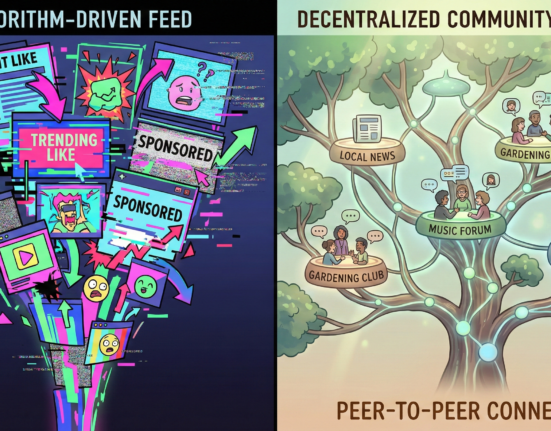
In the early days of the creator economy, the unspoken contract was simple: you bring the attention, and the platform shares the wealth. For years, creators operated under the assumption that high view counts would naturally translate into sustainable income through ad revenue shares and creator funds. However, as we settle into 2026, that contract feels increasingly broken.
Viral hits that once paid rent now often generate enough only for a coffee. “Creator Funds,” initially launched with massive fanfare, have in many cases diluted into fractions of a penny per thousand views as more users flood the apps. The volatility of algorithmic distribution means that a creator’s livelihood can be slashed overnight by a subtle code update they will never see or fully understand.
This reality has ushered in a new phase of the digital economy: the era of aggressive creator revenue diversification. It is no longer a luxury or a savvy business move; it is a survival mechanism. This guide explores why the platforms are under pressure, why payouts are shrinking relative to effort, and most importantly, how modern creators are building resilient, diversified businesses that no algorithm can destroy.
Key Takeaways
- The “Middle Class” Squeeze: While top-tier celebrities still command massive fees, mid-tier creators are seeing platform-native payouts stagnate or decline due to inventory saturation.
- Algorithm Anxiety: Reliance on a single algorithm is now widely considered a single point of failure for digital businesses.
- The Asset Shift: Smart creators are moving from “renting” audiences (social followers) to “owning” audiences (email lists, communities).
- Vertical Monetization: The most successful diversification isn’t just “more platforms,” but deeper monetization of the same audience through products and services.
- B2B Mindset: Creators are evolving into media companies, prioritizing direct brand partnerships and B2B services over passive ad revenue.
The State of Platform Payouts: Why the Decline?
To understand the solution, we must first diagnose the problem. Why, exactly, are payouts feeling so disappointing for so many, despite the creator economy supposedly growing?
1. The Supply-Side Saturation
The barrier to entry for content creation has never been lower. With high-quality smartphone cameras and AI-assisted editing tools, the supply of content has exploded. As of January 2026, platforms are hosting exponentially more content than they were five years ago.
- The Economics: Ad revenue is based on advertiser demand versus ad inventory (content). When content supply outpaces advertiser demand, the cost per impression (CPM) often softens, or the fill rate drops.
- The Result: A creator might get the same number of views as they did in 2023, but the revenue generated from those views is diluted because they are competing with millions of new clips for the same ad dollars.
2. The “Enshittification” Lifecycle
Coined by writer Cory Doctorow, this term describes a platform lifecycle where value is first directed to users, then to business customers (advertisers), and finally clawed back by the platform itself.
- Early Phase: Platforms subsidize creator payouts (often operating at a loss) to attract talent. This is the “golden era” creators remember fondly.
- Mature Phase: Once the platform achieves dominance and lock-in, they reduce subsidies and tighten organic reach to force creators to pay for visibility (boosting posts) or accept lower revenue shares to maintain profitability for shareholders.
3. The End of the “Creator Fund” Model
Fixed-pool creator funds have proven inherently flawed. A fund with a static cap (e.g., $1 billion) distributed among a growing number of creators results in a mathematical certainty: as the platform grows, your slice of the pie shrinks.
- In Practice: A creator who earned $500 for a million views in the fund’s first year might earn $20 for the same performance in year three, simply because there are now ten times as many creators dipping into the same fixed pot.
4. Volatile Ad Markets
Ad spend is cyclical and highly sensitive to macroeconomic conditions. When the economy tightens, marketing budgets are the first to be cut. Creators relying solely on programmatic ads (AdSense, TikTok Creator Rewards, etc.) effectively attach their personal income volatility to the global stock market.
Who This Guide Is For (and Who It Isn’t)
This guide is for:
- Mid-tier creators (10k–500k followers) who feel the pinch of stagnating RPMs (Revenue Per Mille) and want to stabilize their income.
- Full-time aspirants who have viral potential but haven’t figured out how to quit their day job because platform payouts are inconsistent.
- Digital marketers advising influencers on long-term career planning.
This guide is NOT for:
- Mega-celebrities whose massive scale insulates them from minor fluctuations in RPM.
- Hobbyists who create strictly for fun and have no desire to monetize or treat content as a business.
Phase 1: The Mindset Shift (Renting vs. Owning)
The most critical step in creator revenue diversification is psychological. You must stop viewing yourself as an employee of the video platform and start viewing the platform as a top-of-funnel marketing channel for your own business.
The “Sharecropping” Analogy
In digital marketing, building a business solely on social media is often compared to sharecropping. You work land you do not own. The landlord (the platform) can change the rules, raise the rent (reduce reach), or evict you (ban your account) without notice.
Diversification requires moving from Renting to Owning:
- Rented Land: TikTok, Instagram, YouTube, X (Twitter), LinkedIn. You have reach, but no direct contact info.
- Owned Land: Email lists, SMS lists, websites, private communities (Discord, Slack, Circle), podcast RSS feeds. You control the distribution.
The Conversion Funnel
Your goal is not just to get views; it is to move viewers down a funnel:
- Discovery (Platform): Viral content catches attention.
- Connection (Bridge): You invite them to a deeper channel (newsletter, bio link).
- Ownership (Database): They subscribe to something you control.
- Monetization (Product): You sell to them directly.
Phase 2: Analyzing Diversification Options
Diversification does not mean trying to do everything at once. It means choosing the right mix of revenue streams that align with your content style and audience demographic.
1. Direct-to-Consumer (DTC) Digital Products
This is often the highest-margin route for educational or inspirational creators.
- What it is: Selling e-books, templates, presets, guides, or courses directly to followers.
- Why it works: You keep 90–95% of the revenue (minus transaction fees). It decouples your income from views. Selling 100 products at $50 makes $5,000—a sum that might require millions of views to earn via ad revenue.
- Examples:
- A fitness creator selling a 12-week workout PDF.
- A productivity influencer selling Notion templates.
- A photographer selling Lightroom presets.
2. Memberships and Subscriptions
Best for community-focused creators and entertainers.
- What it is: Recurring monthly income in exchange for exclusive content, access, or community.
- Platforms: Patreon, YouTube Memberships, Substack, Kofi.
- The Value Proposition: Fans aren’t paying for the content per se; they are paying for access to you and connection with other super-fans.
- Realistic Expectations: Conversion rates from free followers to paid members are typically low (often 0.5% to 2%). However, that small percentage provides stability.
3. Affiliate Marketing (Done Correctly)
Best for lifestyle, tech, beauty, and fashion creators.
- What it is: Earning a commission on products you recommend.
- The Shift: Instead of relying on random Amazon links, creators are building curated “Shop” pages or partnering with high-ticket affiliate programs (software, finance, luxury goods) where commissions are substantial.
- Pitfall: Promoting low-quality products destroys trust. Affiliate income only works if you protect your reputation fiercely.
4. Brand Partnerships and UGC
Best for creators with high production value or niche expertise.
- Traditional Sponsorships: A brand pays you to post on your channel.
- UGC (User Generated Content): A brand pays you to create content for their channel. This is a booming sector because it doesn’t require the creator to have a massive following—just the ability to make good videos.
- Diversification Angle: Don’t just wait for inbound emails. Create a media kit and pitch outbound.
5. Services and Consulting
Best for B2B creators, educators, and industry experts.
- What it is: Trading time for money at a premium rate.
- Examples: Marketing audits, 1-on-1 coaching, freelance writing, video editing services.
- Why it stabilizes income: Service contracts are often high-value. One client can replace an entire month of bad ad revenue.
Phase 3: Building the “Safety Net” Infrastructure
Once you have identified potential streams, you need the infrastructure to support them. You cannot build a business on DM (Direct Message) orders.
The “Link in Bio” Strategy
Your bio link is the most valuable real estate on your profile. It should not just be a chaotic list of links.
- Prioritize: Put your lead magnet (email capture) or primary product at the top.
- Context: Don’t just say “My Store.” Say “Get the Ultimate Photography Guide.”
- Tools: Linktree, Stan Store, Beacons, or a custom landing page on your own website (preferred for SEO).
The Email List: Your Digital Insurance Policy
If you take only one action from this guide, let it be this: Start an email list.
- Why: Email remains the channel with the highest ROI. Algorithms filter out 80% of your posts from your own followers. Email reaches the inbox.
- How to start: Offer a “Lead Magnet”—something free and valuable (a checklist, a video, a discount code) in exchange for the email address.
- Platform options: ConvertKit (now Kit), Beehiiv, Mailchimp.
Financial Hygiene for Creators
Diversification creates complexity in accounting.
- Separate Accounts: Never mix business revenue with personal funds.
- Tax Reserves: In the US and many other jurisdictions, platforms do not withhold taxes. You must save 25–30% of every diversified dollar you earn.
- Contracts: When diversifying into brand deals or services, always use a contract. “Handshake deals” in DMs are unenforceable disasters waiting to happen.
Common Mistakes in Diversification
The pressure to diversify often leads to panic-induced decisions. Avoid these common traps.
1. The “Kitchen Sink” Approach
Launching a podcast, a newsletter, a YouTube channel, a merch line, and a course all in the same month.
- The Result: Burnout and low-quality execution across the board.
- The Fix: Stack your skills. Master one new revenue stream, systemize it, and then add the next.
2. Creating Products Nobody Wants
Spending three months filming a course without validating that your audience is willing to pay for it.
- The Fix: Pre-sell. Ask your audience to buy the concept before you build it. If nobody buys, you saved three months of work.
3. Ignoring the Core Content
In the rush to sell, creators sometimes stop making the entertaining or educational free content that built the audience in the first place.
- The Fix: Follow the 80/20 rule. 80% value-add free content, 20% promotional content. If you extract value without depositing value, your audience will leave.
Case Studies: Diversification in Action
These are hypothetical examples based on common successful patterns observed in the market as of 2026.
Case A: The “Cozy Gamer” (Entertainment to Physical Goods)
- Platform: Twitch and TikTok.
- Problem: Ad revenue fluctuates wildly based on Q1 vs Q4 ad spend.
- Diversification: Launched a line of branded desk mats and keycaps.
- Result: Physical product sales now account for 60% of income. Ad revenue is just “bonus money.”
Case B: The “Excel Wizard” (Education to Digital Products)
- Platform: Instagram Reels and LinkedIn.
- Problem: High views but low payout per view on educational shorts.
- Diversification: Created a $29 “Excel Shortcuts” cheat sheet and a $199 advanced course.
- Result: High-margin digital sales allowed them to quit their corporate accounting job.
Case C: The “Food Vlogger” (Lifestyle to Brand Ambassadorship)
- Platform: YouTube and TikTok.
- Problem: High production costs (food, travel) were not covered by ad revenue.
- Diversification: Secured a long-term, year-long partnership with a kitchenware brand (Brand Ambassadorship) rather than one-off posts.
- Result: Stable monthly retainer fee allows for better budgeting and higher quality content.
Comparison: Monetization Options at a Glance
For a creator trying to decide where to start, this breakdown clarifies the effort-to-reward ratio.
| Revenue Stream | Startup Effort | Maintenance Effort | Margin | Control |
| Ad Revenue | High (to get traffic) | Low (passive) | Low | None |
| Brand Deals | Medium (pitching) | Medium (creation) | High | Low |
| Digital Products | High (creation) | Low (delivery) | Very High | High |
| Merchandise | Medium (design) | High (logistics*) | Medium | High |
| Coaching | Low (setup) | High (time) | High | High |
| Memberships | Medium (setup) | High (content) | High | High |
*Note: Logistics effort is high unless using Print-on-Demand (POD), which lowers margins.
How to Choose Your Path: A Decision Framework
Don’t guess. Use your analytics and intuition to pick the right path.
1. Assess Your “Trust Equity”
Do your followers just watch you, or do they trust you?
- High Trust = Coaching, Courses, Affiliate Recommendations.
- Low Trust (High Entertainment) = Merch, Ad Revenue, broad appeal Brand Deals.
2. Analyze Your Audience Demographics
- Older / Professional Audience: High purchasing power. Good for expensive courses, consulting, premium subscriptions (Substack).
- Younger Audience: Lower purchasing power. Good for low-cost merch, micro-transactions (stickers/bits), and high-volume ad revenue.
3. Evaluate Your Personal Bandwidth
- Burnt Out? Avoid memberships that require constant new exclusive content. Look at evergreen digital products.
- Love interacting? Coaching or community-based memberships are a great fit.
Future-Proofing: The Role of AI in Diversification
As we look deeper into 2026, Artificial Intelligence plays a dual role. It contributes to content saturation (the problem), but it also aids diversification (the solution).
- AI for Product Creation: Creators are using generative AI to help write e-books, outline courses, and design merch graphics, drastically reducing the “Startup Effort” listed in the table above.
- AI for Operations: Tools that automate emails, repurpose video clips for different platforms, and analyze data allow solo creators to run complex businesses without hiring a large team.
- AI Translation: Tools that automatically dub content into other languages are opening up global ad revenue streams for creators who previously only reached one language market.
Conclusion
The era of passive reliance on platforms is over. The “platform pressure” regarding payouts is not a temporary glitch; it is a structural reality of a mature digital economy. The platforms prioritize their shareholders, not your rent.
However, this pressure is also a refining fire. It is pushing creators to build better, more robust businesses. By shifting your focus from chasing algorithm-driven views to building owned assets and diversified revenue streams, you gain something more valuable than a viral hit: control.
Next Steps:
- Audit: Look at your income from the last 12 months. What percentage came from platform payouts? If it’s over 50%, you are in the danger zone.
- Capture: If you haven’t already, set up a simple landing page to collect emails today.
- Ask: Poll your audience. Ask them what problem they have that you can help solve. Their answer is your first product.
The shift is daunting, but the destination—a sustainable, independent creative career—is worth the effort.
FAQs
Why are platform payouts decreasing in 2026?
Platform payouts are decreasing primarily due to content saturation. There is more video inventory available than there are advertisers to buy it, which drives down the cost per impression (CPM). Additionally, platforms are prioritizing profitability over growth subsidies, tightening their “Creator Funds” and revenue sharing models.
What is the difference between a micro-influencer and a nano-influencer regarding revenue?
Nano-influencers (typically under 10k followers) often struggle with ad revenue because they lack the volume of views. However, they can have higher engagement rates, making them excellent candidates for niche affiliate marketing or selling high-ticket coaching. Micro-influencers (10k-100k) usually have enough volume for some ad revenue but gain the most stability from brand partnerships and digital products.
Is Patreon still a viable option for creators?
Yes, Patreon (and competitors like Fourthwall or Kofi) remains highly viable because it relies on the “super-fan” economic model. Even if only 1% of your audience joins, that income is recurrent and stable, unlike ad revenue which fluctuates with views and seasons.
How much taxes should I save from my creator income?
As a general rule of thumb for US-based creators, you should set aside 25% to 30% of your net income for taxes. Since platforms do not withhold taxes for independent contractors, failing to save can result in a massive tax bill at the end of the year. Consult a tax professional for your specific jurisdiction.
Can I diversify revenue without selling a product?
Yes. You can diversify through services (consulting, speaking, UGC creation) or through affiliate marketing. Affiliate marketing allows you to earn money by recommending other people’s products, removing the need for you to handle manufacturing, shipping, or customer support.
What is “owned audience” vs “rented audience”?
A “rented audience” consists of your followers on social media platforms like TikTok or Instagram; the platform controls your ability to reach them. An “owned audience” consists of contact lists you control, such as email subscribers, SMS lists, or podcast subscribers, where you can reach them directly without an algorithm filtering your message.
How do I avoid burnout while managing multiple revenue streams?
To avoid burnout, focus on “stacking” rather than “juggling.” automate as much as possible using tools for email sequences and sales delivery. Focus on “evergreen” products (like a pre-recorded course) that sell in the background, rather than services or memberships that require constant, real-time manual labor.
What are the best tools for creator monetization?
Popular tools include Shopify or Gumroad for digital products, Patreon or Skool for communities, ConvertKit (Kit) or Beehiiv for newsletters, and Linktree or Stan Store for bio-link management. The “best” tool depends on whether you are selling files, community access, or physical goods.
References
- Doctorow, C. (2023). The Enshittification of TikTok. Wired. https://www.wired.com/story/tiktok-platforms-cory-doctorow/
- Goldman Sachs. (2024). The Creator Economy: State of the Market Report. Goldman Sachs Research.
- Li, J. (2020). The Passion Economy and the Future of Work. Andreessen Horowitz (a16z). https://a16z.com/the-passion-economy-and-the-future-of-work/
- SignalFire. (2023). Creator Economy Market Map & Trends. SignalFire. https://signalfire.com/creator-economy-market-map/
- YouTube Official Blog. (2025). Updates to the YouTube Partner Program and Shorts Monetization. YouTube. https://blog.youtube/news-and-events/
- TikTok Newsroom. (2025). Introducing the Creativity Program Beta and Creator Rewards. TikTok. https://newsroom.tiktok.com/