Skip to content
July 18, 2026
The Tech Trends
The Tech Trends
The Tech Trends
The Tech Trends
AI
AI Ethics
Automation
Deep Learning
Generative AI
Machine Learning
Robotics
Culture
Creator Economy
Digital Nomads
Internet Culture
Remote Work
Tech Careers
Tech Events
Future Trends
5G/6G Networks
BioTech
Metaverse
Quantum Computing
Space Tech
Sustainable Tech
Innovation
AgriTech
EdTech
FinTech
Green Tech
HealthTech
Smart Cities
Gadgets
AR/VR Devices
Drones
Health Tech
Smart Home
Smartphones
Wearables
Software
App Development
Cloud Computing
Cybersecurity
Open Source
Productivity Tools
SaaS
Startups
Disruptive Ideas
Founder Stories
Funding News
Startup Trends
Tech Launches
Unicorn Watch
Web3
Blockchain
Cryptocurrency
DAOs
Decentralization
NFTs
Smart Cities
July 18, 2026
The Tech Trends
AI
AI Ethics
Automation
Deep Learning
Generative AI
Machine Learning
Robotics
Culture
Creator Economy
Digital Nomads
Internet Culture
Remote Work
Tech Careers
Tech Events
Future Trends
5G/6G Networks
BioTech
Metaverse
Quantum Computing
Space Tech
Sustainable Tech
Innovation
AgriTech
EdTech
FinTech
Green Tech
HealthTech
Smart Cities
Gadgets
AR/VR Devices
Drones
Health Tech
Smart Home
Smartphones
Wearables
Software
App Development
Cloud Computing
Cybersecurity
Open Source
Productivity Tools
SaaS
Startups
Disruptive Ideas
Founder Stories
Funding News
Startup Trends
Tech Launches
Unicorn Watch
Web3
Blockchain
Cryptocurrency
DAOs
Decentralization
NFTs
Smart Cities
×
Humanoid Revolution
The Tech Trends
Humanoid Revolution
Humanoid Revolution
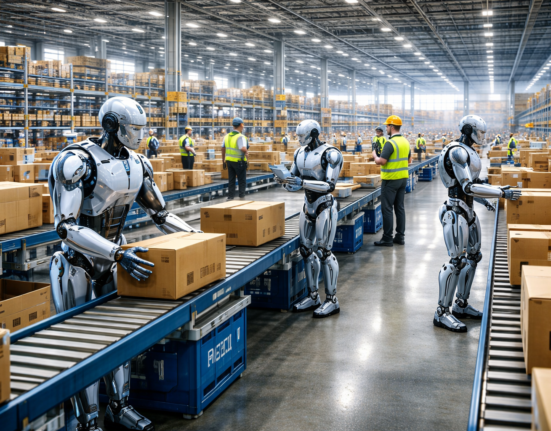
The Humanoid Revolution: 2 Million Robots in the 2035 Workforce
by
Sophie Williams
March 3, 2026
Table of Contents
×
Key Takeaways
Who This Is For
The Dawn of the Physical AI Era (2025–2026)
Defining the Humanoid Robot
The “Big Three” Driving the 2 Million Goal
1. Tesla Optimus (The Mass-Production Bet)
2. Boston Dynamics Atlas (The Industrial Gold Standard)
3. Figure AI (The AI Integration Leader)
Sector Breakdown: Where the 2 Million Will Work
I. Logistics and Warehousing (The “Pick-and-Place” Champions)
II. Smart Manufacturing (The Assembly Line Evolution)
III. Healthcare and Elder Care (The Long-Term Pivot)
IV. Hazardous Environments (Risk Mitigation)
The Technology Stack: Brains, Brawn, and Batteries
1. The Brain: Embodied AI and Foundation Models
2. The Brawn: High-Torque Density Actuators
3. The Hands: Dexterous Manipulation
Addressing the Global Labor Crisis
The “D” Tasks
Common Implementation Mistakes for Businesses
1. Treating Humanoids Like Fixed Automation
2. Ignoring Human-Robot Interaction (HRI)
3. Underestimating Maintenance and “Up-Time”
Economic Disruption and Job Evolution
New Job Categories in 2035
Financial Safety Disclaimer
Ethical and Regulatory Landscapes in 2035
The “Robot Tax” Debate
Safety and Liability
Conclusion: The Path Forward
FAQs
1. How much will a humanoid robot cost in 2035?
2. Can humanoid robots work in any environment?
3. How long can a humanoid robot work on a single charge?
4. Do I need to be a programmer to use these robots?
5. Are humanoid robots safe to work around?
References
←
Table of Contents