Skip to content
September 16, 2026
The Tech Trends
The Tech Trends
The Tech Trends
The Tech Trends
AI
AI Ethics
Automation
Deep Learning
Generative AI
Machine Learning
Robotics
Culture
Creator Economy
Digital Nomads
Internet Culture
Remote Work
Tech Careers
Tech Events
Future Trends
5G/6G Networks
BioTech
Metaverse
Quantum Computing
Space Tech
Sustainable Tech
Innovation
AgriTech
EdTech
FinTech
Green Tech
HealthTech
Smart Cities
Gadgets
AR/VR Devices
Drones
Health Tech
Smart Home
Smartphones
Wearables
Software
App Development
Cloud Computing
Cybersecurity
Open Source
Productivity Tools
SaaS
Startups
Disruptive Ideas
Founder Stories
Funding News
Startup Trends
Tech Launches
Unicorn Watch
Web3
Blockchain
Cryptocurrency
DAOs
Decentralization
NFTs
Smart Cities
September 16, 2026
The Tech Trends
AI
AI Ethics
Automation
Deep Learning
Generative AI
Machine Learning
Robotics
Culture
Creator Economy
Digital Nomads
Internet Culture
Remote Work
Tech Careers
Tech Events
Future Trends
5G/6G Networks
BioTech
Metaverse
Quantum Computing
Space Tech
Sustainable Tech
Innovation
AgriTech
EdTech
FinTech
Green Tech
HealthTech
Smart Cities
Gadgets
AR/VR Devices
Drones
Health Tech
Smart Home
Smartphones
Wearables
Software
App Development
Cloud Computing
Cybersecurity
Open Source
Productivity Tools
SaaS
Startups
Disruptive Ideas
Founder Stories
Funding News
Startup Trends
Tech Launches
Unicorn Watch
Web3
Blockchain
Cryptocurrency
DAOs
Decentralization
NFTs
Smart Cities
×
AI Tutors
The Tech Trends
AI Tutors
AI Tutors
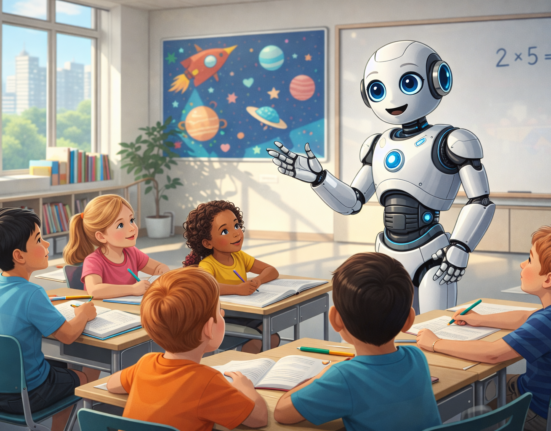
AI Tutors with Physical Presence: The Future of Robotics in Education
by
Mei Chen
March 10, 2026
Table of Contents
×
Definition and Core Concept
Key Takeaways
Who This Is For
The Evolution of Educational Robotics: From Kits to Companions
Why “Physical Presence” Matters: The Science of Embodiment
1. Joint Attention and Spatial Learning
2. Non-Verbal Communication
3. The “Peer Learner” Effect
Core Technologies Powering the 2026 AI Tutor
Multimodal Large Language Models (M-LLMs)
Affective Computing and Emotion AI
SLAM and Spatial Awareness
Primary Use Cases for AI Tutors with Physical Presence
1. Special Education and Neurodiversity
2. Language Acquisition and Literacy
3. STEM and Computational Thinking
Common Mistakes in Implementing Educational Robotics
Ethical Considerations and Safety Disclaimers
Data Privacy (GDPR and COPPA)
The Risk of Displacement
Implementing AI Tutors: A 5-Step Roadmap for Schools
Step 1: Define the Pedagogical Need
Step 2: Pilot with a Small Cohort
Step 3: Integrate with existing LMS
Step 4: Curriculum Alignment
Step 5: Ongoing E-E-A-T Validation
The Market Leaders: Who is Winning in 2026?
Conclusion: Towards the Hybrid Classroom
FAQs
1. Are AI tutors with physical presence safe for children?
2. Can these robots truly understand a child’s emotions?
3. Will robots eventually replace human teachers?
4. What is the average cost of a physical AI tutor in 2026?
5. Do these robots require a constant internet connection?
References
←
Table of Contents