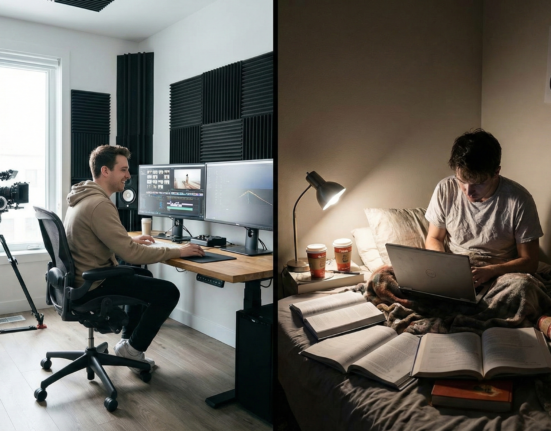
In a world that has long celebrated the “grind,” where sleep deprivation is worn as a badge of honor and 80-hour workweeks are touted as the only path to success, a seismic shift is occurring. We are witnessing the rise of the anti-hustle movement, a cultural and professional reckoning that challenges the unsustainable demands of modern capitalism. This movement is not about laziness or a lack of ambition; rather, it is a radical reclaiming of time, energy, and humanity. It posits that rest is not a reward for work, but a prerequisite for a healthy life.
For decades, “hustle culture” promised that if we just worked harder, sacrificed more, and optimized every waking second, we would achieve nirvana. Instead, it delivered a global burnout epidemic. As of January 2026, the conversation has moved beyond mere “work-life balance” toward a fundamental restructuring of how we view productivity.
This guide explores the depths of the anti-hustle movement. We will define what it truly means, examine the psychological toll of the “always-on” mentality, and provide a comprehensive framework for individuals and leaders to prioritize well-being without sacrificing quality of life.
Key Takeaways
- Redefining Success: The anti-hustle movement shifts the metric of success from “hours worked” to “impact made” and “personal well-being.”
- Rest is Productive: Scientifically, rest is essential for cognitive function, creativity, and longevity; it is not time wasted.
- Beyond Quiet Quitting: While related to trends like “quiet quitting” and “soft life,” anti-hustle is a proactive, structural approach to sustainable living.
- Leadership Responsibility: The shift requires organizational buy-in, moving away from surveillance and presenteeism toward trust and autonomy.
- Sustainable Ambition: You can be ambitious and anti-hustle simultaneously; it involves pacing yourself for a marathon, not sprinting until collapse.
What is the Anti-Hustle Movement?
The anti-hustle movement is a collective pushback against the ethos of “performative workaholism.” It rejects the idea that your self-worth is intrinsically tied to your economic output.
Defining the Term
At its core, anti-hustle is the intentional decision to slow down. It involves decoupling your identity from your job title and recognizing that “busy” is not a personality trait. It is a broad umbrella that encompasses various micro-trends:
- Slow Living: A lifestyle choice focusing on doing fewer things better and being present in the moment.
- Soft Life: A trend, particularly popular among women of color, rejecting the “strong black woman” trope or the necessity of struggle, focusing instead on comfort, low stress, and vulnerability.
- Quiet Quitting: The practice of doing exactly what your job description requires—no more, no less—and setting strict boundaries around work hours.
The Evolution from Grind to Grounded
To understand where we are, we must look at where we came from. The 2010s were dominated by the “girlboss” era and the glorification of the startup grind. Silicon Valley mantras like “move fast and break things” permeated everyday life. However, the global pandemic of the early 2020s acted as a universal circuit breaker. Faced with existential threats, millions of workers questioned the validity of sacrificing their health for a paycheck.
As of early 2026, we are seeing the maturation of this sentiment. It has moved from a reactive anger (The Great Resignation) to a proactive design of a better life.
Scope of this Guide
In this guide, anti-hustle refers to a conscious lifestyle and professional strategy that prioritizes mental and physical health over excessive productivity. It does not refer to checking out of society, financial irresponsibility, or “anti-work” extremism that rejects all forms of labor. It is about sustainable work.
The Toxicity of Hustle Culture: Why We Need a Change
Hustle culture thrives on the myth that the human body is a machine that can run indefinitely without maintenance. The reality is far grimmer.
The Physiology of Burnout
When we exist in a state of constant hustle, our bodies remain in a sympathetic nervous system dominance—the “fight or flight” mode. This results in chronically elevated cortisol levels.
- Cognitive Decline: Chronic stress shrinks the prefrontal cortex, the area of the brain responsible for decision-making, focus, and emotional regulation.
- Physical Ailments: From autoimmune flare-ups to cardiovascular issues, the physical toll of “the grind” is documented and severe.
- Sleep Disruption: The inability to “switch off” leads to insomnia and reduced REM sleep, preventing the brain from clearing out toxins (glymphatic clearance).
The Diminishing Returns of Overwork
The irony of hustle culture is that it is often counterproductive. Research consistently shows that productivity drops sharply after 50 hours of work per week.
- The Error Rate: Tired workers make more mistakes. In knowledge work, one bad decision made in a state of fatigue can cost a company far more than the value of the extra hour worked.
- Creativity Block: Innovation requires “slack” in the system. A mind packed with back-to-back meetings and urgent deadlines has no capacity for lateral thinking or creative problem-solving.
The Social Cost
Hustle culture isolates us. When every interaction is viewed through the lens of “networking” or “optimization,” genuine human connection withers. We sacrifice relationships, community involvement, and hobbies on the altar of productivity, leading to a profound sense of loneliness despite being hyper-connected digitally.
Core Principles of the Anti-Hustle Lifestyle
Adopting an anti-hustle mindset requires rewriting the internal scripts we have learned about work and worth. Here are the foundational pillars.
1. Rest is a Right, Not a Reward
In hustle culture, rest is something you “earn” after you’ve completed your to-do list. Since the to-do list is never finished, rest never comes. The anti-hustle movement views rest as a biological necessity, like food or water. It is non-negotiable and foundational.
2. Quality Over Quantity
This applies to work output, social interactions, and material possessions. It is better to do three things with excellence and presence than to do ten things with mediocrity and stress. This principle aligns closely with Essentialism: the disciplined pursuit of less.
3. Cyclic Living vs. Linear Living
Hustle culture views time as linear and progress as a straight line up and to the right. Anti-hustle acknowledges that humans are cyclical beings. We have seasons of high energy and harvest, and seasons of dormancy and winter. Honoring these cycles—whether they are daily (circadian rhythms), monthly, or annual—prevents burnout.
4. Boundaries are Sacred
Boundaries are not walls to keep people out; they are the gates that protect your well-being. In an anti-hustle life, “no” is a complete sentence. This means protecting your evenings, your weekends, and your mental space from the intrusion of work.
How to Embrace Anti-Hustle in a High-Pressure World
Transitioning to an anti-hustle lifestyle in a hyper-capitalist society is challenging. It requires practical, tactical steps.
Step 1: Perform a “Hustle Detox” Audit
You cannot change what you do not measure. Spend one week tracking not just your time, but your energy.
- Identify Energy Drains: Which tasks or people leave you feeling depleted?
- Identify False Urgency: How many “urgent” emails actually required an immediate response?
- Spot the “Shoulds”: List the things you do because you feel you should (e.g., posting on LinkedIn daily, attending every networking mixer) rather than because they add value.
Step 2: Implement “Slow Productivity”
Coined by Cal Newport and others, slow productivity focuses on doing fewer things, working at a natural pace, and obsessing over quality.
- Reduce Volume: Actively negotiate to take fewer projects on board.
- Extend Timelines: When asked “When can you have this done?”, add 20-30% buffer time to your estimate.
- Single-Tasking: Reject the myth of multitasking. Focus on one deep work session at a time.
Step 3: Digital Minimalism
The hustle is often driven by the device in your pocket. The constant notifications create a Pavlovian response to work.
- The “Phone Foyer” Method: Leave your phone at the entryway of your home; do not carry it room to room.
- App Limits: Hard delete work apps (Slack, Teams, Email) from your personal phone. If that is not possible, bury them in folders and turn off all badges and notifications.
Step 4: Redefine Your “Enough”
Hustle culture is fueled by the fear of not having enough—money, status, or acclaim. Defining your specific “enough” point is liberating.
- Financial Enough: Calculate the actual number you need to live a comfortable life, rather than vaguely chasing “more.”
- Status Enough: Recognize that a fancy job title does not guarantee happiness.
Step 5: Cultivate “Deep Leisure”
Binge-watching TV is “passive leisure,” which can be numbing rather than restorative. Anti-hustle advocates for “deep leisure”—hobbies that require focus but are distinct from work.
- Analog Hobbies: Gardening, woodworking, painting, or hiking. These activities ground you in the physical world and provide a sense of completion that knowledge work often lacks.
The Role of Employers: Creating an Anti-Hustle Workplace
The burden of anti-hustle cannot fall solely on the individual. Organizations must restructure work to be sustainable. As of 2026, forward-thinking companies are realizing that anti-hustle policies are a competitive advantage for retention.
Shifting from Input to Outcome
The most toxic element of hustle culture is presenteeism—the idea that being seen at your desk (or green on Slack) equates to working.
- ROW (Results-Oriented Work): Employers should evaluate employees based on deliverables, not hours logged. If an employee finishes their work in 30 hours, they should not be punished with more work; they should be gifted that time back.
The Four-Day Work Week
Trials across the UK, Iceland, and the US have consistently shown that a four-day work week (32 hours for 100% pay) maintains productivity while drastically improving well-being. This is a structural anti-hustle mechanism that forces prioritization.
Asynchronous Communication
The demand for instant responses destroys focus. Anti-hustle workplaces prioritize asynchronous communication (memos, recorded videos, project management tickets) over synchronous interruptions (meetings, tapping on shoulders). This allows employees to work during their peak energy windows without constant disruption.
Modeling Behavior from the Top
If a CEO sends emails at 11:00 PM or while on vacation, they are signaling that hustle is expected, regardless of what the employee handbook says. Leaders must “leave loudly”—publicly announcing when they are signing off to pick up kids or go to the gym—to give permission for others to do the same.
Overcoming “Rest Resistance” and Guilt
Even when we logically know we need rest, we often feel guilty taking it. This is rest resistance.
Internalized Capitalism
We have internalized the idea that our value is economic. When we are not producing, we feel worthless. Unlearning this requires active cognitive reframing.
- Affirmation: “I am a human being, not a human doing.”
- Practice: Start with small doses of non-productive time. Sit for 5 minutes without a phone or book. Notice the anxiety that arises, acknowledge it, and let it pass.
The Fear of Falling Behind
In a competitive economy, stopping feels like losing. This is driven by scarcity mindset.
- Reframing: View your career as a 40-year journey. Taking a “slow year” or a sabbatical is a strategic pit stop that prevents the car from breaking down, ensuring you finish the race.
Social Comparison
Social media is a highlight reel of everyone else’s hustle.
- Curate Your Feed: Unfollow “hustle porn” accounts that make you feel inadequate. Follow accounts that celebrate slow living, nature, and realism.
The Seven Types of Rest
Dr. Saundra Dalton-Smith’s framework on rest is vital for the anti-hustle movement. Often, we sleep but do not feel rested because we are neglecting other deficits.
- Physical Rest: Passive (sleeping/napping) and active (yoga, stretching, massage).
- Mental Rest: Taking breaks from problem-solving. Writing down your “to-do” list to get it out of your head.
- Sensory Rest: Reducing noise, artificial light, and screen time. Closing your eyes for a minute in the middle of the day.
- Creative Rest: Allowing yourself to appreciate beauty (nature, art) without trying to create or analyze it.
- Emotional Rest: The space to be authentic and express feelings without managing others’ reactions.
- Social Rest: Spending time with people who revive you, or spending time alone if people drain you.
- Spiritual Rest: Connecting to something bigger than yourself (meditation, prayer, community service).
Tools and Frameworks for Slow Productivity
Implementing anti-hustle requires new operating systems for your day.
The “Do Nothing” Day
Schedule one day (or half-day) a week where absolutely nothing is planned. You wake up when you wake up, and you do what you feel like doing in the moment. This resets the dopamine receptors accustomed to constant stimulation.
Time Blocking for Energy Management
Instead of blocking time for tasks, block time for energy states.
- Focus Blocks: 9:00 AM – 11:00 AM (High cognitive load).
- Admin Blocks: 2:00 PM – 3:00 PM (Low cognitive load).
- Recovery Blocks: 12:00 PM – 1:00 PM (Zero cognitive load).
The “Auto-Responder” Strategy
Use your email auto-responder even when you are technically working.
- Template: “I am currently deep in project work and checking email only at 10 AM and 4 PM. If this is urgent, please text me.” This sets a boundary and manages expectations without you having to be rude.
Common Mistakes and Pitfalls
Embracing the anti-hustle movement can backfire if approached incorrectly.
Mistake 1: Performance Rest
Turning rest into another item on the to-do list to be optimized. “I must meditate perfectly for 20 minutes to be productive.” This is just hustle culture wearing a yoga outfit. Rest should be messy and imperfect.
Mistake 2: Financial Negligence
Anti-hustle does not mean ignoring financial realities. Quiet quitting without a plan can lead to job loss. The goal is to perform competently and sustainably, not negligently. It involves financial planning to buy yourself the freedom to slow down (e.g., the F.I.R.E. movement—Financial Independence, Retire Early—often intersects with anti-hustle).
Mistake 3: Judgment of Others
Just because you are slowing down doesn’t mean you should judge those who are currently in a season of hustle. Some people find genuine joy in high-intensity work. The anti-hustle movement is about choice, not moral superiority.
Who This is For (and Who It Isn’t)
Who This Is For:
- Knowledge Workers: Professionals suffering from “Zoom fatigue” and digital overload.
- Creatives: Artists and writers whose best work comes from spaciousness, not grinding.
- Caregivers: Individuals balancing work with raising children or caring for aging parents who need to preserve energy.
- Burnout Survivors: Those recovering from a physical or mental collapse due to work stress.
Who This Isn’t For:
- Early-Stage Founders: Launching a business often requires a temporary season of “hustle” to achieve “escape velocity.” (However, even founders must eventually pivot to sustainability).
- Crisis Responders: Certain professions (ER doctors, firefighters) function in high-intensity bursts by necessity, though they require arguably more recovery time.
The Future of Work: Is Anti-Hustle Here to Stay?
Critics argue that the anti-hustle movement is a luxury of a booming economy and that a recession will force everyone back to the grind. However, the data suggests a deeper structural change.
The Demographic Shift
Gen Z and Gen Alpha are entering the workforce with a fundamentally different social contract. They witnessed their parents burn out during the 2008 financial crisis and the 2020 pandemic. They are unwilling to accept the same terms. Companies that refuse to adapt will face a talent shortage.
The AI Factor
Artificial Intelligence has the potential to be the ultimate anti-hustle tool. By automating the drudgery—data entry, scheduling, basic reporting—AI could theoretically liberate humans to work fewer hours. The danger, however, is that employers will simply expect humans to produce more in the same time. The anti-hustle movement will be the political and social force ensuring that productivity gains from AI translate into time wealth for workers, rather than just profit wealth for shareholders.
Legislation
Governments are stepping in. “Right to Disconnect” laws, which ban employers from contacting staff after hours, have been passed in countries like France, Portugal, and Australia. This legislative trend is spreading, codifying anti-hustle principles into law.
Conclusion
The anti-hustle movement is not a retreat from the world; it is a more thoughtful engagement with it. It is a declaration that while work is a part of life, it is not the whole of life. By prioritizing rest and well-being, we reclaim our health, our relationships, and our creativity.
The transition from a hustle mindset to a sustainable mindset is not a switch you flip; it is a practice you cultivate. It starts with a single “no,” a single lunch break taken away from the desk, or a single notification turned off.
Next Steps: Pick one “energy drain” from your week and eliminate or delegate it today. Then, schedule a non-negotiable 30-minute block of “do nothing” time for tomorrow.
FAQs
1. Is the anti-hustle movement just an excuse for laziness?
No. Anti-hustle is about sustainable productivity. It advocates for doing high-quality work during reasonable hours rather than performative “busy work” that leads to burnout. It prioritizes effectiveness over presence.
2. Can I advance my career while adopting an anti-hustle mindset?
Yes, often faster than before. By avoiding burnout and maintaining mental clarity, you make better decisions and produce higher-quality work. Many leaders respect employees who set boundaries because they are more reliable and consistent in the long run.
3. How do I tell my boss I want to practice “anti-hustle” without getting fired?
Don’t use the term “anti-hustle.” Instead, frame it around performance. Say, “I want to ensure I’m delivering my best work on X Project. To do that, I’m going to block off mornings for deep focus and won’t be on email until 11 AM.” Frame boundaries as benefits to the company.
4. What is the difference between quiet quitting and anti-hustle?
Quiet quitting is often a passive disengagement from a job you dislike. Anti-hustle is a proactive lifestyle choice applied to a career you may actually enjoy. You can love your job and still be anti-hustle by refusing to let it consume your entire life.
5. I feel guilty when I’m not working. How do I stop?
This is “internalized capitalism.” Combat it by diversifying your identity. If you are only “a worker,” not working feels like not existing. Invest time in being a friend, a hobbyist, a parent, or a volunteer so your self-worth has other pillars to stand on.
6. Can entrepreneurs really embrace the anti-hustle movement?
Yes, through “slow entrepreneurship.” This involves setting realistic growth targets rather than “growth at all costs.” It means building a business that supports your life, rather than a life that supports your business.
7. What are some good books to read on this topic?
Key texts include Rest: Why You Get More Done When You Work Less by Alex Soojung-Kim Pang, Laziness Does Not Exist by Devon Price, and Essentialism by Greg McKeown.
8. Is the 4-day work week part of the anti-hustle movement?
Absolutely. It is a structural implementation of anti-hustle principles. It acknowledges that the 40-hour work week is an outdated relic of the industrial age and that modern knowledge work requires more recovery time.
9. How does social media fuel hustle culture?
Social media creates “comparison fatigue.” Influencers often curate a highlight reel of constant achievement, luxury, and grinding, creating a false reality that makes normal, healthy pacing feel like failure.
10. Will AI make hustle culture worse or better?
It depends on how we regulate it. It risks making it worse by accelerating the pace of content creation and expectation. However, the anti-hustle movement advocates using AI to automate tasks specifically to free up time for rest, not to fill that time with more work.
References
- World Health Organization (WHO). (2019). Burn-out an “occupational phenomenon”: International Classification of Diseases. Retrieved from who.int.
- Newport, C. (2024). Slow Productivity: The Lost Art of Accomplishment Without Burnout. Portfolio.
- 4 Day Week Global. (2023). The Four Day Week: Assessing Global Trials of Reduced Work Time with No Reduction in Pay. Retrieved from 4dayweek.com.
- Pang, A. S.-K. (2016). Rest: Why You Get More Done When You Work Less. Basic Books.
- Dalton-Smith, S. (2017). Sacred Rest: Recover Your Life, Renew Your Energy, Restore Your Sanity. FaithWords.
- Price, D. (2021). Laziness Does Not Exist. Atria Books.
- Deloitte. (2023). Mental Health and Well-being in the Workplace Survey. Retrieved from deloitte.com.
- U.S. Surgeon General. (2022). Framework for Workplace Mental Health and Well-Being. hhs.gov.