AI-powered personalized education refers to the use of artificial intelligence technologies—specifically machine learning algorithms and natural language processing—to tailor educational experiences to the unique needs, skills, and interests of individual learners. Unlike traditional “one-size-fits-all” instruction, these systems dynamically adjust the pace, content, and difficulty of material in real-time, aiming to replicate the effectiveness of one-on-one human tutoring at scale.
Key Takeaways
- Dynamic Adaptation: AI systems continuously analyze student performance to adjust learning pathways instantly, not just at the end of a semester.
- Beyond Digitization: True AI personalization goes beyond digital textbooks; it involves “intelligent tutoring systems” that scaffold learning conceptually.
- Teacher Empowerment: Automation of grading and routine remediation frees up educators to focus on mentorship, complex problem-solving, and emotional support.
- Data-Driven Insights: these tools provide granular analytics, helping educators identify learning gaps (and their root causes) with precision.
- Ethical Guardrails: Implementation requires strict attention to data privacy, algorithmic bias, and the prevention of over-reliance on technology.
Scope of This Guide
In this guide, “AI-powered personalized education” refers to software and platforms used in K-12, higher education, and corporate training that utilize algorithms to modify instruction. It covers adaptive learning platforms (which alter the content path) and AI tutors (conversational agents). It does not cover general generative AI tools (like generic text generators) unless they are integrated into a specific pedagogical framework.
Who This Is For (And Who It Isn’t)
This guide is designed for educators, school administrators, edtech decision-makers, and engaged parents who want to understand the mechanics and implications of AI in learning. It is also relevant for corporate learning and development (L&D) professionals. It is not a technical coding manual for developers building these algorithms, nor is it a sales brochure for specific software products.
The Evolution of Personalized Learning
To understand where we are going, we must understand where we started. The dream of personalized instruction is not new. In 1984, educational psychologist Benjamin Bloom identified the “2 Sigma Problem,” finding that average students tutored one-to-one performed two standard deviations better than students in a conventional classroom. The challenge has always been scalability: how do you provide a personal tutor for every student without an infinite budget?
From Static to Dynamic
For decades, “computer-based training” meant static PDFs or multiple-choice quizzes on a screen. If a student failed a quiz, they might be told to “review Chapter 4.” This is not personalization; it is digital gating.
AI-powered personalized education changes the mechanism. Instead of rigid gates, it uses knowledge tracing. As a student interacts with the system, the AI builds a probabilistic model of their understanding. If a student struggles with a calculus problem, the system doesn’t just mark it wrong; it analyzes why it was wrong. Did they fail the calculus concept, or was it an underlying algebra error? The system then adapts, perhaps offering a refresher on the algebra prerequisite before returning to the calculus problem.
The Two Pillars: Adaptive Platforms vs. AI Tutors
While often used interchangeably, these two technologies function differently:
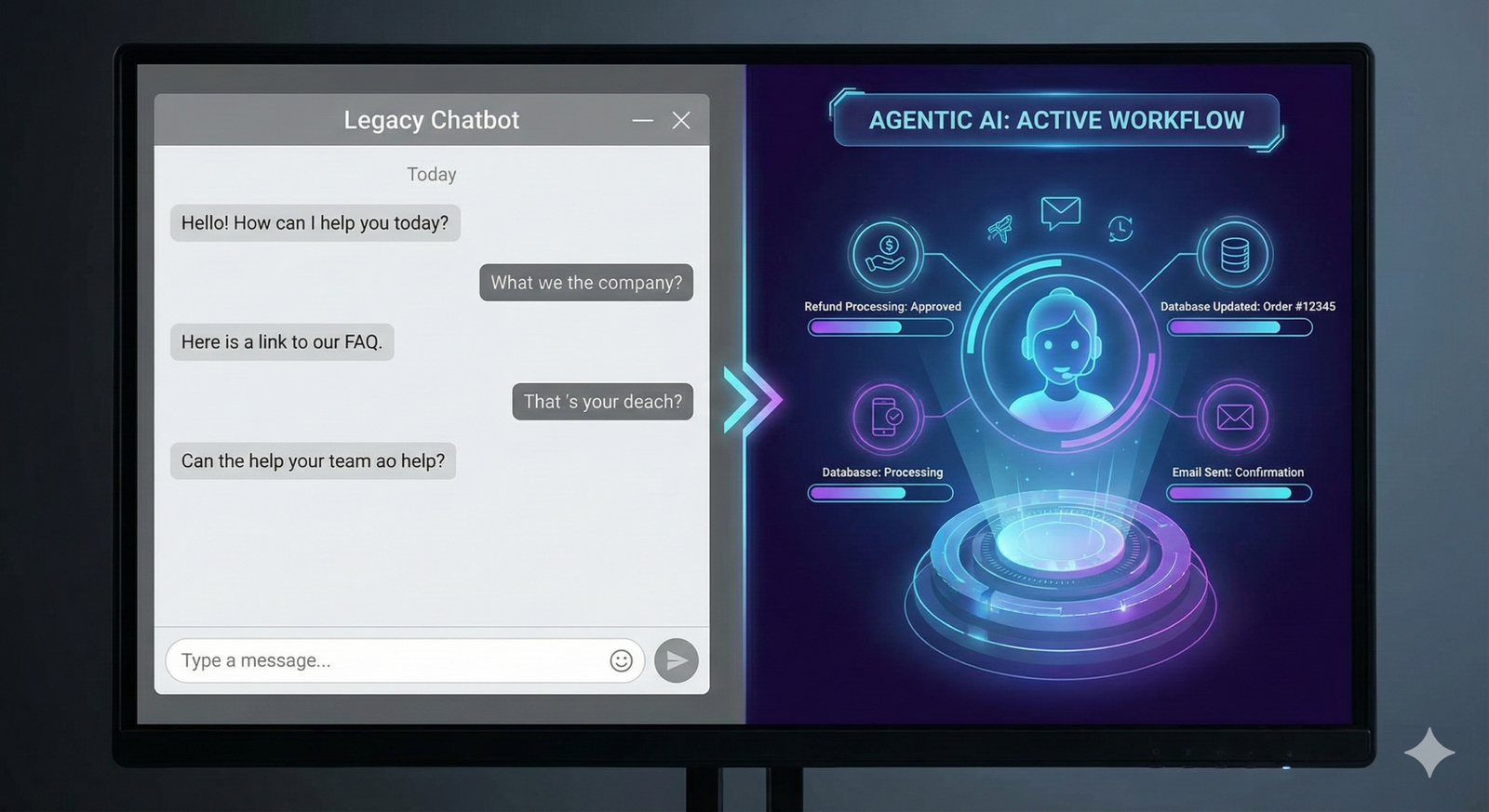
- Adaptive Learning Systems: These act like a GPS for learning. They map out the curriculum and route the student through the most efficient path. If the student moves quickly, the path shortens. If they stumble, the path loops back with alternative explanations.
- AI Tutors: These act like a conversational coach. Using Large Language Models (LLMs) and Natural Language Processing (NLP), they engage in dialogue, answer questions, ask Socratic follow-ups, and provide hints rather than just answers.
How Adaptive Learning Algorithms Work
The “engine” behind personalized education is complex, relying on vast amounts of data to make pedagogical decisions.
Knowledge Graphs and Ontologies
At the core of an adaptive system is a knowledge graph. This is a map of concepts and their relationships. For example, a graph might link “fractions” to “decimals” and “percentages.” The system understands that “adding fractions with unlike denominators” is a prerequisite for “algebraic equations.”
- Dependency Mapping: The AI knows you cannot master Concept B without Concept A.
- Granularity: Concepts are broken down into “atomic” skills (micro-skills), allowing the system to pinpoint exactly where a misunderstanding lies.
Bayesian Knowledge Tracing (BKT)
One common method used is Bayesian Knowledge Tracing. The algorithm calculates the probability that a student has mastered a specific skill based on their history of correct and incorrect attempts.
- Slip vs. Guess: The algorithm tries to distinguish between a “slip” (a student knows the concept but made a careless error) and a “guess” (a student doesn’t know the concept but got it right by luck).
- Mastery Threshold: Once the probability of mastery crosses a certain threshold (e.g., 95%), the system unlocks the next concept.
Item Response Theory (IRT)
Also used in standardized testing, IRT rates the difficulty of questions (items) relative to the student’s ability.
- Calibration: If a “hard” question is answered correctly by many low-ability students, the AI re-calibrates the question’s difficulty rating.
- Matching: The system serves questions that are slightly above the learner’s current ability level to promote growth—a concept known in pedagogy as the “Zone of Proximal Development.”
The Rise of AI Tutors: Conversational Pedagogy
While adaptive platforms manage the path, AI tutors manage the interaction. The explosion of generative AI has transformed this field from simple scripted bots to sophisticated pedagogical agents.
Socratic Questioning Capabilities
Modern AI tutors are trained to avoid simply giving answers. Instead, they use scaffolding.
- Example Scenario: A student asks, “What is the capital of France?” A basic bot says “Paris.” An AI tutor might ask, “What distinguishes a capital city? Do you remember reading about the Eiffel Tower?”
- Step-by-Step Guidance: For complex math or coding problems, the tutor breaks the problem down, verifying understanding at each step before moving forward.
Emotional and Sentiment Analysis
Advanced systems are beginning to incorporate sentiment analysis to detect frustration or boredom.
- Input Analysis: If a student types “I hate this” or starts mashing keys, the AI detects negative sentiment.
- Intervention: The system might pause the lesson, offer a lower-stakes game to reset confidence, or suggest a break. This “affective computing” aims to keep the learner in an optimal emotional state for information retention.
Multimodal Interaction
AI tutors are increasingly multimodal, meaning they can interact via text, voice, and even image recognition.
- Visual Aid: A student can snap a photo of a handwritten math problem, and the AI can parse the handwriting and help solve it.
- Language Learning: Voice recognition analyzes pronunciation nuances, offering corrective feedback that a text-only interface cannot.
Key Benefits for Learners and Educators
The transition to AI-powered personalized education offers distinct advantages over traditional models, primarily by solving the “time constraint” problem in education.
For Students: Equity and Pace
- Mastery Learning: In a traditional class, the teacher moves on to Chapter 5 regardless of whether every student understood Chapter 4. AI systems allow for “mastery learning,” where students do not advance until they demonstrate competence. This prevents the accumulation of knowledge gaps that lead to failure in later years.
- Psychological Safety: Asking a “dumb question” in front of 30 peers can be terrifying. AI tutors provide a judgment-free zone where students can ask the same question ten times without embarrassment.
- Engagement: Adaptive content is often gamified and relevant. If the AI knows a student likes soccer, it might frame physics problems in terms of ball trajectories.
For Educators: From Grader to Mentor
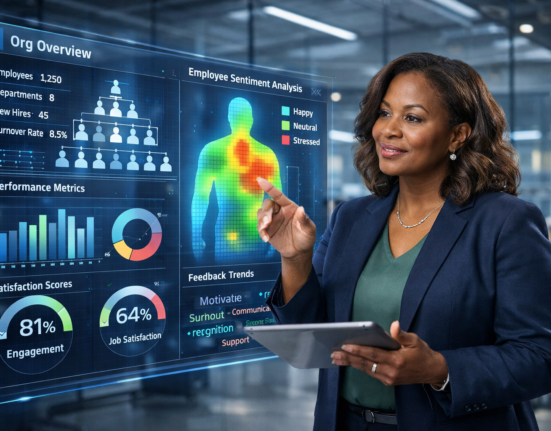
- Actionable Data: Instead of spending weekends grading quizzes to find out who is failing, teachers receive a dashboard Monday morning showing exactly who struggled with which concept.
- Differentiated Instruction: Grouping students becomes data-driven. The AI can suggest: “Group A needs help with thesis statements; Group B is ready for advanced synthesis.”
- Resource Generation: AI tools can instantly generate lesson plans, quizzes, and examples tailored to specific reading levels or needs (e.g., generating a dyslexia-friendly version of a text).
For Institutions: Efficiency and Retention
- Scalability: High-quality tutoring can be offered to thousands of students simultaneously without a linear increase in staffing costs.
- Retention: In higher education, early intervention alerts triggered by AI can identify at-risk students weeks before they drop out, allowing human advisors to step in.
Real-World Applications and Examples
Note: These examples illustrate categories of tools common in the market as of 2026. They are illustrative of functionality.
K-12 Classrooms
- Math Remediation: A middle school uses an adaptive math platform. While the teacher delivers a core lesson on geometry, students spend 20 minutes on tablets. The software identifies that three students are stuck because they forgot how to calculate area from the previous year. It automatically routes them to a mini-module on area, while advanced students are given complex proofs to solve.
- Literacy Support: An AI reading tutor listens to a child read aloud. It detects stumbling on specific phonemes and highlights them. It logs this data for the teacher, who can then do focused phonics work with that student.
Higher Education
- Large Lecture Support: In a generic “Introduction to Psychology” course with 500 students, an AI tutor chatbot is embedded in the Learning Management System (LMS). It answers logistical questions (“When is the midterm?”) and conceptual questions (“Explain Pavlov’s dogs again”) 24/7, reducing the email load on teaching assistants.
- Virtual Labs: Engineering students use AI-simulated environments to “build” bridges. If a bridge collapses in the sim, the AI analyzes the structural flaw and explains the physics error in real-time.
Corporate Training
- Just-in-Time Learning: A salesperson needs to learn a new product line. Instead of a 4-hour seminar, an adaptive app quizzes them on their existing knowledge. It verifies they already know the pricing structure but lack knowledge of technical specs. The training module serves only the technical spec content, cutting training time by 70%.
The Changing Role of the Educator
A common fear is that AI will replace teachers. The consensus among educational researchers is that AI will transform the role, not eliminate it. The model shifts from the “Sage on the Stage” (delivering information) to the “Guide on the Side” (facilitating learning).
The “Human-in-the-Loop” Necessity
AI is excellent at content delivery and pattern recognition, but it lacks empathy, context, and mentorship capability.
- Motivation: An AI can tell a student how to solve a problem, but a human teacher inspires them to want to solve it.
- Social-Emotional Learning (SEL): School is where students learn collaboration, conflict resolution, and empathy. These are inherently human skills that require human modeling and mediation.
- Complex Assessment: AI struggles with subjective creativity. Evaluating the “voice” in a poem or the nuance in a debate argument often requires human judgment.
Teacher Agency and Training
For AI to be effective, teachers must be the pilots.
- Data Literacy: Teachers need training on how to interpret AI dashboards. A red flag on a dashboard is a signal for investigation, not a final verdict.
- Curation: Teachers must evaluate AI-suggested resources for relevance and cultural appropriateness before assigning them.
Challenges and Ethical Considerations
The integration of AI in education (AIEd) brings significant risks that must be managed proactively.
Algorithmic Bias
AI systems are trained on historical data. If that data reflects historical inequalities, the AI will perpetuate them.
- Bias in Content: If an AI is trained primarily on Western literature, it may rate essays using non-Western dialect or rhetorical structures as “poor quality.”
- Bias in Prediction: Predictive analytics that forecast “at-risk” students based on demographics (zip code, race) rather than academic performance can create self-fulfilling prophecies, labeling students as failures before they even start.
Data Privacy and Security
Educational data is highly sensitive. In the US, regulations like FERPA (Family Educational Rights and Privacy Act) and COPPA (Children’s Online Privacy Protection Act) apply. In Europe, GDPR is strict.
- Data Minimization: Schools must ensure vendors collect only the data necessary for instruction, not data for marketing.
- Ownership: Who owns the learning profile? If a student moves districts, does their “mastery map” go with them, or is it locked in a proprietary system?
The “Hallucination” Risk
Generative AI tutors can confidently state falsehoods. In a history lesson, an AI might invent a date or a treaty.
- Guardrails: Educational AI must be grounded in verified corpora (textbooks, vetted databases) rather than the open internet.
- Critical Thinking: Students must be taught to verify AI information, treating the AI as a conversational partner rather than an oracle of truth.
The Digital Divide
If high-quality AI tutoring is expensive, it may only be available to wealthy districts or families, widening the achievement gap. “Personalized education” must not become a luxury good.
Implementation: How to Choose and Use AI Tools
For schools or organizations looking to adopt these systems, a strategic approach is vital.
Evaluation Criteria (How we evaluated)
When selecting an AI learning tool, consider:
- Pedagogical Basis: Is the algorithm based on proven learning science (e.g., spaced repetition, retrieval practice)?
- Transparency: Can the vendor explain how the adaptation works? “Black box” algorithms are risky in education.
- Interoperability: Does it integrate with existing systems (LMS, Student Information Systems)?
- Student Agency: Does the tool give the learner some control, or is it purely directive?
Common Mistakes / Pitfalls
- “Plug and Play” Mentality: Assuming you can just buy software and test scores will rise. Without teacher training and curriculum integration, software sits unused.
- Over-Screen Time: Replacing all human interaction with tablet time. AI should be used for targeted practice, not the entire school day.
- Ignoring Student Feedback: If students find the AI “annoying” or “confusing,” usage will drop. Pilot programs are essential.
Future Trends in EdTech
As of early 2026, several emerging trends are reshaping this landscape.
1. The Lifetime Learning Record (LLR)
We are moving toward blockchain-backed portfolios where a student’s mastery data travels with them from kindergarten to career. The AI tutor you use in 5th grade might feed data into the system that helps you select college courses 7 years later.
2. Generative Media for Learning
AI will not just generate text; it will generate bespoke experiences.
- Scenario: A history student studying Rome. The AI generates a photorealistic, interactive VR environment of the Roman Forum tailored to the specific date they are studying, populated with agents speaking Latin.
3. Invisible Assessment
The end of “Test Day.” As AI tracks every interaction, “testing” becomes continuous and invisible. The system knows you have mastered the material because you successfully applied it in simulations and daily work, rendering high-stakes final exams obsolete.
Related Topics to Explore
- Gamification in Education: How game mechanics increase retention.
- Flipped Classroom Models: Using AI for homework so class time is for discussion.
- Neurodiversity and EdTech: Tools specifically designed for ADHD and dyslexia.
- Prompt Engineering for Educators: How teachers can better direct AI tools.
- Data Sovereignty in Schools: Who owns the student’s digital footprint?
Conclusion
AI-powered personalized education represents a paradigm shift from standardization to personalization. By leveraging adaptive learning algorithms and AI tutors, we can theoretically provide every learner with the individual attention previously reserved for the elite.
However, technology is a tool, not a solution. The success of these systems depends on how they are integrated into the human ecosystem of the classroom. The goal is not to automate the student, but to automate the bureaucracy of learning, clearing the path for curiosity, critical thinking, and human connection.
Next Step: If you are an educator or administrator, start small. Audit one specific subject area (like math remediation) where your students struggle most, and pilot a verified adaptive tool to support—not replace—your instruction.
FAQs
What is the difference between personalized learning and adaptive learning?
Personalized learning is the broad pedagogical goal of tailoring education to individual needs (which can be done by humans). Adaptive learning is a specific technological method where algorithms modify content and pathways in real-time to achieve that personalization.
Can AI tutors replace human teachers?
No. While AI tutors are excellent at explaining concepts and providing practice, they lack the empathy, mentorship, behavioral management, and social-emotional guidance that human teachers provide. AI is best viewed as a “co-pilot” or teaching assistant.
Is my child’s data safe with AI education platforms?
It depends on the platform. Reputable educational vendors must comply with laws like FERPA (US) and GDPR (Europe). Parents and schools should always review the privacy policy to ensure data is encrypted, anonymized, and not sold to third parties.
How does AI personalized learning help students with disabilities?
AI can be transformative for accessibility. It can automatically adjust text complexity, provide text-to-speech, offer alternative visual explanations, and allow students to learn at their own pace, which is crucial for students with processing speed differences or learning disabilities.
What is “Knowledge Tracing” in AI?
Knowledge Tracing is a modeling technique used by AI to estimate a student’s mastery of a skill over time. By analyzing the pattern of correct and incorrect answers, the AI predicts the probability that the student “knows” the concept and decides whether to move forward or review.
Does AI in education increase screen time too much?
It is a valid concern. Effective implementation uses AI for targeted bursts of practice (e.g., 20-30 minutes) rather than all-day usage. The best models use AI to prepare students for offline, collaborative projects and discussions.
Are AI tutors accurate?
They are generally highly accurate for established facts (math, science basics) but can “hallucinate” or make up information in more complex or subjective topics. It is vital to use AI tools specifically tuned for education, which have stricter guardrails than general chatbots.
How much do AI personalized learning systems cost?
Costs vary widely. Some platforms are free (supported by philanthropy), while comprehensive enterprise systems for school districts function on a per-student license basis, often ranging from $10 to $50+ per student per year, depending on the complexity.
References
- UNESCO. (2024). Guidance for generative AI in education and research. UNESCO Digital Library. https://unesdoc.unesco.org
- U.S. Department of Education, Office of Educational Technology. (2023). Artificial Intelligence and the Future of Teaching and Learning: Insights and Recommendations. https://tech.ed.gov/ai
- Bloom, B. S. (1984). The 2 Sigma Problem: The Search for Methods of Group Instruction as Effective as One-to-One Tutoring. Educational Researcher. (Foundational Concept).
- Holmes, W., Bialik, M., & Fadel, C. (2019). Artificial Intelligence in Education: Promises and Implications for Teaching and Learning. Center for Curriculum Redesign.
- Luckin, R., et al. (2016). Intelligence Unleashed: An argument for AI in Education. Pearson. https://www.pearson.com
- European Commission. (2022). Ethical guidelines on the use of artificial intelligence (AI) and data in teaching and learning for educators. Publications Office of the European Union. https://op.europa.eu
- Carnegie Mellon University. (n.d.). Simon Initiative: Learning Engineering. https://www.cmu.edu/simon
- World Economic Forum. (2025). The Future of Jobs Report: Education Skills and Technology. https://www.weforum.org/reports
- International Society for Technology in Education (ISTE). (n.d.). Artificial Intelligence in Education Standards. https://www.iste.org