The morning ritual of staring into a full closet and feeling like you have “nothing to wear” is a universal frustration. It is a paradox of choice mixed with disorganized inventory and the lingering regret of past impulse buys that never quite fit right. For decades, the fashion industry relied on guesswork—consumers guessing their size, brands guessing trends, and everyone guessing how a garment might look in real life based on a static photo of a model.
Enter Artificial Intelligence (AI).
AI in fashion is no longer just about futuristic runway shows or avant-garde designs created by algorithms. It has permeated the practical, everyday side of how we shop, dress, and manage our personal style. From virtual try-ons (VTO) that use generative AI to drape clothing over your specific body type to digital wardrobes that organize your closet in the cloud, technology is fundamentally altering our relationship with our clothes.
This guide explores the transformative landscape of AI in fashion. We will unpack how these technologies work, why they matter for sustainability and convenience, and how you can leverage them to build a smarter, more efficient style routine.
Key Takeaways
- Virtual Try-On (VTO) Evolution: VTO has moved beyond cartoonish 2D stickers to sophisticated generative AI that simulates fabric drape, lighting, and fit on diverse body types.
- The “Clueless” Closet is Real: Digital wardrobe apps allow users to catalog their physical clothes, creating a searchable database that AI uses to suggest outfits, maximizing the use of what you already own.
- Sustainability Driver: By visualizing outfits before purchasing and utilizing existing inventory, AI tools significantly reduce return rates (which harm the environment) and curb overconsumption.
- Hyper-Personalization: Algorithms now analyze personal style data to act as 24/7 stylists, recommending items that actually fit your body measurements and aesthetic preferences.
- Privacy Matters: As we upload body scans and personal data, understanding privacy policies and data usage is critical for user safety.
The Scope of AI in Fashion: What is it?
In this guide, AI in fashion refers specifically to consumer-facing technologies designed to enhance the shopping and dressing experience. While AI is used heavily in supply chain logistics and trend forecasting by big brands, our focus here is on the tools available to you—the shopper and wearer.
This includes:
- Computer Vision: The ability for apps to “see” and identify clothing items from photos.
- Generative AI: Systems that can create new images, such as generating a realistic image of a shirt on your body.
- Augmented Reality (AR): Overlaying digital garments onto a live camera feed.
- Recommendation Engines: Algorithms that learn your style to suggest outfits.
What is OUT of scope:
- Manufacturing robotics.
- Supply chain inventory prediction algorithms (unless they directly impact consumer availability).
- High-concept AI art generation not related to wearable fashion.
Virtual Try-Ons: The End of “Wardrobing” and Returns?
One of the most significant friction points in online shopping is the inability to try things on. This leads to “bracketing”—buying multiple sizes of the same item with the intention of returning those that don’t fit. This practice is costly for retailers and disastrous for the environment due to shipping emissions and waste. Virtual Try-On (VTO) technology aims to solve this.
How Virtual Try-On Technology Works
Early iterations of VTO were clumsy. They essentially pasted a 2D image of a dress over a 2D image of a person, similar to a paper doll. The result was flat, unconvincing, and useless for determining fit. Today, VTO utilizes a combination of advanced technologies:
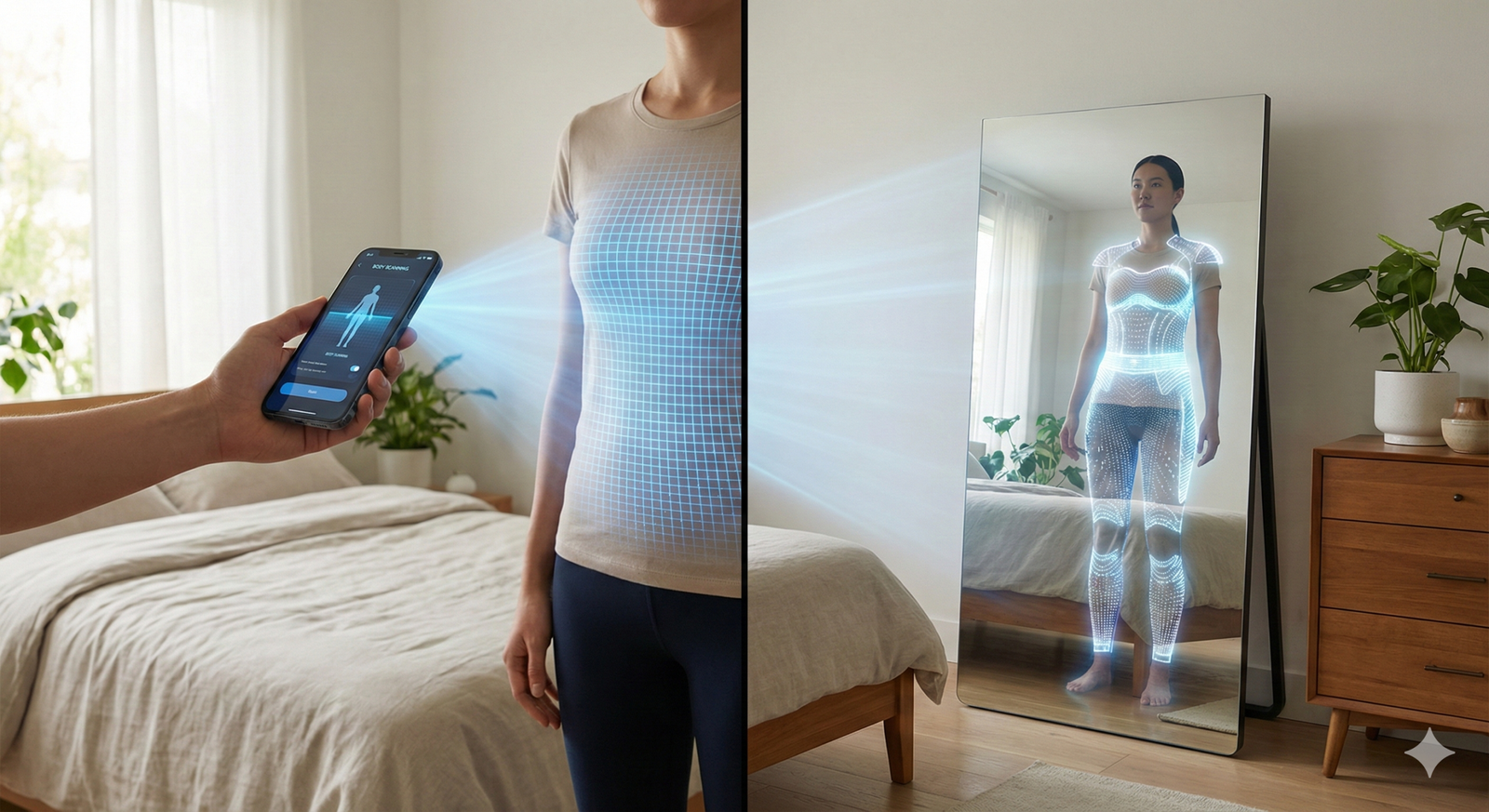
- Body Mapping and Segmentation: When you upload a photo or use your camera, the AI identifies the user’s body parts (segmentation). It distinguishes skin, hair, and background from the body. It then maps key joints (pose estimation) to understand if you are standing straight, sitting, or turning.
- 3D Mesh Fitting: More advanced systems create a 3D mesh of the user’s body. The digital garment is not just an image; it is a 3D asset with physics properties. The AI simulates how the fabric behaves—does silk drape differently than denim? Does the skirt flare out when the user spins?
- Generative Diffusion Models: As of 2025 and 2026, the industry has shifted toward generative AI models (similar to those used in image generators like Midjourney or DALL-E, but specialized). Instead of manually warping a 3D model, these diffusion models predict what the garment looks like on the person pixel-by-pixel, preserving details like lighting, shadows, and fabric folds with near-photorealistic accuracy. This technique, often called “preserves-details try-on,” handles complex patterns and textures far better than older AR methods.
Use Cases in Practice
- Eyewear and Accessories: This was the first frontier. Apps like Warby Parker or Ray-Ban use AR to overlay glasses on your face. Because the face is relatively rigid compared to the body, and glasses are solid objects, this tech is highly mature and accurate.
- Beauty and Makeup: Sephora and L’Oréal utilize facial mapping to let users “try on” lipstick shades or eyeshadows. The AI tracks lips and eyes in real-time, adjusting for skin tone and lighting.
- Footwear: Companies like Snap and Amazon allow users to point their camera at their feet to see how a sneaker looks. This is useful for style, though it cannot yet perfectly predict comfort or pinch points.
- Apparel (The Holy Grail): This is the most complex area. Google’s VTO search feature, for example, allows users to select a body type that resembles their own (ranging in size and skin tone) to see how a top fits. Other platforms allow users to upload their own photos. The goal is to show how fabric pulls across the chest or bunches at the waist.
Benefits of VTO
- Confidence in Purchase: Seeing the item on a body that looks like yours (or your actual body) reduces the anxiety of the “expectation vs. reality” gap.
- Reduction in Carbon Footprint: Fewer returns mean fewer delivery trucks on the road and less packaging waste.
- Style Experimentation: Users can try bold colors or cuts they would normally avoid in a physical changing room due to time constraints or shyness.
Digital Wardrobes: The “Clueless” Closet Come to Life
While VTO helps you buy new clothes, digital wardrobe apps help you manage what you already own. This concept creates a digital twin of your physical closet.
The Digitization Process
The barrier to entry for digital wardrobes has always been the setup. Taking a photo of every shirt you own, removing the background, and tagging it is tedious. AI has leveled the playing field here.
- Automated Background Removal: Modern apps use AI to instantly strip the messy background from your bedroom photo, leaving a clean image of the garment.
- Auto-Tagging: Computer vision algorithms analyze the image to identify attributes. It sees a blue, denim, long-sleeve button-down. It tags it automatically, saving the user from manual data entry.
- Season and Weather Categorization: The app pulls local weather data and cross-references it with your inventory, suggesting sweaters when it’s cold and linen when it’s hot.
Functionality and Workflow
Once the closet is digitized, the AI acts as a stylist:
- Outfit Generation: “Shuffle” features allow the AI to combine items you might not have paired together. It uses rules of color theory and style categorization (e.g., “formal” vs. “casual”) to propose looks.
- Usage Analytics: These apps track what you wear. Over time, they generate data on “Cost Per Wear” (CPW). You might realize that the expensive coat you bought was a great investment because you wear it daily, while the cheap dress has a high CPW because it still has the tags on.
- Packing Lists: AI can generate packing lists based on the destination’s weather and the duration of the trip, ensuring you don’t overpack.
The Sustainability of Utilization
The most sustainable garment is the one already in your closet. Digital wardrobes combat the “hedonic treadmill” of fast fashion by gamifying your existing inventory. When you can visually scroll through your clothes on your phone, you rediscover forgotten items. This visibility decreases the perceived need to buy more.
The Intersection: Where VTO Meets the Digital Closet
The future of AI in fashion lies in the convergence of these two technologies. Imagine this workflow:
- You see a jacket online.
- You use VTO to see it on your body.
- You click a button to “add to digital closet” (temporarily).
- The AI checks your existing digital wardrobe.
- It tells you: “This jacket matches 14 items you already own, creating 25 potential outfits.” OR “This jacket matches nothing you own.”
This compatibility analysis is the missing link in ethical consumption. It shifts the purchase decision from “Do I like this item?” to “Does this item serve my wardrobe?”
Challenges and Limitations
Despite the hype, AI in fashion faces significant hurdles that users should be aware of.
The “Uncanny Valley” and Physics
While generative AI creates beautiful images, it sometimes hallucinates. It might smooth over a zipper that would actually bulge, or make a stiff fabric look soft. “Hallucinated fit” is a risk—if the AI makes the dress look perfect on your photo by altering the dress’s dimensions in a way the physical item doesn’t reflect, it leads to disappointment.
Fabric Dynamics
Simulating cloth is incredibly computationally expensive. Accurately rendering how velvet catches light versus how silk does, or how rigid denim bunches behind the knees, requires physics engines that are often too heavy for mobile apps. Most consumer apps utilize approximations.
Data Privacy
To work effectively, these apps need intimate data: full-body photos, exact measurements, and purchase history.
- Biometric Data: A scan of your face or body is biometric data. Users must trust that this data is encrypted and not sold to third parties or used to train deepfake models without consent.
- Surveillance Capitalism: Brands are eager to know not just what you buy, but what you try on and reject. This creates a granular profile of your insecurities and preferences.
Inclusivity and Bias
Early AI models were notoriously biased, often performing poorly on darker skin tones or non-standard body types. While the industry is improving, with datasets becoming more diverse, users may still encounter VTO tools that struggle with accurate lighting on diverse skin tones or fitting for plus-size or adaptive fashion needs.
Strategic Shift: From Fast Fashion to Smart Fashion
The integration of AI is facilitating a shift in the business model of fashion.
Demand Forecasting
Brands use AI to predict trends. If digital wardrobes show that users are suddenly pairing red accessories with beige trench coats, brands can adjust production in real-time. This sounds corporate, but it benefits the consumer and planet by reducing “dead stock”—clothes that are made but never sold, eventually ending up in landfills.
Made-to-Order and Customization
AI sizing technology enables a return to bespoke clothing. If a brand has your precise 3D body scan, they can manufacture a garment specifically for you. This creates a “zero-inventory” model where clothes are only made after they are sold, drastically reducing waste.
How to Get Started: A Practical Guide
If you want to integrate AI into your style routine, here is a step-by-step approach.
Step 1: Choose a Digital Wardrobe App
Select an app based on your goals.
- For broad compatibility: Look for apps that offer browser extensions to easily clip items from stores.
- For styling help: Look for apps with strong “AI stylist” or “shuffle” features.
- Note: Popular options often change, but look for leaders in the “lifestyle” or “fashion” categories of app stores with high ratings for “ease of tagging.”
Step 2: Digitize in Batches
Do not try to photograph your entire house at once. Start with your active rotation (the clothes you wear this season).
- Lighting: Use natural light. Lay clothes flat on a plain background (a white sheet works best) or hang them against a plain wall.
- The “Ghost” Shot: Ensure sleeves and legs are not folded over. The AI needs to see the shape.
- Review: Check if the background remover cut off any details.
Step 3: Experiment with VTO
When shopping online, look for the “Try On” button.
- Google Shopping: Use their generative AI features to see tops on models that resemble your body type.
- Brand Sites: Many high-street retailers now integrate AR mirrors. Use them for sizing guidance, but always check the size chart as a backup.
Common Mistakes to Avoid
- Over-Trusting the Render: Remember that a VTO image is a prediction, not a promise. If a shirt looks tight on the model but loose in the AI render, trust the fabric composition and size chart over the AI.
- Ignoring Fabric Composition: AI visuals cannot convey touch. A polyester sweater may look identical to a cashmere one in a digital render, but they will feel and drape very differently. Always read the label description.
- Data Carelessness: Before uploading a body scan, read the privacy policy. Look for terms like “data encryption,” “on-device processing,” and “deletion rights.” If an app wants to keep your photos indefinitely for “marketing,” consider opting out.
Who is This For? (And Who It Isn’t)
This technology is ideal for:
- The Planner: People who like to organize outfits for the week on Sunday night.
- The Sustainable Shopper: Those trying to buy less and wear more.
- The Remote Worker: People who need to look presentable from the waist up on video calls and want to quickly cycle through top options digitally.
- Online Shoppers: Those tired of returning 50% of what they buy.
It may not be for:
- The Tactile Shopper: If you need to touch fabric to know if you like it, VTO will not satisfy you.
- The Privacy Absolutist: If you are uncomfortable sharing biometric data or photos of your home/possessions with cloud servers, these apps may cross your boundaries.
- The Vintage Hunter: While you can upload vintage items, VTO works best with current inventory where the brand has provided 3D assets.
Conclusion
AI in fashion is transitioning from a novelty to a utility. The days of “marathon coding” mentioned in other tech sectors have translated here into “marathon styling”—where algorithms do the heavy lifting of sorting, matching, and visualizing.
By adopting digital wardrobes and virtual try-ons, consumers regain control over their style. We move away from being passive consumers of fast fashion trends toward becoming curators of our own personal brands. The technology allows us to shop intentionally, reduce waste, and perhaps most importantly, rediscover the joy of the clothes we already own.
As these tools mature, the line between the digital and physical self will continue to blur. The smartest wardrobe of the future isn’t just the one with the most expensive clothes; it’s the one that is most connected, organized, and utilized.
Next Steps
- Audit your closet: Pick your top 10 favorite items.
- Download a wardrobe app: Test the background removal tool with one item.
- Try a VTO feature: Next time you browse a major retailer, use the “View on Model” or “Virtual Try-On” feature rather than just looking at the flat lay.
FAQs
Can AI really predict my clothing size accurately?
AI is getting much better at predicting size, but it is not perfect. Tools that use body scanning (via your camera) are generally more accurate than those that just ask for your height and weight. However, sizing varies wildly between brands. Use AI as a strong recommendation, but always cross-reference with the brand’s specific measurement chart.
Are digital wardrobe apps free?
Many operate on a “freemium” model. Basic features like uploading a certain number of items and creating outfits are often free. Advanced features, such as unlimited items, detailed statistics (like Cost Per Wear), or personalized AI styling suggestions, often require a subscription.
Does virtual try-on work for all body types?
Inclusivity has been a major focus for VTO developers in recent years. Modern generative AI models are trained on diverse datasets to accurately represent various skin tones, body shapes, and sizes. However, performance can still vary depending on the specific software a retailer uses. The industry standard is moving toward full inclusivity, but edge cases still exist.
Is my data safe when I scan my body for a try-on?
This depends entirely on the app or retailer. Reputable companies use encryption and often process data “on the edge” (on your device) rather than sending raw images to the cloud. Some may store a mathematical model of your body (a mesh) rather than the photo itself. Always check the privacy policy to see if they sell data to third parties or use it for ad targeting.
Can I use virtual try-on for vintage or second-hand clothes?
Generally, no. VTO relies on the retailer having a digital asset or high-quality dataset of that specific garment. Since vintage items are unique and usually not digitized by the seller, VTO is rarely available. However, you can upload photos of vintage items to your digital wardrobe to plan outfits, even if you can’t virtually “try them on” before buying.
Will AI replace human stylists?
For day-to-day outfit planning, AI is becoming a powerful competitor. It remembers everything you own and suggests combinations instantly. However, human stylists provide emotional intelligence, empathy, and a deep understanding of social context and nuance that AI currently lacks. AI is a tool for stylists, not necessarily a total replacement.
How does this help the environment?
The primary environmental benefit is the reduction of returns. Returns often involve double shipping emissions, and a surprising amount of returned clothing is liquidated or landfilled rather than restocked. Additionally, digital wardrobes encourage “shopping your own closet,” extending the lifecycle of garments and slowing down the rate of new purchases.
Why do some VTOs look like cartoons and others look real?
This differentiates “Augmented Reality” (AR) overlays from “Generative AI.” AR overlays (like a Snapchat filter) just stick a 2D or basic 3D image on top of you. It’s fast but looks floaty. Generative AI (like Google’s VTO) essentially “repaints” the image pixel by pixel to create a realistic lighting and texture blend, which takes more computing power but looks photorealistic.
References
- Google. (2023). Try on clothes with generative AI. Google Search Help. https://blog.google/products/shopping/virtual-try-on-google-generative-ai/
- McKinsey & Company. (2024). State of Fashion 2024: Finding growth in uncertainty. McKinsey.com. https://www.mckinsey.com/industries/retail/our-insights/state-of-fashion
- Vogue Business. (2023). The future of virtual try-on: Beyond the gimmick. VogueBusiness.com. https://www.voguebusiness.com/technology/
- Snap Inc. (2023). Augmented Reality in Fashion Retail Report. Snap.com. https://ar.snap.com/
- Ellen MacArthur Foundation. (2021). Circular business models: Redefining growth for a thriving fashion industry.
- Harvard Business Review. (2024). How AI Is Helping Retailers Reduce Returns. HBR.org. https://hbr.org/
- Institute of Electrical and Electronics Engineers (IEEE). (2023). Generative AI for Virtual Try-On: A Survey. IEEE Xplore.
- Whering. (2024). The Impact of Digital Wardrobes on Consumer Behavior. Whering.co.uk. https://whering.co.uk/blog