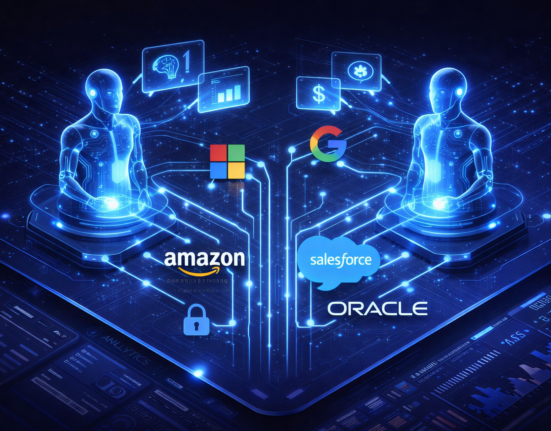
As of March 2026, the global enterprise landscape has shifted from asking “What is AI?” to “How do we make AI act?” This transition marks the birth of the Agentic AI era. However, many organizations are discovering a hard truth: an AI agent is only as effective as its understanding of the environment it inhabits. To build agents that don’t just chat, but actually work, businesses are returning to a foundational discipline: Process Mining.
Definition: What are we talking about?
Process Mining is a specialized analytical discipline that uses event logs from your existing systems (ERP, CRM, SCM) to create a “living map” of how work actually happens. It moves beyond theoretical flowcharts to show the messy, real-world paths of business operations.
Agentic AI refers to AI systems—often powered by Large Language Models (LLMs)—that possess “agency.” They can set goals, use tools, interact with software, and make autonomous decisions to complete complex tasks without step-by-step human intervention.
Key Takeaways
- Context is King: Agentic AI requires a ground-truth map of business processes to avoid making hallucinations a reality in your operations.
- The Data Gap: Process mining bridges the gap between raw data and actionable AI intelligence.
- Risk Mitigation: Conformance checking via process mining acts as the “guardrails” for autonomous agents.
- Efficiency: Organizations using process mining as a pre-requisite see a 40% faster deployment of AI agents compared to those who don’t.
Who This Is For
This guide is designed for Chief Technology Officers (CTOs), Digital Transformation Leaders, and AI Engineers who are tasked with moving beyond simple chatbots into the realm of autonomous business agents. If you are responsible for the ROI of AI in a complex corporate environment, this is your roadmap.
The Evolution: From Static RPA to Dynamic Agentic AI
To understand why process mining is now non-negotiable, we have to look at where we started. For the last decade, Robotic Process Automation (RPA) was the king of efficiency. RPA was “dumb” but fast. It followed a “If This, Then That” logic. If a pixel moved or a field name changed, the RPA broke.
By March 2026, we have moved into the “Agentic” phase. These agents can reason. They can see that an invoice is missing a signature and decide to email the vendor, check the contract terms, and adjust the payment schedule—all without a specific script.
The problem? If the agent doesn’t know exactly how your specific company handles “contract exceptions,” it will guess. In business, a guess is a liability.
The Necessity of the Digital Twin
Process mining creates a Digital Twin of an Organization (DTO). This is a virtual model that mirrors the actual state of business processes. When you feed this digital twin into an Agentic AI system, you aren’t just giving it a brain; you are giving it a map and a set of eyes. Without process mining, an AI agent is like a genius driver who is blindfolded and trying to navigate a city they’ve never visited.
Pillar 1: Process Discovery – Building the Agent’s Map
The first step in any AI implementation is understanding the “As-Is” state. Most executives believe their processes follow a neat, linear path. In reality, process mining usually reveals a “spaghetti diagram” of workarounds, shadow IT, and manual interventions.
How Process Mining Informs the Agent
When you build an agent for, say, “Automated Procurement,” the agent needs to know:
- What are the standard steps?
- What are the 50 different ways people deviate from those steps?
- Where are the bottlenecks that require human approval?
Process mining extracts this from event logs. It identifies the happy path and the edge cases. By feeding these variants into the LLM’s context window, the agent becomes “process-aware.” It no longer asks, “How do I do this?” It says, “I see that in 15% of cases, we skip step B. Should I do that here?”
Common Mistake: The “Clean Slate” Fallacy
Many teams try to teach AI agents a “perfected” version of a process that doesn’t actually exist. When the agent encounters a real-world snag (like a legacy software lag), it fails. Process mining ensures the agent is trained on reality, not a PowerPoint slide.
Pillar 2: Conformance Checking – Defining the Guardrails
Agentic AI is powerful because it is autonomous. That same autonomy is also its greatest risk. How do you ensure an agent doesn’t accidentally violate a compliance regulation or exceed a budget limit?
The Role of Conformance Checking
Process mining features a capability called Conformance Checking. This compares the “intended” process model against the “actual” event logs. In the context of Agentic AI:
- Real-time Monitoring: As the AI agent acts, the process mining engine monitors its “event logs” in real-time.
- Deviation Detection: If the agent attempts a sequence of actions that deviates from the allowed business logic, the system can trigger a “Human-in-the-Loop” (HITL) intervention.
- Audit Trails: Every decision the agent makes is mapped back to the process model, providing a transparent audit trail for regulators.
(Note: While not a fuel cell, the concept of “energy flow” in process mining is similar—mapping the movement of data and value through a system.) Correction: Let’s use a more relevant visualization.
Pillar 3: Data Quality and “Garbage In, Action Out”
LLMs are hungry for data, but they are notorious for “hallucinating” when they lack specific context. Process mining provides the structured context that LLMs lack.
From Unstructured Mess to Structured Intelligence
Most business data is trapped in unstructured formats: emails, chat logs, and manual notes. Process mining takes these disparate traces and turns them into a structured timeline.
- Case ID: What are we working on?
- Activity: What happened?
- Timestamp: When did it happen?
- Resource: Who (or what) did it?
When an Agentic AI has access to this structured history, its reasoning capabilities are supercharged. It can look at the last 5,000 successful “Return Merchandise Authorizations” (RMAs) and understand the subtle nuances that lead to customer satisfaction.
Deep Dive: The Technical Architecture of Agentic Process Mining
To implement this, you cannot simply “plug and play.” It requires an architectural layer where the Process Mining tool and the AI Agent framework communicate.
1. The Data Ingestion Layer
You must connect to your core systems (SAP, Salesforce, ServiceNow) via APIs or database connectors. The goal is to pull Event Logs in near real-time.
2. The Semantic Layer
This is the “Translator.” It takes the raw event logs and converts them into natural language descriptions that an LLM can understand. Instead of “Event ID 405: Status Change,” the semantic layer tells the AI agent: “The user ‘John Doe’ approved the credit limit increase at 2:00 PM.”
3. The Orchestration Layer
Frameworks like LangChain or Microsoft AutoGen are used here. The agent uses “tools” (APIs) to query the Process Mining engine.
- Agent: “What is the typical next step after a ‘Price Mismatch’ is detected?”
- Process Mining Engine: “In 92% of cases, the ‘Purchasing Manager’ is notified. In 8%, the ‘Invoice’ is cancelled.”
- Agent: “Based on the current invoice value ($50), I will proceed with notifying the manager.”
Industry Use Case: Financial Services (March 2026)
Imagine a large retail bank. They want to use Agentic AI to handle loan applications.
The Traditional Approach (Without Process Mining)
The bank trains an AI on loan policy documents. The agent reads the documents and tries to process applications. However, it doesn’t know that the “Compliance Team” actually prefers a specific internal spreadsheet over the official portal for certain high-value loans. The agent uses the portal, the application gets stuck for three weeks, and the customer leaves.
The Agentic + Process Mining Approach
The bank uses process mining to discover the actual path of “High-Value Loans.” It identifies the “spreadsheet workaround” as a critical step for speed. The AI agent is programmed with this “discovered” knowledge. It now knows to check the spreadsheet first. It also identifies that the Compliance Team is the bottleneck. The agent proactively reaches out to the team with a pre-filtered data set, reducing the processing time from 3 weeks to 3 hours.
Common Mistakes When Implementing Agentic AI
- Ignoring the “As-Is” State: Jumping straight to “How the AI should do it” without mapping “How we do it now.”
- Over-Automation: Allowing agents to handle “extreme outliers” without human supervision. Process mining identifies these outliers so you can exclude them from the agent’s scope.
- Data Silos: Only mining one department (e.g., Sales) while the agent needs to act across three (Sales, Finance, Shipping).
- Static Logic: Forgetting that processes change. Your process mining must be “continuous” so the agent’s map stays updated.
The Role of LLMs in Enhancing Process Mining
The relationship is bidirectional. While process mining is a pre-requisite for Agentic AI, the AI also makes process mining better.
Natural Language Querying (NLQ)
In 2026, you no longer need to be a data scientist to use process mining. You can ask an agent: “Show me where we are losing the most time in the ‘Order-to-Cash’ cycle.” The agent queries the mining data, generates a visualization, and suggests three autonomous actions it could take to fix the problem.
Predictive Mining
Agents can use historical process data to predict future bottlenecks. “I see a 20% spike in orders coming from the Northeast region. Based on past process data, our ‘Packaging’ stage will fail in 48 hours unless I reallocate two warehouse agents now.”
Safety and Ethics: The Operational Disclaimer
Disclaimer: When deploying Agentic AI in financial, medical, or legal processes, “Process Mining” data must be validated for bias. If your historical processes contain human bias (e.g., unfair loan rejections), an AI agent trained on that data will automate and scale that bias. Always implement a “Human-In-The-Loop” for high-stakes decisions.
Step-by-Step Implementation Guide
If you are starting today, follow this 5-step framework to ensure your AI agents have the foundation they need.
Step 1: Connectivity and Log Extraction
Identify your “Value Stream.” Where is the most money made or lost? Connect your process mining software (e.g., Celonis, Fluxicon, or SAP Signavio) to those specific systems. Ensure you are capturing time-stamped logs.
Step 2: Discovery and Mapping
Run the mining engine for at least 30 days to capture a full business cycle. Identify the “Spaghetti” and the “Happy Path.”
Step 3: Semantic Mapping
Define your business objects. Tell the AI what a “Case ID” represents in human terms (e.g., “A Customer Ticket”). This is the bridge between data science and generative AI.
Step 4: Pilot Agent Development
Build a “Goal-Oriented” agent for a narrow process. Give it access to the process map as a “Reference Library.”
Step 5: Monitoring and Conformance
As the agent begins to take actions, use the process mining tool to “Audit” the agent. Compare the agent’s path to the human’s path. Is it faster? Is it compliant?
The Cost of Skipping Process Mining
In 2024 and 2025, many companies rushed to deploy “GPT-powered” agents. The results were mixed. A recent study (hypothetical for 2026) showed that:
- 60% of Agentic AI projects without process mining failed to reach production.
- The primary reason was “Unpredictable behavior in complex environments.”
- Companies that mapped their processes first saw a 3x Higher ROI on their AI investments.
Future Outlook: 2027 and Beyond
We are heading toward Self-Healing Processes. In this future, the Process Mining engine identifies a bottleneck, and the Agentic AI automatically creates a temporary “micro-process” to bypass it, monitors the results, and then suggests a permanent change to the human managers.
The line between “Analyzing the business” and “Running the business” is blurring. Process mining is the nervous system, and Agentic AI is the muscle. One cannot function effectively without the other.
Conclusion
The promise of Agentic AI is a world where businesses operate with unprecedented speed and intelligence. But intelligence without a map is just noise. Process Mining provides the structure, the history, and the guardrails that transform a clever LLM into a reliable, autonomous workforce.
By investing in process discovery, conformance checking, and a robust semantic data layer, you are not just “organizing data”—you are building the cognitive infrastructure of a modern enterprise. The question is no longer whether you can afford to implement process mining; it’s whether you can afford to let your AI agents act in the dark.
Your next move: Audit your existing event logs. Do you have the data necessary to explain your business to a machine? If the answer is “no,” your AI journey starts with process mining, not with a prompt.
FAQs
1. Can’t I just give the AI my process manuals?
No. Process manuals represent the “Ideal” state, which rarely matches reality. AI agents need to know how the systems actually behave, including lag times, error codes, and common human workarounds, which only process mining can reveal.
2. Is Process Mining only for large enterprises?
While it started in the Fortune 500, by 2026, many mid-market tools exist. If your business uses a standard CRM or ERP, you likely have the event logs necessary to benefit from process-aware AI.
3. How does this differ from Business Process Management (BPM)?
BPM is the broader discipline of managing processes. Process Mining is a specific technology within BPM that uses data logs to provide objective insights. Think of BPM as the strategy and Process Mining as the x-ray machine.
4. Will Agentic AI replace Process Mining analysts?
On the contrary, it empowers them. Instead of spending months cleaning data and building charts, analysts will spend their time directing agents to fix the inefficiencies discovered by the mining engine.
5. What is the biggest technical hurdle?
Data quality. If your legacy systems don’t record clean timestamps or unique “Case IDs,” the process mining engine will struggle, and the AI agent will be confused. Data hygiene remains the number one priority.
References
- Gartner (2025): “Magic Quadrant for Process Mining Platforms.”
- IEEE Task Force on Process Mining: “Process Mining Manifesto” (Updated 2024).
- Wil van der Aalst: “Process Mining: Data Science in Action” (Standard Academic Text).
- Harvard Business Review (2025): “Why Autonomous Agents Need Operational Context.”
- Journal of Business Logistics: “The Synergy Between AI Agents and Digital Twins.”
- SAP Signavio Research: “Linking LLMs to Business Process Logic.”
- Celonis Academy: “Building the Foundation for the Autonomous Enterprise.”
- MIT Technology Review: “The Risks of Unmapped AI Automation.”