The landscape of entrepreneurship is undergoing a seismic shift. As of February 2026, we have moved past the “AI-wrapper” era and entered the age of the agent-driven startup. Unlike traditional SaaS companies that provide tools for humans to do work, agent-driven startups deploy autonomous software entities—AI agents—to perform the work themselves. This fundamental change in unit economics is creating what economists call the 5x Growth Curve, a trajectory where revenue scales at five times the rate of traditional competitors while maintaining lean headcount.
What is an Agent-Driven Startup?
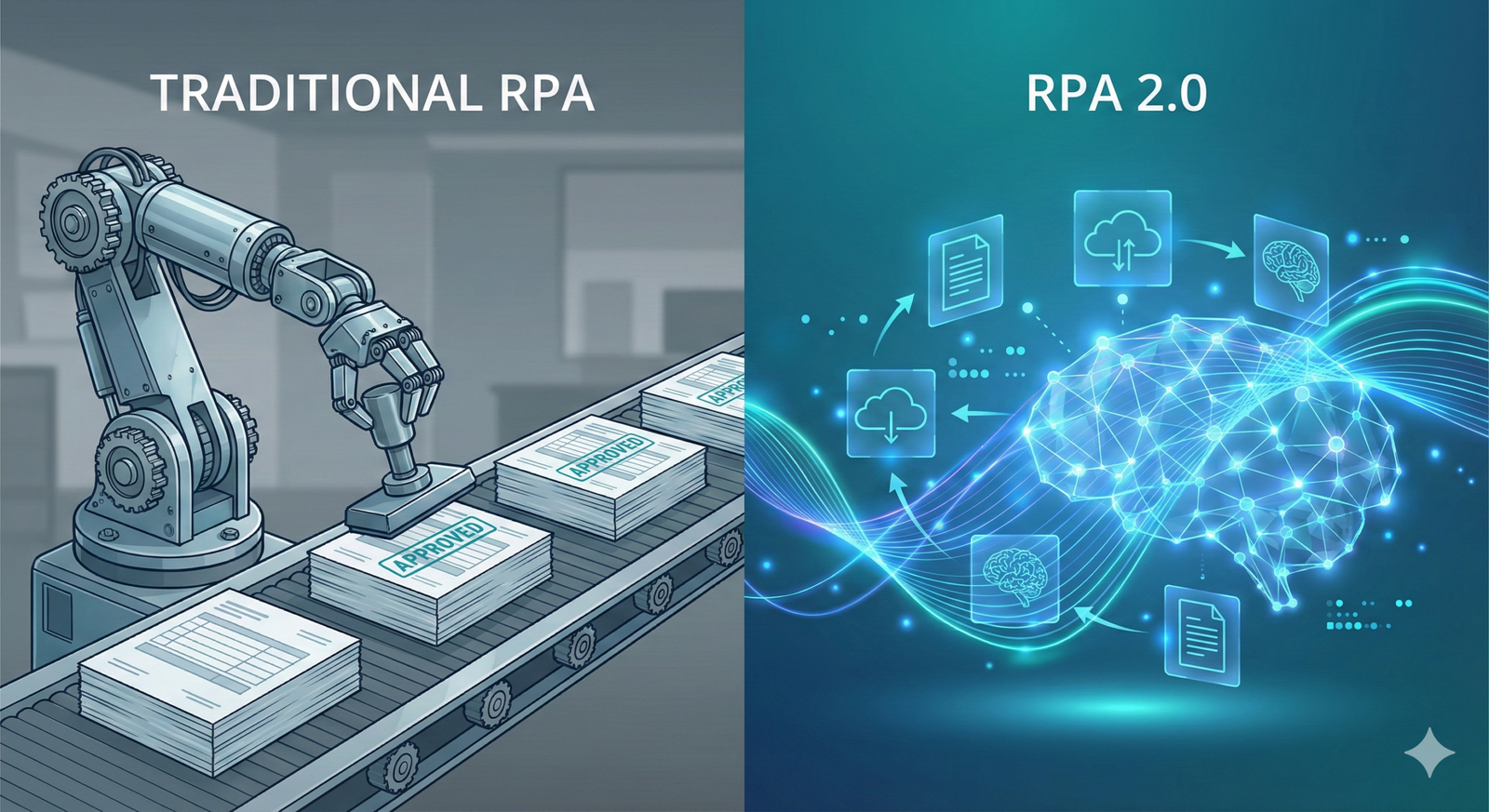
An agent-driven startup is a company that builds its core product, internal operations, and customer delivery around agentic workflows. These are not simple chatbots; they are autonomous systems capable of reasoning, planning, using tools, and executing multi-step tasks with minimal human intervention. While a traditional startup scales by hiring more people, an agent-driven startup scales by deploying more compute.
Key Takeaways
- Decoupling Labor from Revenue: Scaling no longer requires a linear increase in headcount.
- Operational Velocity: Agents operate 24/7, reducing sales cycles and support response times from hours to seconds.
- The 5x Advantage: By reducing the Cost of Goods Sold (COGS) through automated cognitive labor, these startups achieve 500% faster margin expansion.
- Human-on-the-Loop: Humans transition from “doers” to “architects” and “editors,” overseeing agentic swarms.
Who This Is For
This guide is designed for tech founders, venture capitalists, and operations leaders who want to understand the mechanics of autonomous business scaling. Whether you are building an AI-native company or retrofitting an existing SaaS model, understanding the five pillars of the 5x growth curve is essential for survival in the current market.
Financial Disclaimer: The strategies discussed herein involve business scaling and financial projections. Revenue growth is subject to market conditions, product-market fit, and execution. Consult with financial and legal advisors before making significant structural changes to your business.
1. The Foundation: Building the Agent-Native Infrastructure
The first stage of the 5x growth curve is the transition from “software as a tool” to “software as a teammate.” To scale revenue rapidly, a startup must move away from static code and toward dynamic, agentic architectures.
From APIs to Action-Oriented LLMs
Traditional startups rely on APIs to move data. Agent-driven startups use Large Language Models (LLMs) as “reasoning engines” that decide which APIs to call. This creates a flexible infrastructure where the software can adapt to a customer’s specific needs without custom coding. For example, a fintech agent doesn’t just display a balance; it recognizes a cash-flow gap and autonomously drafts a credit application for the founder to approve.
The Technical Stack of Growth
To achieve a 5x curve, your infrastructure must support:
- Long-term Memory: Agents must remember customer preferences across sessions (using vector databases like Pinecone or Weaviate).
- Tool-Use Capabilities: The ability for agents to interact with CRMs, email servers, and payment gateways.
- Observability Layers: Tools like LangSmith or Arize that allow humans to monitor agent reasoning and catch hallucinations before they affect the bottom line.
Common Mistake: Over-Engineering the Prompt
Many founders get stuck in “prompt engineering hell.” The most successful agent-driven startups focus on workflow engineering instead. It is not about the perfect sentence you give the AI; it is about the environment, tools, and feedback loops you provide the agent so it can self-correct.
2. The Efficiency Spike: Automating the Customer Lifecycle
Revenue scaling begins at the top of the funnel. Agent-driven startups use “Sales Agents” (sometimes called AI BDRs) to handle the heavy lifting of prospecting, qualifying, and scheduling.
Hyper-Personalization at Scale
In a traditional model, a salesperson might send 50 personalized emails a day. An agentic system can send 5,000, each one researched by “browsing agents” that look at a prospect’s recent LinkedIn posts, quarterly earnings reports, and news mentions. This increases conversion rates significantly, fueling the initial “spike” in the growth curve.
| Function | Traditional Startup | Agent-Driven Startup |
| Lead Gen | Manual scraping & templates | Autonomous research & custom outreach |
| Customer Support | Tiered human agents | Instant resolution via agentic tools |
| Onboarding | 1-on-1 calls | Self-adjusting AI-guided tutorials |
| Expansion | Quarterly Business Reviews (QBRs) | Continuous usage monitoring & automated upsells |
Shortening the “Time to Value” (TTV)
Revenue scales when customers stay. Agent-driven startups use “Onboarding Agents” that watch how a user interacts with the product in real-time. If a user gets stuck, the agent doesn’t just send a help article; it performs the action for the user or explains the solution via a generated video walkthrough. This reduces churn and accelerates the path to the 5x revenue mark.
3. The Pivot to Autonomy: Shifting from Human-in-the-Loop to Human-on-the-Loop
As a startup grows, human bottlenecks usually become the primary constraint. In the 5x model, the goal is to move humans from being “in the loop” (where the process stops until a human acts) to “on the loop” (where the agent acts, and the human supervises).
The “Agency” of the Agent
True revenue scaling happens when agents can make low-level decisions. For instance, a “Billing Agent” should be able to negotiate a 10% discount for a churning customer based on pre-set guardrails without asking a manager.
Building Trust Through Guardrails
To reach high autonomy, you need:
- Deterministic Checks: Code-based filters that prevent agents from performing illegal or high-risk actions.
- Evaluator Agents: A second, more restricted AI that “grades” the first agent’s work before it goes live.
- Human Escalation Triggers: Natural language triggers that alert a human when the agent’s confidence score drops below a certain threshold (e.g., 85%).
Practical Example: The Automated Marketing Agency
An agent-driven marketing startup doesn’t hire 50 content writers. It hires 5 “Editor-Architects” who manage a fleet of 500 agents. These agents research trends, draft posts, generate images, and analyze performance data. The humans only intervene to set the “brand voice” and approve the final strategy. This allows the agency to handle 10x the client load with 1/10th the staff.
4. The Market Expansion: Vertical Scaling with Multi-Agent Systems
Once the core product is autonomous, the 5x growth curve accelerates through “Multi-Agent Systems” (MAS). This is the practice of having specialized agents work together to solve complex, multi-departmental problems.
Orchestration and Swarms
Instead of one giant, “God-model” agent trying to do everything, successful startups use a “Manager Agent” to delegate tasks to “Worker Agents.”
- The Researcher Agent gathers data.
- The Analyst Agent finds insights.
- The Writer Agent creates the report.
- The QA Agent checks the facts.
This modularity allows a startup to enter new markets (Vertical Scaling) almost instantly. If a legal-tech startup wants to move from “Contract Review” to “Patent Filing,” they don’t need to hire a new department; they develop a new “Patent Agent” module and integrate it into their existing swarm.
Reducing Marginal Cost of Expansion
In the old world, entering a new country meant hiring local teams. In the agentic world, it means deploying agents localized in language, culture, and regulation. The marginal cost of adding a million dollars in revenue in a new territory becomes a matter of server costs rather than salaries.
5. The Compounding Effect: Data Moats and Algorithmic Revenue Growth
The final stage of the 5x curve is where growth becomes exponential and defensive. Agent-driven startups create “Data Flywheels” that are far more aggressive than traditional software.
Self-Improving Workflows
Every time an agent completes a task and a human “approves” or “edits” it, that data is fed back into the system. Over months, the agents become hyper-specialized to that specific business’s data. This creates a “Moat”—a competitive advantage that is impossible for a new competitor to copy because they lack the millions of human-verified agentic traces.
Algorithmic Pricing and Upselling
Revenue scaling is optimized by “Pricing Agents” that monitor market demand, competitor prices, and user engagement in real-time. They can adjust subscription tiers or offer personalized “Pay-as-you-go” credits at the exact moment a user needs them.
The End State: The “Zero-Ops” Startup
While a “Zero-Ops” company is still a theoretical ideal, agent-driven startups are approaching a state where the majority of day-to-day operations (HR, basic accounting, IT support, and lead gen) are handled by a “Digital Twin” of the company. This leaves the human founders free to focus entirely on high-level strategy and innovation, which is the ultimate driver of the 5x growth curve.
Conclusion: The Future of Scaling
The 5x growth curve is not a marketing gimmick; it is a mathematical reality of the AI era. By shifting the burden of cognitive labor from expensive, slow-scaling human teams to rapidly deployable AI agents, startups can achieve levels of efficiency that were previously impossible. However, this journey requires a fundamental mindset shift. Founders must stop thinking like “managers of people” and start thinking like “architects of systems.”
To begin your journey toward an agent-driven model, you should first audit your current customer lifecycle. Identify the “repetitive cognitive tasks”—the emails, the data entry, the basic reports—and ask if an agentic workflow could handle the first 80% of that work. The transition will not happen overnight, but the companies that start building their agentic infrastructure today will be the ones dominating the revenue leaderboards by 2027.
Next Steps for Your Startup:
- Identify one “bottleneck” process where human intervention causes a delay of more than 4 hours.
- Prototype an agentic workflow using tools like LangGraph, CrewAI, or AutoGPT to handle the initial stages of that process.
- Implement a “Human-on-the-loop” system to ensure quality while the agents learn your business’s specific nuances.
- Monitor the ROI not just in saved hours, but in increased lead velocity and customer retention.
FAQs
What is the difference between a “Chatbot” and an “AI Agent”?
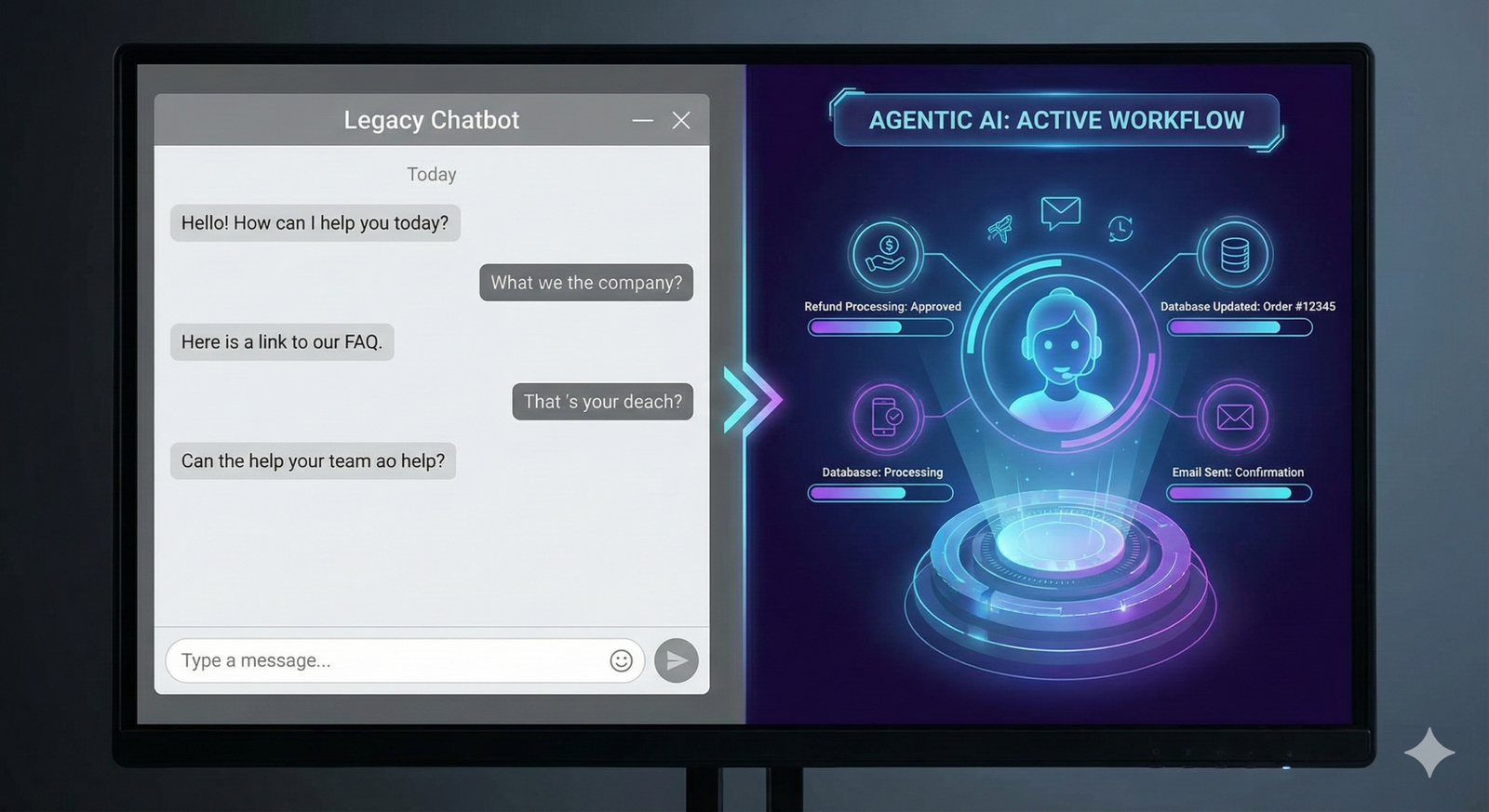
A chatbot is reactive; it waits for a user to ask a question and provides a text response. An AI Agent is proactive and goal-oriented; you give it a goal (e.g., “Find 10 leads and book meetings”), and it plans the steps, uses tools, and executes the task autonomously.
How do agent-driven startups handle the “hallucination” problem?
Successful startups use “multi-agent validation.” One agent performs the task, and a second agent (with a different prompt or model) checks the work against a set of facts or rules. They also keep humans “on the loop” for high-stakes decisions.
Is an agent-driven model only for tech companies?
No. Any business that involves digital workflows—including law firms, accounting agencies, and logistics companies—can use agents to scale. If the “work” involves processing information and making decisions, it can be agent-driven.
Will agents replace human employees in these startups?
Agents replace “tasks,” not necessarily “people.” In an agent-driven startup, the role of the employee evolves. Instead of doing the data entry, the employee manages the agent that does the data entry. This allows one person to do the work of five, which is where the “5x” efficiency comes from.
What is the biggest risk of the agent-driven model?
The primary risk is “cascading errors,” where an agent makes a mistake that triggers another agent to make a mistake, leading to a large-scale operational failure. This is why robust monitoring and “kill switches” are essential components of the 5x growth curve.
References
- Andreessen Horowitz (a16z): “The New Business Logic of AI Agents” (2025).
- OpenAI Research: “Evaluating Large Language Models for Agentic Workflows” (2025).
- Gartner: “Top Strategic Technology Trends for 2026: Autonomous Agents.”
- Stanford Institute for Human-Centered AI (HAI): “The Economic Impact of Agentic Systems on Small and Medium Enterprises.”
- Sequoia Capital: “The AI 50: How Generative AI is Transforming the SaaS Landscape.”
- MIT Technology Review: “Why 2025 Was the Year of the Agentic Shift.”
- McKinsey & Company: “The Future of Work: Scaling Revenue with Cognitive Automation.”
- Harvard Business Review: “Management in the Age of Autonomous Software.”
- Anthropic News: “Constitutional AI and the Safety of Autonomous Business Systems.”
- Journal of Artificial Intelligence Research: “Orchestrating Multi-Agent Swarms for Complex Task Resolution” (2025).