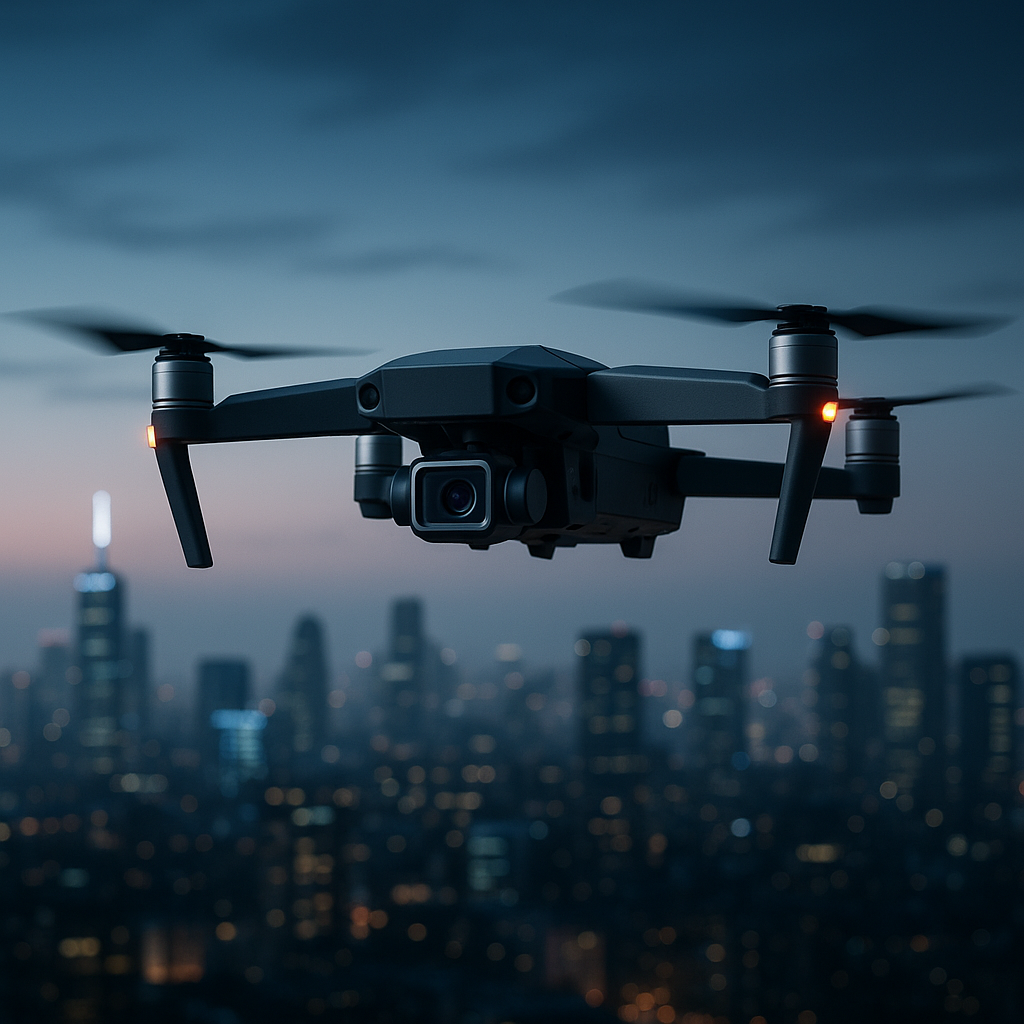
The drone industry is growing very quickly. What started as military weapons and niche hobbyist gadgets has turned into a complicated ecology that is coming up with new ideas for farming, shipping, environmental monitoring, and other fields. By 2030, drones will be a routine part of life, employment, and vital infrastructure. This article discusses about the business, legislative, and technological developments that will shape the future of drone technology for the next ten years and beyond.
The novel things that drones can do
Begin
Unmanned aerial vehicles (UAVs) originally started being employed for reconnaissance in the late 20th century by the military and for research. By the 2000s, powerful surveillance drones like the MQ-1 Predator showed that they could endure a long time and possessed sensors that would subsequently be available to the general public.
- Hobbyist Boom: In the 2010s, Wi-Fi camera modules and smartphone controls made it possible for consumers to acquire quadcopters for their own purposes. Companies like DJI and Parrot made it easy for people to snap images from the sky. This opened up new business and creative doors.
For Work (2020–2025)
- Amazon Prime Air, Wing (Alphabet), and Zipline were the first companies to try to provide deliveries and medical supplies to people living in the suburbs and the country.
- Enterprise Solutions: Farmers used drones to watch over their crops and spray them where they needed it. Construction businesses utilized drones to check if locations were safe.
- Regulation Emergence: Governments all around the world began to set guidelines for how to safely let drones fly in their airspace. This was done with the help of the FAA’s Part 107 in the U.S. and EASA’s U-space in Europe.
Things That Will Be Important After 2030
AI and automobiles that drive themselves working together
- On-board Perception: Thanks to new computer vision and sensor fusion technology, drones will be able to navigate through complicated areas on their own.
- Swarm Intelligence: Drones can cover a lot of land fast when they cooperate together. This is useful for search and rescue, inspecting for damage after a disaster, and huge inspections.
- Edge AI: You can operate offline safely, get answers faster, and cut down on latency using machine learning on devices.
New thoughts on energy and movement
- Solid-state batteries: High-energy-density chemistries might be able to double the length of a flight by 2030, from around 30 minutes to more than an hour.
- Alternative Fuels: Big delivery drones might be powered by hydrogen fuel cells or hybrid-electric systems, which would give them a range of hundreds of kilometers.
- Solar Augmentation: Persistent-flight platforms employ solar panels to keep an eye on the surroundings for a long time.
Keeping in touch and controlling air traffic
- Ultra-reliable low-latency communications (URLLC): will enable you control items and watch video in real time after 5G and beyond.
- Unmanned Traffic Management (UTM): Digital systems will arrange flights, keep planes apart, and adjust routes on the fly to make sure that both unmanned and manned aircraft may safely share the airspace.
Making things smaller and different kinds of payloads
- Micro- and Nano-Drones: These tiny drones can fit into small spaces to assess the building’s structure or look for persons trapped in structures that have come down.
- More and more drones will come with gear that are made for certain tasks in different industries. Two of these tools are LIDAR scanners and multispectral sensors.
The laws and morals of the land
A single standard that everyone in the world agrees on
- ICAO’s goal: to make sure that BVLOS (Beyond Visual Line of Sight) operations and UTM interoperability follow the same standards everywhere in the world.
- The EU’s U-space and the FAA’s future Remote ID and UTM standards are both meant to make the approval process easier, but they are not the same. Having the same rules for privacy, insurance, and licenses will be very crucial.
Safety and privacy of data
- GDPR and Beyond: EU privacy rules already restrict how drone data is used, and similar laws are being established all around the world to safeguard people’s privacy.
- Cybersecurity Standards: Strong encryption and authentication procedures must deter hijacking and data leakage as drones become linked IoT devices.
Using AI in a beneficial way
- Bias and Responsibility: AI-based systems for recognizing objects can’t make mistakes that could lead to accidents or unfair enforcement. People will trust the government better if they can view audits and know who is in charge.
Applications for Certain Areas
Getting There and Shipping
- Last-Mile Shopping: By 2030, huge businesses intend to utilize fleets of drones to deliver products the same day in metropolitan corridors. This will lower prices and carbon emissions.
- Humanitarian and Medical Aid: Zipline’s blood-delivery network has already benefited people in isolated locations, and soon it will be able to serve people in disaster zones and underdeveloped countries as well.
Farming
- Variable-rate spraying based on multispectral imaging is an aspect of precision farming that makes the best use of pesticides. This makes the farm last longer and boosts production.
- Automated Harvest Monitoring: AI-driven phenotyping will let us know when crops are ready to be picked, which will help us prepare ahead for the supply chain.
Building and Infrastructure
- Drones with ultrasonic and thermal sensors can discover faults with bridges, power lines, and wind turbines without having to set up scaffolding or switch them off.
- Digital Twins: 3D mapping with a lot of information creates new models of building sites. This makes it easier to keep an eye on things and stay safe.
Taking care of the environment
- Thermal drones watch over endangered species, poaching, and the health of their ecosystems with as little disturbance as possible to keep animals safe.
- High-altitude drones gather information about the atmosphere, which helps with climate modeling by adding to what satellites see.
Public safety and emergency response
- Quick airborne surveys assist first responders figure out how bad a crisis is: They reveal where people are safe and where there are threats following floods, hurricanes, or earthquakes.
- Firefighters can utilize drones that can handle heat to acquire thermal photographs of wildfires in real time. This helps them find out how to put them out.
Issues with technology and how to solve them
There are too many planes in the air.
- Dynamic Geofencing: Real-time updates on temporary flight restrictions (TFRs) and no-fly zones will keep planes from flying too close to airports and other sensitive sites.
- Edge computing and cloud-native architectures are what UTM systems require to be able to handle thousands of aircraft at once.
The merits and downsides of endurance vs. payload
- Modular Designs: You may easily switch out the battery and payload modules between missions.
- Hybrid architectures: You can employ both electric and fuel engines to get the right amount of weight, noise, and range for your purposes.
Backup and Dependability
- Adding extra sensors and automatic fail-safe procedures (like going home when the signal is lost) makes it less likely that something will go wrong.
- Standardizing parts: It will be easier to maintain all the motors, controllers, and batteries in the industry up to date and make them work better together if they all meet the same standards.
How the Public Sees and Accepts
- Less Noise: Quieter propeller designs and flight paths that run through cities make it easier for people to go around.
- Demonstration Projects: Pilot initiatives that bring people from the community together help them learn to know and trust each other.
Market predictions and how they will effect the economy
- The drone market will be valued $22.5 billion in 2023. It will be valued $42 billion by 2030, mainly to sales to corporations and the government.
- Job Creation: There will be new positions in UTM management, drone maintenance, data analysis, and AI oversight. These jobs will replace the ones that were lost because of automation.
- Cost Savings: Companies that deploy drones report that inspections cost up to 50% less and projects take 30% less time to finish.
The Way to Fly Without a Driver
- UATs are unmanned aerial taxis.
- Some of the businesses that are testing electric vertical takeoff and landing (eVTOL) vehicles for urban air mobility (UAM) are EHang, Volocopter, and Joby Aviation.
- Regulatory agencies are setting regulations for type certification. The FAA’s Part 23 modernization rule lets people design more advanced air mobility vehicles.
Smart Cities in Action
- Cities will build drone ports and vertiports into their infrastructure and connect them to public transportation so that people can easily get from one to the other.
- Smart traffic lights and digital signs will work together to make sure that planes can take off and land without too much issue on the ground.
Hyperloop and other things
- Some hybrid logistics networks boast they can deliver packages from point A to point B in less than an hour. They use drones and fast land transit, like Hyperloop.
To put it briefly
Starting in 2030 and beyond, drones will be helpful for businesses, government services, and keeping the environment safe. When self-driving technology, better propulsion systems, widely accepted rules, and public support all come together, a dynamic drone ecosystem will form. To fix issues with technology, morals, and safety, manufacturers, regulators, service providers, and communities all need to work together. The business and society could change a lot if people appropriately accept the drone revolution.
Questions that people ask a lot
- What are the most important new technologies that are making drones less reliant on people?
Better AI for vision, swarm intelligence algorithms, and edge computing mean that drones can now fly and change course on their own. - What will the rules for drones be like in the year 2030?
All drones throughout the world will have to follow the same standards, but there will be more BVLOS approvals and quicker ways to get your drone authorized. - Do drones actually stay in the air for an hour?
Yes, people are working on solid-state batteries, hydrogen fuel cells, and hybrid-electric systems to make mid-sized platforms fly for 60 to 120 minutes. - What kinds of businesses will benefit the most from employing commercial drones?
Logistics (last-mile delivery), agriculture (precise farming), infrastructure (inspections), environmental monitoring, and emergency services will all be able to do their jobs better. - Are drone swarms safe to use?
When robust UTM, dynamic geofencing, and AI-driven collision avoidance regulate coordinated swarms, they can work safely and give support and strength on essential missions. - How do drones protect people’s privacy?
It is okay to use drones to watch people as long as you obey data protection laws (GDPR and CCPA), complete privacy effect assessments, and have clear policies about how to handle data. - What do people who use drones need to know?
Some of the most crucial jobs are UTM operators, AI/ML engineers, drone maintenance technicians, certifiers, and data analysts who work with data that comes from the air.
References
- Federal Aviation Administration (FAA). “Part 107: Small UAS Rule.” FAA.gov. https://www.faa.gov/uas/commercial_operators/part_107/
- European Union Aviation Safety Agency (EASA). “U‑Space Regulatory Framework.” EASA.europa.eu. https://www.easa.europa.eu/domains/civil-drones/rules-uas
- International Civil Aviation Organization (ICAO). “Remotely Piloted Aircraft Systems (RPAS).” ICAO.int. https://www.icao.int/safety/UA/Pages/default.aspx
- FAA & NASA. “Unmanned Aircraft System Traffic Management (UTM).” NASA.gov. https://www.nasa.gov/aeroresearch/programs/aavp/utm
- MarketsandMarkets. “Drone Market by Component, Type, Application – Global Forecast to 2030.” MarketsandMarkets.com. https://www.marketsandmarkets.com/Market-Reports/commercial-drones-market-1056.html
- McKinsey & Company. “The Commercial Drone Opportunity: How Drone Technology Will Transform Industries.” McKinsey.com. https://www.mckinsey.com/business-functions/operations/our-insights/industrial-drone-opportunity
- IEEE Spectrum. “AI in the Skies: How Drones Are Learning to Fly Themselves.” IEEE.org. https://spectrum.ieee.org/ai-in-the-skies