The landscape of work is undergoing a seismic shift, driven largely by the rapid integration of Artificial Intelligence (AI) and Machine Learning (ML) across virtually every industry. Whether you are a software developer looking to specialize, a marketing professional hoping to leverage data, or someone seeking a complete career pivot, reskilling for AI offers a pathway to future-proof your career. This guide provides a comprehensive roadmap for navigating this transition, focusing on actionable steps, realistic expectations, and the specific skills required to thrive in the AI economy.
Disclaimer: This article provides general career and educational guidance. It does not constitute personalized financial or employment advice. Employment markets vary by region and industry; always conduct your own due diligence or consult a career counselor for specific situations.
Key Takeaways
- The Demand is Real: AI is no longer a niche research field; it is an operational necessity for companies, creating a high demand for practitioners who can build, maintain, and ethically manage these systems.
- Hybrid Roles are Emerging: You do not necessarily need to be a math PhD to work in AI. Roles combining domain expertise (finance, healthcare, logistics) with AI literacy are exploding.
- Python is the Lingua Franca: Proficiency in Python remains the non-negotiable entry point for technical roles.
- Soft Skills Matter: Critical thinking, problem formulation, and ethical reasoning are as important as coding ability.
- Portfolios Over Credentials: While degrees help, a demonstrable portfolio of projects often holds more weight for career pivoters.
- Continuous Learning is Mandatory: The field moves too fast for “one-and-done” learning; a mindset of perpetual upskilling is required.
Who This Is For (and Who It Isn’t)
This guide is for:
- Mid-career professionals looking to pivot into technical AI/ML roles.
- Non-technical professionals (managers, marketers, analysts) seeking to upskill for “AI-adjacent” roles.
- Students or recent graduates deciding on a specialization.
- Anyone feeling “aged out” of their current industry and looking for a high-growth trajectory.
This guide is NOT for:
- Those seeking a “get rich quick” scheme; learning ML requires significant time and cognitive effort.
- Individuals looking for academic research positions (which typically require a PhD track, distinct from industry reskilling).
Understanding the AI Skills Gap and Market Context
As of early 2026, the narrative around AI has shifted from “will this work?” to “how do we scale this efficiently and safely?” This shift has exposed a massive skills gap. While there are many people who can prompt a generative AI model, there is a shortage of professionals who can fine-tune models, engineer reliable data pipelines, and integrate AI into legacy software systems.
The Evolution of Roles
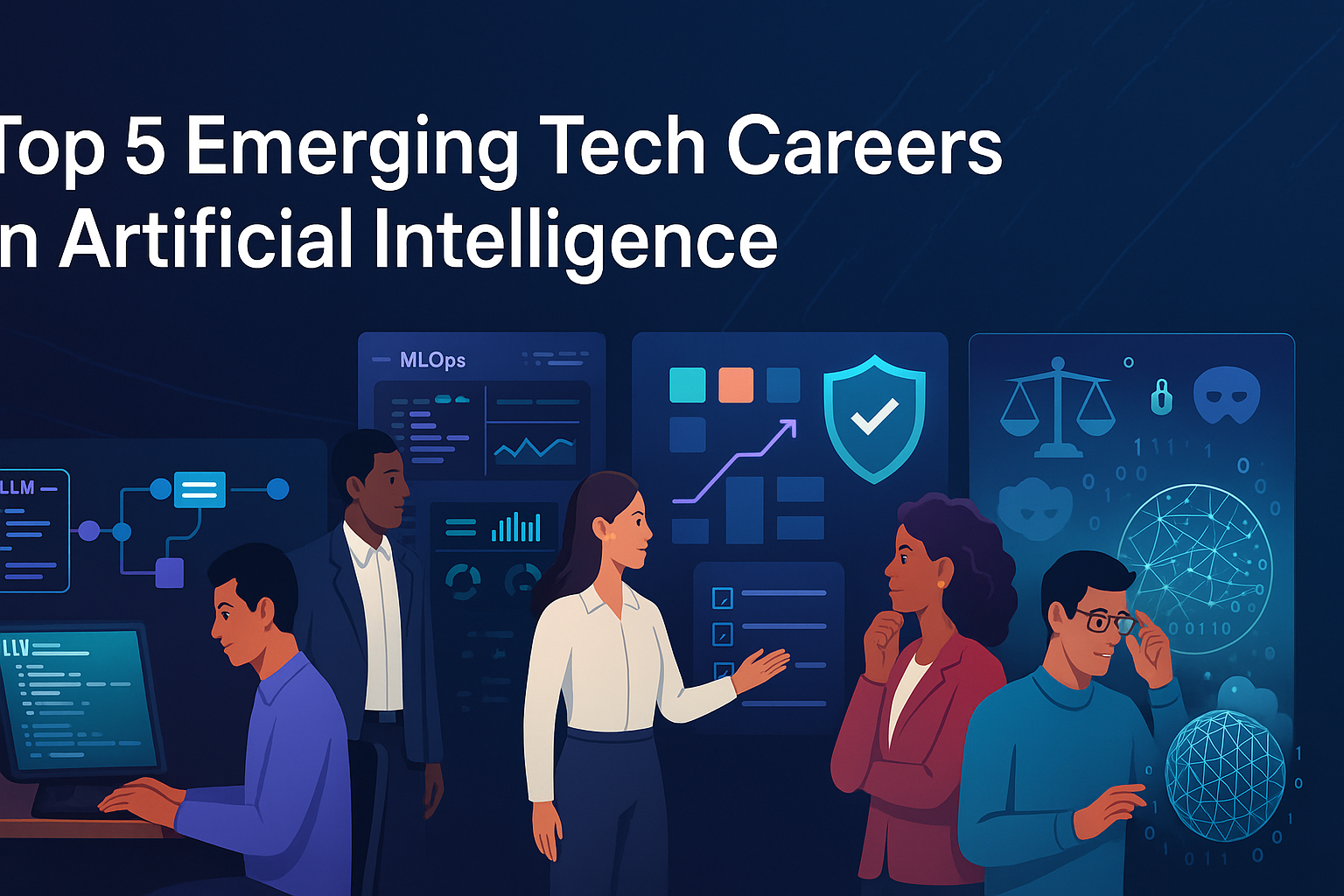
Five years ago, “Data Scientist” was the catch-all title. Today, the field has fractured into more specific specializations:
- Machine Learning Engineer: Focuses on the deployment and scalability of models.
- Data Engineer: Focuses on the architecture that delivers data to the models.
- AI Product Manager: Focuses on the “why” and “what,” bridging the gap between business needs and technical possibilities.
- AI Ethicist/Compliance Officer: Focuses on the governance, safety, and legal implications of automated decisions.
Understanding where you fit in this ecosystem is the first step in your reskilling journey. You do not need to learn everything; you need to learn what is relevant to your target role.
The “Centaur” Employee
A growing trend is the valuation of the “Centaur” or “Hybrid” employee—someone who combines deep institutional knowledge of a specific sector (like supply chain management or copyright law) with the technical ability to implement AI solutions. If you are reskilling, your previous experience is not “legacy baggage”; it is your competitive advantage. A financial analyst who learns ML is often more valuable to a bank than a fresh CS graduate who doesn’t understand liquidity ratios.
Core Technical Skills for AI Transition
For those aiming for technical roles (ML Engineer, Data Scientist), there is a triad of foundational skills you must build: Programming, Mathematics, and Data Handling.
1. Programming Proficiency: Python First
While languages like R, C++, and Julia have their niches, Python is the undisputed king of the AI world. Reskilling starts here.
- Syntax and Logic: You need more than just “Hello World.” You must understand data structures (lists, dictionaries), control flow, and object-oriented programming.
- Libraries: You must become fluent in the data science stack:
- Pandas: For data manipulation and analysis.
- NumPy: For numerical computing.
- Matplotlib/Seaborn: For data visualization.
- Scikit-learn: For classical machine learning algorithms.
- Software Engineering Best Practices: One common pitfall for self-taught data scientists is writing “spaghetti code” in notebooks. To get hired, you need to learn version control (Git), unit testing, and modular code design.
2. Mathematics and Statistics
You do not need to be a mathematician, but you cannot treat AI models purely as “black boxes.” A conceptual understanding is vital for debugging and optimization.
- Linear Algebra: Understanding vectors, matrices, and tensor operations is crucial because this is how data is represented in neural networks.
- Calculus: A grasp of derivatives and gradients is necessary to understand how models learn (backpropagation and gradient descent).
- Probability and Statistics: Essential for understanding data distributions, significance testing, and model evaluation metrics (precision, recall, F1-score).
3. Data Handling and SQL
Models are only as good as the data they are fed. In the real world, data is messy, fragmented, and unstructured.
- SQL: Structured Query Language is non-negotiable. You will spend a significant amount of time querying databases.
- Data Cleaning: Techniques for handling missing values, outlier detection, and data normalization.
- ETL Pipelines: Understanding Extract, Transform, Load processes is increasingly expected of ML practitioners.
Specialized Paths: Choosing Your Lane
Once the foundation is laid, you must diverge into a specialization. Attempting to master all areas simultaneously often leads to burnout.
Path A: The Machine Learning Engineer
- Focus: Productionizing models, latency, scalability, cloud infrastructure.
- Key Skills: Docker, Kubernetes, API development (FastAPI/Flask), Cloud platforms (AWS SageMaker, Azure ML, Google Vertex AI), MLOps practices.
- Best For: Those with a software engineering background or strong interest in backend systems.
Path B: The Data Scientist
- Focus: Insight generation, hypothesis testing, model prototyping, storytelling with data.
- Key Skills: Advanced statistics, experimental design (A/B testing), deep visualization, exploratory data analysis.
- Best For: Those with analytical minds, math/physics backgrounds, or researchers.
Path C: The Deep Learning Specialist (NLP/Computer Vision)
- Focus: Unstructured data—text, images, video, and audio.
- Key Skills: Deep learning frameworks (PyTorch or TensorFlow), transfer learning, familiarity with Transformer architectures (like BERT, GPT), Convolutional Neural Networks (CNNs).
- Best For: Those interested in generative AI, chatbots, or autonomous systems.
Path D: The Applied AI Analyst (Low-Code/No-Code)
- Focus: Using existing AI tools to solve business problems without building models from scratch.
- Key Skills: Prompt engineering, familiarity with APIs, integration tools (Zapier/Make), AutoML platforms (DataRobot, H2O.ai).
- Best For: Business professionals, marketers, and operators looking to supercharge productivity.
The Non-Technical Route: Product, Ethics, and Strategy
Reskilling for AI does not strictly require learning to code. As AI systems become more agentic and integrated into society, the need for human oversight and strategic direction grows.
AI Product Management
AI products have a different lifecycle than traditional software. They are probabilistic, meaning they don’t always produce the same output for the same input.
- Skill Set: Understanding model capabilities and limitations, defining success metrics, managing data requirements, and user experience (UX) for AI interfaces.
- Transition: Product managers from other tech sectors can transition by taking short courses on AI fundamentals to understand the technical constraints.
AI Ethics and Governance
As of 2026, regulations like the EU AI Act have created a massive compliance industry. Companies need people who can audit AI systems for bias, ensuring they meet legal standards.
- Skill Set: Knowledge of data privacy laws (GDPR, CCPA), understanding of algorithmic bias, risk assessment frameworks, and policy writing.
- Transition: Lawyers, sociologists, HR professionals, and compliance officers are well-suited for this path.
Technical Sales and Solutions Architecture
Selling AI requires explaining complex technical concepts to non-technical buyers.
- Skill Set: High-level understanding of ML architectures, ability to map AI capabilities to business ROI, excellent communication skills.
- Transition: Sales professionals with a knack for technology can pivot here by learning the vocabulary and use cases of AI.
Learning Pathways: Degrees vs. Bootcamps vs. Self-Study
There is no single “right” way to learn, but each path implies different costs (time and money) and signals different things to employers.
1. Traditional Degrees (Masters/PhD)
- Pros: Highest credibility, deep theoretical understanding, access to alumni networks.
- Cons: Expensive, time-consuming (1–2 years), curriculum may lag behind industry speed.
- Verdict: Best for those wanting to work in research, specialized R&D, or major tech giants (FAANG) where credentials act as a filter.
2. Bootcamps
- Pros: Structured, fast (3–6 months), career support, project-based.
- Cons: Variable quality, high cost, intense pace, “cookie-cutter” portfolios.
- Verdict: Good for career switchers who need structure and accountability. Caveat: Research the bootcamp’s outcomes specifically for the current year; the market is saturated with low-quality options.
3. MOOCs and Self-Study (Coursera, edX, Fast.ai)
- Pros: Flexible, low cost, access to world-class instructors (e.g., Andrew Ng).
- Cons: Requires immense self-discipline, high dropout rates, harder to get resume notice without a strong portfolio.
- Verdict: Best for disciplined learners and those upskilling while currently employed. Combining a MOOC certification with a strong project portfolio is a viable strategy.
4. Micro-Credentials and Certifications
Vendor-specific certifications (AWS Certified Machine Learning Specialty, Azure AI Engineer Associate, Google Professional Machine Learning Engineer) have gained significant traction. They demonstrate practical competence with the tools companies actually use.
Essential Soft Skills for AI Professionals
In a world where AI writes code, the human differentiator is often soft skills. Technical prowess gets you the interview; soft skills get you the job and promotion.
1. Critical Thinking and Problem Formulation
The hardest part of AI is often not solving the problem, but defining it. Is this actually a machine learning problem? Or can it be solved with a simple rule-based system? Reskilled professionals must be able to assess feasibility and ROI before a single line of code is written.
2. Communication and Data Storytelling
You must be able to explain to a CEO why a model with 95% accuracy might still be a bad business decision (e.g., if the 5% error rate causes catastrophic reputational damage). Translating confusion matrices into business impact is a superpower.
3. Ethical Reasoning
AI practitioners constantly face choices about what data to include and what objectives to optimize. You need the maturity to ask, “Just because we can build this, should we?”
4. Adaptability
The tool stack changes every six months. If you hate having your workflow disrupted by new updates, AI might be a difficult field. You must be comfortable being a perpetual novice in some areas.
Building a Portfolio and Gaining Practical Experience
For career pivoters, a portfolio is your proxy for experience. It proves you can do the work.
Moving Beyond the “Titanic”
Avoid generic projects that every student does (Titanic survival prediction, MNIST digit recognition). These show you can follow a tutorial, not that you can solve problems.
What Makes a Strong Portfolio Project?
- Unique Data: Scrape your own data or use a niche dataset related to your previous industry.
- End-to-End Workflow: Don’t just upload a Jupyter Notebook. Build a small web app (using Streamlit or Gradio) that allows a user to interact with your model.
- Documentation: Your README file on GitHub is arguably more important than the code itself. Explain the business problem, your approach, your results, and what you would do differently next time.
- Deployment: Deploy the model to the cloud so it is actually accessible online.
Where to Host
- GitHub: For code repositories and documentation.
- Kaggle: For participating in competitions and demonstrating data analysis skills.
- Hugging Face: Excellent for hosting demos of NLP and computer vision models.
- Personal Website/Blog: Write articles explaining your projects. Teaching is the best way to demonstrate mastery.
Overcoming Common Barriers to Entry
Reskilling is a psychological journey as much as an intellectual one.
Imposter Syndrome
Because the field is vast, you will frequently feel like you know nothing. This is normal. Even senior researchers consult documentation daily. Focus on being “T-shaped”—broad knowledge of the field, deep knowledge in one specific area.
The “Experience Paradox”
Entry-level jobs often ask for 2+ years of experience.
- Solution: Treat your learning projects as experience. Contribute to open-source projects. Do pro-bono work for non-profits. Look for internal mobility opportunities within your current company—ask to take on a data project even if it isn’t in your job description.
Mathematics Anxiety
Many professionals fear their math skills are too rusty.
- Solution: You usually learn the math as you need it. Start with the coding implementation. When you hit a block understanding why a parameter works, then dive into the math behind it. This “top-down” approach is often more effective for adult learners than slogging through abstract theory first.
The Role of Continuous Learning
In AI, if you stop learning for a year, you become obsolete. Reskilling is not a destination; it is a lifestyle change.
How to Keep Up Without Burning Out
- Curate Your Feed: Follow specific newsletters (e.g., The Batch, TL;DR AI) and researchers on social media rather than trying to read every new paper on arXiv.
- Read Paper Summaries: Use resources that summarize research papers into digestible takeaways.
- Join Communities: Engage in local meetups, Discord servers, or Slack communities. Learning with peers is faster and less isolating.
Current Trends to Watch (As of 2026)
- Small Language Models (SLMs): Running efficient AI on edge devices (phones/laptops) rather than massive servers.
- Multimodal AI: Systems that can seamlessly process text, audio, video, and sensory data simultaneously.
- Agentic Workflows: AI systems that can plan and execute multi-step tasks autonomously.
Job Search Strategy for Career Pivoters
Your resume and LinkedIn profile need a complete overhaul to reflect your new direction.
Resume Optimization
- Highlight Transferable Skills: If you were a marketer, highlight A/B testing and analytics. If you were in logistics, highlight optimization and process logic.
- Keywords: Applicant Tracking Systems (ATS) scan for specific skills. Ensure your resume lists the relevant stack (Python, SQL, AWS, etc.)—but only if you can actually use them.
- Project Section: Place your portfolio projects prominently, potentially even above your work history if your previous roles are unrelated.
Networking
Applying via job portals is the hardest way to get in.
- The “Side Door”: Reach out to peers in your target role. Ask for informational interviews. Ask about their day-to-day challenges.
- Hackathons: Participate in AI hackathons. They are excellent networking events where you can demonstrate your skills to potential employers in real-time.
Tools and Platforms to Accelerate Learning
A brief curated list of high-value resources for the aspiring AI professional.
Interactive Learning
- DataCamp / Dataquest: Excellent for interactive coding in the browser. Good for getting the syntax down.
- LeetCode / HackerRank: Essential for practicing the algorithmic coding problems common in technical interviews.
Deep Dive Courses
- DeepLearning.AI: Andrew Ng’s courses remain the gold standard for foundational theory.
- Fast.ai: A practical, code-first approach to deep learning.
- Hugging Face Courses: Great for modern NLP and diffusion models.
Cloud Training
- AWS Skill Builder: Official training from Amazon.
- Microsoft Learn: Official training for Azure AI.
- Google Cloud Skills Boost: Official training for GCP.
Common Pitfalls When Reskilling for AI
Avoid these mistakes to save time and frustration.
1. Tutorial Hell
This is when you watch endless tutorials but never build anything yourself. You feel productive, but you aren’t retaining the skill.
- Fix: Apply the “20-minute rule.” If you watch a 20-minute tutorial, spend at least 20 minutes playing with the code, breaking it, and changing it.
2. Skipping the Basics
Jumping straight into building Large Language Models without understanding regression or classification basics.
- Fix: Respect the curriculum order. Classical ML concepts (overfitting, bias-variance tradeoff) apply to advanced Deep Learning too.
3. Neglecting Data Skills
Focusing 90% on models and 10% on data. In a job, the ratio is flipped.
- Fix: Ensure your portfolio includes projects where you had to scrape, clean, and wrangle messy data.
Future-Proofing Your Career in an AI World
The goal of reskilling is not just to get the next job, but to remain employable for the next decade. The skills you learn today (Python, specific libraries) may change, but the meta-skills—computational thinking, statistical literacy, and the ability to learn new complex systems—are durable.
By embracing AI not as a threat but as a toolset, you transition from being a passive observer of technological change to an active participant. The barrier to entry has never been lower regarding access to information, but the barrier to mastery remains high. Dedication, curiosity, and resilience are your most important assets.
Related topics to explore
- AI Ethics Certification: How to get accredited in responsible AI practices.
- Prompt Engineering vs. Model Fine-Tuning: Understanding the trade-offs.
- No-Code AI Tools for Business: A guide for non-technical managers.
- The Rise of MLOps: Managing the lifecycle of machine learning in production.
- Data Privacy in the Age of AI: GDPR, CCPA, and compliance strategies.
Conclusion
Reskilling for AI and machine learning roles is a challenging but rewarding endeavor. It requires a strategic approach that balances technical foundational skills with practical application and domain expertise. As we move deeper into 2026, the distinction between “tech roles” and “non-tech roles” continues to blur; AI literacy is becoming a baseline requirement across the board.
Whether you aim to become a deep learning engineer building the next generation of models or a business leader implementing them to drive strategy, the path is open. Start with the basics, build tangible projects, lean into your existing strengths, and maintain a mindset of lifelong learning. The future of work is not just about AI replacing jobs; it’s about humans who use AI replacing those who don’t.
Ready to start? Pick one core skill (like Python basics) and commit to 30 minutes of practice today.
FAQs
1. Do I need a PhD to work in AI in 2026? No, a PhD is generally not required for most applied AI and machine learning roles. While research scientist positions at top labs (like OpenAI or Google DeepMind) often require doctoral degrees, the vast majority of industry roles—such as Machine Learning Engineer, Data Scientist, and AI Analyst—focus on application rather than novel research. A strong portfolio, practical experience, and a Bachelor’s or Master’s degree (or equivalent bootcamp experience) are usually sufficient.
2. How long does it take to reskill for an AI role? The timeline varies significantly based on your starting point and the time you can dedicate. For someone with a coding background, a pivot might take 3–6 months of intensive study. For those starting from scratch with no programming experience, expect a timeline of 9–18 months to reach an entry-level competency. Consistency is key; studying 1 hour a day is often more effective than binge-learning once a week.
3. Is Python the only language I need to learn? Python is by far the most critical language for AI and ML due to its vast ecosystem of libraries (Pandas, PyTorch, TensorFlow). However, depending on the role, familiarity with SQL is almost always required for data retrieval. C++ is useful for high-performance deployment roles, and R is still used in some academic and statistical research settings, but Python should be your priority.
4. Can I get an AI job if I am bad at math? You do not need to be a mathematician, but you cannot be “bad” at math and succeed in technical AI roles. You need a conceptual grasp of linear algebra, calculus, and statistics to understand how models work and how to troubleshoot them. However, for non-technical AI roles like AI Product Management or Ethics Compliance, the math requirement is significantly lower, focusing more on logic and understanding capabilities/limitations.
5. Are AI bootcamps worth the money? Bootcamps can be worth it if you need structure, career services, and a peer group to keep you accountable. However, employers prioritize demonstrated skills (portfolios) over bootcamp certificates. Before spending money, research the bootcamp’s job placement rates specifically for the current year and look for alumni reviews. Self-study is a viable, free alternative if you have high self-discipline.
6. What is the difference between Data Science and Machine Learning Engineering? Data Science typically focuses on extracting insights, hypothesis testing, and building prototype models to solve business problems. Machine Learning Engineering focuses on the engineering aspect: taking those prototypes and turning them into scalable, reliable, and efficient software systems that run in production environments. There is overlap, but the daily tasks differ.
7. How do I build a portfolio if I don’t have work experience? Create your own experience. Find open datasets on platforms like Kaggle or government data portals that interest you. Define a problem (e.g., “Predicting housing prices in my city”) and build a model to solve it. Document the entire process on GitHub and write a blog post about it. Contributing to open-source AI projects is another excellent way to demonstrate capability and collaboration skills.
8. Will AI replace entry-level coding jobs? AI is changing entry-level jobs, automating routine coding tasks and boilerplate generation. This means the bar for entry-level developers is rising; they are now expected to operate at a higher level of abstraction, reviewing AI-generated code and focusing on system design and problem-solving rather than just syntax. Reskilling ensures you are the one leveraging these tools, rather than being displaced by them.
9. What are “soft skills” in the context of AI? Soft skills in AI include critical thinking (knowing which problems are solvable by AI), communication (explaining technical outputs to non-technical stakeholders), and ethics (understanding bias and societal impact). As technical barriers lower with better tools, these human-centric skills become key differentiators for hiring managers.
10. Is it too late to start a career in AI in 2026? Absolutely not. The field is still in its early maturity phase. While the initial “hype” cycle may have settled, the integration of AI into global industries is just beginning. The demand for skilled professionals to build, manage, and secure these systems far outstrips the supply, making it an excellent time to enter the field.
References
- World Economic Forum. (2025). The Future of Jobs Report 2025. https://www.weforum.org/reports/the-future-of-jobs-report-2025
- Coursera. (2025). Global Skills Report 2025. https://www.coursera.org/skills-reports/global
- IBM. (2024). Global AI Adoption Index.
- Google Cloud. (2025). The State of DevOps and AI. https://cloud.google.com/devops/state-of-devops
- U.S. Bureau of Labor Statistics. (2025). Occupational Outlook Handbook: Computer and Information Research Scientists. https://www.bls.gov/ooh/computer-and-information-technology/computer-and-information-research-scientists.htm
- Stanford University. (2025). Artificial Intelligence Index Report 2025. https://aiindex.stanford.edu/report/
- O’Reilly Media. (2025). AI Adoption in the Enterprise 2025. https://www.oreilly.com/radar/
- McKinsey & Company. (2024). The State of AI in 2024: Generative AI’s breakout year. https://www.mckinsey.com/capabilities/quantumblack/our-insights/the-state-of-ai-in-2024