The hospitality industry is undergoing a paradigm shift. For decades, the “personal touch” in hotels, restaurants, and tourism was strictly the domain of human interaction. However, facing chronic labor shortages and a rapid maturation of artificial intelligence, the sector is increasingly turning to a new solution: humanoid robots.
As of January 2026, we are moving past the era of simple, wheeled tablets on sticks. We are entering the age of embodied AI—robots designed to look, move, and interact like us. This guide explores the deployment of humanoid robots as service staff, cutting through the sci-fi hype to offer a practical, people-first analysis of what this technology means for business owners, workers, and guests alike.
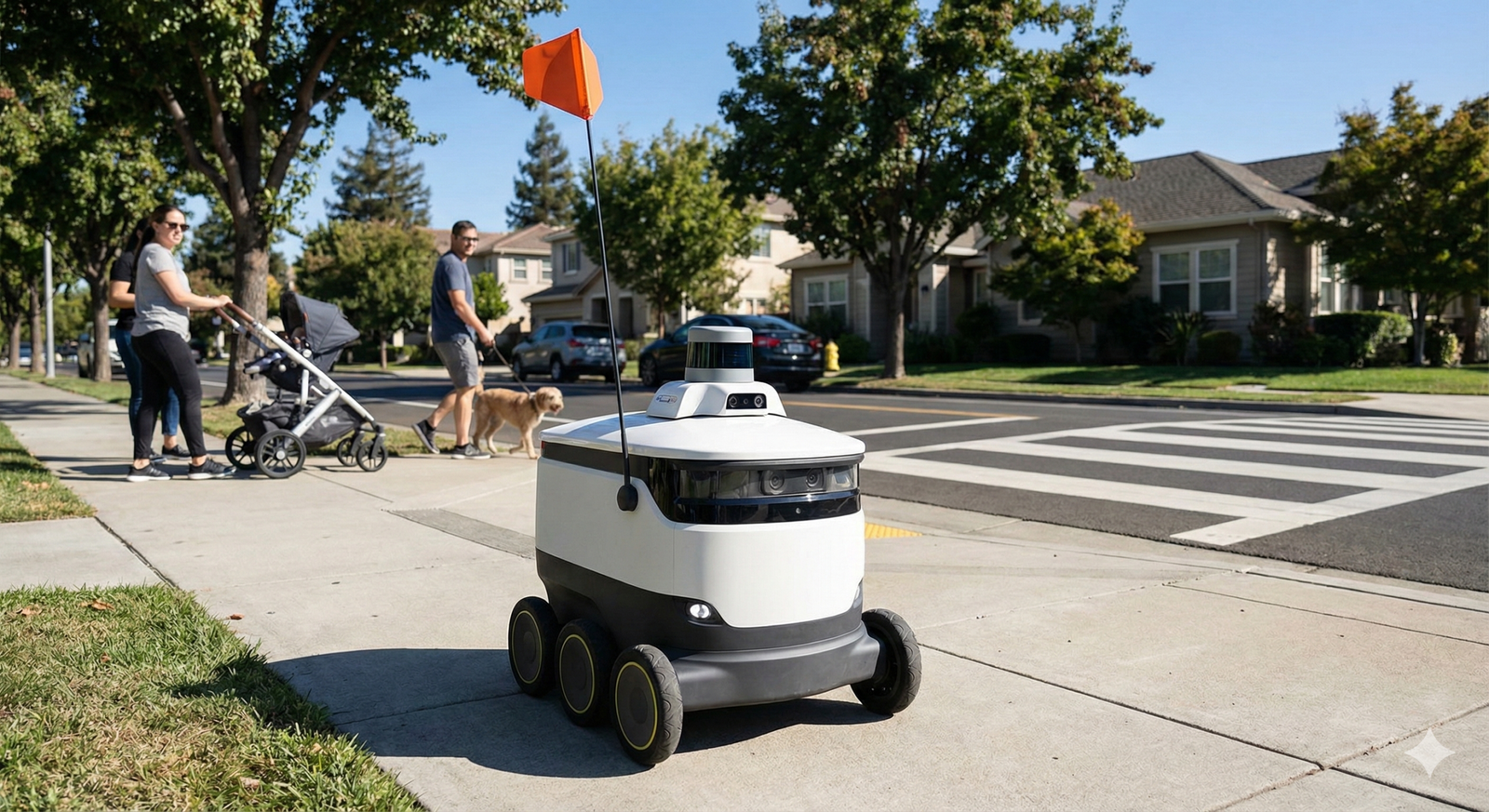
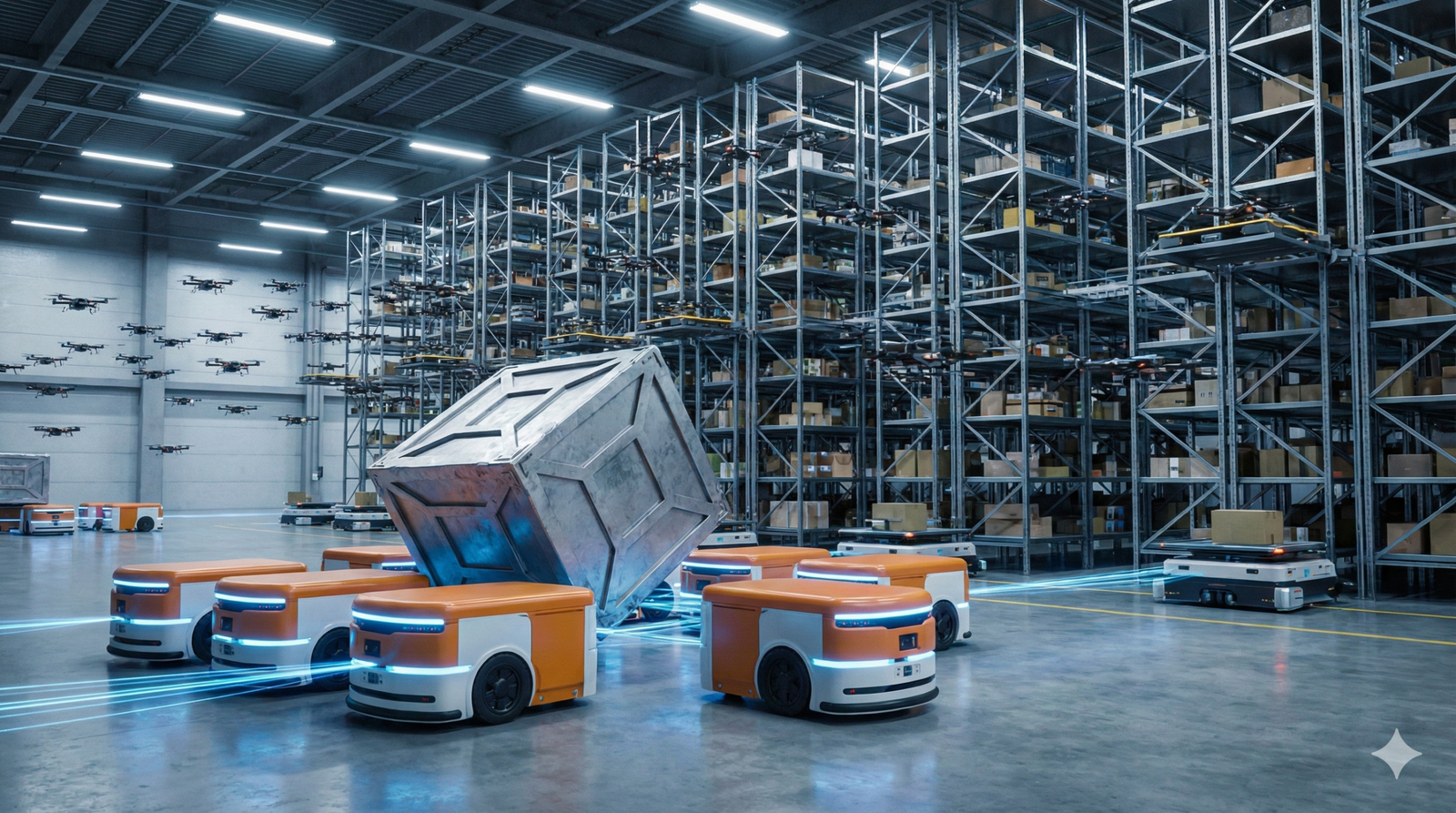
In this comprehensive guide, “humanoid robot” refers to service robots with a distinct head, torso, and often arms/legs, designed to replicate human-like social cues, as opposed to functional Autonomous Mobile Robots (AMRs) that resemble motorized carts.
Key Takeaways
- Labor Augmentation, Not Replacement: In 2026, successful deployments use robots to handle repetitive or data-heavy tasks (check-in, directions), freeing human staff for complex emotional problem-solving.
- The “Uncanny Valley” Risk: Design choices matter. Hyper-realistic robots can alienate guests, while stylized, approachable designs tend to yield better customer satisfaction scores.
- Generative AI Integration: The biggest leap in the last two years is the integration of Large Language Models (LLMs), allowing robots to hold fluid, context-aware conversations rather than reciting pre-scripted lines.
- Infrastructure Requirements: Humanoid robots require robust Wi-Fi, mapped environments, and specifically adapted “robot-friendly” zones to function safely.
- Cost Models: The industry is shifting toward “Robots as a Service” (RaaS) leasing models, reducing the upfront capital expenditure for hotel and restaurant owners.
The Rise of the Machine Concierge: Why Now?
To understand the influx of humanoid robots in hospitality, we must first look at the converging pressures that made this adoption necessary. The trend is driven by three primary vectors: demographic shifts, technological readiness, and evolving guest expectations.
1. The Global Labor Crisis
The hospitality sector has historically struggled with high turnover rates. However, the post-pandemic years accelerated a permanent shift in the workforce. In many developed economies, there are simply fewer people willing to work irregular hours for service-industry wages. Humanoid robots have stepped in not necessarily to cut costs, but to fill shifts that cannot be filled by humans. A robot concierge does not call in sick, does not burnout during peak season, and provides consistent service at 3 AM.
2. The Maturation of Embodied AI
Until recently, a robot that could walk on two legs (bipedal) and manipulate objects with human-like hands was a research prototype, too expensive and fragile for a hotel lobby. Today, identifying objects, navigating around luggage, and interpreting spoken language in a noisy restaurant are solved engineering problems. The convergence of lighter actuators, better battery density, and edge-computing AI chips has made commercial deployment viable.
3. The Expectation of “Instant” Service
Guests accustomed to instant gratification via smartphone apps now expect similar speed in physical environments. Waiting in line to ask a simple question like “What time is breakfast?” is increasingly seen as a friction point. Humanoid robots stationed in lobbies provide immediate triage for these queries, satisfying the guest’s need for speed without taxing human staff.
Core Use Cases: Where Humanoids Excel
Not every role in a hotel or restaurant is suitable for a humanoid robot. The most successful implementations target roles that benefit from a physical presence but rely on standardized data exchange.
The Front Desk and Reception
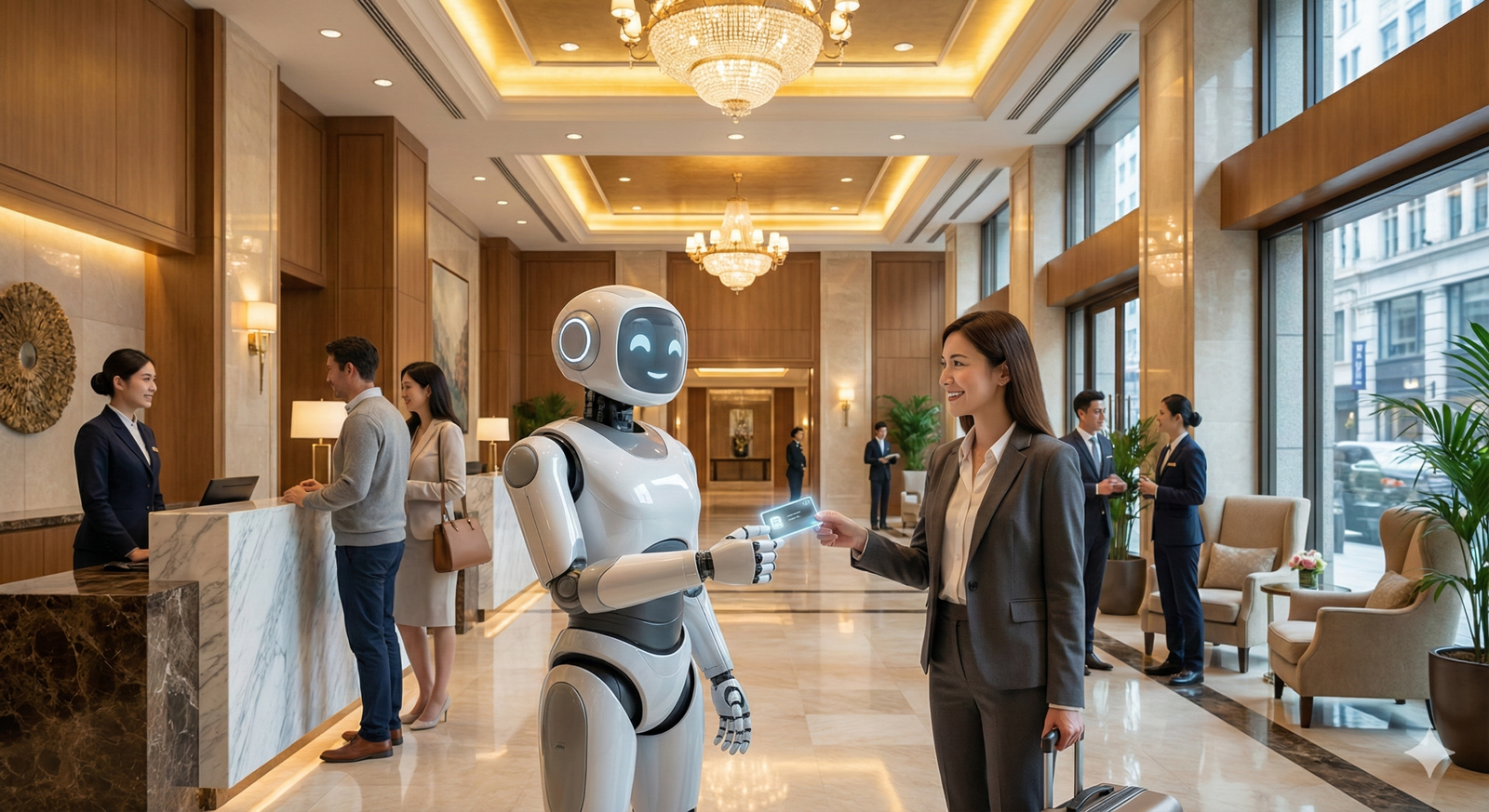
The most visible role for humanoids is the “Meet and Greet.”
- Function: Robots equipped with facial recognition can identify returning loyalty members immediately. They can scan passports, issue key cards (or digital keys), and process payments.
- The Humanoid Advantage: Unlike a self-service kiosk (which is functional but cold), a humanoid robot can bow, gesture, and make eye contact. This preserves the theater of hospitality while automating the bureaucracy.
- Language Support: Modern humanoids can switch instantly between dozens of languages, providing a level of fluency that is difficult to hire for.
The AI Concierge
This is where Generative AI shines.
- Function: Answering “Where is the gym?”, “Book me a table at an Italian restaurant,” or “How do I connect to the Wi-Fi?”
- Evolution: In the past, these robots required rigid keywords. Now, thanks to onboard LLMs, a guest can say, “I’m looking for a romantic spot for dinner, maybe sushi, not too expensive,” and the robot can parse the nuance, search local databases, and make a recommendation just as a human local would.
Food and Beverage Service
While wheeled runners (AMRs) are efficient at carrying trays, humanoid robots are increasingly testing the waters in direct service.
- Bartending: Robotic arms have long been used to mix drinks, but humanoid torsos add a social element, making “eye contact” while shaking a martini.
- Plating and Serving: Bipedal robots are being tested in high-end environments to place plates on tables with the correct orientation—something wheeled shelves cannot easily do.
Housekeeping Support
This remains the frontier. While robots are not yet stripping beds efficiently, humanoid forms are being used for:
- Hallway Patrolling: Acting as security presences and identifying trays left outside doors.
- Supply Delivery: Carrying extra towels or toiletries to rooms and handing them to the guest (requiring an arm/hand mechanism).
Anatomy of a Hospitality Robot: How It Works
Understanding the “how” helps business owners manage expectations. A humanoid robot is a synthesis of three complex systems.
1. Perception (The Eyes and Ears)
The robot must understand the world. This involves:
- LIDAR and Depth Cameras: To map the lobby and avoid running into a child running across the floor.
- Microphone Arrays: To perform “beamforming,” isolating a guest’s voice from the background clatter of a busy restaurant.
- Computer Vision: To recognize a VIP guest or detect that a guest looks confused or unhappy (Sentiment Analysis).
2. Cognition (The Brain)
This is where the decision-making happens.
- Local Processing: For safety-critical tasks like balance and collision avoidance, the robot processes data on-board.
- Cloud Processing: For complex queries (“What is the history of this hotel?”), the robot sends the audio to the cloud, where an LLM generates a response and sends it back. This introduces a slight latency, usually under a second in 2026 networks.
3. Actuation (The Body)
- Degrees of Freedom (DoF): This refers to how many joints the robot has. A hospitality robot needs high DoF in the neck and arms to gesture naturally.
- Expression: Some robots use screens for faces; others use mechanical skin (animatronics) to smile or frown. Screen-based faces are generally preferred in 2026 for avoiding the uncanny valley (discussed below).
The “Uncanny Valley” and Guest Psychology
One of the most critical considerations in deploying humanoid robots is the Uncanny Valley effect. This hypothesis suggests that as a robot appears more human, our empathy toward it increases, until a point where it becomes “almost” human but not quite. At that dip, the response turns to revulsion or creepiness.
Navigating the Valley in Hospitality
In a hotel, you want guests to feel relaxed, not unsettled.
- The Stylized Approach: successful hospitality robots often have clearly robotic features—white glossy plastic, oversized eyes, or a lack of a nose. This signals “I am a helpful machine,” lowering the guest’s expectation of human behavior and avoiding the creepy factor.
- The Hyper-Realistic Approach: Some luxury venues experiment with hyper-realistic androids. These are high-risk, high-reward. When they work, they are marvels of engineering. When they glitch (e.g., a twitching eye or a delayed smile), they can be terrifying.
Trust and Authority
Studies suggest that guests are more likely to trust a robot with data-driven tasks (billing, directions) but less likely to trust them with emotional tasks (complaints about room cleanliness). However, if the robot creates a “social bond” through small talk, guests are more forgiving of service errors.
Implementation Guide: From Pilot to Deployment
For hospitality managers considering this technology, the path to adoption involves several distinct phases.
Phase 1: Assessment and Infrastructure
Before buying a robot, assess the physical space.
- Flooring: Are there thick carpets? Humanoid bipedal bots struggle more on deep pile than wheeled bots.
- Connectivity: Is there dead-zone-free Wi-Fi? A disconnected AI robot is just an expensive statue.
- Elevators: Can the robot electronically signal the elevator, or does it need to physically press buttons? (Humanoids can press buttons, which is a major advantage over older robots).
Phase 2: Staff Training and Buy-In
This is the most common point of failure. If the human staff views the robot as a rival, they will not support it.
- The “Co-bot” Narrative: Frame the robot as an assistant (Cobot). “This robot takes the night shift so you don’t have to,” or “This robot handles the repetitive FAQs so you can focus on VIPs.”
- Handler Training: Staff must know how to reboot the robot, map new zones, and intervene if a guest is harassing the machine.
Phase 3: Guest Onboarding
- Signage: Inform guests what the robot can and cannot do.
- Novelty vs. Utility: Initially, guests will treat the robot as a toy (selfies, testing its limits). Over time, the novelty fades, and the robot must survive on utility.
Challenges and Limitations
Despite the advancements, humanoid robots in 2026 are not magic bullets.
Technical Limitations
- Battery Life: Bipedal walking consumes immense energy. Most humanoid staff need to recharge every 4–6 hours, requiring a fleet approach to maintain 24/7 coverage.
- Grasping Complexity: While identifying a wine glass is easy, picking it up with the right amount of pressure without crushing it or dropping it remains a complex engineering feat.
- Crowd Navigation: In a packed bar, humanoids can freeze or move too cautiously, becoming an obstruction rather than a help.
Cultural Differences
Acceptance varies globally. In markets like Japan or South Korea, robot assistants are culturally embraced and seen as high-tech. In parts of Europe or North America, they may be viewed with skepticism or as a sign of “cheap” service compared to human staff.
Privacy Concerns
Robots are essentially rolling arrays of cameras and microphones.
- Data Governance: Hotels must ensure that conversations processed by the robot (and the cloud) are not stored permanently or used for marketing without consent.
- Surveillance Fear: Guests may feel uncomfortable engaging in private conversations in a lobby if a robot is standing nearby, unsure if it is “listening.”
Cost Analysis and ROI
The economics of humanoid robots have shifted drastically.
The Investment Landscape
- Purchase Price: A high-end humanoid robot can cost between $20,000 and $150,000 depending on complexity.
- RaaS (Robots as a Service): Most venues opt for leasing. For a monthly fee (e.g., $1,500 – $3,000), the vendor provides the robot, maintenance, and software updates.
Calculating ROI
ROI is not just labor substitution.
- Labor Savings: One robot covering two shifts reduces the need for roughly 1.5 full-time equivalent (FTE) employees.
- Upselling: AI robots are programmed to upsell consistently (“Would you like to upgrade your room?”, “Have you tried our spa?”). They never forget to ask, potentially increasing revenue per guest.
- Marketing Value: In the short term, “Instagrammable” moments with robots drive free social media marketing for the venue.
Ethical Implications: Displacement vs. Enhancement
The introduction of humanoid labor raises profound ethical questions that responsible businesses must address.
The “Human Touch” Argument
Critics argue that hospitality is defined by human connection. A robot cannot truly care if your flight was delayed or if you are celebrating an anniversary.
- Counter-argument: By automating the transactional elements of service, we allow human staff to be more human. If a receptionist isn’t typing data for 10 minutes, they can spend that time conversing with the guest.
Job Displacement
Will robots steal jobs? In hospitality, the current reality is a labor gap, not a surplus. Robots are largely filling empty positions. However, as capabilities increase, entry-level roles (porters, basic servers) may diminish, raising the barrier to entry for the hospitality workforce. The industry needs to pivot toward training staff in robot management and high-touch guest relations.
Bias in AI
If the robot’s AI is trained on biased data, it might treat guests differently based on their appearance or accent. Auditing AI responses for fairness and inclusivity is a mandatory step for hotel brands.
Comparative Analysis: Humanoid vs. Non-Humanoid Robots
Is the human form actually necessary?
| Feature | Humanoid Robot | Non-Humanoid (Wheeled/Screen) |
| Mobility | Can handle stairs, carpets, curbs. | Limited to flat, smooth surfaces. |
| Interaction | High emotional connection; gestures. | Transactional; relies on screen UI. |
| Object Manipulation | Can open doors, press elevators buttons. | Requires automatic doors/integrated APIs. |
| Cost | High ($$$). | Moderate ($$). |
| Maintenance | High complexity (many motors/joints). | Lower complexity. |
| Best For | Reception, Concierge, Brand Ambassadorship. | Room Service Delivery, Busboy duties. |
Verdict: Choose humanoids for roles requiring social interaction or complex terrain. Choose non-humanoids for pure logistics and transport.
Future Outlook: The Hotel of 2030
Looking ahead, the integration of humanoid robots will likely follow a “centaur” model—humans and AI working in tandem.
- Remote Operation (Telepresence): We may see “human-in-the-loop” systems where a robot is autonomous 90% of the time, but if a guest asks a complex emotional question, a remote human operator takes over the robot’s voice and movements instantly.
- Standardization: Hotels will begin to be built “robot-ready,” with wider corridors, specific QR codes for navigation invisible to the human eye, and docking stations integrated into furniture.
- Personalization: Your profile will travel with you. The robot at a hotel in London will know you prefer high floors and extra pillows because the robot at the New York branch learned that last month.
Conclusion
Humanoid robots in hospitality are no longer a gimmick; they are a developing necessity in a world of labor constraints and rising technological capability. For the hospitality leader, the goal is not to replace the workforce but to evolve it. By delegating the dull, dirty, and dangerous tasks to machines that look and act like us, we can preserve the energy of human staff for what they do best: genuine care and creativity.
The future of hospitality is not robotic; it is a hybrid. The most successful venues will be those that find the perfect harmony between the efficiency of silicon and the warmth of the human smile.
Next Steps for Hospitality Leaders
- Audit your workflows: Identify tasks that are high-repetition and low-emotion.
- Start small: Pilot a single unit in a controlled environment (e.g., a lobby greeter) before rolling out fleet-wide.
- Engage your team: Make your human staff the architects of the robot’s deployment, not the victims of it.
Frequently Asked Questions (FAQs)
1. Are humanoid robots cheaper than human staff? In the long run, often yes. While the upfront cost is high, a robot costs significantly less per hour than a human employee when amortized over 3-5 years, especially considering they do not require benefits, breaks, or overtime pay. However, maintenance costs must be factored in.
2. Can humanoid robots understand all accents and languages? Modern robots powered by advanced LLMs and speech-to-text engines are incredibly proficient at understanding diverse accents and can speak dozens of languages fluently. However, extremely heavy background noise or strong dialects can still cause processing errors.
3. Do guests actually like interacting with robots? Data suggests a split demographic. Younger travelers (Gen Z and Alpha) and tech-savvy business travelers often prefer the efficiency and novelty. Older generations or luxury travelers may perceive it as a lack of personal service. The context of the interaction matters immensely.
4. What happens if a humanoid robot falls over? Most modern humanoids are equipped with fall-detection and collision-avoidance sensors to prevent this. If they do fall, they are usually designed to “protect” themselves (folding arms) to minimize damage. They typically require human assistance to stand back up to ensure safety checks are performed.
5. Will robots replace hotel receptionists entirely? Unlikely in the near future. While they can handle 80% of routine check-ins, they lack the emotional intelligence to handle a distressed guest who has lost their luggage or is going through a personal crisis. A human shadow or supervisor is almost always required.
6. Is it sanitary to interact with robots? Yes, often more so than humans. Robots do not breathe or spread airborne pathogens. Their surfaces (touchscreens and hands) can be easily sanitized, and some models are even built with self-sanitizing materials or UV-C light cleaning modes.
7. Can humanoid robots carry heavy luggage? This varies by model. While some hydraulic-based humanoids (like early Atlas models or newer industrial bipeds) are strong, many service-oriented humanoids are lightweight for safety and cannot carry heavy suitcases. Dedicated luggage carts or heavy-duty wheeled bots are better for bellhop duties.
8. How secure is the data a robot collects? Reputable robot manufacturers comply with GDPR and CCPA regulations. Data is usually processed locally or encrypted in transit. However, hotel owners must vett vendors carefully to ensure no biometric data (face scans) is stored without explicit guest permission.
9. Can robots work outside? Most current service humanoids are designed for controlled, indoor environments with flat surfaces. Outdoor environments introduce variables like rain, uneven pavement, and bright sunlight (which interferes with sensors) that most hospitality bots cannot yet handle reliably.
10. How do I prepare my hotel for a robot? You need to map your facility digitally (creating a “digital twin”), ensure strong Wi-Fi coverage in all service areas, remove trip hazards like loose cables, and potentially train staff on how to interact with and troubleshoot the unit.
References
- International Federation of Robotics (IFR). (2025). World Robotics 2025: Service Robots. https://ifr.org
- Engineered Arts. (n.d.). Ameca: The Future of Humanoid Robotics. Retrieved January 2026, from https://www.engineeredarts.co.uk/robot/ameca/
- Boston Dynamics. (2024). Atlas: The capabilities of dynamic humanoid robots. https://www.bostondynamics.com/atlas
- Cornell University School of Hotel Administration. (2024). The Impact of Service Robots on Guest Satisfaction: A Longitudinal Study. Cornell Hospitality Quarterly.
- Journal of Hospitality Marketing & Management. (2025). Uncanny Valley in the Lobby: Anthropomorphism and Guest Trust. Taylor & Francis Online.
- NVIDIA Robotics. (2025). Project GR00T: Foundation Models for Humanoid Robots. https://nvidianews.nvidia.com
- Figure AI. (n.d.). Commercial Humanoids: Figure 01 Specs and Hospitality Applications. Retrieved January 2026, from https://www.figure.ai
- Agility Robotics. (2024). Digit: Logistics and Service Work. https://agilityrobotics.com
- IEEE Spectrum. (2025). The Economics of RaaS (Robots as a Service) in the Service Industry. https://spectrum.ieee.org
- European Commission. (2024). Ethical Guidelines for Trustworthy AI in Service Robotics. https://digital-strategy.ec.europa.eu