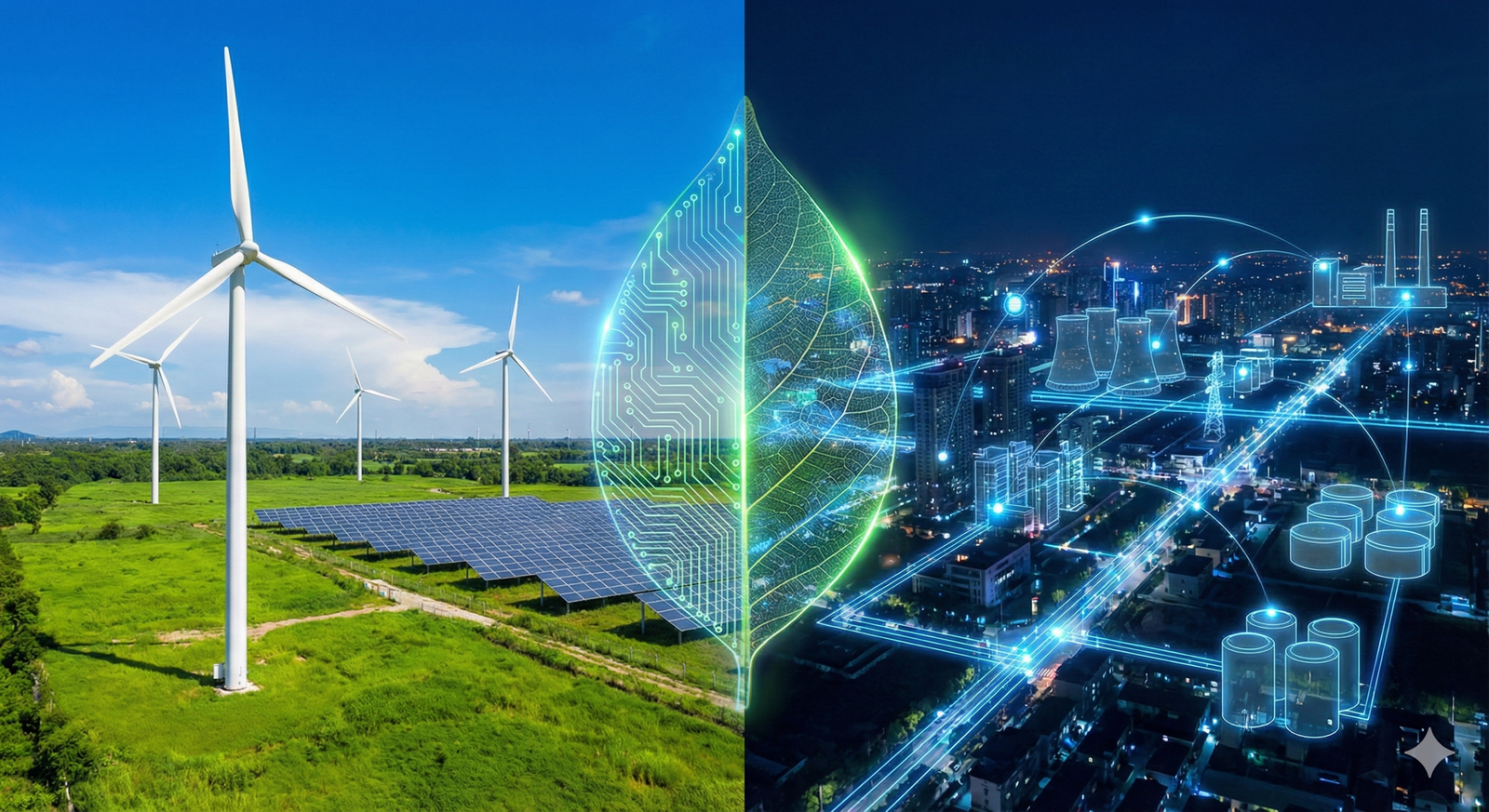
As the global community faces the escalating challenges of climate change, the intersection of technology and environmental stewardship has become a critical focal point. Artificial Intelligence (AI) is no longer just a tool for generating text or analyzing consumer behavior; it has emerged as a pivotal force in the race toward net-zero emissions. By processing vast amounts of data at speeds humans cannot match, AI offers the ability to optimize complex systems, reduce waste, and accelerate the transition to renewable energy.
AI for sustainability refers to the application of machine learning, data analytics, and automated decision-making systems to solve environmental challenges. This guide explores how these technologies are revolutionizing energy grids, enhancing industrial efficiency, and enabling climate-friendly operations across sectors.
Key Takeaways
- Grid Modernization: AI transforms traditional one-way power grids into bi-directional smart networks capable of handling decentralized energy sources.
- Renewable Integration: Machine learning improves the forecasting of solar and wind energy, mitigating the intermittency issues inherent in renewables.
- Operational Efficiency: From data centers to manufacturing floors, AI algorithms reduce energy consumption by optimizing HVAC systems and production lines in real-time.
- Carbon Accountability: Advanced analytics provide granular tracking of carbon footprints (Scope 1, 2, and 3 emissions), moving organizations from estimation to precise measurement.
- The “Green AI” Paradox: While AI solves climate problems, its own energy consumption is a challenge that requires the development of more efficient models and hardware.
Scope of This Guide
In this guide, “AI for sustainability” specifically refers to the use of computational intelligence to improve environmental outcomes, with a heavy focus on energy systems and operational efficiency. While AI is also used in biodiversity tracking and material science, this article prioritizes the energy sector, grid management, and industrial decarbonization strategies.
The Intersection of Artificial Intelligence and Climate Action
The urgency of the climate crisis demands solutions that scale rapidly. Traditional approaches to energy management and industrial operations often rely on static models and historical data. However, climate patterns and energy demands are becoming increasingly volatile. This is where AI steps in, offering dynamic, adaptive capabilities.
At its core, AI supports sustainability through three primary mechanisms: prediction, optimization, and automation.
- Prediction involves forecasting weather patterns, energy demand, and equipment failures.
- Optimization entails adjusting system parameters—such as the angle of a solar panel or the cooling flow in a data center—to maximize efficiency.
- Automation allows these adjustments to happen in milliseconds without human intervention, which is essential for stabilizing modern power grids.
In practice, this means moving from reactive measures (fixing a grid after a blackout) to proactive measures (predicting the surge and balancing the load beforehand). It shifts the paradigm from simply generating more power to using the power we have more intelligently.
Transforming Energy Grids into Smart Networks
The traditional electrical grid was designed for a different era—one where electricity flowed in a single direction from massive fossil-fuel power plants to consumers. Today, the grid is becoming a complex web of distributed energy resources (DERs), including rooftop solar panels, electric vehicles (EVs), and battery storage systems. Managing this complexity exceeds human capacity; it requires AI.
Decentralized Energy Management
A smart grid powered by AI acts as a central nervous system for energy distribution. It continuously monitors the flow of electricity across thousands of nodes. When a household with solar panels produces excess energy, AI algorithms can instantly decide whether to store that energy in a home battery, send it to a neighbor, or feed it back into the main grid. This micro-trading of energy ensures that locally generated power is used efficiently, reducing transmission losses and the need for distant power plants to ramp up production.
Demand Response and Load Balancing
One of the most effective ways to decarbonize the grid is to align consumption with generation. Demand response programs incentivize consumers to use less power during peak times. AI takes this a step further by automating the process.
- Smart Thermostats: AI-enabled devices can pre-cool a home before peak hours hit, then reduce consumption when the grid is stressed, all without impacting comfort.
- Industrial Load Shifting: Manufacturing plants can use AI to schedule energy-intensive processes (like aluminum smelting or cement grinding) for times when renewable energy is abundant and cheap.
Frequency Regulation and Stability
Grids operate at a specific frequency (e.g., 50Hz or 60Hz). If supply and demand do not match exactly, this frequency fluctuates, potentially causing blackouts. Renewable sources like wind and solar are variable, making stability harder to maintain. AI algorithms, specifically reinforcement learning models, can manage smart inverters on solar arrays and batteries to inject or absorb power in milliseconds, maintaining grid frequency more precisely than traditional mechanical inertia systems ever could.
Optimizing Renewable Energy Sources
The “Achilles’ heel” of renewable energy has always been intermittency. The sun doesn’t always shine, and the wind doesn’t always blow. AI is the tool that mitigates this unpredictability, turning variable renewables into reliable baseload contributors.
Solar and Wind Forecasting
Accurate weather forecasting is critical for grid operators who need to know how much power will be available in the next hour or the next day. AI models ingest satellite imagery, historical weather data, and real-time sensor readings from wind turbines to predict generation output with high precision.
- Short-term forecasting (Nowcasting): AI analyzes cloud movements via sky-facing cameras to predict solar output drops 10–15 minutes in advance, giving gas peaker plants or batteries enough time to ramp up if necessary.
- Long-term forecasting: Machine learning algorithms analyze decades of climate data to predict seasonal wind patterns, helping developers choose the optimal sites for new wind farms.
Predictive Maintenance for Assets
Renewable assets are often located in remote or harsh environments—offshore wind farms, desert solar arrays, or hydroelectric dams. inspecting these assets manually is costly and dangerous.
- Computer Vision inspection: Drones equipped with AI cameras fly over wind turbine blades to detect micro-cracks or erosion that the human eye might miss. Early detection prevents catastrophic failure and extends the asset’s lifespan.
- Sensor Data Analysis: Vibration sensors on turbine gearboxes feed data to anomaly detection algorithms. If a bearing shows signs of wear, the AI schedules maintenance during low-wind periods, ensuring that downtime doesn’t occur when electricity generation potential is high.
Maximizing Output via Control Systems
Beyond predicting the weather, AI actively helps capture it.
- Solar Tracking: AI algorithms adjust the angle of solar panels throughout the day to follow the sun’s trajectory more precisely than simple clock-based systems, accounting for shadowing from nearby clouds or terrain.
- Wake Steering: In wind farms, the front turbines create a “wake” of turbulent air that reduces the efficiency of turbines behind them. AI can slightly misalign the front turbines to steer this wake away from the rear turbines, increasing the total energy output of the entire farm by 1–3%.
AI in Industrial Energy Efficiency and Manufacturing
Industry accounts for a massive portion of global energy consumption. For factories and processing plants, energy is a raw material cost. AI helps treat energy optimization as a continuous process rather than a one-time audit.
The Digital Twin Concept
A digital twin is a virtual replica of a physical system—a factory floor, a supply chain, or an engine. By feeding real-time data from the physical system into the digital twin, AI can simulate thousands of scenarios to find the most energy-efficient operating parameters.
- Scenario Simulation: An operational manager can ask, “What happens to our energy use if we increase conveyor speed by 5% but lower the kiln temperature by 2 degrees?” The AI simulates the outcome, identifying the “sweet spot” that maintains product quality while minimizing carbon impact.
Process Optimization
In chemical processing and refining, reactions require precise temperatures and pressures. Often, operators run systems “hot” or “fast” to ensure safety margins, wasting energy. Deep learning models analyze historical process data to tighten these margins safely.
- HVAC in Manufacturing: Industrial spaces require strict air quality and temperature control. AI optimizes heating, ventilation, and air conditioning (HVAC) based on occupancy, machinery heat output, and external weather, often reducing energy bills by 20–40%.
- Scrap Reduction: Producing defective products is a waste of energy and materials. Computer vision systems on assembly lines detect defects instantly, stopping the line or ejecting the part before further energy is wasted processing a bad unit.
Supply Chain Logistics
Transportation is a major emitter. AI optimizes logistics to reduce fuel burn.
- Route Optimization: Algorithms consider traffic, weather, and vehicle load to plan the most fuel-efficient delivery routes.
- Load Consolidation: AI matches freight demands to ensure trucks and containers are full, reducing the number of trips required.
- Inventory Management: By predicting demand accurately, AI prevents overproduction and overstocking, reducing the energy spent manufacturing, storing, and eventually disposing of unsold goods.
Decarbonizing Buildings and Urban Infrastructure
Buildings are responsible for nearly 40% of global energy-related carbon emissions. Retrofitting every existing building with new insulation is slow and expensive. AI offers a faster “digital retrofit” by optimizing how existing systems are used.
Smart Building Management Systems (BMS)
Traditional BMS rely on set schedules (e.g., turn AC on at 7 AM, off at 7 PM). AI-driven BMS use predictive control.
- Thermal Inertia: AI learns the thermal properties of a building. If it knows a hot afternoon is coming, it might pre-cool the building in the morning using cheaper, cleaner energy, relying on the building’s insulation to hold the temperature.
- Occupancy Detection: Using data from Wi-Fi connections or motion sensors, AI adjusts lighting and HVAC in real-time based on how many people are actually in a room, rather than assuming full occupancy.
Urban Planning and Traffic Flow
Sustainable cities require efficient movement. AI aids urban planners in designing low-carbon infrastructure.
- Traffic Signal Optimization: AI analyzes traffic flow cameras to adjust traffic light timing dynamically. This reduces idling at intersections, which lowers fuel consumption and improves local air quality.
- Public Transit Optimization: Machine learning predicts passenger surges, allowing transit agencies to deploy buses and trains exactly when needed, maximizing ridership and reducing the per-passenger carbon footprint.
Waste Management
Smart waste management reduces the fuel used by garbage trucks and improves recycling rates.
- Smart Bins: Sensors in public waste bins alert collection services only when full, eliminating unnecessary pickup trips.
- Robotic Sorting: At recycling facilities, AI-powered robotic arms sort plastics, papers, and metals at speeds human workers cannot match, increasing the purity of recycled materials and diverting waste from landfills.
Advanced Climate Modeling and Disaster Prediction
While mitigation (reducing emissions) is crucial, adaptation (dealing with climate change effects) is equally important. AI supercharges our ability to understand and prepare for a changing climate.
Next-Generation Climate Models
Traditional climate models run on supercomputers and solve complex physics equations. They are accurate but slow. AI emulators can approximate these physics calculations millions of times faster. This allows scientists to run thousands of ensemble simulations to explore a wider range of future climate scenarios, helping policymakers understand the probabilities of extreme heatwaves or sea-level rise with greater granularity.
Disaster Response and Resilience
AI analyzes satellite imagery and social media data to detect disasters as they happen.
- Wildfire Detection: AI algorithms process images from satellites and mountaintop cameras to detect smoke plumes minutes after ignition, dispatching firefighters before the blaze grows out of control.
- Flood Mapping: During hurricanes, AI fuses radar and optical satellite data to map flooded areas in near real-time, guiding rescue crews to the most affected neighborhoods.
- Crop Resilience: In agriculture, AI models analyze soil data and future climate projections to recommend crop varieties that will be resilient to drought or heat in specific regions 10 or 20 years from now.
The Irony of AI: Addressing the Computational Carbon Footprint
It is impossible to discuss AI for sustainability without addressing the elephant in the room: AI’s own carbon footprint. Training a single large language model (LLM) can emit as much carbon as five cars generate in their lifetimes. Data centers currently consume about 1–2% of global electricity, a figure projected to rise.
Green AI vs. Red AI
Researchers distinguish between “Red AI” (buying performance with massive computational power) and “Green AI” (prioritizing efficiency).
- Model Distillation: This involves training a large “teacher” model and then using it to teach a smaller “student” model. The student model requires a fraction of the energy to run but retains most of the capability.
- Sparse Modeling: Instead of activating the entire neural network for every query, sparse models only activate the relevant pathways (like the human brain), significantly reducing energy per inference.
Data Center Efficiency
Ironically, AI is used to cool the very data centers that run AI.
- Cooling Optimization: Google used DeepMind’s AI to control the cooling systems in its data centers, achieving a 40% reduction in energy used for cooling. The AI constantly tweaks pumps, chillers, and cooling towers to match the thermal load of the servers.
- Load Shifting: Hyperscale cloud providers (like Google, Microsoft, AWS) use AI to shift non-urgent training workloads to data centers in regions where renewable energy is currently available. If the wind is blowing in Iowa, the compute job moves there.
Sustainable Hardware
The shift toward specialized hardware, such as TPUs (Tensor Processing Units) and LPUs (Language Processing Units), is driven by energy efficiency. These chips are designed specifically for the matrix math of AI, delivering far more operations per watt than general-purpose GPUs or CPUs.
Challenges and Barriers to Adoption
Despite the potential, deploying AI for sustainability is not without hurdles.
Data Quality and Silos
AI is only as good as the data it is fed. In the energy sector, data is often siloed within utility companies, proprietary to manufacturers, or trapped in legacy analog formats.
- Interoperability: Different smart devices and grid components often speak different digital languages, making it difficult to create a unified optimization system.
- Privacy: Smart meter data reveals intimate details about household habits. protecting this privacy while aggregating data for grid optimization is a major regulatory and technical challenge.
The “Rebound Effect” (Jevons Paradox)
There is a risk that AI efficiency gains will simply lead to increased consumption. For example, if AI makes autonomous driving cheaper and more energy-efficient, people might travel far more, negating the carbon savings. Sustainability strategies must account for behavioral economics to prevent this rebound.
Infrastructure Costs
Upgrading a national grid to a smart grid requires billions in investment. Installing sensors on every piece of industrial equipment is expensive. For developing nations, the upfront cost of this digital infrastructure can be prohibitive, potentially widening the “digital divide” in climate resilience.
Reliability and Trust
Grid operators are naturally conservative; a mistake by an AI could cause a blackout affecting millions. “Black box” AI models, where the decision-making process is opaque, are hard to trust in critical infrastructure. Explainable AI (XAI) is essential here—operators need to know why the AI is recommending a specific load shed before they authorize it.
Real-World Use Cases and Success Stories
1. National Grid ESO (United Kingdom)
The UK’s electricity system operator uses AI to forecast solar generation. By improving accuracy by 33%, they reduced the need to keep gas turbines spinning in reserve “just in case.” This seemingly small optimization saves roughly 100,000 tonnes of CO2 per year.
2. Rainforest Connection (Global)
This non-profit uses upcycled cell phones powered by solar panels placed in rainforests. AI analyzes the audio from these phones to detect the specific sounds of chainsaws or logging trucks. When detected, alerts are sent to local rangers, stopping illegal deforestation in real-time.
3. Maersk (Shipping)
The shipping giant uses AI-driven “situational awareness” systems to optimize vessel speeds and routes. By arriving “just in time” rather than rushing to wait at anchor, they significantly reduce fuel consumption and emissions across their fleet.
Future Trends: What’s Next for Green AI?
As of 2026, several emerging trends promise to deepen the impact of AI on sustainability.
- Edge AI: Processing data locally on the device (the solar inverter, the thermostat, the drone) rather than sending it to the cloud. This reduces the energy cost of data transmission and improves response times for critical grid assets.
- Quantum-AI Hybrids: While still nascent, quantum computing combined with AI holds the promise of discovering new materials for batteries or carbon capture tech that classical computers cannot simulate.
- Carbon-Aware Software: We are moving toward a standard where software development kits (SDKs) include carbon metrics. Developers will optimize code not just for speed, but for “grams of carbon per execution.”
Related Topics to Explore
- Circular Economy Tech: How AI aids in material recovery and product lifecycles.
- Regenerative Agriculture: AI robotics in soil health and pesticide reduction.
- Green Hydrogen: The role of AI in optimizing electrolysis for clean fuel.
- ESG Reporting Automation: How companies use AI to automate regulatory environmental disclosures.
- Battery Management Systems (BMS): AI for extending the life of EV batteries and second-life storage.
Conclusion
AI for sustainability represents a powerful convergence of digital innovation and ecological necessity. It provides the visibility needed to understand our impact and the intelligence required to minimize it. From balancing the fluctuations of wind power on a national grid to shaving percentage points off a factory’s energy bill, AI is the engine driving efficiency in the modern world.
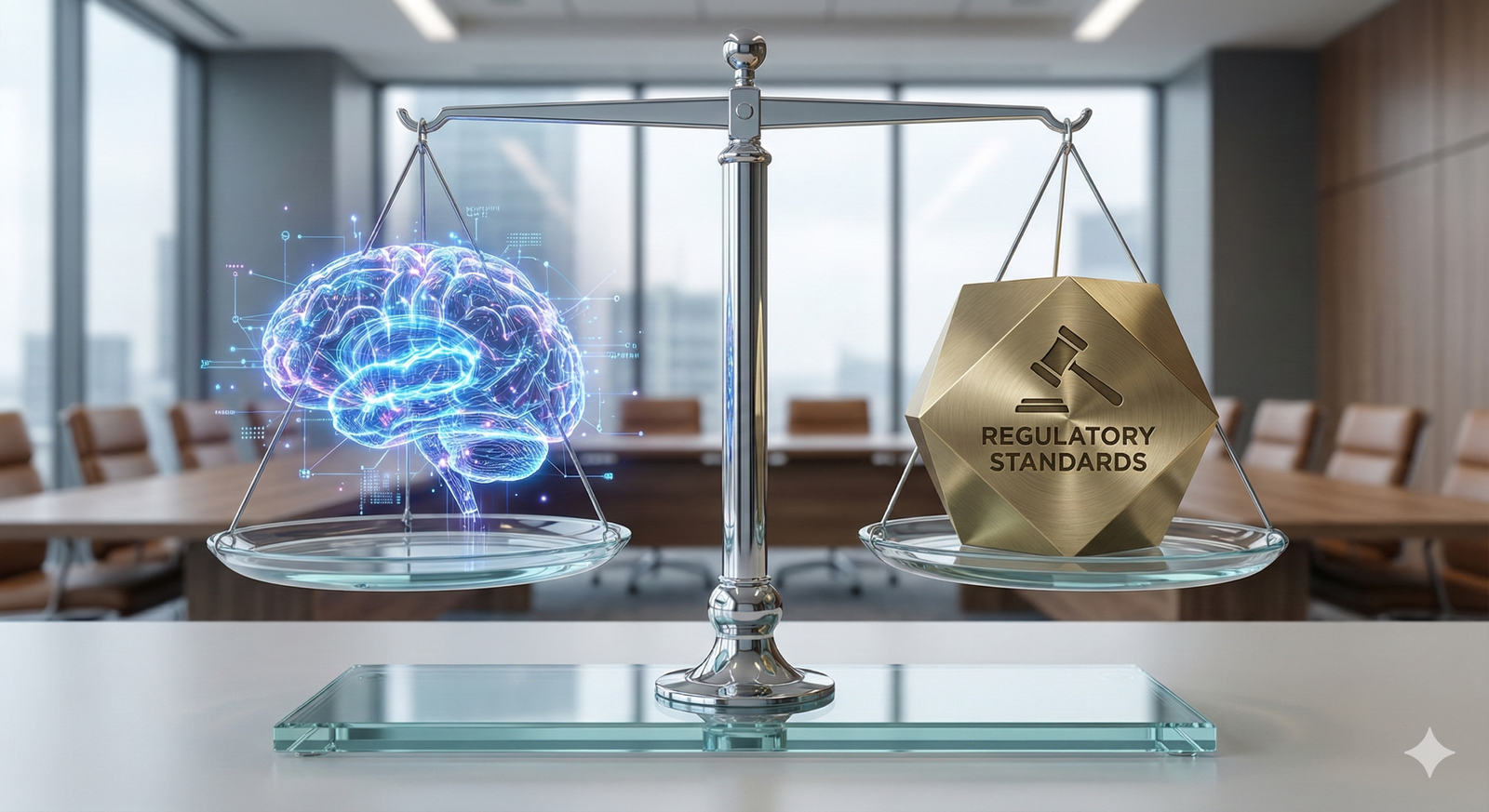
However, technology alone is not a panacea. It must be paired with robust policy, significant investment in physical infrastructure, and a conscious effort to minimize the environmental footprint of the technology itself. As we move forward, the metric of success for AI will not just be its intelligence, but its ability to foster a habitable, sustainable planet.
Next Steps
If you are an organization looking to implement AI for sustainability:
- Audit your data: Ensure you have the sensors and data infrastructure to measure your current baseline.
- Start with “Low-Hanging Fruit”: Implement HVAC optimization or fleet routing AI, which offer quick ROI and immediate carbon reduction.
- Prioritize Green AI: When choosing cloud providers or AI models, ask for their carbon metrics and choose efficient, sparse models where possible.
FAQs
Q: Does AI consume more energy than it saves? In most sustainability applications, AI saves far more energy than it consumes. For example, the energy cost of training a model to optimize a national grid is negligible compared to the massive reduction in fossil fuel usage that the model enables. However, for generative AI (like writing text or creating images), the energy cost is high and the environmental benefit is less direct, requiring careful management.
Q: How does AI help with renewable energy integration? AI helps by predicting weather patterns to forecast energy generation from wind and solar. It also manages the rapid switching required to store energy in batteries and release it when demand is high, stabilizing the grid against the natural fluctuations of renewable sources.
Q: What is a “Virtual Power Plant” (VPP)? A Virtual Power Plant is a network of decentralized energy sources (like home batteries, EVs, and solar panels) that are connected and controlled by AI. The AI aggregates these small sources to act like a single large power plant, feeding energy back to the grid during peak demand times.
Q: Can AI help reduce Scope 3 emissions? Yes. Scope 3 emissions are indirect emissions in a company’s value chain. AI helps by analyzing supply chain data to identify carbon-intensive suppliers, optimizing logistics to reduce transport emissions, and designing products that use less material, effectively reducing the upstream carbon footprint.
Q: Is AI necessary for a net-zero future? While not strictly “impossible” without it, reaching net-zero without AI would be significantly more expensive and slower. The complexity of a renewable-heavy grid and a circular economy involves too many variables for human operators to manage efficiently in real-time. AI is considered a critical accelerator for net-zero goals.
Q: What is the difference between Predictive Maintenance and Preventive Maintenance? Preventive maintenance is scheduled based on time (e.g., “service every 6 months”). Predictive maintenance uses AI to analyze sensor data and service equipment only when it actually needs it (e.g., “service now because vibration patterns indicate a bearing failure”). Predictive maintenance is more energy and material efficient.
Q: How can individuals use AI for sustainability? Individuals can use smart home devices (thermostats, plugs) powered by AI to reduce their energy bills. Additionally, using apps that track personal carbon footprints or optimize EV charging schedules utilizes AI to lower individual environmental impact.
Q: What are the risks of relying on AI for grid management? The main risks are cybersecurity threats (hackers targeting the AI to destabilize the grid), data privacy concerns regarding household usage data, and algorithmic bias or errors that could lead to incorrect load shedding or power distribution issues during emergencies.
References
- International Energy Agency (IEA). (2025). Digitalization and Energy. Retrieved from https://www.iea.org/reports/digitalization-and-energy
- Google DeepMind. (2016). DeepMind AI Reduces Google Data Centre Cooling Bill by 40%. Retrieved from https://deepmind.google/discover/blog/deepmind-ai-reduces-google-data-centre-cooling-bill-by-40/
- National Grid ESO. (2024). Artificial Intelligence in Energy Forecasting. Retrieved from https://www.nationalgrideso.com
- Microsoft. (2024). Carbon-Aware Computing: Measuring and Reducing the Carbon Footprint of Software. Retrieved from
- Climate Change AI. (2023). Tackling Climate Change with Machine Learning. Retrieved from https://www.climatechange.ai/papers
- U.S. Department of Energy. (2024). Smart Grid System Report. Retrieved from
- Nature Climate Change. (2022). The role of artificial intelligence in achieving the Sustainable Development Goals. Retrieved from https://www.nature.com/nclimate/
- World Economic Forum. (2024). Harnessing Artificial Intelligence for the Earth. Retrieved from
- NVIDIA. (2024). Accelerating Climate Science with AI and Digital Twins. Retrieved from
- Schneider Electric. (2025). Sustainability and Efficiency in Buildings: The Role of Digitalization. Retrieved from https://www.se.com/ww/en/work/campaign/life-is-on/sustainability.jsp