Decentralization distributes control, decision-making, and operations across many independent nodes rather than concentrating power in a single authority. It matters because it reduces single points of failure, aligns incentives closer to users, and unlocks permissionless innovation across markets and communities. In practice, “decentralized” is not a binary badge; it is a spectrum of architectural, governance, and economic choices that shift power, risk, and resilience in measurable ways. Throughout this guide, you’ll see concrete guardrails, small numeric examples, and tools you can apply immediately. This article is educational and general in nature; for security, legal, or financial decisions, consult qualified professionals. By the end, you’ll have a clear, step-by-step way to assess and implement decentralization where it actually improves outcomes.
Quick start steps you can skim now:
- Map decisions and dependencies; identify single points of failure (SPOFs).
- Choose your decentralization model (federated, peer-to-peer, multi-party, or protocol-first).
- Align governance with architecture (who can propose, validate, upgrade, exit).
- Set numeric guardrails (replication factor, quorum thresholds, MTTR, RTO/RPO).
- Pilot on a thin slice, measure latency/cost/quality, then iterate.
At a glance
| Criterion | Centralized | Decentralized |
|---|---|---|
| Failure Risk | Single point of failure | Redundant, fault-tolerant |
| Change Control | Rapid but unilateral | Slower, multi-party checks |
| Costs | Economies of scale, vendor lock-in risk | Variable, competitive supply |
| Privacy/Censorship | Easier to monitor/restrict | Harder to censor, more privacy options |
| Innovation | Curated roadmap | Permissionless composability |
| Interop | Often proprietary | Protocol- and standard-first |
1. Eliminate Single Points of Failure to Increase Resilience
Decentralization matters first because it directly lowers the probability that a single component outage can take down an entire service or community process. By distributing duties—compute, storage, governance, and validation—across independent nodes, you replace fragile chains with resilient meshes. The immediate benefit is continuity: even when one node fails, others can absorb load and maintain service. This is true in cloud regions, content distribution, payment rails, and even community response networks. It also improves change safety; when deployment or policy changes roll out gradually across nodes, blast radius is controlled. You will trade some coordination overhead for these gains, but the resilience dividend usually outweighs it in critical systems. The core idea is simple: remove any place where “if this fails, everything fails.”
How to do it
- Inventory SPOFs: Catalog databases, identity providers, DNS, CI/CD, and leadership roles that can halt service.
- Replicate with independence: Use multi-region/multi-provider setups; ensure fault isolation boundaries are real (power, network, teams).
- Diversify control paths: Separate deployer and rollback permissions; use multiple maintainers for critical keys.
- Stagger change: Progressive delivery (canary/blue-green) so only a fraction of nodes update at once.
- Exercise failure: Run game days and chaos experiments to validate that redundancy actually works.
Numbers & guardrails
- Replication factor: Start at 3–5 independent replicas for critical data/services.
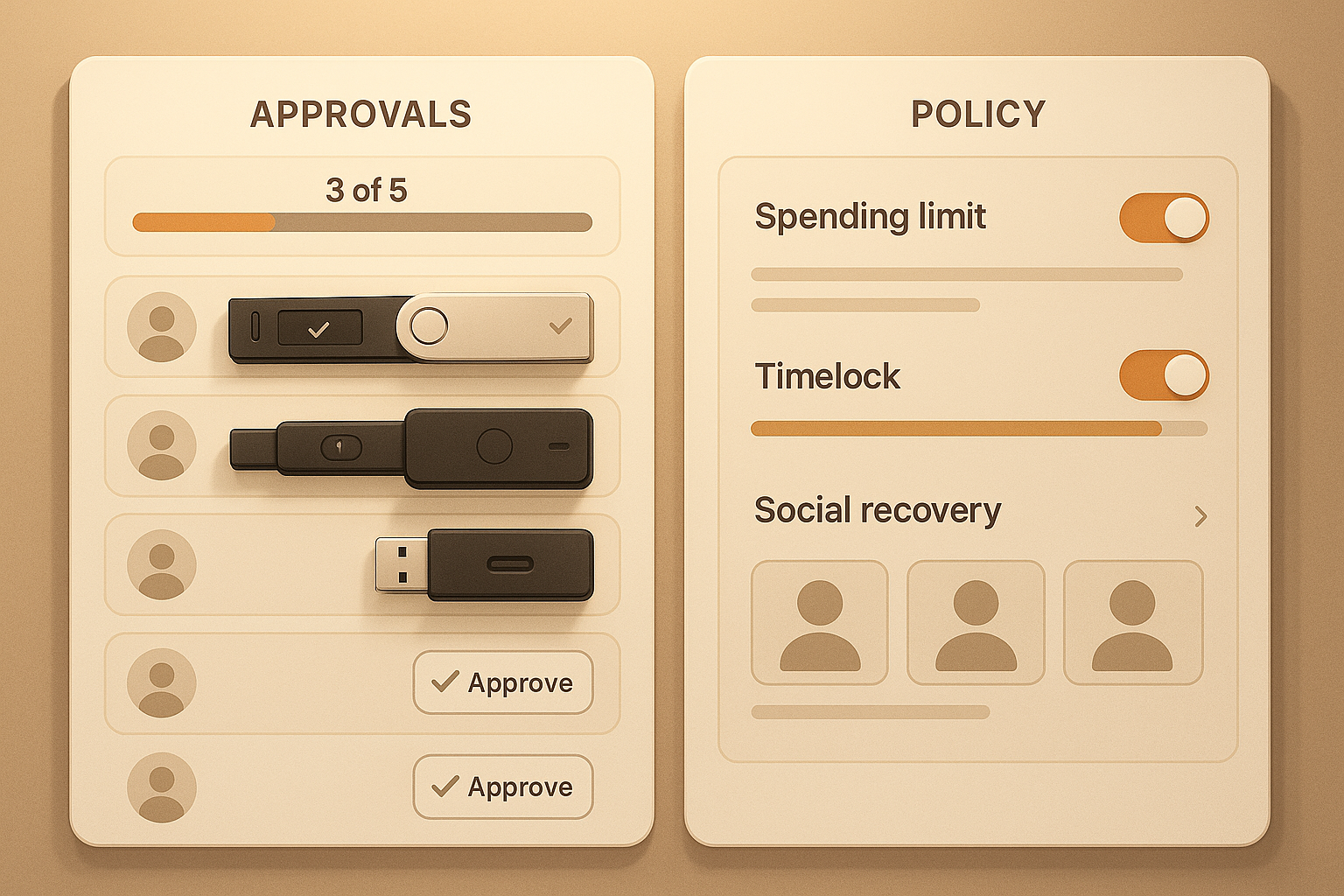
- Quorum: Choose majority (⌈n/2⌉+1) or threshold signatures (e.g., 3-of-5) for admin actions.
- Recovery targets: Aim for RTO ≤ 15 minutes and RPO ≤ 60 seconds for user-facing systems.
Synthesis: When you replace singular dependencies with redundant, independently controlled nodes and measurable guardrails, resilience becomes a property of the system—not the luck of any one component.
2. Scale Throughput and Reach Without Central Bottlenecks
Decentralization can increase capacity by letting work happen closer to users and in parallel across many nodes. Instead of a central server saturating under load or distance, edge nodes cache, compute, and coordinate locally, reducing latency and central bandwidth costs. Sharding—splitting responsibilities across partitions—lets you scale horizontally while keeping each node’s working set small. The societal analogue is similar: communities that distribute decision-making resolve local needs faster and reduce queueing at the “center.” The trade-off is coordination complexity: consistency models, conflict resolution, and observability must be designed in. Still, for read-heavy, geographically dispersed workloads, decentralized patterns routinely deliver faster response times and better user experiences.
How to do it
- Edge first: Push static assets and compute to edge nodes; use local write buffers with conflict-free data types where possible.
- Shard by key: Partition by user/account/region to keep hot spots isolated.
- Backpressure lanes: Protect the system by isolating heavy tenants behind queues or rate limits.
- Async where safe: Embrace eventual consistency where user impact is low; surface progress indicators to maintain trust.
Mini case
A global API serving 120,000 requests/second moved from a single-region monolith to a 4-region active-active setup with edge caching. Median latency dropped from 220 ms to 85 ms, and central egress bills fell by 32% due to regional cache hits.
Synthesis: Spreading compute and data out—deliberately and observably—translates into lower latency, higher throughput, and a cost curve that scales with demand rather than against it.
3. Restore User Agency and Data Sovereignty
Decentralization matters because it returns meaningful control to the people generating value—users, creators, operators, and local communities. In centralized models, switching costs, opaque policies, and account-level lock-in can trap you. Decentralized alternatives can separate identity from platforms, make data portable via open formats, and ensure that access is granted by the individual, not a gatekeeper. Practically, this means you choose clients, move providers, and revoke access yourself. It also improves trust: when permissions are explicit and auditable, users can verify rather than hope. The subtle point is that agency is not only a rights question; it’s an ergonomic one. If controls are too hard to use, defaults win. Good decentralized designs therefore hide cryptography behind simple flows and provide clear revocation paths.
How to do it
- Self-sovereign identity (SSI): Use portable identifiers and verifiable credentials so accounts outlive any one app.
- Data export/import: Offer one-click data portability using standard schemas and proven sync tools.
- Client choice: Separate server and client; let people pick or build the interface they prefer.
- Revocation UX: Make consent dashboards and key rotation one tap away; show exactly who can access what.
Common mistakes
- Complex keys: Expecting non-experts to manage raw private keys without recovery plans.
- Dark patterns: Nudging users to centralized defaults while advertising “decentralization.”
- Fake portability: Exports that are unreadable, lossy, or costly to import elsewhere.
Synthesis: When identity and data are portable by design, users can leave with dignity—and that pressure alone raises the bar for every provider.
4. Unlock Permissionless Innovation and Composability
Central platforms innovate, but they also gatekeep. Decentralization flips the default: if you conform to a protocol, you can build without asking. This creates a composability flywheel—new services plug into existing ones like Lego bricks, expanding the ecosystem’s surface area without a central product team’s blessing. Open, versioned interfaces allow alternative clients, bot assistants, analytics layers, and new marketplaces to bloom. The flipside is governance: protocol changes must balance stability with progress. Yet when the base rules are narrow and stable, innovation moves to the edges where experimentation is cheap and reversible.
Tools/Examples
- Open social protocols: Federated messaging and social APIs that allow cross-server follows and portable handles.
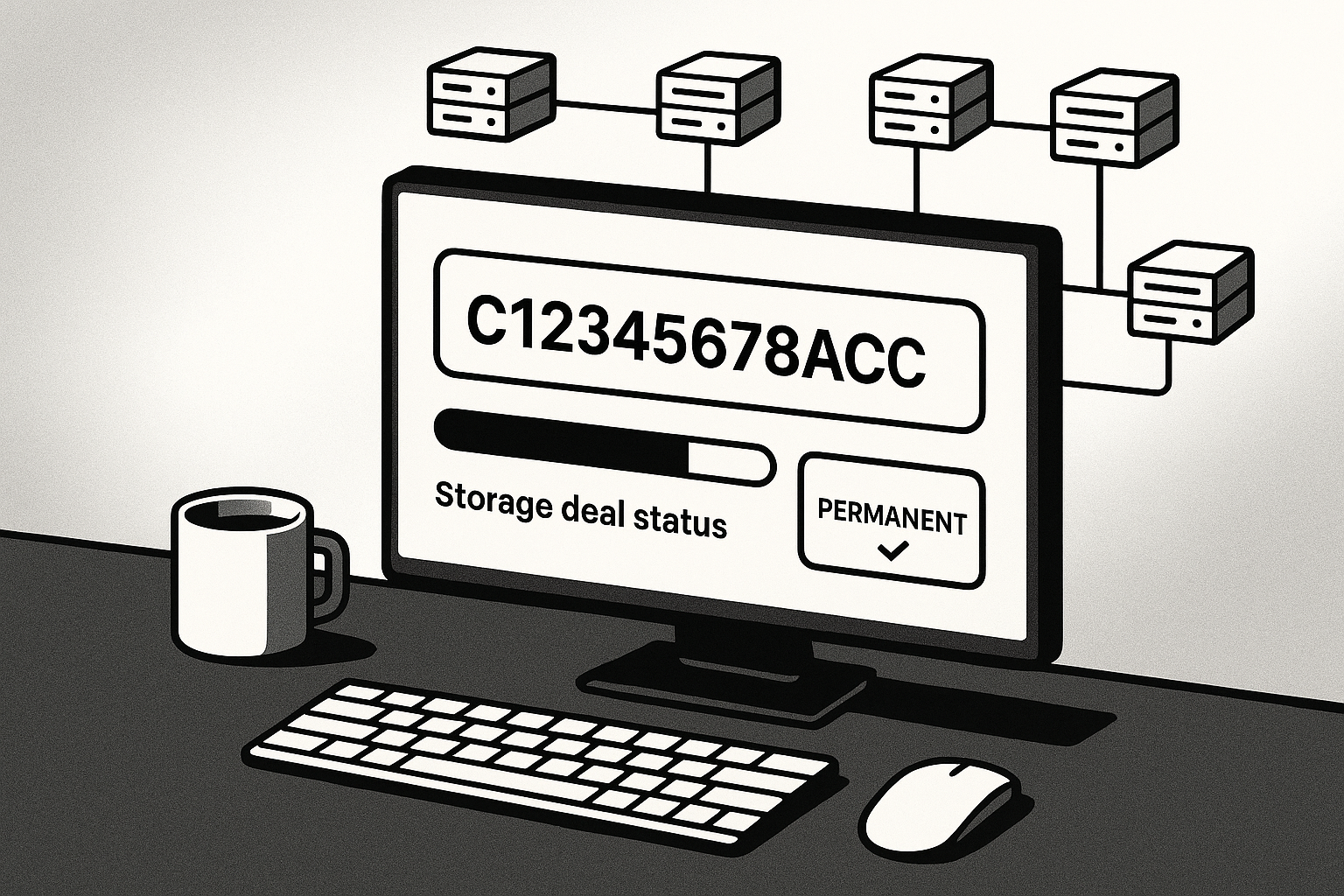
- Decentralized storage: Content-addressed networks where URLs point to what not where.
- Programmable money/rights: Smart-contract platforms enabling automated payouts, escrow, or time-locked access.
Numbers & guardrails
- Versioning cadence: Major protocol changes no more than 1–2 times per upgrade cycle; minor/extension channels open-ended.
- Ecosystem health: Track # of interoperable clients, # of independent server operators, and share of traffic from third-party apps; aim for independent apps to represent ≥ 20% of usage within a healthy ecosystem.
Synthesis: By narrowing the center to a stable protocol and moving creativity to the edges, you invite more builders—and more unexpected breakthroughs—without sacrificing coherence.
5. Share Power Transparently with Multi-Party Governance
Decentralization is not only about servers; it’s about who decides. Multi-party governance distributes proposal, review, and execution rights across stakeholders with clear checks and balances. This reduces unilateral risks and aligns incentives with diverse users. Structures range from representative councils to token-weighted voting to rotating maintainers with veto power limited to safety scopes. The key is transparency: publish charters, decision logs, and upgrade procedures. Expect slower decision velocity than a founder-led model, but expect fewer catastrophic surprises. Done well, governance becomes a living contract: everyone sees the rules and how to change them.
How to do it
- Define roles: Proposers, reviewers, maintainers, incident commanders—each with scoped powers.
- Quorums & thresholds: Use explicit quorum (e.g., ≥ 25% participation) and supermajority thresholds (e.g., ⅔) for breaking changes.
- Conflict management: Establish appeals processes and emergency powers with strict time limits and audits.
- Sunset clauses: Time-box experimental powers so they require explicit renewal.
Common mistakes
- Vague authority: “The core team decides” without clarity breeds distrust.
- Voter fatigue: Too many votes on low-impact issues reduce engagement and quality.
- Opaque finance: Budgets and grants without reporting create reputational risk.
Synthesis: When governance is designed like a product—with clear roles, thresholds, and audits—you get legitimacy, safer changes, and a community that sticks around.
6. Improve Security Posture via Distribution and Zero Trust
Decentralization strengthens security by shrinking blast radius and making compromise detection easier. In centralized setups, a single credential or misconfiguration can expose everything. Distributed control—with least privilege, threshold approvals, and independent attestations—forces attackers to breach multiple boundaries. Pair this with zero trust (authenticate and authorize each request) and you reduce implicit trust that attackers exploit. Decentralized logging and monitoring add integrity: tamper-evident event streams and multi-party sign-offs make cover-ups harder. Cryptographic primitives like threshold signatures and multi-party computation (MPC) allow shared control without sharing secrets.
How to do it
- Segment keys & secrets: Use n-of-m approval for production deploys and treasury moves; rotate keys on a schedule.
- Independent verifiers: Run separate telemetry paths to catch anomalies; require two independent attestations for sensitive actions.
- Policy as code: Version and review security policies; enforce via automated gates across nodes.
Numbers & guardrails
- Approval thresholds: For high-impact actions, set ≥ 2-of-3 or 3-of-5 human approvals plus automated checks.
- Exposure windows: Target detection to < 5 minutes and containment to < 15 minutes for critical paths.
- Diverse implementations: If feasible, maintain 2 independent client implementations to reduce shared-bug risk.
Synthesis: Security improves when trust isn’t assumed, secrets aren’t centralized, and no single credential opens every door.
7. Reduce Platform Risk and Encourage Healthy Competition
Dependence on a single platform or vendor concentrates risk: price hikes, capricious policy changes, sudden deprecations, or geographic restrictions can disrupt your roadmap overnight. Decentralization—whether through open protocols, multi-vendor procurement, or federation—creates credible exit options. With switching costs lowered, providers must compete on service quality, not captivity. This dynamic also disciplines governance: if participants can leave, leaders must persuade rather than coerce. For societal systems, decentralization counters monopolistic control and soft censorship by giving communities practical alternatives.
How to do it
- Protocol-first buying: Prefer solutions that speak open standards and let you run your own instance.
- Multi-home critical routes: Run at least 2 providers for DNS, build pipelines, or payments; keep A/B paths warm.
- Data leverage: Maintain continuously exportable data so migrations are weeks, not months.
Mini case
A SaaS company facing a 40% price increase avoided disruption by shifting 35% of traffic to a second provider over 10 days, thanks to a protocol-compatible design and continuous exports. Churn stayed flat; gross margin recovered.
Synthesis: When exit is feasible, bargaining power shifts back to builders and users—and suppliers improve to keep you.
8. Strengthen Privacy and Censorship Resistance
Central choke points make surveillance and censorship straightforward. Decentralized architectures resist both by eliminating or diluting single control layers. Federation lets communities set their own moderation norms while still interconnecting. End-to-end encryption, local-first apps, and privacy-preserving analytics (like differential privacy or secure enclaves) make it harder to intercept or monetize data without consent. This doesn’t mean an absence of moderation or law; it means moderation is plural and transparent, and compliance can be scoped to jurisdictions without compromising global speech. The nuance: strong privacy must be ergonomic; otherwise users default to convenience.
How to do it
- Local-first patterns: Store data on devices; sync with conflict-free data types and user-controlled keys.
- Federated moderation: Delegate policy to server operators with clear federation/blocking tools.
- Private telemetry: Use on-device aggregation or privacy budgets to measure without deanonymizing.
Region notes
- Jurisdictional variance: Data locality laws differ; keep data partitioned by region with clear residency guarantees.
- Lawful process: Build auditable lawful-process channels that notify users when permitted and minimize data retained by default.
Synthesis: Decentralization doesn’t guarantee privacy, but it gives you the architectural levers to make privacy the default rather than the exception.
9. Optimize Costs by Matching Supply With Demand
A common myth is that decentralization is always more expensive. In reality, cost depends on shape: decentralized systems can align compute/storage supply with where and when demand occurs, cutting wasteful over-provisioning and expensive backhauls. Multi-provider strategies invite price competition. Community-operated nodes can monetize idle capacity while enterprises pay for reliability tiers, balancing the market. The caution is coordination overhead: more operators mean more observability and incentives to keep them honest. With clear SLOs, automated scaling, and cost visibility, decentralization can reduce total cost of ownership (TCO) for many read-heavy or globally distributed workloads.
How to do it
- Right-tier storage: Put cold content on cheaper networks; keep hot paths on premium nodes.
- Local cache wins: Cache at edges to slash egress and origin compute.
- Auction-style procurement: Periodically re-price capacity across vendors and regions.
Mini case
An education platform serving 8 million monthly learners moved media delivery from a single cloud to a mixed edge network. Edge cache hit rate rose from 58% to 91%. Origin egress dropped 45%, saving $380,000 annually while improving video start times by 120 ms on average.
Synthesis: When capacity lives closer to demand and providers compete, you can cut bills while improving experience.
10. Increase Interoperability Through Open Standards
Decentralization thrives when systems can speak a shared language. Open standards and protocol-first design let independent implementations interoperate without centralized brokers. Interop lowers switching costs, grows total addressable markets, and encourages niche specialization because participants trust they won’t be orphaned. Standards must be crisp enough to ensure compatibility yet flexible enough to evolve. Good test suites and conformance programs keep chaos at bay. Importantly, interoperability is not just technical—it includes portable identity, content formats, and policy semantics so institutions can collaborate across tools.
How to do it
- Protocol-before-product: Write interfaces and test vectors first; build reference implementations second.
- Conformance culture: Automate interoperability tests in CI; publish compatibility matrices.
- Extensibility lanes: Define extension points so innovation doesn’t require forks.
Numbers & guardrails
- Interop bar: Require 100% conformance on mandatory tests and documented behavior for optional features.
- Diversity: Encourage ≥ 3 independent implementations before declaring a standard stable.
- Breakage budget: Limit breaking changes to < 1 per major cycle, with migration paths.
Synthesis: Open, tested standards turn decentralization from a slogan into working systems people can actually combine.
11. Build Community Resilience and Local Capacity
Decentralization empowers local actors to solve local problems, whether that’s disaster response, last-mile connectivity, or community finance. When resources and decision rights are distributed, communities adapt faster and recover stronger because they don’t wait for a distant center to notice and react. Technologically, mesh networks, local caches, and peer-assisted distribution keep essential services running when backbone links are down. Institutionally, neighborhood councils and co-ops allocate scarce resources transparently. None of this implies isolation; it means subsidiarity—decisions made at the lowest effective level—while still collaborating across the wider network.
How to do it
- Local meshes: Deploy resilient Wi-Fi meshes with battery-backed nodes and offline-first apps.
- Community operations: Train local stewards for upgrades, moderation, and incident response.
- Transparent funds: Use auditable ledgers (not necessarily public) for pooled resources and grants.
Mini checklist
- Power: Battery/solar for critical nodes
- Backups: Off-grid copies of essential data
- Rosters: Contact trees and role rotations
- Drills: Quarterly failover and comms checks
Synthesis: By equipping communities with tools and authority, you create systems that bend without breaking—and recover without waiting.
Conclusion
Decentralization matters because it redistributes power, risk, and opportunity in ways that make systems more resilient, fair, and inventive. It reduces single points of failure, scales performance by moving work to the edge, and restores user agency through portable identity and data. It encourages permissionless innovation, tempers platform risk with credible exit options, and strengthens privacy with architecture rather than promises. None of this is free: coordination, governance, and observability must be designed with the same care as protocols and code. The reliable path is to treat decentralization as a set of concrete choices—replication factors, quorum thresholds, interop tests, procurement strategies—not as a label. Start with a thin slice, measure with clear guardrails, and iterate as you learn. If this guide helped you choose where to decentralize next, share it with a teammate and pilot one small change this week.
FAQs
1) Is decentralization always better than centralization?
No. Decentralization shines where resilience, autonomy, and open innovation matter more than tight central control. Centralization can be superior for highly coupled, latency-sensitive operations or where strict compliance demands single-authority oversight. The right question is: Which elements benefit from distribution, and which require a strong center? Many robust systems mix both, decentralizing the data plane while keeping a thin, auditable control plane.
2) How do I decide what to decentralize first?
Start with a dependency map and mark components whose failure or policy change would halt your mission. Target high blast-radius elements like identity, data stores, and external providers. Choose one “thin slice” where you can add redundancy or federation quickly—say, multi-region read replicas or a protocol-compatible alternative client. Define numeric guardrails (replication factor, MTTR) and measure before/after to learn without betting the farm.
3) Won’t coordination slow us down?
Coordination adds overhead, but most delays come from ambiguity, not votes. Clear roles, thresholds, and change windows keep decentralized teams moving. Use progressive delivery to limit risk, automate tests to reduce debates, and reserve human approvals for truly high-impact changes. Many teams find overall velocity improves because fewer rollbacks and incidents mean more time shipping value.
4) How does decentralization affect security?
It reduces single-credential catastrophes and makes tampering more detectable by splitting control across people and systems. Techniques like threshold signatures, policy-as-code, and independent attestations harden critical actions. Be mindful of new attack surfaces—consensus mechanisms, peer discovery, and misconfigured federation—but with least privilege and strong monitoring, the net effect is usually a safer posture.
5) Can decentralized systems meet compliance requirements?
Yes, but you must map controls to the decentralized topology. Data residency is handled with regional partitions; audit trails come from tamper-evident logs; access reviews map to role scopes across nodes. Often, decentralization helps compliance by reducing data concentration and proving that no single admin can act unilaterally on sensitive records.
6) Do decentralized networks always cost more?
Not necessarily. Costs depend on workload shape and vendor strategy. Edge caching can cut egress dramatically, and multi-vendor procurement can introduce price pressure. Coordination tooling and observability add line items, but they’re usually offset by fewer outages and better performance. Track cache hit rates, egress, and failover tests to quantify savings.
7) What’s the difference between federation and peer-to-peer?
Federation uses independently run servers that interoperate via shared protocols; peer-to-peer connects user devices directly without central servers. Federation suits communities and organizations that want policy control; P2P excels for transient sharing and offline or low-infrastructure contexts. Many ecosystems mix both: P2P for local sync, federation for discovery and moderation.
8) How do we prevent decentralized governance from being captured by a minority?
Design participation incentives and quorum thresholds, distribute voting power sensibly, and rotate roles. Publish decision logs, add conflict-of-interest disclosures, and require supermajorities for breaking changes. Consider delegated models with recall, plus independent audits of treasury or grant programs. Healthy governance is explicit, transparent, and reviewable.
9) Isn’t interoperability just a technical problem?
Technical compatibility is necessary but insufficient. True interoperability includes portable identity, content formats, and policy semantics so organizations can comply with local rules while collaborating globally. Invest in test suites, conformance programs, and documented extension points—then back them with real budgets and maintenance calendars.
10) How do we measure if decentralization is working?
Track outcome metrics, not slogans. Reliability (SLO attainment, RTO/RPO), performance (latency, throughput), autonomy (time-to-exit, data export completeness), competition (share of traffic from third-party clients), and security (time-to-detect/contain) are useful. Set targets, run controlled pilots, and make go/no-go decisions with evidence.
References
- Decentralized Identifiers (DIDs) v1.0, World Wide Web Consortium, Publication date: not specified. https://www.w3.org/TR/did-core/
- ActivityPub, World Wide Web Consortium, Publication date: not specified. https://www.w3.org/TR/activitypub/
- Zero Trust Architecture (SP 800-207), National Institute of Standards and Technology, Publication date: not specified. https://csrc.nist.gov/publications/detail/sp/800-207/final
- Understanding Denial-of-Service Attacks, Cybersecurity and Infrastructure Security Agency, Publication date: not specified. https://www.cisa.gov/resources-tools/resources/understanding-denial-service-attacks
- Time, Clocks, and the Ordering of Events in a Distributed System, Leslie Lamport, Publication date: not specified. https://lamport.azurewebsites.net/pubs/time-clocks.pdf
- On Consensus and Humming in the IETF (RFC 7282), Internet Engineering Task Force, Publication date: not specified. https://www.rfc-editor.org/rfc/rfc7282.html