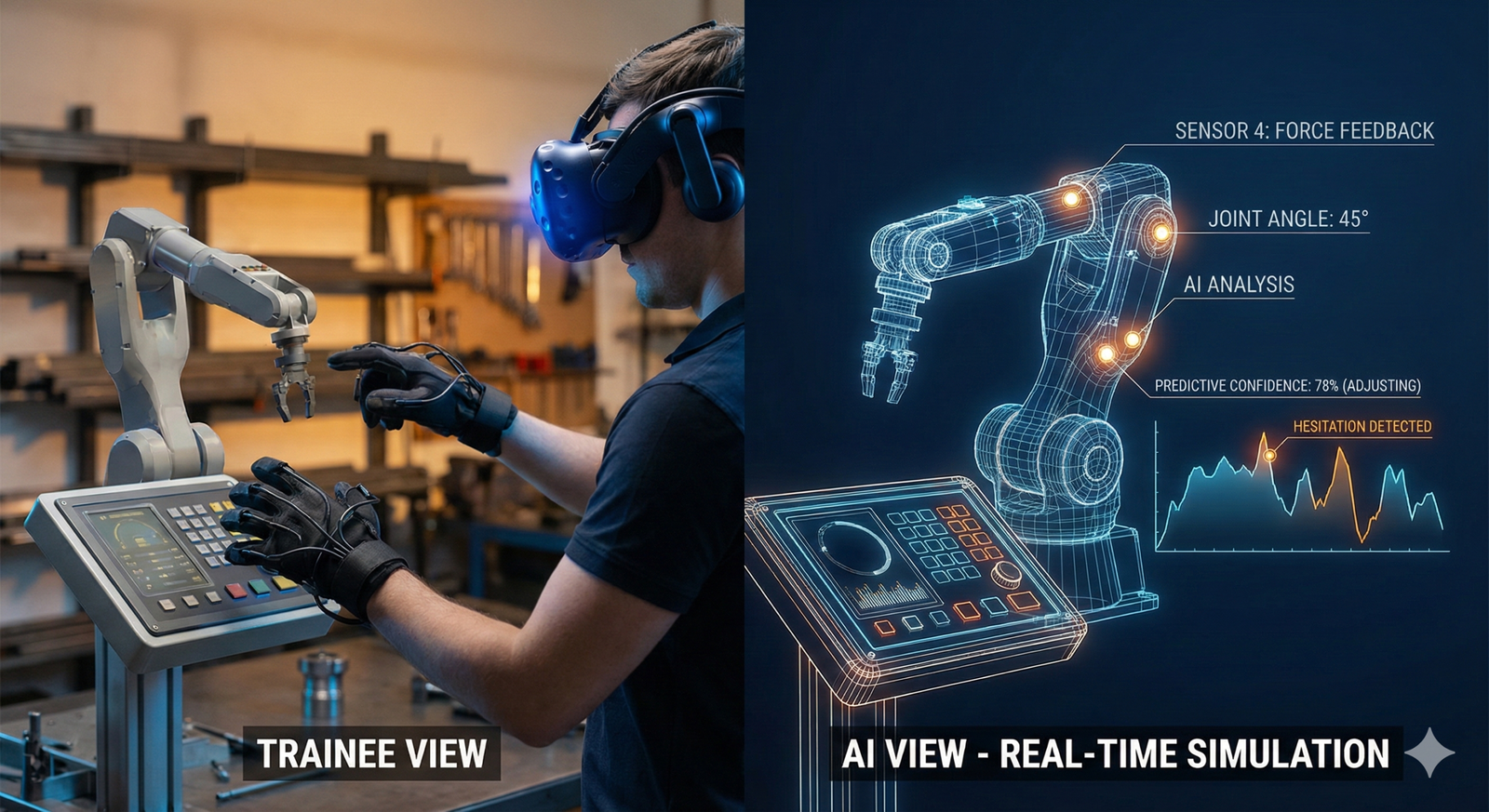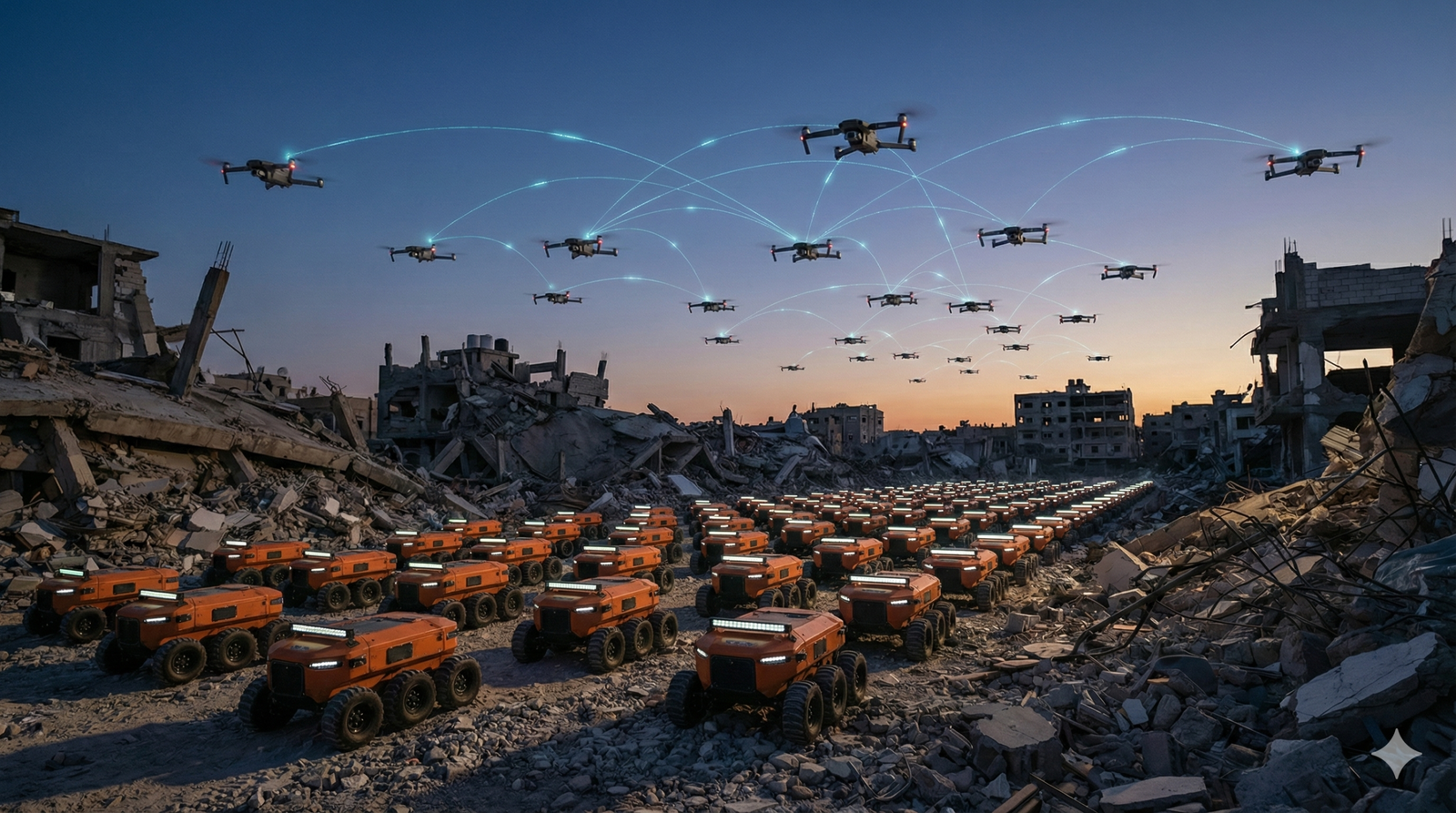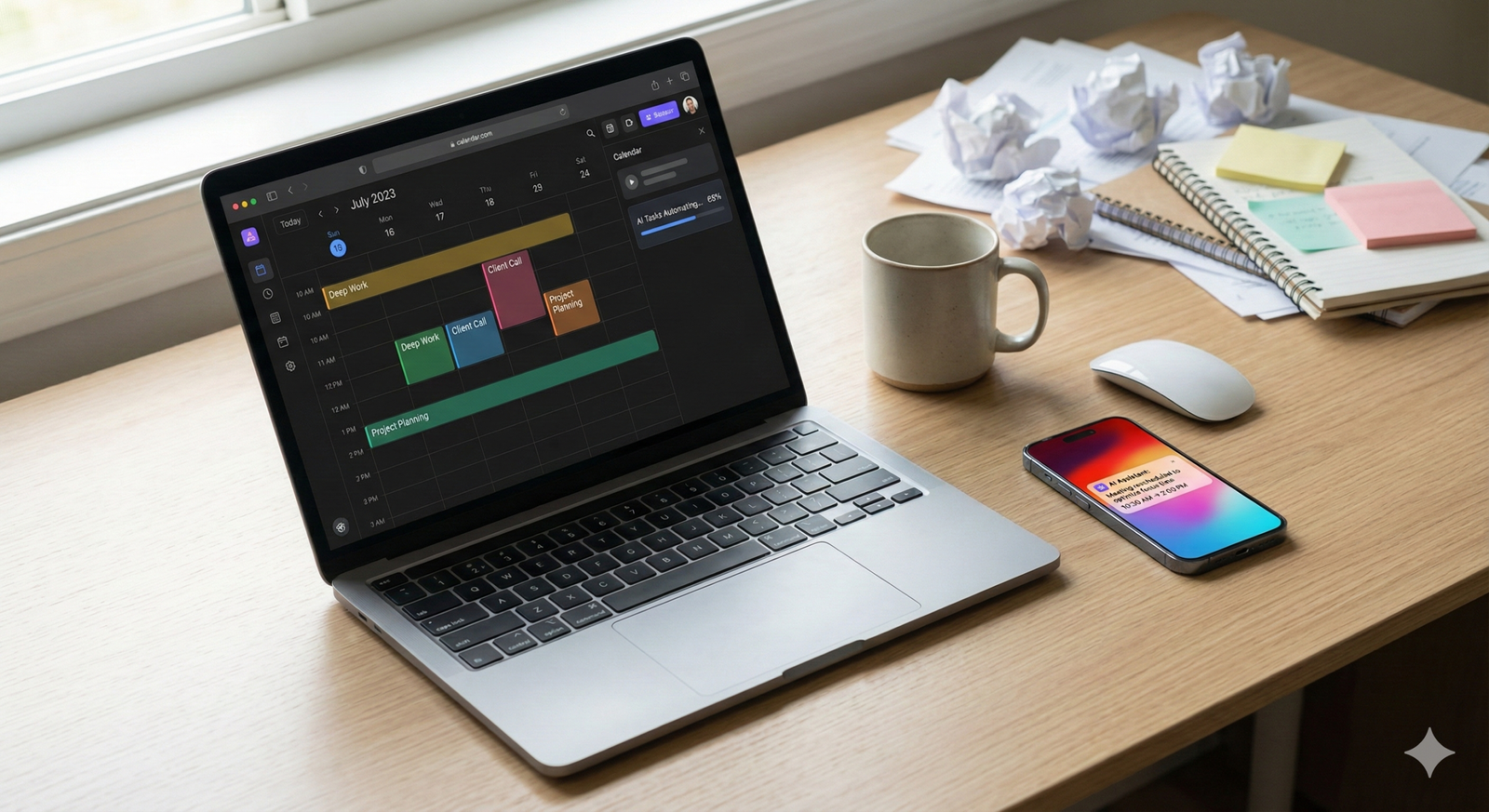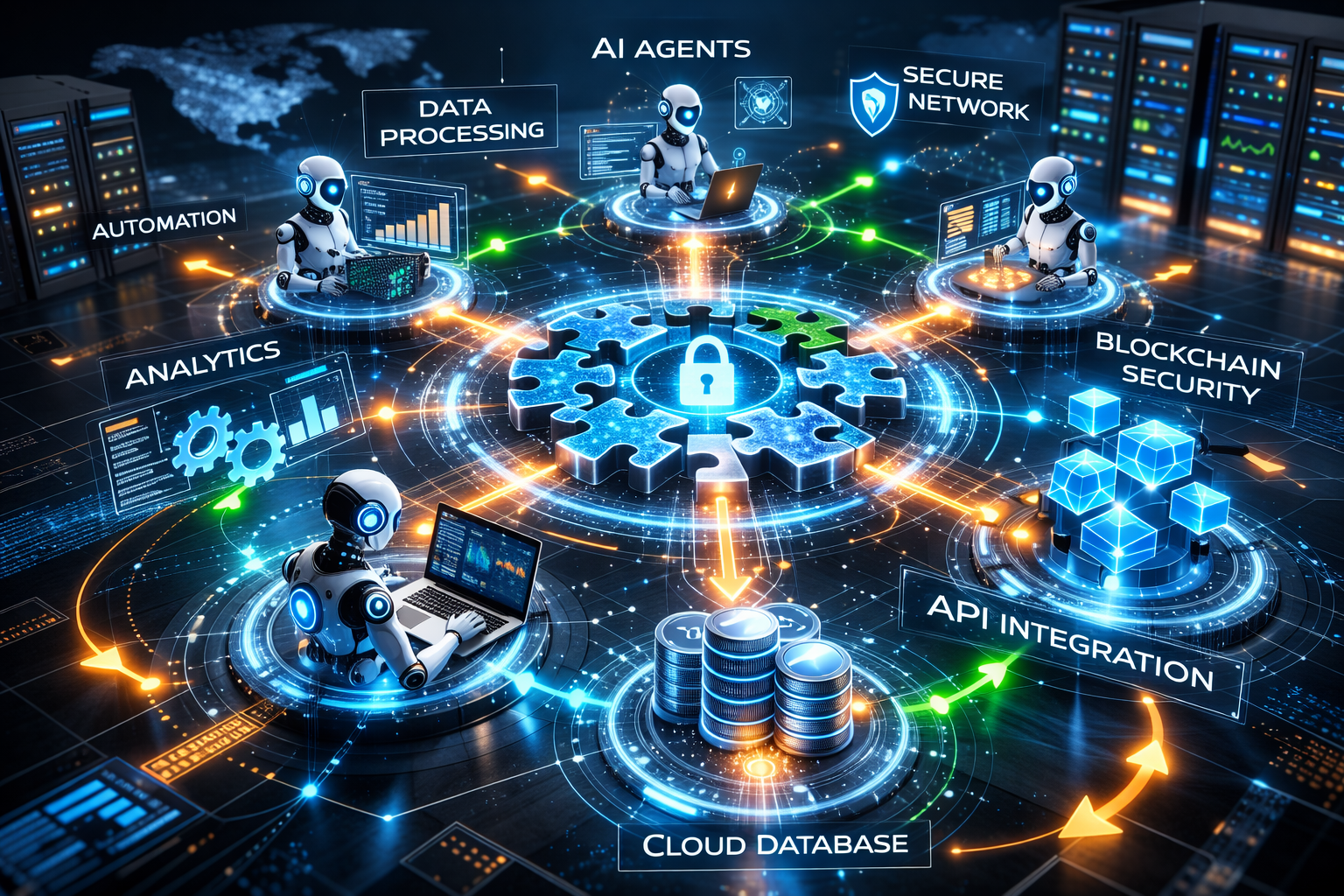
In the early days of generative AI, we were impressed by a single chatbot’s ability to write a poem or debug a snippet of code. But as of February 2026, the industry has moved far beyond the “single-prompt” era. We have entered the age of multi-agent orchestration, where specialized AI agents don’t just respond to us—they talk to each other, challenge each other, and execute complex workflows that once required entire human departments.
Multi-agent orchestration (MAO) is the practice of managing multiple autonomous AI agents to achieve a common goal. Think of it like a symphony: individual musicians (agents) are masters of their instruments, but without a conductor or a shared score (protocols), the result is noise rather than music.
Key Takeaways
- Specialization over Generalization: Breaking complex tasks into smaller pieces handled by specialized agents reduces errors and hallucinations.
- Coordination is King: The magic isn’t in the LLM itself, but in the protocols—the rules of communication and hand-off—that govern how agents interact.
- Scalability: Orchestrated systems can handle enterprise-level tasks like full-scale software development, market research, and supply chain logistics autonomously.
- Human-in-the-Loop: Effective orchestration always includes “checkpoints” where humans can audit or redirect the agent collective.
Who This Is For
This guide is designed for AI architects, software engineers, and CTOs who are moving past simple RAG (Retrieval-Augmented Generation) and looking to build robust, agentic workflows. It is also for product managers who need to understand the technical constraints and possibilities of “agentic” products in the 2026 landscape.
Why Single Agents Are No Longer Enough
While a single large language model (LLM) is powerful, it suffers from “cognitive load” when tasks become too complex. If you ask one agent to research a topic, write a 10-page report, format it for PDF, and email it to a list of stakeholders, the agent is likely to lose track of details, hallucinate sources, or fail at the formatting stage.
By shifting to multi-agent orchestration, we apply the principle of “Separation of Concerns.” One agent researches. One agent writes. One agent edits. One agent manages the tools for PDF conversion.
The Benefits of Multi-Agent Systems (MAS)
- Reduced Hallucinations: When an “Editor Agent” critiques a “Writer Agent,” the error rate drops significantly.
- Modular Debugging: If the system fails, you can pinpoint exactly which agent or protocol failed rather than staring at a monolithic prompt.
- Parallelism: Agents can work on different parts of a project simultaneously, drastically reducing “time to completion.”
Core Orchestration Patterns
How do agents actually work together? There isn’t a one-size-fits-all approach. Depending on your goals, you will likely choose one of these four primary patterns:
1. Sequential Workflows (The Assembly Line)
In a sequential pattern, Agent A finishes its task and passes the output to Agent B. This is the simplest form of orchestration, ideal for linear processes like content creation or data cleaning.
- Example: A “Summarizer Agent” takes a transcript and sends it to a “Social Media Agent,” which then sends snippets to a “Graphics Agent.”
2. Hierarchical Orchestration (Manager-Worker)
In this model, a “Manager” or “Orchestrator” agent receives the user’s high-level goal. It then decomposes the goal into sub-tasks and assigns them to specialized “Worker” agents.
- The Manager’s Role: It tracks the state of the project, re-assigns tasks if a worker fails, and synthesizes the final result.
- Example: A “Project Manager Agent” delegating tasks to a “Coder Agent,” a “Tester Agent,” and a “Documentation Agent.”
3. Joint Collaboration (The Round Table)
Here, agents have equal standing and communicate in a shared space (often called a “Blackboard”). They contribute their expertise as needed until a consensus is reached.
- Use Case: Strategic brainstorming or solving “wicked problems” where no clear linear path exists.
4. Peer-to-Peer (P2P) Coordination
Agents talk directly to each other without a central manager. This is common in “Swarm Intelligence” models where agents follow simple rules to achieve complex emergent behavior.
- Use Case: Large-scale web scraping, network monitoring, or decentralized logistics.
Agent Communication Protocols: The “How”
For agents to coordinate, they need more than just an API key; they need a language for cooperation. In 2026, we utilize several sophisticated protocols to ensure data integrity and task completion.
Task Decomposition Protocols
Before an agent starts working, the task must be broken down. Chain-of-Thought (CoT) prompting was the precursor, but in MAO, we use Task Graphs. A task graph defines the dependencies: “Task B cannot start until Task A provides an authenticated token.”
State Management
One of the hardest parts of orchestration is keeping everyone on the same page.
- Shared Memory: All agents write to and read from a central database.
- Message Passing: Agents send specific “payloads” to each other, containing only what the next agent needs to know.
The Contract Net Protocol (CNP)
Borrowing from classical multi-agent system theory, CNP involves a “Manager” issuing a “Call for Proposals” (CFP). Worker agents bid on the task based on their current load or expertise. The Manager then awards the contract to the best-suited agent.
Leading Frameworks in 2026
If you are building these systems today, you aren’t starting from scratch. Several frameworks have emerged as the “standard library” for multi-agent coordination.
1. LangGraph (by LangChain)
LangGraph treats agentic workflows as a directed graph. Its biggest advantage is its ability to handle cycles. Unlike standard linear chains, LangGraph allows agents to loop back—for example, a “Reviewer” sending a document back to the “Writer” for revisions until a quality threshold is met.
2. Microsoft AutoGen
AutoGen focuses on “conversational” agents. It excels in scenarios where agents need to “talk” through a problem. AutoGen 2.0 (released in late 2025) introduced enhanced support for “Agent Teams” that can be dynamically scaled based on cloud resources.
3. CrewAI
CrewAI is the most “human-centric” framework. It uses roles (e.g., “Senior Researcher,” “Technical Writer”) and allows you to define “Crews” with specific processes (sequential or hierarchical). It is highly popular for business process automation.
4. OpenAI Swarm
For those who want lightweight, stateless orchestration, Swarm provides a minimalist approach. It focuses on making “handoffs” between agents as seamless as possible, prioritizing speed and low latency.
Common Mistakes in Multi-Agent Design
Building a multi-agent system is deceptively difficult. Here are the pitfalls we see most often in enterprise deployments:
- The “Infinite Loop” Trap: Without proper exit conditions, two agents might go back and forth forever (e.g., A asks B for a correction, B provides it but A finds a new error). Always implement a max_iterations cap.
- Context Window Bloat: Passing the entire history of every agent’s conversation to every other agent will quickly exceed context limits and blow up your API costs. Use Summary Buffers to pass only the essential “state.”
- Over-Engineering: Do not use five agents when a single prompt with a few examples (Few-Shot) would suffice. Each agent adds latency and cost.
- Lack of Observability: If you can’t see the “thoughts” of each agent in real-time, you won’t be able to debug why the final output is wrong. Use tools like LangSmith or Arize Phoenix for tracing.
Safety, Ethics, and Oversight
When you have multiple agents acting autonomously, the risk of “emergent behavior” increases. An agent might decide that the most efficient way to solve a problem is to bypass a security check or spam a third-party API.
Safety Protocols
- Human-in-the-Loop (HITL): For high-stakes tasks (financial transfers, code deployment), the system must pause and wait for a human “O.K.” before proceeding to the next node in the graph.
- Sandboxing: Agents should execute code in isolated environments (like Docker containers) so they cannot harm the host system.
- Rate Limiting and Budgets: Assign a “token budget” or a “dollar budget” to an agentic run. If the agents exceed $10 in API costs, the system should automatically shut down and alert an admin.
The Implementation Roadmap: Your First Orchestrated System
If you are ready to build, follow this structured approach to ensure success.
Step 1: Define the Roles
Don’t just name them “Agent 1” and “Agent 2.” Give them personas.
- Agent 1: The Researcher. Access to Google Search and academic databases. Goal: Find three verified facts.
- Agent 2: The Skeptic. Goal: Find counter-arguments or flaws in Agent 1’s findings.
- Agent 3: The Synthesizer. Goal: Create a balanced summary.
Step 2: Choose the Topology
Will they work in a line (Sequential)? Or will the Synthesizer act as the boss (Hierarchical)? For beginners, a Sequential workflow with a Human Reviewer at the end is the safest starting point.
Step 3: Set the Communication Protocol
Decide how data moves. We recommend using a JSON schema for all inter-agent communication. This ensures that the “Synthesizer” doesn’t crash because the “Researcher” decided to output raw text instead of a list.
Step 4: Monitor and Iterate
Run the system 10 times. Note where the “handoff” fails. Usually, the failure is in the Instructions (system prompt). Be more specific about what “Success” looks like for each individual agent.
Conclusion
Multi-agent orchestration represents a fundamental shift in how we interact with artificial intelligence. We are moving away from treating AI as a “magic box” that gives answers and toward treating it as a digital workforce that performs tasks.
The complexity of these systems requires a disciplined approach to coordination. By mastering protocols like the Contract Net Protocol, utilizing frameworks like LangGraph or CrewAI, and maintaining strict safety boundaries, you can build AI systems that are far more capable than the sum of their parts.
As we look toward the remainder of 2026, the “Agentic Revolution” will likely focus on Cross-Platform Orchestration—where your company’s agents interact with your vendor’s agents to negotiate contracts and manage logistics without a single email being sent. The infrastructure you build today is the foundation for that autonomous future.
Your Next Step: Start small. Take one existing, complex prompt you use today and try splitting it into two distinct roles using a framework like CrewAI. Observe how the quality of the output changes when the agents are allowed to “specialize.”
FAQs
1. How much does multi-agent orchestration cost compared to single agents?
While MAO uses more tokens because of the back-and-forth communication, it is often more cost-effective in the long run. By using smaller, specialized models (like GPT-4o-mini or Claude Haiku) for sub-tasks instead of one giant model for everything, you can often reduce total compute costs while increasing accuracy.
2. Can agents use tools like Python or Web Browsers?
Yes. In an orchestrated system, “Tool Use” (or Function Calling) is usually assigned to specific agents. For example, you might have a “Data Analyst Agent” that has permission to run Python code, while the “Copywriter Agent” does not. This is a key safety feature.
3. What is “Emergent Behavior” in multi-agent systems?
Emergent behavior occurs when the collective interaction of agents results in a strategy or outcome that wasn’t explicitly programmed. While this can lead to creative problem-solving, it can also lead to “hallucination loops” if the coordination protocols are weak.
4. Is LangGraph better than AutoGen?
It depends on your use case. LangGraph is superior for complex, logic-heavy workflows where you need fine-grained control over the state and “cycles.” AutoGen is generally better for open-ended collaborative tasks and multi-party simulations.
5. How do I prevent agents from leaking private data to each other?
Use Data Masking protocols. Before an agent sends a message to another agent (especially if they use different underlying models or providers), a “Privacy Agent” can scrub PII (Personally Identifiable Information) from the payload.
References
- Wooldridge, M. (2009). An Introduction to MultiAgent Systems. Wiley. (The foundational academic text for MAS).
- Microsoft Research (2024-2025). AutoGen: Enabling Next-Gen LLM Applications via Multi-Agent Conversation Framework. Official Documentation.
- LangChain Blog (2025). LangGraph: Orchestrating Agents with Cyclic Graphs. 4. OpenAI (2025). Swarm: Lightweight Multi-Agent Orchestration. GitHub Repository and Documentation.
- CrewAI (2026). Role-Based Multi-Agent Systems for Enterprise Automation. Official Whitepaper.
- arXiv:2401.12345 (2024). Communicative Agents for Software Development. (A seminal paper on agent collaboration).
- Google DeepMind (2025). Scalable Coordination Protocols for Large Language Model Swarms.
- IEEE Transactions on AI (2025). Safety and Governance in Autonomous Multi-Agent Workflows.