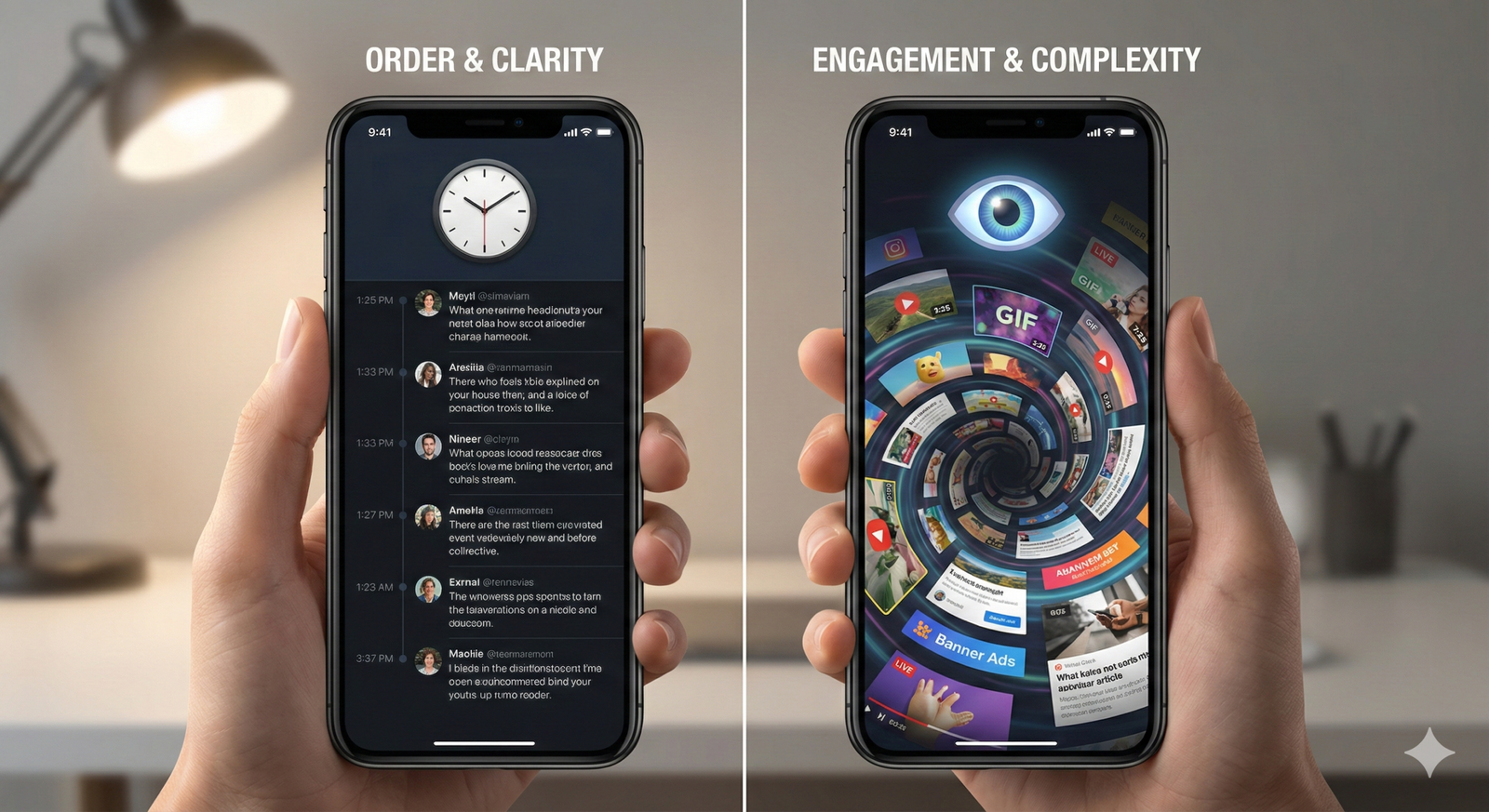
The modern digital experience is defined by a single, often invisible mechanism: the feed. Whether you are scrolling through Instagram, checking X (formerly Twitter), or losing track of time on TikTok, the order in which content appears determines what you see, who you hear, and ultimately, how you perceive the world. For years, a quiet battle has been waging between two dominant philosophies of information distribution: the chronological feed and the algorithmic feed.
This is not merely a technical setting in an app menu; it is a fundamental debate about user agency, mental health, and the economics of attention. As platforms increasingly prioritize retention over chronology, users are finding themselves fighting for control over their own digital environments.
Key takeaways
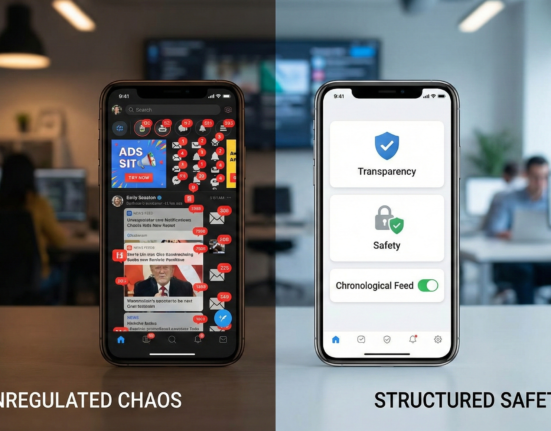
- Fundamental difference: Chronological feeds order content by time (newest first), whereas algorithmic feeds order content by predicted engagement (what the platform thinks you will like).
- The trade-off: Chronological feeds offer control and completeness but can be noisy; algorithmic feeds offer discovery and relevance but create filter bubbles and addiction loops.
- Business incentives: Platforms almost universally prefer algorithmic feeds because they maximize “time on device,” which correlates directly with advertising revenue.
- User agency: The “struggle for control” refers to the difficulty users face in curating their own experience when algorithms prioritize sensationalism or outrage over user intent.
- The pendulum swing: After a decade of algorithmic dominance, there is a growing user demand and regulatory push (such as the EU’s Digital Services Act) to return control options to the user.
Scope of this guide
In this guide, “algorithmic feed” refers to any content stream curated by machine learning models based on user signals, while “chronological feed” refers to strict reverse-chronological ordering (newest to oldest). We will explore the mechanics of these systems, the psychological impact on users, the economic incentives driving platform decisions, and practical steps users can take to regain agency. We will not cover deep technical code reviews of specific ranking algorithms, as these are proprietary and constantly changing.
Who this is for (and who it isn’t)
This guide is written for:
- Everyday social media users who feel overwhelmed or manipulated by their feeds and want to understand why.
- Content creators trying to understand why their reach fluctuates and how to navigate the volatility of non-linear distribution.
- Digital marketers seeking to understand the shift from “following” to “discovery” models.
- Parents and educators concerned about the impact of curated content streams on attention spans and information literacy.
This is likely not for:
- Data scientists looking for white papers on neural network architecture.
- Users seeking a tutorial on how to “hack” an algorithm for viral fame (though understanding the mechanism helps).
Defining the Contenders: Order vs. Optimization
To understand the struggle for control, we must first strip away the jargon and look at the basic architecture of how we consume information.
The Chronological Feed: The “Subscription” Model
The chronological feed is the digital equivalent of a town square or a physical mailbox. If you subscribe to a magazine, you get the magazine. If you follow a friend, you see their posts.
In a strict reverse-chronological feed, the ranking signal is singular: Time.
- Mechanism: User A posts at 9:00 AM. User B posts at 9:05 AM. When you log in at 9:10 AM, you see User B, then User A.
- Promise: “You will see everything from everyone you follow, provided you scroll far enough.”
- Vibe: Linear, predictable, finite. You can “finish” a chronological feed.
The Algorithmic Feed: The “Discovery” Model
The algorithmic feed is the digital equivalent of a personalized shopping assistant who follows you around, notes what you look at, and then rearranges the shelves before you arrive the next day.
In an algorithmic feed, the ranking signals are multitudinous: Engagement prediction.
- Mechanism: The platform analyzes your past behavior (likes, dwell time, shares), the content’s characteristics (video, keywords, popularity), and your relationship to the poster. It assigns a score to thousands of potential posts and presents them in the order of highest probable engagement.
- Promise: “You will see the most relevant, entertaining, or important content first, even if it was posted 12 hours ago.”
- Vibe: Chaotic, endless, highly stimulating. You can never “finish” an algorithmic feed.
The Great Shift: Why Platforms Killed Time
In the early days of social media (the mid-2000s to early 2010s), the chronological feed was the standard. Twitter was a real-time ticker; Facebook was a diary of friends’ updates. Today, almost every major platform defaults to an algorithmic experience. Why did this shift happen?
1. The Problem of Scale and Noise
As social networks matured, users accumulated hundreds, sometimes thousands, of connections. A user following 800 accounts might face a chronological stream of 3,000 posts per day.
- The “Missed Content” Paradox: Internal data from platforms like Instagram (prior to their switch) suggested that users were missing 70% of the content in their feeds, including posts from close friends, simply because they were buried under high-volume posters or brands.
- The Signal-to-Noise Ratio: Without curation, a chronological feed treats a life update from your best friend the same as a low-effort meme from a brand. As feeds became noisier, users became less engaged.
2. The Business of Attention
The primary revenue model for free social platforms is advertising. Advertising revenue is a function of Time Spent and Ad Impressions.
- Retention is King: Algorithmic feeds are mathematically optimized to keep you on the app. By serving dopamine-inducing content—whether it’s outrage, humor, or aesthetic beauty—platforms can extend a user’s session from minutes to hours.
- The Slot Machine Effect: Algorithms operate on a “variable ratio reinforcement schedule.” You scroll (pull the lever), and mostly you get boring content, but occasionally you get a “win” (a great post). This unpredictability is more addictive than the predictable nature of a chronological list.
3. The Shift from Social Graph to Interest Graph
We are currently witnessing a massive evolution from the Social Graph (connecting with people you know) to the Interest Graph (connecting with content you like).
- Social Graph (Old Facebook): “Show me what my friends are doing.”
- Interest Graph (TikTok): “Show me videos about woodworking because I watched one yesterday.” The algorithmic feed is essential for the Interest Graph. You cannot have a “For You” page based on chronology because you don’t follow the millions of strangers creating the content. The algorithm is the bridge between you and the content you didn’t know you wanted.
The User Experience: Freedom vs. Convenience
The debate isn’t one-sided. Both models offer distinct advantages and disadvantages that affect how we experience the internet.
The Case for Algorithmic Feeds (Convenience)
When implemented benevolently, algorithms act as useful filters.
- Relevance: If you only have 5 minutes, an algorithm ensures you see the highlight reel rather than the noise.
- Discovery: Algorithms introduce us to new creators, hobbies, and communities we would never find in a closed chronological loop.
- Quality Filtering: Algorithms often suppress spam, low-quality content, or repetitive posts that might clog a chronological timeline.
The Case for Chronological Feeds (Control)
Proponents of the chronological feed argue that the “convenience” of algorithms comes at too high a cost.
- Agency and Intent: In a chronological feed, you decide who is important by following them. In an algorithmic feed, the platform decides.
- Completeness: It provides a sense of completion. You can catch up, reach the post you saw yesterday, and put the phone away.
- Context: Real-time events (sports, elections, disasters) make sense only in chronological order. An algorithmic feed might show you a reaction to a goal before showing you the goal itself.
- Anti-Echo Chamber: While you choose who to follow, a chronological feed forces you to see everything those people say, not just the posts that reinforce your existing biases (which algorithms tend to amplify).
The Struggle for Control: Psychological and Societal Impacts
The phrase “struggle for control” highlights the power dynamic at play. When a user opens an app, they enter an environment designed by thousands of engineers to subvert their executive function.
1. Learned Helplessness and FOMO
Algorithmic feeds breed a specific type of anxiety: the Fear Of Missing Out (FOMO), weaponized. Because the feed is non-linear and endless, users subconsciously fear that if they close the app, they might miss the “best” post that was queued up next. This leads to doom-scrolling. Users often report feeling “stuck” in the app, scrolling without enjoyment, a state known as “zombie scrolling.”
2. The Filter Bubble and Radicalization
Algorithms optimize for engagement. Unfortunately, negative emotions—anger, fear, and disgust—often drive higher engagement than neutrality.
- The Radicalization Loop: If a user pauses on a slightly polarizing post, the algorithm may serve more extreme versions of that content to test engagement limits.
- The Reality Distortion Field: Two neighbors can log into the same platform and see two entirely different versions of reality. One sees a world of crime and collapse; the other sees baking recipes and cat videos. This erosion of shared reality makes civil discourse increasingly difficult.
3. Impact on Mental Health
The algorithmic prioritizes “perfect” moments—high-engagement travel photos, beauty filters, and success stories. In a chronological feed, you see the mundane mix of life. In an algorithmic feed, you are bombarded with a highlight reel of humanity.
- Comparison Trap: Constant exposure to the top 1% of engaging content leads to inadequate social comparison, driving rates of anxiety and depression, particularly among adolescents.
The Creator’s Dilemma: Writing for Humans or Machines?
The struggle for control extends to the people making the content. The shift to algorithmic feeds has fundamentally changed the job description of a “Creator.”
The “Reach” Volatility
In a chronological era, if you had 10,000 followers, you could reasonably expect a consistent percentage of them to see your posts. In the algorithmic era, follower count is a vanity metric.
- The Gatekeeper: You can have 1 million followers, but if the algorithm deems your post “low engagement” in the first hour, it may only show it to 5% of your audience.
- Burnout: Creators feel compelled to post constantly to stay “relevant” to the system. Missing a few days can signal to the algorithm that the account is dormant, punishing future reach.
Optimization vs. Authenticity
Creators are forced to optimize for machine signals rather than human connection.
- Clickbait: Titles and thumbnails must be exaggerated to stop the scroll.
- Format Compliance: If the platform prioritizes video (e.g., Instagram Reels vs. Photos), creators must pivot their entire art form or die.
- Engagement Bait: Posts often ask mundane questions (“What’s your favorite color? Comment below!”) solely to drive the comment metric, not to spark genuine conversation.
This creates a homogenized culture where content looks and sounds the same because everyone is optimizing for the same mathematical variable.
Platform Analysis: The State of the Feed (As of Early 2026)
Different platforms handle the balance between algorithm and chronology differently. Here is a look at the landscape.
TikTok
- Primary Model: Aggressively Algorithmic (Interest Graph).
- User Control: Very Low.
- The Dynamic: TikTok is not a social network; it is an entertainment platform. The “Following” tab exists, but it is secondary to the “For You” page. Users have little control over what they see beyond skipping videos to train the AI.
- Primary Model: Algorithmic hybrid.
- User Control: Moderate (but hidden).
- The Dynamic: Instagram defaults to a ranked feed mixed with “suggested posts” (strangers). However, following user backlash, they reintroduced a “Following” and “Favorites” view. These views are often tucked away in menus and do not stay as the default setting, requiring the user to select them every time they open the app—a “dark pattern” designed to nudge users back to the algorithm.
X (formerly Twitter)
- Primary Model: Split (For You vs. Following).
- User Control: High (but nudged).
- The Dynamic: X defaults to the algorithmic “For You” tab, which mixes followed accounts with viral content. Users can swipe to “Following” for a strictly reverse-chronological view. However, the platform incentivizes the “For You” tab by making it the landing page.
- Primary Model: Highly Algorithmic.
- User Control: Low.
- The Dynamic: LinkedIn’s feed is notorious for resurfacing posts from weeks ago if someone in your network comments on them. It prioritizes “velocity” of comments. Finding a chronological view is difficult and often resets.
Bluesky and Mastodon (The Challengers)
- Primary Model: Chronological / Custom.
- User Control: Very High.
- The Dynamic: These decentralized platforms were built as a reaction to algorithmic control.
- Mastodon: Defaults to strict chronology. No ads, no engagement ranking.
- Bluesky: Introduces the concept of “Algorithmic Choice” or “Middleware.” Users can subscribe to different algorithms created by third parties (e.g., a “Science Feed,” a “Cat Photo Feed,” or a “Mutuals Only” feed). This unbundles the hosting of content from the curation of content.
Regaining Control: A Practical Guide
While platforms are incentivized to keep you on the algorithmic drip, users are not powerless. Here are strategies to regain agency over your feeds.
1. Utilize “Hidden” Lists and Feeds
Most platforms allow you to create lists of specific users.
- On X/Twitter: Create Lists for “News,” “Friends,” or “Tech.” Pin these lists. Viewing a List is almost always chronological and free of suggested ads.
- On Instagram: Use the “Favorites” feature. Add your 50 closest friends. When you select the Favorites view, you see their posts chronologically and without interference.
2. Aggressive Curation (Gardening the Feed)
The algorithm is a mirror. If you stare at rage-bait, it shows you rage-bait. You must aggressively signal what you don’t want.
- The “Not Interested” Button: Use it liberally. It is the most powerful signal you have.
- Unfollow/Mute: If an account stresses you out, mute it.
- Interact with Intent: Don’t hate-watch. If you engage with content you dislike, the algorithm only sees the “engage” part, not the “dislike” part.
3. Use Third-Party Clients (Where Possible)
While many APIs (Application Programming Interfaces) have been closed off by platforms like X and Reddit, some opportunities remain.
- Browser Extensions: Extensions like “Social Fixer” for Facebook or various “Unhook” extensions for YouTube can strip away recommendations, shorts, and algorithmic sidebars, leaving only the core content.
4. Digital Minimalist Habits
- The “Purpose” Check: Before opening an app, ask: “What am I looking for?” If the answer is “nothing,” you are entering the slot machine.
- Time Limits: Use OS-level screen time limits. Algorithms are designed to dissolve your perception of time; hard limits break the spell.
The Future: Regulation and “Algorithmic Choice”
The struggle for user control has moved from the user interface to the courtroom. Governments are beginning to recognize that opaque algorithms function as black boxes that can harm public health and democracy.
The EU Digital Services Act (DSA)
Implemented in Europe, the DSA is a landmark piece of legislation. One of its key requirements is that Very Large Online Platforms (VLOPs) like TikTok, Facebook, and Instagram must offer users an option to turn off personalized recommendations.
- Impact: In the EU, users can now legally demand a feed that is not based on profiling. This effectively mandates a chronological or non-personalized option. While this is currently limited to Europe, it sets a global standard that forces platforms to build the infrastructure for user control.
The Rise of Middleware
The concept of “middleware” envisions a future where the platform hosts the data, but third-party software determines how it is displayed.
- Imagine logging into Facebook, but instead of using Meta’s ranking algorithm, you choose a ranking algorithm designed by the American Psychological Association (prioritizing mental health) or a chronological filter built by an open-source community.
- This shifts power from the platform (which wants you addicted) to the user (who chooses their lens).
Hybrid Models
The future is likely not purely chronological or purely algorithmic, but a transparent hybrid. Users typically want discovery, but they want it labeled.
- The “Catch Up” Feature: Platforms may reintroduce features that say, “You’re all caught up,” signaling the end of new chronological content before switching to algorithmic suggestions.
- Transparency Sliders: Imagine a slider on your feed where you can adjust the mix: “100% Friends” vs. “100% Discovery.”
Conclusion
The debate between algorithmic and chronological feeds is fundamentally a debate about who owns your attention. The chronological feed represents a tool—a utility that serves you information as it happens. The algorithmic feed represents an environment—a casino designed to extract time and data in exchange for entertainment.
Neither is inherently evil. Algorithms solve the problem of noise and help us find needle-in-a-haystack content that enriches our lives. Chronology provides the grounding and context necessary for a coherent view of the world.
The problem arises when the choice is removed—when the “For You” page becomes a “Forced Upon You” page. As we move forward, the most successful platforms will likely be those that treat attention as a finite resource to be respected, rather than a commodity to be mined. Until then, the responsibility falls on us, the users, to navigate these digital waters with intention, using every tool at our disposal to ensure that we are using the tool, and not the other way around.
Next steps for you
To immediately regain some control, go to your most-used social media app right now and spend five minutes digging into the settings to find the “Favorites,” “Lists,” or “Following” feed options. Set them as your default or pin them to your home screen if possible.
FAQs
1. Why do social media platforms dislike chronological feeds? Platforms dislike chronological feeds because they generally result in lower “time on site.” When a user runs out of new posts from friends, they close the app. Algorithmic feeds can constantly serve new, engaging content from strangers, keeping the user scrolling longer and generating more ad revenue.
2. Can I permanently switch Instagram back to chronological? As of early 2026, Instagram does not allow you to set the chronological “Following” feed as your permanent default. You must tap the Instagram logo or the dropdown menu and select “Following” every time you open the app. This friction is intentional to keep you on the algorithmic main feed.
3. Do algorithmic feeds cause depression? While algorithms themselves don’t “cause” depression, research suggests a strong correlation between heavy social media use (specifically passive scrolling of algorithmic feeds) and increased feelings of anxiety, depression, and loneliness. This is often linked to the “comparison trap” and sleep disruption.
4. What is “shadowbanning” in the context of algorithms? Shadowbanning refers to the practice where an algorithm suppresses a user’s content so that it doesn’t appear in followers’ feeds or hashtags, without notifying the user. This often happens if the content triggers safety filters or is deemed “low quality” by the AI, even if it doesn’t violate explicit rules.
5. How does the TikTok algorithm differ from Facebook’s? Facebook’s algorithm was originally built on the “Social Graph”—prioritizing connections with people you know. TikTok’s algorithm is built on the “Interest Graph.” It cares very little about who you follow and almost entirely about how you interact with specific pieces of content, allowing it to predict your interests with uncanny accuracy.
6. Are chronological feeds better for news consumption? Generally, yes. Chronological feeds provide timeline context, which is crucial for breaking news. Algorithmic feeds can confuse the timeline, showing outdated updates or reactions before the initial event, which can lead to misinformation or confusion during rapidly developing situations.
7. What is “Middleware” in social media? Middleware refers to third-party software that sits between the social media platform’s data and the user. It allows users to choose their own algorithms or filters for their feeds, rather than relying on the platform’s default ranking system. It effectively unbundles content hosting from content curation.
8. Do algorithms prioritize angry or negative content? Algorithms prioritize engagement. Human psychology dictates that high-arousal emotions like anger, fear, and outrage drive more clicks and comments than neutrality. Therefore, algorithms inadvertently prioritize negative content because it generates the signals (comments, shares) the system is optimized to seek.
9. How can I “reset” my algorithmic feed if it shows me things I hate? Most platforms have a section in settings (often under “ads” or “account preferences”) where you can view and clear your “interests.” Additionally, aggressively using the “Not Interested” or “Hide” options on posts, and clearing your cache/watch history, can help retrain the algorithm to a neutral state.
10. What is the “Filter Bubble”? A filter bubble is a state of intellectual isolation that can result from personalized searches and algorithmic feeds. The system guesses what information a user would like to see based on past behavior, effectively isolating them from information that disagrees with their viewpoints, creating an echo chamber.
References
- Chayka, K. (2024). Filterworld: How Algorithms Flattened Culture. Doubleday. (Explores the impact of algorithmic curation on human taste and culture).
- European Commission. (2023). The Digital Services Act: Ensuring a safe and accountable online environment. Official website of the European Union. https://commission.europa.eu/
- Fisher, M. (2022). The Chaos Machine: The Inside Story of How Social Media Rewired Our Minds and Our World. Little, Brown and Company.
- Instagram Help Center. (2025). How Instagram Ranks Your Feed and Stories. Meta Platforms. https://help.instagram.com/
- Narayanan, A. (2023). Understanding Social Media Recommendation Algorithms. Princeton University Computer Science Department.
- Newport, C. (2019). Digital Minimalism: Choosing a Focused Life in a Noisy World. Portfolio/Penguin.
- Oremus, W. (2023). The Great Unbundling of the Social Graph. The Washington Post. https://www.washingtonpost.com/
- Twitter/X Engineering Blog. (2023). Open Sourcing the Algorithm. X Corp. https://blog.twitter.com/