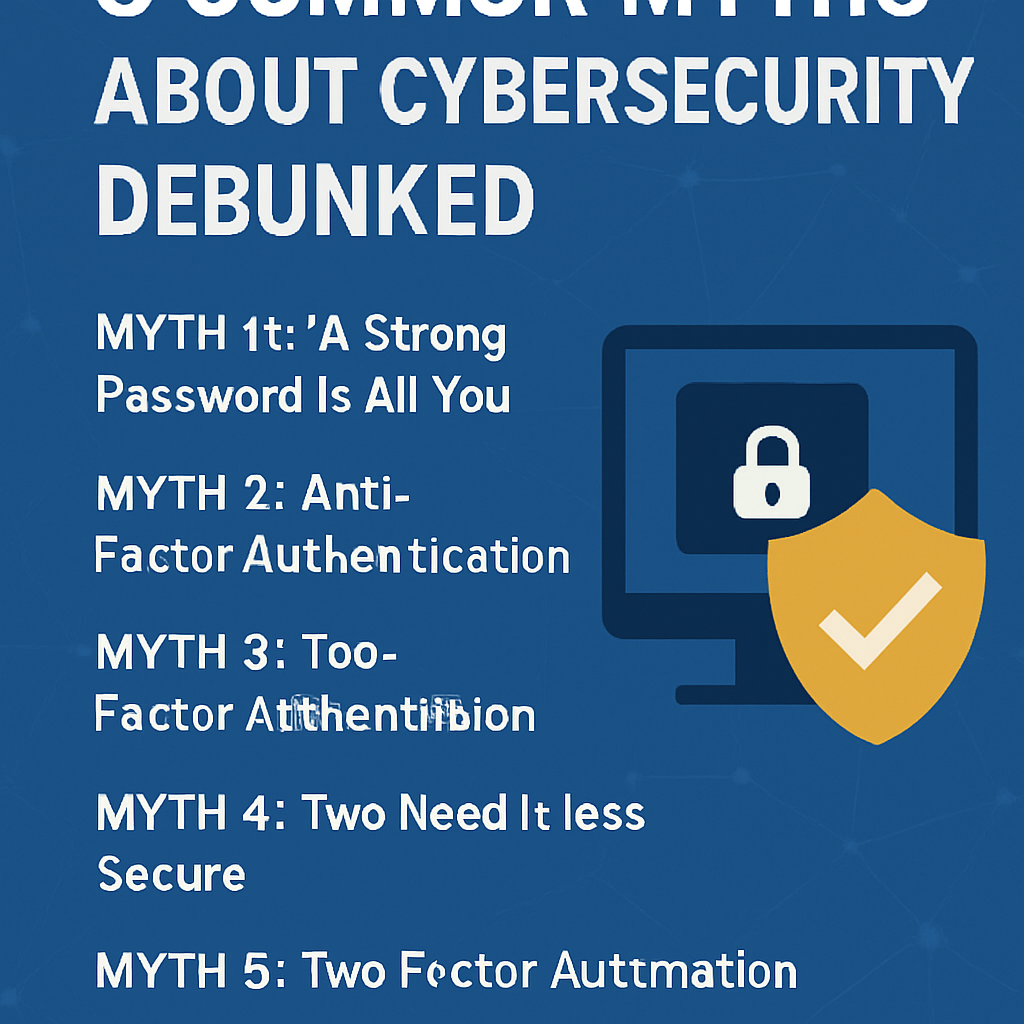
When digital threats change quickly, misinformation about cybersecurity can be just as dangerous as the threats themselves. For the past ten years, I’ve worked as a cybersecurity consultant, helping companies of all sizes make their defenses stronger. During that time, I’ve seen a lot of bad ideas that make systems less safe. This article shows that five common cybersecurity myths are wrong by using real-life examples, expert opinions, and official advice from well-known groups like NIST, CISA, and SANS. Not only will clearing up these misunderstandings make you safer, but it will also help you give better advice to clients, coworkers, or stakeholders.
You need to know and get rid of these myths if you want to keep your defenses strong and ready for the future, whether you work in IT, own a small business, or just use a computer.
Myth #1: “All You Need Is a Strong Password”
A strong, unique password is a good first step, but it’s not the only one. Hackers today can get around even the most complicated passwords by using methods like credential stuffing, phishing, and keylogging.
Why relying too much on passwords is risky
- Phishing and social engineering
Attackers make fake emails or websites that look real and ask you to give them your login information. Your “strong” password is no longer safe once someone has it. - Using the same password again
Hackers can get into all of your online accounts if you use the same password for more than one account. This is called a “domino effect” breach. - Entering Your Information
Bots that run on their own search through thousands of websites for pairs of leaked usernames and passwords. Hard-to-remember passwords can slow them down, but they can’t stop them from being used elsewhere.
The best ways to do more than just use strong passwords
- Use MFA (Multi-Factor Authentication):
Adding a second factor, like a push notification, a one-time code, or a hardware token, makes it much harder for someone to get in without permission. CISA says that MFA can stop more than 99.9% of automated attacks on accounts (see CISA on MFA). - Use a password manager to make and save unique, high-entropy passwords that you don’t have to remember. Some good choices are 1Password, Bitwarden, and LastPass.
- Instead of passwords, use passphrases:
It can be easy to remember a string of random words, like “Rocket!Banana9_Sunlight?” but hard to guess.
Myth #2: “Antivirus software always keeps me safe.”
Find out the facts: Antivirus (AV) tools that only use signatures can only find malware that they already know about. They have a hard time with fileless malware, zero-day exploits, and advanced social engineering attacks.
The Problems with Old Antivirus: They Rely on Signatures
- AV solutions use databases that have known malware signatures. New or mutated strains can go undetected until definitions are changed.
Ways to make a living without using files
- Attackers today run bad code in memory using real system tools like PowerShell and WMI. This way, they don’t have to worry about scanners that look for files.
The time it takes to respond is slow.
- Even if the updates are in the cloud, there is always a time when an attack can happen and AV signatures can be used.
A full approach to endpoint security is Endpoint Detection and Response (EDR).
Keeps an eye on how systems work, finds problems, and lets you fix them quickly. CrowdStrike Falcon, Microsoft Defender for Endpoint, and SentinelOne are some of the best EDR tools.
By default, application whitelisting only lets approved programs run on important systems.
This stops programs that aren’t known or allowed from running.
You need to patch and manage vulnerabilities on a regular basis
to keep your operating systems, apps, and firmware up to date. The Verizon Data Breach Investigations Report says that one of the main reasons breaches happen is because people don’t keep their software up to date.
Myth #3: “Online attacks don’t happen to small businesses.”
Check the facts: Attackers often target small and medium-sized businesses (SMEs) because they don’t have teams of IT or security experts. The Small Business Administration (SBA) says that almost 43% of cyberattacks are aimed at small businesses.
Why SMEs Are Prime Targets:
- Attackers think that businesses with less money have weaker defenses.
- Important: Even small businesses keep personal information about their customers, payment information, and secret processes. On the black market, all of this is worth a lot of money.
- Supply-Chain Attacks: Hacking a small business can get you bigger clients, partners, or vendors.
How to Improve the Security of Your Small Business
- Plan how to keep your computer safe:
Write down how to handle problems, find important things, and figure out what risks they face. - Use Managed Security Service Providers (MSSPs):
Hiring professionals to watch over and manage your security is often much less expensive than hiring your own team. - Teach Employees:
Hold regular security training sessions that cover how to protect data, avoid phishing, and use social engineering. - Get cyber liability insurance so you don’t lose money if your data is stolen, your business is shut down, or you have to pay for ransomware.
Myth #4: “Two-Factor Authentication (2FA) Is Too Hard or Not Needed”
A Reality Check: Some 2FA systems can be a little hard to use, but the security benefits far outweigh the small problems they cause. Two simple and safe ways to protect yourself from phishing are hardware tokens and app-based authenticators.
Things People Get Wrong About 2FA
- “Two-Factor Authentication by SMS Is Enough.”
Bad apps, SIM swapping, and SS7 network attacks can all mess up SMS codes. When you can, use hardware security keys (like YubiKey) or app-based authenticators (like Google Authenticator or Authy). - “It’s Too Hard for Employees and Customers.”
Clear instructions, easier processes, and help all lead to better user experiences. Quick setup guides can help new hires learn the ropes faster. - “We don’t need it for things that aren’t important.”
Attackers will take over accounts, even ones that don’t have much value, to get to more valuable targets in a company.
How to set up 2FA the right way
- Use MFA standards that are hard to fool:
NIST SP 800-63B says not to use SMS and instead use cryptographic authenticators. - Two-factor authentication (2FA) should be used on all important systems.
This includes email, VPNs, remote access portals, and admin accounts. - Give people backup options:
If someone can’t get to their main 2FA device, give them other ways to get back in, like recovery codes or hardware tokens.
Myth #5: “The Cloud Is Always Less Secure Than On-Premises”
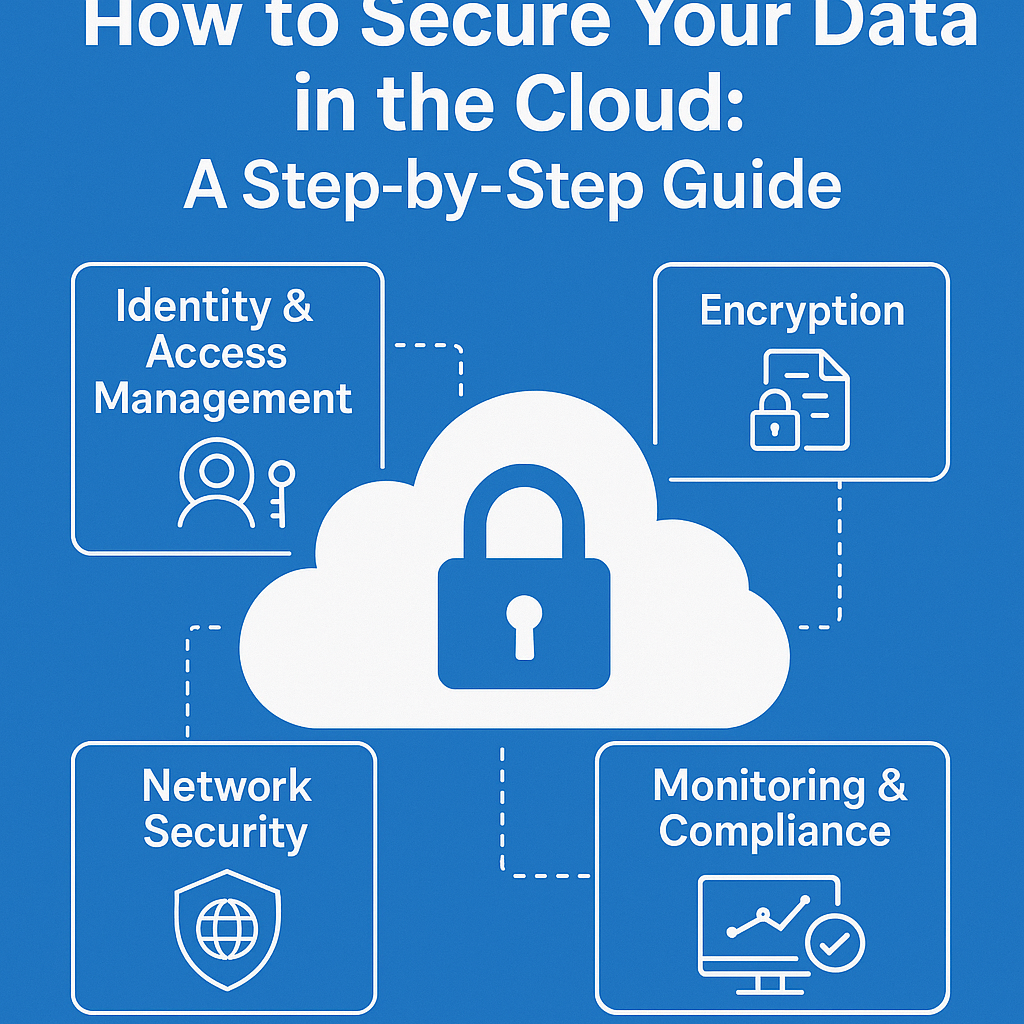
Check the facts: both the customer and the provider are responsible for cloud security. The biggest cloud platforms spend billions of dollars a year on advanced security controls, which is more than most businesses can afford to do on their own.
Getting to know the model of shared responsibility
- What the Cloud Provider Does: Protecting the infrastructure, which includes the basic services, the hypervisors, the network, and the physical data centers.
- The customer is responsible for managing identities, setting up apps, encrypting data, and controlling network traffic.
How to Stay Away from Common Mistakes
- Storage buckets that aren’t set up right
There have been a lot of data leaks because S3 buckets and Azure Blob containers were open to the public. Always follow the principle of least privilege and check your cloud storage rules often. - Service Accounts That Have Too Many Permissions
Give out only the permissions that are necessary, and change passwords frequently. Set up role-based access control (RBAC). - Not being able to see
With cloud-native security posture management (CSPM) tools like AWS Security Hub, Azure Security Center, or third-party tools like Palo Alto Prisma Cloud, you should always be on the lookout for misconfigurations and compliance drift. - Not enough encryption
Use strong algorithms like AES-256 and TLS 1.2+ to encrypt both data that is being sent and data that is not being used. Use hardware security modules (HSMs) or cloud key management services to safely store encryption keys.
Building a Strong Cybersecurity Culture: Beyond the Myths
- Ongoing training and fake phishing:
Regularly check to see if your employees are ready and encourage them to follow good security practices. - Tabletop exercises:
Before an incident happens, use tabletop exercises to make sure that your playbooks, roles, and communication plans are all correct. - Zero Trust Architecture:
Stop thinking in terms of “castle and moat.” Check every user, device, and request, no matter where they are. - Information Sharing:
Join Information Sharing and Analysis Centers (ISACs) that are related to your field to keep up with new threats.
Questions that are often asked
Q1: How often do I need to change my passwords?
A1: Experts now say that you should only change your password if you think someone else has gotten into your account. Changing passwords at random times can make them weaker and make people mad if you have MFA and strong passphrases.
Q2: What is the difference between antivirus software and EDR?
A2: Antivirus looks at the signatures of known threats to find them. EDR, on the other hand, keeps an eye on system states and behaviors all the time. It finds new or fileless attacks and lets you look into them and respond right away.
Q3: Can small businesses get ransomware?
A3: Yes, for sure. In 2024, nearly 60% of people who were victims of ransomware were businesses with fewer than 1,000 workers. Attackers think they are easy targets because they don’t always know when an attack is coming.
Q4: Does cloud encryption happen on its own?
A4: Not all the time. Many providers automatically encrypt data at rest, but customers may have to turn it on and keep track of the keys themselves. Always check the encryption settings for your cloud space.
Q5: Is it possible to use biometric authentication instead of two-factor authentication?
A5: Biometrics, such as fingerprints and facial recognition, are useful, but you need to use them with something else you know or have to fully comply with MFA.
Q6: How can I tell if someone has taken my password?
A6: Use reliable breach-notification services like Have I Been Pwned or business solutions that work with your identity provider to flag credentials that have been used before or that have been compromised.
Q7: What is a network that doesn’t trust anyone?
A7: Zero Trust doesn’t trust anyone by default. Every request for access is checked, verified, and approved before it is granted. This makes it harder to move sideways and lessens the damage from breaches.
Q8: Should I get insurance for cybersecurity?
A8: If you handle sensitive information or rely on IT systems a lot, cyber liability insurance can help pay for losses caused by breaches, fines from regulators, and legal fees.
Final Thoughts
The first step to having strong, long-lasting cybersecurity is to get rid of these five myths. Today’s defenses need to be layered and proactive. This means using multi-factor authentication and endpoint detection, and it also means that everyone is responsible for keeping the cloud safe. Keep in mind that attackers are always changing, and so should your plans. You can stay one step ahead of new threats by using strong technical controls, creating a culture that values security, and following proven frameworks and expert advice.
References
- CISA – Multi-Factor Authentication
U.S. Cybersecurity and Infrastructure Security Agency.
https://www.cisa.gov/mfa - NIST SP 800-63B – Digital Identity Guidelines
National Institute of Standards and Technology.
https://pages.nist.gov/800-63-3/sp800-63b.html - Verizon Data Breach Investigations Report (DBIR) 2024
Verizon.
https://www.verizon.com/business/resources/reports/dbir/ - SANS Institute – Endpoint Security
SANS Reading Room.
https://www.sans.org/white-papers/endpoint-security/ - U.S. SBA – Small Business Cybersecurity
U.S. Small Business Administration.
https://www.sba.gov/business-guide/manage-your-business/prepare-emergencies/cybersecurity - Microsoft – Zero Trust Deployment Guide
Microsoft Security.
https://learn.microsoft.com/azure/security/fundamentals/zero-trust-deployment-guide - AWS – Shared Responsibility Model
Amazon Web Services.
https://aws.amazon.com/compliance/shared-responsibility-model/ - Have I Been Pwned
Breach notification service.
https://haveibeenpwned.com/